
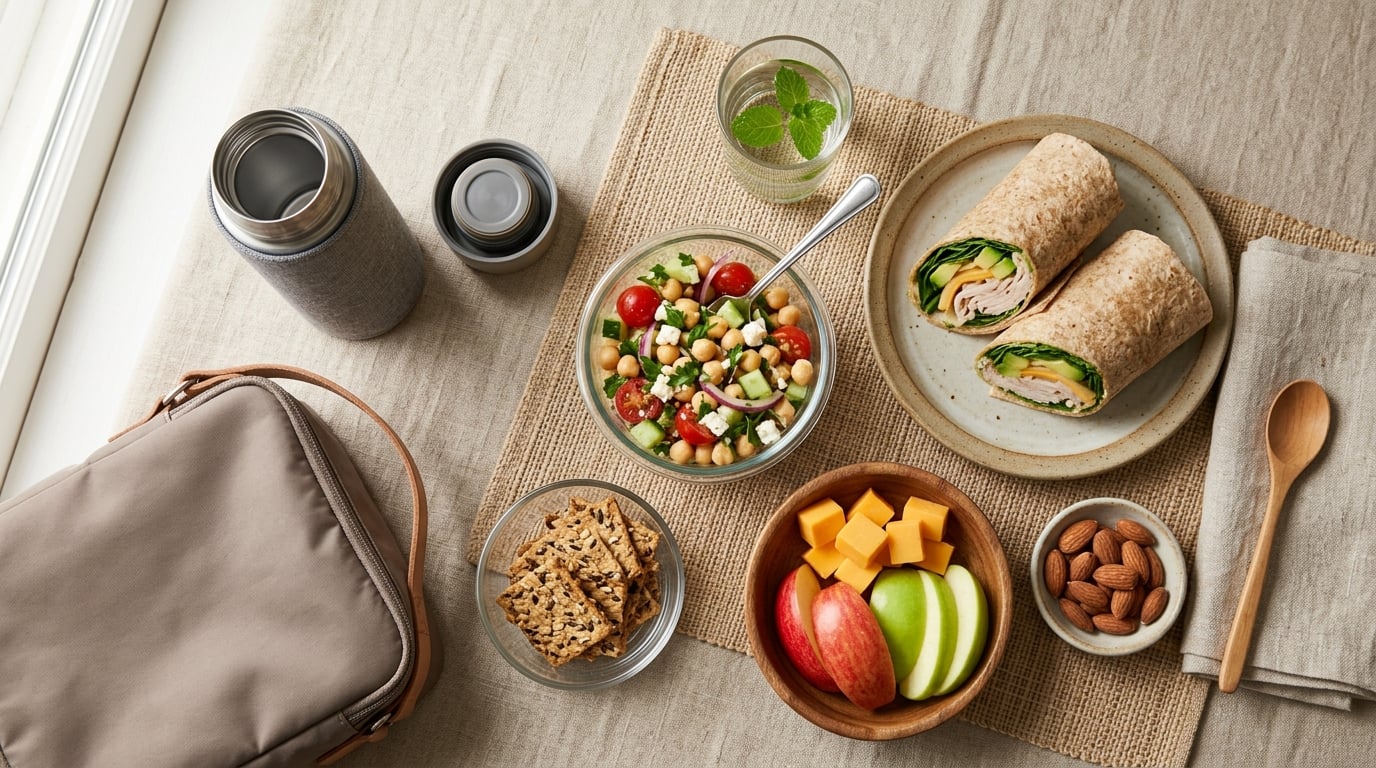
If your office has no microwave and no fridge, your lunch has to be ready to eat cold and stay safe unrefrigerated for the whole workday. The best work lunch ideas with no microwave and no fridge are built from shelf-stable ingredients — canned beans and tuna, nut butter, dried fruit, crackers, roasted chickpeas, tortillas — packed so nothing needs reheating and nothing spoils before you eat.
That covers office workers on shared floors, teachers with one microwave between a hundred colleagues, drivers, warehouse and field staff, students, and anyone whose lunch break is four bites at a desk. I’ve broken this list into 12 ideas, and every one of them is labelled for whether it’s genuinely shelf-stable or whether it needs an insulated bag and an ice pack.
That label matters more than people expect. Most lists mix both and leave you guessing, and guessing with a tuna salad at 7am on a warm day is how people end up sick at work. So: Fridge-free means it sits at room temperature all morning with no ice pack at all. Ice pack means it’s perishable and needs to stay at or below 40°F (4°C) until you eat it.
One more thing before the list. Pack lunch the night before, not at 6am. Almost every soggy-sad desk lunch I’ve seen started as a five-minute morning scramble.
Table of Contents
- Best Work Lunch Ideas with No Microwave and No Fridge at a Glance
- 1. Mediterranean Chickpea and Olive Salad
- 2. Peanut Butter and Honey Banana Wrap
- 3. Shelf-Stable Tuna and White Bean Salad
- 4. Smoked Salmon Bagel with Cucumber Spread
- 5. Oat and Peanut Butter Energy Bites
- 6. Sun-Dried Tomato and Cheese Pinwheels
- 7. Shelf-Stable Greek Yogurt Parfait
- 8. Beef Jerky and Cheese Trail Box
- 9. Hummus and Veggies Whole-Wheat Wrap
- 10. Shelf-Stable Miso Ramen Cup
- 11. Apple Cheddar Almond Snack Box
- 12. Tofu and Edamame Sesame Bowl
- How to Keep Food Safe Without a Fridge
- Frequently Asked Questions
- What food can I eat at work without a microwave or refrigerator?
- How long can a no-refrigeration lunch stay safe?
- Can I eat yogurt or dairy products without a fridge at work?
- What is the best lunch to pack for a long workday?
- How can I keep sandwiches and wraps from getting soggy?
- Do I need an insulated lunch bag for these work lunches?
- Conclusion
Best Work Lunch Ideas with No Microwave and No Fridge at a Glance
Here’s the full list compared side by side so you can pick before you shop. Prep effort is measured the night before, and “travels well” means it survives being tossed in a bag and eaten three hours later.
| Lunch idea | Main ingredients | Prep effort | Travels well | Best for |
|---|---|---|---|---|
| Mediterranean chickpea and olive salad | Canned chickpeas, cucumber, cherry tomatoes, olives, feta, oil and vinegar | 10 minutes | Yes, packed separately | Normal office day |
| Peanut butter and honey banana wrap | Tortilla, peanut butter, banana, honey | 5 minutes | Yes | Early starts, no break |
| Tuna and white bean salad | Pouch tuna, rinsed cannellini, celery, vinegar dressing | 10 minutes | Yes, in a sealed jar | High-protein days |
| Smoked salmon bagel | Bagel, cream cheese, smoked salmon, cucumber, capers | 5 minutes | Moderately | Ice-pack days |
| Oat and peanut butter energy bites | Rolled oats, peanut butter, dried fruit, seeds | 20 minutes for a batch | Excellent | Long days, grazing |
| Sun-dried tomato and cheese pinwheels | Tortillas, sliced cheese, sun-dried tomatoes, greens | 10 minutes | Yes | Shared break rooms |
| Greek yogurt parfait | Shelf-stable yogurt pouch, granola, dried fruit, seeds | 5 minutes | Poor without a cold pack | Ice-pack days, breakfast-style |
| Beef jerky and cheese trail box | Jerky, cheese, nuts, dried fruit, crackers | 5 minutes | Excellent | 12-hour shifts, no break |
| Hummus and veggie wrap | Hummus, roasted red pepper, cucumber, carrots, spinach | 8 minutes | Yes, paper-lined | Plant-forward days |
| Miso ramen cup | Dry noodles, miso powder, dried veg, scallions, hot water | 5 minutes at work | Excellent, jar is sturdy | When you want something hot |
| Apple cheddar almond box | Apple, cheddar, almonds, whole-grain crackers | 5 minutes | Excellent | Low-effort mornings |
| Tofu and edamame sesame bowl | Shelf-stable tofu, edamame, grains, dried veg, sesame | 15 minutes | Yes, in a sealed bowl | Vegetarian and vegan days |
Six of these twelve are fully shelf-stable. That’s the group to build your week around if your site has no fridge at all rather than just an inconvenient one.
1. Mediterranean Chickpea and Olive Salad
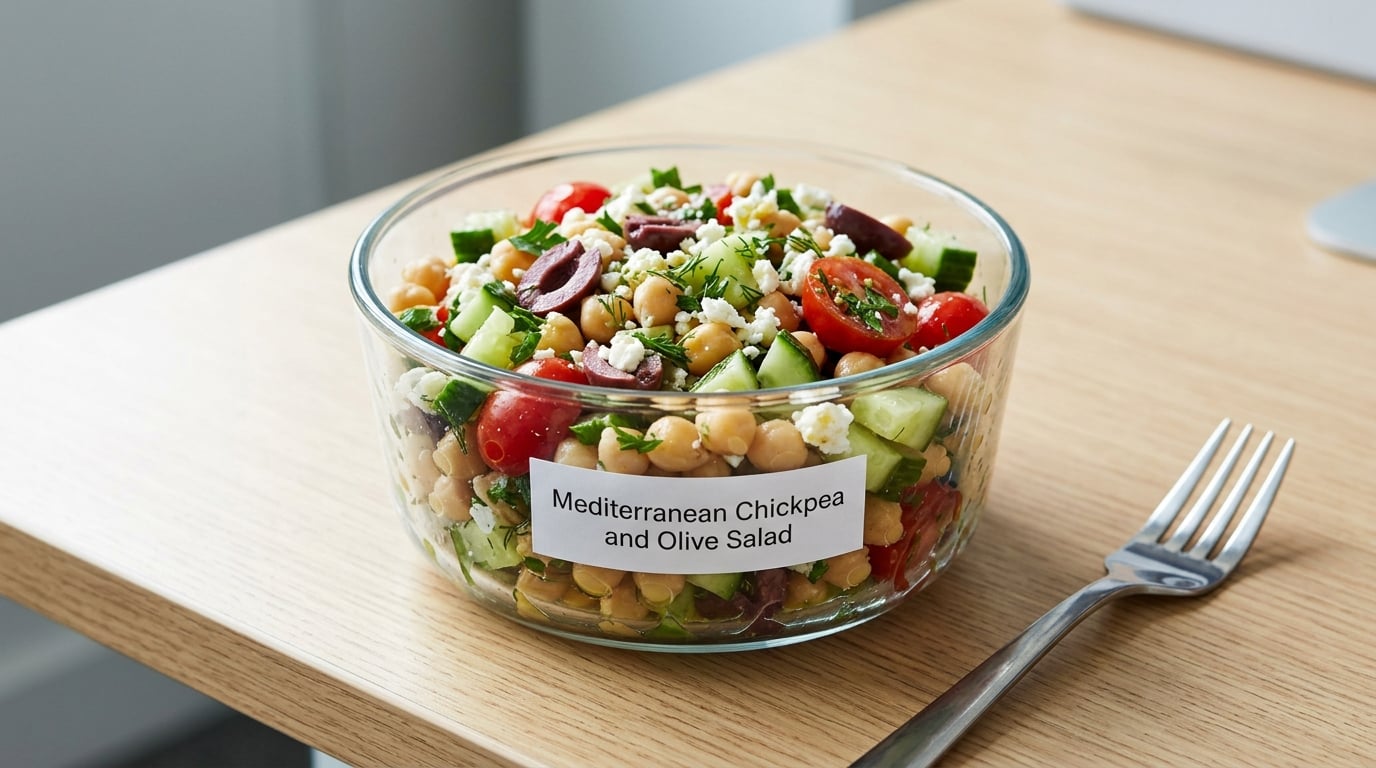
A chickpea salad is the rare salad that genuinely doesn’t need a fridge. An oil-and-vinegar dressing is stable at room temperature, and chickpeas are shelf-stable straight from the can, so nothing in this bowl is perishable except the cut cucumber. Pack the cucumber in a separate small container and add it when you sit down.
Here’s how I build it. Drain one can of chickpeas, half a cucumber diced, a handful of cherry tomatoes, a few Kalamata olives, a spoonful of feta, then dress it with two tablespoons of olive oil, a tablespoon of red wine vinegar, a crack of pepper and a dried oregano. Ten minutes, no cooking, one spoon.
For more staying power, add a hard-boiled egg or a handful of roasted chickpeas. If feta doesn’t travel well to you, a spoonful of hummus mixed into the chickpeas does the same job and keeps it creamy.
One caution: tomatoes and cucumber release water, so drain the salad well and pack it in a wide, shallow container rather than a deep tub. A paper towel under the vegetables buys you a couple of extra hours of texture.
2. Peanut Butter and Honey Banana Wrap
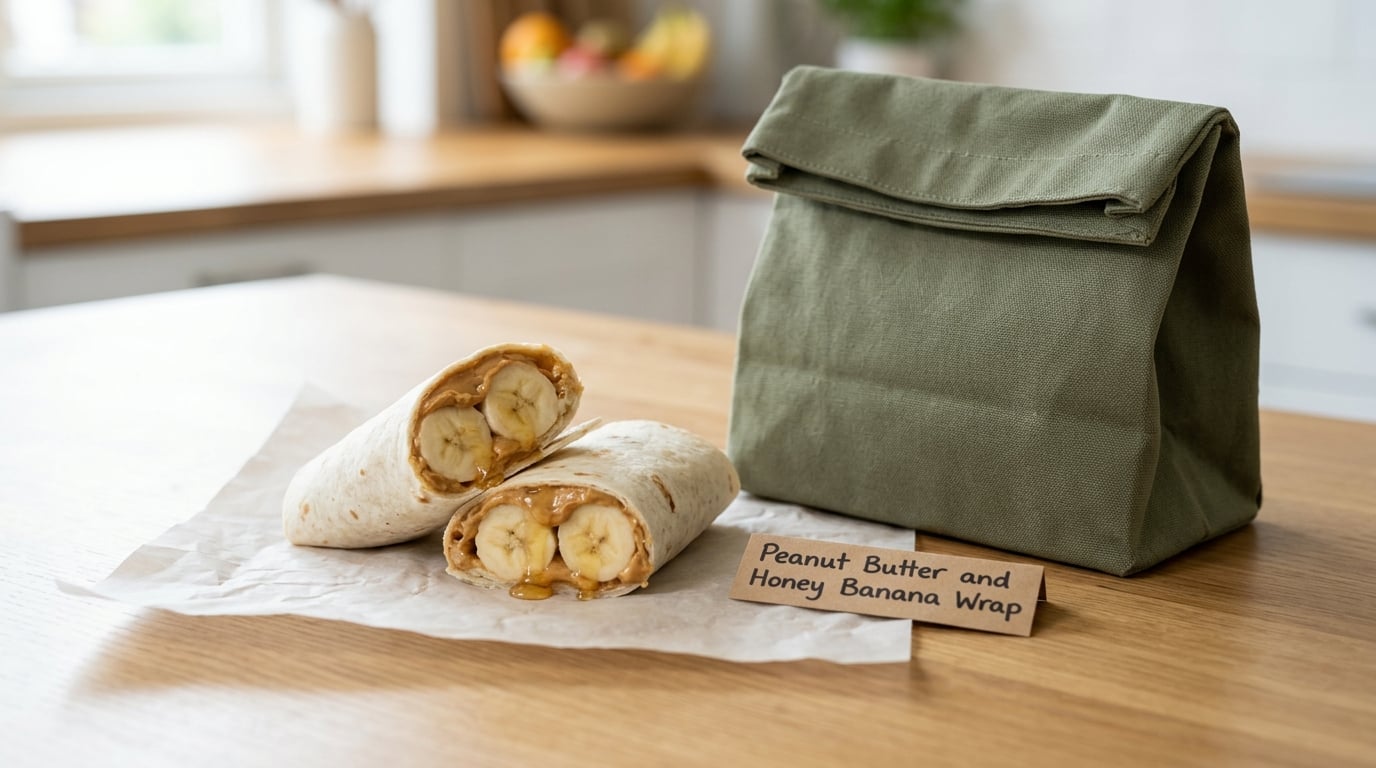
This is the five-minute answer for anyone whose day starts before they fully wake up. Peanut butter is the single most reliable shelf-stable protein in a pantry, a banana is sturdy enough to travel, and a tortilla needs no heating. The whole thing is under 200 calories of assembly time, not eating time.
The two ways it goes wrong are a tortilla that cracks when you roll it and a banana that turns the wrap into mush. For the first, use a large flour tortilla and warm it for ten seconds in a dry pan if you have one — no microwave needed, just a skillet. Flour flexes instead of cracking where whole wheat tends to split.
For the second, slice the banana lengthwise rather than in rounds, pat it dry with a paper towel, and spread the peanut butter thickly right up to the edges. The nut butter forms a moisture barrier, and a thick layer means less banana touching tortilla in the first place.
Roll it tight, wrap the middle in parchment or a slice of deli paper, and cut it in half with a serrated knife. It holds together through a bag and a train ride.
3. Shelf-Stable Tuna and White Bean Salad
Tuna and white beans is the highest-protein fridge-free lunch on this list, and it takes ten minutes. Use a shelf-stable tuna pouch rather than a can so you don’t drain liquid into a sink at work, and rinse canned beans so they don’t carry the beany baking-soda taste.
Drain the tuna, add about three quarters of a cup of rinsed cannellini beans, chopped celery, a little red onion, and a dressing made from olive oil, rice vinegar, Dijon mustard and black pepper. Keep the dressing on the side if you care about texture — beans hold a vinaigrette better than anything else on this list.
For safety, treat it as a refrigerated item even though you can eat it at room temperature. Fish and cooked or dressed beans belong at or below 40°F until you eat them, so this one goes in an insulated bag with an ice pack. I also find tuna gets a bit heavy by 2pm — a pinch of lemon and a little extra celery lighten it up.
Sunflower seeds or chopped walnuts add crunch if you want it, and soy-free versions of both exist if that’s a consideration.
4. Smoked Salmon Bagel with Cucumber Spread
A smoked salmon bagel takes five minutes and looks like you tried, which matters more than you’d think on a nine-to-five where every lunch is in a Tupperware. The catch is that smoked salmon is perishable, so this one needs an ice pack and should be eaten within a couple of hours of opening.
Split a bagel, spread both halves with cream cheese, layer on cucumber ribbons, capers and a squeeze of lemon. Add dill or red onion if you have them. Keep the cucumber in a separate little container so it doesn’t make the bread damp, and wrap the whole thing in a paper napkin before it goes in the bag.
Two easy swaps. Smoked trout or roasted red pepper strips work the same way, and a nut-free option is cucumber ribbons with hummus and olives on a seeded roll. For lower sodium, skip the capers and salted lox and go with a thick slice of plain cream cheese plus lemon and pepper — the flavour comes mostly from the lemon, not the salt.
5. Oat and Peanut Butter Energy Bites
Energy bites are the batch-cook answer, and they’re the only idea here that gets better the more of them you have. Twenty minutes of work on a Sunday gives you fifteen lunches, and they are the single most complained-about gap in cold lunch planning — people get tired of sandwiches, and bites are not sandwiches.
Mix one cup of rolled oats, one cup of peanut butter, a third cup of honey, a quarter cup of dried cranberries or raisins, two tablespoons of chia or flax seeds, and a pinch of salt. Add a third cup of whatever mix-in you like — shredded coconut, chopped peanuts, mini chocolate chips, or cacao powder if you want them to taste like dessert.
Roll into walnut-sized balls, about twelve to fifteen of them. They hold at room temperature for a week in an airtight container, which means you can make a fresh batch midweek in five minutes. Wrap each one individually if you’re putting them in a bag with loose items — otherwise you’ll find them squashed under a book.
They travel better than anything else on this list, and eating two at a time through the afternoon works well for people who don’t get a real break.
6. Sun-Dried Tomato and Cheese Pinwheels
Pinwheels solve the soggy wrap problem because the filling is thick and the greens are optional. A sliced cheese, a strip or two of oil-packed sun-dried tomato, and a thin spread of cream cheese or hummus, rolled in a tortilla, gives you something that looks planned and eats in two bites.
Roll the tortilla snugly, wrap it in parchment or plastic wrap, and refrigerate or freeze it for at least 20 minutes before you cut it. That chill is what makes a pinwheel a pinwheel — a warm roll squashes into a mess the moment you cut it. A short time in a freezer works too, ten minutes is plenty.
Cut into rounds with a sharp knife, and lay the cut sides down in the container so they don’t press flat against each other. Add a thin layer of spinach or arugula only if the wrap is going straight to your desk, since leaves wilt fast once they’re exposed to air.
Variations: roasted red pepper and goat cheese, shredded chicken and pickle with a mustard spread, or the classic pesto-and-provolone. Store-bought pesto travels badly, so make your own or use a dry herb blend mixed with olive oil.
7. Shelf-Stable Greek Yogurt Parfait
A yogurt parfait sounds like the obvious no-cook lunch, and it is — with one catch you have to plan for. Yogurt is perishable, so a fridge-free desk means an insulated lunch bag with a frozen ice pack, not a jar left on the counter from 8am to 1pm.
Buy shelf-stable yogurt pouches rather than a tub. They keep for months unopened, travel without a spoon if you want to drink it straight, and the single-serve format means you are not trusting a leaky container in a bag for six hours.
Layer it in a wide-mouthed jar: yogurt at the bottom, granola in the middle, dried fruit and seeds on top. That order matters. Granola goes on last so it stays crunchy, and wet fruit like fresh berries sits at the bottom where it makes a syrup you can stir in as you eat rather than a soggy lid on top.
Limit it to about four hours with an ice pack, and if your site truly has no cold storage at all, skip this one and go with the apple cheddar box or the trail box instead. Both deliver the same crunchy-sweet satisfaction with zero cold-chain risk.
8. Beef Jerky and Cheese Trail Box
A trail box is the no-lunch-break lunch. Nothing needs a fork, nothing needs a table, and you can eat it in three-minute increments between tasks. It is also the answer to the most common complaint on packing forums: cheese and meat sticks every single day gets old fast, and this is the fix — same protein, different vehicle.
Build it in a divided container or a small bento. Fill two compartments with roughly 2 to 3 ounces of beef jerky, and one with cubed cheddar, which holds up better than most soft cheeses at room temperature. Add a small handful of almonds or walnuts, some dried mango or apricots, and four or five whole-grain crackers.
Sodium is the thing to watch, and it adds up fast when you stack jerky, cheese and salted nuts. Choose unsalted nuts and a lower-sodium cheese, skip the jerky brands that list more than 400 milligrams per serving, and let the dried fruit and crackers do the sweet work instead of a granola bar with sugar in it.
Portion it out in the container rather than eating from the bag. It takes about four minutes to assemble and it never needs an ice pack.
9. Hummus and Veggies Whole-Wheat Wrap
Hummus is shelf-stable, mild in smell, and high enough in fat to blunt hunger, which makes it the most forgiving base on this list. Roasted red pepper, cucumber, carrot and spinach all travel. Avocado does not — it goes brown and watery by 11am, so leave it at home.
Spread hummus generously down the middle of the tortilla, leaving a two-inch border at the far edge, then lay the vegetables in a tight row across that middle third. Fold the sides in, roll the near edge over the filling, then roll the rest tightly. That order prevents the wrap from opening in the middle.
Two anti-soggy tricks worth learning. Put the crunchy vegetables closest to the outside and the soft ones nearest the hummus, so any moisture that collects stays inside the filling. And wrap the finished roll in parchment before it goes in the container — it keeps the tortilla from steaming itself.
If you need this to be vegan, use hummus and skip the cheese. For gluten-free, use a wrap labelled gluten-free and check that the hummus has no wheat-based thickener.
10. Shelf-Stable Miso Ramen Cup
This is the answer for the day you genuinely miss something hot, and it needs no microwave at all — just boiling water. Jar-style ramen cups are shelf-stable, cook in about five minutes, and leave you with a warm meal in an office with nothing but a kettle.
Pack the dry noodle block and the seasoning sachets, then add a small jar or leakproof container of toppings: dried corn, sliced scallions, dried seaweed, a spoonful of roasted sesame seeds, or a hard-boiled egg if you’re using an ice pack for it. The seasoning packet usually includes dried vegetables and miso powder, so you’re not buying a separate paste.
At work, break the noodles into the cup, add toppings and seasoning, and pour boiling water to just below the rim. Cover with the lid for five minutes, stir, and eat straight from the cup. If you’re sensitive to hot liquid on your desk, let it sit three minutes first.
For a real hot lunch with no appliance, a food thermos is the better tool. Boil water, preheat the thermos with it, empty it, then add your already-cooked soup, stew or curry from home. Plenty of people on packing forums use one for exactly this reason — it keeps cooked food hot for hours with no reheating at all. It’s also the only way to safely bring last night’s leftovers.
11. Apple Cheddar Almond Snack Box
The apple and cheddar box takes five minutes and three ingredients, and it works as a full lunch when you add crackers and a little more. It’s the lowest-effort idea here, which makes it the one to fall back on when you’re packing at 6am with no plan.
Slice a firm apple — Honeycrisp, Gala, or Fuji all hold their shape; Granny Smith is too tart, and softer varieties turn to mush. Toss the slices with a few drops of lemon juice to slow browning, or use a reusable dip container with lemon water if you want them even brighter.
Add a small block of sharp cheddar cut into cubes, a quarter cup of almonds, and four or five whole-grain crackers. Cheddar is the best cheese for a room-temperature box; soft cheeses like brie or cream cheese need cold storage, and soft spread on crackers turns the crackers to paste.
Two upgrades: a tablespoon of peanut butter for staying power, or a few dried apricots instead of the almonds if you want the box to feel less like a snack locker. Nuts travel better than any cracker, so pack the crunchy element last if you want it crisp.
12. Tofu and Edamame Sesame Bowl
A sesame grain bowl covers the plant-based end of this list and holds up better cold than most people expect. The trick is separating the perishable parts, and choosing the right tofu.
Use shelf-stable tofu — the vacuum-sealed kind sold unrefrigerated — and press it for 15 minutes under something heavy so it crumbles instead of going rubbery. Edamame, whether fresh or frozen and thawed, is perishable, so that part needs an ice pack. If your site has no cold storage at all, leave the edamame out and double the grains and dried vegetables instead.
Build it on cooked quinoa, farro, or rice cooled in the morning. Add the cubed tofu, a spoonful of dried corn, shredded carrot, and a sesame dressing made from soy sauce, rice vinegar, a dash of sesame oil and a little grated ginger. A teaspoon of chili crisp on top turns it into a completely different lunch.
Keep the dressing in a small lidded jar and shake it in at your desk, because rice and grain bowls go soft and dull sitting in dressing for three hours. The crunchy element — toasted seeds, roasted chickpeas, cashews — goes on top and travels best in a separate little pot if you can spare one.
For a nut-free version, use roasted sunflower seeds instead of sesame in the topping and check that your soy sauce is nut-free.
How to Keep Food Safe Without a Fridge
Perishable food should stay at or below 40°F (4°C), and the two-hour rule is the number to remember: perishable food sitting warmer than 40°F for more than two hours — one hour if it’s above 90°F outside — should be thrown out. A full day in a car or a loading bay is a long time.
That’s the whole reason shelf-stable items are on this list. Canned goods, nut butter, dried fruit, crackers, roasted nuts, unopened pouches, shelf-stable milk, whole fruit with an intact skin, dried pasta and dry noodles are all safe unrefrigerated. Anything cut, cooked, dairy-based or meat-based is not.
When you do need to keep something cold, the gear people in packing threads actually use is unglamorous and cheap. A soft-sided insulated lunch bag plus one or two reusable gel ice packs, or a water bottle frozen solid overnight and used as the ice pack itself. A freezable lunch box that goes straight from the freezer to the bag does the same job with fewer loose parts.
A food thermos covers the other half of the problem. Preheated with boiling water, it keeps hot food hot for hours and works just as well as a cold-holding container for a small portion.
If you cook meat at home, the USDA minimum internal temperatures are 165°F (74°C) for poultry, 160°F (71°C) for ground meat, and 145°F (63°C) for whole cuts and fish. Cool leftovers quickly, get them into the bag within two hours of cooking, and go straight to an ice pack.
Frequently Asked Questions
What food can I eat at work without a microwave or refrigerator?
You can eat anything shelf-stable or best served cold. That means nut butters, dried fruit, crackers, roasted nuts, whole fruit, canned tuna and beans, shelf-stable yogurt pouches, dried pasta with a vinegar or oil dressing, tortillas, hard cheeses, jerky, roasted chickpeas and hot-water ramen cups. What you leave out is anything that needs reheating to taste right, plus anything cut, cooked, dairy-based or meat-based that has no way to stay at or below 40 degrees F until you eat it.
How long can a no-refrigeration lunch stay safe?
Perishable food should stay at or below 40 degrees F, and if it sits warmer than that for more than two hours you should throw it out — one hour if it’s above 90 degrees F outside. Shelf-stable items such as nut butter, crackers, unopened cans and dried fruit are fine all day. Anything with meat, fish, dairy, cut fruit or cut vegetables needs an insulated bag with an ice pack, and should be eaten within a few hours of opening.
Can I eat yogurt or dairy products without a fridge at work?
Not safely, unless you have cold storage. Regular yogurt, milk, cream cheese and soft cheeses all need to stay at or below 40 degrees F, and a morning in a desk drawer is warmer than that. Shelf-stable yogurt pouches and UHT milk boxes are the exceptions — both are made to be stored unrefrigerated until you open them. If you want a creamy option with no cold storage, hummus or peanut butter does the same job in a wrap.
What is the best lunch to pack for a long workday?
A graze box, or something you eat in small pieces across the day rather than one sitting. Beef jerky, cubed cheddar, unsalted nuts, dried fruit and whole-grain crackers need no cooling, no utensils and no table, so you can eat them in three-minute gaps. Energy bites and a piece of fruit add staying power. If you do have an insulated bag, a hot thermos of soup bought ready-made or cooked the night before is the most restorative option on a 12-hour shift.
How can I keep sandwiches and wraps from getting soggy?
Keep wet and dry apart and let steam escape. Pack all dressing in a separate small container, wrap the finished wrap in parchment or a slice of deli paper before it goes in the bag, and use a container that lets moisture out rather than sealing it in. Skip tomatoes in a wrap unless you drain and dry them first. Cold, sturdy fillings hold up best: sliced cheese, hummus, tuna, chicken, and cucumber ribbons packed separately from the bread.
Do I need an insulated lunch bag for these work lunches?
Only for the ideas marked ice pack on the list. The trail box, energy bites, apple and cheddar box, pinwheels, hummus wrap, chickpea salad, trail mix-style snacks and dry ramen cups are all fine at room temperature in an ordinary bag. A soft-sided insulated bag with one or two reusable gel packs covers everything else, and a frozen water bottle overnight works as a free DIY ice pack. A food thermos handles the opposite problem, keeping hot food hot with no reheating.
Conclusion
If your site has no fridge at all, build your week from the six shelf-stable ideas: the trail box, energy bites, apple and cheddar box, pinwheels, hummus wrap and miso ramen cup. Those are the ones that work as genuine work lunch ideas with no microwave and no fridge, no gear required. If you have an insulated bag and an ice pack, the smoked salmon bagel, tuna and white bean salad, yogurt parfait and tofu edamame bowl all open up.
One batch of energy bites and one jar of pinwheels on a Sunday covers a good chunk of the week, and both pack into the same bag as tomorrow’s trail box. Do that before the week gets busy, not after.