
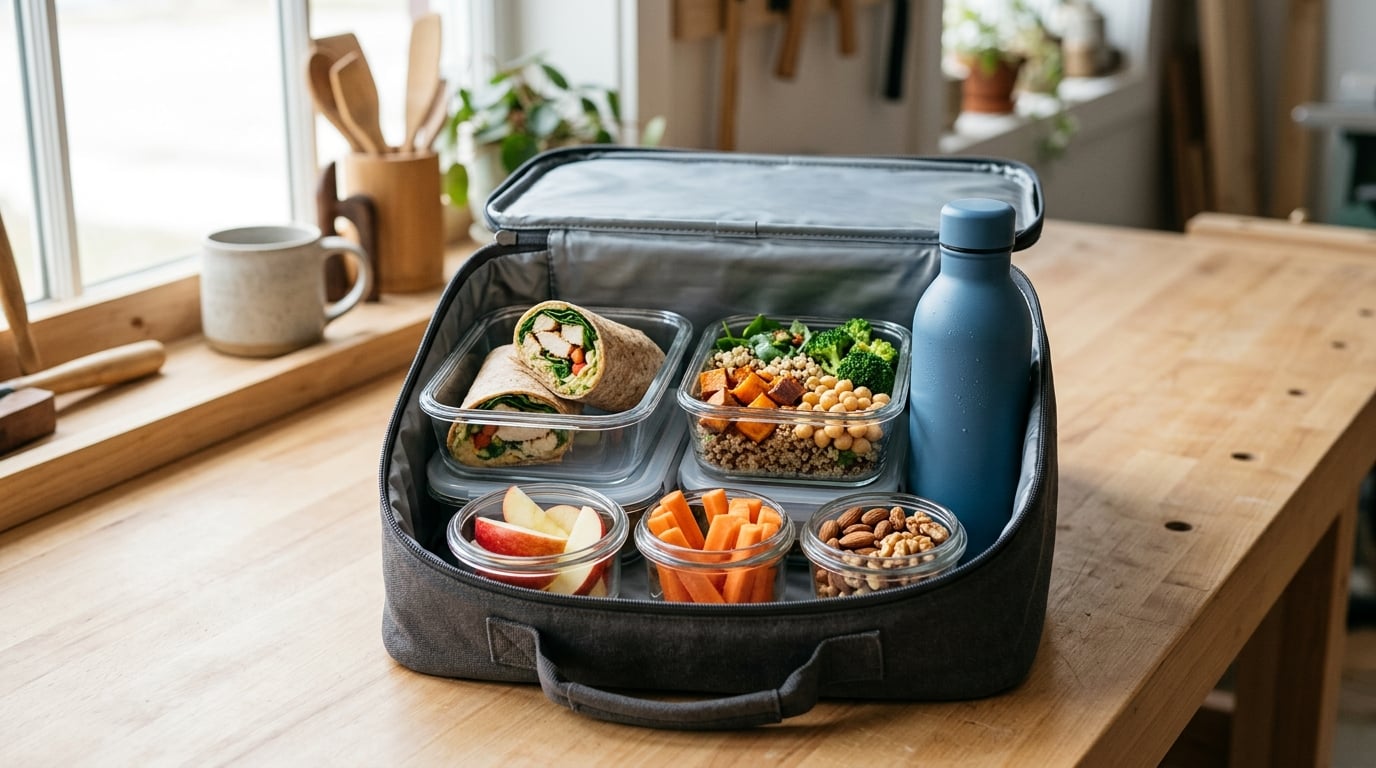
A good packed lunch for construction workers is built around four things: enough fuel for 8 to 12 hours of physical labor, food you can eat with one dirty hand in about ten minutes, nothing that needs a microwave, and a container that keeps it safe whether the lunch box is riding in a hot truck cab or a job box in the rain. Construction work burns roughly 4.9 calories a minute, which is about 2,400 calories across an 8-hour shift, and most crews get 10 to 30 minutes to eat it. That mismatch is why the same gas station sandwich shows up every day.
The good news is that the meals below need no reheating, no on-site refrigerator, and almost no cleanup. Most travel in a single leakproof container, hold their texture for hours, and cost less than the drive-thru stop they replace. Each one includes a specific note on packing, so you can adjust it to your shift length and to the weather you’re working in.
A few realities shape every choice below. Breaks are short, hands are dirty, and there is rarely a table. That rules out anything that needs a fork, a knife, or a plate, and it rules out anything that has to be kept hot to be edible. The meals are ordered roughly from most forgiving to most sensitive, so if you are on a residential site with zero facilities, start at number one.
Table of Contents
- Best Packed Lunches for Construction Workers and Long Shifts at a Glance
- 1. Turkey and Avocado Crunch Wrap
- 2. Chicken Burrito Bowl
- 3. Tuna Egg Salad Sandwich
- 4. Mediterranean Pita Box
- 5. Peanut Butter and Banana Oat Bar
- 6. Leftover Chicken and Rice Power Bowl
- 7. Italian Sub in a Reusable Container
- 8. Cold Sesame Noodle Box
- 9. Ham, Cheese, and Apple Lunchbox
- 10. Vegetarian Bean and Cheese Quesadilla
- 11. Salami, Cheese, and Olive Snack Plate
- 12. Overnight Oats and Yogurt Cup
- Frequently Asked Questions
- What is a good lunch for a construction worker?
- What are good cold lunch ideas for construction workers?
- What is a good meal plan for a construction worker?
- How do you keep a packed lunch cold all day on a jobsite?
- How many calories does a construction worker need per shift?
- What can I eat that needs no refrigeration or heating?
- How to Choose the Best Lunch for Your Shift
Best Packed Lunches for Construction Workers and Long Shifts at a Glance
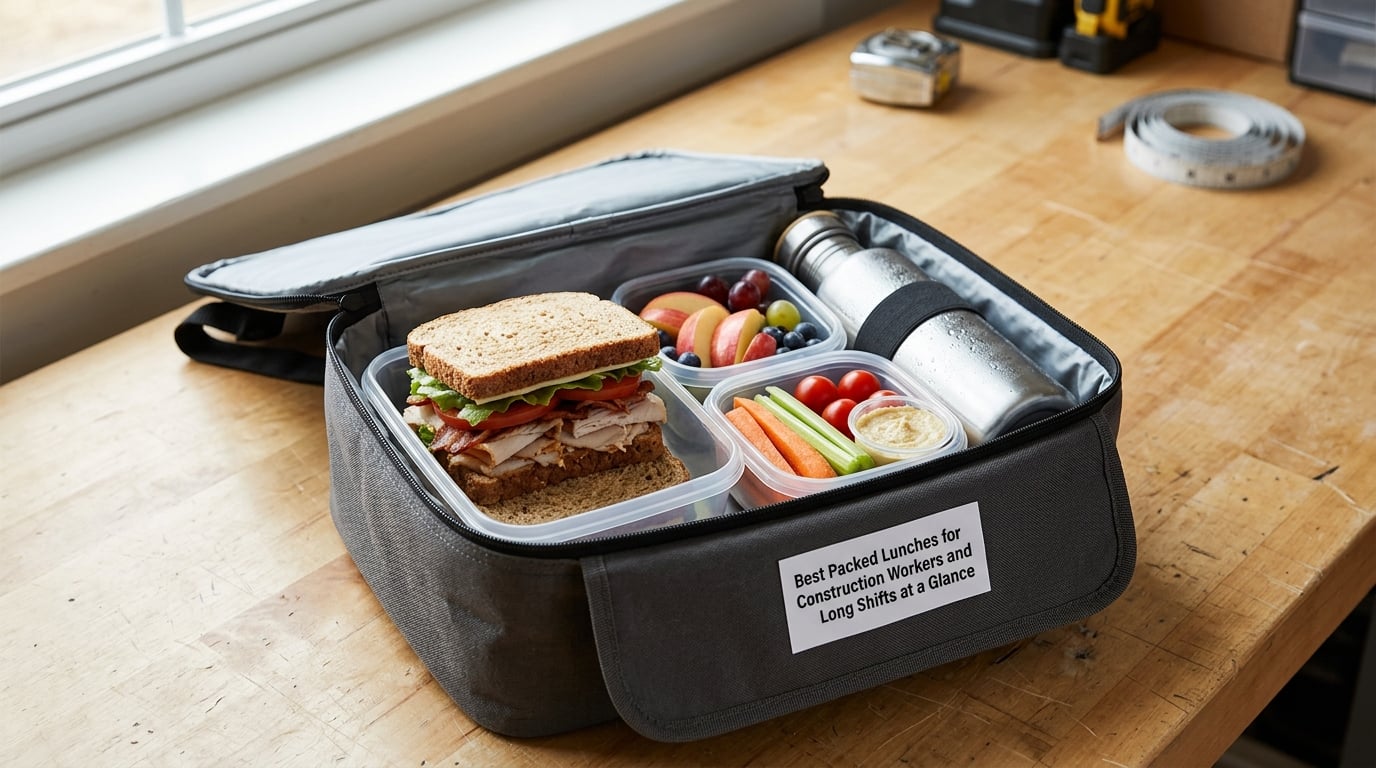
| Lunch | Best quality | Ideal shift | Hot or cold |
|---|---|---|---|
| Turkey and avocado crunch wrap | One-hand eating, no utensils | 8 to 12 hours | Cold |
| Chicken burrito bowl | Balanced and portionable | 10 to 12 hours | Cold or hot in a thermos |
| Tuna egg salad sandwich | Fills you up cheaply | 8 to 10 hours | Cold |
| Mediterranean pita box | Variety in one box | 8 to 10 hours | Cold |
| Peanut butter and banana oat bar | Portable energy, no prep on site | Double shift | Room temperature |
| Leftover chicken and rice power bowl | Uses Sunday leftovers | 10 to 12 hours | Cold |
| Italian sub in a container | Substantial, holds up | 8 to 10 hours | Cold |
| Cold sesame noodle box | Light but energizing | 8 to 12 hours | Cold |
| Ham, cheese, and apple lunchbox | Assembles the night before | 8 hours | Cold |
| Bean and cheese quesadilla | Filling, meatless, reheats well | 8 to 10 hours | Cold or hot |
| Salami, cheese, and olive snack plate | No cooking at all | Short to moderate shifts | Room temperature |
| Overnight oats and yogurt cup | Sustained energy, make-ahead | 8 to 10 hours | Cold |
1. Turkey and Avocado Crunch Wrap
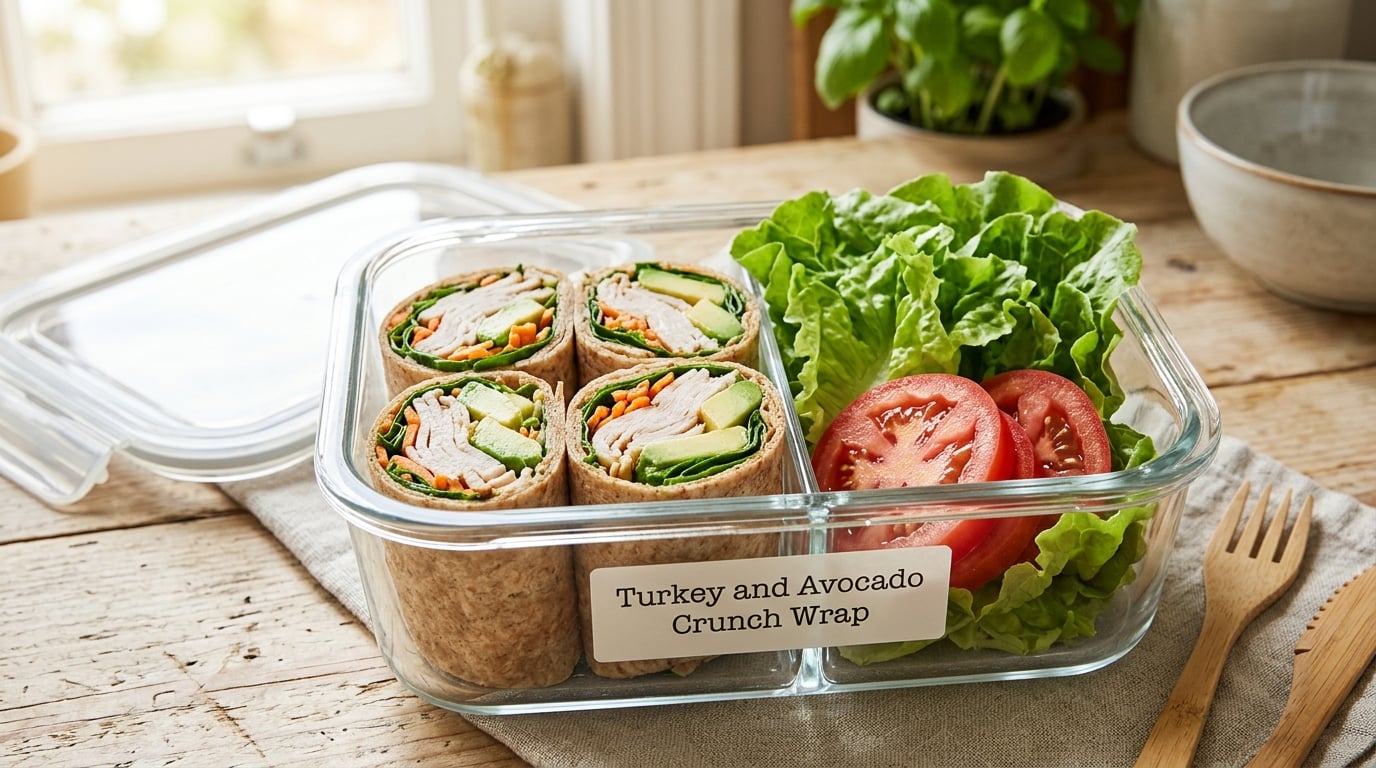
A wrap is the most reliable thing you can put in a lunch box. The tortilla holds together when a sandwich falls apart, and cutting it into thick segments means you can eat a piece in your hand without unrolling the whole thing over your jeans.
Build it with sliced turkey, mashed avocado, shredded lettuce, a few tomato slices, and a thin layer of mayo or cream cheese to stop the avocado browning. Pack the lettuce and tomato in a separate small cup and tip them in when you sit down, or the wrap goes soggy by 11:30. Roll it in parchment or wax paper first, then slice it, then box it, and the whole thing survives a long drive and a jostled truck bed.
2. Chicken Burrito Bowl
A burrito bowl is the answer when you want an actual meal instead of a sandwich that runs out of protein at noon. Rice, black beans, grilled or roasted chicken, corn, salsa, and shredded cheese give you carbs for the afternoon and roughly 30 to 40 grams of protein in one container.
Pack the salsa and any wet dressing in a leakproof cup rather than pouring it over the rice. It costs about a minute extra at 5 a.m. and it is the difference between a bowl that tastes good at lunch and a bowl of rice soup. Skip the sour cream and shredded lettuce, and this bowl works equally well cold straight from the container or reheated in a wide-mouth insulated jar before you leave the trailer.
3. Tuna Egg Salad Sandwich
This is the cheapest sandwich that still keeps you full through a 10-hour day, and the ingredients are all shelf-stable pantry items. Use a pouch of tuna rather than a can so there is nothing to drain in a portable sink, mix it with mayo and a chopped hard-boiled egg, and put it between slices of sturdy bread or on a roll.
Two things matter here. First, mayo-based tuna salad is perishable, so it needs to stay cold until you eat it, in an insulated bag with a frozen gel pack or a frozen water bottle. Second, buy bread that can take a wet filling. A soft white loaf turns to paste; a denser roll or whole-grain bread holds. A handful of potato chips or raw veggie sticks alongside turns it into a meal rather than a snack.
4. Mediterranean Pita Box
Think of this as a deconstructed sandwich where nothing touches anything else. Hummus spread in the bottom of a container, warm pita cut into wedges around it, cucumber and pepper slices, cherry tomatoes, olives, feta, and a handful of dried apricots or apple chunks for sweetness.
Keeping the components separate is what stops it going soft by noon, and it also means you can eat it in pieces with your fingers. Pita packed in the morning, even from a bakery, dries out by lunch, so bring a container with a lid and do not seal the pita until the morning of. It is also the easiest box to adjust for a crew: double the olives and feta, add a boiled egg per person, and label anything containing nuts.
5. Peanut Butter and Banana Oat Bar
A dense oat-and-nut bar is the one item on this list that survives being sat on, dropped in a tool bag, and eaten at hour eleven of a double shift. It needs no refrigeration, no container, and no prep that morning, and the combination of fat, slow carbs, and protein holds steady energy far longer than a sugary granola bar.
Make a batch on a Sunday: 2 cups rolled oats, 1 cup peanut butter, a cup of honey or maple syrup, a teaspoon of vanilla, a pinch of salt, and sliced banana or chocolate chips if you want them. Press it into a lined 8-inch square pan, chill it a couple of hours, and cut into eight bars. They keep about a week in the fridge or a couple of weeks in the freezer. For a nut-free version, swap sunflower seed butter for the peanut butter and check that your oats are labeled nut-free, since cross-contact is common in oats.
6. Leftover Chicken and Rice Power Bowl
The best construction worker lunch ideas are usually already in your fridge. Sunday dinner chicken and rice becomes Monday lunch with a handful of roasted vegetables on top, a drizzle of oil and vinegar, and a lid on the container. It costs you nothing extra and it is the single highest-return habit in this whole list.
Safety is the part worth being careful about. Get the chicken and rice into a refrigerator within two hours of cooking, and keep leftovers no more than three to four days at or below 40F. If you cannot refrigerate it that night, freeze it instead, and thaw it in the fridge overnight so the container is cold again before you leave. Reheat any chicken to 165F, and when in doubt, skip the leftovers and pack something shelf-stable.
7. Italian Sub in a Reusable Container
An Italian sub is a sandwich that survives contact with a hard day, mostly because the bread is dense and the filling is cured. Salami, ham, provolone or Swiss, banana peppers, shredded lettuce, and a drizzle of olive oil and red wine vinegar is a solid build. Cut it into sections rather than halves so you can eat a piece at a time.
The wet ingredients are the enemy. Drain the sliced peppers, pat the tomatoes dry, and keep the olives whole on the side if you can. Choose a roll rather than a baguette, because a thin crust splits on the first bite and then you are eating sub filling off a napkin. If your crew has no refrigerator, treat cured meats as perishable and pack it with a gel pack, or switch to a shelf-stable snack plate for the hottest days.
8. Cold Sesame Noodle Box
Cold noodles are for the worker who finds a heavy sandwich at 1 p.m. hard going. Soba, spaghetti, or rice noodles tossed with shredded carrot, cucumber, scallion, and a sesame-ginger dressing give you carbs and a lighter finish, and they keep their texture for hours rather than turning to mush, which is where most pasta salads go wrong.
The dressing is the whole trick. Make it the night before, refrigerate it in its own small jar, and toss the noodles with just a little sesame oil and a splash of the dressing in the morning. Mix the rest at lunch. Cold noodles actually taste better after a few hours in the fridge, so this is one of the few lunches that improves as the day goes on. Keep the noodles chilled, and add protein, either sliced chicken, a hard-boiled egg, or a spoonful of peanut dressing if you need more.
9. Ham, Cheese, and Apple Lunchbox
Not every crew needs a project lunch. This is the plain, fast, assembly-line option: a ham and cheese sandwich, apple slices, baby carrots, and a handful of crackers or a small handful of nuts, packed in a compartmented box the night before.
Toss the apple slices with a squeeze of lemon at packing time so they do not go brown by midday. Sandwich the ham and cheese with a thin layer of mustard rather than mayonnaise, which keeps the bread drier and travels better. If you are on a residential job with no cooler, skip the apple and carrots, and pack a whole banana instead, along with some shelf-stable cheese and crackers. Assembling five of these takes about ten minutes and covers the whole week.
10. Vegetarian Bean and Cheese Quesadilla
For a crew that wants a hot meal but has no microwave, a quesadilla is hard to beat. Refried beans, grated cheese, diced bell pepper, onion, corn, and a light sprinkle of cumin on a flour tortilla cook in a skillet in five minutes. They are filling, they cost very little, and they reheat without turning rubbery.
If you have an outlet on site, wrap it in foil and heat it thirty seconds. If you do not, pack it cool and eat it like a folded wrap, which works better than it sounds. Cooled and then reheated, the tortilla is soft, not crisp, so treat it as a soft sandwich rather than a crunchy one. This is also the easiest way to feed a mixed crew: two vegetable quesadillas and two with chicken and cheese, labeled, satisfy everyone at once.
11. Salami, Cheese, and Olive Snack Plate
When the break is ten minutes and there is nowhere to sit, a snack plate is the honest answer. Sliced salami and a block of hard cheese cubed at home, a handful of olives, dried apricots, and a small stack of crackers is genuinely filling, needs no cooking, no refrigeration if the weather is cool, and no cleanup beyond a napkin.
It is also the best choice for out-of-town work where the nearest store is a gas station 25 miles behind you. The protein and fat combination slows you down between meals, and the olives and dried fruit add sugar without the crash of a candy bar. Treat the cured meat as perishable in summer heat, keep it in the insulated bag, and use hard cheese, crackers, jerky, and nut butter when the thermometer climbs.
12. Overnight Oats and Yogurt Cup
Breakfast food works as a lunch when the shift starts before dawn and the lunch break lands while you are still in a groove. Half a cup of rolled oats, half a cup of milk or yogurt, a spoonful of peanut butter, and a banana or apple sauce mixed the night before turns into a cold, thick, spoonable meal by morning. It is filling, cheap, and needs no reheating.
There is a catch: dairy and cooked oats are perishable. Build it in a container that goes straight into the fridge, and take it out of the fridge last thing before you leave, packed in the insulated bag with a gel pack. Do not make it more than a day ahead. If you cannot keep it cold, make the dry version instead, oats, nut butter powder, and dried fruit in a jar, and add liquid at break time when you have access to hot water from a thermos.
Frequently Asked Questions
What is a good lunch for a construction worker?
A good lunch for a construction worker is calorie dense, high in protein, and needs no microwave. Most sites have no reliable microwave and no refrigerator, so a cold or room-temperature meal that survives in a container is the safest default. Aim for roughly 600 to 900 calories and 25 to 40 grams of protein, plus a piece of fruit, so you stay full from 11 a.m. to the end of a 10 or 12-hour day.
What are good cold lunch ideas for construction workers?
Cold options that hold their texture all day include turkey and avocado wraps, burrito bowls packed with wet ingredients separate, tuna egg salad on sturdy bread, cold sesame noodle boxes, Mediterranean pita boxes, Italian sub sections, ham and cheese with apple, and overnight oats. The rule is simple: keep dressings and wet toppings in a separate cup, use bread that can take moisture, and treat anything with dairy or meat as perishable.
What is a good meal plan for a construction worker?
Plan five lunches on Sunday, buy once, and prep in one session. A workable rotation is wraps on Monday, a burrito bowl on Tuesday, a sub on Wednesday, leftovers converted to a power bowl on Thursday, and a make-ahead overnight oats or quesadilla on Friday. Vary the protein, keep one grain and one vegetable in most meals, and keep two shelf-stable backups in the truck for the days a cooler fails.
How do you keep a packed lunch cold all day on a jobsite?
Use an insulated bag with two frozen gel packs, or freeze a water bottle overnight and use it as the cold source. Pack the bag the night before so it is already chilled, add the ice last thing before you leave, and keep the closed bag in shade or out of the cab until your break. USDA guidance treats 40F to 140F as the danger zone: discard perishable food left in that range more than two hours, or one hour if it is above 90F.
How many calories does a construction worker need per shift?
Heavy construction work runs about 4.9 calories per minute, which works out to roughly 2,400 calories across an 8-hour shift, and light tasks sit below that. Most breaks are 10 to 30 minutes, so a single large meal is not enough. Split the day, eating a substantial packed lunch around 11 a.m. and carrying a shelf-stable snack, fruit, and an electrolyte drink for the afternoon.
What can I eat that needs no refrigeration or heating?
The reliable shelf-stable options are nut butter on bread or in a homemade oat bar, whole nuts, dried fruit, beef or turkey jerky, crackers, whole-grain tortillas, shelf-stable tuna and bean pouches, canned fruit, potatoes, carrots, onions, and whole apples or bananas. Anything with dairy, deli meat, cooked rice, cut avocado, or cut fruit needs to stay below 40F, so keep those meals for days when your cooler is working.
How to Choose the Best Lunch for Your Shift
Start with three questions, and the answer writes itself. How long is the shift, how hot is it, and is there any cold storage on site? An 8-hour day with a working cooler and a microwave opens up hot meals. A 12-hour day in July with no facilities and a 10-minute break means cold, hand-held, shelf-stable food only.
Then pick the meal and prep it the night before. If you take one thing from this list, make it the Sunday batch session: five lunches, one shopping trip, and two frozen gel packs in the bag. Consistency beats a perfect recipe, and a lunch you actually have at 11 a.m. is worth more than a better one you skipped because you ran out of time.