
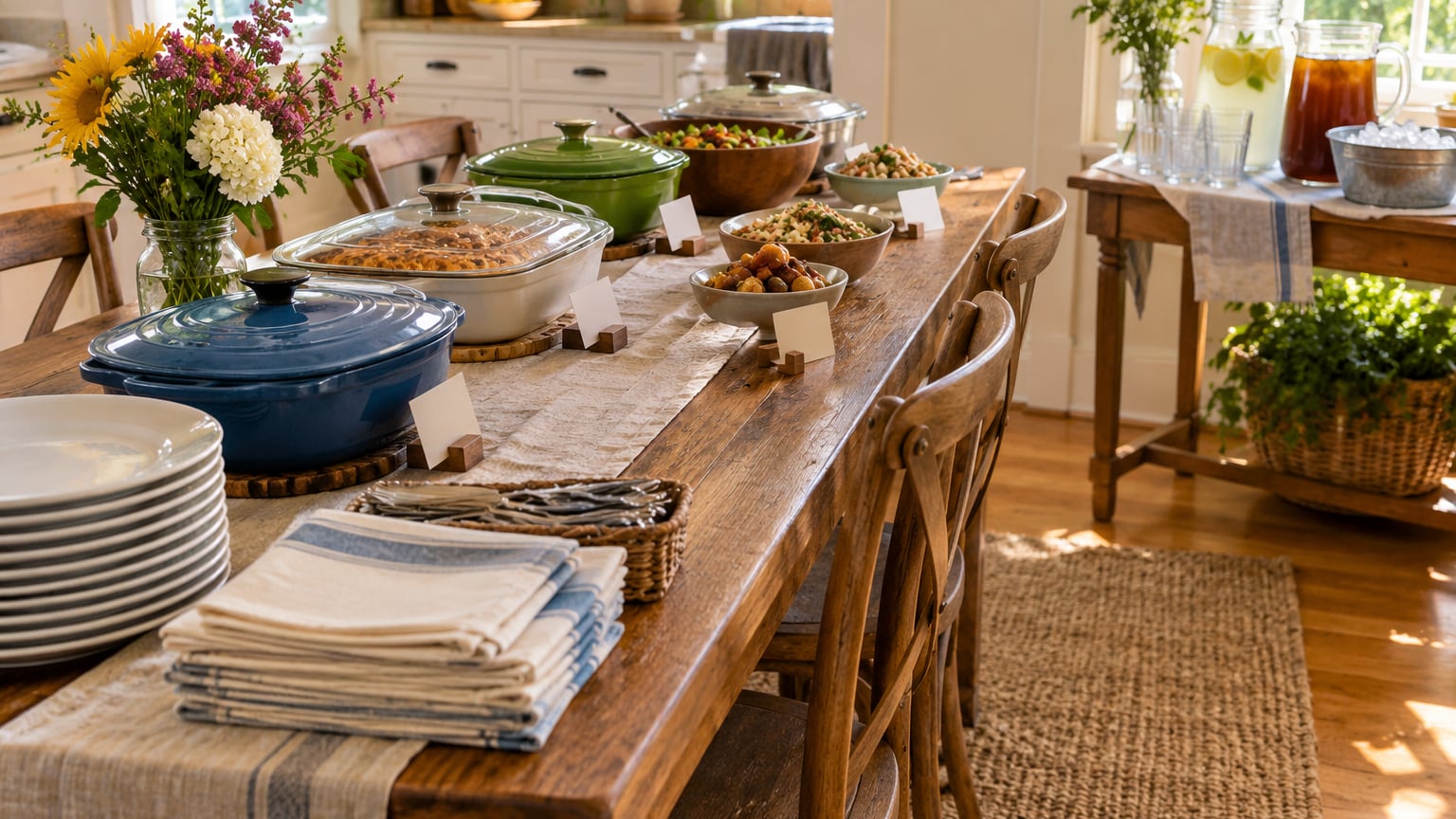
How to plan a potluck? Lock the headcount, pick dish categories instead of letting everyone guess, run a sign-up list with quantities attached, and set up the serving table so food stays at a safe temperature. Most of the work happens two weeks before the event, and the whole thing takes about an hour of planning plus a normal cooking session the day before.
I’ve hosted enough of these to know where they fall apart. The failures are almost never about the food itself. They come from nobody owning the guest list, three people bringing pasta salad and nobody bringing dessert, and a slow cooker that runs out of outlet near the serving table.
This guide walks through the planning process in seven steps, with the quantities and temperatures written out so you don’t have to guess. Whether it’s an office lunch, a Friendsgiving dinner, or a park picnic, the system is the same.
Table of Contents
- What You Need Before You Plan
- Step-by-Step: How to Plan a Potluck Successfully
- 1. Define the Occasion, Guest Count, and Style
- 2. Choose a Balanced Menu Everyone Can Share
- 3. Estimate Quantities and Label Each Dish
- 4. Confirm What Each Guest Is Bringing
- 5. Build a Prep, Chill, and Transport Schedule
- 6. Set Up Serving Equipment and Food-Safe Stations
- 7. Send a Final Plan and Do a Quick Event-Day Check
- Common Mistakes
- Frequently Asked Questions
- How much food should I bring to a potluck?
- How do I plan a potluck when guests have dietary restrictions?
- Should the host provide all the food for a potluck?
- How do I keep hot and cold food safe while transporting it?
- What should the host do if guests bring the same dish?
- How early should I prepare food for a potluck?
- Conclusion
What You Need Before You Plan
Gather these seven things first. Without them, every decision downstream is a guess.
- Occasion and timing. A Wednesday office lunch and a holiday dinner need very different lead times.
- Estimated guest count. Your best guess today, refined by RSVPs later.
- Serving location. Your kitchen, an office break room, a community hall, or a picnic table all have different limits.
- Dietary needs. Collect allergy and preference information before you assign dishes.
- Available equipment. Count oven space, burners, slow cookers, outlets, refrigerator shelf room, and serving pans.
- Budget. Deciding what the host pays for versus what guests cover avoids an awkward conversation later.
- A sign-up tool. A shared document or sign-up sheet that everyone can see at once.
If there are more than ten people coming, appoint one other person to help you track responses. Two sets of eyes catch cancellations and duplicate dishes that one set misses.
Step-by-Step: How to Plan a Potluck Successfully
A successful potluck depends on coordination more than cooking. The seven steps below cover the menu, the quantities, the schedule, the serving needs, and the guest contributions, in the order that makes each next step easier.
1. Define the Occasion, Guest Count, and Style
Start by writing down what kind of meal this is. A birthday party, a holiday table, a casual picnic, and a work lunch each produce a different menu and a different setup.
Then estimate the guest count and add a buffer. I plan for 5 to 10 percent more than the number of confirmed guests, because people bring spouses, kids get dragged along, and someone always has a plus-one you never heard about. Under-planning by one or two servings is cheap insurance; over-planning by a full dish is wasted food.
Decide the service style too. A buffet line moves faster and needs less table space than a sit-down meal. It also needs more thought about flow, because people queue in one direction and you want plates and napkins first, then mains and sides, then desserts last.
The location changes the food. In a break room with one microwave, dishes that need reheating take turns and the line crawls. In a kitchen with a real oven and counter space, a casserole works fine. At a park, anything needing heat or refrigeration is out.
2. Choose a Balanced Menu Everyone Can Share
Build the menu from food categories, not from individual dishes. A potluck spread usually needs a main, two or three sides, a salad, bread or a starch, one dessert, and drinks.
Two or three substantial dishes is usually plenty for a group. Plenty is the operative word here. A table crowded with entrees leaves no room for sides, and people end up eating three heavy dishes instead of a proper meal.
Handle dietary needs with a mix, not with a separate meal for everyone. If two guests are vegetarian, make one of the side dishes a substantial vegetarian option rather than serving them an appetizer plate. If someone has a nut allergy, say so on the sign-up before dishes are assigned so nobody claims a slot that makes the table unsafe.
Everyone should be able to eat something, and nobody should need a substitute plate assembled in the corner.
3. Estimate Quantities and Label Each Dish
Portion math is where most hosts get it wrong, so use these numbers as your starting point and adjust for your crowd.
| Guest count | Mains | Sides and salads | Desserts | Drinks |
|---|---|---|---|---|
| 6 to 8 people | 1 | 2 | 1 | 2 to 3 |
| 10 to 15 people | 2 | 3 | 2 | 3 |
| 16 to 20 people | 3 | 4 | 2 | 4 |
| More than 20 people | 4 | 5 or more | 3 | 4 or more |
Worked out per serving, plan on 4 to 6 ounces of a main entrée per adult, and slightly more for buffet service where people go back for a second pass. A nine-by-thirteen pan of most casseroles feeds about eight to ten people as a main.
Write the target on every slot before anyone claims it. “Green salad (feeds 8 to 10)” gets you a bowl you can count on. “Salad” gets you a small bowl that two people finish.
Label every dish that arrives. A card with the dish name, the main allergens, whether it’s vegetarian or vegan, and whether it should be served hot or cold covers everything a guest needs to decide safely. Index cards and a marker do the job fine.
4. Confirm What Each Guest Is Bringing
The coordination system is the whole game. A group chat sounds practical and falls apart fast, because by the fourth reply nobody knows what’s already claimed.
Use one shared list everyone can see at once: a sign-up sheet in an app, or a shared document with one dish per line. Set broad category limits so people claim a slot rather than announcing a free-for-all, and leave the specific recipe to them. Assigning “green salad” instead of “that specific salad” respects the fact that guests have different cooking skills and different ideas about what they want to make.
Say plainly what every dish has to do. It must arrive ready to serve, meaning no oven time needed after guests get there, and it should come with its own serving utensil and containers for taking food home. Those two requests solve most of the day-of problems.
Not everyone cooks. Give people who don’t cook an easy, respectable option: drinks, ice, a bakery dessert, cut fruit, or a bag of chips to add to a table. Nobody should feel like a failure for showing up with store-bought bread.
5. Build a Prep, Chill, and Transport Schedule
Work backwards from the eating time and write the timeline down. Most hosts are fine on cooking and shaky on scheduling, and that’s what causes the cold casserole in the car.
Build the timeline around these checkpoints: shopping, preparation, chilling, reheating, packing, travel, setup, and cleanup. Cook the dishes that keep well one or two days ahead. Chill things promptly and refrigerate them rather than leaving them on the counter while you finish another task.
For transport, hot food travels in an insulated carrier or a cooler with heat packs, and cold food travels in a cooler with plenty of ice or frozen packs. Keep perishables out of the temperature danger zone between 40°F and 140°F while they’re in transit; a car parked in the sun heats up fast, and a dish that sat warm for two hours is not a serving gift.
If the drive is short, the risk is low. If it’s an hour on a highway in July, use the cooler, and keep the food covered the whole way.
6. Set Up Serving Equipment and Food-Safe Stations
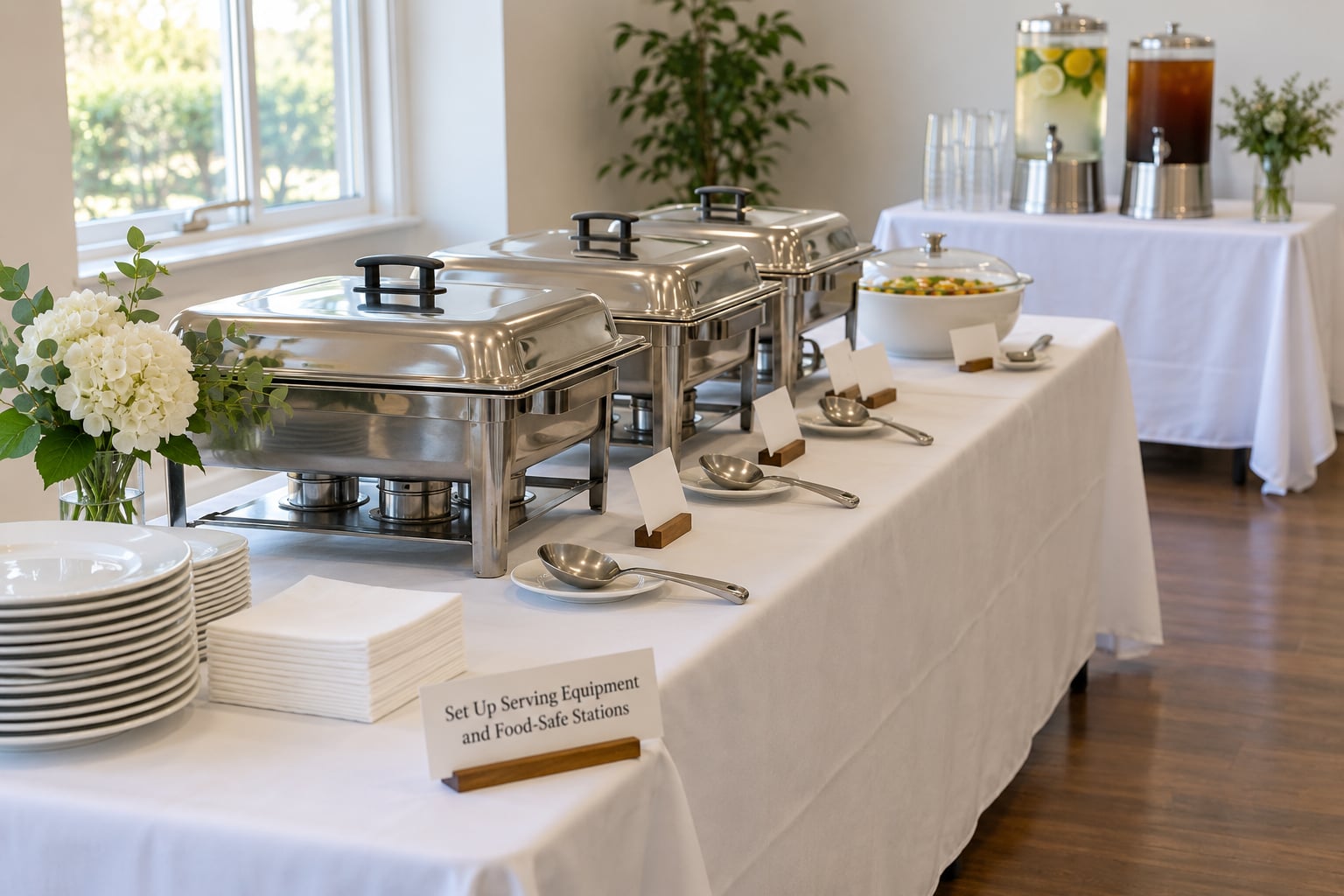
Plan the physical setup before guests arrive, while you still have time to solve problems. Count table space, serving pans, utensils, labels, napkins, plates, forks, and a trash and recycling container that isn’t in the traffic path.
Arrangement matters as much as equipment. Put plates, forks, and napkins at the start of the line, then mains, then sides and salads, then desserts at the far end so the line doesn’t back up against the dessert table. Keep the drinks station on a separate table so cups and ice aren’t blocking the food.
For any dietary-sensitive dish, use a separate serving utensil and keep it physically apart from the rest of the spread. Cross-contact happens with shared spoons long before anyone notices.
Cook food to safe internal temperatures, and check with a thermometer rather than guessing from color. Poultry reaches 165°F, ground meat reaches 160°F, and whole cuts of meat and fish reach 145°F.
Hold hot food at 140°F or above and cold food at 40°F or below. Warm dishes in the oven, slow cooker, or chafing setup, and put cold dishes on ice rather than leaving them in shallow trays on a warm table. Serve perishable dishes within two hours of being out of temperature control.
For storage, refrigerate leftovers within two hours of serving and use them within three to four days. Freeze what nobody will eat, and send guests home with labeled containers rather than stacking dishes in your sink.
7. Send a Final Plan and Do a Quick Event-Day Check
Confirm the menu, arrival times, dietary coverage, equipment, and access details with everyone before the day. Message the group with the eating time, the address or room, parking or entrance notes, and what is still open on the sign-up.
Send a reminder three days out. Short, friendly, and specific beats a long one, and it gives people a chance to bail out while you can still adjust the counts.
One hour before guests arrive, run through a short check: setup spaces clear, labels written, serving utensils and pans in place, hot food heating, cold food on ice, drinks set up with cups and ice, and a few empty storage containers on hand for leftovers. Know what the host, you, is responsible for and let everyone else know what they own.
Common Mistakes
Most of these are fixable with a small change made a week ahead.
Planning too many dishes. Six heavy entrees crowd out sides and desserts. Fix it by capping mains at one per eight to ten guests and filling the rest of the table with lighter sides.
Underestimating portions. People arrive hungry and take twice what you expected. Put the serving target in writing on the slot and ask for a nine-by-thirteen pan rather than a round dish.
Leaving dietary needs vague. “Any allergies?” in a group chat gets no useful answers. Ask directly in the invitation and confirm the details on the sign-up sheet.
Forgetting serving utensils. Require one utensil per dish in the invitation. A spoon and a covered pan travel together in the same bag.
Double-booking categories. Four pasta salads and no dessert is the classic outcome of an open invitation. Set category caps and fill the gaps yourself with drinks or sides.
Transporting food at an unsafe temperature. Use a cooler with ice packs for cold dishes and insulated carriers for hot ones, and keep the time in the temperature danger zone under two hours.
Assuming the host does everything. You should make one anchor dish and manage the setup. Everything else has an owner.
Leaving food out too long. Put out cold dishes in small batches and refill them, rather than setting out everything at once. The host’s job on day of is mostly watching temperatures and clearing plates.
Keep the plan flexible enough to absorb a cancellation. When a guest drops out, that slot is simply one more thing for you to fill, and a store-bought side or a bag of ice solves it in five minutes. That is the real reason to make the anchor dish yourself.
Frequently Asked Questions
How much food should I bring to a potluck?
For a main dish, plan on 4 to 6 ounces per adult, and a little extra for buffet refills. A nine-by-thirteen pan of a casserole or a tray of rolls feeds about 8 to 10 people. Sides generally serve 10 to 12 people per dish. If you are bringing a salad, a large bowl usually covers 10 to 12. Drinks are the most commonly forgotten item, so two to three bottles or a gallon of something cold is a safe contribution.
How do I plan a potluck when guests have dietary restrictions?
Ask about restrictions in the invitation itself, not in the group chat days later. Then build the menu so dietary needs are covered by ordinary dishes: one substantial vegetarian or vegan side, a salad with dressing on the side, and at least one dessert without nuts. Tell guests the categories already covered so nobody duplicates them, and require allergy notes on the labels. Use separate serving utensils for dishes that need them.
Should the host provide all the food for a potluck?
No. A potluck means the group shares the cooking, but the host still owns one anchor dish, usually a main, so there is something substantial to eat if a guest cancels. The host also handles setup, the serving table, and cleanup. Everything else should have a name on it. The exceptions are drinks, ice, and small staples like plates and napkins, which hosts usually cover because they are easy to forget.
How do I keep hot and cold food safe while transporting it?
Hot food travels in an insulated carrier or a cooler with heat packs. Cold food travels in a cooler with plenty of ice or frozen packs, packed tightly so the cold holds. Keep every dish out of the temperature danger zone between 40°F and 140°F for more than two hours, and refrigerate leftovers within two hours of serving. Cover everything during the drive, especially in a warm car.
What should the host do if guests bring the same dish?
Do not send anyone home with their casserole. Work with the duplicates instead of against them. Portion one of each into a smaller dish so both can be served, merge them if they are close enough to combine, or split the serving order so guests see a variety first. Then note it on the sign-up for next time. Duplicate dishes are usually a sign the sign-up sheet needs firmer category caps.
How early should I prepare food for a potluck?
Cook one or two days ahead for dishes that keep well, then chill and refrigerate them promptly. Finish and assemble one to two hours before guests arrive. Reheat close to serving time so food does not sit out, and pack hot and cold items separately for the trip. Day-of cooking only works for quick dishes, and the host ends up stuck in the kitchen instead of hosting.
Conclusion
To plan a potluck, do four things first: confirm a guest count and add a 10 percent buffer, choose menu categories instead of naming specific dishes, run a sign-up list with serving quantities and category caps, and build a preparation and serving checklist that covers cooling, transport, and holding temperatures.
A simple coordinated plan beats a fancy menu every time. Cook the anchor dish, write the quantities down, and the table takes care of itself.