
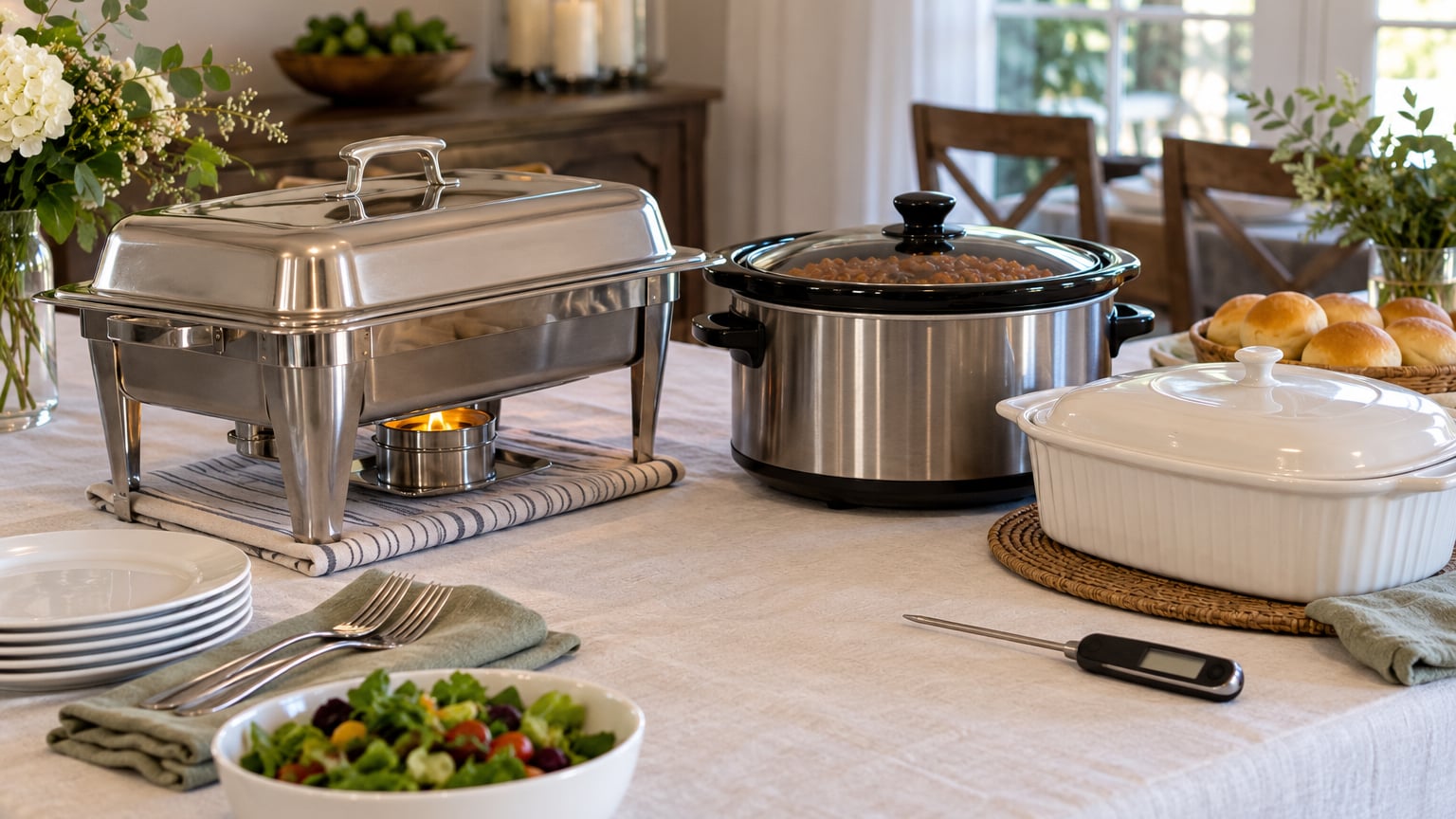
How to keep food warm for a party comes down to one rule: cook the food completely first, then hold it at 140°F (60°C) or above. A warmer holds food that is already hot, it does not cook it. Pick the equipment that matches the dish, preheat it before you load anything, and check the temperature with an instant-read thermometer so you are not guessing.
The part that catches most hosts is the lukewarm middle. A dial set to Warm sounds fine, but food sitting at 110°F for three hours is in the danger zone, not safe. Getting the method right decides whether your food arrives hot and moist or lukewarm and dried out.
Table of Contents
- What You Need to Keep Food Warm for a Party
- Step-by-Step: How to Keep Food Warm for a Party
- Common Mistakes That Cool or Dry Out Party Food
- Frequently Asked Questions
- What is the 2 hour 4 hour rule for keeping hot food?
- How long can food sit in a chafing dish?
- What setting on a slow cooker keeps food warm?
- How do I keep casseroles warm without drying them out?
- Are chafing dishes necessary for keeping food warm?
- How can I keep food warm for a party without electricity?
- Conclusion
What You Need to Keep Food Warm for a Party
Most households already own two or three pieces of this equipment. You rarely need more than that if you plan the menu around what you can hold.
- Chafing dish or chafing pan for buffets, especially outdoors. No electricity, fuel burns underneath, and the water pan turns the heat into a gentle bain-marie.
- Slow cooker or crockpot on the Warm setting. Ideal for chili, soup, pulled pork, meatballs and anything with sauce.
- Electric warming tray when you have a nearby outlet and want one dial to control.
- Insulated cooler that doubles as a transport container and a backup warmer.
- Instant-read food thermometer left in a glass of ice water. This is the single most useful item on this list.
- Serving utensils and a spoon rest for each dish, so nobody doubles-dips.
- Fuel or water as appropriate: wick or gel cans for chafing dishes, plain hot water for the water pan.
Warming the serving plates is worth doing too. Professional kitchens warm dishes before plating because a cold plate pulls heat out of the food in seconds.
Step-by-Step: How to Keep Food Warm for a Party
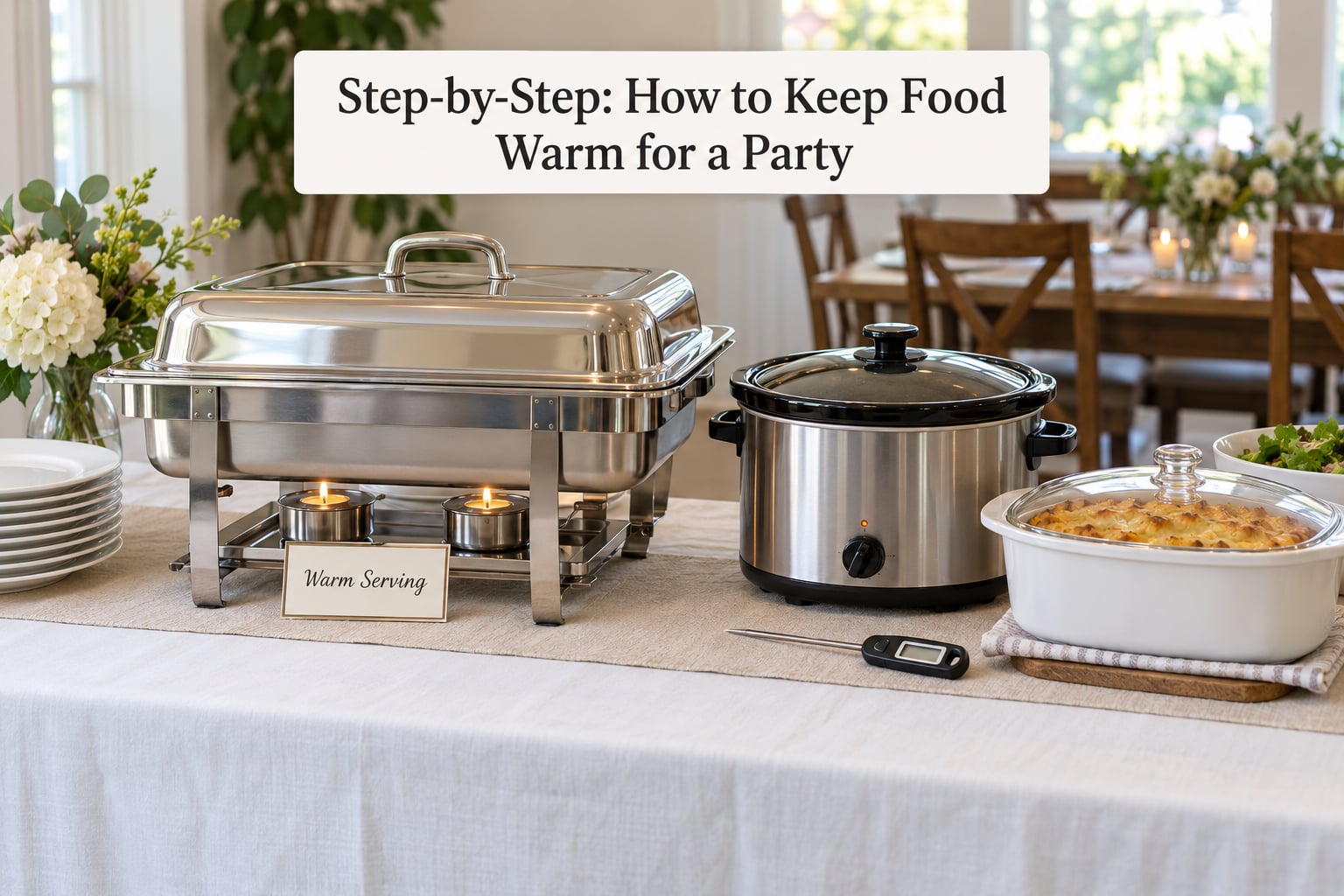
The whole process takes about an hour of active work if you start early. Here is the order that works: choose equipment, preheat it, finish cooking, transfer hot, hold and check, then replenish in smaller waves.
Choose Equipment for the Type of Food
Moist heat protects food. Dry heat preserves texture. That single distinction decides most of your setup, because soup left uncovered on a warming tray dries out in an hour, and a crisp appetizer sealed under foil goes soft in twenty minutes.
| Food | Best holding method | What to watch for |
|---|---|---|
| Soup, chili, gravy, mac and cheese | Slow cooker on Warm, or chafing dish with a water pan | Moist heat only. Loosely tent with foil and stir occasionally. |
| Casseroles and baked pasta | Chafing dish, covered foil pan, or the oven on its lowest setting | Tight foil cover traps steam and keeps the edges from drying. |
| Sliced roast, ham, turkey | Low oven or warming tray with a shallow pan of hot drippings | Slice thin, cover loosely, and keep the pan shallow so it stays hot. |
| Fried appetizers, potato skins, wedges | Uncovered warming tray, or a chafing dish with the lid propped | No cover. They steam themselves soggy in a closed dish. |
| Dips and sauces | Small slow cooker or a wide shallow pan on a warming tray | Keep portions small so you are not wasting what cools down. |
| Bread, rolls, biscuits | Low oven, or individually foil-wrapped and stacked in a slow cooker | Wrap each piece separately so steam cannot collect. |
| Rice and pasta | Covered foil pan in a warm oven, or a slow cooker on Warm | Add a splash of hot water and cover tightly to stop drying out. |
Community cooks have long used individual foil wraps for biscuits and scones so they stay warm without steaming, and a tray of sliders built from Hawaiian roll alternatives for party sliders holds better under a loose tent than stacked bare.
Preheat and Prepare the Warming Station
Preheat the vessel empty. A slow cooker that starts at room temperature needs twenty minutes on Warm before food goes in, and a warming tray left on high for ten minutes before you drop the pan on it keeps the food from shocking.
For a chafing dish, set the fuel holders first, then fill the water pan with one to one and a half inches of boiling water. The boiling water is what turns direct heat into a bain-marie, which is why a chafing dish dries food out far less than a bare flame.
Put a layer of something under any hot pan: a folded towel, a cork trivet, or a sheet pan if the table is one you care about. Then set out the utensils, spoon rests and any lids, and finish the whole station before guests arrive rather than during the first wave.
If you are staging a bigger spread, plan the flow the way you would for a DIY sandwich bar for a party, with cold items at one end and hot equipment away from the door.
Keep Food Above 140°F During Service
Check the food, not the dial. Push the thermometer into the center of the pan every half hour or so, and if it reads below 140°F you have two choices: swap in a hotter pan of food from the kitchen, or stir in a ladle of boiling liquid.
Keep dishes covered when practical, but only when the dish wants moisture. Sauces, grains and casseroles get a tight cover. Crisp items get no cover at all. Condensation is the enemy of anything with a crust.
Replenish with small amounts. Refill the pan half full rather than topping up an almost empty one, because every transfer puts fresh food into a warm vessel and keeps the temperature steady.
Transport Warm Food Without Letting It Cool
The reliable protocol is preheat, load, go. Fill an insulated cooler with boiling water, close it, and let it stand about ten minutes. Empty it, line it with towels, nest your covered hot dishes inside, and shut it. That preheated cooler holds food hot for one to two hours, which covers most drives to a potluck.
Do not seal cold food in an ordinary container and expect it to stay hot for hours. Without temperature control you are simply carrying food that slowly cools through the danger zone.
For soups and sauces headed to someone else’s house, a slow cooker filled with hot water and the sealed food container sitting in it is a solid no-electricity alternative. A quality insulated vessel is the same idea on a smaller scale, and you can see how those are built in our guide to food thermoses for soup and sandwich lunches.
Plan for Refills and Last-Minute Changes
Guests almost never arrive at once. If your party runs two to three hours, the first batch is usually fine and the last one is what people remember, so stagger it deliberately.
Put out a first wave sized for about a third of your guests, keep the rest hot in the kitchen, and refill as the pans empty. For twenty guests, that means a smaller pan on the table and a second one ready behind the counter rather than two enormous dishes going cold together.
Hold garnishes, herbs and toppings back until the last minute. They wilt fast and they look better added in front of people anyway.
Common Mistakes That Cool or Dry Out Party Food
Most disappointing party food is a fixable mistake, and they repeat year after year.
- Cold food into a warm vessel. It has to be fully cooked and steaming before transfer. Loading a cold casserole into a hot chafing pan drops the whole vessel and wastes the fuel.
- Forgetting the water pan. Without boiling water underneath, a chafing dish is just a slow broiler and dries your food out.
- Sealing crisp food. Foil over fried appetizers, potato skins or crisp breads traps steam and ruins them. The fix is a loose tent or no cover at all.
- Assuming Warm means hot. Warm holds, it does not reheat. A dish that comes straight from the refrigerator needs cooking on Low first, then transfer to Warm.
- One enormous batch. A full pan stays hot longer than a part-full one you keep refilling, and one big pan means one big casualty if something goes wrong.
- Filling pans to the brim. Leave room for stirring, and for the steam to escape before you put the lid on.
- Opening the oven constantly. Each check costs you 20°F or more and adds several minutes to recovery. Check twice, with a thermometer, not every few minutes.
- Leaving food on the counter. Perishable food sitting at room temperature for more than two hours gets discarded, and one hour is the limit above 90°F outdoors.
One more worth knowing: warming mats and small electric warmers get mixed reviews from owners, and plenty of experienced hosts go back to cast iron cooked extra hot and held off to the side. That works because hot cast iron radiates heat for a long time and you can pick it up and move it.
Frequently Asked Questions
What is the 2 hour 4 hour rule for keeping hot food?
It is the USDA and FoodSafety.gov rule on how long perishable food can sit in the danger zone, the range between 40°F and 140°F (4°C and 60°C). Food kept hot at 140°F or above is fine for the length of the event. Food left at room temperature should be discarded after two hours, or after one hour if the air is above 90°F (32°C). The exception is if the food was kept below 40°F or above 140°F the whole time.
How long can food sit in a chafing dish?
As long as the water pan still has boiling water and the thermometer reads 140°F or above, food can safely sit in a chafing dish for the whole party, often three to four hours. Check the fuel and the water level at the two-hour mark. If a dish drops below 140°F and you cannot bring it back up quickly, discard it rather than serving it lukewarm.
What setting on a slow cooker keeps food warm?
Use the Warm setting, which typically runs between 140°F and 190°F depending on the model. Warm is a holding setting, not a cooking setting. Food that comes out of the refrigerator needs to be brought up to temperature on Low or High first, which is why the USDA advises against reheating food in a slow cooker.
How do I keep casseroles warm without drying them out?
Use moist heat: a chafing dish with a boiling water pan underneath, or the oven on its lowest setting with the casserole covered tightly in foil. A tight cover traps the steam that keeps the edges from crusting over. Adding a splash of hot water or broth and re-covering it resets a casserole that has gone tight.
Are chafing dishes necessary for keeping food warm?
No. They are the best option when you have no nearby outlet, when you are serving outdoors, or when you want a buffet that handles several dishes at once. At home, a slow cooker on Warm and an oven on its lowest setting cover most menus. The rule to keep is the temperature, not the equipment.
How can I keep food warm for a party without electricity?
Fuel chafing dishes and preheated insulated coolers both work with no power at all. Fill a cooler with boiling water, stand it ten minutes, empty it, nest covered hot dishes inside and close it. It holds for one to two hours. Fuel cans come in two, four and six hour burn times, so bring a spare can for a long party.
Conclusion
Start with the equipment, not the menu. Match each dish to a holding method based on whether it needs moisture or needs to stay crisp, then preheat that equipment before anything goes in.
Cook every dish completely first, transfer it hot, and check the center with an instant-read thermometer until you have trained your eye to trust the reading over the dial. Then serve in waves and keep the rest hot in the kitchen, and you will have food that is still hot and still moist when the last guest sits down.