
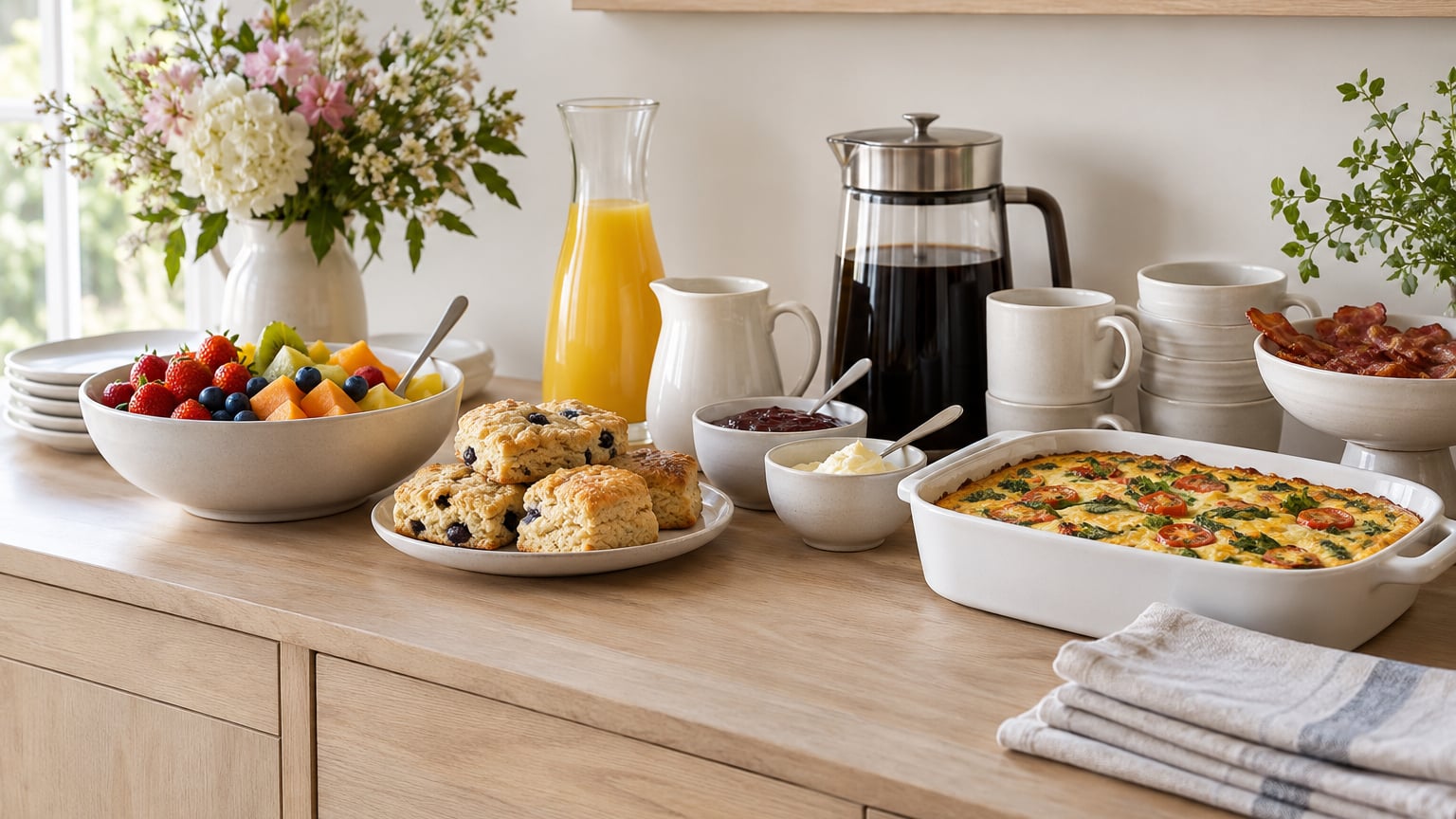
Learning how to host a brunch party at home is mostly a planning problem, not a cooking problem. Pick one make-ahead main, two supporting dishes, one sweet item and a drink, cook almost everything the day before, then set up a self-serve layout so guests serve themselves. Most first-time hosts spend 90 minutes in the kitchen on the day and the rest of the morning actually at the table.
The honest version: 10 to 12 people is the sweet spot for a home brunch. Below four it feels like breakfast, above 16 the food arrives faster than you can reheat it. This guide walks through guest counts, a portion guide, an hour-by-hour timeline, safe serving temperatures and a cleanup plan.
Table of Contents
What You Need
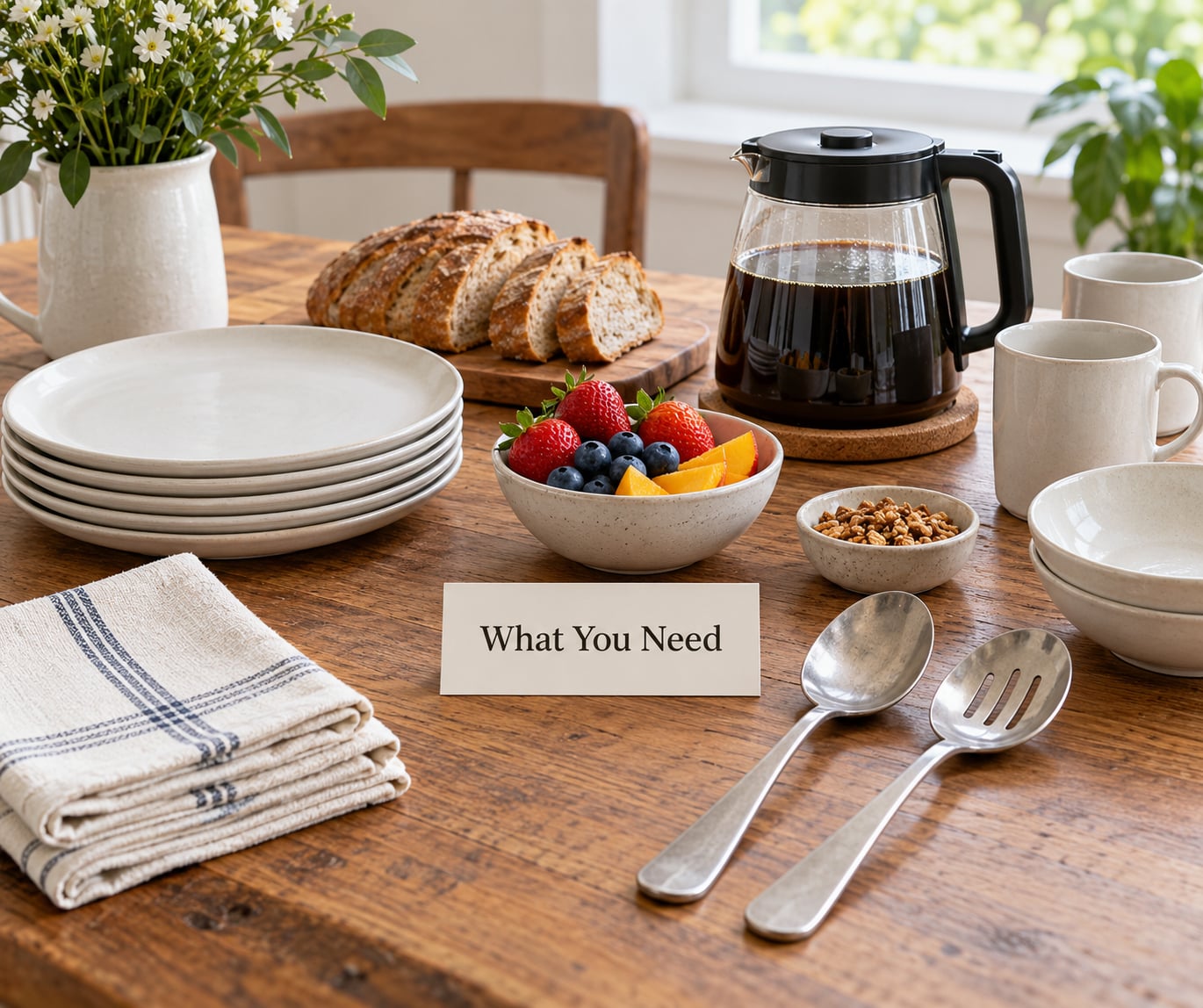
The menu rule is what keeps this manageable: one main dish, two supporting foods, one sweet item and one drink. Readers on home hosting threads keep landing on the same winners, a bagel or yogurt board, one hot dish, and coffee with a mimosa setup. Anything past that list and you will be standing at the stove when people arrive.
- Guest count and invitations. Decide the number before you plan food, then give guests a 30-minute arrival window instead of one hard start time.
- A written menu with quantities. One page in your phone is enough. Include what each dish needs, including the baking dish, so nothing hides in a cupboard.
- Serving equipment. One large platter or board per dish, a serving spoon or tongs for each, a small knife, a cutting board for anything sliced at the table, and a few extra plates for seconds.
- Food-safe prep tools. A reliable refrigerator thermometer, shallow containers for cooling leftovers, separate boards for raw meat and ready-to-eat food, and an instant-read thermometer.
- Drink gear. A coffee carafe or insulated pot, mugs or glasses, ice, and two carafes if you are doing sparkling drinks. Non-drinkers need something that looks like a drink, not a glass of tap water.
- Decor. Enough of it to look intentional in one area rather than evenly everywhere. Flowers in a jam jar and a candle on the coffee station do most of the work.
- A timeline. Written on paper, stuck on the refrigerator. This is the item people skip and then regret.
Step-by-Step: How to Host a Brunch Party at Home
How to Host a Brunch Party at Home: Plan the Guest Count and Timing
Finalize your headcount before you write the menu, because every quantity scales off it. Set your arrival window rather than a single time. Most hosts invite people between 10:30 and 11 for an 11:00 brunch, which means food goes out when the last person walks in, not when the first one arrives.
A reliable portion rule for a mid-morning meal is one main serving, two supporting servings and one sweet serving per guest, then add roughly 15 percent if you expect second helpings or a group that eats out of a big shared casserole.
| Item | Per guest | For 8 guests |
|---|---|---|
| Eggs | 2 eggs | 16 eggs |
| Bread or rolls | 1 slice or 1 roll | 8 slices or rolls |
| Protein (sausage, bacon, salmon) | 2 to 3 oz | 1 to 1.5 lb |
| Fruit | 1/2 to 1 cup | 4 to 8 cups |
| Pastry or sweet bake | 1 item | 8 items |
| Coffee | 1 to 2 cups | 8 to 16 cups, about 2 pots |
| Juice | 3/4 cup | 1.5 qt |
Build your schedule backward from arrival. If guests arrive at 11:00 and the main dish needs 35 minutes, it goes in the oven at 10:25. Once you know that one number, work out the rest and write it down.
Build a Simple Brunch Menu
A basic brunch menu covers six slots: a savory main, an egg dish, a bakery item, a sweet bake, fruit, and drinks. Fill the savory main with something that improves overnight, like a breakfast strata, a quiche, a frittata or a French toast casserole.
| Slot | Example | Make-ahead friendly |
|---|---|---|
| Savory main | Quiche, strata, frittata | Yes, bake the night before |
| Egg dish | Baked French toast squares | Yes, assemble night before |
| Board | Bagels, schmears, lox, capers, pickles | Partly, assemble morning of |
| Fruit | Seasonal cut fruit or melon | Cut night before, citrus on top |
| Sweet | Scones, muffins, coffee cake | Yes, freeze up to a month |
| Drinks | Coffee, tea, juice, sparkling water | Yes, brew ahead |
For a vegetarian group, swap the meat side for roasted mushrooms, a second frittata with different vegetables, or smoked salmon. If you want a platter to carry the whole table, our guide to how to make a deli platter at home that looks catered covers the arrangement side.
Skip anything that needs last-minute attention: flipping pancakes, cutting individual waffles, or a build-your-own taco bar where the guest does the work while you stand there. Those turn a host into a line cook, which is exactly the complaint you hear most.
Prepare Food Safely and Ahead of Time
Food safety is the one part of a brunch host’s job that is non-negotiable, and brunch is riskier than dinner because guests eat at room temperature while they talk.
Cook to a thermometer, not to a timer. Poultry needs an internal temperature of 165°F, ground meat 160°F, and whole cuts of meat or fish 145°F. Let poultry and large roasts rest about 15 minutes before slicing so the juices settle instead of running across the platter.
Keep hot food at 140°F or above and refrigerate perishable food within two hours, or within one hour if the outdoor temperature is above 90°F. On a warm patio that hour matters, and it is the most common mistake of all: a platter sitting out for three hours because nobody wanted to interrupt the conversation.
Cool leftovers in shallow containers rather than one deep bowl, then refrigerate them promptly. Whole fruits, sealed condiments and unopened baked goods keep longest, which matters when you are planning what to eat the next day.
Set Up the Brunch Table and Serving Area
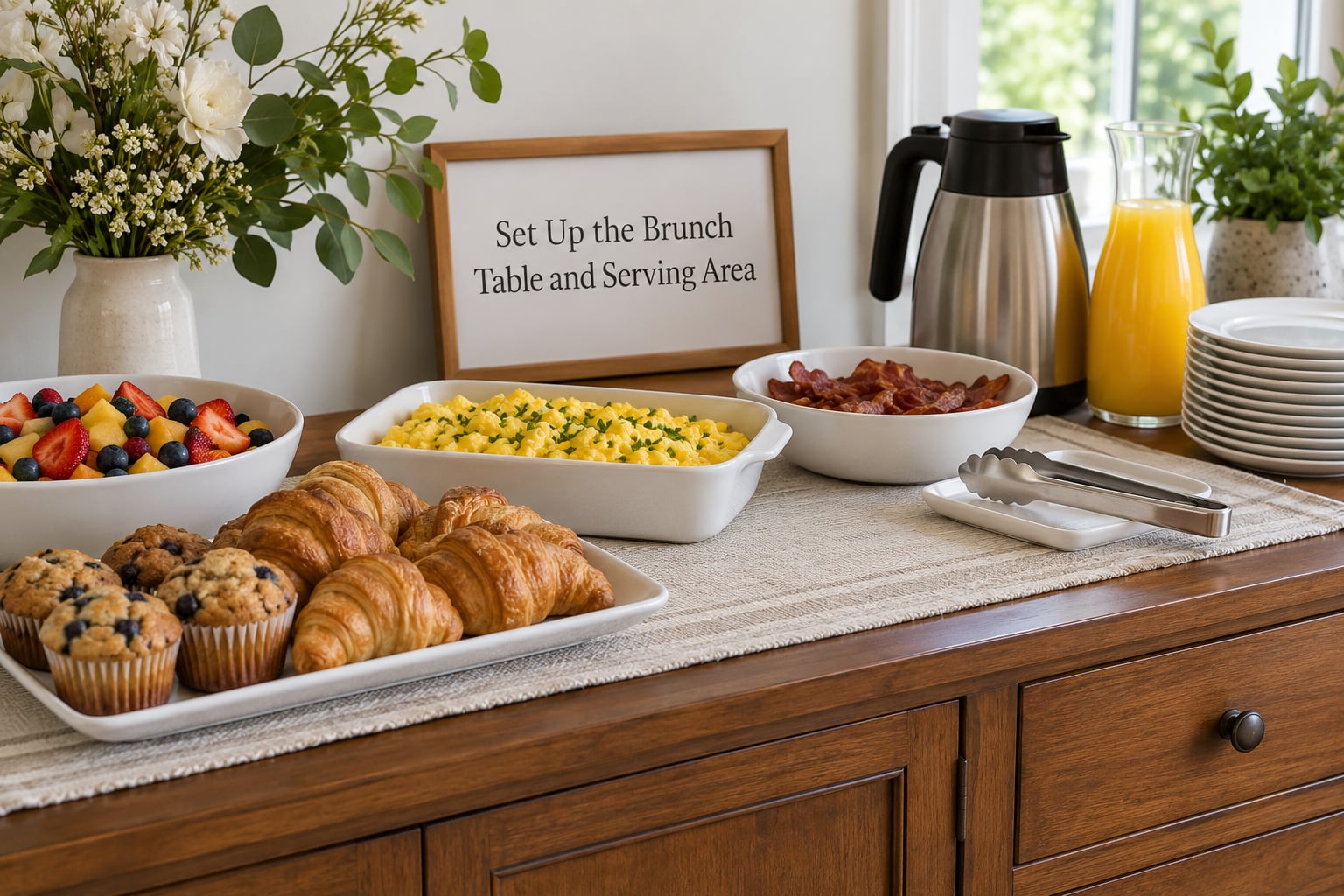
Put drinks at one station away from the food. A carafe of coffee, a pot of tea, a jug of juice and ice in a tub keeps the traffic line moving and stops people from circling the main table three times for a refill. If you want the drinks to feel like an event rather than a chore, our piece on setting up a DIY sandwich bar for a party applies to the same logic in reverse, where the guests assemble instead of the host.
Put the hot dishes on the table and the cold boards on a sideboard, with one serving utensil per dish. Place the knives and cutting board next to anything that gets sliced at the table, and napkins within reach of both stations.
Leave a clear path from the table to the kitchen and to the bathroom. If a table is too small for everything, stand a buffet line on a counter and put plates at the start of it. That single move fixes most crowding problems in apartments and small dining rooms, where a line along a wall beats trying to squeeze six platters onto one table.
Guard the hot dishes by setting them at one end of the line and never on a path. Serving them last, or on a trivit in the middle of the table away from the walk-through, keeps kids and guests from crowding one spot.
Host Without Spending the Whole Day in the Kitchen
Do a food check 30 minutes before arrival: probe the main dish to confirm it is holding temperature, look at the cold board for anything that looks dull or watery, and confirm the coffee pot is full and hot. That one check is the difference between a calm morning and a scramble at 11:05.
During the party, stay on the floor. Sit down, refill the coffee pot on a schedule rather than on request, and bring out second helpings in small waves so you are not walking back and forth holding a hot dish. Guests who ask about ingredients or allergies get a straightforward answer at the table, and keeping every dish in its own serving vessel makes that answer easy because you can point rather than explain.
If you did not get dietary questions beforehand, ask them early and casually, ideally as guests arrive and before anyone eats. One honest note with the menu beats improvising a substitute with your hands full.
Finish the Party and Reset the Home
Wrap up on a clear signal. Around the two-hour mark, start moving plates toward the kitchen so guests read the room and drift out, and stop offering seconds 20 minutes before you would like the last person gone.
Leftovers need a plan before the first guest leaves, not after. Scrape what is left into shallow containers, refrigerate within two hours of being served, and pull out the items you will use tomorrow first, starting with dips, pastries and cut fruit. Hard-boiled eggs and baked goods keep the best; avoid sending guests home with a container of food that sat out the whole party.
Then clean in order: hot dishes and cutting boards first, then glassware, then plates, then a quick wipe of surfaces and a sweep of the floor. Move everything that is not storage-safe into one bin near the sink rather than back into the cupboard, and leave the rest to run in the dishwasher. Wipe down counters, empty the ice bin, and stack serving pieces by the sink. The goal is not a finished room, it is a room that is not actively dirty when you go to bed.
Common Mistakes
Planning too much food is the first mistake and the most common. Hosts consistently over-buy and end up throwing food away, which is both a waste and a reason to feel bad about a party that went fine. Fix it by counting actual guests, using the portion table, and skipping the sweet item if you already have a pastry and a coffee cake.
Cooking everything on the day of is the second. Two dishes that need you at the stove after guests arrive is one too many. Bake your main the night before, freeze anything that freezes well, and treat reheating as your only day-of cooking.
Crowding the table is the third. When everything lands at once, nobody can reach anything and guests stand in a traffic jam. Fix it by moving drinks off the table entirely and using a buffet line for the hot dishes.
Letting food sit at the wrong temperature is the fourth, and the only one that can make guests genuinely sick. Keep hot food above 140°F, keep cold food cold, and set a timer so perishable items get refrigerated within the two-hour window, one hour in heat above 90°F.
Forgetting dietary accommodations is the fifth. One guest with a nut allergy or a vegetarian in a group of twelve turns a planned menu into scramble at the last minute. Fix it by asking when you send the invitation and by serving the meal deconstructed, so nobody has to compromise on a single plate.
Running out of serving utensils is the sixth. It sounds minor until you are holding a hot casserole with nowhere to put it. Bring one more utensil than you think you need, and put the spare in with the spare plates rather than in a drawer.
If you want to cut the stress further, pick a no-cook brunch: a yogurt or bagel board, fruit, pastries, coffee and sparkling drinks. Guests assemble their own plates, cleanup is a bin rather than a sink, and if you are curious whether a store-bought option is worth it, we break down whether a pre-made party platter holds up on a per-person basis.
Frequently Asked Questions
How long should a brunch party last?
Plan for roughly two to two and a half hours for an adult brunch. Invite people to arrive across a 30-minute window so latecomers still get hot food, and put the main dish out when the last guest is likely to walk in. If you are hosting families with small children, consider a 9:30 to 11:30 second breakfast so everyone is home for lunch and naps.
How much food should I plan per guest?
Budget one main serving, two supporting servings and one sweet serving per guest, then add about 15 percent if you expect second helpings. In practice that is two eggs, two to three ounces of protein, one slice of bread or roll, half a cup to a cup of fruit and one pastry each. For eight guests, that works out to 16 eggs, a pound of sausage and roughly two full pots of coffee.
What can I make the day before for a brunch?
Strata, French toast casserole, quiche, frittata, muffins, coffee cake and any salad dressing all hold up well overnight. Muffins and coffee cakes can even be baked a month ahead and frozen. Chop fruit and mix the dressing the night before, but add citrus to cut fruit so it stays bright. Reheat savory dishes at 325°F and add a splash of liquid so they do not dry out.
How do I host brunch when guests have dietary restrictions?
Ask when you send the invitation, then serve the meal deconstructed so nobody needs a special plate. Put cheese, meat and toppings in separate bowls beside the base rather than combining them, and label anything that matters. A build-your-own board, taco bar or yogurt station handles vegetarian, gluten-free and nut-free guests with one menu instead of two.
What should I do with leftover brunch food?
Refrigerate perishables within two hours of being served, using shallow containers so they cool quickly. Hard-boiled eggs, baked goods, unopened condiments and whole fruit keep best, so pull those out first for the next morning. Baked dishes like quiche and strata reheat well in a 325°F oven for about 20 minutes. Pass along dips and pastries rather than handing out a dish that sat out the whole party.
Conclusion
Start with the three decisions that cost nothing: fix your guest count, set your arrival window, and lock a menu of one main, two supporting dishes, one sweet and one drink before you open a browser to shop. Everything after that is execution, and the execution is mostly the night before, a 30-minute food check, and a self-serve setup that keeps you in the room with your guests.
A home brunch works when the food is safe, the portions are planned and nobody is waiting on the host to slice something. Get those three right and the morning takes care of itself.