

Tipping etiquette at restaurants in the US comes down to one habit: paying your server extra after you eat, because their wage depends on it. A tip is optional in the legal sense, and the customary range is 15 to 25 percent of the pre-tax bill, adjusted for how the meal actually went.
I have eaten out in this country for years, and the awkwardness almost always comes from people being unsure about two things: how much, and when. Nobody is tracking whether you tipped 18 or 22 percent. Servers are, though, and so are the people working the counter with you in line.
So here is the practical version, written for diners. Where the customs vary by city or restaurant, I will say so, because there is no single national tipping law to memorize.
Table of Contents
- What Is Tipping Etiquette at Restaurants in the US?
- How Much Should You Tip at a US Restaurant?
- When Should You Tip?
- How Do You Tip With Cash or a Card?
- Should You Tip When a Restaurant Adds a Service Charge?
- What If the Service Is Poor?
- Common Tipping Situations and What to Do
- Frequently Asked Questions
- A Simple Tipping Rule of Thumb
What Is Tipping Etiquette at Restaurants in the US?
Tipping in the United States means giving a gratuity to the person who served you, on top of what the bill already says. It is voluntary, and it is calculated as a percentage of the bill rather than any fixed sum.
Two details explain almost everything else. First, the percentage is based on the food and drink subtotal before tax, not on the total you hand over with your card. Second, servers in many states may legally be paid a lower hourly base wage, with tips counted on top to reach the state’s minimum wage. That is why the gesture carries weight here in a way it does not in most other countries.
Nothing obliges you to tip. Common expectation is what makes it feel mandatory, and treating a tip as automatic turns a custom into a resentment.
How Much Should You Tip at a US Restaurant?
Here is the reference most diners work from, based on the pre-tax subtotal.
| Service level | Customary tip on the pre-tax subtotal | What it looks like |
|---|---|---|
| Satisfactory | 15 percent | Food arrived, drinks refilled, nobody hovered |
| Good | 18 percent | Attentive without hovering, sensible recommendations |
| Very good | 20 percent | Knowledgeable wine advice, timing handled well |
| Exceptional | 25 percent or more | A birthday dinner rescued, a serious allergy handled perfectly |
These are customs, not rules. Nobody is keeping score, and a 15 percent tip on a Tuesday lunch is not a social offense.
How to calculate a restaurant tip fast
Move the decimal point. Ten percent of any subtotal is the same number with the decimal shifted one place left: a 64 dollar subtotal makes 6.40 at ten percent. Double that for twenty. For eighteen, take ten percent plus half of ten, which on 64 dollars is 11.52. Most people carry a round figure anyway, so rounding to the nearest dollar usually costs nothing.
On a 200 dollar dinner, twenty percent comes to 40 dollars. On a 500 dollar check with wine, the same twenty percent is 100 dollars, which is worth remembering before you order the bottle.
When Should You Tip?
At a full-service restaurant, the moment is simple: as you settle the check. Hand the card or the cash over with a tip already worked out, or write it on the receipt line if one is offered.
Other common moments:
- Counter service. You tip when you pay at the register, especially when the person who takes your order also makes it, bags it and hands it over.
- Bar tabs. Tip when you settle the tab rather than with each round, unless you are running a tab and want to spread it out.
- Delivery. The tip goes through the app, added before you pay, and it is the only compensation part of the order.
- Fast casual with table numbers. Sometimes you pay a register and sometimes a server comes to the table. Pay whoever brought the food.
Fast-casual spots that hand you a bag at a window generally do not expect a tip, and a tip jar at the register is a suggestion rather than an obligation.
How Do You Tip With Cash or a Card?
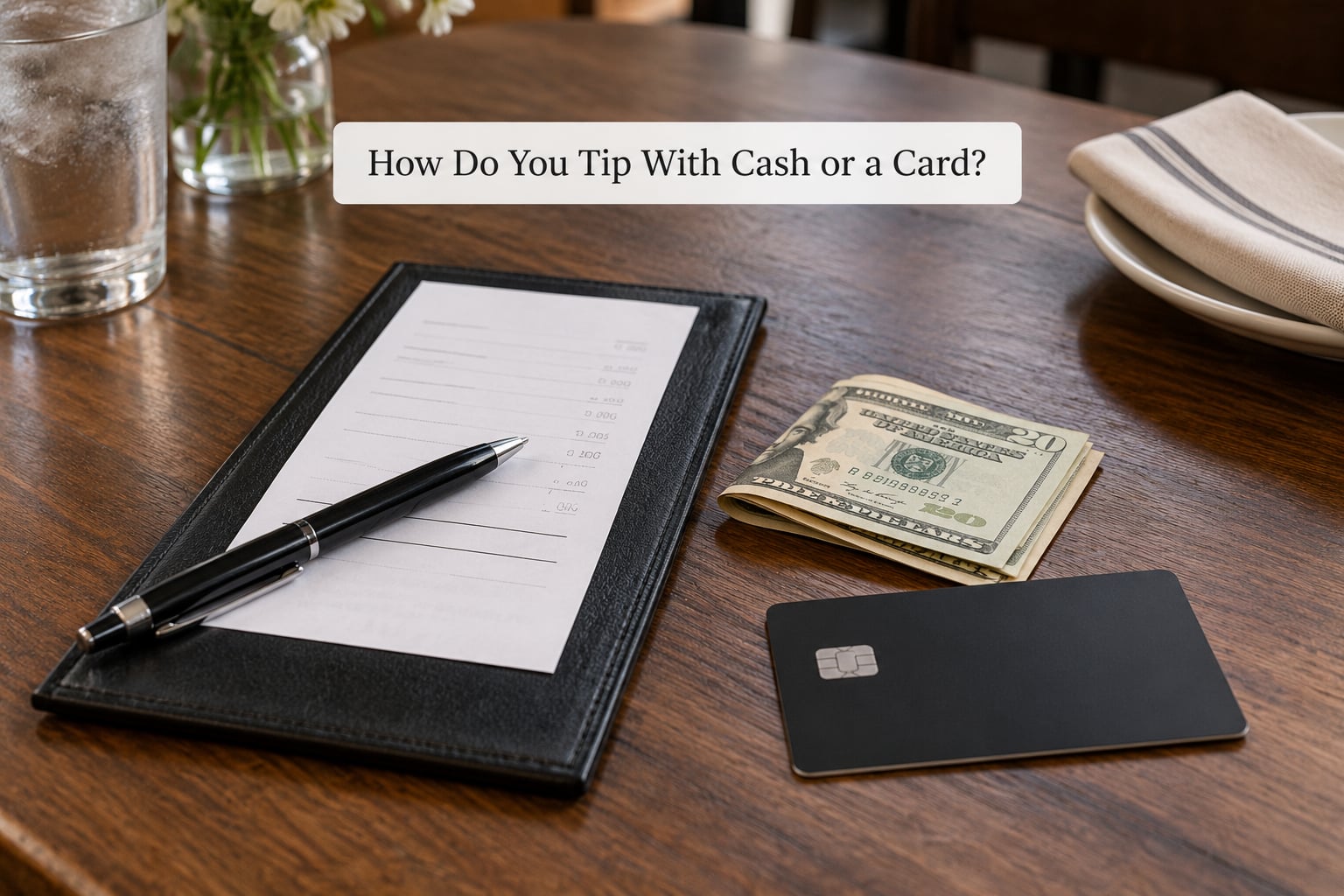
Cash remains the cleanest option because the server receives it directly and nothing gets deducted. Leave it folded on the table, or hand it to the server with a clear “keep this.” Handing over cash without a word of explanation is how people accidentally tip the wrong person at a busy station.
With a card, most restaurants now use a handheld terminal at the table. It will ask for a tip, so decide beforehand rather than in front of your server. Writing on a paper receipt still works: put the dollar amount in the tip line, write “total” on the next line with the whole amount, sign, and hand it back with your card.
One rule people get wrong: leave a comment about the tip only when you mean it, and never attach a message to a card payment without telling the server first. They cannot read it, and the note travels to a processor.
Should You Tip When a Restaurant Adds a Service Charge?
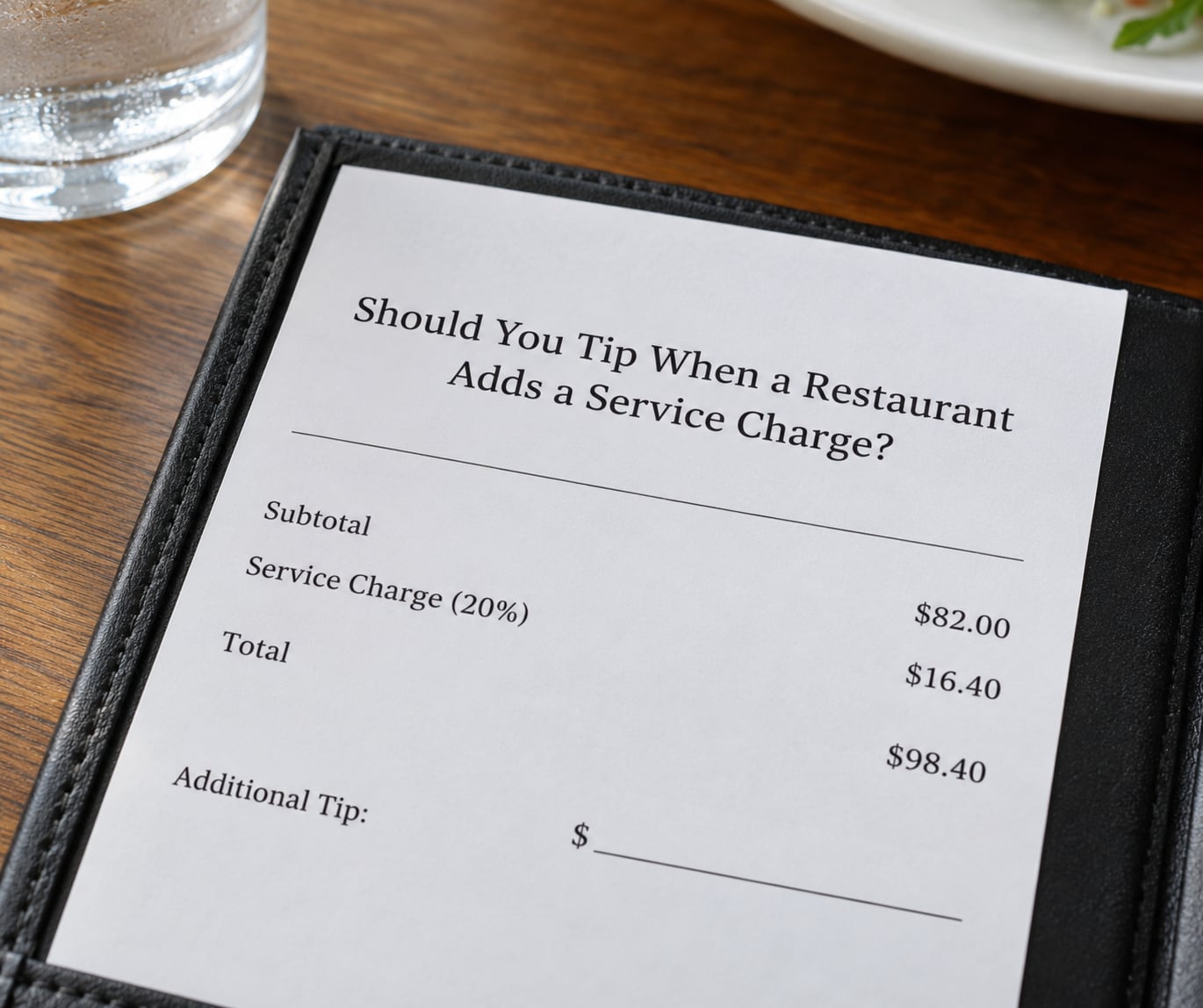
Read the bill before you tip. A service charge is added automatically and legally belongs to the establishment, and in some states it must be shared with the staff who worked the shift. A tip is voluntary and goes to one person. They are different things with confusingly similar names.
An automatic gratuity, often added for parties of six or more, is technically a tip the restaurant is passing along to staff. It usually shows up as its own line, sometimes with wording that explains where the money goes.
So what should you do? If the line says service charge or gratuity, add nothing unless the service disappointed you. If it says something vaguer, ask the server or the manager who receives it before assuming you owe more. A two-minute question at the table settles it faster than guessing.
What If the Service Is Poor?
Tie the tip to what you actually experienced. Twenty percent for good service and fifteen for service that dragged is a perfectly reasonable range, and adjusting downward is not a character flaw.
Avoid zero as a punishment. It reads as a public rebuke in front of a table of coworkers, and it communicates with the whole room rather than with the person responsible. If the problem is serious, say something while it is happening, or ask for a manager. Most managers will fix a wrong order, take something off the bill or bring a good server over. That conversation helps you far more than a shaved percentage does.
Common Tipping Situations and What to Do
Takeout. Optional. A tip jar or a prompt on the pickup screen invites one, and regulars often leave a few dollars for the person who handled the order.
Delivery. Customary, because the driver supplies the vehicle, the fuel and the time. Ten to twenty percent of the order total is normal, and the app’s preset buttons usually sit in that range.
Bars. Tip per drink for a mixed drink or a pour, roughly a dollar or two, or settle up on the tab at the end instead. Both are normal.
Buffets. Usually optional, since there is little table service. The tip jar at the register asks you to pass along a share of what you ate to the kitchen and buss staff.
Large groups. Check for an automatic gratuity before the meal starts. If none appears and you are eight or more, ask whether the server can accept a tip on the card later, because adding one to a printed receipt after everybody has gone is not realistic.
Holidays and birthdays. Extra tipping on a celebration is a nice touch, but a dessert with a candle written on it is also worth noticing. Small and sincere beats large and showy.
Split checks. One person may pay the tip and let the group cover it, or each guest calculates their own share from the subtotal. Agreeing on this at the start avoids the awkward recalculation at the table.
Tipping for coworkers. For a coworker covering your shift, a shared tip jar split among everyone who worked is the fair approach.
Frequently Asked Questions
Is 20% the standard tip in the US?
Twenty percent has become the most common tip for good service, and servers frequently report it as their expectation for a normal table. Fifteen percent remains acceptable for average or quick service. Treat both as customary ranges rather than rules, and base the number on the pre-tax subtotal.
Do I need to tip if the restaurant adds a service charge?
Usually not. A service charge or automatic gratuity is added automatically and is treated differently from a voluntary tip, often being shared with the staff who worked the shift. If the wording is unclear, ask your server or the manager who actually receives the money before adding anything on top.
Should I tip on a takeout order?
It is optional at a typical fast-casual window, since nobody serves you at a table. If a tip jar sits at the register or the pickup screen asks, a few dollars is a reasonable gesture for the person who took and bagged your order. Nobody will think less of you for passing, though.
How do I write a tip on a credit card receipt?
Write the tip amount on the line marked tip or gratuity, then write the full amount you are paying on the total line, sign the back if the restaurant asks for it, and hand the slip over with your card. Writing the same number twice means your server receives nothing.
Can I tip less than 15% when service is bad?
You can, and fifteen percent is a customary floor rather than a moral obligation. Adjust downward for slow or careless table service. Skip the zero tip, which reads as a public rebuke, and instead raise a real complaint with a manager so the problem gets addressed by someone who can fix it.
Do restaurant owners pay their servers enough that tips matter?
It varies enormously. Many states allow employers to pay a lower base wage to tipped workers and count tips toward the minimum wage, so in some restaurants tips form a large share of take-home pay. In others with higher base wages and no tip credit, tips are a genuine bonus. That gap is a live debate in the industry.
A Simple Tipping Rule of Thumb
Read the bill first, because a service charge changes what is expected. Then calculate fifteen percent of the pre-tax subtotal, round up to a sensible dollar figure, and move toward twenty if the service earned it.
Beyond that, judge the person rather than the rule. The server refilled your water, remembered the allergy, and never rushed you. That is worth more than any table of percentages, and on most bills the difference comes out to a few dollars anyway.