

The best easter brunch menu ideas follow one rule: mix categories instead of piling up egg dishes. Pick one savory main, one breakfast carb, one salad or roasted side, two or three sweets, and a drink, and you get a table that looks generous without cooking five separate breakfasts.
The ten ideas below lean on spring produce and dishes that hold well, so they survive a buffet line and a slow-arriving crowd. Most of the savory options can be assembled Saturday night and baked or reheated while the coffee brews on Sunday morning.
Table of Contents
- Easter Brunch Menu Ideas at a Glance
- 1. Baked Ham, Egg, and Cheese Croissant Sandwiches
- 2. Herb and Cheese Sheet-Pan Eggs with Seasonal Vegetables
- 3. Lemon Ricotta Pancakes with Fresh Berries
- 4. Savory Spring Asparagus and Avocado Tartines
- 5. Classic Deviled Eggs with Four Flavor Variations
- 6. Build-Your-Own Bagel Brunch Board
- 7. Sausage, Egg, and Potato Breakfast Pizza
- 8. Fresh Fruit, Yogurt, and Granola Parfaits
- 9. Make-Ahead Potato and Cheddar Breakfast Casserole
- 10. Elegant Spring Pasta and Salad Bar
- Frequently Asked Questions
- Conclusion
Easter Brunch Menu Ideas at a Glance
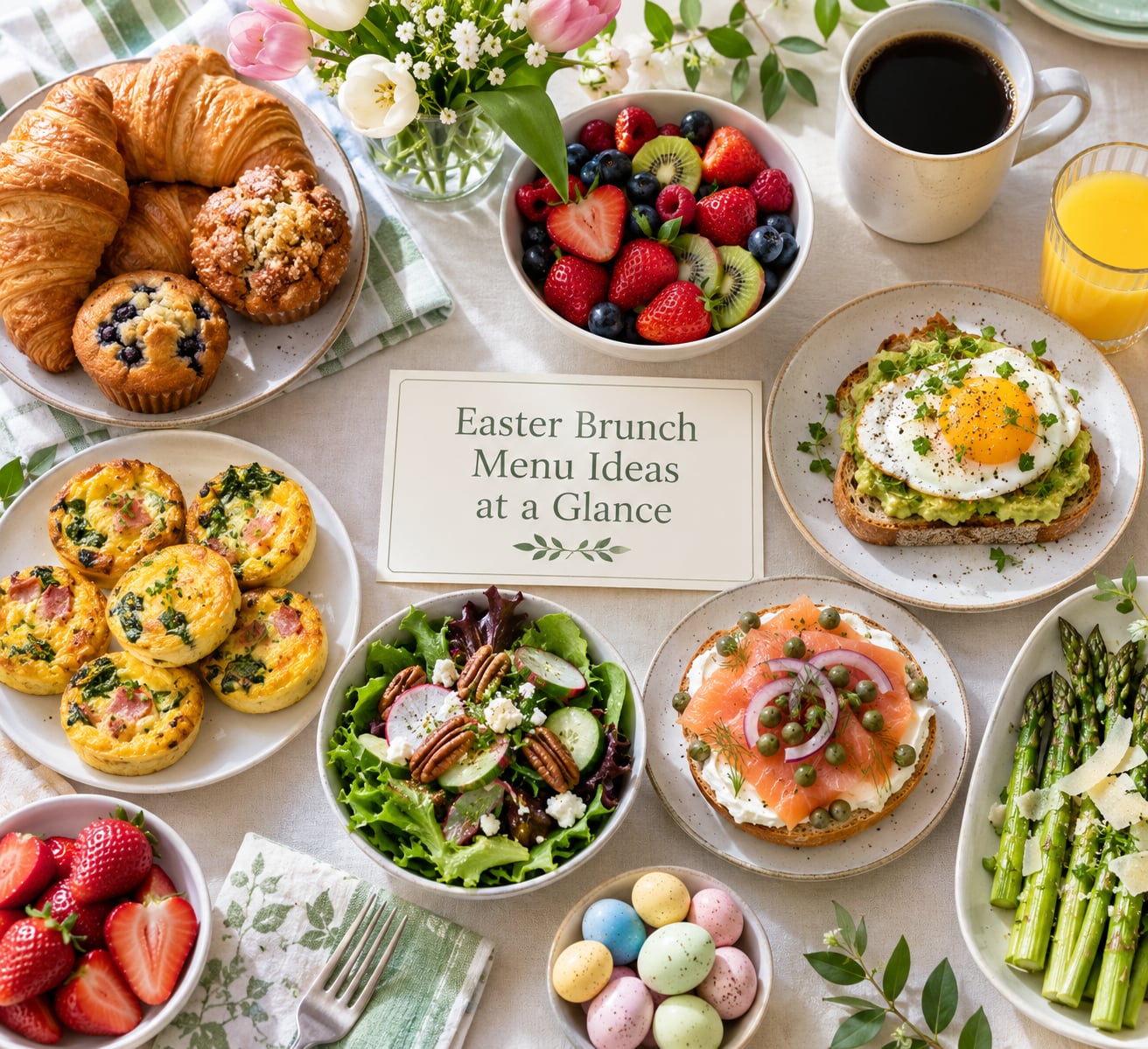
These ten dishes cover every part of a brunch table, from the savory centerpiece to the tray of pastries nobody wants to skip. Match each one to the effort and serving style that fits your morning.
| Menu idea | Category | Prep effort | Serving style | Best for |
|---|---|---|---|---|
| Croissant ham, egg and cheese sandwiches | Savory main | Low | Handheld, buffet tray | Feeding a crowd fast |
| Herb and cheese sheet-pan eggs | Savory main | Low | One pan, table center | One-pan mornings |
| Lemon ricotta pancakes | Breakfast carb | Medium | Stacked at table | A lighter sweet option |
| Asparagus and avocado tartines | Light main | Low | Passed plates | Lunch-style brunches |
| Deviled eggs, four ways | Finger food | Low (make ahead) | Buffet platter | Make-ahead hosting |
| Build-your-own bagel board | Interactive main | Low | Self-serve | Mixed diets at one table |
| Sausage, egg and potato pizza | Savory main | Medium | Sliced, table center | Using leftover ham or sausage |
| Fruit, yogurt and granola parfaits | No-cook option | Low | Individual cups | Kids and no-cook days |
| Potato and cheddar casserole | Make-ahead main | Low | Casserole dish | Overnight prep |
| Spring pasta and salad bar | Lighter spread | Medium | Buffet bar | Lunch-length gatherings |
How many dishes do you actually need?
Plan for three substantial dishes, not six. For a group of 8, cook one savory main, one carb, one sweet and one salad, then add fruit, bread and coffee. That covers the table without leaving you with a week of leftovers.
Almost every host I know over-buys first and boxes up food nobody wanted the next day. Ordering the menu by category instead of by recipe count is the fix.
1. Baked Ham, Egg, and Cheese Croissant Sandwiches

Croissant sandwiches are the fastest centerpiece on this list, and they are the one dish most guests can eat standing up. Cut a croissant in half, fill it with scrambled eggs, folded ham and a slice of cheese, and bake until the cheese melts.
Let the croissants come to room temperature before filling so they stay flaky, and bake them at 375F for 12 to 15 minutes. Scramble the eggs first, because raw egg going into a hot oven gives you uneven results and a rubbery texture.
Because this is an egg dish with ham, cook the eggs to 160F, and heat any poultry-based ham or egg filling to 165F before it goes in. Assemble and refrigerate up to 24 hours ahead, then bake from cold with 5 extra minutes.
If the Easter ham is big enough that you have slices left over, our leftover ham sandwich ideas cover what to do with them through the week.
2. Herb and Cheese Sheet-Pan Eggs with Seasonal Vegetables
Sheet-pan eggs are the answer when you want one pan and almost no washing up. Hollow out wells in roasted asparagus, tomatoes and peppers, crack in the eggs, scatter on feta or grated Gruyere, and bake at 400F until the whites are set and the yolks still move.
Watch the timing closely, because the vegetables brown before the eggs finish and an overbaked yolk turns the whole tray rubbery. Pull the pan when the whites look matte and the yolks are still glossy, around 10 to 14 minutes depending on how deep your wells are.
Roast the vegetables 10 minutes first if they are thick, then add the eggs. Cook eggs to a minimum internal temperature of 160F, and let the pan rest five minutes before serving so the yolks set slightly and the tray survives the walk to the table.
3. Lemon Ricotta Pancakes with Fresh Berries
Lemon ricotta pancakes give you a sweet option that still reads spring. Ricotta keeps the centers tender, so a stack that sits for a few minutes still tastes good, and lemon zest plus a squeeze of juice does the work of a heavy frosting.
Whisk the batter and let it rest 10 minutes before you cook, then use a moderate heat so you get a golden edge instead of a dark middle with a raw middle. Top with sliced strawberries or blueberries, a spoonful of yogurt, and maple syrup at the table.
For a crowd, cook the first batch, hold it on a rack over a warm oven at 200F, and stack just before serving. A wide skillet and two pans running at once get you to twelve pancakes faster than flipping one at a time.
4. Savory Spring Asparagus and Avocado Tartines
Tartines are the lighter counterweight to a table full of eggs. Toast thick sourdough, mash avocado with lemon and salt, and top with roasted asparagus, thin radish slices, a soft egg or prosciutto, and a scatter of chives.
Build these right before guests sit down, or no more than 30 minutes ahead. The moisture in avocado and roasted asparagus turns bread soggy fast, so a platter left out for an hour is a platter of damp toast.
Roast the asparagus at 425F for 12 minutes with oil, salt and pepper until the tips char, then cool it on the tray. Season the avocado mash generously, because the bread underneath is unsalted and the dip carries the whole bite.
5. Classic Deviled Eggs with Four Flavor Variations
Deviled eggs are the best make-ahead dish on the list, and four variations from one base filling solve the repeat-menu problem. Mash yolks with mayo, mustard and a little pickle brine, then split the mix four ways.
- Bacon and chive: fold in crisp bacon and fresh chives for the classic Easter table.
- Smoked salmon and dill: swap in smoked salmon and dill for a lighter, coastal version.
- Pesto and parmesan: pesto and grated parmesan turn the same filling green and herby.
- Southern style: add a pinch of sugar and hot sauce for a sweet-hot take.
Boil the eggs to a firm set, cool them in ice water for 10 minutes so they peel cleanly, then fill and refrigerate. Keep them chilled until 30 minutes before serving, and put out only a third of the platter at a time so the rest stays cold.
6. Build-Your-Own Bagel Brunch Board
A bagel board trades cooking for arranging, which makes it the right pick when your kitchen is already full of a main dish. Set out mini bagels, cream cheese and two other spreads, smoked salmon, sliced turkey or ham, cucumber, tomato and a bowl of fruit.
Give guests a small plate and let them build their own. It handles a mixed group well, since vegetarian and gluten-free guests can assemble something that works for them without a separate dish, and it doubles as the finger food for people who wander in late.
Keep the cold items on ice. Put the salmon, sliced meat, spreads and cut produce on a platter over a bed of ice or use a chilled sheet pan, and take perishables off the counter within two hours of setting them down.
If you want a second spread that leans on the same build-your-own logic, our Super Bowl sandwich and slider ideas translate well to a brunch table with the oven set to warm.
7. Sausage, Egg, and Potato Breakfast Pizza
Breakfast pizza is the most forgiving dish here, because it uses whatever is already in the fridge. Roll out pizza dough or use a prepared crust, then top it with roasted potatoes, cooked breakfast sausage, eggs, cheese and scallions.
Pre-cook the potatoes and sausage. Raw potatoes stay firm and raw sausage renders grease into the crust, and neither problem is fixable once the pie is in the oven.
Add the eggs last, or cut the baked pizza after, so they set rather than rubberize. Cook the sausage to 160F, heat any poultry-based meat to 165F, and take the pie out at 400F when the cheese bubbles and the crust edges look golden.
8. Fresh Fruit, Yogurt, and Granola Parfaits
Parfaits are the no-cook option, and they eat well at any pace, which matters when children arrive at nine and grandparents at eleven. Layer yogurt, berries, granola and nuts in clear cups so the colors show.
Use a large glass bowl for a family-style version when you have more than ten people and you want the table to look abundant. Individual cups take about two minutes each and cut down on waste, which matters at a potluck.
Keep dairy cold by setting the bowl over ice or making the parfait cups a few hours ahead and refrigerating them. Add the granola just before serving so it stays crunchy, and hold melon and cut fruit back until the last minute.
9. Make-Ahead Potato and Cheddar Breakfast Casserole
A potato and cheddar casserole is the dish that makes an early brunch possible. Layer diced potatoes, shredded cheddar, eggs and milk, and bake until the center sets and the top browns.
Assemble it the night before and refrigerate it covered. An unbaked casserole needs at least 8 hours in the fridge to soak up the custard, so a Saturday night assembly gives you a much better texture than a rushed morning job.
Give it 45 to 60 minutes at 350F, and start checking at 40 minutes. Cover it with foil if the top darkens before the middle sets. Reheat leftovers at 165F until steaming all the way through, and refrigerate any portion you will not serve within two hours.
10. Elegant Spring Pasta and Salad Bar
A pasta and salad bar works best when brunch stretches toward lunch, which it often does on Easter. Serve a chilled pasta salad built on bow ties or rotini, a green salad with a lemon vinaigrette, roasted seasonal vegetables, fresh fruit and optional grilled chicken.
Chilled food suits a buffet better than hot food, because it holds its temperature without a chafing dish and can sit out without turning. Roast the vegetables the day before and hold them at room temperature, not in the fridge.
Put the dressings in small jugs so the salad stays crisp, and replenish the bar in waves rather than stacking everything out at once. If you add grilled chicken, cook it to 165F and slice it just before it goes on the platter.
Frequently Asked Questions
How Many Dishes Should I Plan for Easter Brunch?
For most groups, three substantial dishes plus fruit, bread and coffee is plenty. One savory main, one breakfast carb, one salad or roasted side and one sweet will feed eight people comfortably. Plan for three to four substantial dishes for a group of 12, and add a second sweet or a cheese board rather than another egg dish, since guests get tired of heavy savory food by the third plate.
What Can I Make Ahead of Time for an Easter Brunch?
Casserole, quiche, strata, deviled eggs, fruit salad and most muffins or quick breads can all be made the night before. Refrigerate them covered and bake or reheat while the coffee brews. Save eggs baked in their shells, sliced avocado, whipped cream, cut fruit and toasted bread for the morning, since those items go soggy or brown once they sit.
How Do I Keep Brunch Food Safe at Room Temperature?
Keep eggs, dairy, meat, fish and prepared casseroles out for no more than two hours, and discard anything left sitting longer than that. Serve perishable items in small batches and refill them from the fridge, and keep plates chilled over ice. Cook poultry and poultry-based egg dishes to 165F, ground meat to 160F, and whole cuts and fish to 145F.
Can I Make Easter Brunch Menu Ideas Vegetarian?
Yes, and you can do it without a separate menu. Skip the ham, sausage, smoked salmon and poultry, and lean on eggs, roasted potatoes, mushrooms, spinach, avocado, cheese, fruit and yogurt. The croissant sandwiches, sheet-pan eggs, breakfast pizza, deviled eggs and granola parfaits in this list are all vegetarian as written or with a simple swap.
What Drinks Pair Well with an Easter Brunch?
Coffee is the one thing a brunch table cannot go without, so plan one cup per guest plus a refill. Beyond that, sparkling water with citrus, fresh orange or grapefruit juice, iced tea, and one or two signature drinks work well. Set drinks away from the food so guests are not balancing a mimosa and a plate at the same time, and always offer a nonalcoholic option.
Conclusion
Start with one egg dish, one bread or pastry dish, one spring side and one casserole, then fill the rest of the table with fruit, coffee and one good sweet. Do the chopping, mixing and casserole assembly on Saturday night, chill everything, and spend Sunday morning on coffee and final garnishes.
Those ten ideas mix and match freely. Pair the croissant sandwiches with deviled eggs and the fruit parfaits, or run the whole list across a spring pasta bar, and you get an Easter brunch that feels celebratory without turning your holiday into a cooking shift.