
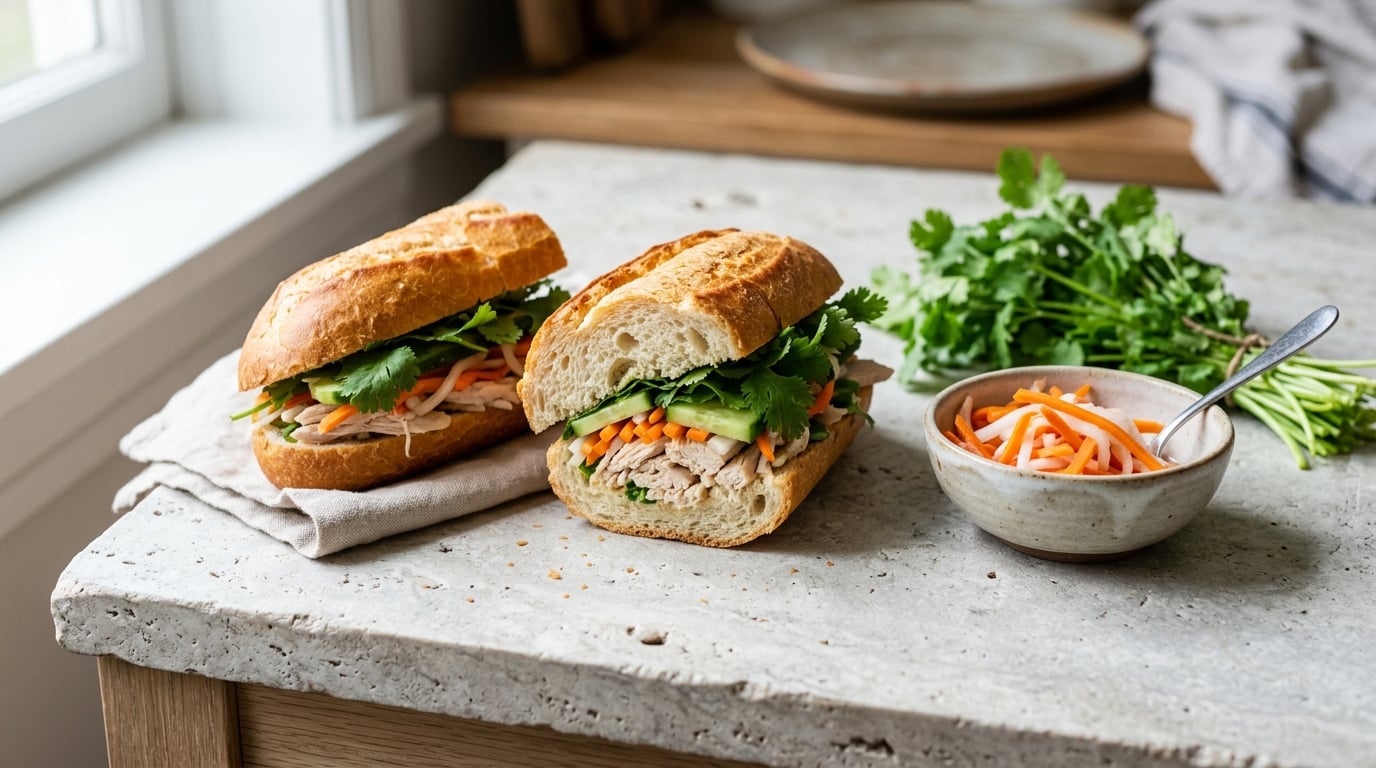
A banh mi is a Vietnamese baguette sandwich built on a crisp, airy roll layered with liver pate and mayonnaise, a protein such as Vietnamese cold cuts or roast pork, sweet-tangy pickled carrots and daikon, crisp cucumber, fresh cilantro and green onion, and sliced fresh chili. The best store-bought shortcuts for banh mi at home let you assemble that in about fifteen minutes without a Vietnamese grocery store, a brine, or a shop down the road.
The catch is that a banh mi lives or dies on contrast, not on any single ingredient. A shatteringly crisp shell, a rich salty spread, sharp acid from the pickle, cool cucumber, and fresh herbs all have to show up in the same bite. Skip the pickle and the sandwich tastes flat no matter how good the meat is. That is why it is worth knowing exactly which parts of the build you can buy ready-made and which two you should still do yourself.
So which two are worth the effort? The bread and the pickles. Everything else on the list below has a supermarket stand-in that gets you most of the way there. The versions here are the ones that hold up on an ordinary weeknight, when the closest banh mi shop is a twenty-minute drive away and you would rather not make the trip.
Table of Contents
- Best Store-Bought Shortcuts for Banh Mi at Home at a Glance
- 1. Use a Rotisserie Chicken Shredded Into Sandwiches
- 2. Pick Up a Jar of Pickled Carrots and Daikon
- 3. Add Canned Vietnamese-Style Pickled Vegetables
- 4. Choose a Bottled Dipping Sauce or Seasoned Sauce
- 5. Use Pre-Cut Cucumber and Jalapeno
- 6. Buy Fresh Cilantro in a Small Bunch
- 7. Start With Store-Bought Pate or a Concentrated Spread
- 8. Use a Prepared Pork Cold Cut or Protein Alternative
- 9. Add Ready-Made Mayonnaise and Chili Crisp
- 10. Assemble a Simplified Banh Mi Bowl-Style Sandwich
- Frequently Asked Questions
- What is the best store-bought shortcut for making banh mi at home?
- Can I make banh mi without a special Vietnamese baguette?
- How do I keep a banh mi from getting soggy?
- Can I use canned or cooked chicken instead of rotisserie chicken?
- What vegetables can I add to a quick supermarket-style banh mi?
- How long should I store leftover banh mi fillings?
- Conclusion: Where to Start
Best Store-Bought Shortcuts for Banh Mi at Home at a Glance
The table below maps each shortcut to the banh mi component it covers, the time it saves, and when to reach for it.
| Shortcut | Component it covers | Time saved | Best use case |
|---|---|---|---|
| Rotisserie chicken, shredded | Protein | 25 minutes plus oven time | Feeding more than two people |
| Jarred pickled carrots and daikon | Do chua crunch and acid | 30 minutes of pickling | Any night you do not plan ahead |
| Shelf-stable canned pickled veg | Do chua, pantry version | Both the brine and the jar run | Weekend cooking, no fridge pickle |
| Bottled Vietnamese dipping sauce | Sauce base | 5 minutes of mixing | When you want a brighter, tangier sauce |
| Pre-sliced cucumber and jalapeno | Fresh crunch and heat | 5 minutes | Lunchbox sandwiches and short prep windows |
| Small bunch of cilantro | Fresh herbs | 1 minute, if you dry it well | Every sandwich, no exceptions |
| Store-bought pate or liverwurst | The savory spread | Homemade pate entirely | Batches where you want real depth |
| Deli cold cut or tofu | Protein, budget tier | All cooking time | Lunch, or a vegetarian build |
| Mayonnaise and chili crisp | Creamy heat base | 2 minutes | The fastest possible sauce |
| Ten-minute assembly order | The build itself | Nothing, but saves the roll | Anyone still getting soggy bread |
1. Use a Rotisserie Chicken Shredded Into Sandwiches
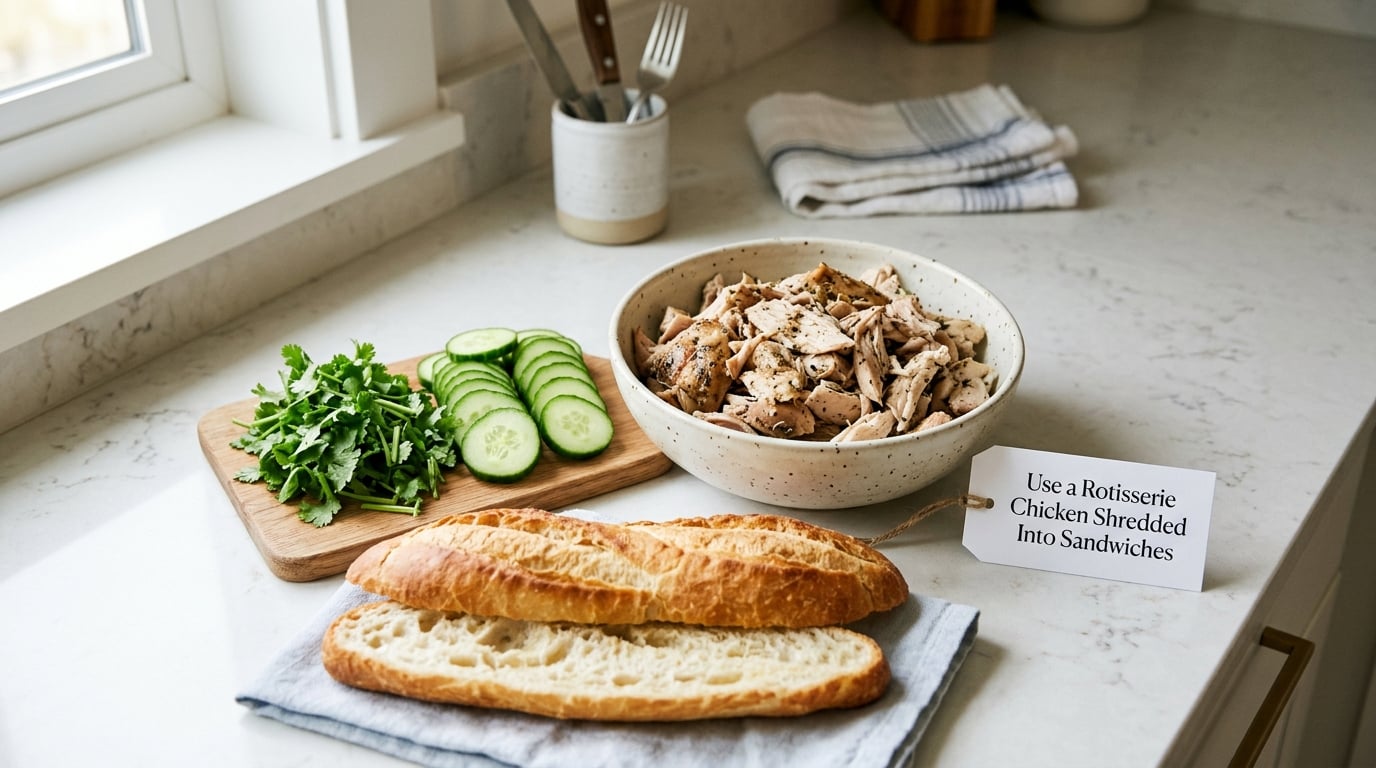
Rotisserie chicken is the highest-yield protein shortcut in a normal American supermarket, and one bird fills eight to ten sandwiches. Shred it while it is still warm, using two forks, and the meat pulls apart clean instead of tearing into chunks.
Season it before it goes in the sandwich, not after. A squeeze of lime, a teaspoon of light soy sauce and a few drops of chili oil turn plain breast meat into something with the same savory-sweet profile as a shop-roasted filling. Light soy, not dark: dark is far saltier and will fight the pate and the pickles.
Refrigerate the shredded meat in a sealed container and use it within three to four days, or freeze it flat in portions. Keeping the sauce and the vegetables separate from the bread is what stops everything going soft overnight, so mix the lime and soy in only for the servings you are eating that day.
2. Pick Up a Jar of Pickled Carrots and Daikon
Jarred do chua is the shortcut with the biggest payoff, because the pickle is the component most home cooks cannot fake in a weeknight window. Look for jars in the refrigerated section where the carrots and daikon are still visibly firm, not in the mushy cooked-jar kind sold near the sushi.
Good signs on the label: crisp cut vegetables, a clear brine, and a use-by date a few weeks out. Avoid anything that lists sugar as the first ingredient ahead of the vegetables, because that version reads more like a sweet relish than a pickle.
Drain them in a sieve for a minute before they go in the sandwich, then taste one. If the jar is flat, a splash of rice vinegar and a pinch of sugar fixes it in seconds. If it is too sharp for your palate, add a second pinch of sugar. That two-second adjustment is the whole difference between a jar that tastes like a banh mi and a jar that just tastes like carrots.
3. Add Canned Vietnamese-Style Pickled Vegetables
Shelf-stable jars of pickled carrot and daikon are the pantry version of the same idea, and they are useful because they take up no fridge space and last for months on the shelf. In the US you will usually find them in the international aisle of a big-box store or in the Asian section of a store like H Mart or Whole Foods.
Canned pickles arrive softer and saltier than the refrigerated kind, so plan on two corrections. Drain them well, then let them sit in a paper towel for five minutes to shed surface moisture. After that, taste: a pinch of sugar usually fixes a flat batch, and a small splash of rice vinegar rescues a bland one.
Read the sodium on the label before you commit. Canned versions run noticeably saltier than fresh quick-pickles, and if you are also using deli meat, pate and a soy-based sauce, the total climbs fast. Using half a portion of canned pickle per sandwich is the usual fix for keeping the balance right.
4. Choose a Bottled Dipping Sauce or Seasoned Sauce
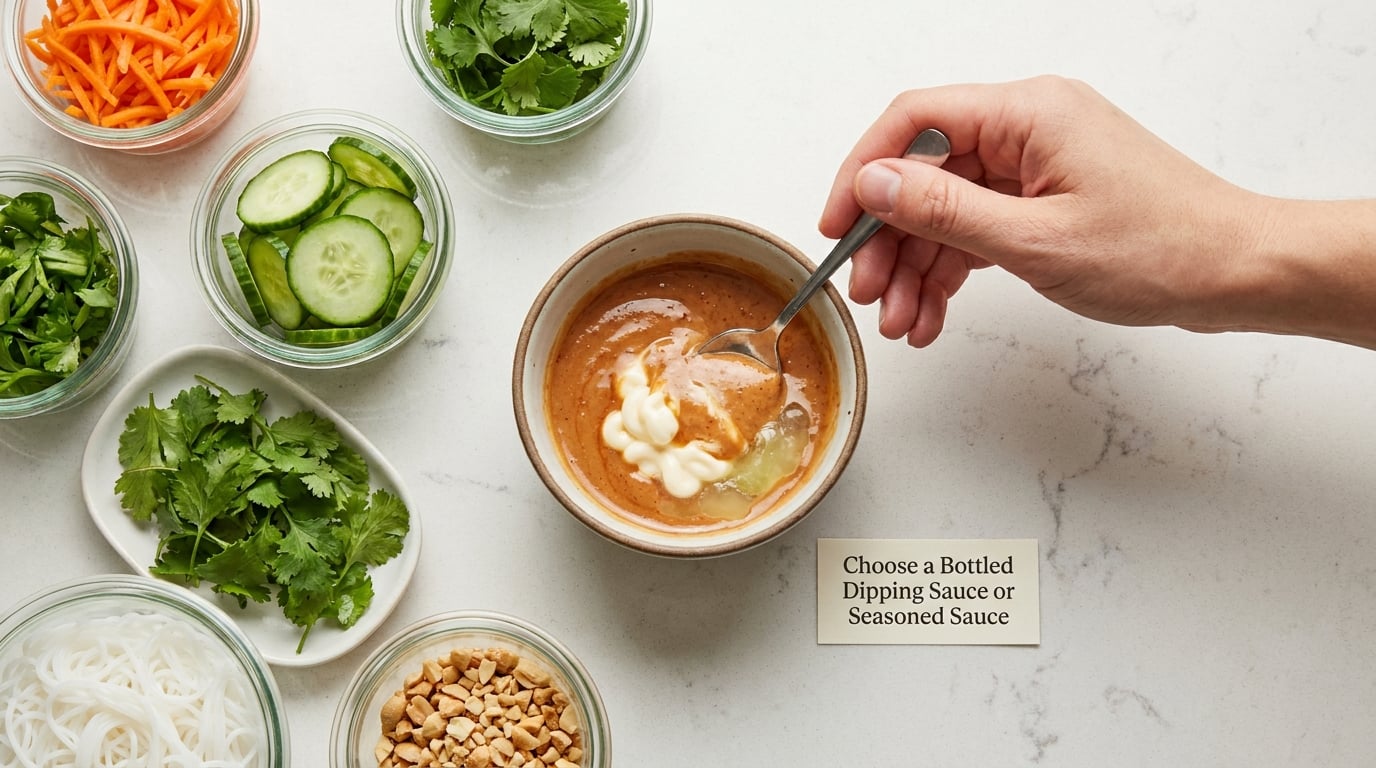
Bottled Vietnamese dipping sauce, sold as nuoc cham, is a ready-made shortcut for the sharp, sweet, salty sauce base that a banh mi shop mixes from fish sauce, sugar, lime and garlic. It tastes noticeably brighter and more acidic than a mayonnaise-based sauce on its own, which balances heavy meat and rich spread better than most people expect.
Use it thin rather than straight from the bottle. Stir two parts dipping sauce with one part mayonnaise and a squeeze of lime, then taste. That mixture lands close to the sauce on a real banh mi while staying pourable enough to spread without tearing the roll.
The other route is a homemade copycat of the seasoning blend Vietnamese shops use, most of which is soy-based. Combine light soy sauce, fish sauce, a small splash of Worcestershire-style sauce and a pinch of sugar, then use about two-thirds the amount of soy you would normally reach for, because that blend is saltier than plain soy. If you have neither fish sauce nor Maggi seasoning, plain soy plus a drop of Worcestershire still gets you most of the way.
5. Use Pre-Cut Cucumber and Jalapeno
Pre-sliced cucumber from the produce shelf is the shortest shortcut on this list, and cucumber is the fresh crunch that keeps a banh mi from reading as a meat sandwich. The packaged kind is thin enough to layer without trimming, which matters more than it sounds when you are building six at once.
Keep it crisp by storing the tub upside down over the original brine, or by patting the slices dry on a towel right before assembly. A dry cucumber adds water to the roll all by itself, and that is a big part of why takeout-style banh mi goes soft in a lunchbox.
Pickled jalapeno slices work too if you want the heat with less fresh moisture, and a sliced serrano gives a sharper kick. Balance is the thing to watch: one or two rounds of pepper per sandwich sits well with a heavy meat and a rich spread, while three or four can flatten every other flavor. Start low, taste, and add.
6. Buy Fresh Cilantro in a Small Bunch
A small bunch of cilantro costs almost nothing and does more for a banh mi than any bottled herb. Buy the loose bunch rather than the plastic clamshell, which usually arrives already wilted, and use most of it within a few days.
The reason home cilantro goes limp is water. Rinse it in a cold stream, shake hard, and dry it completely in a salad spinner or between two towels. Store the stems and leaves together upright in a glass with a little water in the fridge, covered loosely, and change the water every couple of days.
Use roughly a tablespoon of leaves per sandwich, torn rather than chopped so the stems stay tender. If cilantro is not for you, Thai basil is the closest substitute in flavor profile, and chives work if you want a milder onion note. Parsley is the last resort: it tastes flat and leans sweet rather than citrusy.
7. Start With Store-Bought Pate or a Concentrated Spread
The brown layer in a banh mi is liver pate, and it is the single most misunderstood component. It is not a garnish; it is the savory, fatty layer that gives the sandwich depth, and the reason a banh mi made with only mayo and pickles still tastes wrong to anyone who knows the real thing.
Edible pate is harder to find in a US supermarket than you would expect, and the can labeled simply pate is not always meant for people. Read the label carefully. A spread intended for humans lists liver in the first two ingredients and is sold near the deli or in the cheese and refrigerated meat section.
The simplest fallback is a good liverwurst from the deli, used sparingly. Spread it thinly on one cut face of the roll, roughly a tablespoon and a half per sandwich, and skip the extra seasoning. Pate is a background layer: when you can taste it clearly, the portion is too heavy.
If your store sells no edible pate at all, do not improvise with a homemade liver mixture. Mayo alone with a well-seasoned protein is a perfectly good banh mi; many shops in Vietnam serve it that way, and not every banh mi contains pate.
8. Use a Prepared Pork Cold Cut or Protein Alternative
The classic fillings are Vietnamese cold cuts: cha lua, the pale pork loaf, and thi nguoi, the steamed pink ham. If you have an Asian grocery store, buy those and skip this whole shortcut. If you do not, the supermarket deli covers the role well enough.
Thinly sliced roast pork or pork cold cuts from the deli are the closest match, because they carry the same salt-and-fat profile as cha lua. Brawn and head cheese work in a pinch, and a chicken loaf is fine where roast pork is not available. Slice everything as thin as the knife allows, since the roll is narrow and thick slices push the fillings out.
Temper the deli counter in the middle of the sandwich rather than all on one end, which spreads the salt. For a cooked shortcut, rotisserie chicken from item one is the most forgiving. For a vegetarian or vegan build, press extra-firm tofu in a hot pan until the outside browns, then season it with light soy, lime and a little chili oil so it does not taste bland next to the pickles.
9. Add Ready-Made Mayonnaise and Chili Crisp
Two jars, ten seconds, done. Mayonnaise supplies the rich, creamy base that carries the sauce, and chili crisp supplies heat plus a nutty, savory depth that plain hot sauce does not. Stir the two together in a small bowl right before serving, starting with about two parts mayo to one part chili crisp.
Add a squeeze of lime and a pinch of sugar to loosen it, and you have a sauce that behaves like the one on a shop sandwich. Kewpie, the Japanese mayonnaise, is worth seeking out: its yolk-forward sweetness rounds out the chili crisp in a way that standard mayo does not, and it is the version most people reach for once they have tried it.
Control moisture by mixing only what you will use within the hour, and by keeping the bowl on the side rather than spreading sauce hours ahead. Any mayonnaise-based sauce will soften bread given time, and that is the one problem no amount of good technique elsewhere will fix.
10. Assemble a Simplified Banh Mi Bowl-Style Sandwich
Cut the roll lengthwise, leaving the hinge intact so the bottom stays attached. Toast the two cut faces for two to four minutes in a hot oven until the cut surfaces are dry and lightly golden. This one step prevents more soggy banh mi than anything else on this list.
Spread the pate or liverwurst on one cut face, then the mayo mixture on the other. Layer the protein next, dressed with a little soy and lime, then the drained pickles, then the dried cucumber and jalapeno. Herbs and sliced green onion go in last, right before the sandwich closes, so they stay bright.
Press the two halves together firmly, wrap in parchment or a clean towel, and cut in half with a serrated knife after the press. The compression is what makes it portable: the fillings compact into a firm block that survives a lunchbox instead of sliding out on the first bite. Eat it within a couple of hours for the best crust.
If your rolls are less than perfect, that is fine. A slightly soft loaf with a crisp exterior works, and a too-hard crust pushes every filling out of the sandwich. What you cannot recover is the pickle, so if you only make one thing from scratch, make the quick-pickled carrots and daikon: equal parts carrot and daikon matchsticks, covered in equal parts rice vinegar and water with sugar and a pinch of salt, left for thirty minutes at room temperature or two hours in the fridge.
Frequently Asked Questions
What is the best store-bought shortcut for making banh mi at home?
Shredded rotisserie chicken is the one that changes the most. It is ready the moment you open the bag, one bird fills eight to ten sandwiches, and it takes seasoning better than almost any deli cold cut. The second most useful shortcut is a jar of pickled carrots and daikon, since the pickle is the component that cannot be improvised on a weeknight.
Can I make banh mi without a special Vietnamese baguette?
Yes, and most people do. A hoagie roll or a short French roll is the best stand-in for a banh mi khong, the Vietnamese sandwich roll, because the crumb is soft enough to absorb sauce without splitting. A full French baguette works, but slice off the tapered ends and use only the middle section. Avoid ciabatta and any very crusty loaf, which pushes the fillings out.
How do I keep a banh mi from getting soggy?
Toast the cut faces of the roll first, pat the cucumber and pickles dry, and mix any mayonnaise-based sauce only just before serving. Sauce belongs on the bread, not in a pile in the middle of the filling, where it soaks through faster. Press the sandwich firmly and wrap it, then eat within two hours if you want the full crust.
Can I use canned or cooked chicken instead of rotisserie chicken?
Yes. Canned chicken works, but drain it well and shred it, since the packed texture turns pasty in a sandwich. Plain canned chicken also needs more seasoning than rotisserie, so add light soy and lime before it goes in. Rotisserie is better only because it is already seasoned and already shredded.
What vegetables can I add to a quick supermarket-style banh mi?
Cucumber, cilantro, green onion and sliced fresh jalapeno are the core fresh layer, and all four are available pre-cut. For acid and crunch, use jarred or canned pickled carrots and daikon. If daikon is not available, red radish cut thin and pickled the same way works and keeps the texture; parsnips is a weaker substitute and can taste earthy.
How long should I store leftover banh mi fillings?
Keep the components separate, not the assembled sandwich. Shredded rotisserie chicken and cooked meats keep three to four days in the fridge; pickled carrots and daikon keep up to two weeks in a sealed container, and a homemade quick-pickle actually improves after a day. A mixed bowl of cucumber, herbs and sauce should be used within a day, and the bread should stay dry and separate.
Conclusion: Where to Start
If you are making one of these for the first time, start with the rotisserie chicken and a jar of pickles. Season the meat with light soy and lime, mix mayo with chili crisp and a squeeze of lime, toast the roll, and assemble in the order above. That single combination gets you most of the way to a sandwich that tastes like it came from a shop.
From there, taste before you adjust. Most jarred pickles need a pinch of sugar or a splash of vinegar, and most bottled sauces need to be thinned with mayonnaise. Prepare the protein and the pickles ahead when you can, but keep the bread dry and separate until you are ready to eat, because that is the only part of the build you cannot fix later.