
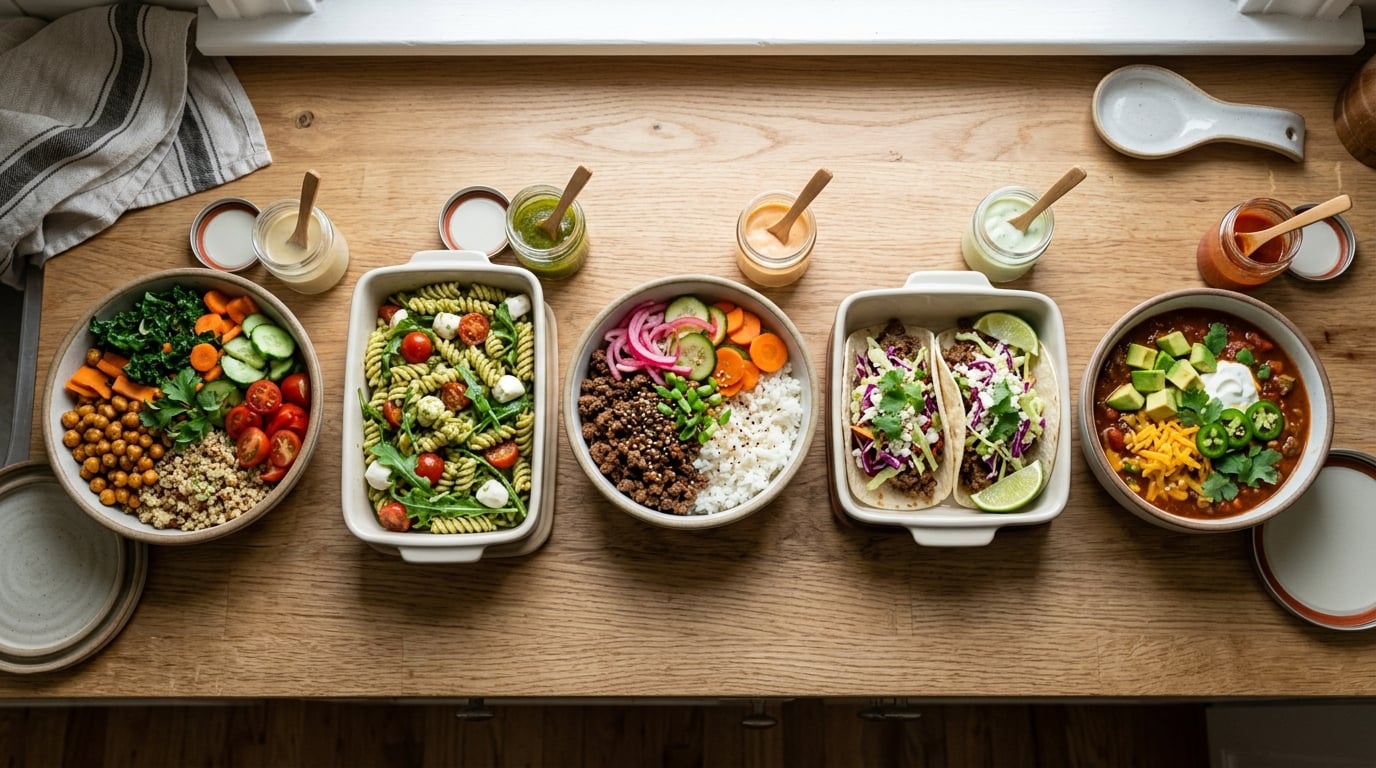
If you pack the same lunch five days running, the fourth one usually stops tasting like food. The fix isn’t more recipes; it’s picking meal-prep lunches that don’t get boring by design, with contrast built in: something crisp, something acidic, a strong sauce, and a component you add at eating time rather than on Sunday.
Boredom by Thursday is completely normal, not a discipline problem. The r/MealPrepSunday crowd says it plainly again and again, in threads titled things like “not so boring meal prep ideas.” The complaint is almost never hunger. It’s the third identical container, the softened tortilla, the sad pile of lettuce.
What follows is ten lunches, each chosen because it has at least two built-in points of difference, plus a Sunday batch method and a storage plan. Cook once, assemble differently, and Thursday stops being the day you resent your lunchbox.
Table of Contents
- Best Meal-Prep Lunches That Don’t Get Boring by Thursday at a Glance
- 1. Lemon Herb Chicken Bowls with Crispy Chickpeas
- 2. Mediterranean Pesto Pasta with Crunchy Vegetables
- 3. Korean Beef Rice Bowls with Quick-Pickled Vegetables
- 4. Black Bean and Sweet Potato Tacos with Lime Slaw
- 5. Sesame Soba Noodles with Edamame and Mango
- 6. Smoky Turkey and White Bean Chili Bowls
- 7. Mediterranean Falafel Wraps with Herby Tzatziki
- 8. Thai-Inspired Peanut Noodle Salad with Tofu
- 9. Italian Chopped-Salad Pasta with Rotating Add-Ins
- 10. Curry Chickpea and Rice Bowls with Fresh Herb Chutney
- Frequently Asked Questions
- How long do meal prep lunches actually last in the fridge?
- How do I meal prep and not get bored of the same lunch?
- Why does my meal prep get soggy by Wednesday?
- Can I meal prep sandwiches and wraps ahead of time?
- Do I need a microwave for these meal-prep lunches?
- What proteins work best for cold lunches and meals for one?
- Conclusion
Best Meal-Prep Lunches That Don’t Get Boring by Thursday at a Glance
| Lunch | Flavor profile | Active prep time | Travels well | What fights day-four fatigue |
|---|---|---|---|---|
| Lemon herb chicken bowls | Bright, herby, savory | 25 minutes | Yes | Crousty chickpeas stay crunchy cold |
| Mediterranean pesto pasta | Garlicky, nutty, fresh | 20 minutes | Yes | Cucumber and pepper crunch against soft pasta |
| Korean beef rice bowls | Savory, sweet, tangy | 30 minutes | Yes | Quick-pickled vegetables cut the richness |
| Black bean and sweet potato tacos | Warm spice, lime, fresh crunch | 35 minutes | Best in a wrap | Cold slaw against warm filling |
| Sesame soba with mango | Sweet, salty, nutty | 20 minutes | Yes | Mango and cabbage add juiciness daily |
| Turkey and white bean chili bowl | Smoky, savory, tangy | 40 minutes | Yes | Pickled onions and avocado per serving |
| Falafel wraps with tzatziki | Herby, creamy, crisp | 25 minutes | Best in a wrap | Shredded cabbage and dry sauce separate |
| Peanut noodle salad with tofu | Sweet, spicy, lime-forward | 25 minutes | Yes | Peanuts added at the table for crunch |
| Chopped-salad pasta with add-ins | Bright, herby, customizable | 20 minutes | Yes | Rotating toppings make Thursday a different dish |
| Curry chickpea rice bowl | Warm spice, sharp, fresh | 35 minutes | Yes | Sharp herb chutney wakes up day-four chickpeas |
Two things stand out here. Every dish has one component that goes in at eating time, and every one travels without a microwave-friendly finish. Those two habits do more for variety than doubling your recipe list.
1. Lemon Herb Chicken Bowls with Crispy Chickpeas
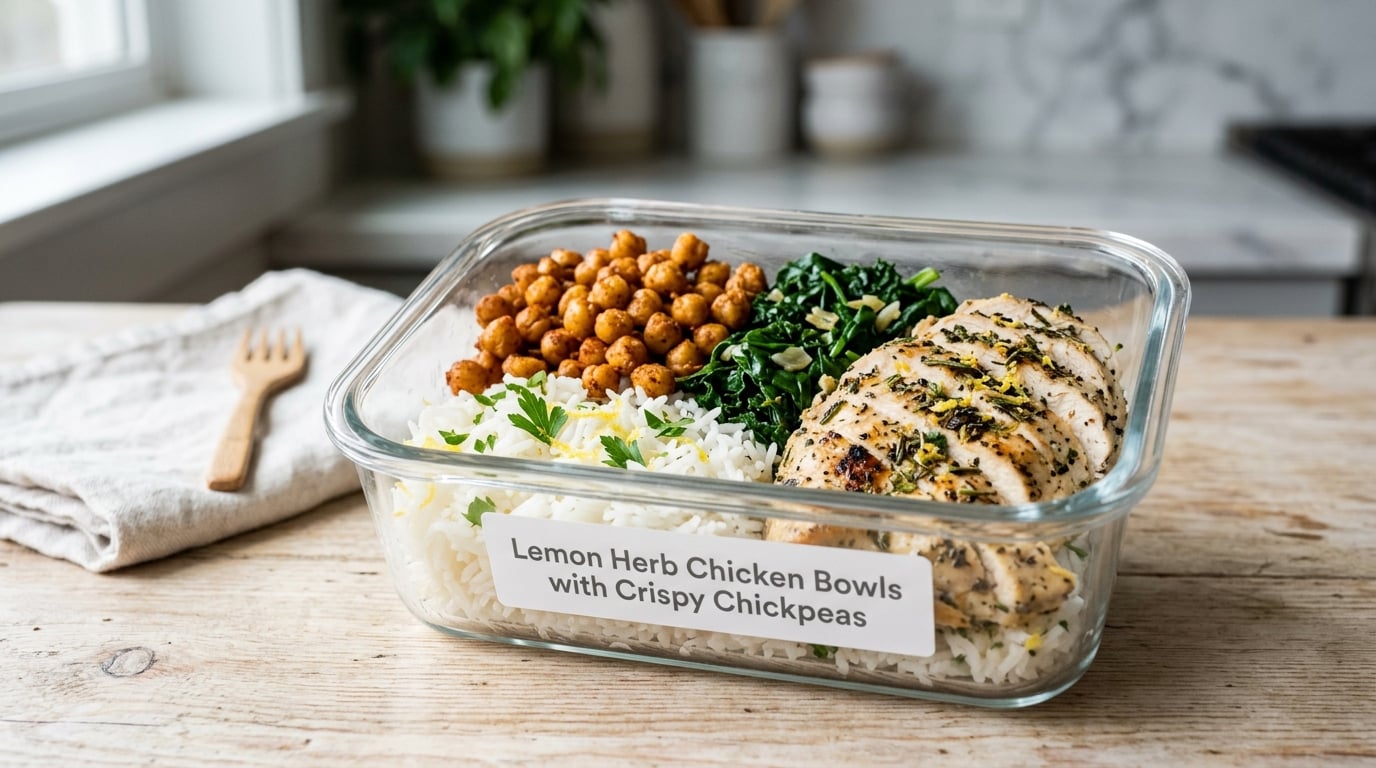
This bowl works on Thursday because it holds three textures at once, and only one of them softens. Roast chicken thighs stay moist, rice is forgiving, and the chickpeas keep their crunch if you store them apart from anything wet.
My batch method: roast two trays of chicken thighs at 425°F until the thickest piece reads 165°F on a thermometer, about 25 minutes. Roast a separate tray of chickpeas with paprika and salt, and store them in their own container so condensation doesn’t soften them.
Dress the chicken in lemon zest, garlic, oregano, olive oil, and a pinch of salt. Keep the dressing in a small jar with its own lid rather than pouring it over the bowl on Sunday, which is what turns rice into rice paste.
Storage: four days in the fridge is comfortable for this bowl. Reheat the rice and chicken covered at 70% power for about 90 seconds, then add the chickpeas and greens cold so you keep the crunch the microwave would have destroyed.
2. Mediterranean Pesto Pasta with Crunchy Vegetables
Pasta salad is the most underrated anti-boring lunch because the base is neutral and the add-ins do the work. Cucumber, cherry tomatoes, peppers, and seeds give you a different bite every time you open the box.
Cook 2 cups of short pasta, cool it under cold water, and toss it with a little olive oil so it does not clump. Roast a sheet pan of chopped peppers and zucchini with olive oil and salt at 425°F for 20 minutes, then cool before mixing.
Store the pesto separately. Pesto made with fresh basil and olive oil stays bright for about three days refrigerated, and packing it on top of hot pasta on Sunday flattens the basil flavor by Wednesday. Stir it in at the desk.
Travel and storage: this one holds four days if the dressing is packed in its own container. No reheating needed, which makes it the answer on office days when the microwave queue is twenty minutes long.
3. Korean Beef Rice Bowls with Quick-Pickled Vegetables
The reason a Korean beef bowl survives day four is the pickle. Carrots and cucumbers soaked in vinegar, sugar, and salt keep cutting through the fatty beef, so the bowl tastes sharp instead of heavy on Thursday.
Brown 1.5 pounds of ground beef in a hot skillet, drain most of the fat, then add garlic, ginger, soy sauce, a teaspoon of sesame oil, and brown sugar. Cook until the sauce reduces and coats the meat. Simmer for about 10 minutes; the food safety minimum for reheating cooked food is 165°F.
Make the pickles while the beef cooks. Thin-sliced carrot and cucumber go into a jar with rice vinegar, a tablespoon of sugar, and salt. They are usable after 30 minutes and keep improving for three days.
Storage: beef and rice hold four days refrigerated; the pickles are fine for a week. Dress only the portion you are eating that day, and keep sesame seeds in a separate pinch jar. Seeds added Sunday turn soft and dusty by Thursday.
4. Black Bean and Sweet Potato Tacos with Lime Slaw
This is the sandwich answer to midweek boredom. Warm spiced sweet potato and seasoned black beans hit a large tortilla, and cold lime slaw keeps the whole thing from turning into a damp pile by Thursday.
Roast one sheet pan of cubed sweet potato at 425°F with cumin, chili powder, and oil for 25 minutes. Simmer a can of black beans with cumin, garlic, and a splash of broth until they thicken, about 10 minutes.
Make the slaw with shredded cabbage, chopped cilantro, and a dressing of lime juice, olive oil, and salt. Cabbage is the one green that genuinely gets crunchier rather than softer over four days, which is why it belongs here.
Storage: the filling keeps four days; assemble tacos at night or pack the components layered. Pack the slaw in a separate cup, and use tortillas warmed at home rather than cold from the bag. Reheat the filling only, about 45 seconds.
5. Sesame Soba Noodles with Edamame and Mango
Cold noodle bowls are the fastest route to a lunch that tastes new every day, because toppings go in at the last second. Soba itself is buckwheat, so it holds a firmer bite and a nuttier flavor than wheat noodles.
Cook soba according to the package directions, rinse under cold water, and toss with a small amount of sesame oil so the strands separate. Dress the whole batch with a sauce of soy sauce, rice vinegar, a little honey, and grated ginger.
Keep edamame, shredded carrot, and red cabbage in one container, and cut a mango into cubes in another. Add the mango and cabbage when you eat, not when you pack, because mango starts browning within a few hours once it is cut.
Storage: dressed soba keeps about four days refrigerated and needs no reheating. Soba reheated in a microwave turns rubbery, so treat it as a cold dish by design. The sesame seeds go on at the table for the crunch.
6. Smoky Turkey and White Bean Chili Bowls
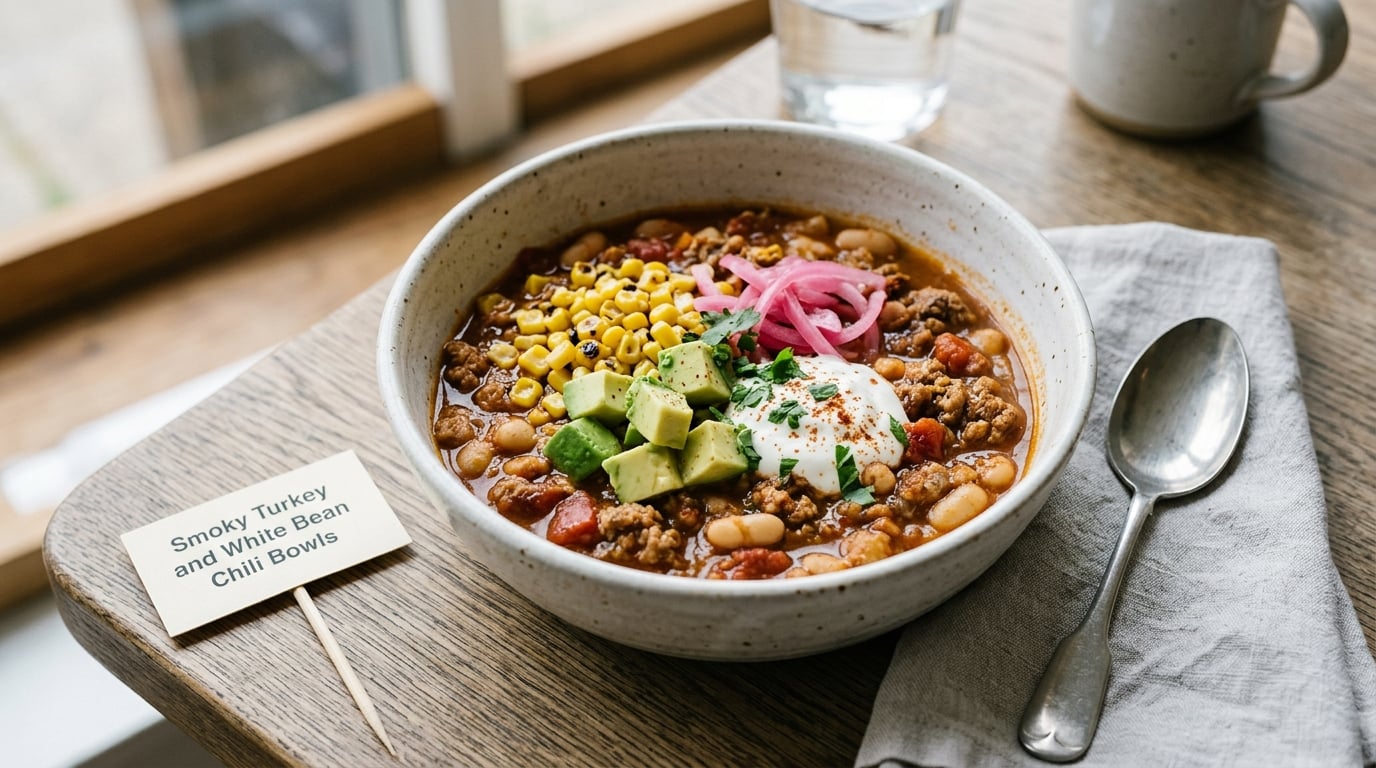
A chili bowl is the answer for anyone who finds grain bowls boring by design. It tastes good warm or cold, it reheats without drying out, and the toppings make each serving feel assembled rather than reheated.
Brown a pound of ground turkey with smoked paprika, cumin, and onion. Drain it, add a can of white beans, a can of fire-roasted tomatoes, and a cup of broth, and simmer 25 minutes until it thickens. Cook poultry to 160°F before it goes back into the pan.
Portion the chili into containers and chill it fast. Top each serving at eating time with corn, avocado, pickled red onion, and a spoonful of plain Greek yogurt or sour cream.
Storage: five days refrigerated for most cooked chili, though I would not push past four if the avocado is already in the bowl. Avocado never goes in before it leaves home. Reheat covered at 70% power for about 90 seconds, adding a splash of broth if it thickened overnight.
7. Mediterranean Falafel Wraps with Herby Tzatziki
Falafel wraps are the wrap version of the same contrast trick: hot spiced chickpea patties, cool herby yogurt, and shredded cabbage for crunch. They assemble in three minutes and travel better than almost any hot lunch.
Bake a tray of falafel at 400°F for 20 minutes instead of deep-frying, which cuts the oil and the mess. While they bake, stir together Greek yogurt, cucumber, garlic, dill, and a squeeze of lemon for the tzatziki.
Wrap one in a warmed flatbread with shredded cabbage, a few tomato slices, and a spoon of tzatziki. If you want the wrap to survive until Friday, toast the flatbread for 20 seconds first; a dried surface blocks moisture from the sauce.
Storage: bake falafel up to four days ahead and keep it out of the fridge if you are packing within that window. Keep the tzatziki in a separate cup and dress the wrap on the day you eat it. That one habit fixes most soggy-wrap complaints.
8. Thai-Inspired Peanut Noodle Salad with Tofu
This bowl layers sweet, salty, spicy, and fresh in the same bite, which is what stops the flavor flattening out. Tofu absorbs the peanut dressing overnight and gets better for it, so this is a good make-ahead dish even though it looks like a fresh one.
Press cubed tofu between two plates under a weight for 15 minutes, then bake or air-fry at 425°F for 20 minutes until the edges brown. Cook rice noodles, cool them under cold water, and toss with a dressing of peanut butter, lime juice, soy sauce, and a little sriracha.
Shred cabbage and carrots for the crunch layer, and chop herbs such as cilantro, mint, and Thai basil. Add the herbs at the table, because herbs packed on Sunday look like decoration by Wednesday.
Storage: four days refrigerated, served cold or at room temperature for a short commute. Crushed peanuts go on at eating time; packed on Sunday, they soften against the dressing and lose the crunch that makes this bowl interesting.
9. Italian Chopped-Salad Pasta with Rotating Add-Ins
This is the system version of the article. You build one sturdy chopped base on Sunday, then swap toppings across the workweek so Thursday’s box reads as a different dish from Monday’s.
Chop 2 cups of broccoli, 1 cup of white beans, 1 cup of cherry tomatoes, 1/2 cup of olives, and a few slices of salami or pepperoni. Toss everything with cooked and cooled pasta and a lemon vinaigrette of olive oil, lemon juice, Dijon, salt, and pepper.
Monday gets all of it together. Tuesday gets white beans and extra lemon. Wednesday gets the olives and salami added. Thursday gets a spoonful of pesto swirled in and the tomatoes set aside so they don’t release water. Friday gets chopped basil and a pinch of chili flakes.
Storage: chopped salad with pasta holds about four days, and every change comes from the freezer, not from more cooking. Pack the tomatoes on the days you eat them first, in the middle of the week. Keep the salami in a separate cup if you want it cold on day five.
10. Curry Chickpea and Rice Bowls with Fresh Herb Chutney
Chickpea curry is the budget and vegetarian workhorse, and a sharp chutney is what keeps it from tasting flat on Thursday. The base gets deeper each day; the chutney gives you fresh contrast every single time.
Sauté onion and garlic, add curry powder and a diced tomato, and stir in a can of chickpeas plus a splash of coconut milk. Simmer 15 to 20 minutes. Cook a batch of rice, a tray of roasted cauliflower or broccoli, and a small pot of plain yogurt or a cucumber salad.
Blend the chutney fresh: cilantro, mint, a little ginger, lime juice, and honey. A quarter cup per person is plenty, and it keeps about four days refrigerated in a sealed jar.
Storage: four days for the curry and rice. Add the chutney with a spoon at eating time rather than swirling it in on Sunday, and keep the yogurt dollop separate. Reheat the curry covered for about 90 seconds at 70% power so the chickpeas don’t turn to paste.
Frequently Asked Questions
How long do meal prep lunches actually last in the fridge?
Most cooked lunches hold about four days in the refrigerator, which lines up neatly with a Monday-to-Friday work week. Chili and soups often stretch to four or five days if cooled quickly and kept sealed. Fish is the exception at about three days, and anything cut and dressed, such as avocado or fresh mango, travels better in a separate container. Plan your prep so the dishes you like most go into the Monday and Tuesday boxes, not the Thursday one.
How do I meal prep and not get bored of the same lunch?
Change at least two of four variables each day: the grain base, the protein, the sauce, and the topping. Same rice bowl with a different sauce and different protein reads as a different meal. Add one fresh component at eating time, such as avocado, pickled onions, seeds, or herbs. Boredom is normal, not a sign you lack discipline, and most people who quit meal prep quit because of repetition rather than effort.
Why does my meal prep get soggy by Wednesday?
Moisture is almost always the culprit. Dressings and sauces release water overnight, bread and tortillas absorb it, and stacked wet ingredients make the bottom of the container mushy. Pack every dressing separately, toast bread lightly before assembling a sandwich, layer a paper towel between wet and dry items, and avoid piling dressed noodles or rice. Airtight containers with a paper towel do more than any amount of careful plating.
Can I meal prep sandwiches and wraps ahead of time?
Yes, with a few adjustments. Toast the bread or wrap first so it forms a moisture barrier, keep wet ingredients such as tomato, cucumber, and salad separate until the day you eat, and pack sauce in its own container. Build the sandwich the night before if you can, and refrigerate it rather than leaving it at room temperature. Wraps with shredded cabbage and a dry filling travel better than anything with mayo-heavy filling.
Do I need a microwave for these meal-prep lunches?
No, and several of these are better without one. Pesto pasta, soba bowls, chopped salad pasta, and cold noodle salads are all meant to be eaten cold, which means they work in offices, schools, and jobs with no kitchen at all. For the hot options, a microwave is helpful but not essential; a thermos or a pot at home can reheat chili and curry. Pick your week so you only need to reheat two or three of the five lunches.
What proteins work best for cold lunches and meals for one?
Cold-friendly proteins are the ones already cooked or cured: canned tuna, hard-boiled eggs, chickpeas, white beans, deli turkey, roast chicken, tofu, and olives. They travel without reheating and hold their texture for four days. For cooking for one, buy proteins already portioned, cook two chicken thighs rather than a whole tray, and use canned beans and pre-cooked grains so you are not cooking four times to eat once.
Conclusion
Start with two sturdy base meals, not ten. Cook one grain and one protein on Sunday, then build five lunches by changing the sauce and the topping from one day to the next.
Add the fresh element at your desk: pickled onions, avocado, seeds, herbs, chopped peanuts. It takes twenty seconds and it is the single change that most reliably keeps lunch-prep lunches that don’t get boring from turning into leftovers by Wednesday.