
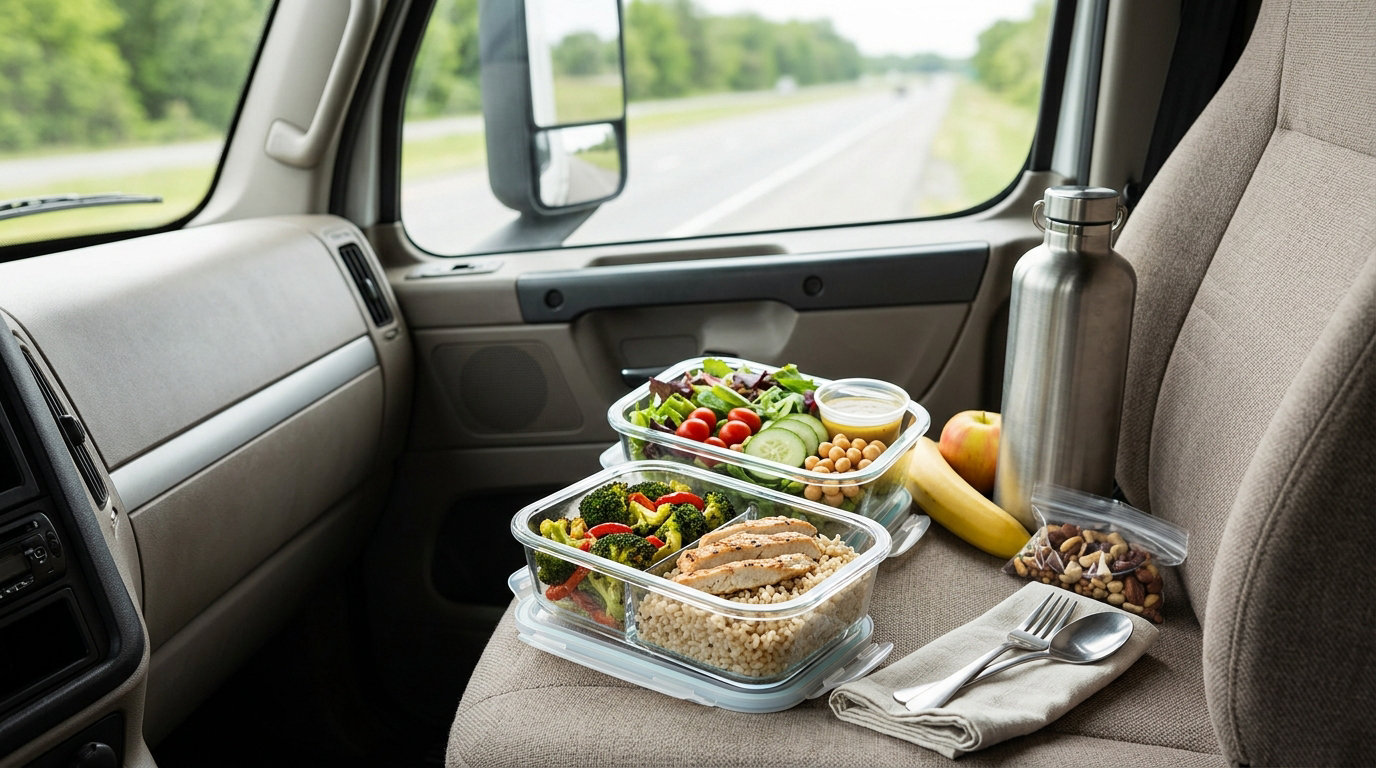
The best lunches for truck drivers without stopping for fast food are portable, one-handed, low-mess meals that need no cooking: wraps, cold pasta salad, bagels, burrito bowls and cold sandwiches. Packed on a Sunday, they hold their texture for two to four hours in a warm cab and cost a fraction of what a truck-stop plate runs.
That is the whole trick. A cab lunch is not about being elaborate. It is about a meal that survives a passenger seat, needs one hand and a napkin, does not leak or crumble into the seatbelt, and keeps you sharp through the next three hours of driving.
Most of what you have read on this topic starts with a slow cooker and a microwave. Plenty of drivers run a reefer plug-in, a fridge-freezer combo, and a lunchbox oven, and those setups are genuinely useful. But they are optional. Every lunch on this list works with nothing more than a paper wrapper and a cool bag, and several need no refrigerator at all.
I have pulled these together from what drivers actually describe packing for a multi-day haul, plus the food-safety rules that decide whether a packed lunch is still worth eating at mile 400.
Table of Contents
- Best Lunches for Truck Drivers Without Stopping for Fast Food at a Glance
- 1. Turkey and Hummus Wrap
- 2. Chicken Caesar Pasta Salad
- 3. Tuna and White Bean Salad Sandwich
- 4. Peanut Butter and Banana Bagel
- 5. Leftover Chicken Burrito Bowl
- 6. Roast Beef and Cheddar Sandwich
- 7. Mediterranean Quinoa and Chicken Salad
- 8. Ham and Swiss Cheese Pinwheels
- 9. Oatmeal and Fruit Energy Cups
- 10. Lentil and Veggie Stew
- Frequently Asked Questions
- What is the best lunch to eat while driving without stopping?
- How long can a packed lunch stay cold in a truck?
- What foods are safest to pack in a cooler for a long drive?
- How can I prevent sandwiches from getting soggy?
- What can truck drivers eat that is cheap and filling?
- Can I eat a refrigerated sandwich without a microwave?
- What is the 30-minute break rule for truck drivers?
- Conclusion
Best Lunches for Truck Drivers Without Stopping for Fast Food at a Glance
| Lunch | Portability | Filling power | Prep effort | Cost | Best use |
|---|---|---|---|---|---|
| Turkey and hummus wrap | Excellent | High | 10 min | Low | No-cook tier, cold weather |
| Chicken Caesar pasta salad | Good with the right dressing | High | 15 min | Low | Cooler or mini fridge |
| Tuna and white bean sandwich | Excellent | Very high | 8 min | Low | Budget, high-protein |
| Peanut butter and banana bagel | Excellent | Moderate | 3 min | Very low | No gear at all, night drives |
| Chicken burrito bowl | Good, toppings packed apart | Very high | 25 min | Low | Fridge plus microwave |
| Roast beef and cheddar sandwich | Excellent | High | 10 min | Moderate | Long stretches, no stops |
| Quinoa and chicken salad | Good | High | 20 min | Moderate | Meal prep, cold lunch |
| Ham and Swiss pinwheels | Excellent | Moderate | 10 min | Moderate | Short 30-minute break |
| Oatmeal and fruit cups | Excellent | Moderate | 15 min for a batch | Very low | Early start, breakfast-style lunch |
| Lentil and veggie stew | Good, reheat anywhere | Very high | 40 min, one big pot | Very low | Freezer stocked, tight budgets |
Read the table by what you own, not by what looks good. If you have no fridge and no microwave, start with rows one, three, four, six and eight. If you have a mini fridge, everything on the list is open to you.
1. Turkey and Hummus Wrap
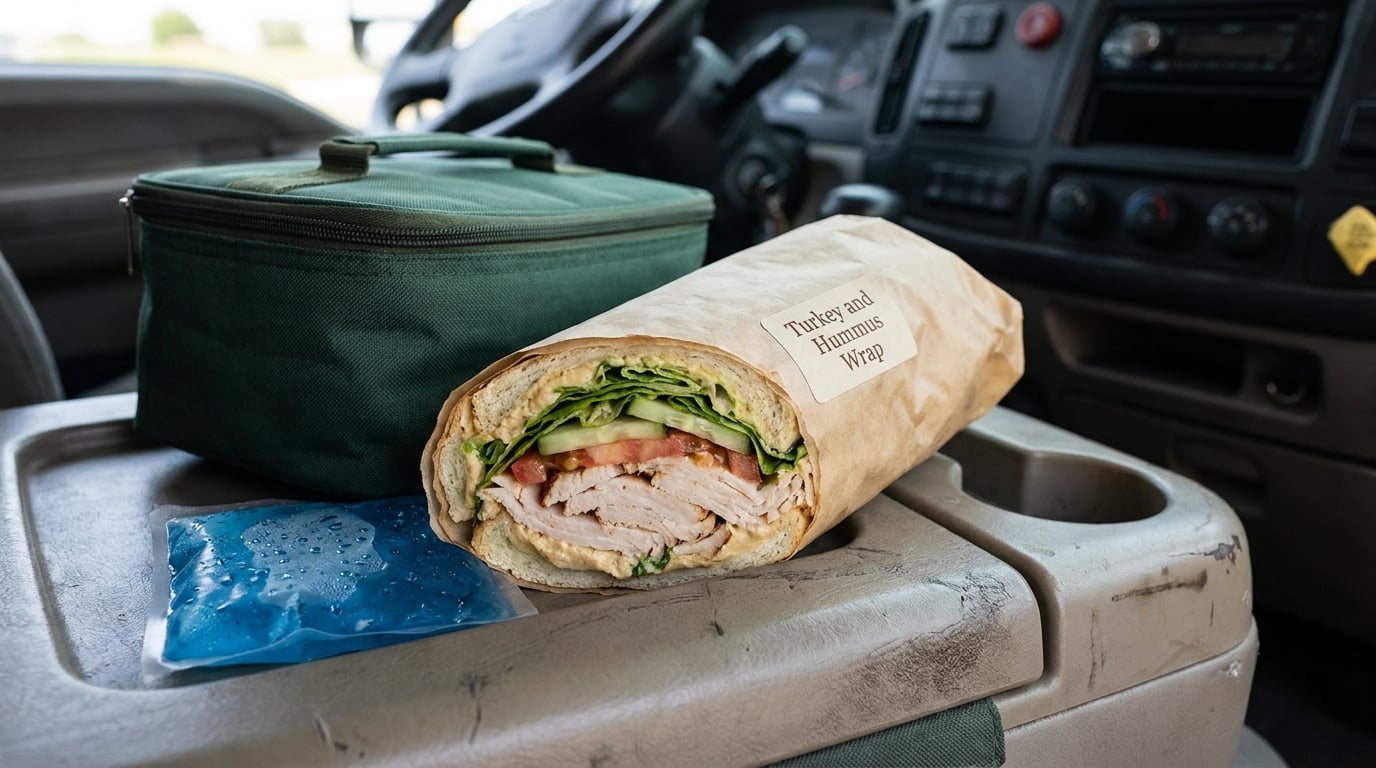
This is the default cab lunch for a reason. A wrap is a complete meal you can hold in two fingers, and unlike a sliced sandwich it has no hinge to give way halfway through a curve. Hummus is the key ingredient: it adds protein and fat that keep you full, and it is creamy enough that you do not need mayo, which is what turns day-old bread into a swamp.
How to build one that does not go soggy
Spread hummus on the tortilla, not on the bread, and keep it about half an inch short of the edges. Put the turkey and vegetables in a line down the center rather than spread across the whole wrap, then roll tight.
Wrap it in parchment or a deli wrap before it goes in the bag. Parchment is the single cheapest upgrade in this whole list, and it is what stops a warm wrap from steaming itself wet inside a plastic bag.
Why it works in a hot cab
Sliced turkey and vegetables are perishable, so this one wants a cool bag with an ice pack or a few hours in a fridge. Out of a cooler it holds about two hours before you should rethink it. If you are running a route where the lunch window is longer than that, swap the turkey for canned tuna or roasted chickpeas and the wrap becomes shelf-stable.
2. Chicken Caesar Pasta Salad
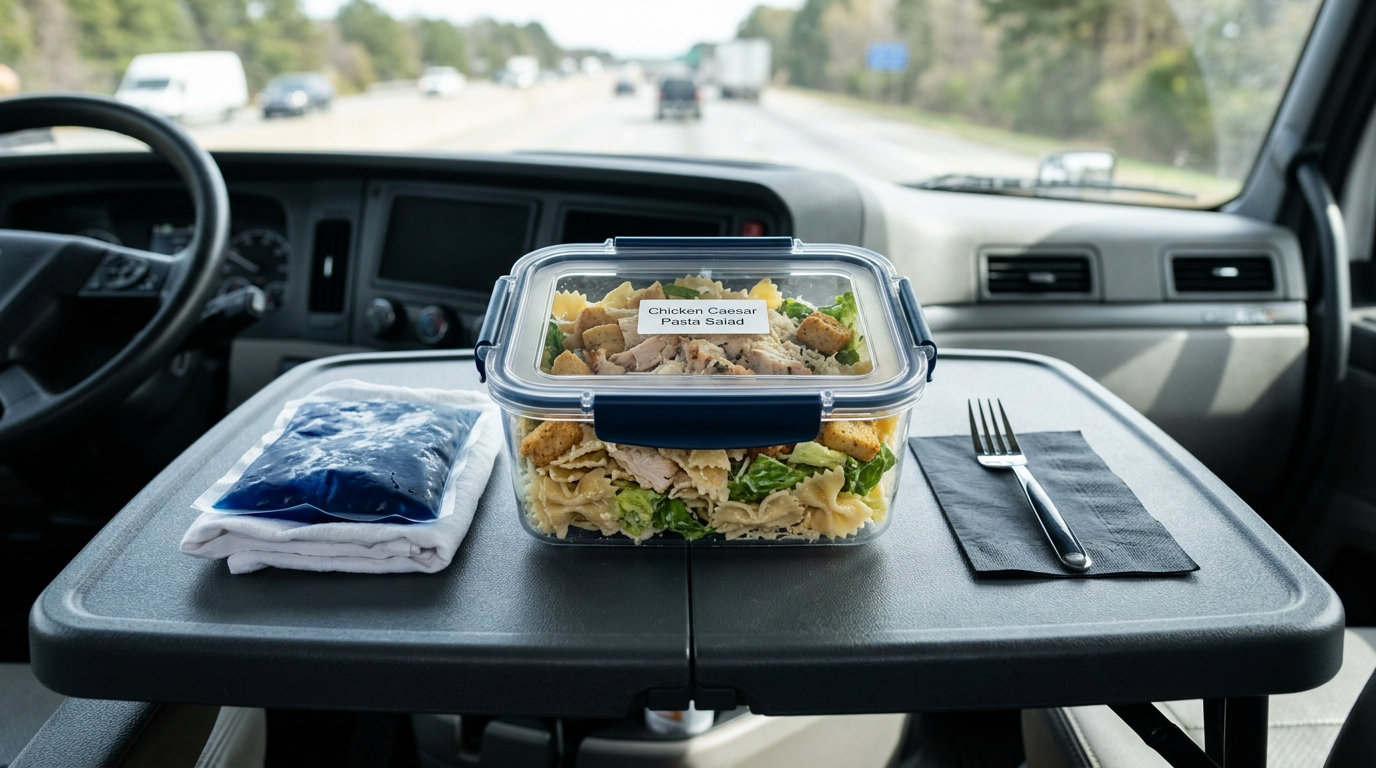
Pasta salad gets a bad name because most versions leak. Made correctly it is the best no-cook lunch on this list: real protein, real carbs, and a fork is the only utensil you need. It also reheats badly, so treat it as a cold lunch and pack it in the fridge the night before.
Cook the pasta, rinse it under cold water until it stops steaming, and let it cool completely before anything else goes in. Warm pasta plus dressing is what produces the mush in the bottom of the container. Dress it with a thick Caesar built from Greek yogurt, lemon and a little Parmesan, and keep the dressing in a separate small container if you have the room.
Roast the chicken to 165 degrees Fahrenheit before it goes anywhere near the pasta, then cool it. Per the USDA, 165 F is the safe minimum internal temperature for poultry, and that number holds whether you are cooking at home in a home kitchen or reheating something in a microwave at a truck stop.
For texture, add the croutons and the grated Parmesan in the morning rather than at prep time. Add the romaine last, right before the lid goes on, and drain any water that collected at the bottom of the wash tub the night before.
3. Tuna and White Bean Salad Sandwich
If you want the cheapest filling lunch in the cab, this is it. Tuna and white beans is a genuinely strange-looking combination that works because both bring something different: tuna for protein and fats, beans for fiber and bulk, and the beans keep you full well past the end of the shift.
Drain the tuna well and mash the beans in rather than chopping them. A fork-mashed texture holds together better in a sandwich and does not leak out of the bread the way whole beans do. Add a little mustard, a handful of chopped celery or red onion, and a spoon of mayonnaise if you want it to stay moist.
The trick to a filling that will not soggy the bread is to mash it and let it sit. Mix it the night before, refrigerate it, and by lunchtime the liquid has soaked into the beans instead of sitting under the sandwich.
Everything in this lunch is shelf-stable once assembled, so it needs no cooler at all. A can of tuna and a can of white beans costs less than any drive-thru stop and keeps for the length of almost any haul.
4. Peanut Butter and Banana Bagel
Nothing on this list survives heat and rough roads better. Peanut butter and banana is protein, complex carbohydrate and fruit in something that takes three minutes to assemble and needs no equipment at all, and it shows up again and again when drivers describe what they actually eat on a run.
To stop the banana from turning the bagel into paste, slice it thin and lay it against the peanut butter so the spread is sealed on both sides. Skip the sliced banana on top, where it sweats and slides.
Wrap it in parchment and keep the whole thing cold, or pack the banana separately in a sealed container and add it when you eat. A firm bagel beats a soft one; a soft one folds, and folded bread over a steering wheel is its own hazard.
The other trick is the afternoon version. When the same bagel sits in a warm cab from 6 a.m. to noon it goes flat and slightly stale. Keep a small bag of toasted nuts or a handful of protein bars in the cab for the second half of the shift rather than fighting it with a sandwich maker.
5. Leftover Chicken Burrito Bowl
A burrito bowl is the most forgiving thing you can cook at home on a Sunday. It is a bowl of rice, beans, chicken and roasted vegetables, and it is the most reheatable lunch on this list, which is why drivers eat it with a fork straight out of a container with one hand on the wheel.
Cook a double batch of rice and roast a sheet pan of vegetables while the chicken is going, then portion everything into containers. Pack the salsa, cheese and any crunchy topping in a separate small cup and add it at lunchtime, or the bottom of the container turns to mush somewhere around mile 200.
Reheat chicken to 165 F, and take the bowl out at the same moment you would take a restaurant lunch. Hot food cooling to room temperature is one of the most common food-safety problems in a truck, because the cab sits in sun and the container stays closed.
Beans make this a filling option on their own. A bowl with a decent scoop of black or pinto beans will hold you through a long afternoon stretch without a snack break.
6. Roast Beef and Cheddar Sandwich
Sometimes you want a sandwich that is just a sandwich. Roast beef and sharp cheddar is the one to build for a long stretch with no plausible stopping point, because it is dense, salty, and it does not fall apart as the afternoon goes on.
The pairing works because cheddar is a fat cheese that melts into the beef and holds moisture in the bread instead of letting it dry out. A little mustard on the beef and a thin layer of mayo keep the whole thing from turning into leather by mile 300.
Build it on a sturdy roll rather than a soft sliced loaf, wrap it in parchment, and chill it before it goes in the bag. A sandwich that goes into the cooler room temperature starts giving off moisture immediately; one that goes in chilled holds its structure noticeably longer.
Keep deli meat cold until you eat it. If you have no cooler, the shelf-stable version is canned tuna, peanut butter or a thick hummus and roasted vegetable spread, all of which behave better in a cab than anything sliced.
7. Mediterranean Quinoa and Chicken Salad
This is the one to make when you want to feel like you ate well and not just ate. Quinoa, chicken, cucumber, tomatoes, olives and feta give you a genuinely balanced plate, and it is the lunch drivers mention most often when they ask how to eat well on the road without going off a diet.
Cook the quinoa in a big batch and cool it completely. Dress it while it is still warm with a simple lemon and olive oil vinaigrette, since warm quinoa absorbs dressing better than cold, then refrigerate it. The chicken goes in the same way as the Caesar salad, roasted to 165 F and cooled.
Add the cucumber, tomatoes and olives in the morning, not the night before. Those three release water, and a quinoa salad with a half-inch of pooled liquid at the bottom is a disappointment even when the flavor is right.
Make feta a separate crumble if you can. It is the difference between a salad that tastes fresh at 2 p.m. and one that tastes like a fridge.
8. Ham and Swiss Cheese Pinwheels
Pinwheels are the best answer to a short 30-minute break under federal hours-of-service rules. You can eat one in four bites without ever putting the rest of it down, which makes it one of the few lunches that genuinely works during a 30-minute break window rather than after it.
Spread cream cheese or a soft spread on a tortilla, lay on a slice of ham and a slice of Swiss, roll it tight, and chill it for at least an hour before slicing. Cheese that is well chilled slices cleanly; cheese that is room temperature tears the tortilla and gives you a loose end.
Cut with a sharp knife, keep the pinwheels seam-side down in the container, and they hold their shape for a couple of hours without refrigeration. They are also small enough that drivers eat two and call it lunch without feeling like they skipped a meal.
As with any deli meat, keep it cold until you eat it. If your break is long enough to buy ice or use a microwave, reheat-then-eat beats eating it straight from the bag.
9. Oatmeal and Fruit Energy Cups
There is a version of this that is a snack, and there is a version that is a lunch. The lunch version is built from oats, banana, nut butter, a little honey and dried or fresh fruit, portioned into cups and made a week at a time.
The reason it works as a truck lunch is the slow-release carbohydrate. A white-bread sandwich spikes your blood sugar and drops it an hour later, and that dip is a bad afternoon on a highway. Oats do not do that, which is why drivers who switch to breakfast-style lunches usually report steadier energy.
Use rolled oats, not instant, for the base so the cup keeps some texture, and mash the banana in rather than chopping it. Applesauce is a fine stand-in when you want the cup to stay firm, and peanut butter added after cooling keeps it from going rancid in a warm truck.
Refrigerate the cups, and pull them out about 15 minutes before you eat so they are not fridge-cold. If you want hot oats, add boiling water at a truck stop microwave and let them sit three minutes. This one also freezes well, which makes it a good use of a freezer-packed haul.
10. Lentil and Veggie Stew
The lentil and veggie stew is the answer for a driver with a tight budget, a freezer, and a long dry stretch between towns. It is filling, it costs almost nothing per serving when you cook it from dried lentils, and it genuinely improves after a day in a container.
Cook a big pot at home: lentils, carrots, potatoes, onions, canned tomatoes, stock and whatever spices you like. Simmer until the lentils break down and the broth thickens. Season it more than seems reasonable at the stove, since a container of food eaten cold and reheated needs more salt than one eaten fresh.
Portion it into containers and freeze flat once it is cool, then stack them in a straight bag. Pull one out the night before and put it in the fridge overnight, which thaws it safely and means you are not relying on a microwave to defrost anything.
Reheat it to a steaming 165 F and let it stand a couple of minutes. If you are reheating in a microwave, cover the container loosely so it does not splatter across the cab.
The one caution is holding it. Lentil stew left sitting in a sunlit truck is one of the better bacteria stories in this article, and it is why the ice packs are not optional for anything with beans, meat or dairy in it.
Frequently Asked Questions
What is the best lunch to eat while driving without stopping?
The best no-stop lunches are ones you can eat one-handed without looking down: a wrap, a peanut butter bagel, a turkey and hummus sandwich, or a cold salad eaten with a fork at a stop. Avoid anything that requires a knife, anything that drips, and anything so messy it takes both hands. If you want zero mess, choose foods you can eat entirely with your fingers.
How long can a packed lunch stay cold in a truck?
A good ice pack in an insulated bag keeps food safely cold for roughly four to six hours, and a quality 12-volt cooler holds temperature far longer than an ice-only bag. A sunlit cab climbs fast, so keep the bag out of direct light and out of the passenger footwell, and pack the ice on top of the food rather than underneath it.
What foods are safest to pack in a cooler for a long drive?
Whole fruit, whole nuts in a sealed bag, shelf-stable breads, tortillas, unopened shelf-stable milk, cans of tuna, and nut butter are all safe without refrigeration. Anything with meat, fish, dairy, cooked rice, or cut vegetables needs to stay at or below 40 F. The USDA advises not leaving perishable food in the 40 to 140 F range for more than two hours, or one hour if the day is above 90 F.
How can I prevent sandwiches from getting soggy?
Use spreads that are not mostly water, pack a barrier between the wet ingredients and the bread, and keep the sandwich cold until you eat it. Arugula, cucumber and tomato all release water as they sit. Wrapping in parchment instead of plastic, and wrapping tightly rather than loosely, reduces the trapped steam that turns bread soft in a warm truck.
What can truck drivers eat that is cheap and filling?
Canned tuna with white beans, peanut butter on a bagel, lentil and vegetable stew made from dried lentils, and rice and bean bowls all cost a fraction of a truck-stop plate and fill you up for hours. The trick is combining protein with fiber, such as tuna plus beans, lentils plus vegetables, or peanut butter plus whole-grain bread, instead of eating carbohydrates on their own.
Can I eat a refrigerated sandwich without a microwave?
Yes. A cold sandwich eaten straight from the fridge is a perfectly good lunch and there is no rule requiring hot food. Bring deli meat, cheese, and turkey in a cooler with an ice pack and eat them cold. If the sandwich has gone warm, the FDA advises against eating it or drinking its juices, so eating it chilled from the start is the safer habit.
What is the 30-minute break rule for truck drivers?
Under federal hours-of-service rules for property-carrying drivers, you need a 30-minute break after driving 8 cumulative hours without a break of at least 30 minutes, and you cannot drive more than 11 hours after 10 consecutive hours off duty. Those windows are exactly when you eat, so packing a lunch you can finish in 20 minutes matters. Check the FMCSA hours-of-service rules for current requirements.
Conclusion
A cab lunch comes down to four tests: it is portable, it is one-handed, it leaves no mess, and it is safe at the temperature you can actually keep it. Every option here passes, and the differences between them are mostly about how much equipment you want to haul and how long the drive between stops really is.
Start by packing two lunches at a time. One for the middle of the shift, one for the end of it, in an insulated bag with an ice pack on top, and see which ones you actually look forward to eating. That is faster than planning ten.