
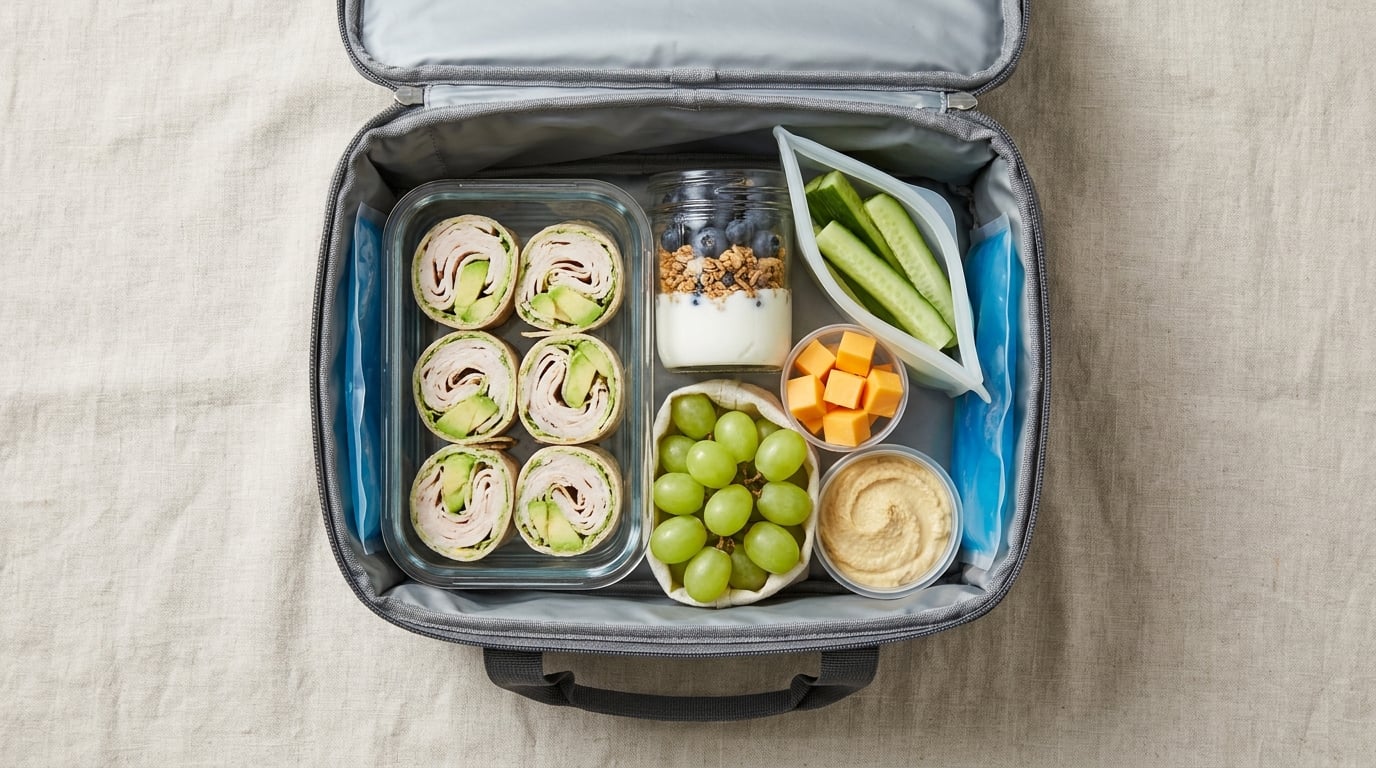
The best lunchbox ideas for hot weather are meals that were designed to be eaten cold: chilled wraps, pasta salad cups, yogurt parfaits, cold noodle bowls and frozen bites, packed with ice in an insulated bag. Nothing needs reheating, and nothing has to hold its temperature for four hours. Pick one cold entree, add a fruit or a vegetable, keep sauces in their own container, and you have a lunch that is still safe to eat at the end of a 90°F day.
Heat does not spoil food visibly. Bacteria multiply fast between 40°F and 140°F (4°C and 60°C), the range the USDA calls the danger zone, and a lunchbox sits unrefrigerated for most of a school day or a shift. USDA and FDA guidance is simple: perishable food that has been out longer than two hours gets thrown away, and on days when the air is above 90°F that window shrinks to one hour. A parked car heats up far faster than the weather forecast suggests, so a bag set down at the curb is the riskiest part of the whole routine.
The twelve ideas below are all no-cook or cook-ahead, they taste good cold, and they hold together in a bag for hours. Updated for October 2026.
Table of Contents
- Best Lunchbox Ideas for Hot Weather at a Glance
- 1. Chilled Turkey and Hummus Wrap
- 2. Caprese Pasta Salad Cups
- 3. Yogurt, Berry, and Granola Parfait
- 4. Crunchy Vegetable Pita Cups
- 5. Cold Sesame Noodles
- 6. Tuna Lettuce Cups
- 7. Fruit and Cheese Lunch Plate
- 8. Mini Frittata Muffins with Fruit
- 9. Rice and Avocado Lettuce Boats
- 10. Cool Poke Bowls
- 11. Chilled Couscous and Chickpea Salad
- 12. Frozen Fruit and Yogurt Bites
- Frequently Asked Questions
- Conclusion: Start With the Coolest Food
Best Lunchbox Ideas for Hot Weather at a Glance
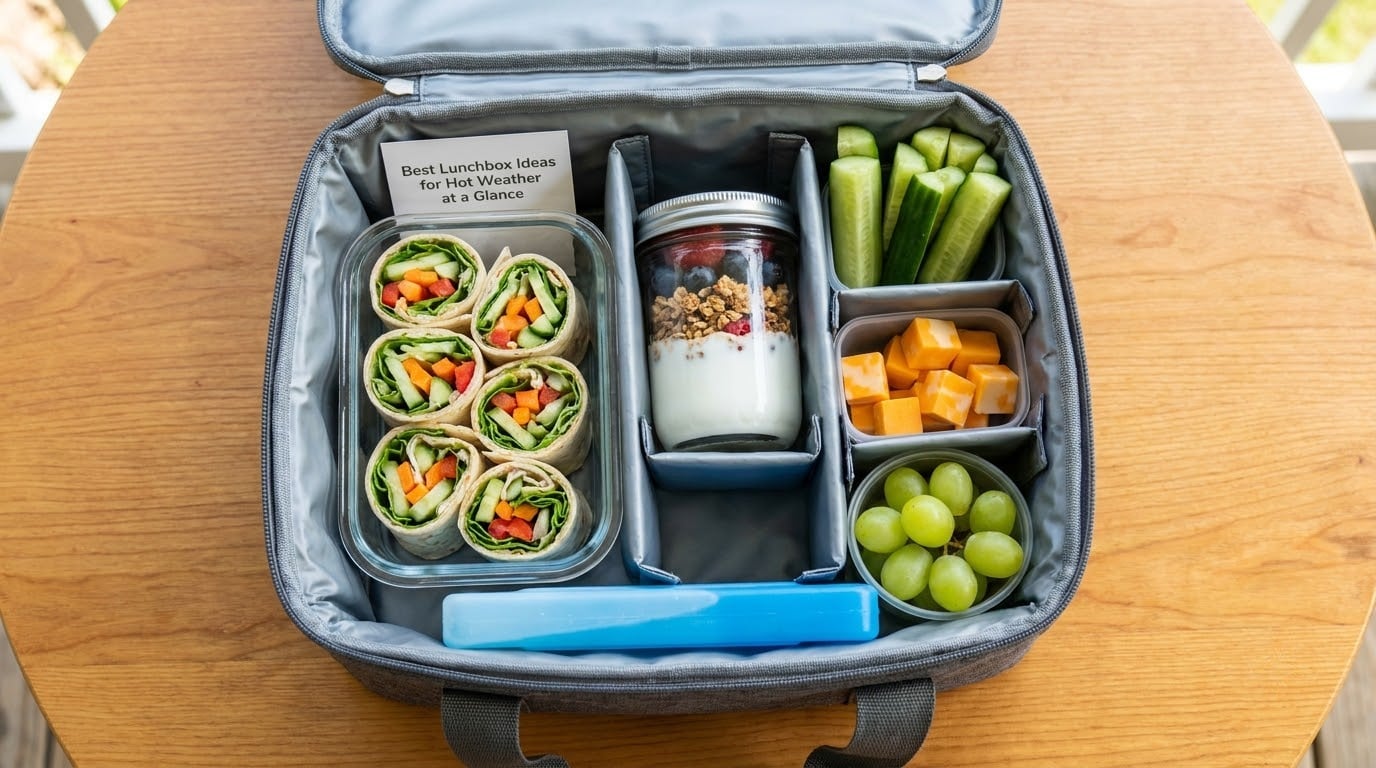
Every lunch below fits the same rule: it is meant to be eaten cold, and it travels better than a sandwich. Use the table to match the idea to the day, the child, and the amount of fridge space you have.
| Lunch idea | Best served | Packing advantage | Suits |
|---|---|---|---|
| Turkey and hummus wrap | Cold | No mayo, no sogginess, rolls tight in parchment | School, sports practice, work |
| Caprese pasta salad cups | Cold or room temp | Make-ahead, eats with a spoon, no reheating | Older kids, adults, travel days |
| Yogurt, berry and granola parfait | Cold | Built in layers, nothing to slice or heat | Preschool, daycare, picky eaters |
| Vegetable pita cups | Room temp or cold | Open-faced, so no soggy bread | Preschool, finger-food days |
| Cold sesame noodles | Cold | Noodles travel in a twist tie, sauce packed apart | Kids and adults, no-microwave offices |
| Tuna lettuce cups | Cold | No utensils needed, lettuce packed separate | Daycare, field trips |
| Fruit and cheese plate | Cold or room temp | Zero prep, whole fruit travels best | Any age, zero-cook mornings |
| Mini frittata muffins | Warm or cool | Bake once, freeze or chill, reheat if available | Breakfast-style lunch days |
| Rice and avocado boats | Cold | Avocado packed apart so it stays green | Older kids, warm-weather weeks |
| Cool poke bowls | Cold | Every wet item in its own cup, nothing mixed | Elementary and up, adult work lunches |
| Couscous and chickpea salad | Cold | Holds texture for hours without going mushy | Vegetarian, meat-free days |
| Frozen fruit and yogurt bites | Frozen or soft | Still cold at lunchtime, doubles as the ice pack | Summer reward, sports days |
1. Chilled Turkey and Hummus Wrap
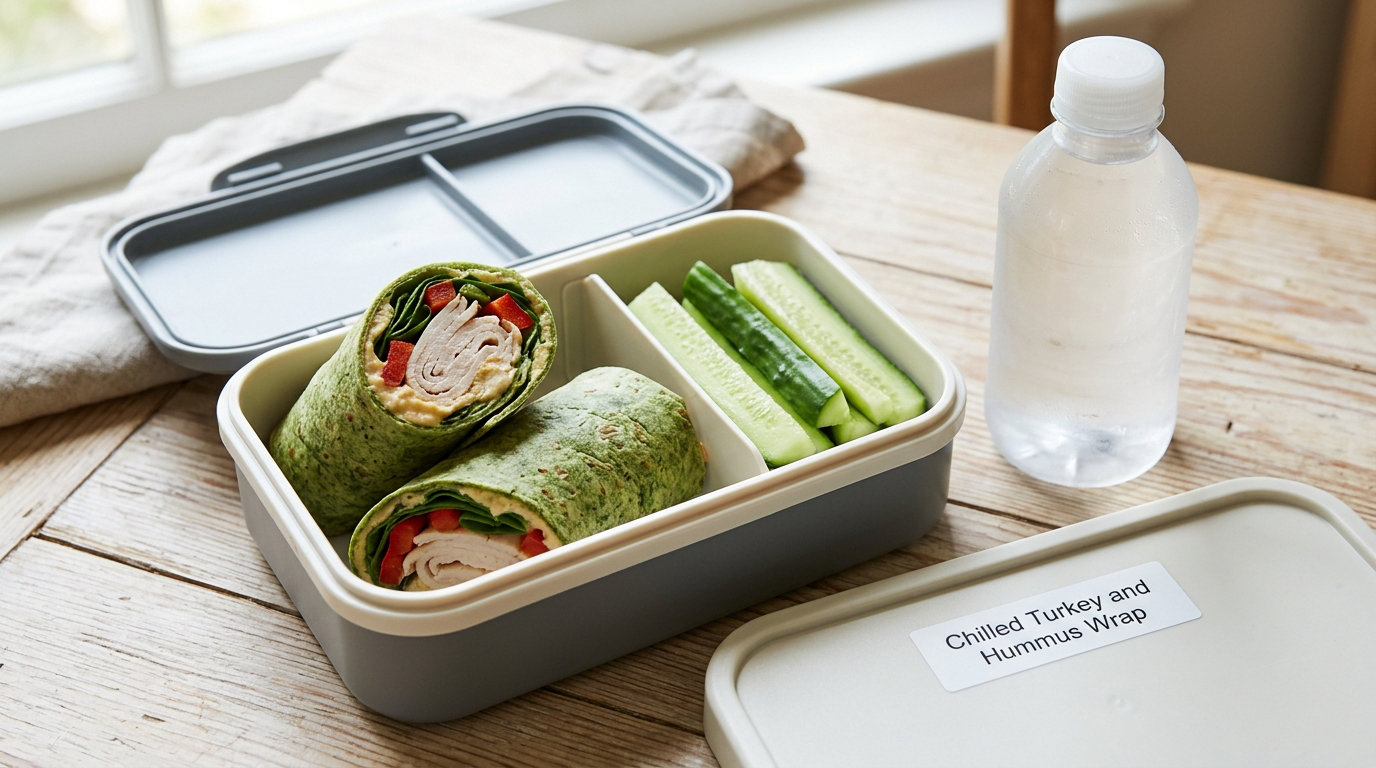
A cold wrap solves the problem that kills most hot-weather sandwiches: moisture. Hummus holds its structure when it is cool, while mayonnaise-based fillings turn loose and oily once they warm up, and that is what makes bread soggy from the inside.
Spread hummus on a tortilla or a slice of sourdough, add turkey and a leaf of lettuce, roll it tightly in parchment or a silicone wrap, and chill it. Cutting the wrap at lunchtime instead of at packing time keeps the ends from drying out and stops moisture from the filling reaching the bread.
How to keep the wrap cold until lunch
Pack it directly from the fridge, set it at the top of the bag where cold air sits, and rest it against a frozen ice pack. If the day is forecast above 90°F, use two ice packs, one under the lunch and one beside the wrap, and choose a wrap over a stacked sandwich so nothing is compressed.
2. Caprese Pasta Salad Cups
A small pasta salad served cool is one of the easiest things to make ahead and it improves overnight. Cook small pasta for the minimum time on the packet, drain it well, and cool it in the fridge before dressing.
Halve the cherry tomatoes and salt them briefly in a colander so the extra water drains off, because watery tomatoes are what turns a pasta salad into soup by noon. Add mozzarella pearls, sliced cucumber and a spoon of pesto or a splash of balsamic and vinegar. Keep the dressing in a small sealed pot until lunchtime if you want the pasta to stay firm.
3. Yogurt, Berry, and Granola Parfait
A parfait is the lowest-effort lunch on this list and one of the few that looks like a treat. Use a wide-mouth jar so a small hand can reach the bottom, and layer it wet at the base and dry on top: yogurt and berries first, granola packed separately in a small container or folded into a sealed bag.
Granola added in the morning goes soft by lunch, which is disappointing rather than dangerous. For dairy safety, keep the parfait cold: freeze the jar for 20 minutes before it goes in the bag and nestle it against an ice pack. If the school is nut-free, use a pumpkin or sunflower seed topping and check the granola label, since oats are frequently toasted in a facility with nuts.
4. Crunchy Vegetable Pita Cups
Open-faced pita is a good swap for a sandwich when the day is warm, because there is no top slice trapping steam. Cut the pita into wedges or small circles, spread each one with hummus, and top it with vegetables that keep their crunch.
Cucumber, carrot, bell pepper and sugar snap peas all hold their texture. Tomato and cucumber release water once cut, so drain them and pack them in a separate cup if you want the pita to stay crisp. Pack the dip underneath rather than on top so it cannot slide off, and dust the vegetables with a little lemon juice to keep them bright.
5. Cold Sesame Noodles
Soba or spaghetti served cold with a mild sesame sauce is a proper lunch rather than a side dish. Boil the noodles, then rinse them under cold running water for a full minute: that stops the cooking, removes surface starch, and is the difference between springy noodles and a clump.
For a mild sauce suitable for young children, whisk low-sodium soy sauce with a small squeeze of honey, a dash of sesame oil and a little rice vinegar, and leave the chili oil on the side. Twist the drained noodles into a compact knot in a container so they do not tangle, and pack the sauce separately. The same build works well for an adult lunch on a job with no kitchen, which is exactly the gap most school-lunch posts leave open.
6. Tuna Lettuce Cups
Two leaves of lettuce, a spoon of tuna and a few vegetables make a lunch that is cool, quick and needs no utensils. Use the leaves as cups so nothing has to be cut at school.
Pack the lettuce in one compartment and the filling in another, then let the child assemble it, because that part they will actually do. Tuna is perishable, so it belongs against an ice pack, not on the counter of a classroom. For children who refuse tuna, mashed chickpea with a little olive oil and lemon, or cold baked salmon, works the same way and travels just as well.
7. Fruit and Cheese Lunch Plate
The fastest option on this list takes about two minutes: whole fruit, cubed cheese, crackers and something spreadable such as cream cheese or nut butter, packed in divided compartments. Whole apples, clementines, grapes and small bananas travel better than cut fruit because nothing has been exposed to air.
If you do cut the fruit, toss it in a little diluted lemon water and drain it before packing, which slows browning for a few hours. On hot days reach for hard cheese, which tolerates the trip well, and skip soft cheeses such as brie, camembert and fresh mozzarella unless the bag is properly chilled. A small ice pack matters here more than most parents expect.
8. Mini Frittata Muffins with Fruit
A frittata baked in a muffin tin is the one item here that can be hot, which makes it worth understanding properly. USDA guidance for egg dishes is an internal temperature of 160°F, and cooked eggs kept in the shell or in a sealed muffin cup belong in the fridge until the morning they are packed.
Whisk eggs with a little milk, fold in cooked spinach, diced bell pepper, feta and ham, and bake in a greased muffin tin for about 20 minutes at 350°F. Cool the cups fully, refrigerate them, and freeze any you will not use within three days. Pack two on an ice pack, add a piece of fruit, and expect to serve them early in the day, since a room-temperature egg dish should not sit out for the full school session. If the school can reheat, they are the one lunch on this list that improves warm.
9. Rice and Avocado Lettuce Boats
Cooled seasoned rice spooned into lettuce leaves makes a lunch that eats cold without feeling like a salad, and it is a good way to use rice cooked the night before. Season the rice while it is still warm with a squeeze of lime, a little olive oil and salt, then chill it fast.
Avocado is the difficult part. Cut it at lunchtime rather than in the morning, or pack the cubes in their own container with a spoonful of lime juice pressed on top and press a small sheet of plastic directly against the flesh. Use large, sturdy leaves rather than the small ones from the heart of the head, and pack the rice in a separate cup if the boat needs to survive a backpack.
10. Cool Poke Bowls
A cold bowl is the most flexible idea here because every component can be swapped. Start with chilled rice or another grain, then add cucumber, edamame, shredded carrot, sweetcorn and a protein: a hard-boiled egg, cooked tofu, or cooked fish cooled and flaked.
For temperatures: cook fish to 145°F and poultry to 165°F before it goes anywhere near a lunchbox, and use the cooked rather than the raw form of both. Pack every wet component in its own cup, put the soy sauce in a small sealed pot, and let the bowl be assembled at the table. Nothing in it needs reheating, which is the point on a day when the school kitchen is closed.
11. Chilled Couscous and Chickpea Salad
Couscous is one of the few staples that actually improves on day two, which makes it a good choice for a family that likes to cook once. Simmer it, drain it while hot, and spread it on a tray to cool quickly before dressing.
Chickpeas, cucumber, cherry tomatoes, feta and a lemon-olive oil dressing give you a full vegetarian lunch that stays distinct rather than mushy. Drain the tomatoes properly, dress no more than an hour before eating, and hold the salad cold from the fridge to the table. Adding sweetcorn or diced pepper is the easiest way to win over a child who has decided couscous is a grey cloud.
12. Frozen Fruit and Yogurt Bites
Blended Greek yogurt with chopped mango, berries or banana poured into a small silicone mold and frozen solid is the easiest cool treat to make in bulk, and it thaws to something soft by lunchtime. Frozen grapes work the same way and are the one item on this list that doubles as the ice pack.
Packing frozen bites so they are still edible at lunch
Freeze them solid overnight and put them in the insulated bag in a sealed bag inside a folded cloth, so the moisture that forms as they thaw stays away from everything else. Use a frozen gel pack alongside them, and place the bites in the middle of the bag rather than against a warm wall. If the day is hot enough that the bites thaw well before lunch, the general two-hour rule still applies to them once they are no longer frozen.
Frequently Asked Questions
What foods stay safe in a lunchbox during hot weather?
Whole fruit, whole-grain crackers, shelf-stable nut butter, unopened drink pouches, dried fruit, and foods that are meant to be served cold all travel well. Anything with meat, fish, egg, dairy or cut produce needs to stay below 40u0026deg;F, so pack those foods directly from the fridge in an insulated bag with an ice pack. FDA guidance also names cut melon, cut tomatoes, cut leafy greens and raw sprouts as foods that spoil quickly once cut, even at a modest temperature.
How long can perishable foods sit unrefrigerated?
USDA guidance is two hours at most, and one hour when the air temperature is above 90u0026deg;F (32u0026deg;C). That limit applies to the total time the food spends between 40u0026deg;F and 140u0026deg;F, not to each individual moment it feels warm. A school day of three to five hours without a refrigerator crosses the limit well before lunch, so a lunchbox that relies on an insulated bag alone is managing a problem it cannot win.
What is the best way to keep a lunchbox cold?
An insulated bag helps, but it does not cool anything, so pair it with cold. Put a flat ice pack at the bottom of the bag, pack the coldest items in first, then add a second ice pack or a frozen water bottle on top and fill the gaps with a cloth napkin. Freezing the bottles you want to drink doubles your cooling capacity. Pre-chill the bag itself in the freezer overnight if the forecast is above 90u0026deg;F.
Which foods do not get soggy in hot weather?
Sogginess comes from trapped steam, so open-faced and rolled options beat stacked sandwiches. Pita cups, lettuce cups, cold noodle bowls, cheese cubes with crackers, and wraps that are rolled tightly and cut at lunchtime all hold up. Choose sourdough, wheat or a tortilla over soft white bread, skip wet fillings such as tomato and mayonnaise, and pack dips and dressings separately. Crunchy additions like granola are better carried in their own container.
Can I freeze sandwiches or wraps for lunch?
Yes, for a day or two. Wrap the sandwich tightly in foil or a freezer bag, press out the air, and freeze it solid. Thaw it in the fridge overnight, or pack it still frozen in an insulated bag with an ice pack so it thaws slowly. Freeze fillings that travel well, such as turkey and cheese or a cold-pressed wrap, and avoid freezing anything with fresh tomato, cucumber or lettuce, which go limp once they thaw.
How can I pack a hot-weather lunch without making sandwiches?
Build from cold components instead: pasta salad cups, a yogurt and berry parfait, couscous and chickpea salad, cold sesame noodles, a poke bowl with components packed separately, or frozen yogurt bites. A fruit and cheese plate takes two minutes and needs no cooking at all. Most of these are also a good adult lunch for a workplace with no microwave, where the same rules about cold storage apply.
Conclusion: Start With the Coolest Food
Choose one cold entree, add a piece of fruit or a few vegetables, and put every sauce in its own container. That alone will beat most sandwiches on a hot day. Then pack the bag from the fridge, put an ice pack at the bottom and another on top, and keep the whole thing out of a parked car. For details on keeping food below 40°F for the full session, see the packing notes and the safety rules above.