
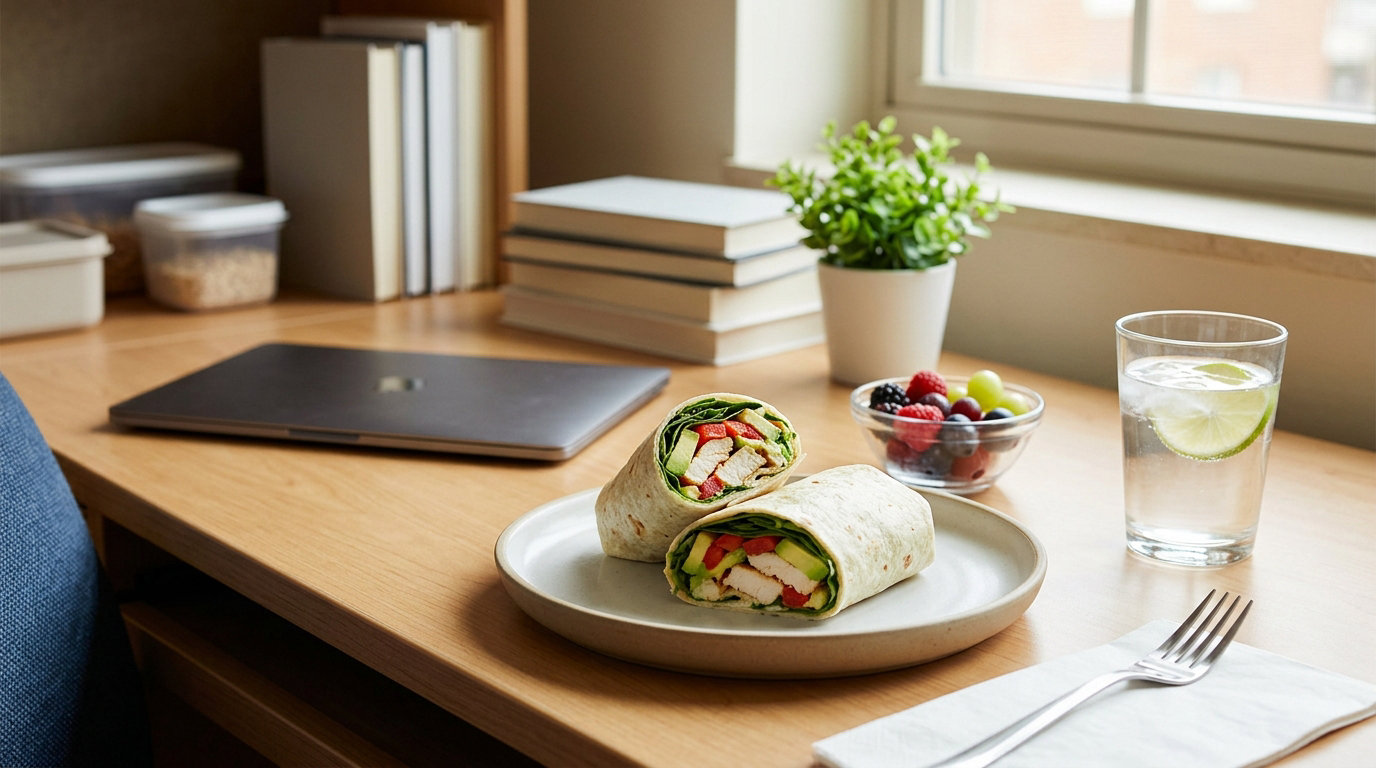
The best lunch ideas for college students in a dorm are meals you can assemble in ten minutes or less with a microwave, a kettle, or no cooking at all. Think hummus and cracker plates, overnight oats, ramen bowls with frozen vegetables, and bean burritos, all of which hold up in a small shared mini fridge and cost a fraction of delivery.
Most students I know do not have a food problem so much as a logistics problem. The dining hall closes at 2, class runs until 1:50, the mini fridge is the size of a footlocker, and the only appliances in the room are a microfridge, a microwave, and sometimes an egg cooker someone smuggled in. Every recipe online assumes a stove and an oven. Almost none of that matters if you plan around what you actually have.
The list below is organized around that constraint. Each lunch states the equipment it needs, roughly how long it takes, what it costs relative to other options, and how to adjust it for vegetarian, vegan, dairy-free, gluten-free, or nut-free eating. Two of them are straight out of the recurring favorites on college cooking forums, where the same advice keeps surfacing: wraps, sandwiches, and snack-plate lunches are the workhorses, and canned beans plus a microwave is the single highest-value combo in a dorm.
Table of Contents
- Best Lunch Ideas for College Students in a Dorm at a Glance
- 1. Turkey-and-Hummus Crackers
- 2. Mediterranean Chickpea Lunch Box
- 3. Quesadilla and Bean Bowl
- 4. Peanut Butter Banana Oat Wraps
- 5. Tuna Potato Salad Cups
- 6. Ramen Upgrade Bowl
- 7. Caprese Pasta Salad
- 8. Black Bean and Cheese Burrito
- 9. Bagel Pizza
- 10. Overnight Oats Cup
- 11. Loaded Sweet Potato Plate
- 12. Five-Minute Snack Plate
- Frequently Asked Questions
- What can I eat for lunch if my dorm does not have a microwave?
- How long can homemade lunch stay in a dorm refrigerator?
- What are the cheapest lunch foods for college students?
- How can I make dorm lunches healthy without spending a lot of money?
- What can I use instead of peanut butter if nuts are not allowed?
- Can I meal-prep lunches in a small dorm refrigerator?
- Conclusion
Best Lunch Ideas for College Students in a Dorm at a Glance
Here is the short version. Cost is rated relative to the other options in the table, not by price, since what counts as cheap depends on your campus and your meal plan. Storage notes tell you whether the lunch survives a night in a shared mini fridge or has to be eaten the same day.
| Lunch idea | Prep method | Time | Cost | Storage | Dietary notes |
|---|---|---|---|---|---|
| Turkey and hummus crackers | No cook | 5 min | Low-moderate | Packs cold, 3-4 days | Gluten-free with GF crackers; nut-free |
| Mediterranean chickpea lunch box | No cook | 10 min | Low | Best same day | Vegan, dairy-free, gluten-free |
| Quesadilla and bean bowl | Microwave | 6 min | Very low | 2 days, holds well | Vegetarian; easy vegan and GF swaps |
| Peanut butter banana oat wraps | No cook | 4 min | Very low | Eat same day | Vegan; nut-free option listed |
| Tuna potato salad cups | Batch cook | 20 min for 3 | Low | 3 days refrigerated | Gluten-free; dairy-free with yogurt dressing |
| Ramen upgrade bowl | Kettle or microwave | 7 min | Very low | Cook fresh, not for storing | Vegetarian; use GF tamari if needed |
| Caprese pasta salad | Make ahead | 15 min | Low | 2-3 days | Vegetarian; gluten-free with GF pasta |
| Black bean and cheese burrito | Microwave or freezer | 4 min | Very low | Freezes up to a month | Vegetarian; vegan with no cheese or dairy |
| Bagel pizza | Microwave or toaster oven | 5 min | Very low | Best fresh; freeze sliced | Vegetarian options |
| Overnight oats cup | No cook | 5 min + chill | Very low | 4 days | Vegan with fortified soy milk |
| Loaded sweet potato plate | Microwave | 8 min | Very low | Cooked base 3-4 days | Gluten-free; vegan with beans and salsa |
| Five-minute snack plate | No cook | 5 min | Low | Packs cold, 3-4 days | Adaptable to any restriction |
Two entries, the tuna potato salad cups and the black bean burritos, are the ones that reward a twenty-minute prep session. Everything else is a five-minute assembly you can do at a desk with a spoon.
1. Turkey-and-Hummus Crackers
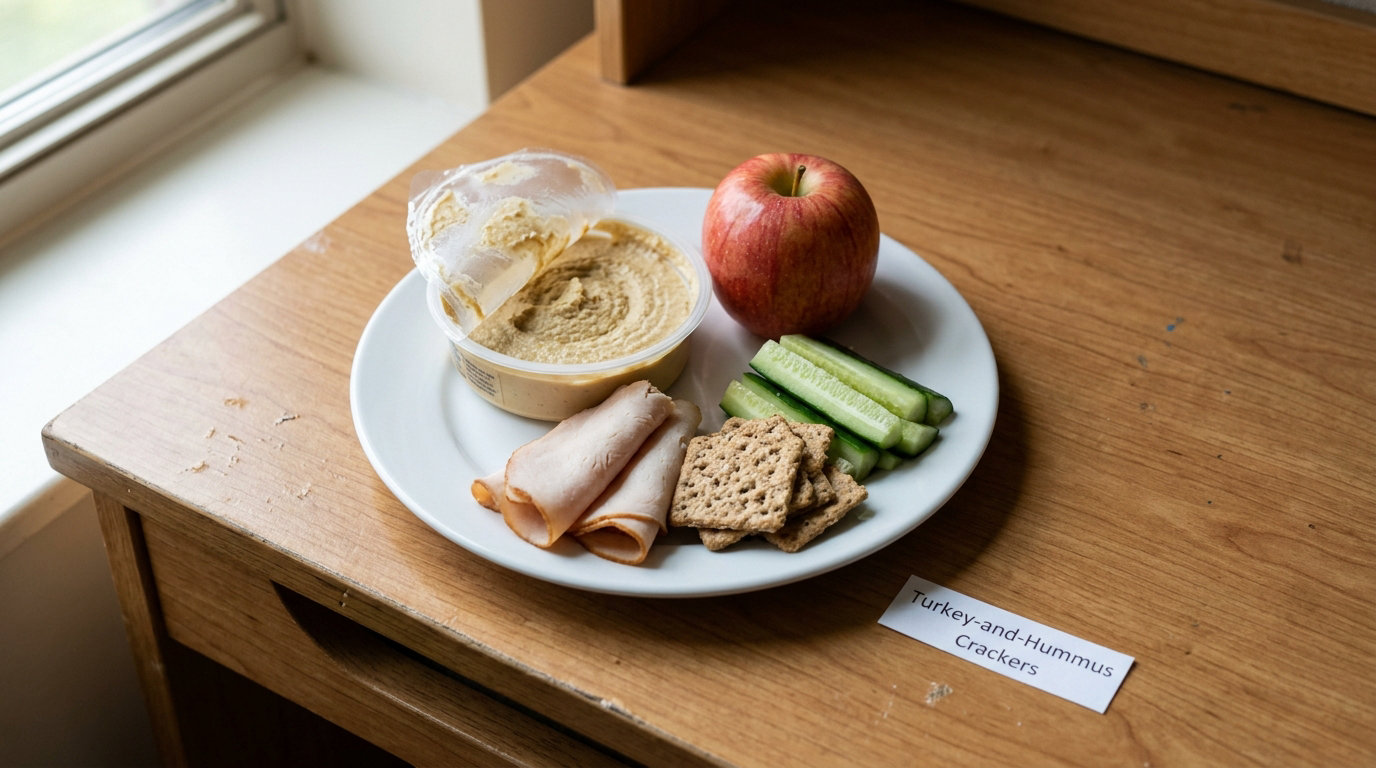
This is the lunch for the day you have nothing cooked, nothing thawed, and a class that starts in forty minutes. Hummus does the work of a sauce, crackers do the work of bread, and you can eat it standing up. My standard build is two or three crackers spread with hummus, folded slices of turkey on top, cucumber sticks and pepper strips on the side, and an apple or clementine to finish it.
Cost-conscious swaps: roasted chickpea snacks or pretzels instead of crackers, a hard-boiled egg or a wedge of cheese instead of the deli meat, and seasonal fruit instead of the packaged cups that cost three times as much. Turkey, chicken, or nothing at all all work, since the hummus is carrying the flavor.
Storage and timing: this is a no-cook lunch, so the only real limits are cold. Keep any cut fruit or vegetables in a separate small container from the crackers so nothing goes soggy, and eat it within three to four days of assembly. It travels well in a backpack if you pack the crackers in their own box, which matters more than it sounds when your laptop is already taking up the good space.
2. Mediterranean Chickpea Lunch Box
A lunch box is just a collection of components in separate compartments, and this one is the most forgiving format in dorm cooking. Rinse a can of chickpeas, halve a handful of cherry tomatoes, slice cucumber, add a few olives, and pack a small portion of tuna or two falafel pieces if you want more protein. A lemon, oil, and oregano dressing in a tiny sealed container ties it together, or a splash of bottled vinaigrette works if you are not fussy.
The main problem with any chickpea or tuna salad packed hours ahead is sogginess and smell, and both are fixable. Keep the wet ingredients, especially the tomatoes and the dressing, in separate containers and add them right before you eat. Skip anything that will make a backpack unpleasant, because strong-smelling fish and pickled onions in a shared fridge is the fastest way to lose goodwill with your roommate.
For a no-cook version, start with shelf-stable components that need nothing: canned chickpeas, olives, dried cranberries or raisins, roasted red peppers from a jar, and a handful of nuts or pretzels. Add fresh vegetables twice a week and you have a lunch that is essentially pantry assembly.
The Best Lunch Ideas for College Students in a Dorm Shopping List
Buy the shelf-stable half of your lunch list once and stop thinking about it. The core bin holds canned beans, black beans, chickpeas, tuna, diced tomatoes, tomato sauce, pasta, rice pouches, rolled oats, tortillas, nut butter, crackers, pretzels, and granola bars. Add frozen vegetables, frozen edamame, and a few juice boxes if the microfridge has a freezer compartment that actually works.
Then buy fresh twice a week, in small quantities: a bag of apples or clementines, a head of lettuce or a bag of spinach, cucumbers, carrots, bananas, a small container of yogurt, eggs if your room allows them, and one item you would not normally buy, like a bell pepper or a bag of shredded cheese. Fresh items are the ones that spoil, and buying them in small amounts means nothing goes in the back of the mini fridge to be discovered a week later.
Containers matter more than recipes here. A set of nesting containers in two or three sizes lets you prep four lunches in one session and stack them in the fridge instead of lining up five bulky boxes. Glass is heavier but goes in the microwave; plastic is lighter and stacks better. A fork, a spoon, and a can opener are the only tools most of these lunches need.
3. Quesadilla and Bean Bowl
Fold a tortilla around black beans and cheese, microwave it for about 30 to 45 seconds until the cheese is melted, and cut it in half. It is the cheapest real meal available in a dorm, and it counts as lunch rather than a snack because the beans and cheese make it filling. Add salsa and a handful of pre-cut vegetables on the side or inside the fold, and you have a complete meal that took less time than a microwave popcorn bag.
Batch version: mash a can of drained black beans with a spoon, a splash of salsa, a pinch of cumin, and a bit of cheese, then scoop portions onto tortillas. Roll them, and microwave 30 to 45 seconds a piece. Make four at once and you have a mid-afternoon lab covered.
Swaps are easy. Use a corn or brown rice tortilla for gluten-free, skip the cheese and add salsa and avocado for vegan, and use shredded chicken or a hard-boiled egg on the outside of the tortilla if you want more protein than beans give you. Frozen corn kernels warmed in the microwave work too, and they are cheap.
4. Peanut Butter Banana Oat Wraps
This is the answer for the days with no microwave at all, no stovetop, and no plan. Spread nut butter across a flour tortilla, add a sliced banana and a spoon of oats or yogurt, roll it up, and eat it. Rolled it is portable in a way a sandwich is not, because it does not leak or get crushed. It travels well, which matters if your lunch happens between a 10 a.m. lab and a 1 p.m. seminar.
Rolling technique is the whole trick. Put the filling slightly off-center, fold the two sides in, then roll tightly and wrap the seam in parchment or a silicone food bag so nothing oozes out. Slice it in half to eat it faster, and let it firm up in the fridge for ten minutes so it holds together better.
Nut-free alternative: sunflower seed butter or a soy nut spread, which taste close enough in a wrap that most people do not notice. Yogurt plus a drizzle of honey also works, and a savory version with hummus and shredded carrot is a good change of pace.
5. Tuna Potato Salad Cups
This is a make-ahead lunch rather than an assemble-it-now one, and it is the best value in the list if you have a pot and thirty minutes. Simmer two chopped potatoes until soft, drain and cool them, then fold through one can of drained tuna, chopped celery, diced pickles or pickle relish, a spoonful of mayonnaise or plain Greek yogurt, and a dash of salt and pepper. Portion it into small containers.
Greek yogurt in place of mayo cuts the richness and works well with a little extra lemon. The texture is still creamy, and it is a good swap if dairy is not your thing since yogurt is the dairy part. Add a handful of chopped hard-boiled eggs for extra staying power, or a spoonful of chopped olives for salt.
Food safety is the real constraint here, because a shared mini fridge is not a controlled environment. Refrigerate the cups within two hours of making them, keep the fridge at 40 degrees Fahrenheit or below, and eat them within three days. Label the lid with your name and the date, because a fridge full of identical unlabeled tubs is how a shared kitchen turns into a war of nerves. Wear a lid, not a bowl, and put anything fishy on a lower shelf.
6. Ramen Upgrade Bowl
Instant ramen becomes a real lunch when you add protein and vegetables, and the additions mostly come from the freezer. Break the noodles into a bowl, add a handful of frozen spinach, frozen corn, sliced mushrooms, or shelled edamame, and cover with water from a kettle or a short microwave burst. Add the seasoning half of the packet, then top with a sliced boiled egg, a spoonful of peanut butter, or a drizzle of soy sauce and a few drops of sesame oil.
Portion control is the trick to a balanced bowl, because the noodles expand and the whole thing is easy to overeat. Use half a block of noodles and double the vegetables, or add a cup of cooked rice from a rice pouch. The frozen vegetables cook in the same water and cost a small fraction of fresh.
Storage: this one is not a make-ahead lunch. The noodles turn to mush in a container and the broth goes into the fridge, so make it and eat it within a few minutes. If you want a packed version, cook the noodles, drain them completely, and pack the broth in a separate small container to add at lunchtime. Keep the added vegetables out of the fridge longer than a day, and use tamari instead of soy sauce if you avoid gluten.
7. Caprese Pasta Salad
Chilled pasta, halved cherry tomatoes, cubed mozzarella, cucumber, olives, and a dressing of olive oil, balsamic, and a little salt turns into a lunch that eats cold, travels cold, and does not need reheating. Cook a box of pasta, rinse it under cold water to stop the cooking, and let it chill before you add anything else. Dressing warm pasta is what makes it watery, so the chilling step is the one that matters.
Make-ahead version: cook a full box, mix the dressing in while the pasta is still slightly cool, and add tomatoes, cucumber, and olives. Portion it, then add the mozzarella cubes on top the night before or in the morning so they do not turn the pasta pink.
Vegetarian as written. For vegan, use cubed avocado or a few spoonfuls of white beans in place of the mozzarella, and check that your pasta is made without egg. For gluten-free, use a gluten-free pasta, which holds its shape well once rinsed. Eat it within two or three days, and keep anything with fresh tomato in the fridge rather than a bag in your backpack.
8. Black Bean and Cheese Burrito
This is the one lunch on the list that can be made a week ahead and still taste good on a Friday. Warm a tortilla, fill it with seasoned black beans, shredded cheese, corn, and a spoonful of salsa, and add cooked rice if you want it heavier. Fold the ends in and roll it tight. Two or three of these rolled in a container do the same job as a burrito, except they do not need a microwave to reheat.
Freezing is where this lunch really wins. Wrapped individually in foil or parchment, a small burrito freezes for a month and reheats in the microwave in about 90 seconds from frozen, or you can pull one out when you wake up and let it sit at room temperature while you get ready. Straight from the freezer to the microwave is the practical version, and leave two or three minutes of standing time before eating so the heat spreads.
Season the beans properly, since canned beans are bland on their own: cumin, garlic powder, chili powder, and a pinch of salt, warmed in the microwave with a teaspoon of water before they go in. Vegan versions skip the cheese and add salsa and guacamole at the end. Corn tortillas keep it gluten-free, though they split more when rolled, so use two.
9. Bagel Pizza
A split bagel, a spoon of tomato sauce, a handful of low-moisture shredded cheese, and whatever vegetables are in the crisper drawer makes a two-ingredient lunch that feels like more than it is. Low-moisture mozzarella is the important choice here, because it melts without releasing water and keeps the bread from going soggy underneath the sauce.
Method: split the bagel, spread the sauce thinly, add cheese, and microwave on a plate for about 45 to 60 seconds until the cheese bubbles. A toaster oven, if your building has a shared one or a dorm-approved countertop oven, gives a crisp bottom in six minutes at 400 degrees Fahrenheit, which is the best result. Set it on a plate with a paper towel underneath, and eat it while it is hot, because bagel pizza goes from good to chewy in about ten minutes.
The genuinely two-ingredient version, sauce and cheese with no toppings, is the fastest of the twelve. Add sliced pepperoni, halved cherry tomatoes, spinach, or a few mushrooms if you have them, and season the sauce with garlic powder and oregano so it tastes like more than a jar of tomatoes.
10. Overnight Oats Cup
Lunch is a good place for oats if you are the kind of student who crashes at 2 p.m. anyway. Half a cup of rolled oats, half a cup of milk or fortified soy milk, a spoonful of yogurt or a tablespoon of chia seeds, a sliced banana, and a spoon of peanut butter, stirred in a jar or any container with a lid. Refrigerate overnight, eat it cold in the morning.
Portion size is the whole recipe, because oats expand and a too-full cup is a disappointment at 9 a.m. Leave a couple of inches of headroom, and keep the wet ingredients roughly equal to the dry ones.
Variations: apple sauce and cinnamon instead of banana, berries stirred in the night before so they do not bleed, cocoa powder for something that tastes like a treat, or a spoonful of peanut butter on top added in the morning so it stays a topping. Do not add crunchy things like granola until you eat it, since they soften overnight. Keep it in the fridge and eat it within four days, and use a jar if you want the overnight-oats portioning to do the work for you at 6 a.m.
11. Loaded Sweet Potato Plate
A medium sweet potato microwaved for six to eight minutes, split open, and loaded with canned black beans, salsa, shredded cheese, Greek yogurt, or peanut butter is a complete lunch that costs very little and keeps you full for hours. It is also the highest-fiber option on this list, which matters if your afternoon runs long.
How to do it: pierce the potato several times with a fork, microwave it for five minutes, turn it over, and add another two to three minutes until a fork slides in with no resistance. Split it, mash the inside with a fork, and add the toppings. Black beans and salsa plus a spoonful of Greek yogurt is the most balanced version, since it gives you protein, carbs, and something fresh in one container.
Batch prep: cook three or four potatoes at once, refrigerate them, and reheat one for lunch over two to three days. Toppings go on after reheating, not before, so they stay fresh. If you add beans and cheese, keep the whole plate in the fridge and eat it within three days. Sweet potatoes roasted in a toaster oven or a hot oven in a shared kitchen taste better, but the microwave version is close and takes a fraction of the time.
12. Five-Minute Snack Plate
When there is genuinely nothing else happening, the fastest good lunch is a snack plate: one protein, one whole-grain or starchy carbohydrate, one piece of fruit or vegetable, and one extra that makes it feel like a meal rather than a snack. That is four components in about five minutes, and it needs no equipment at all.
Some combinations that work: hummus with crackers, baby carrots, and a clementine; cottage cheese with a handful of crackers, grapes, and walnuts; a hard-boiled egg with a banana and a small handful of pretzels; sliced cheese with an apple and whole-grain crackers; peanut butter with celery sticks and a banana; edamame with dried fruit and a handful of roasted chickpeas. Each one has protein, carbs, produce, and something extra, and each is under five minutes.
Cost stays low when you rotate around the three cheap protein anchors that keep in a dorm: canned tuna, peanut or sunflower butter, and eggs if your room allows them. Cottage cheese and yogurt are the fourth and fifth. Produce is the part that adds up, which is why a fruit that survives three days without bruising, like an apple or a banana, works better than strawberries.
Frequently Asked Questions
What can I eat for lunch if my dorm does not have a microwave?
You have more options than most students realize. Wraps, sandwiches, snack plates, overnight oats, hummus and cracker boxes, chickpea salads, and pasta salads all work cold and need nothing but a knife, a spoon, and a container. Add a kettle and you can cook noodles, instant rice, and couscous in five minutes on a dorm desk. The main limit is storage space, not equipment, so pack components separately and add wet ingredients at lunchtime.
How long can homemade lunch stay in a dorm refrigerator?
Most homemade lunches keep three to four days in a fridge held at 40 degrees Fahrenheit or below. Prepared salads, cut fruit, cooked pasta, and egg-based dishes are on the shorter end, so eat those in the first two days. Refrigerate anything perishable within two hours of making it, label the container with your name and the date, and keep lids closed in a shared fridge so nothing dries out or picks up smells.
What are the cheapest lunch foods for college students?
The lowest-cost lunches in a dorm are built on four anchors: canned beans, canned tuna, nut butter, and eggs. Add a bag of rice, a box of pasta, tortillas, and a bag of frozen vegetables, and you can make burritos, bean bowls, tuna pasta, peanut butter wraps, and ramen upgrade bowls all week. Canned soup with a box of crackers takes three minutes and needs no fridge space at all, which makes it useful when the mini fridge is full.
How can I make dorm lunches healthy without spending a lot of money?
Add three things to whatever you already buy: a protein, a vegetable, and a piece of fruit. Canned beans or tuna add protein for very little, frozen vegetables cost a fraction of fresh and do not spoil, and bananas or apples last a week in a mini fridge. Cut back on the packaged salty items rather than the portions, and buy the same base ingredients in bigger sizes so you spread the cost over more lunches.
What can I use instead of peanut butter if nuts are not allowed?
Sunflower seed butter is the closest swap and tastes similar in wraps and on fruit. Soy nut spread is another option, and yogurt with a little honey works when you want sweetness. Tahini thinned with a splash of water works for savory wraps, and hummus covers the same role in a lunch box. Many dining halls treat peanut butter as a separate allergen from tree nuts, so check your campus policy before assuming the restriction covers both.
Can I meal-prep lunches in a small dorm refrigerator?
Yes, if you plan around the shelf space. Most microfridges hold three to four glass containers or a similar number of plastic ones, and condiments take up more room than people expect. Prep on the counter, portion into containers that nest, and keep one shelf for drinks and one for prepared lunches so the stack is easy to see and easy to return. Freeze burritos and overnight oats jars if your unit has a working freezer compartment.
Conclusion
Pick two lunches from this list that you can make without thinking, and make those your defaults. The turkey and hummus crackers and the black bean burritos are the easiest place to start, since both cost little and both tolerate a bad week. Buy your shelf-stable base ingredients once, add one fresh fruit or vegetable on your way home twice a week, and the best lunch ideas for college students in a dorm stop being a search you have to do every morning.