
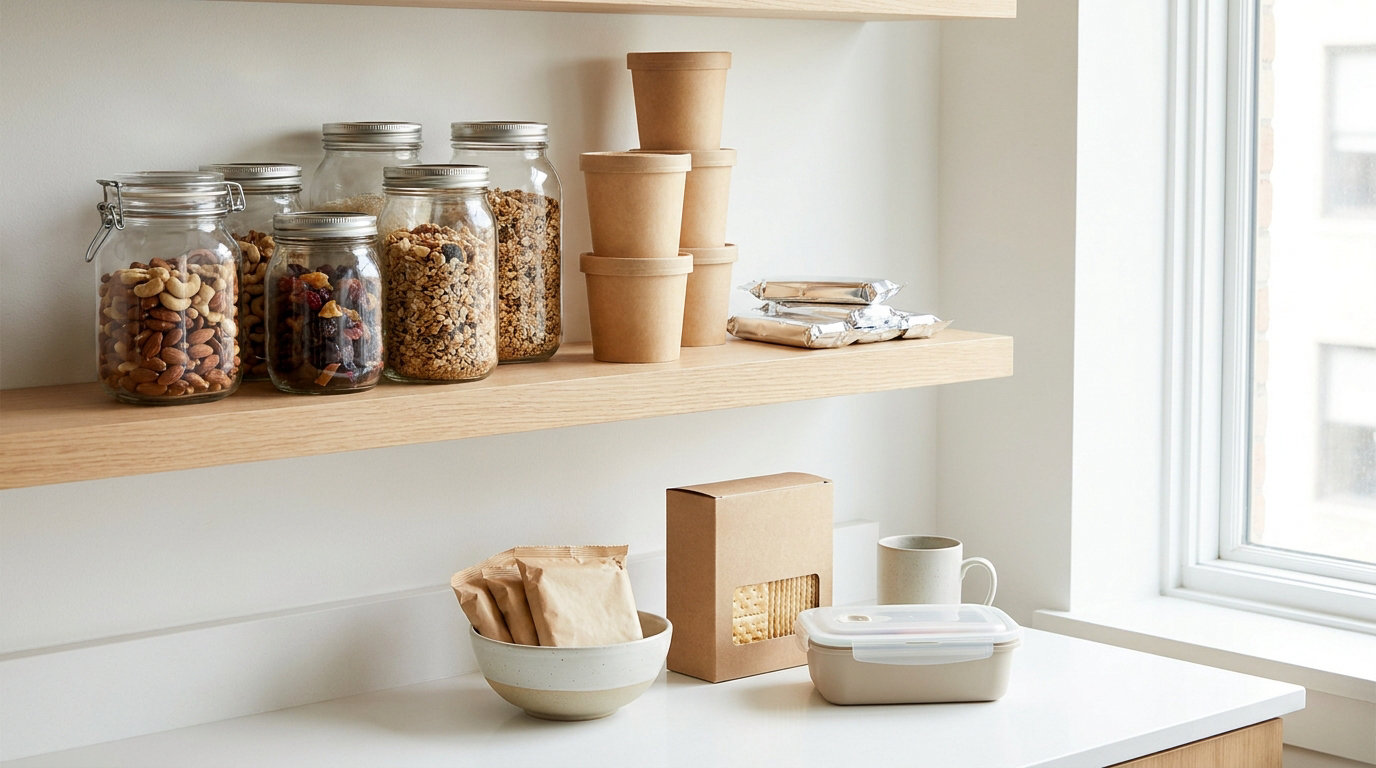
A desk pantry is a small stash of shelf-stable food kept in a drawer, locker or office kitchen so you can put together a real lunch in under five minutes when there is no kitchen, no fridge and no time.
That is the whole idea behind the best office desk pantry staples: a ready-to-eat protein, a crunchy carb, something fresh and one source of fat, all of it built to survive at room temperature. Stack those four parts and you have a meal that takes about a minute to assemble and costs a fraction of a delivery order.
Most people do not need twenty items. Ten well-chosen ones cover the emergencies that actually happen: the forgotten lunch, the 8pm finish, the day the vending machine is empty and you would rather not spend money you did not plan to spend.
Updated for October 2026.
Table of Contents
- Best Office Desk Pantry Staples for Emergency Lunches at a Glance
- 1. Nut Butter and Single-Serve Packets
- 2. Shelf-Stable Wraps and Tortillas
- 3. Canned Tuna and Other Protein Packs
- 4. Dried Beans and Chickpeas
- 5. Instant Oatmeal and Overnight Oats
- 6. Whole-Grain Crackers and Rice Cakes
- 7. Dried Fruit, Trail Mix, and Nuts
- 8. Pasta and Microwaveable Cups
- 9. Hummus and Shelf-Stable Dips
- 10. Bottled Sauces, Dressings, and Flavor Boosters
- Frequently Asked Questions
- Conclusion
Best Office Desk Pantry Staples for Emergency Lunches at a Glance
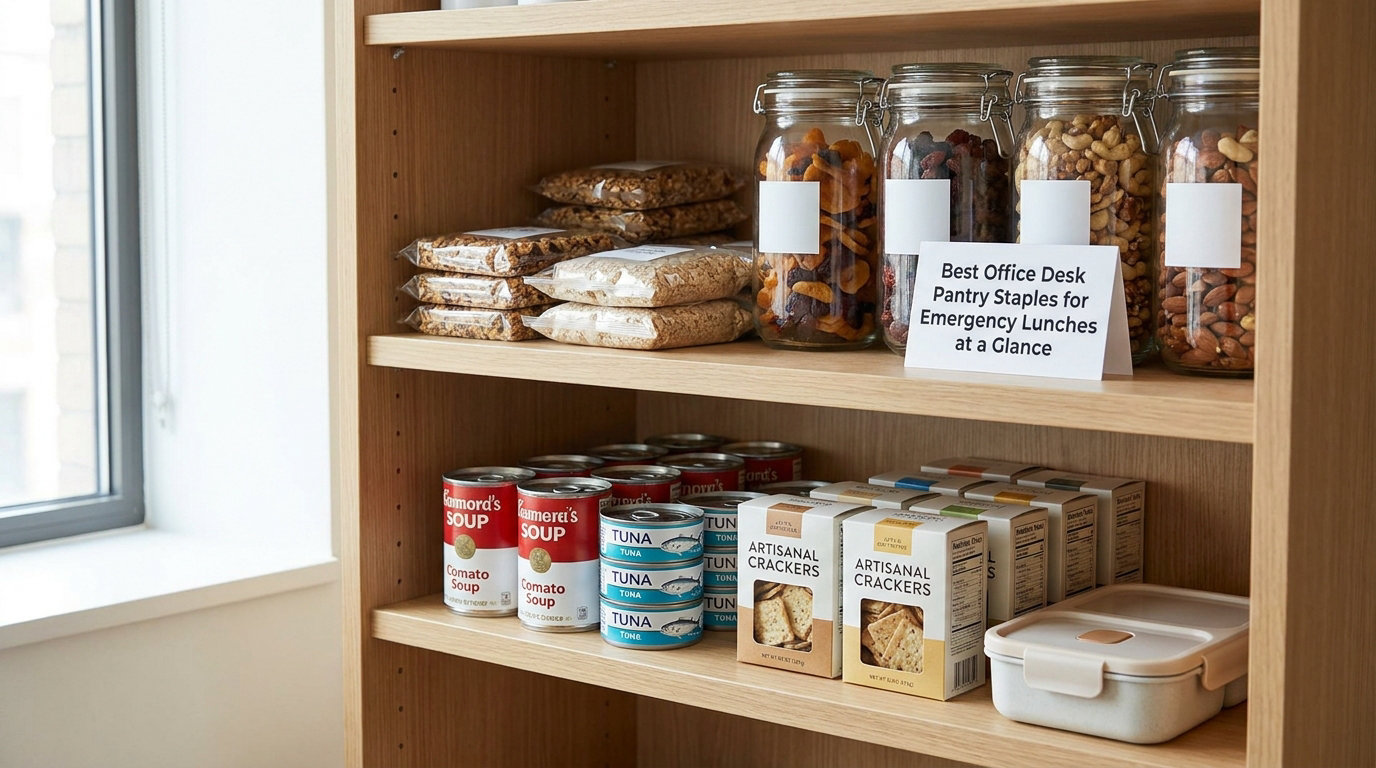
Here is the short version. The table lists each staple, what it is best at, how it should be kept, how long assembly takes, and the emergency lunch it helps you build.
| Staple | Best use | Storage | Prep time | Emergency lunch it builds |
|---|---|---|---|---|
| Nut butter packets | Protein and fat in one | Unopened, room temperature | 30 seconds | Apple slices and nut butter on crackers |
| Tortillas and wraps | Sandwich replacement | Resealable bag, room temperature | 2 minutes | Hummus and vegetable wrap |
| Tuna and salmon pouches | Lean, dense protein | Unopened pouch, room temperature | 1 minute | Pouch tuna with crackers and fruit |
| Dried beans and chickpeas | Protein and fiber | Resealable bag, room temperature | 5 minutes or an overnight soak | No-reheat chickpea salad |
| Instant oatmeal cups | Filling carbohydrate, hot water only | Sealed cups, room temperature | 2 minutes | Oatmeal with dried fruit and nuts |
| Crackers and rice cakes | Sturdy carbohydrate base | Sealed sleeve, room temperature | No prep | Crackers with tuna and sliced cheese |
| Dried fruit, trail mix, nuts | Sweetness and staying power | Resealed bag, room temperature | No prep | Trail mix with jerky and dried apricots |
| Pasta and microwave cups | Hot meal when a microwave exists | Unopened cup, room temperature | 90 seconds | Pasta cup with added beans or tuna |
| Hummus and dip pouches | Carrier for raw vegetables | Sealed pouch; tubs need a fridge | 1 minute | Carrot and cucumber sticks with hummus |
| Sauces and dressings | Flavor for a bland pantry lunch | Packets or small bottles | 10 seconds | Rice cakes with hot sauce and tuna |
What makes an office desk pantry staple worth keeping?
Three things. It survives at room temperature in its original packaging, it needs no utensils to eat, and it combines with at least two other items to make something filling rather than a handful of calories. A single candy bar fails all three tests. A pouch of tuna and a sleeve of crackers pass two and a half.
1. Nut Butter and Single-Serve Packets
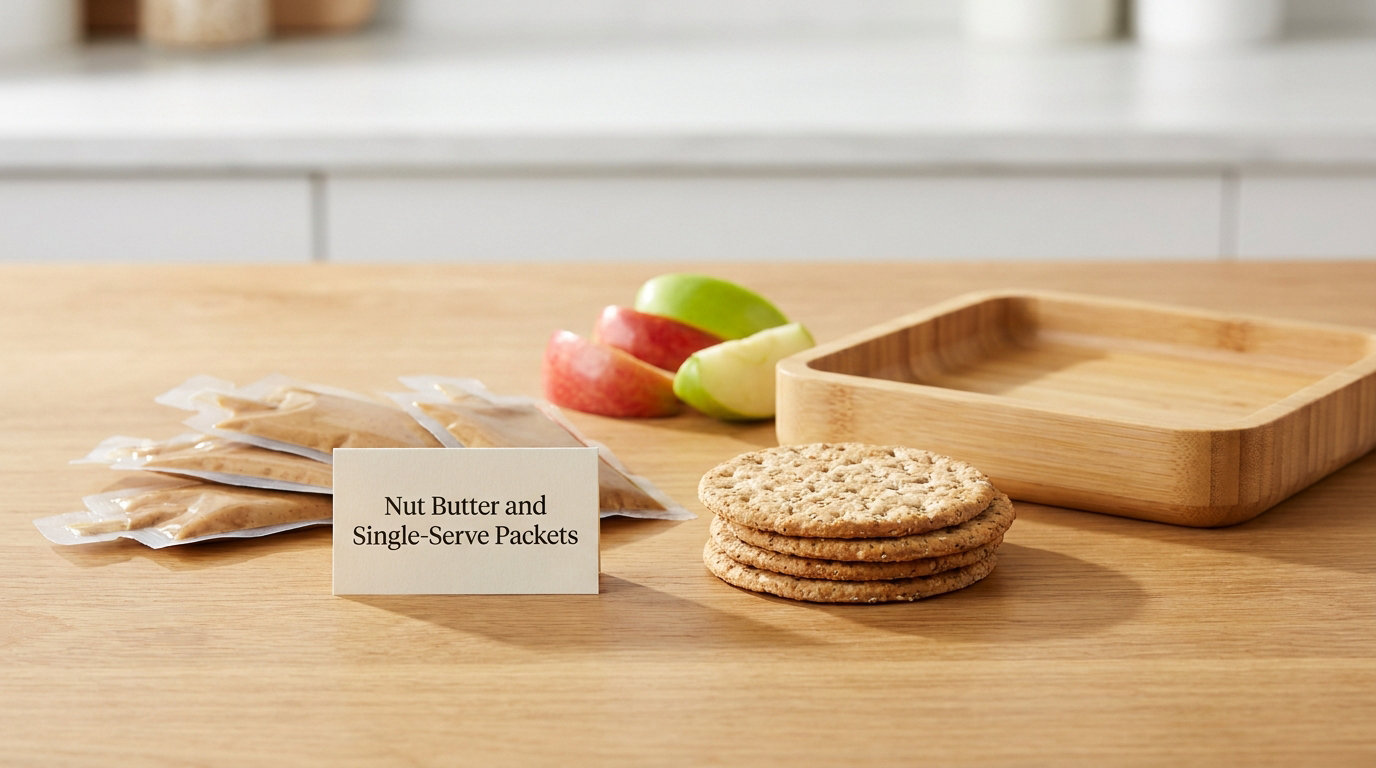
Nut butter is the most useful thing in a desk pantry because it delivers protein and fat in the same spoonful, and because it turns almost any cracker into something that reads as a meal instead of a snack. Peanut and sunflower seed butter packets cover the nut-free case.
Packets or a jar?
Packets win for a drawer. Each one is a portion, there is no knife to wash, nothing spills, and unopened packets sit in a desk for months with no fridge at all. A jar is better value if you can get it into a fridge and you use it most days, because opened nut butter needs refrigeration and turns rancid within a few weeks at room temperature.
Keep packets in a small tin or a labeled pouch so you take three instead of nine. I have watched a whole sleeve disappear in a meeting that nobody needed a snack for.
How to build a lunch around it
Spread two packets on four whole-grain crackers, add apple slices and a handful of roasted chickpeas, and you have protein, carbohydrate, produce and fat in one container. The nut butter covers the protein and the fat, so the rest of the meal only has to supply crunch and something fresh.
One caveat for shared floors: peanut butter is a serious allergen, and packets are noisy and sticky at a desk. If your office has a nut policy, keep sunflower seed butter packets in the mix so the drawer works for everyone, not just for you.
2. Shelf-Stable Wraps and Tortillas
Shelf-stable wraps turn whatever is in the pantry into a sandwich-shaped lunch, which matters if you are the person who never wants another sandwich. A tortilla rolled around hummus and sliced vegetables takes two minutes and eats like something you paid for.
What to keep on hand
- Flour or whole-wheat tortillas in a resealable bag
- Plain corn or spinach tortillas for gluten-free days
- Pita or flatbread, which doubles as a cracker substitute
Tortillas go stale quickly once the bag is open, so buy the smaller count and press the air out before you reseal it. If your floor has a hot plate or toaster, thirty seconds brings them back. Otherwise eat them soft, which works fine rolled.
Filling combinations that travel
Hummus with sliced bell pepper and baby spinach is the reliable one. Nut butter with banana and a small honey packet works if you wrap it in wax paper first. Cooked shredded chicken with a shelf-stable sauce works when you have a fridge, or when you bring it in an insulated bag with an ice pack.
Watch the smell. Tuna, raw onion and strong curry are fine on a hot-desk floor and a poor idea eight feet from a colleague in an open plan.
3. Canned Tuna and Other Protein Packs
Retort pouches of tuna and salmon are the densest protein you can keep in a drawer with no refrigeration, no can opener and no cleanup. Pull the ring, spread it on crackers or rice cakes, and the backbone of a lunch is done in about a minute.
Safety, precisely
An unopened pouch is shelf-stable by design, which is the entire point of retort packaging. Once it is open, treat it like any cooked protein: eat it right away, or get it into a fridge within two hours. A half-eaten pouch does not go back in the drawer, and a pouch left in a hot car all afternoon is not a lunch, it is a risk.
The smell problem and the no-fish alternative
Open tuna at your desk and you will hear about it. Step into a kitchen or a stairwell, or skip it entirely. Chickpea salad, edamame, marinated white beans and sliced cheese do the same job with none of the reputation damage, and most people end up reaching for one of those on tuna days anyway.
4. Dried Beans and Chickpeas
Dried beans and chickpeas are the cheapest protein and fiber in the pantry, and the ones that take the most planning, which is why most people skip them. A quick-soak chickpea gets you from bag to salad in a few hours, and you can start it in the office kitchen on your way home.
Canned beans come in retort pouches too, which is the same trick without the soak. Either version reheats in a bowl with a splash of water in about ninety seconds, or eats cold once you have dressed it.
A no-reheat chickpea salad
- Half a cup of chickpeas, cooled
- A spoonful of olive oil from a small bottle
- A squeeze of lemon or a splash of vinegar
- Dried onion flakes, salt and pepper
- A small handful of trail mix or dried cranberries for sweetness
Eat it from a container with a fork. The whole thing takes under a minute of work and keeps until you finish it, which makes it a good thing to eat at a slow desk rather than between meetings.
Sodium is the honest caveat. A shelf-stable diet eaten every day can get uncomfortably salty, so alternate beans with unsalted nuts and seeds instead of making the pouch your daily protein.
5. Instant Oatmeal and Overnight Oats
Instant oatmeal is the most underrated emergency lunch. It needs hot water rather than a microwave, it keeps for months, and with the right additions it is a real meal instead of a bowl of warm carbs.
Quick oats hydrate in about two minutes. Rolled and steel-cut oats do not, they want overnight and generally a fridge, so they are not a desk-drawer item. Choose cups with a wide mouth and a lid so you can eat straight from the package without a bowl or a spoon at 3pm.
For a lunch version, add two spoonfuls of nut butter, a small handful of dried apricots, a few almonds and a spoon of seeds. That is carbohydrate, protein and fat in one cup, which is the difference between oatmeal as breakfast and oatmeal as dinner at the office.
If your floor has a kettle, oatmeal is the best item on this list for anyone who wants their emergency lunch to actually taste like breakfast food.
6. Whole-Grain Crackers and Rice Cakes
Sturdy, shelf-stable carbohydrates are what turn a pile of snacks into a meal. Crackers and rice cakes are inexpensive, they keep for months, and they accept every topping you already have in the drawer.
Crackers or rice cakes?
Crackers win for spreads and chunky toppings: nut butter, tuna, hummus, sliced cheese. Pick a whole-grain or seeded sleeve and accept the crumbs. Rice cakes are blander and far more portable, they do not crumble, and most are gluten-free, which makes them the safer pick on a floor with a shared but limited kitchen.
Rice cakes are fine dry and much better after thirty seconds in a hot pan, if there is one, or with a thin layer of hummus underneath to soften them. A single rice cake under tuna, a slice of cheese and a hot sauce packet is a genuinely complete lunch.
7. Dried Fruit, Trail Mix, and Nuts
This group is what makes a pantry lunch feel like a treat rather than a task. Dried fruit covers sweetness, nuts cover fat, and a proper trail mix covers all three plus salt in a package that is already portioned for you.
Buy trail mix in single-serve bags, and keep nuts in their shells where you can. The shell slows you down, which is exactly why pistachios in shells are the desk-pantry nut most people recommend: you cannot eat a hundred of them in four minutes.
For fruit, dried apricots and raisins are the practical picks. Both are calorie-dense, which matters on a day you skipped breakfast, and both go in a pocket without leaking or needing a knife.
Reseal the bags rather than clipping the original box, and write the month on the bag with a marker. Nuts turn rancid well before the printed date gives you any warning, and rancid nuts in a shared office are a problem nobody enjoys.
8. Pasta and Microwaveable Cups
Shelf-stable pasta cups and microwaveable rice are the emergency option for floors that have a microwave but no fridge. They trade some fiber and flavor for a hot meal in ninety seconds, which on a deadline day is a fair deal.
Read the instructions rather than assuming. Most rice cups want three minutes and a splash of water, some pasta cups are built for boiling water instead, and a few are perfectly edible cold if you have to eat at your desk.
Make the cup a meal
A plain cup of pasta is carbohydrate and very little else. Add ninety seconds of work: a pouch of tuna or rinsed beans, a spoon of salsa or dried vegetables, and grated cheese or a sauce packet on top. The cup becomes a bowl rather than a side dish.
If your floor has no microwave at all, keep a cup or two in the drawer anyway. Floors change, teams move, and someone on your team will have a kettle you can borrow.
9. Hummus and Shelf-Stable Dips
Dips are the bridge between your drawer and raw produce. Hummus in a retort pouch is shelf-stable until you open it, and one spoonful turns carrots, cucumber, bell pepper or a sleeve of crackers into a lunch with fat and fiber in it.
Standard refrigerated hummus tubs and single-serve cups need a fridge, so read the label before you buy. Retort pouches and stick packs are the drawer-friendly format, and they are the ones worth keeping a small supply of.
A snack box that doubles as lunch
One hummus pouch, one sleeve of crackers, a small pack of carrot and cucumber sticks, a handful of trail mix, and two rice cakes with a sauce packet. Everything in that box is either shelf-stable or holds up for a couple of hours out of a fridge, which is enough for most working lunches.
10. Bottled Sauces, Dressings, and Flavor Boosters
A shelf-stable lunch turns bland fast, and a sauce packet fixes that for almost nothing. This is the cheapest upgrade on the whole list and the one people forget most often.
Mustard, ranch, hot sauce, barbecue, soy sauce, olive oil packets and the packets left over from a salad order all count. Keep them in a small zip case or a mint tin so you can find one without unpacking your lunch and shaking loose crumbs into it.
Mind the sodium and the mess. Several packets in one sitting adds up fast, and a torn ranch packet in a bag ruins the rest of it. One reusable screw-top container for liquids is worth more than a stack of packets.
Frequently Asked Questions
What are the best foods to keep in an office desk pantry?
Start with two proteins, two grains, one produce item and one flavor booster. Good proteins are tuna or salmon pouches, nut butter packets and beef or turkey jerky. Good grains are whole-grain crackers, rice cakes, tortillas and pasta cups. Produce means dried fruit, trail mix, or raw vegetables that hold up for a couple of hours. That covers most emergencies without a fridge or a microwave.
How can I build a balanced emergency lunch without a microwave?
Use four parts: a protein, a carbohydrate, a produce item and a source of fat. Tuna pouch plus crackers plus apple slices plus olive oil is a complete lunch with no heat involved. Nut butter on rice cakes with dried apricots works the same way. Hummus with carrot sticks and crackers is the vegetarian version, and every piece keeps at room temperature.
Which pantry staples do not spoil quickly at room temperature?
Unopened retort pouches, sealed crackers and rice cakes, dried beans, dried fruit, unsalted nuts, jerky, sealed tortilla bags, sauce packets and unopened oatmeal cups all keep for months. Watch the two exceptions: opened nut butter and opened hummus both need a fridge. Anything involving fresh produce, cooked meat or dairy belongs in an insulated bag with an ice pack, not a drawer.
How should I store emergency lunch foods at work?
Keep everything sealed, in one labeled container, and check the date before you move it into the drawer. Reseal bags after each use and write the month on them. If you use the office fridge, put your name and the date on anything that is not factory sealed, and take open items home rather than leaving them to expire next to someone else’s lunch.
What can I buy on a tight budget for office emergency lunches?
Buy the store-brand versions and skip the single-flavor novelty packs. The cheapest useful kit is a box of crackers, a multi-pack of nut butter packets, dried beans, a bag of trail mix and a few sauce packets, which turns into several different lunches. Buying larger sizes of dried staples and dividing them yourself is cheaper still, as long as you have small containers.
Conclusion
Start with two proteins, two grains, one fruit or vegetable option and one flavor booster. That is eight items, and with the right combinations they cover most emergencies you will actually have.
Then do a ten-minute audit every Friday. Check the dates, replace what is gone, and take home anything open that you will not finish. A desk pantry only works if you look at it occasionally; otherwise it turns into a drawer of expired crackers you keep stepping over.