
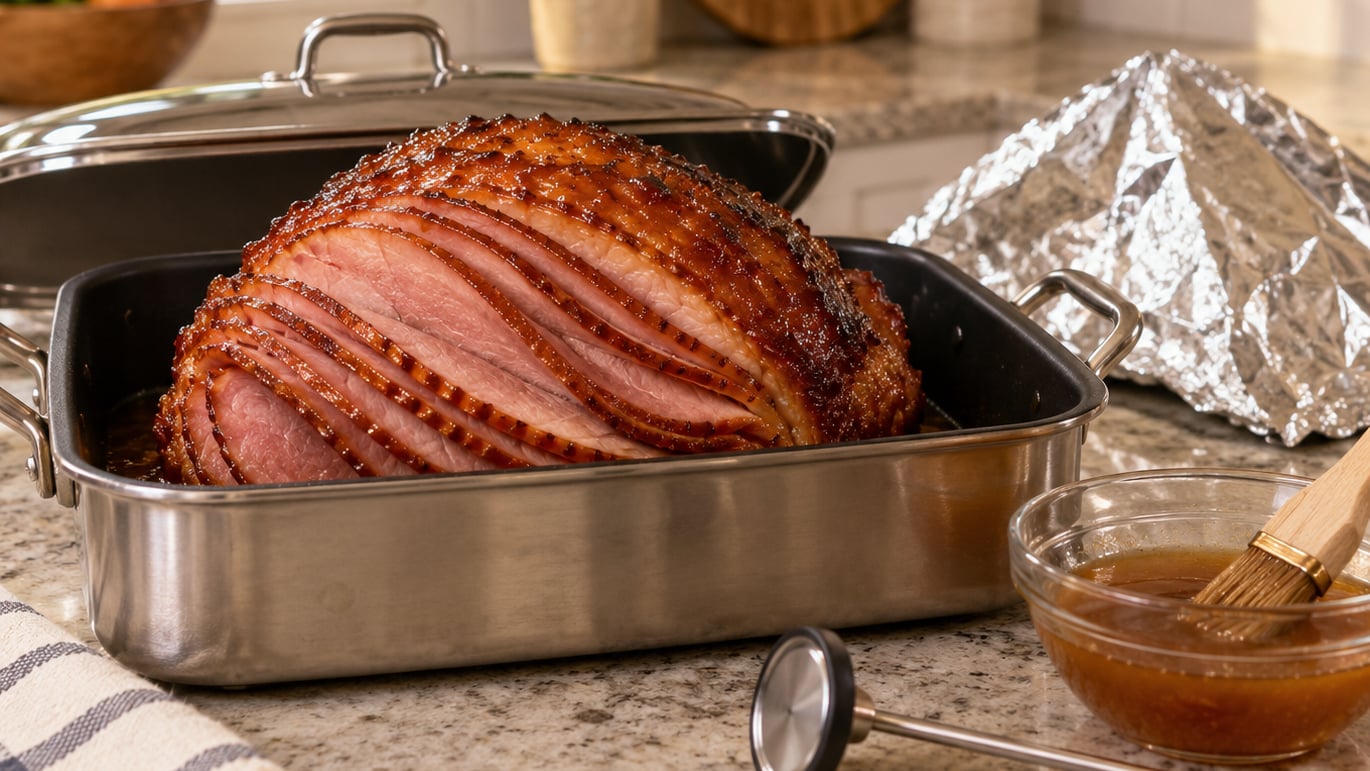
Knowing how to cook a spiral ham without drying it out comes down to one thing: most spiral hams are already fully cooked, so the job is not roasting at all. It is reheating gently, with liquid in the pan and a loose foil tent, until the center reaches 140°F. Get that right and the slices stay juicy; get it wrong and you get a dry, tight, chewy centerpiece after three hours of oven time.
This matters more than it sounds, because the spiral cut exposes a huge amount of surface area to the oven. Slices fan open, their edges curl, and moisture leaves faster than it ever would from a solid roast. The fix is simple and takes about ten minutes of setup: low heat, a covered pan, liquid underneath, and a thermometer so you stop cooking the moment the ham is hot all the way through.
From thaw to table you are looking at roughly 20 minutes of work and 2 to 3 hours of oven time, most of which you can ignore while doing something else. There is no active cooking in this recipe at all.
Table of Contents
What You Need
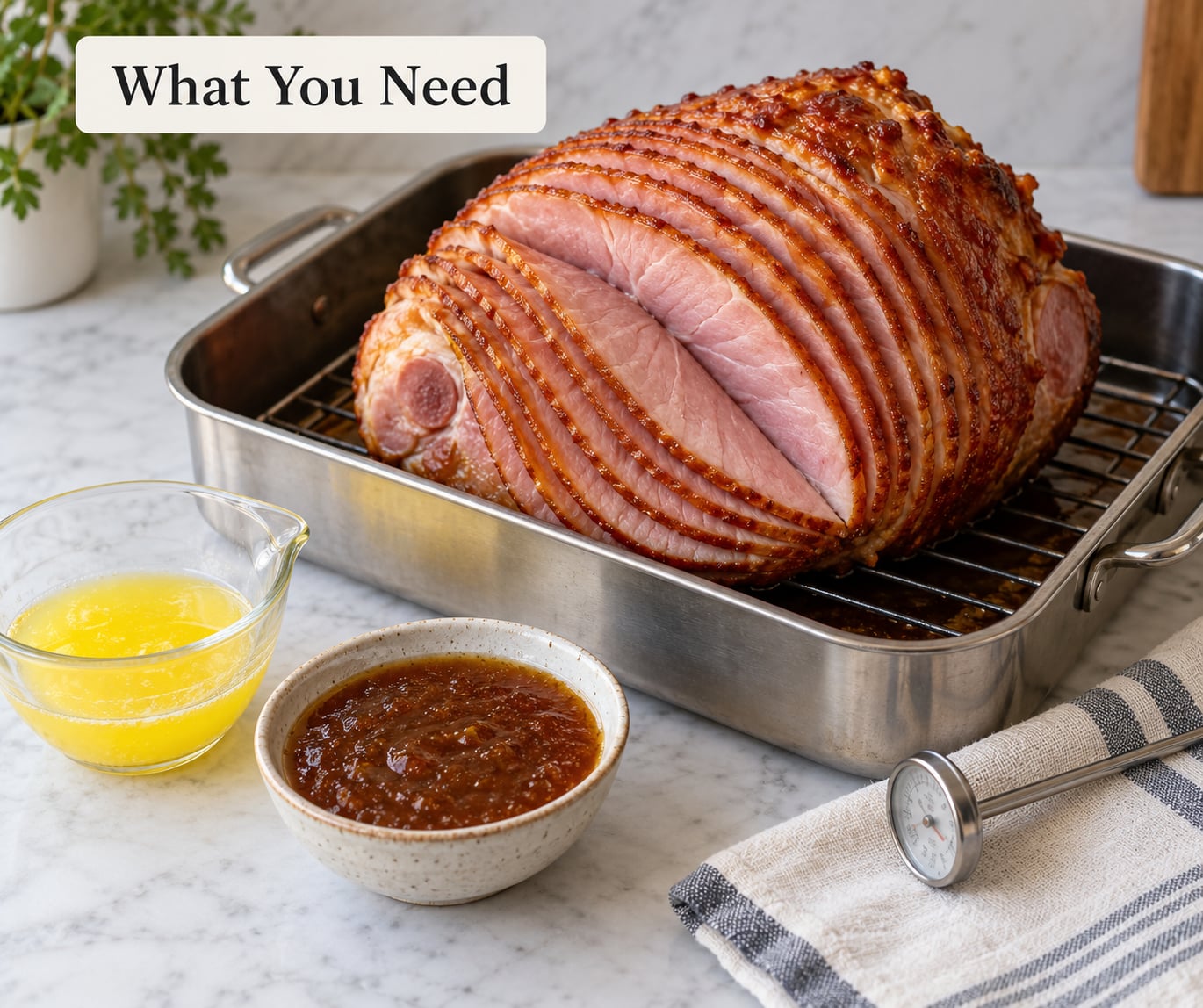
The ham itself matters more than the equipment. Check the label carefully before you start, because it tells you whether you are reheating a cooked ham or cooking a raw one, and those two jobs have completely different timelines.
- The ham. Fully cooked (city ham, ready to eat) is what spiral-cut hams almost always are. If it says raw or needs cooking, use the longer timeline later in this guide.
- A roasting pan with a lid, or heavy-duty foil. A lid is better because it traps steam. A shallow pan with high sides works; a flat cookie sheet does not.
- A wire rack. Optional but worth having. It lifts the ham so hot liquid circulates underneath instead of the bottom sitting in a puddle.
- An instant-read thermometer. Non-negotiable if you want a predictable ham. Cooking by the printed minutes is how people end up with dry slices.
- Liquid. About two cups of chicken broth, apple juice, water, or a mix. The drippings from the ham itself count toward this.
- A basting spoon or brush, plus foil for the tent.
- Optional glaze. Brown sugar, Dijon mustard, and juice or cola in a 3-2-1 ratio works well. Apricot jam, honey and mustard, or a barbecue-style glaze all work too.
Step-by-Step
- Check whether the ham is fully cooked or raw. Read the label. A fully cooked spiral ham only needs reheating to 140°F internal. A ham marked raw or requiring cooking needs to reach 145°F, and takes considerably longer.
- Take the ham out of its plastic wrap and net. Leave the ham netting or string in place if it has one. Pull off the paper packet of pop-up timer and any cardboard base. Rinse briefly and pat dry.
- Let it come toward room temperature. This one is worth doing. A ham straight from the fridge spends most of its cooking time warming through while the outer slices already look done and dry out. Letting it sit out for an hour or two before cooking evens out the finish. Keep it under two hours for safety, and leave it in the fridge if you need longer.
- Preheat the oven to 325°F. Resist the 250°F printed on most packages. Low heat works, but it takes so long that the outside of the ham spends a long time losing moisture. 325°F with a covered pan gets you a moist ham faster.
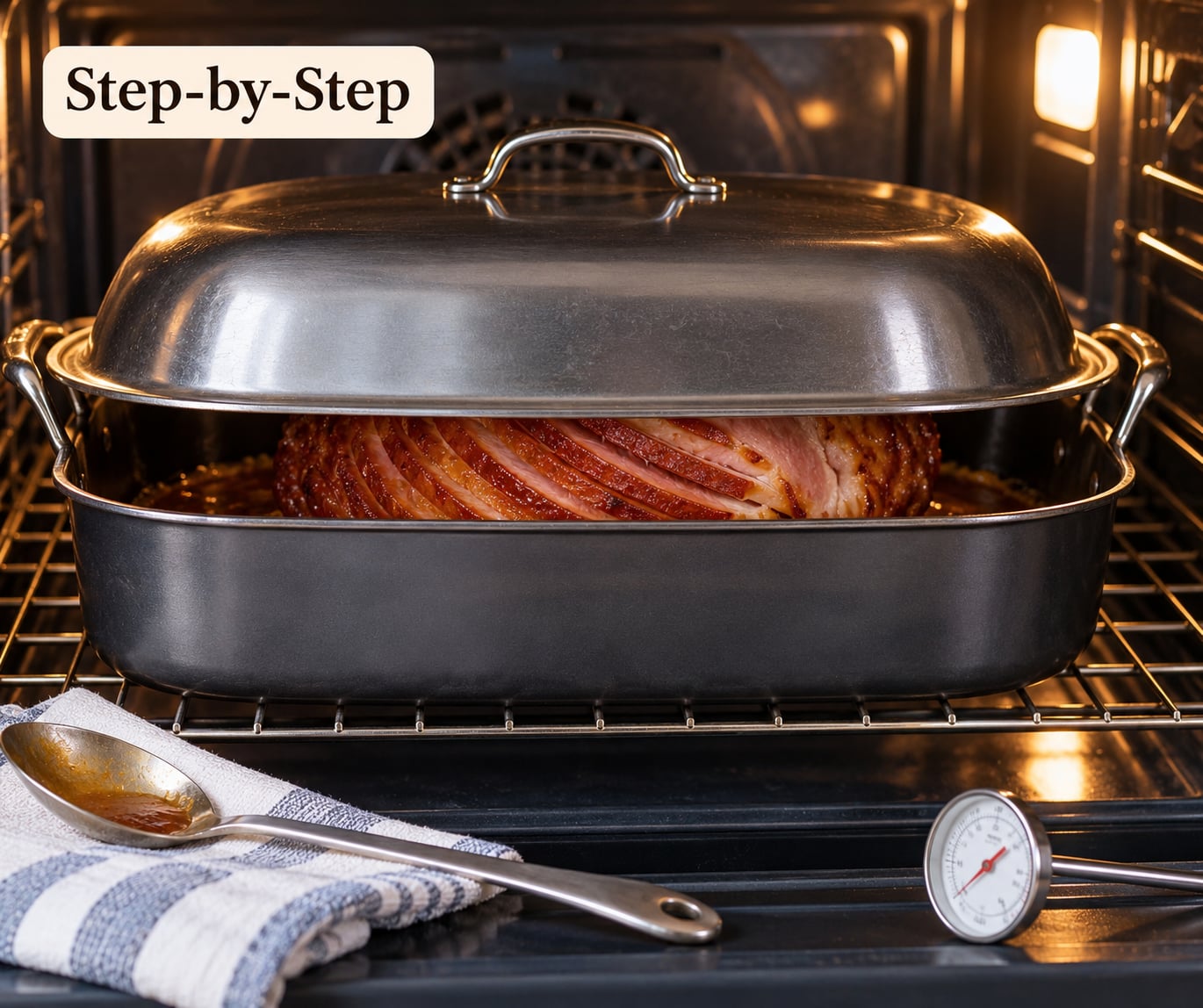
- Set the ham on the rack and add liquid. Pour two cups of broth, juice, or water into the bottom of the pan without touching the ham. That steam is what keeps the slices from drying out.
- Cover it. Lid on, or wrap tightly in foil if you have no lid. Press the foil down against the ham so steam cannot escape. This is the single most important step for moisture.
- Cook to temperature, not to the clock. Check the internal temperature at the thickest part of the ham, not touching bone. Pull it out at 135°F to 140°F for a fully cooked ham. Most hams hit it in about 10 to 15 minutes per pound, but the shape matters more than the weight, and a thermometer settles every argument.
- Uncover and glaze for the last 20 to 30 minutes. Raise the heat to 375°F or 400°F, peel back the foil, and brush on the glaze. Watch it closely. Brown sugar goes from glossy to burned fast, and the top slices are the ones that suffer most.
- Rest before carving. Give it 15 to 20 minutes. The slices relax, the juices redistribute, and carving a hot ham right out of the oven makes everything run dry down the plate.
- Carve along the spiral. Start at the end of the ham and follow each slice’s curve back toward the bone. Cutting straight across instead of between the slices shaves the surface and dries out the edges you worked to protect.
How to Cook a Spiral Ham Without Drying It Out
Five habits do most of the work. Modest heat, a covered pan, liquid underneath, a thermometer, and patience at the end.
The covered pan is the one people skip. Home cooks on cooking forums describe the same result repeatedly: a ham tented in foil or sealed in a bag comes out juicy, the same ham roasted uncovered goes dry. Steam cannot escape, so the slices stay in a humid pocket the whole time they reheat.
Heat is the second lever. Open the oven door once near the halfway mark to check on things, then stop opening it. Every opening lets heat and moisture out at the same time, and you restart the cooking cycle each time.
Basting is a nice touch but not a cure-all. A spiral ham sheds enough fat and drippings on its own that most packages do not call for basting. If you do baste, use the pan liquid rather than a wet brush, and do it no more than a few times.
One warning about reheating a previously chilled ham. Coming straight from the fridge at a high oven temperature scorches the outside while the center stays cold, so it keeps cooking, keeps drying, and never reaches a safe temperature evenly. Let it temper first, then cook at 325°F.
For leftover slices, put them in a baking dish with a splash of broth and cover loosely. The microwave makes ham rubbery because the water inside the muscle turns to steam unevenly. Oven or air fryer with a little liquid is worth the extra five minutes.
Common Mistakes
Dry spiral ham nearly always traces back to one of these.
- Cooking at 350°F or higher with the foil off. The edges of the slices brown and tighten before the center warms. Drop to 325°F and cover.
- No liquid in the pan. Dry heat pulls moisture out of the exposed cut surfaces. Two cups of broth or juice fixes this completely.
- A tight seal on the ham itself is fine, but a dry pan is not. Foil traps steam; the steam has to come from somewhere.
- Trusting the package minutes. Round hams cook differently from flat ones, and a thermometer costs less than a dry ham.
- Peeling the foil off too early and walking away. Uncovered time is when the glaze burns and the top slices dry out. Stay in the kitchen for that last half hour.
- Glazing early. Sugar in a hot oven for two hours is a scorch risk, and a burnt glaze tastes bitter all the way down to the bone.
- Carving straight away. Cutting a ham that just left the oven pushes juice out onto the cutting board instead of keeping it in the slice.
- Reheating leftover slices without liquid. Ten seconds of microwave time does more damage than the original roast did.
And one non-mistake that gets flagged too often: resting the ham uncovered in the fridge for an hour or two before cooking. That is deliberate, not neglect. Just keep it under two hours so it stays out of the food-safety danger zone, and put it back in the fridge if you want more time.
Frequently Asked Questions
How long should I cook a spiral ham?
For a fully cooked spiral ham, most reach 140°F in about 10 to 15 minutes per pound, so a 10 pound ham takes roughly 100 to 150 minutes at 325°F. That is a guideline, not a rule: round hams take longer than flat ones, and a covered ham finishes at the shorter end of the range. Use a thermometer and pull it at 135°F to 140°F.
Should I cover a spiral ham while cooking?
Yes. A lid or a tight foil wrap is the most reliable way to keep a spiral ham juicy, because it traps the steam rising from the liquid in the pan. That steam keeps the cut faces of the slices from losing moisture to the dry oven air. Uncover only for the last 20 to 30 minutes, when you want the surface to brown and glaze to set.
How do I know when a spiral ham is done?
Use an instant-read thermometer in the thickest part of the ham, away from bone. A fully cooked spiral ham is done at 135°F to 140°F internal. A ham labeled raw needs 145°F. Probe near the bone too, since heat travels slowest through the center, and remember the internal temperature keeps rising a few degrees after you pull it from the oven.
Do I need to baste a spiral ham?
Usually not, especially when the ham sits on a rack over liquid. Spiral-cut hams release enough fat and drippings on their own. If you like a shinier surface, spoon pan juices over the top a couple of times during the covered portion, not at the end. Basting is a garnish step, not a moisture fix, and adding more liquid to the pan matters far more.
Can I reheat a spiral ham without drying it out?
Yes. Set leftover slices in a baking dish with a splash of broth or ham juices and cover loosely with foil, then warm at 325°F for about 15 to 20 minutes. An air fryer or toaster oven works well too, with the foil still in place. Avoid the microwave unless you are reheating a single slice for thirty seconds, since it turns ham rubbery.
Start with the thermometer, the pan of liquid, and the foil tent. Those three take five minutes and they decide whether the ham comes out moist, regardless of what the package says. If you end up with extra slices, meal prepping sandwiches for the week is a good use for them, and if you slice the ham on a slicer rather than a knife, our guide to cleaning a home meat slicer covers the cleanup afterward.