
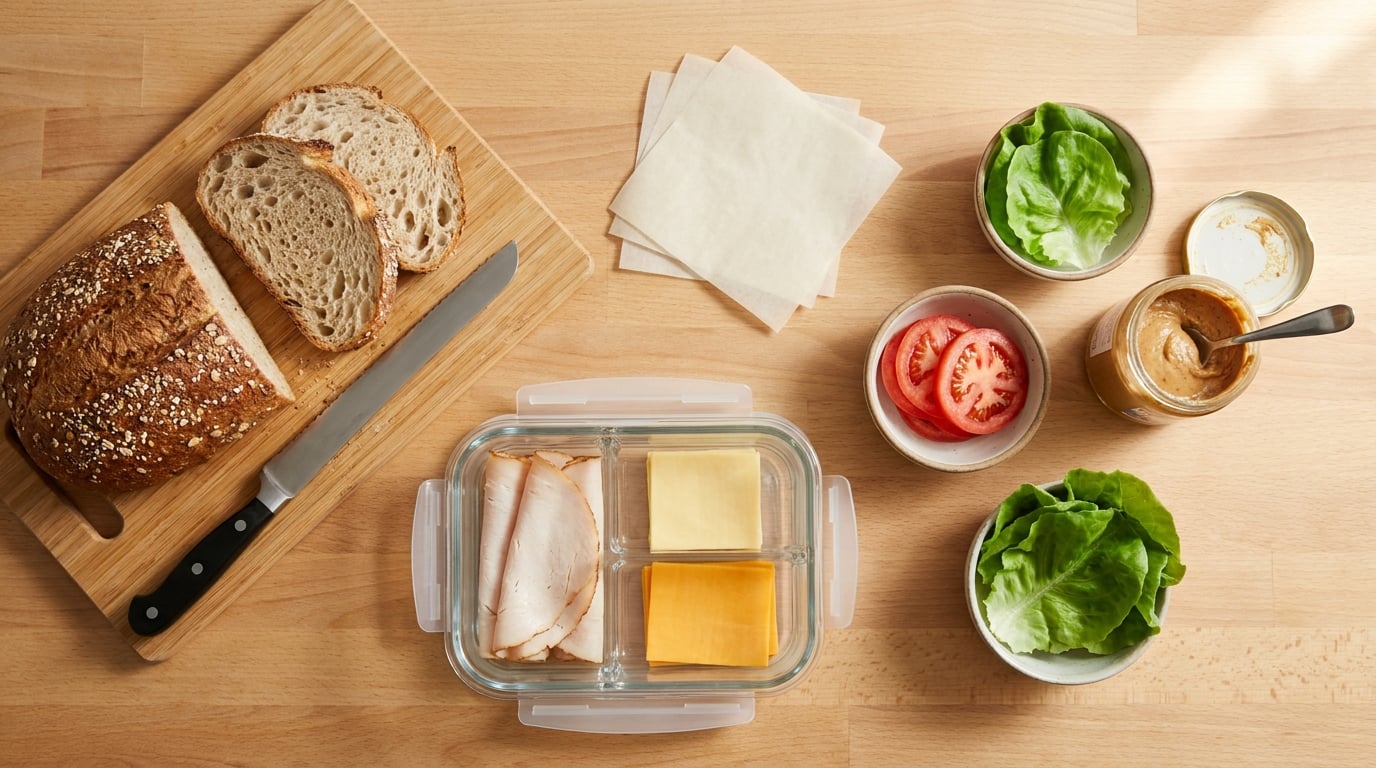
To meal prep sandwiches for the week without soggy bread, you do not build the sandwiches on Sunday. You prep every component separately, keep wet ingredients away from the bread, and do a two-minute assembly each morning. The soggy bread problem is a moisture problem, and moisture is something you can control almost completely.
Here is the honest version. Sliced tomato, cucumber and avocado release water the moment you cut them. A sealed lunchbox traps that water as condensation, and the bread crumb drinks it up. Meanwhile a mayonnaise-based filling goes slack, lettuce wilts, and by Wednesday the whole thing is a disappointment. None of that is a recipe failure, though. It is a packing failure, and it has a fix.
The fix is a component system. Bread, protein, cheese, dry vegetables and sauces each get their own home, and the sandwich gets built at eat time. Prep takes about an hour on Sunday, assembly takes under two minutes on a weekday morning, and cleanup is a ten-minute sink job instead of a nightly one.
Table of Contents
What You Need
A sandwich prep system needs very little equipment. It needs containers that seal, a barrier material, and ingredients chosen for how they behave on day four rather than how they look on day one.
Bread
Sturdy is the goal. Sourdough, ciabatta, whole-grain sandwich bread, pita and tortillas all hold their structure where soft white sandwich bread turns to mush. Buy a loaf that is already sliced if you can, since even slices make the layer order much easier to get right.
Protein and cheese
Roast beef, turkey, ham, sliced chicken and hard cheeses are the reliable options. Cheese does double duty here: it is a flavor layer and a physical moisture barrier between wet vegetables and bread.
Vegetables
Buy two kinds. Dry, sturdy vegetables such as romaine hearts, spinach, cucumber, bell pepper and shredded cabbage go in the fridge as-is. Wet ones such as tomato, avocado and pickled onions need a workaround described below.
Condiments
Mayonnaise, mustard, hummus, pesto and cream cheese all work. They belong between the fillings, not smeared on the bread.
Packing materials
Deli paper or parchment paper cut to sandwich size, a small stack of paper towels, dual-compartment containers with snap lids, and a few clips or rubber bands. Labels or masking tape on a marker keep the days straight, which matters more than you would think on a Wednesday.
How to Meal Prep Sandwiches for the Week Without Soggy Bread: Step-by-Step
How to Meal Prep Sandwiches for the Week Without Soggy Bread: Pick Sandwiches That Hold Up
Choose sandwich styles that survive refrigeration before you choose flavors. Turkey and ham with a firm cheese, roast beef with sharp cheddar and pickled onions, and hummus or cream cheese spreads with crunchy vegetables are the reliable ones. Chicken salad, tuna and egg salad hold onto moisture, so make them with less dressing than feels natural and serve them within two days.
Skip the fragile builds. A BLT is a same-day sandwich, not a weekday lunch, because the tomato ruins it within hours. So are burgers and anything stacked tall enough to compress under its own weight.
Wraps, rolls and pitas give you variety without sacrificing structure. A tortilla rolled tightly and wrapped in parchment holds far better than a tall sub, and a ciabatta roll is a natural fit for a thicker filling. If you are packing for a kid, the roll format usually survives the trip to school in one piece, which the flat sandwich does not always manage.
How to Meal Prep Sandwiches for the Week Without Soggy Bread: Prep Components Separately
Cook your proteins first, while the oven is on. Roast a chicken breast or a tray of vegetables at 400°F and let them cool fully before you pack them. Warm food sealed into a container sweats as it cools, and that trapped steam is half the sogginess problem. Deli meat you bought ready to eat skips this step.
Then handle the vegetables. Wash produce under running water, dry it thoroughly, and only then slice it. A salad spinner or a clean kitchen towel removes the surface water that otherwise rides along into the container. Dry lettuce stays crisp for four or five days; wet lettuce turns translucent by day two.
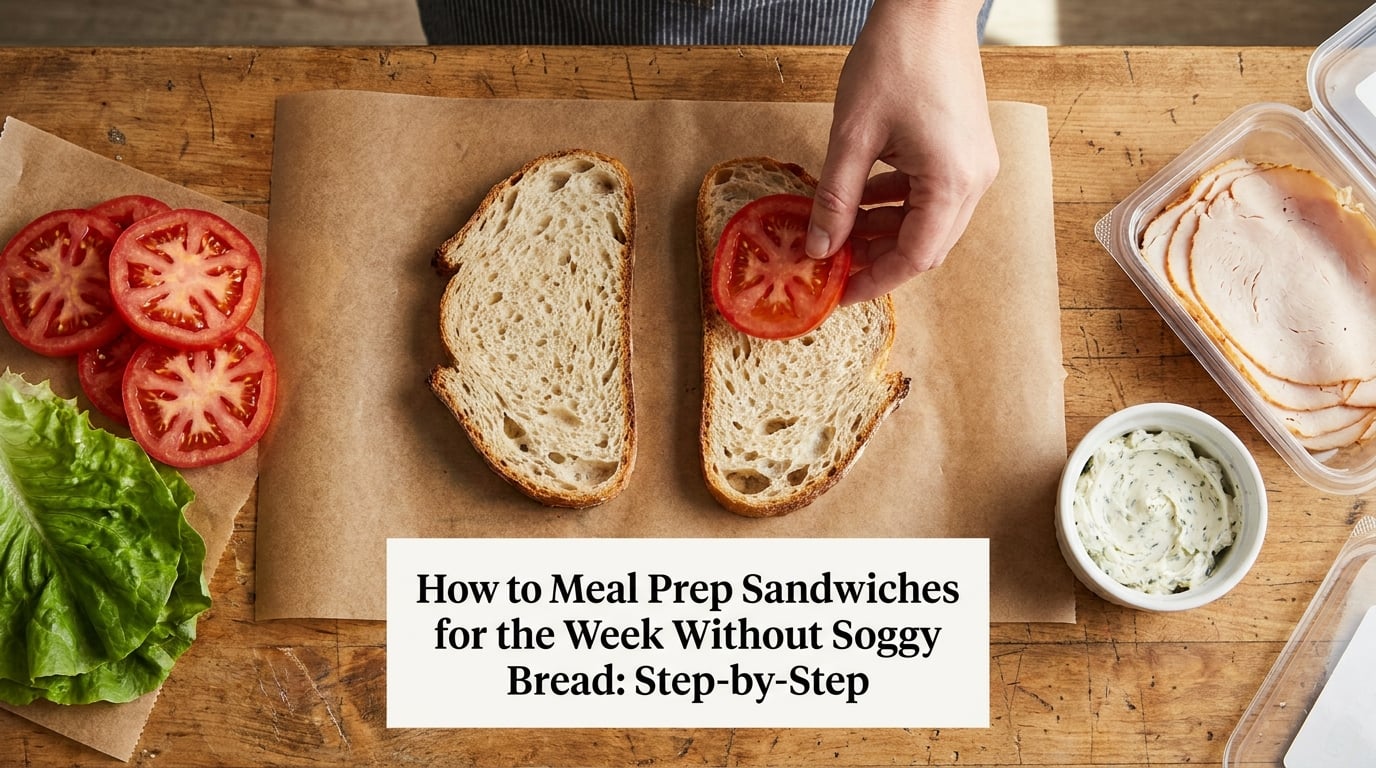
Draw water out of the wet vegetables before they ever touch bread. Salt sliced tomato and lay the slices on a paper towel for ten minutes, and the surface liquid moves onto the towel. A quick pickle does the same thing with more flavor: thin cucumber and onion slices in a splash of vinegar and a pinch of salt are noticeably firmer by the next morning. Shredded cabbage, bell pepper rings and carrot are so dry they need no intervention at all.
Store wet and dry separately. A dual-compartment container is the easiest tool for this: proteins and cheese on one side, dry vegetables and pickles on the other. Bread goes in its own container or wrapped in a clean towel. If you only have one container, a small sealed tub of vegetables nested inside the larger one works nearly as well.
Keep the fridge at or below 40°F, and cool everything to room temperature before sealing a container. Cross-contamination matters here: use a separate cutting board for cooked meat and raw vegetables, and never return sliced vegetables to the container you used before they were washed.
How to Meal Prep Sandwiches for the Week Without Soggy Bread: Build and Store Without Sogginess
Layering is what keeps soggy bread out of the sandwich. The order runs from dry to wet, so the moisture stays in the middle where it cannot reach a crust.
- Spread butter, mayo or hummus on the slice. A thin layer acts as a moisture barrier, and it works best when it touches only the other fillings rather than the bread surface.
- Add the protein and the cheese. Cheese goes on the wet side of the protein so it becomes the barrier between vegetables and bread.
- Add wet ingredients, salt them lightly, and drain or blot any surface liquid.
- Add dry vegetables, which do not release water and do not wilt from contact with anything above them.
- Close it up, wrap in deli paper or parchment, and seal.
The single most useful trick, and the one most people have never heard outside a comment thread, is to put the spread between the fillings rather than on the bread. A sandwich with mayo on the slice contacts bread directly, and that is the contact that ruins it. Mayo between turkey and lettuce touches protein, not crumb. Lettuce on the outermost layer protects the bread from the filling and keeps the sandwich from getting damp on the outside.
Wrap each sandwich before it goes in the container. Deli paper or parchment is the best barrier material because it keeps condensation off the bread while letting the sandwich breathe slightly. Foil is airtight, which is useful for hot sandwiches and unnecessary for cold ones, since a fully sealed foil packet traps steam. A folded paper towel tucked against the bread absorbs what does get through. Swap it on day three.
Seal the container and get it into the fridge within two hours. Airtight is the goal, and a snap-lid dual-compartment container beats a bowl covered in cling film every time.
Label each container with the day. Plan on eating deli-meat sandwiches within three to four days of prep and use a midweek top-up for the tail of the week, which also solves the boredom problem that ends most sandwich meal preps by Tuesday.
Common Mistakes
Building finished sandwiches on Sunday. This is the mistake behind most soggy weekday lunches. The fix is to prep components and assemble in the morning, which takes about two minutes per sandwich.
Washing vegetables and packing them wet. Surface water is the enemy. Dry everything after washing, and blot tomato slices on a towel before they go in.
Putting mayo or dressing straight on the bread. Move the spread between the fillings, or use a slice of cheese as the barrier instead.
Sealing food that is still warm. Steam forms as warm food cools, and it condenses on the lid and the bread. Cool first, then seal.
Stacking sandwiches in one container. The weight from a sandwich on top presses moisture out of the one below. Pack one per container, or on separate levels with a divider.
Grilling sandwiches and wrapping them warm. A cold grilled sandwich goes soggy because the steam has nowhere to go. Let it cool for ten minutes on a rack before you pack it.
Forgetting the ice pack on days four and five. An insulated lunch bag with a frozen gel pack keeps the perishable filling under 40°F through a morning that includes a long commute or a hot car.
A few quick habits round it out. Rotate two or three sandwich styles across the week instead of one, so lunches do not get boring by Wednesday. Keep lettuce and cabbage in a paper towel inside the container, not loose. And if a slice of bread has gone a bit soft, toast it or run it under the broiler for a minute before eating. Fifteen seconds of heat brings back the crust.
Frequently Asked Questions
Can I meal prep sandwiches for the whole week without them getting soggy?
Yes, if you prep the components rather than the finished sandwich. Store bread, protein, cheese and vegetables in separate containers, or a dual-compartment container, and add wet ingredients at lunchtime. Sandwiches with deli meat are safest within three to four days of prep, so plan a short midweek top-up for days four and five. Fully assembled sandwiches hold up best for one to two days before the bread softens.
What is the best bread for meal prep sandwiches?
Sturdy breads such as ciabatta, sourdough, whole-grain sandwich bread, pita and tortillas hold their structure far better than soft white sandwich bread. Pita and tortillas are the most forgiving because a tight roll distributes the filling rather than pressing it into the slice. Lightly toasting bread before filling adds a barrier and buys you an extra day. Store the loaf in its original wrapping or a clean towel, never sliced open in a sealed tub.
Should I wash vegetables before meal prepping sandwiches?
Yes. Wash produce under running water and dry it thoroughly before cutting or packing, since surface water is what turns bread soft. A salad spinner or a clean kitchen towel removes more moisture than a colander alone. For tomatoes, slice, salt lightly and rest the slices on a paper towel for ten minutes before packing. Dry vegetables such as shredded cabbage, bell pepper and cucumber need no extra treatment.
Can I freeze sandwiches for the week?
Freezing works for bread, cooked meat, cheese and sturdy vegetables, but lettuce, tomatoes, cucumbers, avocado and creamy dressings turn watery or bland once thawed. Freeze unwrapped or loosely wrapped on a tray first, then wrap in foil or freezer bag. Thaw in the fridge or on a plate between cloth napkins so condensation is absorbed, not reabsorbed by the bread. Toast or broil before eating to bring the crust back.
Which sandwich fillings travel best for a packed lunch?
Turkey and ham with cheese, roast beef, and vegetarian combinations built on hummus or cream cheese with firm vegetables are the most reliable. Shredded chicken, tuna and egg salad travel but need less dressing than usual and are best eaten within two days. Avoid tomato, avocado and raw onion, which release water quickly, and skip lettuce on the outer layer of any sandwich that will sit for more than a day.
Conclusion
Start with the bread and the containers. Pick up a sturdy loaf, a handful of dual-compartment containers and a roll of parchment paper, then Sunday prep your proteins, dry vegetables and pickles as separate components. Seal it all airtight with a barrier between the wet fillings and the bread, and the two-minute morning assembly takes care of the rest.