
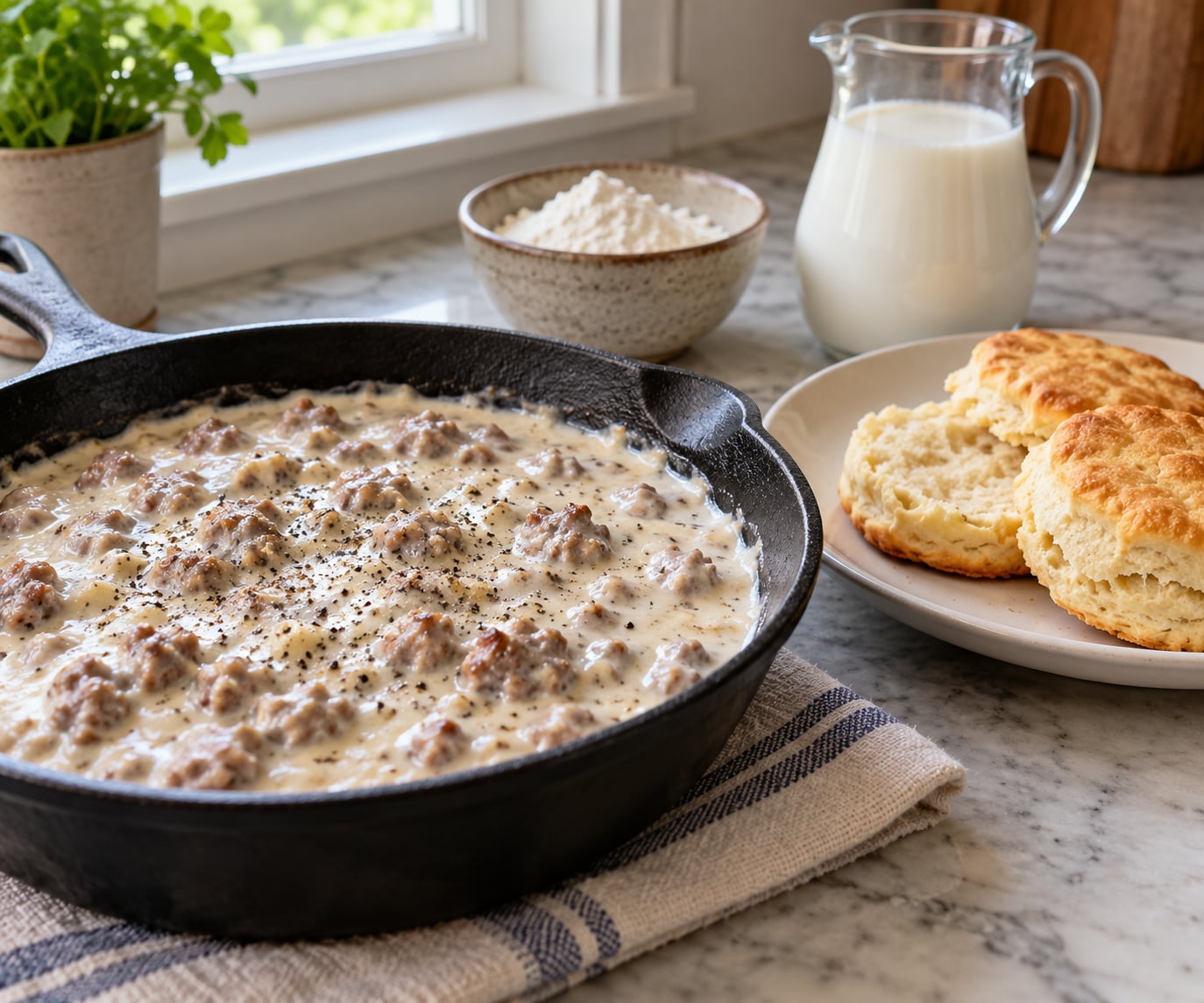
Learning how to make sausage gravy for biscuits is one skillet and about 30 minutes: brown the breakfast sausage, whisk flour into the rendered fat, then add milk slowly until the sauce coats a spoon. It works on a weeknight as well as a holiday brunch, and the whole thing hinges on two things people tend to rush.
The first is browning the sausage until the pan is genuinely brown, no pink anywhere. The second is whisking the milk in slowly enough that the sauce never breaks. Get those right and the rest is just seasoning.
Table of Contents
What You Need
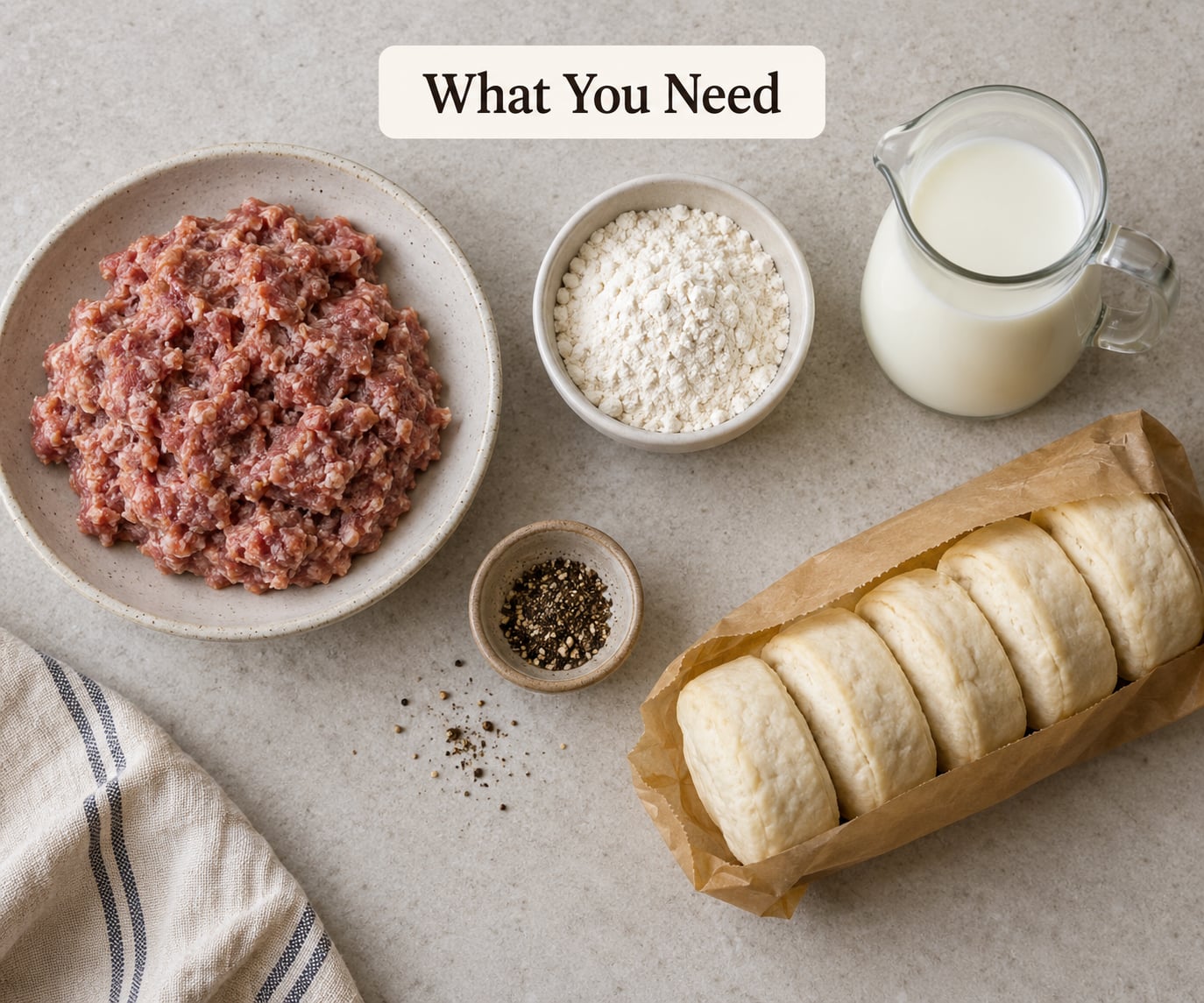
This makes about 4 cups of gravy, which covers six servings at two biscuits each.
- 1 pound pork breakfast sausage, mild or hot
- 3 tablespoons butter, divided
- 1/4 cup all-purpose flour (about 5 tablespoons; some recipes go to 1/2 cup for a thicker gravy)
- 3 cups whole milk, plus more for adjusting
- 1/4 teaspoon freshly ground black pepper, plus more to taste
- 1/2 teaspoon salt, added late
- 6 to 8 biscuits
Whole milk is the standard because its fat gives the sauce body. Two percent works and is a little lighter; skim makes a thinner gravy that needs more flour to hold. Skip heavy cream, which turns a breakfast gravy heavy enough to sit on your stomach.
Both refrigerated and frozen biscuits work. Bake refrigerated jumbo biscuits from the carton at 425F for 12 to 15 minutes. For frozen, either bake from frozen at 375F for 20 to 25 minutes, or let them sit on the counter for 15 minutes and bake at 425F until the tops are golden, roughly 12 minutes. Leave a couple inches between them, since they rise and can bake unevenly when crowded.
Drop biscuits and homemade buttermilk biscuits both work well. If you have time to make the dough from scratch, keep the biscuits unbaked and frozen for up to a month, then bake straight from frozen at 400F for 20 to 25 minutes.
Step-by-Step: How to Make Sausage Gravy for Biscuits
How to Cook the Sausage
Heat a wide skillet over medium-high heat. Add the sausage in a single layer and leave it alone for two minutes so the bottom actually browns.
Break it into crumbles with a wooden spoon, then cook until the meat is deeply browned with no pink left anywhere, about 8 to 10 minutes total. Ground meat needs to reach 160F internal temperature, and a thermometer is the only honest way to check crumbles sitting in their own grease.
When it’s done, tip off most of the fat but leave roughly 2 tablespoons in the pan. That grease is flavor, and it is what the flour cooks in. If the pan looks dry, add 2 tablespoons of the butter. Coat the flour with the fat before any milk goes near it, or you are gambling with lumps.
How to Make the Flour Sauce Without Lumps
Whisk the remaining butter into the pan, then sprinkle in the flour while whisking. Keep whisking for a minute until the mixture looks like wet sand and the sausage crumbles are coated, about 1 to 2 minutes more.
Now let the roux cook. Stir it every 30 seconds and wait until it smells nutty and turns a light golden brown, roughly 2 minutes. This step is skippable but not worth skipping, since raw flour tastes pasty in the finished sauce.
Pour in about one cup of milk and whisk hard until the roux loosens into a slurry. Then add the rest a quarter cup at a time, whisking constantly. The rule that matters here is hot flour, cold milk, mixed slowly. Cold milk gives the starch something to bond with and cuts the chance of small clumps.
How to Thicken and Season the Gravy
Bring the gravy to a gentle simmer and stir often, scraping the bottom, for 3 to 5 minutes. It should thicken to roughly the consistency of thin cream: a spoon drawn through the sauce leaves a clean trail for a second or two before the sauce closes back up.
Turn the heat to low and season with the black pepper and salt. Salt goes in late because milk-based sauce needs a full simmer to taste properly seasoned rather than simply salty.
Too thin? Simmer another two minutes. Too thick? Whisk in a tablespoon of milk at a time. Taste as you go, then taste once more after a minute, because pepper and salt both hit harder once the sauce has cooled slightly.
How to Serve Sausage Gravy for Biscuits
Keep the finished gravy on the lowest heat while the biscuits finish, stirring every minute or two. Gravy thickens as it sits, and if it starts to tighten, a splash of milk brings it right back.
Split two biscuits per person, lay them in a shallow bowl, and spoon about 2/3 cup of gravy over the top, letting it run down into the crevices rather than sitting in a neat layer. Serve immediately, while both the biscuits and the gravy are still hot.
Chopped scallions or chives, cracked black pepper, and a spoonful of hot honey or maple syrup on the side all help. Biscuits and gravy also work over grits, scrambled eggs, fried apples, or hash browns if you want to stretch the batch.
Common Mistakes and Fixes
| What went wrong | Why it happened | How to fix it |
|---|---|---|
| Gravelly or lumpy gravy | Milk added too fast, or into a roux that was too hot | Whisk an extra cup of cold milk in hard to break up the clumps, then simmer gently and strain through a sieve if needed |
| Watery gravy | Not enough flour, or simmered too briefly | Whisk in a tablespoon of flour slaked with a splash of milk, then simmer 2 to 3 minutes |
| Gravy like wet cement | Too much flour, or boiled hard for too long | Whisk in milk a tablespoon at a time until it coats the back of a spoon |
| Gravy turns greasy as it sits | Heat too high, or the sauce was not stirred while it sat | Skim the surface with a spoon, or whisk in a tablespoon of cold milk to emulsify the fat back in |
| Sausage is rubbery or chewy | Overcrowded the pan, or cooked it past done | Brown in a single layer with space between, and pull it off the heat as soon as no pink remains |
| Gravy tastes bland | Seasoned before the sauce reduced | Simmer to the target thickness first, then add salt and pepper and taste again |
One more worth naming: gravy that keeps thickening on the stove while everyone is still eating. A quarter cup of warm milk stirred in at the table fixes it faster than any other move.
How to Store and Reheat Sausage Gravy
Let the gravy cool a little uncovered, then move it to a container and refrigerate it. It keeps 3 to 4 days at 40F or below, in line with USDA guidance for cooked ground meat.
Reheat on the stove over low heat, stirring every minute or so. Gravy that sat in the fridge thickens noticeably, and the biscuits absorb liquid on the plate as they sit, so have milk close by and stir it back to your intended consistency before it goes over the biscuits.
For longer storage, cool it fully, spread it flat in a freezer bag or shallow container, and freeze for up to three months. Thaw in the refrigerator overnight rather than on the counter, then warm it with a splash of milk.
Yes, you can make it ahead. Cook the sausage and make the gravy the night before, refrigerate both, and bake the biscuits fresh. Gravy keeps better than biscuits, so never try to bake the biscuits days early and refrigerate them; they go soft and flat.
Frequently Asked Questions
What is the best sausage for sausage gravy?
Pork breakfast sausage, either mild or hot, is the standard choice because it renders plenty of fat and seasons the gravy on its own. Italian sausage with fennel also works and gives a deeper, more herby flavor. Turkey sausage runs leaner, so add an extra tablespoon of butter to compensate for the fat it does not render, or the sauce will taste thin.
Should I add flour directly to the sausage?
You can, but it is easier on the roux to lift out most of the grease first and leave about 2 tablespoons in the pan. Whisk the flour into that fat until it looks like wet sand, cook it a minute or two until golden, then add milk. Dumping flour straight onto greasy sausage without whisking is the usual reason gravy turns grainy.
How do I make sausage gravy thicker?
Whisk 1 tablespoon of all-purpose flour into a tablespoon or two of cold milk, stir that slurry into the simmering gravy, and cook two to three more minutes. Simmering it a little longer also thickens what you already have. For a quick fix at the table, a quarter cup of warm milk is the fastest way to loosen gravy that tightened while it sat.
Can I use canned biscuits instead of homemade biscuits?
Yes, and most of the time it is the sensible choice on a weeknight. Jumbo refrigerated biscuits are the better pick of the canned options: bake them at 425F for 12 to 15 minutes and they stay tall enough to hold gravy. Small tube biscuits split into mini sandwiches also work well, warmed 30 seconds in the microwave.
How long should sausage gravy simmer?
Give it 3 to 5 minutes at a gentle simmer after the milk goes in, stirring often, until it coats a spoon. A hard boil for a long stretch breaks the sauce and can make it greasy and thin. Once it reaches the right thickness, drop the heat to the lowest setting so it holds without overcooking while the biscuits bake.
Conclusion
Learning how to make sausage gravy for biscuits comes down to four things: brown the sausage until no pink remains and the crumbles are genuinely crisp, cook the flour in the rendered fat until golden, add cold milk slowly while whisking, and stop at a consistency that coats a spoon. Spoon it over warm biscuits and serve it right away, with milk nearby for anyone who likes theirs thinner.