
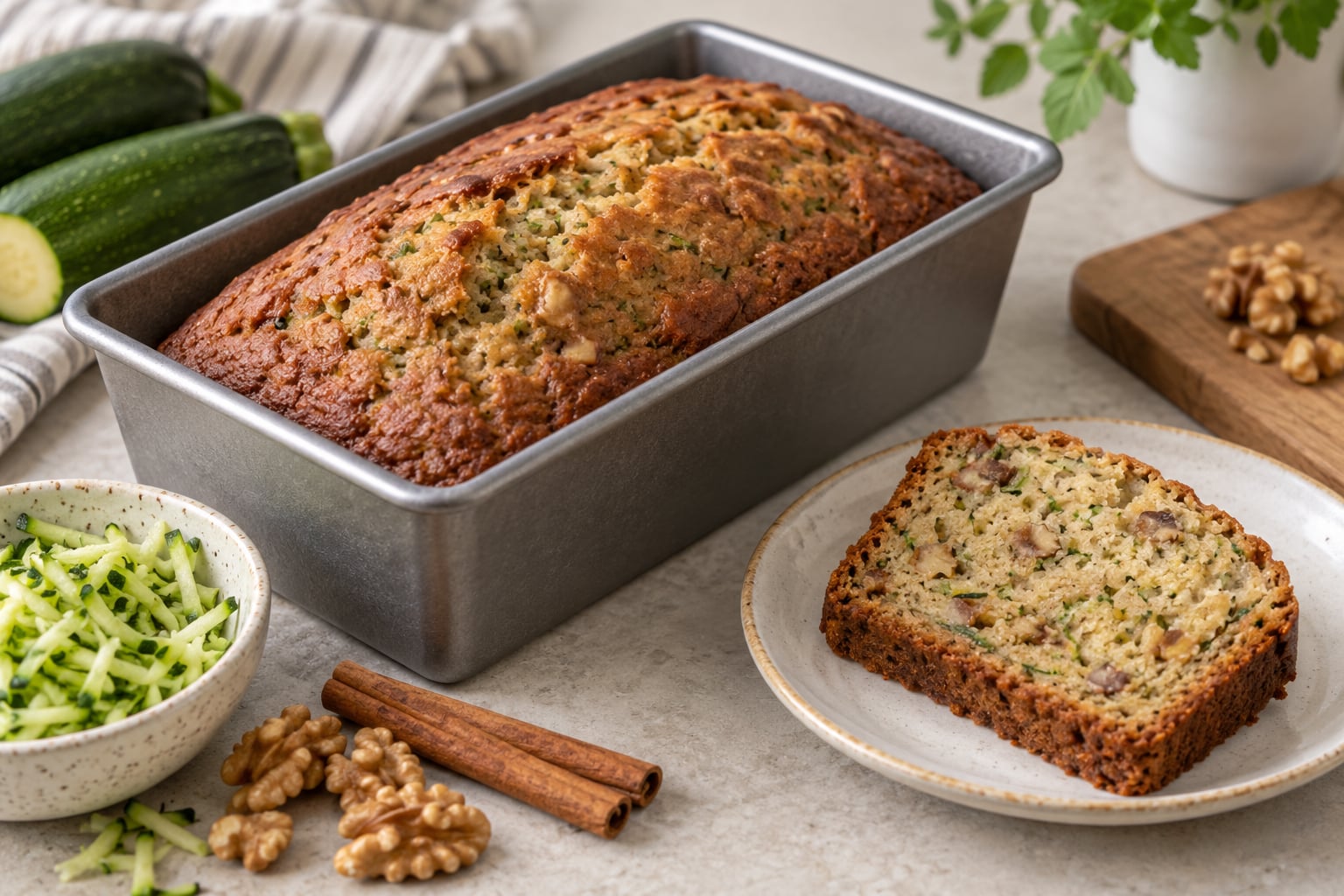
Zucchini bread is a quick bread: grated zucchini folded into a cinnamon-and-vanilla batter and baked in a loaf pan at 350F for 50 to 60 minutes, with no yeast, no kneading and no mixer. Prep takes about 15 minutes, the bake takes about an hour, and the whole thing is beginner work with two bowls, a whisk and a box grater. Knowing how to make zucchini bread well comes down to two things people rarely get right by accident: how you treat the grated zucchini, and how much batter you put in the pan.
This guide covers both, plus the pan-size conversions, the substitutions and the specific fixes for the four failures that actually show up in readers’ kitchens: a gummy center, a sunken middle, a crust that browns before the middle sets, and a loaf glued to the pan.
Table of Contents
What You Need
One 9×5-inch metal loaf pan is the standard. An 8×4-inch pan also works and gives you two shorter loaves instead of one tall one, and either size needs greasing plus a sheet of parchment so nothing sticks.
For the dry ingredients:
- 3 cups (390 g) all-purpose flour, spooned into the cup and leveled
- 1.5 teaspoons (6 g) baking powder
- 1 teaspoon (4.6 g) baking soda
- 1 teaspoon (6 g) fine salt
- 2 teaspoons (4 g) ground cinnamon
- 1/2 teaspoon ground nutmeg, optional
- 1.5 cups (300 g) granulated sugar, or 1 cup white sugar plus 3/4 cup (165 g) light brown sugar
For the wet ingredients:
- 3/4 cup (180 ml) neutral oil, such as canola or vegetable
- 3 large eggs, at room temperature
- 1 tablespoon (15 ml) vanilla extract
- 3 cups (about 300 g) grated zucchini, loosely packed and not squeezed
Then the optional add-ins: 1 cup (110 g) chopped walnuts or pecans, 1 cup chocolate chips, 3/4 cup raisins or dried cranberries, or 1/2 cup sunflower seeds if you are baking nut-free.
Equipment is short: a box grater, two mixing bowls, a whisk, a rubber spatula, a toothpick or thin skewer, and a wire cooling rack. A food processor with a shredding disc works too, and honestly it beats a box grater if you grate a garden surplus.
On substitutions, a few worth knowing before you start. Yellow squash works exactly like zucchini, and any firm summer squash can be grated in the same way. Applesauce can replace up to a third of the oil for a slightly denser crumb. A 1-to-1 gluten-free flour blend behaves like the all-purpose flour, which is what most bakers in the r/Baking threads use when they bake this gluten-free. If you want to cut sugar, reduce it by up to one third and add 2 tablespoons of unsweetened applesauce for every 1/4 cup of sugar you leave out.
Step-by-Step: How to Make Zucchini Bread
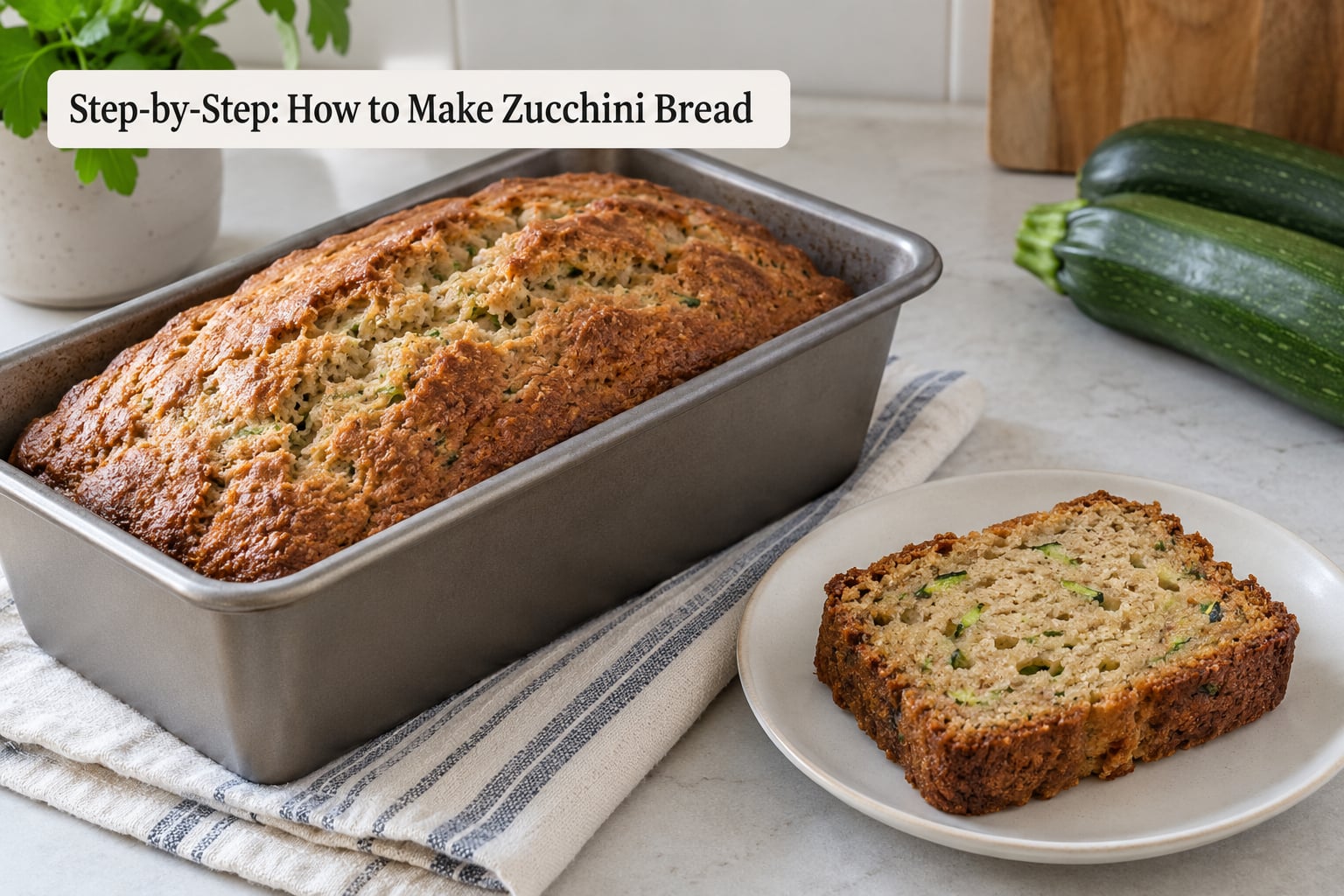
How to Prepare the Zucchini Correctly
Leave the skin on for medium and small zucchini, where it is thin enough to shred into the crumb and adds color. Oversized garden squash is the exception: peel it, cut it in half lengthwise, scoop out the seedy center with a spoon, and grate only what is left. That is the standard advice in most home-baking threads, and it is right.
- Trim the ends, cut the zucchini into lengths that fit your hand comfortably, and grate on the large holes of the box grater.
- Measure 3 cups loosely packed. Do not pack the zucchini down into the cup, and do not squeeze it. Squeezing the pulp with your hands is the single most common reason a homemade loaf comes out dry and tight, because that moisture is flavorless and it is the whole reason the crumb stays tender for days.
- Set the grated zucchini aside and move on. No salting, no draining, no wringing.
If you are working through a garden pile, count on roughly 3 medium zucchini for 3 cups grated, and grate extras and freeze them in measured portions so the next loaf is a ten-minute job.
How to Mix the Zucchini Bread Batter
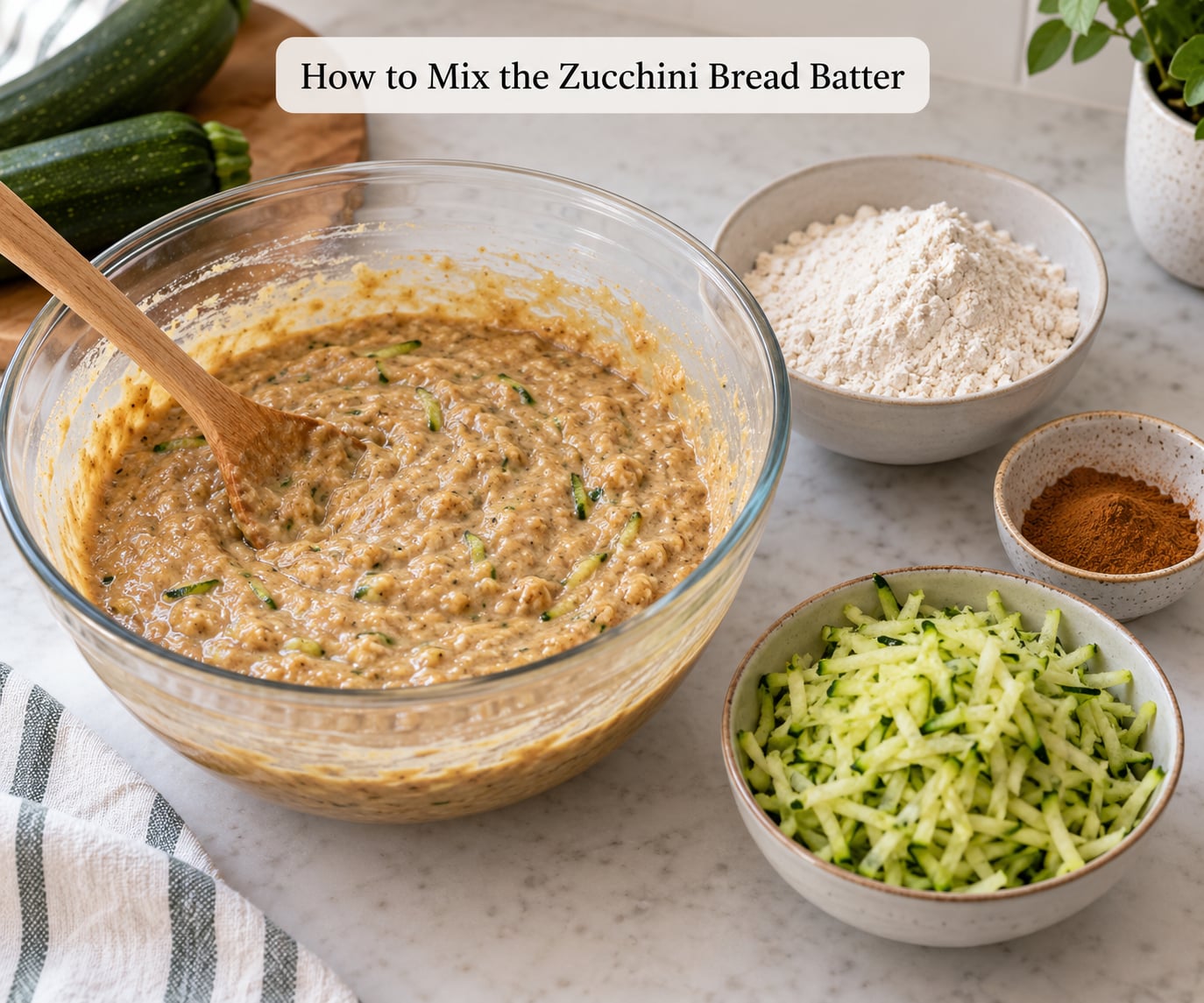
Dry first, wet second, and stop mixing the moment the last streak of flour disappears. Overmixing is the other big reason a quick bread turns dense, and it is easy to do with a stand mixer set to medium.
- Whisk the flour, baking powder, baking soda, salt, cinnamon, nutmeg and both sugars together in a large bowl until no streaks of flour remain.
- In a second bowl, whisk the oil, eggs and vanilla until smooth and pale.
- Pour the wet bowl into the dry one and fold with a rubber spatula. Scrape along the bottom of the bowl, turn, and scrape again, about a dozen strokes.
- Fold in the grated zucchini and any add-ins. The batter is done when no dry flour is visible; a few streaks of zucchini in the bowl are fine.
What finished batter looks like: thick, spoonable, and slow-moving, closer to cookie dough than pancake batter. If it pours like a thin cake batter, you have too much zucchini or not enough flour, and the loaf will spread and bake up pale.
How to Bake and Check Zucchini Bread
Grease the pan and line the base with parchment, leaving an inch overhanging each side so you can lift the loaf out. Heat the oven to 350F before you mix, and pour the batter in, filling the pan roughly two-thirds to three-quarters of the way.
- Bake at 350F for 50 to 60 minutes in a 9×5-inch pan. Start checking at 45 minutes.
- If the top darkens before the middle sets, lay a piece of foil loosely over the loaf and continue baking.
- Test with a toothpick inserted into the deepest part of the center. It should come out clean or with a few moist crumbs, never with wet batter. An instant-read thermometer in the center should read close to 200F.
- Let the loaf sit in the pan for 10 to 15 minutes, then lift it out by the parchment and cool completely on a wire rack.
Four signs it is done: the top has risen and set rather than staying domed and glossy, the edges pull slightly from the sides of the pan, the toothpick comes out clean, and the loaf sounds faintly hollow when you tap the bottom. A loaf that passes three of those four is baked, even if the tester still shows a few crumbs.
Pan size changes everything, so use this as a guide rather than a formula:
- 9×5-inch loaf pan, 350F, 50 to 60 minutes, one loaf
- 8×4-inch loaf pans, 350F, 45 to 55 minutes each, split the batter between two pans
- 9×13-inch baking dish, 350F, 30 to 38 minutes, spread the batter flat like a bar
- 10 to 12 cup bundt pan, 350F, 45 to 55 minutes, grease and flour it heavily
- Mini loaf pans, about 2 by 4 inches, 350F, 28 to 35 minutes
- Bread machine pan, 350F, start checking at 30 minutes, since it is smaller than a standard loaf pan
- 12-cup muffin pan, 425F for 5 minutes, then drop the oven to 350F for 13 to 16 minutes
Store the cooled loaf wrapped in plastic or a clean towel at room temperature for 3 to 4 days, or in the fridge for up to a week. For freezing, cool it completely, wrap the whole loaf in plastic, add a layer of foil, and freeze for up to 2 to 3 months. Thaw slices on the counter or overnight in the fridge, and refresh a slice in a 300F oven for five minutes.
Common Mistakes and Tips
Soggy or gummy center. Almost always one of three things: more than 3 cups of zucchini, underbaking, or a pan that is too small so the middle never got enough heat. Measure loosely, keep to 3 cups, and give it 5 to 10 extra minutes if the toothpick comes out with wet crumbs. A probe thermometer is the honest fix here.
Raw middle with a browned crust. The oven is running hot or the pan is shallower than you think. Tent the loaf with foil for the rest of the bake, and if it happens repeatedly, drop to 325F and start checking at 50 minutes.
Dense, heavy crumb. You overmixed, or you squeezed the zucchini dry and the batter had nothing left to hydrate. Fold until the last dry streak disappears, then stop.
Sunken middle. Oven doors opened early, too much baking soda, or a loaf left in the pan far too long after baking. Use exactly 1 teaspoon of baking soda, and do not open the door for the first 30 minutes.
Sticks to the pan. Under-greasing or a 45-minute cool-down in the pan. Butter and flour the sides properly or use parchment, and pull the loaf out at 10 to 15 minutes.
Cinnamon tastes like a mouthful of spice. This is the loudest complaint in comment threads under popular zucchini bread recipes. Halve it to 1 teaspoon, add 1/2 teaspoon of apple pie spice, and you get a warmer, more balanced loaf.
The loaf falls apart when sliced. Too many nuts. One cup is plenty; at 1.5 cups or more, toss them with 2 tablespoons of the flour from the dry bowl first so they suspend in the crumb instead of sinking to the bottom.
Two things worth adding for flavor. A tablespoon of finely grated lemon zest cut into the dry ingredients makes the vanilla and cinnamon taste brighter, and a teaspoon of instant coffee powder in the same bowl deepens the spice without making the loaf taste of coffee. For serving, a plain cream cheese frosting turns the same loaf into dessert, and it is the only reason I bake two.
Frequently Asked Questions
Can I make zucchini bread without grated zucchini?
You can, but you are making a different quick bread. Without 3 cups of grated zucchini, cut the oil to a half cup and expect a noticeably denser, drier loaf, because the vegetables are supplying most of the moisture. Any firm, moist fruit works in the same slot: grated apple, grated carrot, mashed banana or canned pumpkin. Do not use watery cucumber or tomato.
How much zucchini do I need for one loaf?
Three cups of loosely packed grated zucchini, which is roughly two medium zucchini or three small ones. Two cups still works and gives a slightly tighter crumb. Past three and a half cups the batter gets loose, the middle bakes slowly, and you move into gummy territory. Weighing the grated zucchini is the most reliable habit if you bake this often.
Why is my zucchini bread soggy?
The three usual causes are too much zucchini, a pan that is too small, and underbaking. Measure the grated zucchini loosely at 3 cups, keep to a 9×5-inch pan, and probe the deepest part of the center with a toothpick until it comes out clean. If you squeezed the zucchini dry and then added extra liquid, that is the opposite problem and the loaf will be dry instead.
Can I use a different pan size?
Yes, and the bake time has to change with it. An 8×4-inch pan gives two shorter loaves at 45 to 55 minutes, a 9×13-inch dish bakes in 30 to 38 minutes, mini loaf pans take 28 to 35 minutes, and a bundt pan takes 45 to 55 minutes with heavy greasing. A bread machine pan is smaller than a standard loaf, so start checking at 30 minutes.
Can zucchini bread be made ahead and frozen?
Yes, and it freezes well. Cool the loaf completely first, then wrap it tightly in plastic, add a layer of foil, and freeze for up to 2 to 3 months. Thaw overnight in the fridge or at room temperature in the wrapper. A slice warmed for five minutes at 300F tastes close enough to fresh to pass for it.
Should I add walnuts or chocolate chips?
Both work, and nuts are the traditional choice: one cup of chopped walnuts or pecans is the amount that flavors the loaf without making it fall apart. Chocolate chips, raisins, dried cranberries and sunflower seeds are equally good substitutes, and the nut-free options matter if you are baking for a school or a table with an allergy at it.
Conclusion
Start with the zucchini. Grate it on the large holes, leave the skin on unless the squash is oversized, and measure 3 cups loosely without squeezing. From there it is whisk, fold, pour and wait, with a toothpick test at the 45-minute mark and 10 minutes in the pan before the loaf comes out. Fill the pan two-thirds full, and if the top browns early, cover it with foil and let the middle finish.
For a related read on why homemade loaves turn out dense, our guide to dense sandwich bread and how to fix it covers the same overmixing problem in a different loaf. If you are shopping for equipment first, our round-up of bread machines for everyday sandwich loaves explains which ones can bake without kneading.