
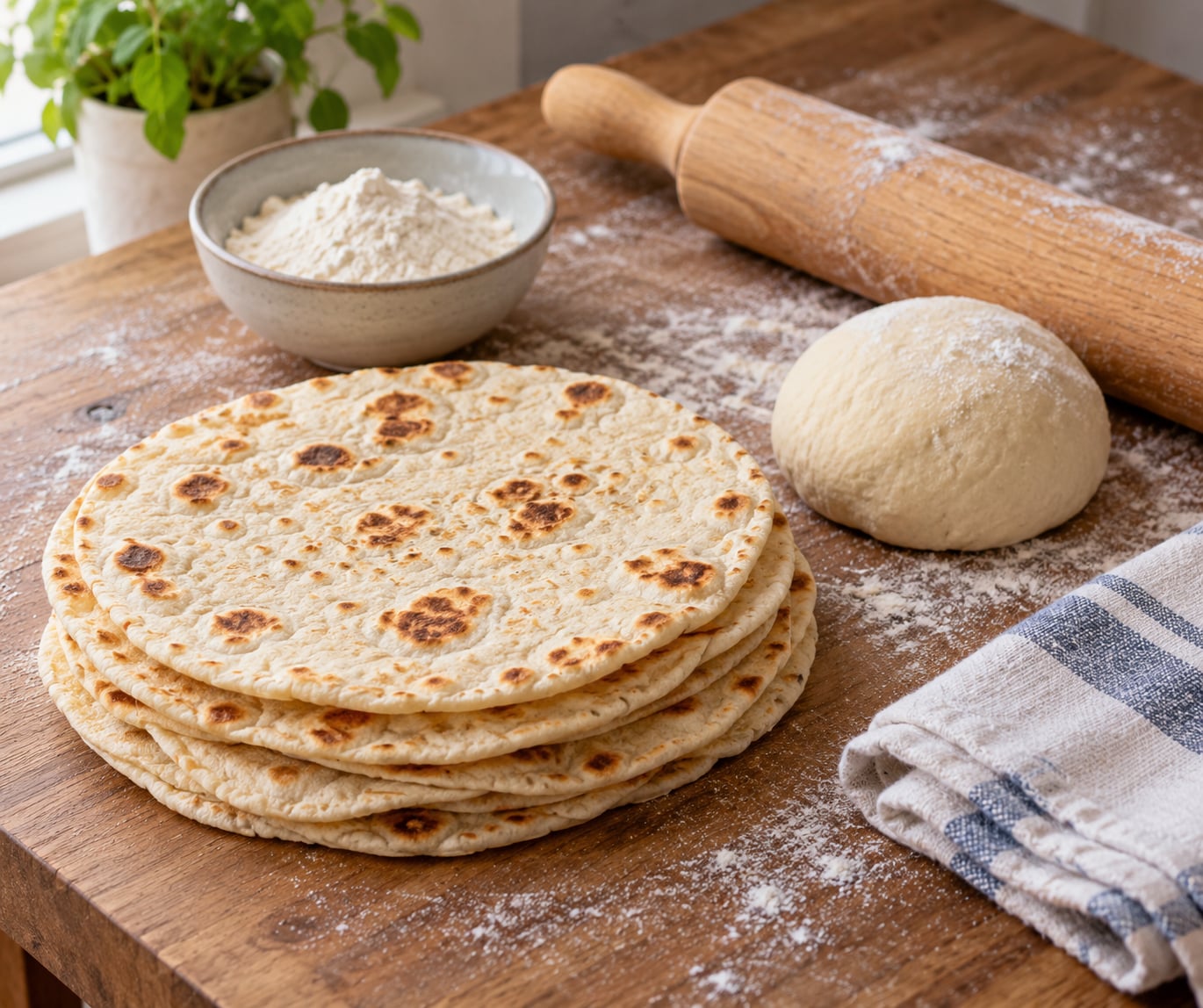
Soft homemade flour tortillas take five ingredients, about 30 minutes of active work, and no tortilla press. Mix flour, baking powder, salt, a fat, and hot water, rest the dough so it rolls without springing back, then cook each tortilla 30 to 60 seconds a side until pliable. The whole batch lands somewhere around an hour, and most of that is waiting.
The reason store-bought tortillas disappoint is mostly time and water. They sit on a shelf, and they are made with less water than a dough you make yourself. Once you get used to hot water and a proper rest, the stiff-cracking problem mostly disappears.
Here is my short version before the details: use water hot enough to sting a little, keep bench flour to a dusting, and pull the tortillas out of the pan the second they are soft and bendable. Brown spots are welcome. Charred edges are not.
Table of Contents
What You Need
For about 12 medium tortillas:
- 3 cups (360 g) all-purpose flour
- 2 teaspoons baking powder
- 1 teaspoon kosher salt
- 1/3 cup (80 ml) neutral oil, melted lard, or melted butter
- 3/4 cup (180 ml) hot water, plus more as needed
Drop the fat and you get a four-ingredient tortilla. Drop the baking powder too and you have the three-ingredient version Mexican home cooks have made for generations, which relies entirely on a long rest for tenderness.
Tools are basic: a mixing bowl, a measuring cup, a rolling pin, a clean towel, and a skillet or griddle. A tortilla press is genuinely optional. A press is wonderful for corn masa because corn does not spring back, but wheat gluten fights you, so a pin is easier for flour tortillas. If you want a size comparison before you start, this rundown of tortillas and wraps that do not crack is worth a read.
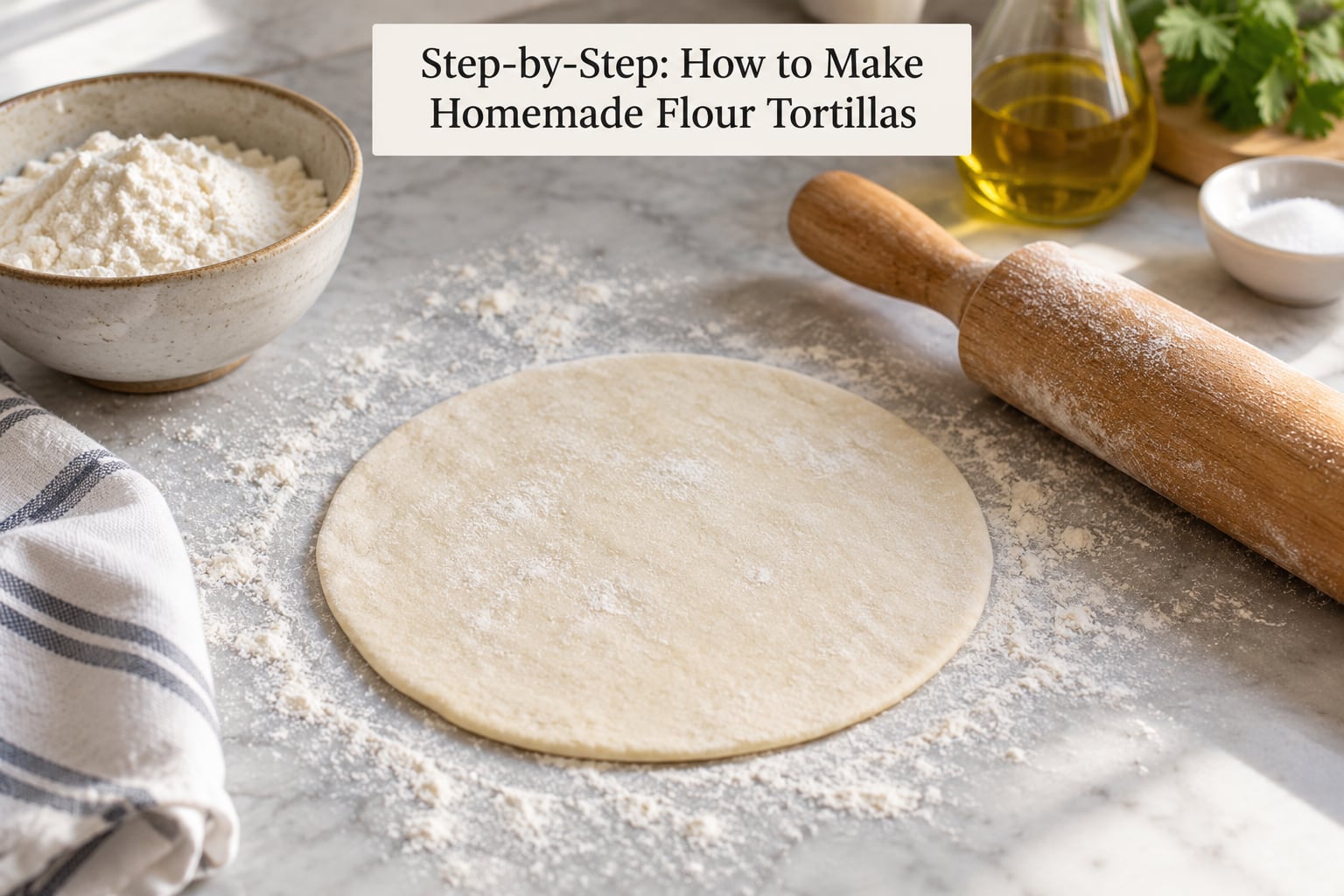
Step-by-Step: How to Make Homemade Flour Tortillas
Mix the Dough
Whisk the flour, baking powder, and salt together in a large bowl. Pour in the fat, then the hot water, and stir with a spoon or spatula until no dry flour is left. The dough will look shaggy and slightly sticky, almost like a stiff biscuit dough, and that is exactly right.
Do not beat this in a mixer at full speed. A stand mixer with a dough hook on low works if you want it to, but more than a minute or two makes the tortillas tough rather than tender. Long-time cooks on cooking forums put it plainly: the dough just needs the ingredients combined.
Knead and Rest the Dough
Turn the dough out and knead by hand for 1 to 2 minutes, until the surface turns smooth and it feels elastic when you pull a small piece. Then put it in a bowl, cover with a damp towel or plastic wrap, and leave it for 20 to 30 minutes at room temperature.
That rest is the step beginners skip, and it is the one that matters most. Flour dough is a gluten network, and resting lets those strands relax. When they are relaxed, the dough stretches under the pin instead of snapping back, which is the difference between a thin round and a thick puck with raw spots in the middle.
How to Roll the Tortillas Without a Tortilla Press
Divide the dough into 12 balls, about 55 g each. That gives roughly 8-inch tortillas. Divide by 8 for burrito-sized rounds, by 16 for taco-sized ones. Cover the balls so they do not dry out while you work.
Flatten one ball, then roll it from the center outward in every direction, rotating a quarter turn after each pass. Lift and reposition it often so it does not stick underneath. Keep the pin moving and keep the pressure even.
Use the least flour you can get away with. A heavily floured surface is the number one reason tortillas come out dry and hard, so dust, roll, and if it sticks, lift the dough and sprinkle a little more rather than dumping flour on it. You are aiming for thin enough that you can faintly see the light through the dough.
Cook the Tortillas
Heat a skillet or griddle over medium to medium-high heat. A drop of water should skitter and vanish in about two seconds; if it sits there and steams, the pan is too cool, and if it evaporates before you can count, pull it back.
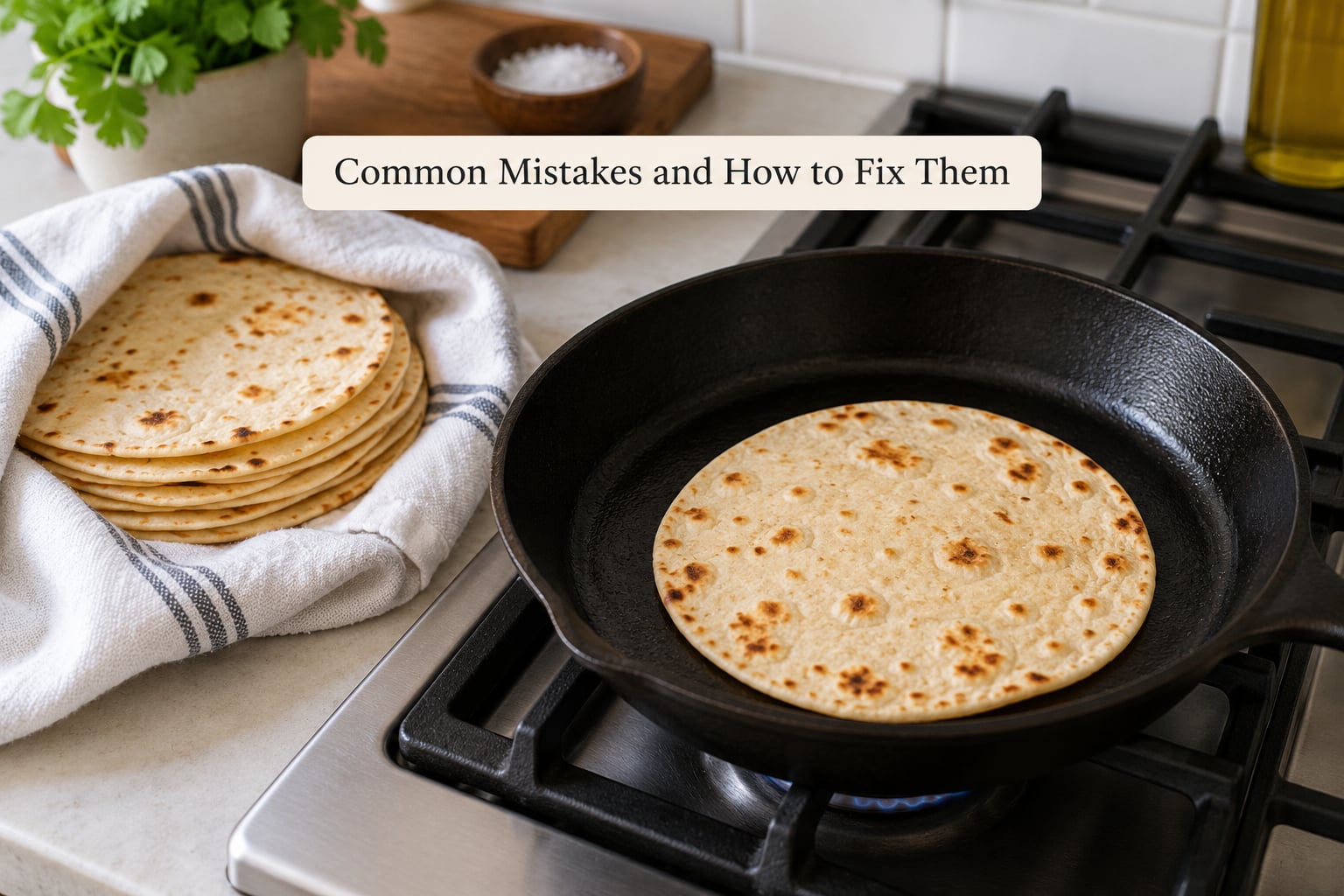
Place a tortilla in the dry pan. Within 30 to 60 seconds bubbles rise and the edges start to lift. Flip it, cook the second side for another 30 to 60 seconds, and it will puff like a small pillow, often flipping itself partway through. Turning it once more with tongs mid-cook helps it puff evenly.
Cast iron runs hotter and keeps heating, so lower the burner a notch and cook those faster. Nonstick and glass cooktops need more time to come up to temperature, so give them an extra minute of preheating.
Stack the finished tortillas in a clean towel or a tortilla warmer as you go. The trapped steam keeps them pliable. Wrapping them up dry, or letting them sit uncovered, dries the edges within minutes. That soft, slightly damp tortilla is also what you want for a heavy filling, where a stiff shell splits before you can fold it, as in our guide to getting an overstuffed sandwich to hold together.
Common Mistakes and How to Fix Them
- Tortillas come out stiff and hard. Usually overcooked, or dusted with too much bench flour. Pull them at the first sign of brown spots, and dust the board lightly rather than heavily.
- Dough cracks at the edges while rolling. Not enough water, or the dough rested too little. Add a teaspoon of water at a time and knead, then rest 10 more minutes and try again.
- Tortillas are dense and chewy in the middle. Rolled too thick, usually from gluten spring-back. Rest longer, roll from the center out, and rotate constantly.
- Raw pale patches with browned edges. Uneven thickness or uneven heat. Press out thick spots before cooking and turn the tortilla twice.
- Surface tastes floury. Too much bench flour got absorbed into the dough. Use a light dusting and roll the tortilla directly on the floured surface rather than lifting it.
- Edges curl and it will not lie flat. The pan is too hot, or the tortilla cooked too long on one side. Lower the heat and flip as soon as the edge lifts.
- It burns before it puffs. Cast iron stored too close to the flame. Turn the burner down after the first tortilla, since the pan keeps its heat.
One note on puffing. A tortilla balloons when steam forms between the top and bottom layers and forces them apart. That is a good sign, meaning even thickness and a sealed edge, though cooks in r/mexicanfood note some families treat a non-puffing tortilla as a failed batch. Either way it will still taste right.
Serve them warm from the towel. For packed lunches, wrap them in a slightly damp paper towel inside a bag so they stay soft until noon, the same trick used for sandwiches that still taste fresh by lunchtime.
Frequently Asked Questions
What are the ingredients to make flour tortillas?
A basic flour tortilla needs all-purpose flour, baking powder, salt, a fat such as lard, shortening, vegetable oil, or melted butter, and hot water. A common starting ratio is 3 cups flour to 2 teaspoons baking powder, 1 teaspoon salt, 1/3 cup fat, and 3/4 cup water. Lard gives the most traditional flavor, but oil works and butter adds a slightly richer taste. Any fat at all makes the dough more tender; leave it out and the tortillas turn out noticeably tighter.
Why are my homemade flour tortillas stiff?
Stiffness almost always comes from overcooking or from too much flour on the rolling surface. A tortilla only needs 30 to 60 seconds per side, and it should come out of the pan soft with a few light brown spots. If you have been waiting for deep browning, that is the whole problem. The second cause is a dusty board, which soaks up oil into the surface of the dough. Dust lightly, cook quickly, and stack the warm tortillas under a damp towel.
Can you let tortilla dough rest too long?
At room temperature, a few hours is the practical limit, and covered dough will keep reasonably well overnight in the refrigerator. Resting longer than that at room temperature encourages the dough to turn grey and slightly sour, which some cooks like and most do not. Dough balls also freeze well raw: portion them, freeze on a tray until solid, then bag them for up to a month and thaw on the counter before rolling.
Can I make flour tortillas ahead of time?
Yes, and most of the work happens ahead. Cook a full batch, let the tortillas cool, then stack them with a sheet of parchment or wax paper between every layer and freeze in a bag for two to three months. Thaw at room temperature and reheat as needed. You can also freeze the raw dough balls, though cooked tortillas freeze more predictably and reheat faster. A sealed container at room temperature only lasts about two days before you risk mold, so freeze anything beyond that.
How do you store flour tortillas so they stay soft?
For a few hours, wrap the cooked tortillas in a clean kitchen towel and keep them in a tortilla warmer or a sealed container. For longer, layer them in an airtight container or freezer bag with parchment between each tortilla so they do not stick together. The refrigerator dries tortillas out faster than the counter, so only refrigerate them if you need a week or more. If yours have gone stiff, wrap them in a damp towel and warm them gently; the moisture brings them back.
Is it better to reheat tortillas in the oven or microwave?
The oven wins on texture. Wrapped in foil at about 300F, tortillas come back soft and pliable in about 10 minutes and stay that way through a meal. The microwave is faster, roughly 20 to 30 seconds for a stack, but wrap the tortillas in a damp paper towel first or they will turn leathery. A dry skillet over medium heat for 15 seconds a side is the best option when you only need one or two.
Conclusion
Making soft flour tortillas comes down to three things: hot water in the bowl, a real 20 to 30 minute rest under a cover, and cooking each one only until it bends. Mix the dough, let it rest, roll thin from the center out, and pull the tortillas from the pan the moment they are pliable with a few brown spots. Stack them in a towel, fill them while they are warm, and freeze the leftovers with parchment between each layer for the next weeknight.