
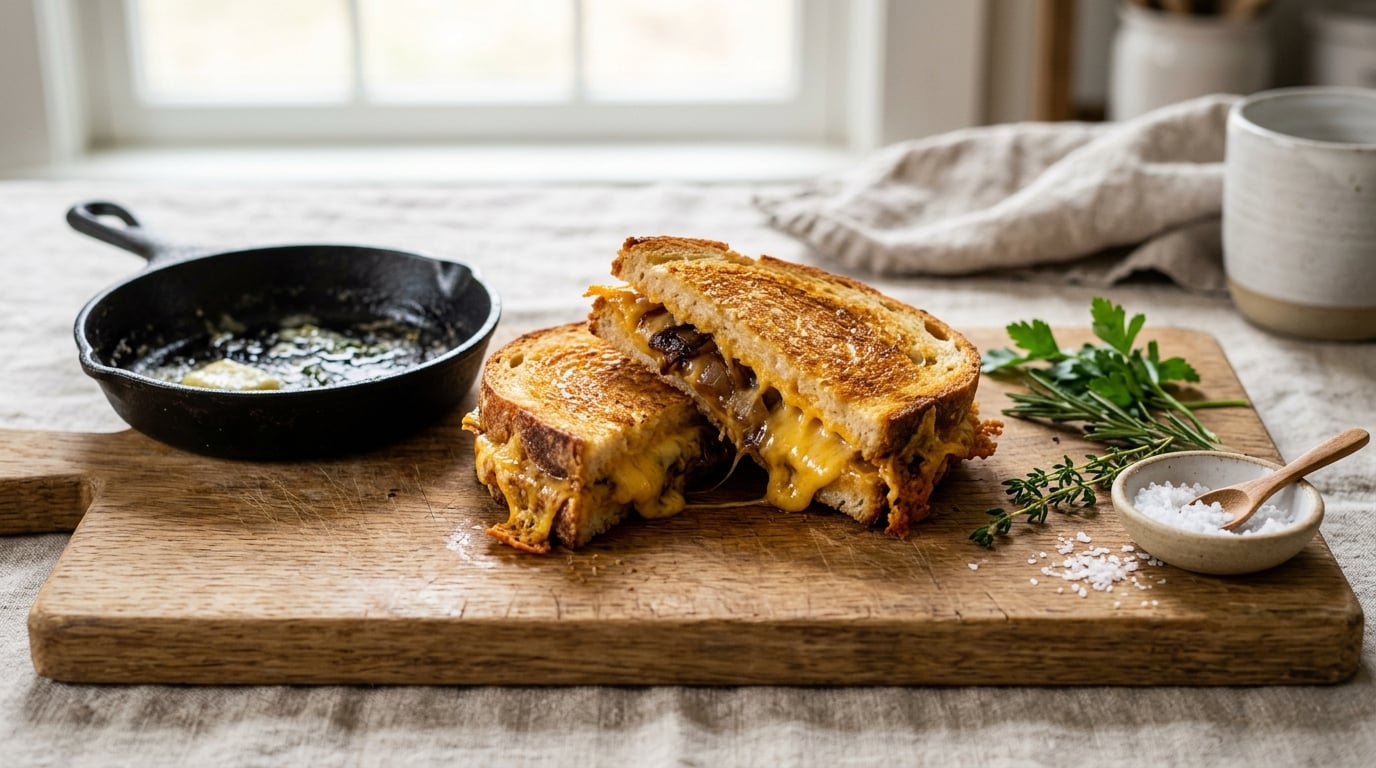
A grilled cheese upgrade is any change to the bread, the cheese, the cooking fat, the filling, or the method that makes the classic two-ingredient sandwich taste more complex without turning it into something else entirely. The best grilled cheese upgrades for grown-ups are the ones that change one thing at a time: a sharper cheese, a fattier spread, a filling that adds flavor without releasing water. Start with good cheddar and a hot pan, then work down the list.
Two ingredients leave nowhere to hide, so technique and ingredient quality carry nearly all the flavor. Swap mild American for aged cheddar and the sandwich tastes deliberate. Add caramelized onions that were cooked for twenty-five minutes instead of softened for five, and it tastes like someone planned dinner. None of that takes more than a few minutes of extra work.
Updated for October 2026. This is a method guide, not a shopping list — you probably have most of what you need.
Table of Contents
- 12 Best Grilled Cheese Upgrades for Grown-Ups at a Glance
- 1. Add a Sharp Cheese for More Depth
- 2. Layer In Crispy Bacon or Prosciutto
- 3. Make It Spicy with Pepper Jack or Hot Peppers
- 4. Add Pickles for Bright Crunch
- 5. Use Caramelized Onions for Sweet Savoriness
- 6. Add Roast Chicken or Turkey for a Heartier Sandwich
- 7. Melt in Mushrooms and Thyme
- 8. Balance Rich Cheese with Fresh Herbs
- 9. Add Tomato and Avocado for a More Complete Lunch
- 10. Upgrade the Bread with Garlic Butter or Olive Oil
- 11. Add a Sweet-and-Savory Topping
- 12. Finish with a Crispy Cheese or Herb Crust
- Which Grilled Cheese Upgrade Should You Try First?
- Frequently Asked Questions
- Conclusion: Start With a Sharp Cheese and One Bold Topping
12 Best Grilled Cheese Upgrades for Grown-Ups at a Glance
Here is the whole list in one place, with the flavor each upgrade brings and the cheese it pairs with best.
| Upgrade | What it adds | Best cheese or bread pairing | Watch out for |
|---|---|---|---|
| Sharp or aged cheese | Nutty, savory depth | Aged cheddar or Gruyère on sourdough | Aged cheddar can turn oily if overheated |
| Bacon or prosciutto | Salt and crunch | Provolone and mozzarella on sourdough | Greasy bread if the meat isn’t drained |
| Pepper jack or hot peppers | Clean heat | Pepper jack and Muenster on white bread | Wet jalapeños steam the bread |
| Pickles or pickled jalapeños | Acidity and crunch | Cheddar and Swiss on rye | Blot them dry, or they leak |
| Caramelized onions | Sweet savoriness | Cheddar, Swiss, or Gruyère | Long cook time, not a five-minute softening |
| Roast chicken or turkey | Protein and substance | White cheddar and provolone | Dry out if the filling is cold and thin |
| Sautéed mushrooms and thyme | Earthy, woodsy flavor | Swiss, Muenster, or Brie | Water released by crowded mushrooms |
| Fresh herbs | Freshness against rich cheese | Basil with mozzarella, parsley with Gruyère | Delicate greens wilt if cooked long |
| Tomato and avocado | Freshness and cream | Provolone, Swiss, or goat cheese | Salting the tomato first is essential |
| Garlic butter or seasoned oil | Aroma and a darker crust | Any cheese on any sturdy bread | Garlic burns fast in a hot pan |
| Sweet-and-savory topping | Balance and interest | Pear with cheddar, fig with Swiss | Sugar added too early burns |
| Cheese or herb crust | Restaurant-style exterior | Shredded Parmesan on sourdough | Too much makes the bread stiff |
1. Add a Sharp Cheese for More Depth
The single biggest change you can make is the cheese itself. A mild, young cheddar melts smoothly and tastes like nothing much, while an aged or sharp cheddar breaks down into the bread with a nutty, almost brothy depth. Extra-sharp cheddar comes up again and again in home-cooking forums as the go-to choice for a plain grilled cheese, and it is the reason a lot of sandwiches that taste flat are missing something.
Gruyère is the other workhorse: nutty, faintly sweet, and a better melt than most people expect from a hard cheese. Manchego and aged provolone lean saltier and more punchy, while Muenster and Jarlsberg melt creamier and stretch further. Aged cheddar, Gruyère, and Muenster blended together is a restaurant move — three cheeses, equal weights, shredded.
For melting, slice or shred the cheese cold and let it come to room temperature while you build everything else. Room-temperature cheese softens into the bread instead of sitting there in a sheet. Aged cheddar is the exception that proves the rule: it gets oily before it gets fluid, so pull it off the heat the moment the edges look soft.
2. Layer In Crispy Bacon or Prosciutto
Crispy bacon turns a grilled cheese from a snack into lunch. The rendered fat seasons the bread from the inside, the salt cuts through the fat of the cheese, and the crunch survives the pan in a way melted cheese never does.
Cook the bacon until it is fully crisp, then lay it on a paper towel for a minute or two before you build. That step is not optional if you care about the bottom slice: bacon that goes into the pan wet enough to pool grease will fry its own bread instead of flavoring it. Two or three strips is plenty, laid side by side rather than chopped, so the sandwich stays square.
Prosciutto is the lighter route. Drape thin slices on the outside of the bread during the last thirty seconds and they crisp in the pan like a natural outer layer, no frying required. Combine it with provolone and mozzarella for a sandwich that leans Italian without turning into a deli order.
3. Make It Spicy with Pepper Jack or Hot Peppers
Heat is the upgrade people leave on the table longest. Pepper jack melts creamy and gives a mild, clean warmth rather than a burn, which makes it the easiest place to start. Jalapeños add heat and crunch, Calabrian chiles in oil add a slow, fruity kind of heat, and chili crisp or hot honey adds a sweet edge that plays well with a buttery cheese.
Keep the heat in the filling rather than the spread. Pepper jack plus one layer of pickled jalapeños on white bread is a clean, quick combination, and the bread’s mildness keeps the heat readable. Go one notch further with habanero or Scotch bonnet and cut back on everything else — no hot sauce on the outside, no chili crisp in the same sandwich.
Add any wet pepper after the cheese, and pat it dry first. A slice of jalapeño that has been sitting in a jar carries enough water to steam a hole in the bread, and you will get a pale, damp sandwich with a soft center.
4. Add Pickles for Bright Crunch
Pickles bring the thing a plain grilled cheese is missing: acid. A bite of sharp dill against rich cheddar makes both taste more like themselves. Home cooks disagree about this one more than almost any other topping, which tells you it is a real preference and not an obvious win.
Thin, crisp slices work best. Dill chips or bread-and-butter pickles cut through a heavy cheddar, while pickled jalapeños or pickled red onions bring crunch and heat at once. Sandwich pickles are the worst option here; they soak into the bread and go to mush.
The fix for sogginess is a paper towel. Lay the slices out, blot both sides, and let them sit while your pan heats. Two minutes removes enough surface moisture that you will not get a puddle in the skillet, and you keep the flavor.
5. Use Caramelized Onions for Sweet Savoriness
Caramelized onions add a sweetness that reads as savory because it took so long to get there. A French onion grilled cheese is a repeat favorite in home-cooking communities for exactly that reason, and it works with whatever cheese is on hand.
Slice a medium onion thin, cook it in butter or olive oil over medium-low heat for 25 to 30 minutes, stirring every few minutes, until the strands are genuinely golden-brown. The five-minute softening that most recipes call caramelizing is a different dish. If you want to rush it, cook the onion hard for two minutes first, then drop the heat and finish it slowly.
Pair it with sharp cheddar, Swiss, or Gruyère. The onion’s water is the one real risk here, so drain it in a sieve for a minute and put the sandwich together at the last possible second. A pinch of salt at the end sharpens the sweetness more than any amount of cooking time.
6. Add Roast Chicken or Turkey for a Heartier Sandwich
Leftover roast chicken makes a grilled cheese that actually fills you up, and it is the fastest protein upgrade there is if you already have a roast on the counter. Shredded turkey breast works the same way.
For food safety, keep cooked poultry refrigerated and use it within three to four days, or freeze it. Reheat it to 165°F (74°C) before it goes in the pan — the skillet will get it there, but only if the meat starts warm rather than refrigerator-cold, which is how a lot of people accidentally serve underheated filling.
White meat wants a mild, stretchy cheese: white cheddar and provolone, or mozzarella with a sharp cheddar underneath. Season the shredded chicken with salt, black pepper, and a little mustard powder while it is still warm, and keep it in a thin, even layer. A thick mound of cold chicken cools the pan, stalls the cheese melt, and leaves you with a warm shell around a cold middle.
Whether a sandwich with meat still counts as a grilled cheese is a genuine argument in the sandwich subreddit, and neither camp has a clean answer.
7. Melt in Mushrooms and Thyme
Mushrooms add an earthy, woodsy flavor that nobody expects from a sandwich and that pairs unusually well with nutty cheese. The trick is that they have to be browned, not steamed.
Cook sliced cremini or shiitake in a hot pan with a little butter and salt until the liquid they release has boiled away and the edges turn brown, which takes most mushrooms 8 to 10 minutes. Crowding the pan traps steam, and steamed mushrooms taste flat and drip into the bread. Brown them in two batches if your pan is small.
Throw in a few thyme leaves in the last minute, or a spoonful of soy sauce for a deeper, more savory result. Swiss and Muenster are the classic matches, and Brie works if you want something softer. Spread a thin layer of mustard on the bread first, so the mushroom juices have something to go with instead of pooling.
8. Balance Rich Cheese with Fresh Herbs
A rich, fatty sandwich tastes heavier than it is until something fresh cuts through it. Basil, parsley, chives, dill, and arugula all do different jobs, and a handful of leaves costs almost nothing.
Basil belongs with mozzarella and provolone, on the tomato version. Parsley and chives are neutral enough to go with almost any cheese and are the safest starting point if you are unsure. Arugula adds a peppery edge that stands up to strong cheddar, and a few leaves of dill tastes like a French onion sandwich without the onion-cooking step.
Timing matters. Basil and parsley go in before the sandwich hits the pan, because they tolerate heat. Arugula, watercress, and any delicate greens go on after cooking, because they wilt into something limp in about fifteen seconds. You want the green to look like it was just picked.
9. Add Tomato and Avocado for a More Complete Lunch
Tomato and avocado make a grilled cheese into a full meal. The tomato gives acid and juiciness, the avocado gives fat and cream, and together they turn a two-ingredient sandwich into something closer to lunch.
Watery tomato is the number one complaint about this version, so salt the slices first. Lay them on a paper towel, sprinkle with salt, and wait five minutes; the salt pulls out liquid that would otherwise soak into the bread. Blot them and use a serrated knife to cut through the skin so nothing is left behind.
Mash the avocado slightly and spread it on the bread as a barrier layer under the cheese, then add the tomato on top. Provolone and Swiss both handle it well, and goat cheese works if you want tangier. Keep the avocado out of the pan entirely and add it after cooking, with a squeeze of lemon to stop it browning.
10. Upgrade the Bread with Garlic Butter or Olive Oil
The spread on the outside of the bread does more for aroma and crunch than anything else you can do without changing the recipe. Garlic butter is the classic: mix softened butter with a little minced garlic and salt, and spread it on the cut faces before the sandwich goes in.
Olive oil is the alternative that regulars recommend when butter is inconvenient. A drizzle of olive oil, brushed rather than pooled, browns evenly and needs no spreading. Seasoned oil works the same way with rosemary, thyme, or red pepper flakes stirred in. Mayonnaise is the third option and it browns better than butter, because it has a higher smoke point and sugars the surface lightly.
Whatever you use, spread it on the outside only and put the cheese on the inside. Garlic in the pan scorches quickly at sandwich heat, so keep it mixed into the butter rather than sprinkling it on the bread where it will hit a hot spot and turn bitter.
11. Add a Sweet-and-Savory Topping
A little sweetness makes a savory sandwich taste more finished, but the balance has to be right. Pear with cheddar, fig with Swiss, and apple with gouda are the three that work most reliably.
Use thin slices of ripe pear or apple, added inside the sandwich so they soften slightly in the heat. Fig jam is the concentrated version: a teaspoon spread thin on the bread, not dolloped, or it burns before the cheese melts. A drizzle of hot honey does the same job with a kick and needs no knife work at all.
Add sweeteners late. Honey, jam, and fruit added before the sandwich hits the pan will scorch in a hot skillet, leaving a bitter exterior while the inside stays cool. If you are using a skillet, add the honey after the first side is browned, then flip.
12. Finish with a Crispy Cheese or Herb Crust
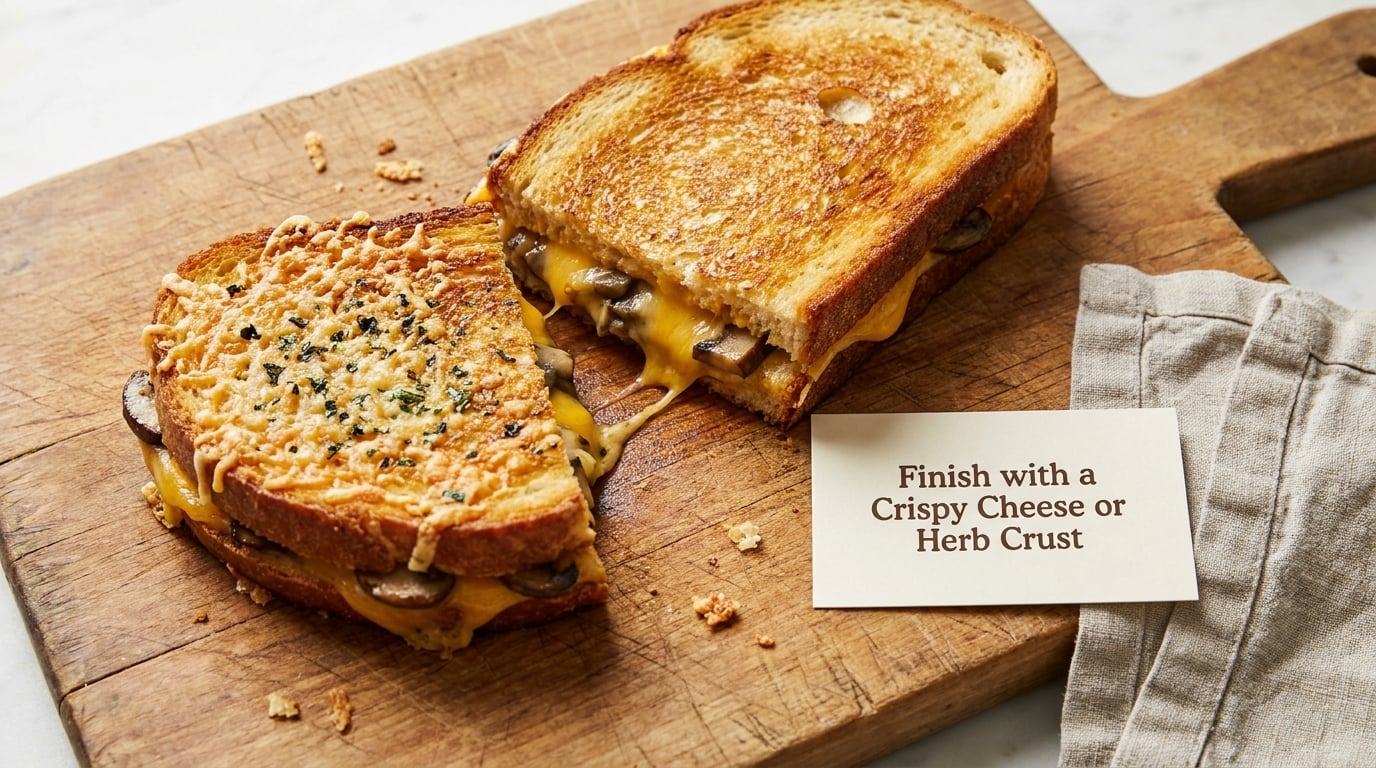
A thin blanket of finely grated Parmesan on the outside of the bread turns a home sandwich into something that looks like it came off a deli menu. It browns into a genuine crust, adds salt, and gives you a crunch that bread alone will not reach.
Use finely grated, not shredded, Parmesan or Romano — coarse shreds fall off in the pan. Press a tablespoon onto each cut face with the palm of your hand so it adheres, then let it sit for a minute before the sandwich goes in. Press hard enough that it sticks, and go light on the amount, because too much makes the crust hard and the bread stiff.
Chopped parsley, basil, or a few thyme leaves pressed into the same layer work the same way, as does a very thin coating of mustard under the Parmesan. Once the crust is on, keep the heat medium rather than high, because Parmesan browns faster than bread and will go from gold to bitter in seconds.
How to Build the Best Grilled Cheese Upgrades Without Soggy Bread
Build the sandwich so the cheese and the dry toppings sit against the bread, and the wet ones sit in the middle. That single ordering habit fixes most soggy grilled cheese problems. Order, from the bottom slice up: butter or oil, bread, cheese, dry toppings, more cheese, wet or moist toppings, then the top slice with its buttered face out.
Use enough cheese. Most disappointing sandwiches are short on it, and the bread turns dry and tough when there is not enough fat and moisture between the slices. Three to four ounces for a normal sandwich, shredded or cut thin, melts into a proper layer rather than leaving gaps.
Press it. Home cooks who use a second cast iron pan or a weighted lid on top of the first get an evenly browned, well-compressed sandwich with almost no flipping. The weight evens out the heat and stops the fillings from sliding out. If you only have one pan, flip with a wide spatula and commit in one motion.
Cook it medium-low and give it time. Around 3 to 4 minutes a side in a cast iron skillet at medium-low is the usual window. Let the sandwich rest on a board for a minute before cutting, so the cheese stops running, and cut it with a serrated knife rather than pressing down with a straight edge.
Which Grilled Cheese Upgrade Should You Try First?
If you want the shortest path to a better sandwich, sharp cheddar and a well-browned crust on sourdough changes the most with the least work. It is the one I would hand to anyone who says their grilled cheese is fine, which is usually what people mean when they say it is boring.
For specific preferences: hot honey on a sharp cheddar and mozzarella sandwich gives you heat and sweetness with no prep. Swiss with caramelized onions and thyme is the most sophisticated-tasting option and the only one with a long cook time, so make it when you have half an hour. Provolone, roasted red pepper, and pesto on sourdough is a five-minute vegetarian lunch that tastes like it came from a cafe.
And for the purist objection, which comes up constantly: a grilled cheese stops being one when the sandwich can stand up on its own and be eaten without being held. Add cheese, onions, bacon, or a sauce and you still have a grilled cheese. Replace the bread entirely and you have a melt. The line is thinner than the arguing, and both camps agree on the important part — the cheese must be the point.
Frequently Asked Questions
What is the best cheese for an upgraded grilled cheese?
Extra-sharp or aged cheddar is the best all-around choice because it melts into the bread with real depth instead of tasting like nothing. Gruyère is the best for nuttiness, mozzarella and provolone for stretch, and Muenster for a creamy melt. Blending two cheeses in equal weights gets you more than either one alone.
How do I keep a grilled cheese from getting soggy?
Dry every wet ingredient before assembly and keep the cheese between the bread and the filling. Salt tomato slices, blot pickles and roasted peppers, and drain caramelized onions in a sieve for a minute. Cook at medium-low rather than high, and let the sandwich rest a minute before cutting so the moisture settles instead of running out.
Can I add chicken to a grilled cheese?
Yes, and it turns the sandwich into a real meal. Shredded roast chicken or turkey works well with white cheddar and provolone, seasoned with salt, pepper, and a little mustard powder. Reheat the poultry to 165°F (74°C) first, and add it in a thin, even layer so it does not cool the pan and stall the cheese melt.
What vegetables work best in a grilled cheese?
Caramelized onions are the most reliable, taking 25 to 30 minutes over medium-low heat until genuinely golden. Sautéed mushrooms, roasted red peppers, and thin tomato slices also work well, and arugula added after cooking keeps its bite. Cucumbers and raw tomatoes are the ones to skip or salt first, because they release water straight into the bread.
How should I store and reheat a grilled cheese?
Refrigerate it in an airtight container for up to three days, and eat it within two days if it contains chicken or turkey. Reheat in a dry skillet over medium-low heat for two to three minutes a side rather than in a microwave, which leaves the bread soft. The oven works too, at 375°F for about 10 minutes, and keeps the crust closer to the original.
What is the easiest grown-up grilled cheese to make?
Sharp cheddar and mozzarella on sourdough, spread with garlic butter, cooked medium-low for three to four minutes a side, is the easiest real upgrade. It needs no chopping, no pre-cooking, and no special ingredients. A drizzle of hot honey and a few fresh basil leaves on top turns the same sandwich into something that reads as deliberate.
Conclusion: Start With a Sharp Cheese and One Bold Topping
Buy a block of aged cheddar, use bread with a real crust, and cook it medium-low until the outside is genuinely golden. That is the whole foundation. Everything else on this list is one addition on top of a sandwich that already works.
Then add exactly one contrasting thing — caramelized onions, crisp bacon, pickled jalapeños, or a spoon of hot honey — and give it a full second round before you start stacking. A sandwich with two good upgrades usually beats one with six, and it is far easier to eat.