
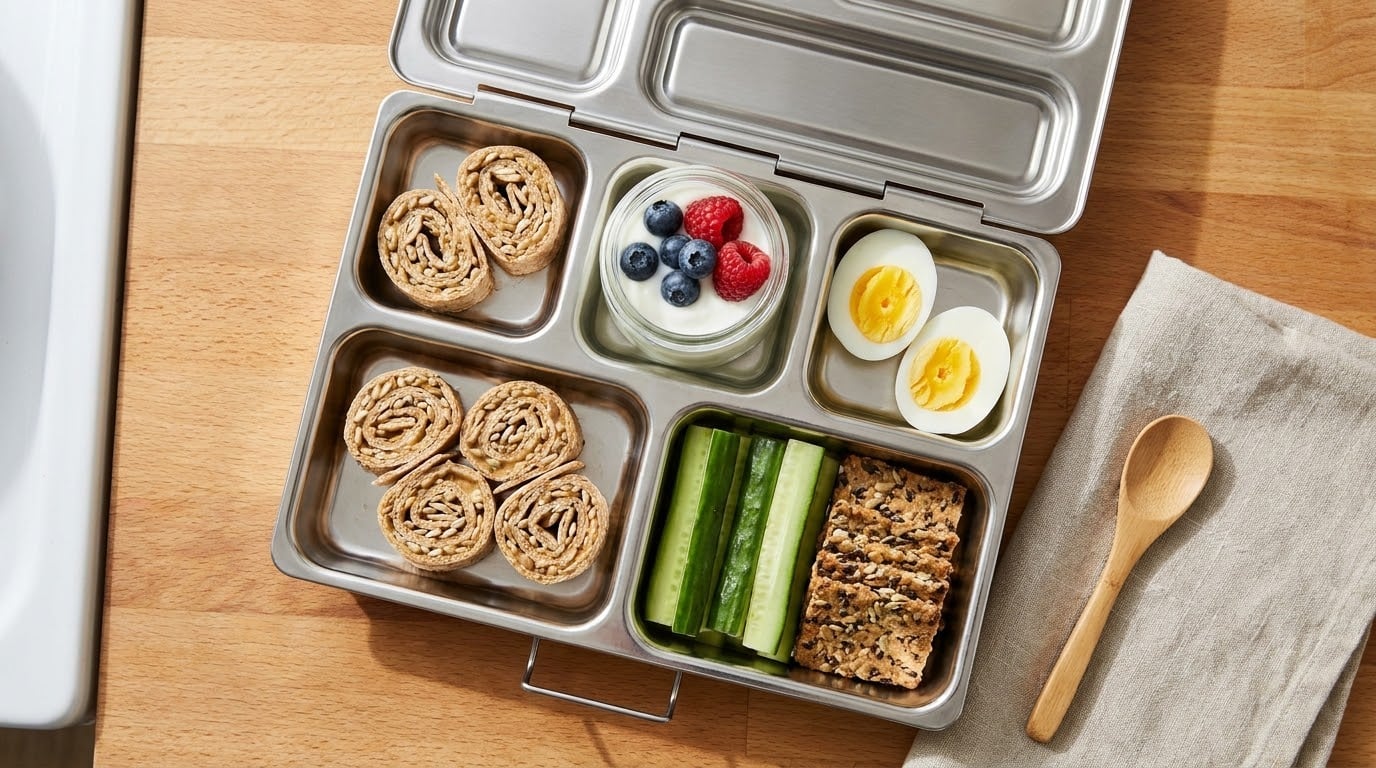
Nut free school lunch ideas work best when you build the meal from whole, simply packaged foods: seed butter instead of peanut butter, eggs, yogurt, deli meat, cheese, roasted chickpeas, fruit, vegetables and whole-grain crackers. The trick is checking every label, not inventing new recipes every morning.
If your child attends a nut-free school, the note in the backpack handbook can send you into a spiral. One family I know spent a whole Sunday googling “what can I send to a nut free school for lunch” because their kid eats one thing and one thing only: peanut butter and jelly. It took them until a parent in their school group pointed out that sunflower seed butter on the same bread, cut the same way, does the same job.
That is really the whole trick. Familiar shapes, familiar flavors, one label check. Below are twelve lunch ideas that pack well in a compartmented box, travel without a mess, and give you a clear way to describe every ingredient to the school.
Table of Contents
- Best Lunch Ideas for Nut-Free Schools at a Glance
- 1. Turkey and Hummus Pinwheels
- 2. Sunflower Seed Butter and Jelly Sandwiches
- 3. Chicken Caesar Wraps with Seed Croutons
- 4. Tuna and White Bean Salad Cups
- 5. Caprese Skewers with Seed-Based Crackers
- 6. Greek Yogurt Berry Parfait
- 7. Tofu and Vegetable Rice Bowls
- 8. Mini Turkey Burgers on Seed-Based Buns
- 9. Veggie Quesadilla with Guacamole
- 10. Hard-Boiled Eggs and Seed-Based Whole-Grain Toast
- 11. Lentil or Bean Pasta Salad
- 12. Breakfast-for-Lunch Oatmeal Cups
- Frequently Asked Questions
- How can parents pack lunches for a nut-free school?
- Are sunflower seeds and sunflower seed butter allowed in nut-free schools?
- What should I look for on a food label when packing for a child with a nut allergy?
- How do I keep a school lunch cold and safe until afternoon?
- Can granola, sauces, and baked goods be included in a nut-free school lunch?
- How can I contact the school to confirm its nut-free policy?
- Conclusion
Best Lunch Ideas for Nut-Free Schools at a Glance
| Lunch idea | Main ingredients | Prep time | Travels well | Best for |
|---|---|---|---|---|
| Turkey and hummus pinwheels | Flour tortilla, sliced turkey, hummus, cucumber | 10 min plus chill | Yes, chilled | Preschool and elementary |
| Sunflower seed butter and jelly | Seed butter, jelly, sandwich bread | 5 min | Yes | Picky eaters, any age |
| Chicken Caesar wraps | Flour tortilla, chicken, romaine, seed croutons | 10 min | Yes if packed cold | Older kids who like wraps |
| Tuna and white bean salad cups | Canned tuna, white beans, celery, olive oil | 15 min | Yes in a sealed cup | Omega-3 and protein |
| Caprese skewers | Mozzarella, tomatoes, basil, seed crackers | 10 min | Yes, kept chilled | Low-assembly lunches |
| Greek yogurt berry parfait | Plain yogurt, berries, nut-free granola | 5 min | Yes with a wide cup | No-cook breakfasts |
| Tofu and vegetable rice bowl | Rice, baked tofu, vegetables, seed dressing | 30 min batch | Yes in a leakproof bowl | Vegetarian main dishes |
| Mini turkey burgers | Ground turkey, cheese, seed-based buns | 25 min batch | Yes, eaten same day | Sandwich lovers |
| Veggie quesadilla | Tortilla, cheese, approved vegetables | 12 min | Yes, better warm | Picky vegetable avoiders |
| Eggs and seed toast | Hard-boiled eggs, whole-grain toast, fruit | 5 min from batch | Yes | Cheapest reliable option |
| Lentil pasta salad | Cooked pasta, lentils, vegetables, vinaigrette | 20 min batch | Best eaten next day | Make-ahead lunches |
| Oatmeal cups | Oats, cinnamon, berries, seed topping | 10 min batch | Yes in a sealed cup | Breakfast for lunch days |
1. Turkey and Hummus Pinwheels
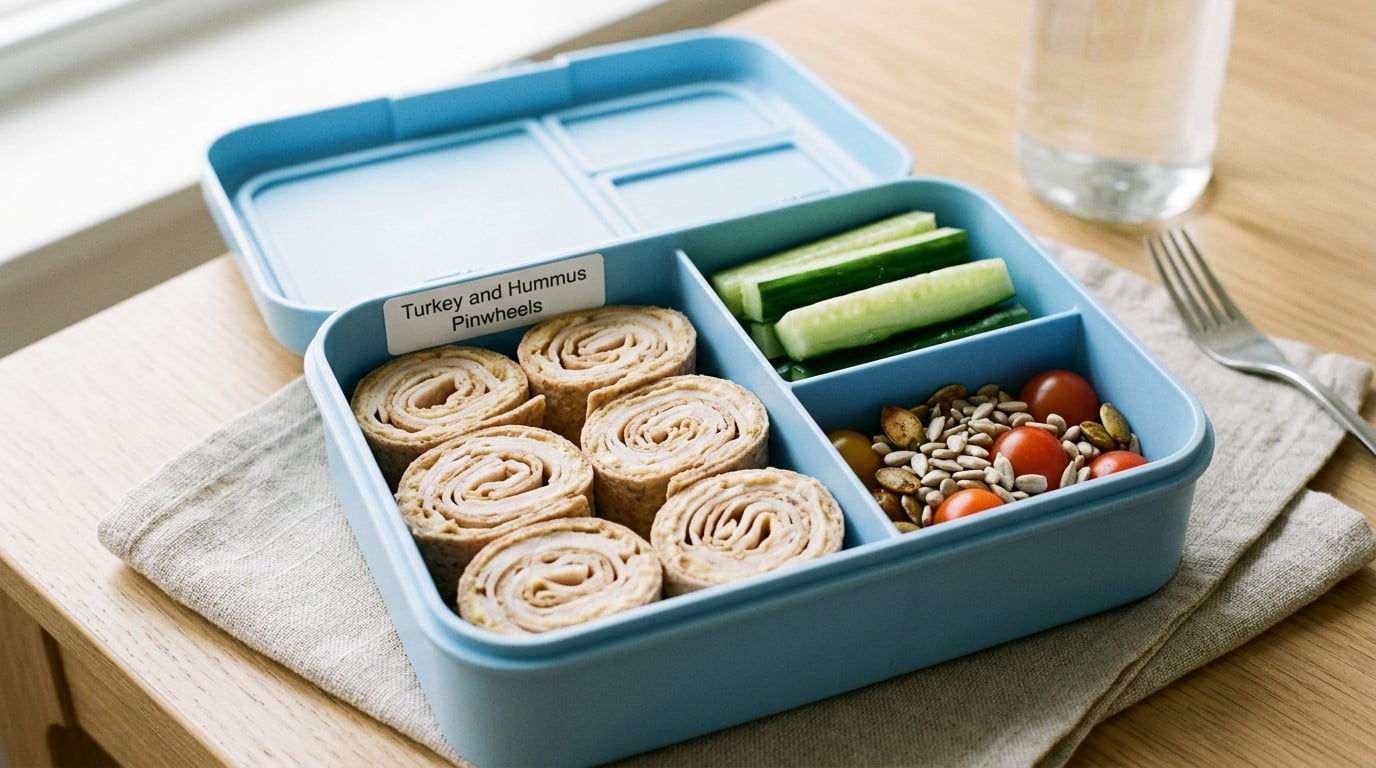
Pinwheels are the workhorse of a nut-free week. You spread a thin layer of hummus on a flour tortilla, lay on deli turkey and cucumber sticks, roll it up and slice it into rounds a kid can pick up with fingers instead of a fork.
Prep takes about ten minutes, plus twenty in the refrigerator so the roll firms up and does not unspool in the lunchbox. Hummus is one of the most repeated recommendations in parent groups for exactly this reason: it adds moisture and flavor without a nut ingredient, and the flavor is mild enough that a picky eater will not object.
How to check a pinwheel for nut safety
Three packaged items go in this lunch, and each one gets its own check. Read the deli turkey label for peanuts, tree nuts and a shared-equipment statement. Read the tortilla the same way. For the hummus, check whether the brand names almonds, walnuts or hazelnuts, and skip any brand that blends a nut into the mix for flavor.
A nut-free example: plain white flour tortilla, oven-roasted sliced turkey breast, classic hummus, and cucumber ribbons cut thin enough to roll. Pack the pinwheels in the coldest compartment and add carrot sticks with a separate cup of hummus on the side.
2. Sunflower Seed Butter and Jelly Sandwiches
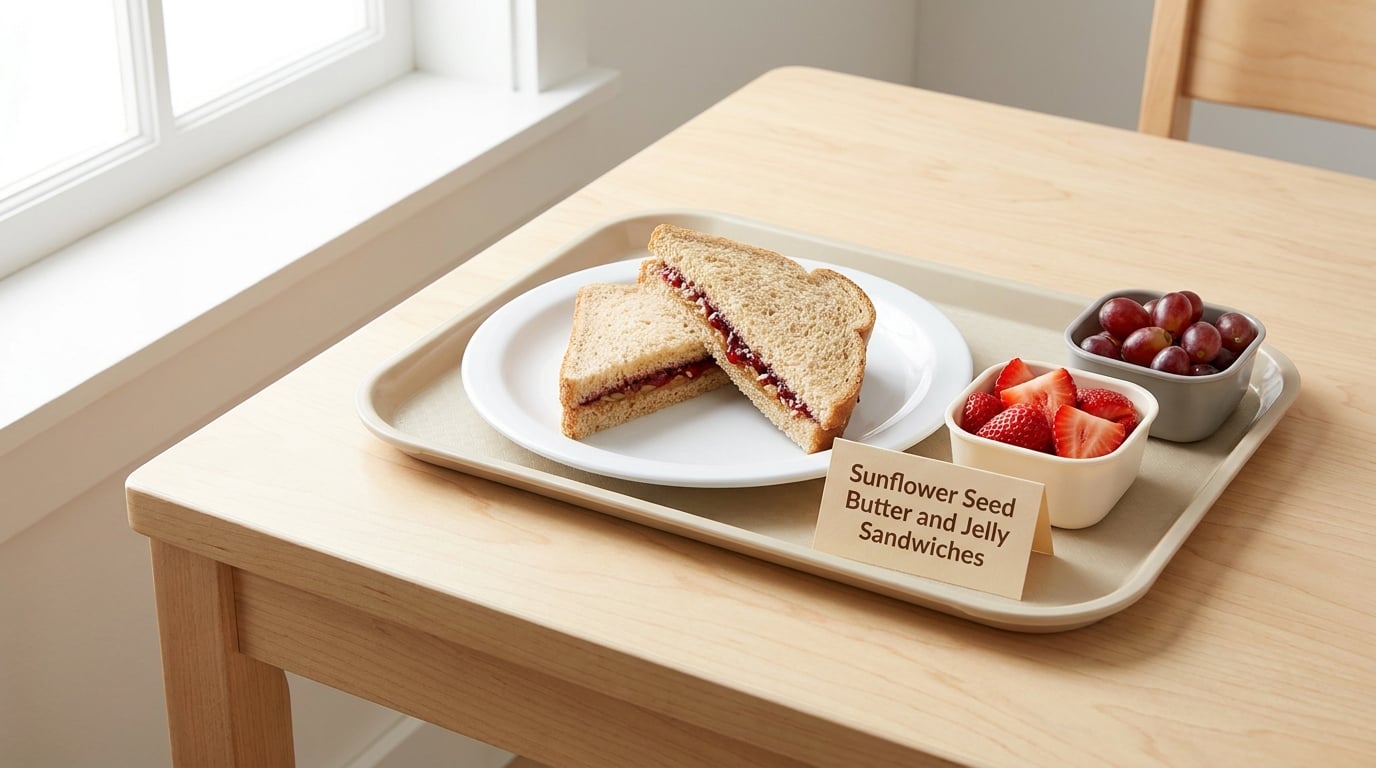
Sunflower seed butter is the swap parents reach for first, and it is the closest thing to peanut butter a child will actually accept. It is sweet, it spreads the same way, and it makes the familiar sandwich shape that most nut-free-averse kids still want for lunch.
Prep is five minutes. Two school-lunch examples: seed butter and grape jelly on whole wheat, cut into triangles so it fits a compartmented box, or seed butter and a seed-based jam swirl rolled into a “nut-free lunchable” pinwheel. Both hold together until lunch without a thermos.
The caveat matters enough to say plainly. Some schools that ban peanut butter also restrict sunflower and soy nut butter because they look like the real thing and can be confused with it, or because a child cannot safely eat a school that is full of allergen exposure. A parent in one school group described exactly that: her daughter attends a nut-free table, and the rule was seeds too. Read your handbook before you buy the jar, not after.
3. Chicken Caesar Wraps with Seed Croutons
A wrap solves a lot of lunch problems at once. It eats cold, holds up to being dropped in a bag, and lets you hide vegetables in a form most kids accept. For a chicken Caesar version, use plain grilled chicken, chopped romaine, shredded cheese and a dressing made from olive oil, lemon juice and grated Parmesan instead of a jarred sauce.
Croutons are the part worth checking. Many are baked in a facility that also handles nuts, and some contain almond flour. Choose a seed-based cracker or crouton brand that states it is made in a nut-free facility, or leave them out entirely and add pretzels in their place.
Prep is about ten minutes if the chicken is already cooked. Cook poultry to an internal temperature of 165°F, then cool it before rolling. Keep the finished wrap in an insulated bag until lunch.
4. Tuna and White Bean Salad Cups
Canned tuna is one of the most underrated lunch proteins, and white beans fix its two problems at once: they add bulk and they keep the salad moist without a mayonnaise-heavy dressing. Stir together canned tuna, rinsed cannellini beans, diced celery, a little olive oil, lemon juice and black pepper, then pack it in a leakproof cup with a small fork.
The moisture question is what parents ask about most. The trick is packing the wet ingredients at the bottom of the container and the dry ones, like crackers or a handful of seed-based pretzels, in a separate compartment. Nothing touches, nothing goes soft by noon.
Food safety rules apply here because this is a cold dish. Keep it at 40°F or below with an ice pack in an insulated bag, and throw it away if it has sat above that temperature for more than two hours. Pack one example for a nut-free school: tuna and white bean salad, cucumber coins, and a sealed pack of seed crackers, with a table tent listing every ingredient.
5. Caprese Skewers with Seed-Based Crackers
This is the lowest-assembly lunch on the list. Slide halved cherry tomatoes, cubed mozzarella and fresh basil leaves onto short wooden or reusable skewers, and add a handful of seed-based crackers in the other compartment. Ten minutes, no cooking, nothing to spill.
Cut the skewers short, around six inches, so they fit flat in a box and are less likely to poke a sibling on the walk to the cafeteria. Bamboo skewers with pointed ends are a poor choice for a young child; look for the blunt kid-safe kind.
Cheese and cut produce both need to stay cold. Pack the skewers on ice and eat them the same day. If your school requires a written ingredient list, this one is short: mozzarella, tomatoes, basil, seed crackers, olive oil.
6. Greek Yogurt Berry Parfait
Parfait cups get dismissed as a snack, not a lunch, but paired with a side and a fruit they hold up. Use plain Greek yogurt rather than a flavored variety, since flavored ones often carry nut-derived flavorings and a lot of added sugar. Layer yogurt, berries and a nut-free granola in a clear cup so a child can see what is inside.
Granola is the label item to slow down on. Pick a brand that states it is made in a nut-free facility, and read the granola itself for almonds, pecans, walnuts and cashews, which appear in most ordinary varieties. When in doubt, swap in a topping of toasted pumpkin seeds, which most nut-free schools allow once you have confirmed their policy.
Pack the granola in a separate little container so it stays crunchy until lunchtime. Five minutes to assemble, and it travels without any temperature worry, which makes it a good choice for the morning your child has a fire drill schedule shift.
7. Tofu and Vegetable Rice Bowls
Rice bowls are the answer for a family that has run out of sandwich ideas but still wants a real main dish. Cook rice, roast cubed tofu at 425°F until the edges brown, and pack it with a mix of vegetables: cucumber, edamame, shredded carrots, bell pepper or broccoli.
Bake the tofu until it reaches 165°F, and use a dressing you mix yourself from sesame paste or tahini, rice vinegar, soy sauce and a little honey. Homemade dressing lets you control the whole ingredient list, and tahini is a sesame product, not a nut, at schools that ban only peanuts and tree nuts.
This one is worth batching. Thirty minutes of Sunday cooking produces four to five bowls, and they hold up better than most packed lunches, which makes them a good Monday option. Pack the dressing on the side so the rice does not turn to glue, and skip the bowl if your school also restricts sesame. Nut-free example: brown rice, baked tofu, cucumber and edamame, sesame dressing in a sealed cup.
8. Mini Turkey Burgers on Seed-Based Buns
Some kids refuse a sandwich but will happily eat a burger, and a mini turkey burger is a comfortable middle ground between the two. Use ground turkey, season it with salt, pepper and a little garlic powder, and form patties small enough to fit in a slider-sized bun.
Bread labels are where most parents get stuck. Many standard buns and rolls are made on shared equipment with tree nuts, and some contain nut-derived ingredients. Look for a brand that states it is made in a nut-free facility, and read the full ingredient list for wheat flour, yeast, sugar, oil and any nut species names.
Cook ground turkey to 160°F internal temperature, then let the patties cool before packing so condensation does not soak the bun. Twenty-five minutes of cooking yields about a dozen patties, which batch well. Add a slice of cheese, carrot coins and grape tomatoes, and you have a lunch that looks like a fast-food burger without the nut risk.
9. Veggie Quesadilla with Guacamole
A cheese quesadilla hides vegetables in a way most picky eaters accept. Fill a flour tortilla with a modest layer of shredded cheese and one or two approved vegetables, then cook it on a skillet or in a sandwich press until the cheese melts and the outside takes on a little color.
Check three labels: the tortilla, the cheese and the seasoning. Many spice blends include peanut flour, and some multi-ingredient shredded cheeses carry nut-derived ingredients. Plain salt and cumin from a single-ingredient jar are the easy win.
Pack the guacamole in a separate sealed cup with a small spoon, never smeared against the quesadilla, and include a fork. A whole quesadilla cut into wedges fits neatly in a compartmented box, and a nut-free example reads: flour tortilla, cheddar, diced bell pepper, guacamole. Cook the chicken to 165°F if you add any.
10. Hard-Boiled Eggs and Seed-Based Whole-Grain Toast
This is the cheapest reliable lunch on the list, and the one parents fall back on when the week gets away from them. Hard-boiled eggs, whole-grain toast cut into strips, a piece of fruit and a crunchy side, packed in five minutes from a Sunday batch.
Eggs are the piece that needs care. Keep them in their shells in the coldest compartment of the bag, and consider sending them slightly underdone only if your child is older and your school allows it. For younger children, fully cooked eggs are the simpler answer. To peel a batch cleanly, cook them, cool them in ice water and refrigerate them in the shell.
Toast is worth one label check for shared-equipment warnings, and the same goes for whatever crunchy thing you add. One nut-free example: two hard-boiled eggs, whole-grain toast strips with seed butter, apple slices tossed in a little orange juice to keep them from browning, and a handful of seed-based pretzels.
11. Lentil or Bean Pasta Salad
Pasta salad feels like a leftover, which is exactly why it works. Cook a batch of pasta with red lentils or white beans folded in, cool it under cold running water, then toss it with chopped cucumber, cherry tomatoes, sweet corn and a simple vinaigrette of olive oil, red wine vinegar, mustard and a little honey.
Sogginess is the single complaint about packed pasta salad, and the fix is not complicated. Dressing goes on at the table rather than in the bowl, so pack it in a small leakproof container, and add the crunchier items like pretzels in a separate compartment. Celery and cucumber hold their texture better than onion or tomato in a cold box.
Make it the night before and refrigerate it covered, then pack it in the morning with an ice pack on the bottom. Twenty minutes of active work covers a large batch, so this is the lunch to cook when you want the rest of the week handled.
12. Breakfast-for-Lunch Oatmeal Cups
Some days a hot breakfast at 7 a.m. is the one thing that will not happen. Overnight oats cups solve that: stir together rolled oats, milk, a little yogurt, cinnamon and a spoonful of sunflower seed butter, divide into individual jars, and refrigerate overnight. In the morning you add berries and go.
Ten minutes of work makes five cups. Keep them cold in the jar and pack them with an ice pack, because dairy and cooked oats should stay at or below 40°F. Texture is the other thing to plan for: add fruit in the morning rather than the night before, or the oats turn pink and watery.
A nut-free example: rolled oats, milk, plain Greek yogurt, cinnamon, sunflower seed butter and fresh blueberries, with a small spoon and a napkin. Some nut-free schools also restrict seed-heavy breakfasts, so check before you make this a weekly default.
Frequently Asked Questions
How can parents pack lunches for a nut-free school?
Read the school handbook first, because the policy is written down and it may ban more than peanut butter. Then check the ingredient label on every packaged item for peanuts, tree nuts and shared-equipment warnings. Pack foods separately in a compartmentalized box, write a short ingredient list on a card, and confirm the policy directly with the office if anything is unclear.
Are sunflower seeds and sunflower seed butter allowed in nut-free schools?
Seeds are botanically not nuts, so a school that bans only peanut and tree nuts will usually allow seed butter, pumpkin seeds and sunflower seeds. Some schools restrict them anyway because they resemble peanut butter or because a child with a severe allergy should not be around that risk at all. Confirm with the school in writing before you make it a regular item.
What should I look for on a food label when packing for a child with a nut allergy?
Look for peanut and tree nut names in the ingredient list, which US labeling law requires. Then check for a shared-equipment statement such as processed in a facility with nuts or may contain traces. A label that states the product is made in a nut-free facility is the safest option for school. When a product has no nut wording at all, whole single-ingredient foods like fruit, plain yogurt and cooked eggs are still the simplest choice.
How do I keep a school lunch cold and safe until afternoon?
Use a well-insulated lunch bag with at least one cold source, such as a frozen water bottle or an ice pack, and keep perishable foods at or below 40u0026deg;F until they are eaten. Pack cold items at the top of the bag, where they stay coolest. Any perishable food that sits above 40u0026deg;F for more than two hours should be discarded.
Can granola, sauces, and baked goods be included in a nut-free school lunch?
They can, but only after you read each one. Most granola, bars, crackers and sauces are made on equipment that also processes nuts, and some contain almond flour or nut flavoring. Choose items from brands that state they are made in a nut-free facility, and skip anything whose label leaves you guessing. Baked goods are the category where surprises hide most often.
How can I contact the school to confirm its nut-free policy?
Send a short written email to the school nurse or office rather than a phone call, and ask three specific questions: which tree nuts are covered, whether sunflower and soy nut butter are restricted, and whether outside food needs a labeled ingredient list. Keep the reply in your file so you are not re-asking every September, and re-check the handbook at the start of each school year since policies get updated.
Conclusion
Start with the school, not the recipe. Confirm the exact policy in writing, including whether seed butter is restricted, then pick two or three lunches from this list your child already likes and build the rest around them.
Once you know the rules, packing gets fast. Batch eggs and rice bowls on a Sunday, keep one shelf stocked with single-ingredient foods, pack perishables cold in a compartmentalized box, and write the ingredient list on a card taped inside the lid. That last habit is what turns a nut-free school lunch from stressful to ordinary.
If your child has a diagnosed allergy rather than simply attending a nut-free school, talk with their pediatrician or allergist about the plan that fits them. The ideas here are general food-preparation guidance, not medical advice.