
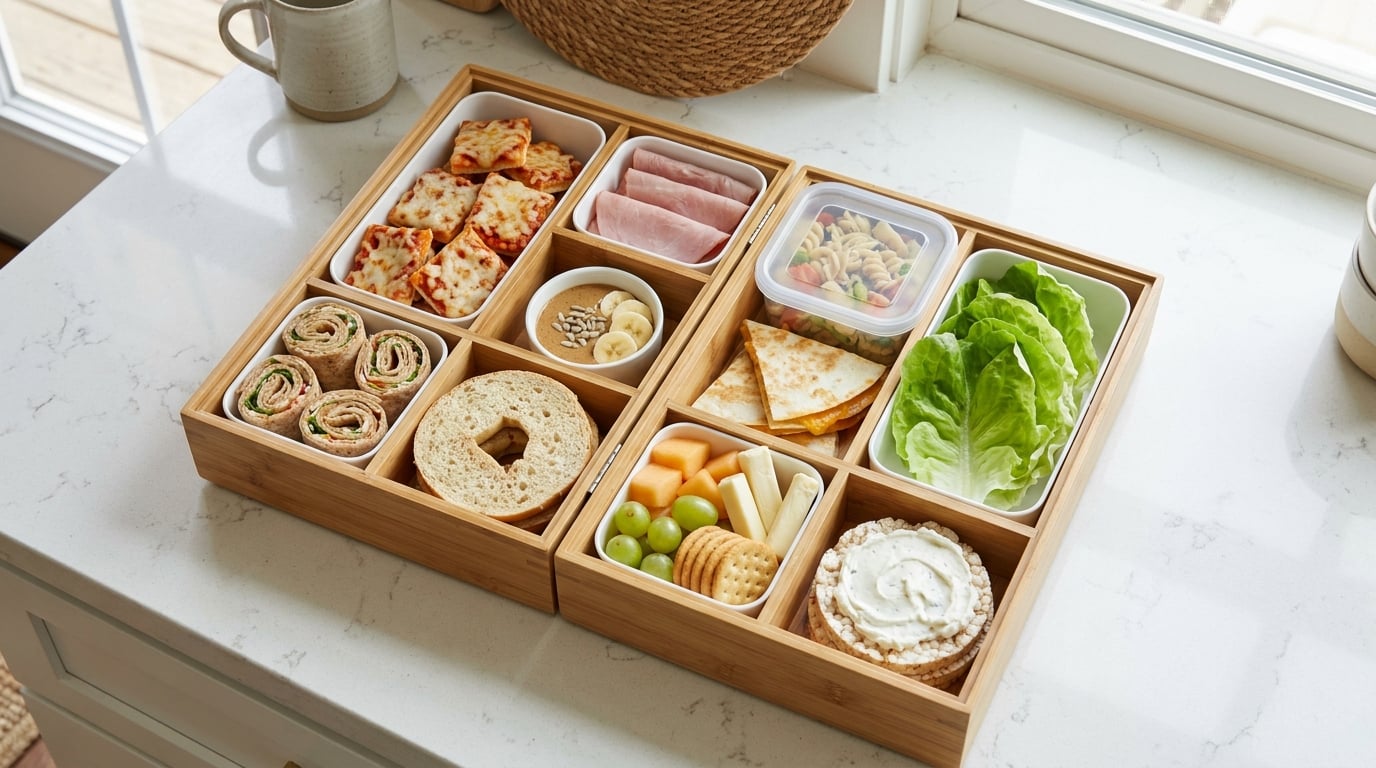
School lunch ideas for picky eaters all follow the same rule: build the lunch out of foods your child already eats, then change the shape, not the ingredients. Serve each component in its own compartment so nothing touches, cut it small enough to eat one-handed, and pack it at a temperature the child already accepts.
That sounds simple until you are standing in your kitchen at 6:40 in the morning with a child who eats five things. Most packed lunches fail on logistics, not on nutrition. The food gets soggy, the thermos comes back cool, the pinwheels slide apart, and the whole box comes home full.
Every idea below works for that situation. I have kept the ones that pack well in a bag for five hours, open with one hand, and survive a 15-minute lunch period where a kindergartner is doing all of this without an adult helping. Use the list as a rotation, not a test. Pick the two your child already accepts and vary the rest.
Table of Contents
- Best School Lunch Ideas for Picky Eaters at a Glance
- 1. Turkey and Cheese Pinwheel Sandwiches
- 2. Mini Pizza Lunchboxes
- 3. Ham and Creamy Cheese Snack Wrappers
- 4. Peanut Butter and Banana Lunchbox Cups
- 5. Pasta Salad with Flexible Add-Ins
- 6. Quesadilla Cut Into Small Triangles
- 7. Chicken Salad Lettuce Cups
- 8. Bagel Pita Pockets with Creamy Fillings
- 9. Fruit, Cheese, and Cracker Snack Packs
- 10. Soft Rice Cakes with Creamy Toppings
- Frequently Asked Questions
- What do I feed an extremely picky eater at school?
- How do I keep food warm in a thermos for school lunch?
- What can I put in a bento box for a picky eater?
- How do I stop packing the same lunch every day?
- What are the 5 P’s of picky eating?
- Is it safe to pack school lunch the night before?
- How much food should I pack for a kindergartener?
- Easy First Step for a Pickier Eater
Best School Lunch Ideas for Picky Eaters at a Glance
Here is the short version. Prep times assume an adult assembling the box; every one of these can be made the night before.
| Lunch idea | Main food | Best feature for selective eaters | Prep time | Travels well |
|---|---|---|---|---|
| Turkey and cheese pinwheels | Tortilla roll-ups | Filling stays put, no open sandwich | 10 min | Yes |
| Mini pizza lunchbox | Crackers, pita or English muffin | Kid can eat the toppings separately | 15 min with oven | Yes, crackers travel best |
| Ham and cream cheese wrappers | Ham plus soft spread | Soft, moist, no chewing | 8 min | Yes |
| Peanut butter and banana cups | Sunflower seed butter and fruit | Nut-free, served in a cup to scoop | 5 min | Yes |
| Pasta salad with add-ins | Small pasta and cheese | Every mix-in sits in its own corner | 20 min | Yes, with a cup lid |
| Quesadilla triangles | Flour tortilla and cheese | Cold or warm, dipped not folded | 12 min | Cold version yes |
| Chicken salad lettuce cups | Moist chicken salad | Scooping instead of chewing | 15 min | Better as a wrap |
| Bagel and pita pockets | Sliced bagel, pocket, English muffin | Fillings can be scraped out | 10 min | Yes |
| Fruit, cheese and cracker packs | Cut fruit, soft cheese, crackers | No cooking, nothing mixed | 7 min | Yes |
| Soft rice cakes with toppings | Rice cakes and creamy spreads | Sandwich substitute with no bread | 5 min | Best eaten same day |
1. Turkey and Cheese Pinwheel Sandwiches
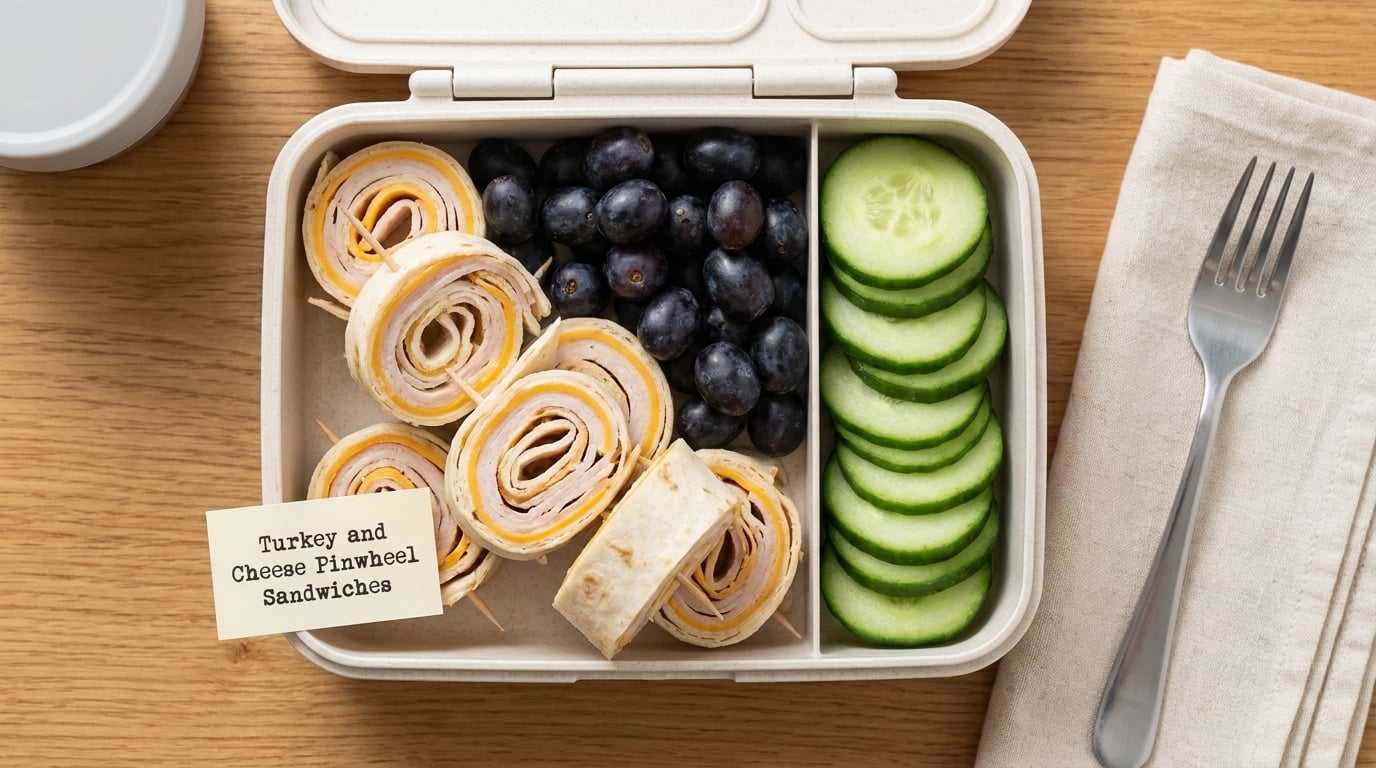
Pinwheels solve the most common school lunch failure, which is a sandwich that falls apart in a bag by 11:30. Roll deli turkey and sliced cheese onto a flour tortilla, spread a thin layer of cream cheese on the tortilla first so the filling grips, and roll it up snugly. Let it sit in the fridge for 20 minutes before slicing so it holds its shape.
Cut it into slices about a centimetre thick. A paper cup cut in half makes a perfect pinwheel cutter for small hands, and the slices stand up in the cup instead of sliding against each other.
The bigger win is what you put beside it. Cucumber rounds, baby carrots or grapes in their own compartment mean the vegetables never touch the tortilla, so a child who hates them mixed in can still pick one up. For a child who refuses any green, swap in a few cut strawberries or a small handful of cereal and keep the build identical.
2. Mini Pizza Lunchboxes
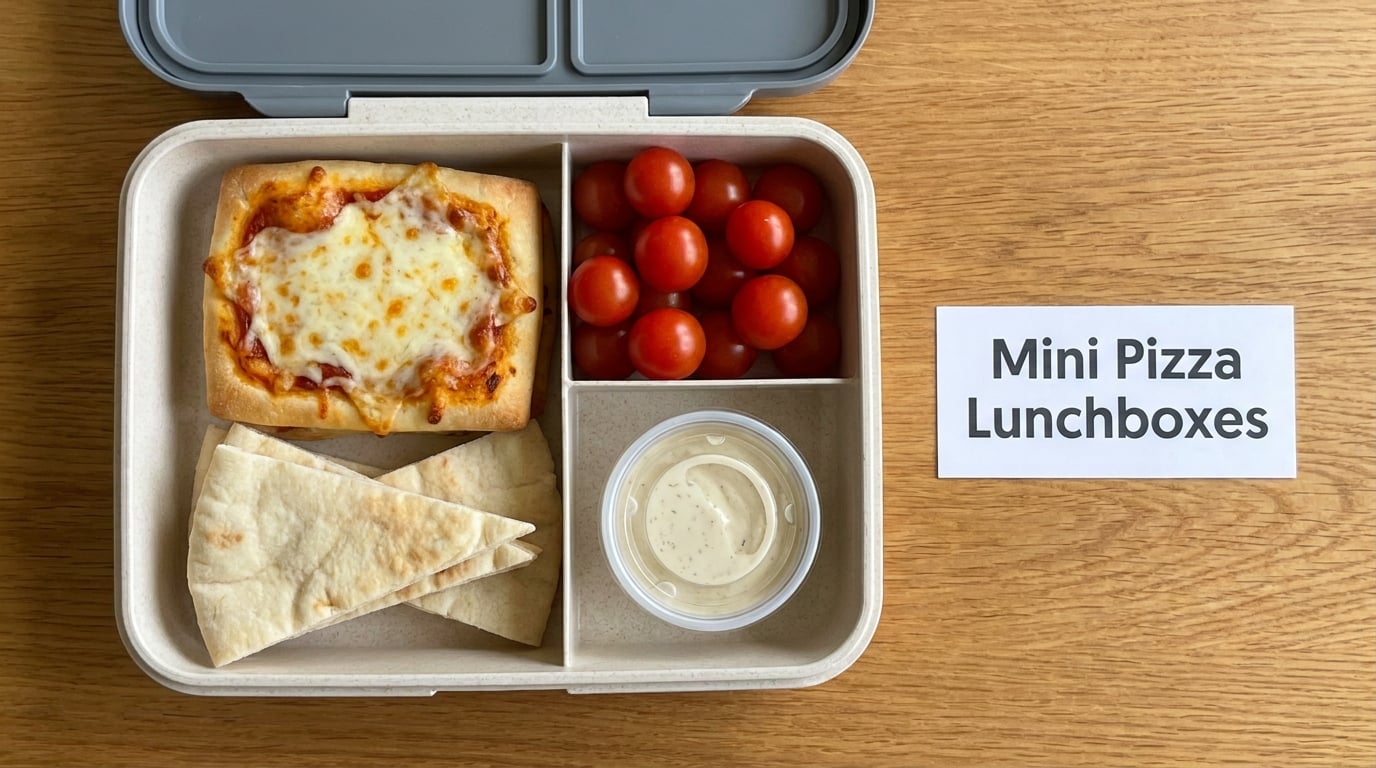
Mini pizza works because it is one of the few meals a child can eat with their hands in a noisy room. Three bases do the job: a few crackers with the toppings set on top, a split English muffin, or soft pita triangles. Melt the cheese until it looks familiar and hold the rest of the toppings back.
That last part matters more than it sounds. Put the mushrooms and peppers straight on the pizza and you have built a new food. Set them in a separate little cup with a fork and the same pizza becomes lunch your child already recognizes plus something they can inspect on their own terms.
For a 15-minute lunch period, the cracker version is the fastest thing on this list to eat. Cut a square of cheese into thin strips so they can pick them up one at a time, and add a few round crackers to the same cup. Skip the tomato sauce if raw texture is a trigger for your child.
3. Ham and Creamy Cheese Snack Wrappers
Ham and cream cheese is a good fit for a child who avoids chewy or dry textures. Spread a thin layer of cream cheese on one side of a slice of ham, fold it over, and cut into small finger-width pieces, or spread the mixture on a small tortilla and cut into ribbons.
Keep the pieces slightly moist rather than cracker-crisp, and pack the cream cheese side down if you are using bread. Add a small cup of soft carrot sticks or banana slices beside it so the protein and the produce never mix in the mouth.
Nutrition-wise this is a fine protein anchor, not a complete lunch. Pair it with something from the fruit and grain side, such as a few whole-grain crackers and a peeled apple cut into wedges, and it holds together as an actual meal.
4. Peanut Butter and Banana Lunchbox Cups
Peanut butter and banana is the classic, and it is still the fastest lunch on this list to make. But if your child’s school bans peanuts, sunflower seed butter is the direct swap and most kids accept it once the label is off the counter. The one-taste rule matters here: taste a small amount at home first, on a spoon, before you assume it works.
Serve it in a small lidded cup rather than as a sandwich. Spread the butter on one side of a slice of bread, lay a banana slice against it, and let the child scoop with a small spoon. That format is far more forgiving than a sandwich because nothing has to stay assembled.
Oatmeal, yogurt or a few soft crackers all work as the base if bread is the problem. A cup of yogurt with a swirl of seed butter and a few banana coins is a deconstructed version of the same idea and travels without a wrapper.
5. Pasta Salad with Flexible Add-Ins
Start with the pasta and cheese a child already accepts, then keep every add-in in its own section of the container. Small elbows, rotini or shells hold more dressing and stay soft; cool them under cold running water first so they are not warm in the morning.
Toss the pasta with a light dressing and put it in one compartment. Peas, corn, diced cucumber, chicken, olives or grated carrot each go in a separate small cup so the child builds each bite themselves. Nothing is forced to touch, which is exactly what a texture-sensitive eater needs.
Chicken and egg should be cooked to a safe internal temperature before they go in the box: 165°F for poultry and egg dishes, and keep chilled items cold with an ice pack in an insulated bag. A pasta salad that sits warm for three hours is not worth the shortcut.
6. Quesadilla Cut Into Small Triangles
A cheese quesadilla is a warm-tolerance test in a good way. Many children who refuse a sandwich will eat a quesadilla because the tortilla is soft, the cheese is melty and there is no visible filling to inspect. Cut it into small triangles and pack a little cup of mild salsa or sour cream for dipping rather than putting the dip inside.
Leftover chicken or refried beans can go inside, but add them only after the plain cheese version has become a safe food. Grilled or shredded chicken needs to reach 165°F before it goes in the box.
If your school has no microwave, send it cool. A cool quesadilla is still soft and mild, and cutting it into thin triangles means it packs flat in a compartment without a leak. That is a much better trade than a hot lunch that arrives lukewarm.
7. Chicken Salad Lettuce Cups
Chicken salad is a good bridge for a child who dislikes anything with texture inside a bread product, because the lettuce does the structural work. Use a small buttery leaf, spoon a teaspoon of the salad in, and let the child fold it. A mini muffin tin liner makes a single-serve cup if they are not ready to handle a whole leaf.
Wet filling is the failure point here. Keep the chicken salad creamy but not loose, drain any excess, and pack the lettuce separately so it does not go limp. Or skip the cups entirely and use the same salad in a small tortilla wrap, which travels better and is easier to eat at a table.
Give the deconstructed version too: plain shredded chicken in one compartment, the mayo or dressing in a tiny cup, the lettuce in another. A child can accept all three parts and refuse the mixture, and both options get protein into the day.
8. Bagel Pita Pockets with Creamy Fillings
For a child who has decided bread is the problem, a halved bagel, an English muffin or a pita pocket changes the format without changing the flavor. Cream cheese, egg salad or tuna all stay soft and moist, which is easier to eat than a dry sandwich.
Cut the bread with a cookie cutter so the shapes are small and predictable. Circle or star shapes are often accepted at the same table where a square sandwich gets refused, and a child can also eat a small piece at a time without it falling apart.
Keep the filling thin in the pocket and put the extras on the outside. Scrape-out filling, sliced egg on the side, or a separate cup of cream cheese for spreading all give the child control over the same meal.
9. Fruit, Cheese, and Cracker Snack Packs
This is the most flexible build on the list and the one I lean on when a new idea is not working. Cut fruit into thin coins or quarters, add a soft cheese cut into sticks or cubes, add a small handful of crackers, and put each in its own compartment. There is no cooking, no heat, and nothing mixed.
A round of soft cheese with apple slices and a few buttery crackers reads to a child as a set of familiar foods rather than one unfamiliar meal. It also travels the best of anything here, since there is no sauce to leak and nothing to fall apart.
Cut grapes and cherry tomatoes lengthwise into quarters for younger children, and round them into thin slices for a short lunch period where eating fast matters. Serve with a small fork rather than a spoon if finger food is unreliable at the table.
10. Soft Rice Cakes with Creamy Toppings
Soft rice cakes are the fallback when a child refuses every form of bread. They give you a flat base for cream cheese, avocado, yogurt or mashed beans without asking the child to try a new bread product, and they are light enough for a child with a small appetite.
For texture-sensitive children, choose the cakes that bend rather than snap, and check for added sugar in flavored varieties. Soft toppings matter more than the flavor here. Mashed avocado, cream cheese and thin yogurt are all mild and smooth, and they soak into the cake instead of sliding off.
Skip anything crisp on top for this one, since a crisp topping contradicts the soft base. Pack dairy toppings with an ice pack and keep them out of the refrigerator for more than two hours, or use a shelf-stable alternative if the day is long.
Frequently Asked Questions
What do I feed an extremely picky eater at school?
Start from the short list of foods your child reliably eats, not from a nutrition chart. Pick two safe foods as the base, add one mild side such as a soft fruit or a plain cracker, and let the rest be optional. Pack a small portion of a new food in its own compartment with no pressure to try it. Repeated low-pressure exposure over weeks, not a new food every day, is what eventually widens the list. Talk to your pediatrician if the accepted-food list is shrinking rather than growing.
How do I keep food warm in a thermos for school lunch?
Pre-heat the thermos first. Pour boiling water into it, close the lid, and wait five to ten minutes before emptying it and adding the hot food. Wide-mouth bottles are easier to fill and easier for a child to clean. A widebail handle beats a screw top for a kindergartner. Test it the night before with a known temperature, and if it fails, pack cold food instead, since cold lunches are eaten more reliably than lukewarm ones.
What can I put in a bento box for a picky eater?
Fill compartments with single, un-mixed components: one protein, one mild fruit or vegetable, one grain or cracker, and one optional new item. Keep wet foods in a lidded cup so they do not touch anything dry. Cut fruit into small pieces and round whole grapes and cherry tomatoes lengthwise for younger children. A bento works best when the food is recognizable at a glance, since a child has seconds to decide whether to start eating.
How do I stop packing the same lunch every day?
Keep a written safe-food list on the fridge and rotate the format rather than the ingredient. The same cheese can be a quesadilla, a cut pizza, melted over crackers, or a dip for fruit. Change the shape, the container, and the temperature, and the meal reads as new without a single new ingredient. Add one new item a week in a separate compartment so nothing familiar gets crowded out.
What are the 5 P’s of picky eating?
The five P’s describe how restricted eating shows up: pickiness, which is preferring familiar foods and rejecting anything new; persistence, holding that narrow list over months or years; phase, when a child goes through a new food and then stops eating it; problems with eating, including distress, gagging or vomiting around food; and prematurity, when the pattern continues past the age when it is developmentally typical. See your pediatrician if you notice distress or weight concerns.
Is it safe to pack school lunch the night before?
Yes, if you refrigerate everything and use an ice pack. Cooked chicken and egg dishes need to reach 165u0026deg;F before going in the box, and cold foods should stay out of the danger zone of about 40 to 140u0026deg;F for more than two hours. An insulated bag with a frozen pack keeps a cold lunch safe for the school day. Items meant to be eaten warm, like a thermos meal, are better skipped than sent lukewarm.
How much food should I pack for a kindergartener?
Less than most parents expect. A short lunch period means the goal is a few bites of something familiar, not a full meal. Pack small portions in small containers, skip anything that requires cutting with a knife, and choose foods that can be eaten quickly one-handed. Follow up with a real snack after school, since most young children cannot eat an entire day’s needs in 15 to 20 minutes.
Easy First Step for a Pickier Eater
Pack one familiar favorite, one mild side, one fruit or vegetable, and one optional item they are allowed to ignore. That is a complete first attempt, and it takes about five minutes.
The part that matters most is handing over a choice. Let your child pick between two safe options, cut the fruit, or decide which container the crackers go in. Children eat more of the food they assembled themselves, even when the ingredients have not changed.
Then keep a short list of what came back empty and what came back gone, and let that list drive next week’s rotation. Most parents find the untouched box is a format problem, not a refusal, and format is the thing you can fix on Sunday.
If your child’s accepted-food list is shrinking, or eating brings on distress, gagging or vomiting, book a conversation with your pediatrician. Selective eating is common and usually improves with time, but the severity matters more than the timeline.