
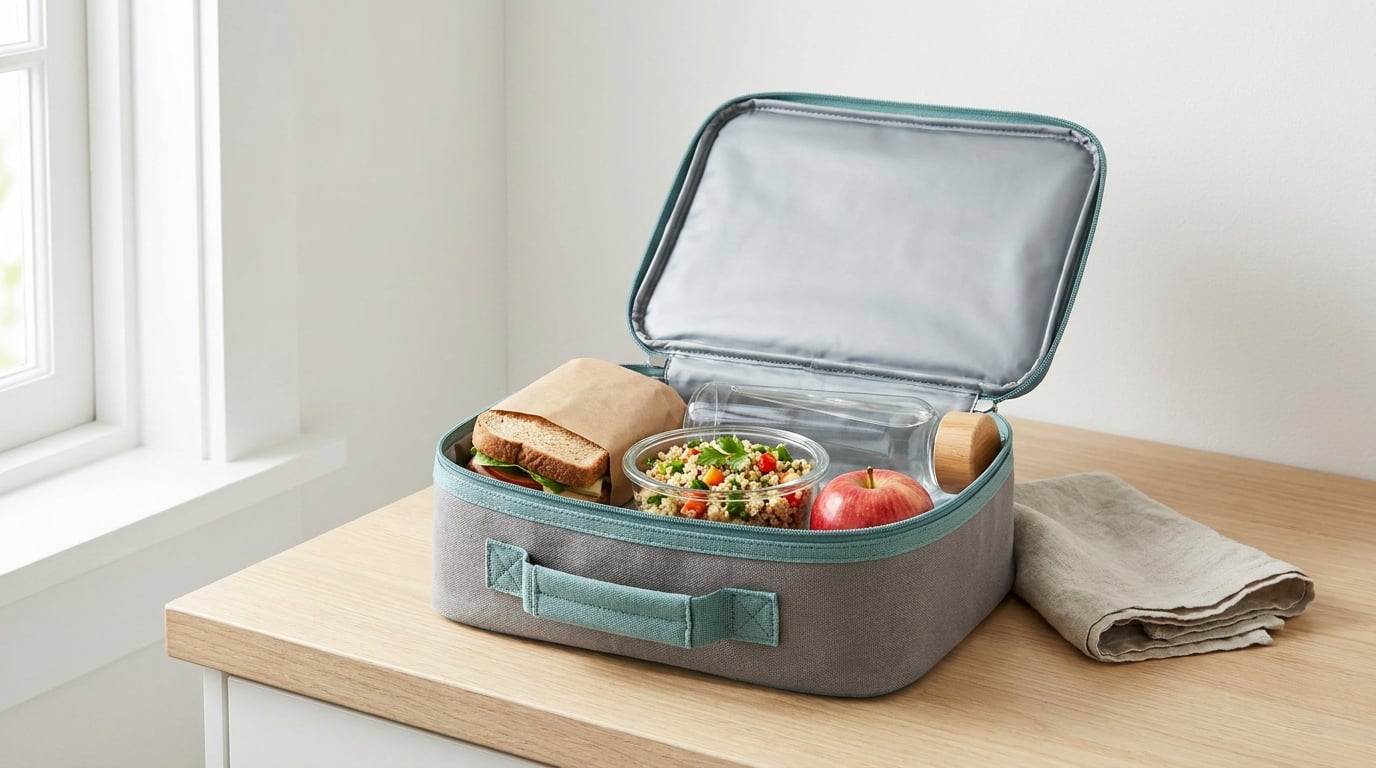
A 12-hour shift does not care what you planned to eat. The break lands when it lands, sometimes at hour three, sometimes not at all, and the unit microwave is a coin flip. The best lunches for nurses on 12-hour shifts are the ones already cold when you open the lid, still holding their texture after six hours, and built from protein and fiber so you reach handoff without the energy crash that usually hits around hour seven.
StaffDNA, writing about fueling a shift, reports that roughly 35% of nurses do not take a meal break at all during a shift. That single number explains a lot of shift food. People end up eating vending machine crackers at 2 a.m. because nobody planned a second meal, then wonder why they feel wrecked by hour ten.
Every idea below follows the same three rules: no reheating needed, no soggy or leaky textures, and enough protein and fiber to carry you. Prep times are honest estimates for one portion, not for a full production kitchen.
Table of Contents
- Best Lunches for Nurses on 12-Hour Shifts at a Glance
- 1. Chicken Caesar Wrap
- 2. Turkey and Hummus Sandwich
- 3. Mediterranean Quinoa Bowl
- 4. Tuna and White Bean Salad
- 5. Overnight Oatmeal with Berries
- 6. Caprese Pasta Salad
- 7. Burrito Bowl with Black Beans
- 8. PB and Apple Crunch Wrap
- 9. Cold Sesame Noodles
- 10. Greek Yogurt and Snack Board
- Frequently Asked Questions
- Conclusion
Best Lunches for Nurses on 12-Hour Shifts at a Glance
How we narrowed the best lunches for nurses on 12-hour shifts
Start here when your shift starts in six hours. The table ranks all ten lunches by prep time, whether they hold up chilled for four hours or more, whether they need a microwave, and which shift they suit best.
| Lunch | Prep time | Holds 4+ hrs chilled | Needs reheat | Best for | Protein source |
|---|---|---|---|---|---|
| Chicken Caesar Wrap | 10 min | Yes, with sauce packed separately | No | Both shifts | Chicken |
| Turkey and Hummus Sandwich | 7 min | Yes | No | Day shift | Turkey and hummus |
| Mediterranean Quinoa Bowl | 15 min | Yes | No | Both shifts | Feta and chickpeas |
| Tuna and White Bean Salad | 8 min | Yes | No | Both shifts | Tuna and cannellini beans |
| Overnight Oatmeal with Berries | 5 min | Yes | No | Night shift | Greek yogurt and milk |
| Caprese Pasta Salad | 12 min | Yes | No | Day shift | Mozzarella and chickpeas |
| Burrito Bowl with Black Beans | 12 min | Yes, toppings packed apart | Optional | Night shift | Black beans and chicken |
| PB and Apple Crunch Wrap | 4 min | Yes | No | Both shifts | Peanut butter |
| Cold Sesame Noodles | 15 min | Yes | No | Both shifts | Edamame and sesame |
| Greek Yogurt Snack Board | 6 min | Yes | No | Both shifts | Greek yogurt and almonds |
Two things this table does not show. First, refrigerated food should sit at 40F or below, and a packed lunch should go straight into a fridge or an insulated bag with an ice pack, not sit on a counter. Second, a breakroom fridge is shared and crowded, so anything that spills or smells strongly is a bad bet. Cold and sealed wins every time.
1. Chicken Caesar Wrap
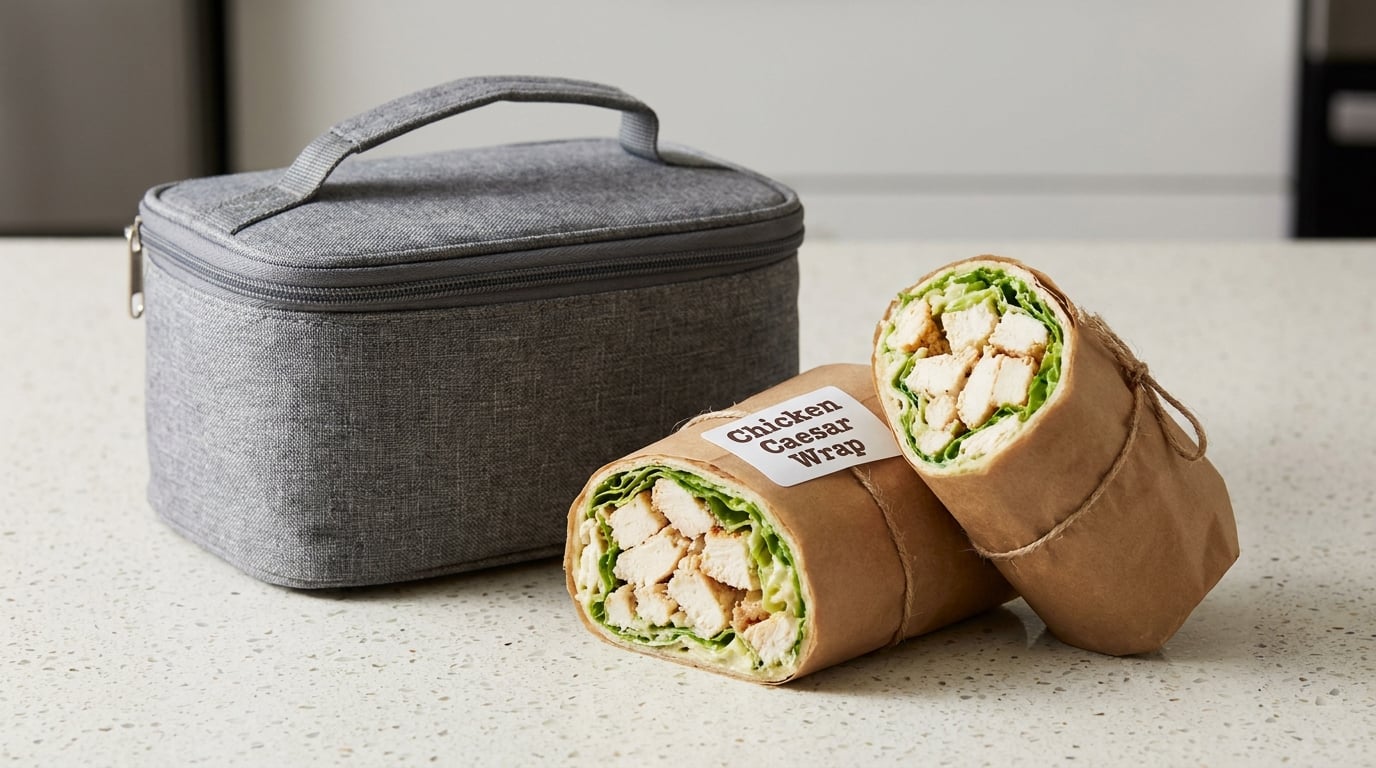
The chicken Caesar wrap is the single most reliable lunch on this list because it is eaten cold, one handed, in about four minutes. Shredded chicken and romaine keep their structure far better than most lunch meats, and a large flour tortilla holds the whole thing without splitting.
The one thing that ruins it is dressing. Caesar sauce seeps into the tortilla within an hour, and by hour six you have a wet, fragile wrap. Pack the sauce in a two-ounce container and add it right before you eat.
A working example: two cups shredded rotisserie chicken, a handful of romaine, a tablespoon of shredded Parmesan, a spoon of chopped celery for crunch, and about two tablespoons of Caesar-style sauce in a small lidded cup. Wrap it tight in parchment, then in foil. Five minutes of assembly, roughly 30 grams of protein, and it holds until your break.
If you are on a unit with a fridge you trust, cold chicken straight from the container is fine. If you want it warm, 30 seconds in a microwave does not ruin it, but plan for the microwave not existing.
2. Turkey and Hummus Sandwich
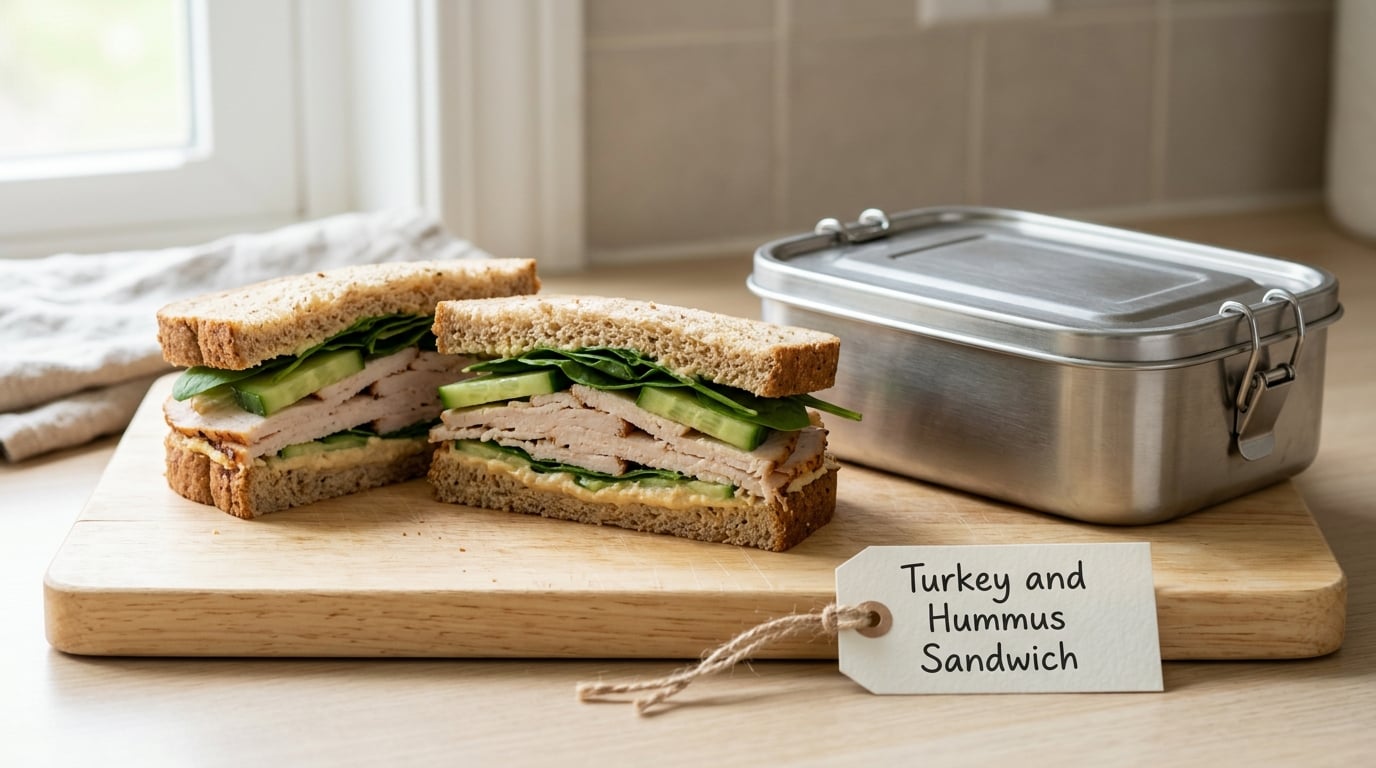
Turkey and hummus is the sandwich that survives a six-hour fridge stay better than anything else I have packed. Hummus is oil and water based, so it does not soak into bread the way mayonnaise does, and it adds fat and fiber that keep you full past the halfway mark.
Watch the wet vegetables. Tomato releases water as it sits, and that is what turns a sandwich into a mush by lunch. Cucumber, spinach, and red onion are the safer picks. Pat the tomato dry if you insist on including it.
Build it like this: two slices of sturdy bread, a thick spread of hummus, three or four slices of turkey, cucumber ribbons, a few spinach leaves, and a grind of pepper. Assemble it, then keep the whole thing cut side up in a sealed container so the moisture from the filling has somewhere to go that is not the crust.
Nurses on a 3×12 schedule tell each other to stop prepping the identical sandwich for four days running. The fix is simple: keep the formula and change one component. Turkey becomes chicken, or add roasted red pepper, or swap the bread for a wrap. Same assembly time, different lunch.
3. Mediterranean Quinoa Bowl
The Mediterranean quinoa bowl is the answer to the hour-seven crash, because quinoa is a slow-burning whole grain rather than a fast sugar. Chilled, it tastes good. Most grain bowls are built around rice, and cold rice has a texture people describe as cardboard, but quinoa stays pleasantly nutty even straight from the fridge.
Choose sturdy vegetables over delicate ones. Cucumber, cherry tomatoes, bell pepper, red onion, and olives all hold up for hours. Skip asparagus and anything leafy on top, and skip any dressing with a lot of oil, which turns the bottom of the bowl oily by lunch.
Batch it: cook two cups of quinoa on Sunday and chill it, then portion over four workdays. Add two cups of chickpeas, a diced cucumber, a cup of halved cherry tomatoes, a quarter cup of chopped olives, and a small container of feta. Dress with lemon juice, olive oil, dried oregano, and garlic powder, added at eating time.
This is also the best option for anyone who gets sick of sandwiches by week two. It is a completely different eating experience from bread, which matters when you are weighing the best lunches for nurses on 12-hour shifts and eating the same category of thing three shifts a week.
4. Tuna and White Bean Salad
Tuna and white beans is a pantry lunch that costs almost nothing and comes together with a fork in under ten minutes. It also travels better than fish should, because the beans and lemon hold everything together and there is no bread to go soggy.
Use pantry tuna packed in olive oil or water, drained, and a can of cannellini beans, rinsed. Fold in chopped celery, red onion, a spoonful of capers or relish, and lemon juice. A little Dijon mustard and olive oil turns it into something closer to a Provençal tuna and white bean salad than a can of tuna.
Food safety note: refrigerate it the moment you make it and keep it at 40F or below. Shelf-stable tuna is not shelf-stable tuna salad, and a breakroom counter is not a fridge. If you cannot refrigerate overnight, pack the two cans separately and assemble at your break instead.
Nutritionists commonly advise tuna a couple of times a week rather than daily, so rotate this one with the lentil or chickpea version. A can of lentils instead of tuna gives you the same filling bowl with a different protein source and a longer pantry life.
5. Overnight Oatmeal with Berries
Overnight oatmeal is the answer for night-shift nurses who find food too heavy at 4 a.m. It is cold, spoonable, and it can be eaten in three minutes standing at a counter, which matters when your break is short and the breakroom is full.
The energy case rests on fiber and protein together. Rolled oats and chia seeds give you soluble fiber that slows digestion, and Greek yogurt or milk adds protein so the bowl does not spike and drop your blood sugar the way a plain bagel does. Berries add sweetness without the crash of a sugary syrup.
Assemble it the night before: half a cup of rolled oats, two tablespoons of chia seeds, three quarters of a cup of milk, a quarter cup of Greek yogurt, a spoonful of honey, and a handful of berries or a few slices of banana. Stir, lid on, fridge. It is ready by morning and holds for four days, which means one batch can cover three or four shifts.
Add crunchy elements at eating time. Stirring in almonds or granola before it goes in the fridge softens them overnight, and you lose the contrast that makes the bowl feel like more than oatmeal.
6. Caprese Pasta Salad
Caprese pasta salad gets better after the night in the fridge, which is unusual and perfect for shift work. The dressing soaks into the pasta, the tomatoes go a little jammy, and nothing about it depends on being freshly made.
The trick is choosing sturdy pasta. Short shapes like rotini, fusilli, or penne hold dressing and survive being eaten cold without turning to mush. Skip long strands like spaghetti, which collapse into a clump by lunchtime and are unpleasant to eat quickly.
Build it with a pound of cooked and rinsed pasta, halved cherry tomatoes, cubed mozzarella, a quarter cup of basil torn rather than chopped, and a handful of chickpeas. Dressing: olive oil, red wine vinegar, a little garlic, salt, and dried oregano. Chill it overnight and pack it cold.
Lower-moisture add-ins are what keep it from turning into soup. Drained mozzarella, sundried tomatoes, olives, and roasted pepper all work. Fresh mozzarella packed in brine is the one to skip, because it keeps releasing water the entire shift.
If your unit has a microwave you can count on, serve this slightly warm, and you have converted a cold packed lunch into something that reads as a meal.
7. Burrito Bowl with Black Beans
The burrito bowl is the one option here that can go either way, cold from the fridge or ninety seconds out of a microwave, and that flexibility is exactly why it works for night shifts. At 4 a.m. people want something that feels hot even when it is not.
Black beans and rice are the staying-power combination. Both are slow-release, both are cheap, and both reheat without turning rubbery the way chicken breast does. Add corn, black beans, diced tomato, shredded cabbage, and salsa, and you have a bowl that is genuinely filling by volume alone.
Texture is the thing to protect. Pack the rice, beans, and corn together, but put the salsa, sour cream, cheese, and shredded cabbage in separate small containers. Everything that carries water goes in last, at the moment you sit down.
A make-ahead version: cook a pot of rice, a pot of seasoned black beans, and a tray of roasted sweet potato cubes on one Sunday, then portion into containers for four shifts. Assembly at 10 p.m. takes about three minutes, which is the real win. A thread on r/NursingUK about meal prep for 12-hour shifts describes the same approach: packing components apart so nothing goes soft.
8. PB and Apple Crunch Wrap
The peanut butter and apple wrap is the cheapest option here and the fastest to build, at roughly four minutes. It is also the most underrated. The combination of protein, fat, and fiber from the apple and nuts holds steady energy, and it does not sit heavy at the end of a shift.
Use a tortilla rather than bread so you can eat it one handed while standing. Spread peanut butter, add a thin layer of jelly, lay on apple slices or thin matchsticks, and finish with a small handful of nuts. The nut crunch is what turns this from a kid lunch into something you look forward to at hour four.
For more staying power, add a sliced hard-boiled egg or a spoon of Greek yogurt blended into the peanut butter. Both add protein without adding much bulk.
Two cautions. If your unit is nut-free or you are packing for a shared space, swap the peanut butter for sunflower seed butter, which behaves almost identically. And put the apple slices in a separate cup if you are packing more than a few hours ahead, because cut apples brown and go soft in a sealed container.
9. Cold Sesame Noodles
Cold sesame noodles are the fastest noodle option that does not turn into a brick. They are eaten at room temperature, need no microwave, and a batch makes four lunches, so the fifteen minutes of cooking buys you most of a week.
Sauce is what makes or breaks it. A sesame dressing of soy sauce, rice vinegar, sesame oil, a little honey or sugar, and grated ginger holds up on noodles for hours without turning them into a sticky mess. Thin and watery sauces, and anything with a lot of cornstarch, are the ones that go gluey.
Build it with cooked and rinsed spaghetti or ramen-style noodles, tossed with the sauce in the container so the noodles absorb it overnight. Add edamame, shredded cabbage, julienned carrots, and scallions. The vegetables go on top rather than being mixed in, so they stay crisp instead of wilting into the noodles.
Edamame is doing real work here. It adds protein and keeps the bowl filling, and once the noodles are cold, it is the thing that stops the lunch from being a plate of carbs with a sweet sauce.
10. Greek Yogurt and Snack Board
Not everyone wants a full lunch at 3 p.m. on a long shift. If you prefer something lighter, a Greek yogurt snack board is the most organized option on this list, and it works well when you are splitting your eating across the shift rather than doing one sit-down meal.
The structure is: protein, fruit, something crunchy, and one vegetable. Greek yogurt covers the protein, grapes or apple slices cover the fruit, almonds or pumpkin seeds cover the crunch, and cucumber or bell pepper strips cover the vegetable. Pack it in a divided container and the whole thing eats in five minutes without a utensil.
Choose plain or lightly flavored Greek yogurt and add the sweetness yourself with berries or a spoonful of honey. Flavored varieties carry a lot of added sugar, and sugar on an empty stomach mid-shift is the fastest route to a crash followed by hunger.
This is also the best lunch for anyone who gets queasy eating before procedures, or who is on a unit where eating a full meal smells like food to everyone else. Add a boiled egg or a cheese stick if you need it to hold you past handoff.
Frequently Asked Questions
What should I eat on a 12-hour nursing shift?
Choose a packed lunch that needs no reheating, holds its texture for six hours, and combines protein with fiber. Wraps, quinoa bowls, cold pasta salads, tuna and white bean salads, and yogurt snack boards all qualify. Each keeps about 25 to 35 grams of protein, which is what holds steady energy through the back half of a shift.
How do I keep lunch from getting soggy or messy?
Keep wet ingredients out of contact with bread or tortilla. Pack sauce, salsa, and dressing in small lidded containers and add them when you sit down. Choose hummus over mayonnaise, dry cucumber and spinach over tomato, and use sturdy pasta shapes instead of long strands. Sealed containers with dividers make the biggest difference of anything.
Can I prepare nurse lunches for several workdays?
Yes, and most of the options here hold three to four days refrigerated at 40F or below. Cook grains, beans, and pasta in batches, portion into containers, and keep sauces separate. Overnight oatmeal and cold noodle bowls survive even longer. Cooked meat and poultry should be refrigerated within two hours, and the whole batch needs to stay cold the entire time.
Are cold lunches safe to take to work?
Cold lunches are safe when they stay cold. Refrigerate packed food immediately, use an insulated bag with an ice pack if you cannot reach a fridge, and follow the USDA two-hour rule for food left in the danger zone. A crowded breakroom fridge is still a fridge, but label your container and push it to the back so it is not the one forgotten until Monday.
What foods help me feel full without making me sleepy?
Protein, fiber and fat together slow digestion and blunt the mid-shift crash. That means chicken, turkey, tuna, Greek yogurt, beans, lentils, chickpeas, quinoa and nut butters, paired with vegetables and whole grains. Skip the large greasy meal before a shift and anything heavily sugared, both of which tend to hit harder around hour seven.
How can I pack lunch for a hospital shift with limited storage?
Use an insulated lunch bag with a flat ice pack, which gives you six to eight hours without a fridge. Choose foods that eat cold and store flat: wraps, sandwiches cut in half, yogurt snack boards, thermos soup, and nut mixes. A visible breakroom fridge is a backup, not a plan, since a full unit fridge has little room for one more container.
Conclusion
Pick one lunch from this list for your next shift and batch-prep it, rather than deciding at 5 a.m. whether the vending machine is worth it. The chicken Caesar wrap and the turkey and hummus sandwich are the safest first choices, because they are cheap, forgiving, and easy to change up day to day.
Whichever you choose, pack the dressing separately, get it into a fridge or an insulated bag within two hours, and treat the lunch as fuel rather than a reward for surviving the shift. Review this list updated for 2026 whenever you want fresh options.