
Office lunch catering ideas beyond pizza are simply team meals ordered in a format other than a flat pizza order: individually boxed meals, family-style platters, or build-your-own food stations built around grain bowls, taco bars, mezze spreads, or breakfast-for-lunch spreads. The goal is a lunch people actually look forward to, that still arrives hot, gets labeled clearly, and doesn’t leave your team scrubbing a break room at 2 p.m. I’ve ordered enough of these to know the difference between a rotation that works and one that just runs out of food at 12:15.
The complaint I hear most often isn’t really about pizza. It’s about the same three things every two weeks: pizza, sandwich platters, then a fast-casual buffet line where everyone’s standing in one file with a paper tray. This list replaces that whole rotation with ten formats you can actually mix and match across a quarter, so nobody develops lunch fatigue by week five.
Who this is written for: office managers, team leads, executive assistants, and the people-ops folks who own the team lunch budget and get blamed when the guacamole shows up warm. Sizes, logistics, and dietary handling are covered for groups of roughly 10 to 100.
Table of Contents
- Best Office Lunch Catering Ideas Beyond Pizza at a Glance
- 1. Build-Your-Own Sandwich Bar
- 2. Mediterranean Mezze Platter
- 3. Mexican-Style Taco Bar
- 4. Fresh Grain Bowls
- 5. Pasta Bar With Sauces and Toppings
- 6. BBQ and Fried Chicken Feast
- 7. Breakfast-Inspired Lunch Catering
- 8. Vegan and Vegetarian Trays
- 9. Global Cuisine Sampler
- 10. Individual Lunch Boxes
- Frequently Asked Questions
- What are good office lunch catering ideas that are not pizza?
- How do I choose lunch catering for a large office with different dietary needs?
- What food is best for an office meeting lunch that is easy to serve?
- How far in advance should I order office lunch catering?
- How can I keep catered lunch food safe during delivery?
- What are affordable office lunch options beyond pizza?
- Where to Start With Your Next Team Lunch
Best Office Lunch Catering Ideas Beyond Pizza at a Glance
The table below maps each idea to the situation it handles best. Format tells you how the food is served, dietary strength tells you how easily it absorbs restrictions, and the size column is the headcount each format works cleanly at.
| Idea | Format | Best for | Dietary strength | Works cleanly at | Relative cost tier |
|---|---|---|---|---|---|
| Build-your-own sandwich bar | Shareable spread | Casual team lunches, onboarding days | Good, with labeled components | 10-40 | Lower to mid |
| Mediterranean mezze platter | Shareable spread | Meetings that need light, filling food | Strong (naturally plant-forward) | 10-60 | Mid |
| Mexican-style taco bar | Build-your-own station | All-hands, onboarding, team building | Strong, easy to split by protein | 20-100 | Mid |
| Fresh grain bowls | Individual or family-style | Health-forward teams, hybrid groups | Strong (vegan and GF swaps) | 15-80 | Mid to upper |
| Pasta bar | Build-your-own station | Working lunches, casual Fridays | Moderate (needs separate GF pans) | 20-100 | Mid |
| BBQ and fried chicken feast | Family-style platters | Comfort-food days, larger celebrations | Moderate (vegetarian side replaces entrée) | 25-100 | Mid |
| Breakfast for lunch | Mix of stations | Morning meetings, offsite starts | Strong (fruit, yogurt, pastries) | 10-50 | Lower to mid |
| Vegan and vegetarian trays | Family-style platters | Mixed-diet teams, inclusive events | Highest (whole menu is plant-based) | 10-60 | Mid |
| Global cuisine sampler | Small portions, many cuisines | Quarterly team lunches, culture shares | Good, varies by dish | 20-80 | Mid to upper |
| Individual lunch boxes | Boxed meals | Heads-down sessions, client meetings | Highest (diets pre-selected by person) | 10-100 | Mid |
1. Build-Your-Own Sandwich Bar
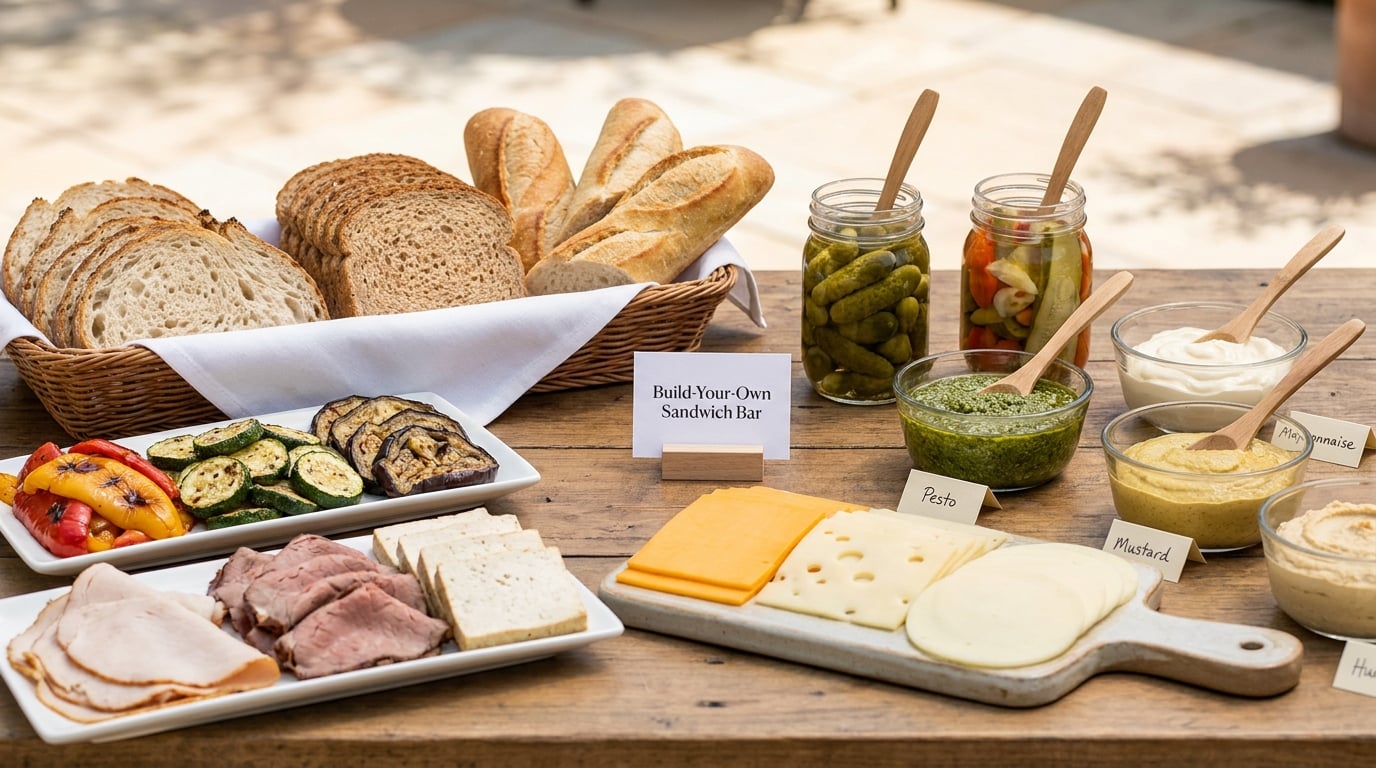
A sandwich bar that isn’t a stack of triangles in a plastic dome is the easiest upgrade from the standard platter. Ask the caterer for components on separate boards: three or four breads, two or three proteins, sliced cheese, roasted vegetables, pickles, and sauces in labeled small bowls with a dedicated ladle for each one.
Flatbread share boards work especially well for groups that don’t want to stand up and assemble anything. Cut thick flatbreads into squares, layer fillings, and slice into pinwheels. Ciabatta sliders are the other crowd-pleaser: small enough that people can take two without over-committing to a full meal, and they travel from a conference room without falling apart.
Piadina-style pressed wraps cut into rounds are a good third option when the group includes people avoiding wheat bread but not gluten entirely. For allergy safety, keep the protein and the bread on separate boards and let people build, because a pre-cut sandwich carries a higher risk of cross-contact than a buffet line where nothing has touched anything else yet.
Order this when: the group is casual, the headcount is under about 40, and you want something people can eat standing up without committing the whole 30-minute meeting to lunch.
2. Mediterranean Mezze Platter
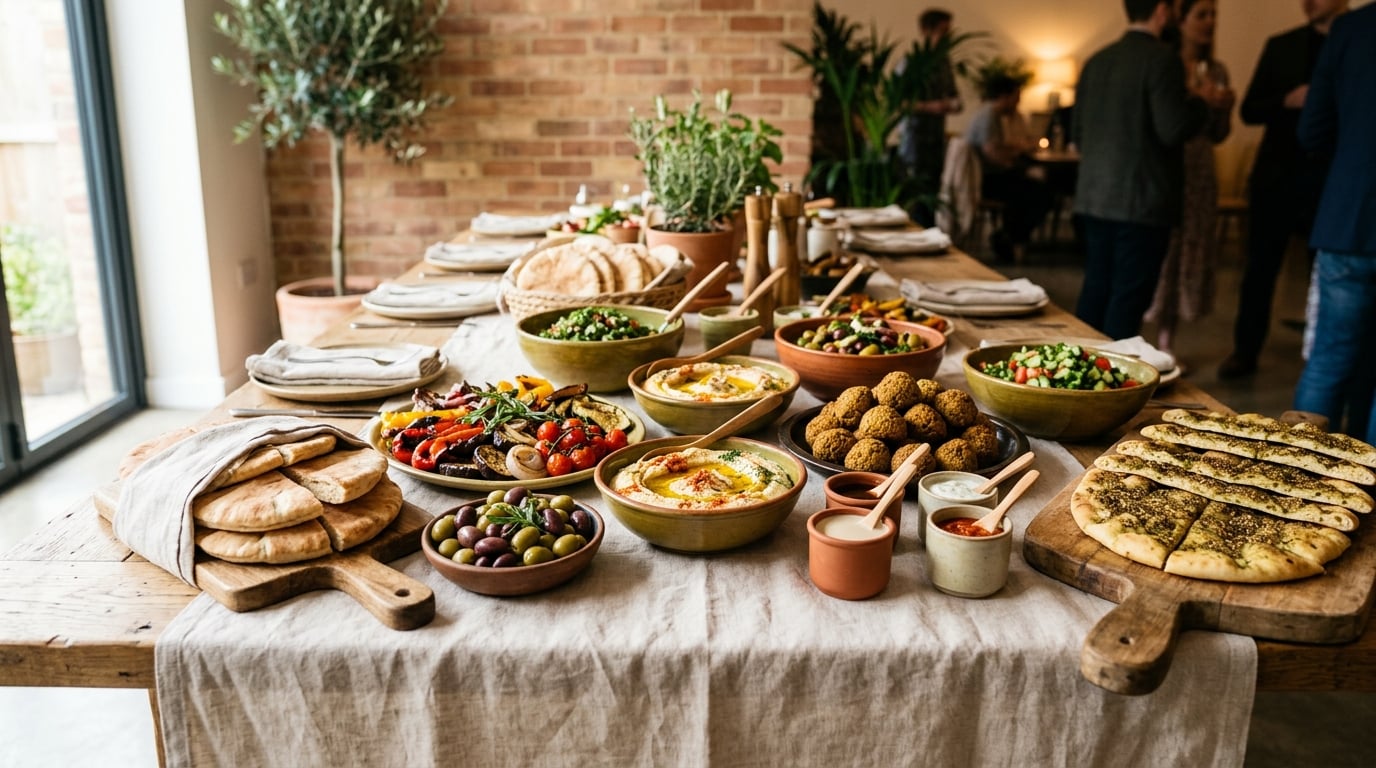
A mezze spread is shareable, sits fine at room temperature for the length of a meeting, and gives you a large vegetarian share of the table without any separate vegan order. Hummus, baba ganoush, olives, roasted peppers, cucumber, cherry tomatoes, pita or crackers, stuffed grape leaves, falafel, and a grain or lentil salad cover the bases.
What makes it work for office catering is that nothing needs reheating and nothing needs a utensil beyond a small plate. One caveat: falafel is best served warm, so ask whether it travels in a separate insulated container or whether you should leave it off the order if the delivery is more than about 30 minutes out.
For a group of 60 or more, ask for the spread to be split across two or three tables rather than one long one. A single table creates a traffic jam and the far end goes untouched. This is also the format I’d pick for a working lunch where nobody wants to drip dressing on a keyboard.
3. Mexican-Style Taco Bar
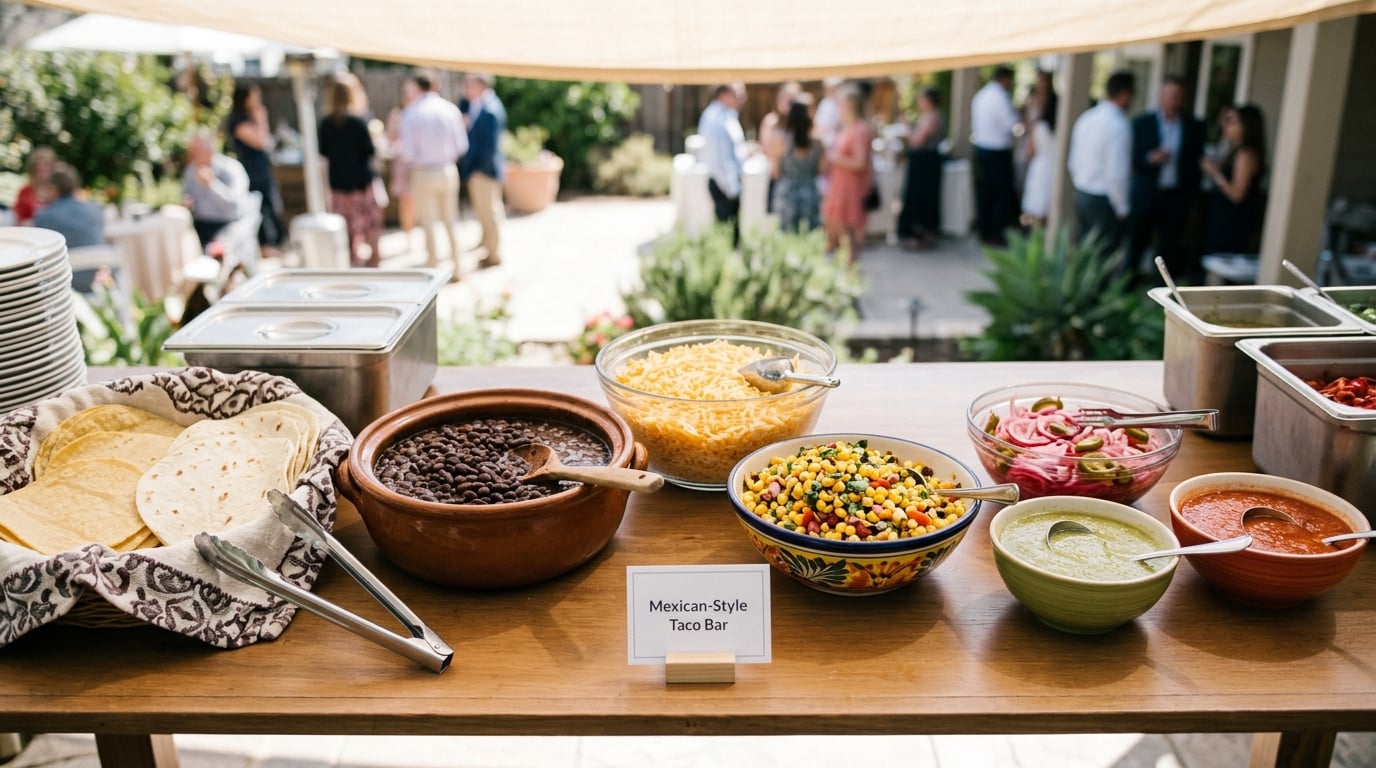
A taco bar is the single most flexible format on this list. Warm tortillas in an insulated carrier, black or pinto beans, shredded cheese, corn salsa, pickled onions, lettuce, sour cream, guacamole, and bowls of mild and hot proteins let one order cover carnivores, vegetarians, and people who want no heat at all.
Serve the proteins in separate containers rather than mixing them, which is what makes the vegetarian option genuinely vegetarian instead of vegetarian-adjacent. Build a mild bowl and a hot bowl and label them, and skip the jalapeños in the shared tray if anyone in the room has a documented sensitivity to them.
Keeping the taco bar safe from pickup to serving
Hot proteins should arrive at 165°F or above and stay there, which means either a chafing dish or insulated carriers with fuel. Poultry and reheated leftovers must reach 165°F, ground meat should hit 160°F, and whole cuts of meat or fish are done at 145°F with a rest. Cold items like guacamole, salsa, and cheese should sit on ice or in refrigerated trays and come out of the danger zone fast.
Two hours is the practical limit for perishable food sitting out in a conference room, and that clock starts when the food is set down, not when it leaves the kitchen. In a warm room or under bright lights, treat it as ninety minutes. Put out the toppings in waves instead of all at once if the meeting tends to run long.
Order this when: you have 20 or more people, one or more people need a vegetarian or vegan entrée, and you want a meal that generates conversation without a lot of utensils.
4. Fresh Grain Bowls
Grain bowls are the format that travels best from a catered spread into a hybrid team. Order farro, brown rice, quinoa, or roasted sweet potato as the base, then add a protein (roasted chicken, tofu, chickpeas, steak, or a spiced lentil), roasted vegetables, greens, and two sauces. Bowls hold together well in a container, so remote teammates get an equivalent meal instead of a leftover.
Build three or four named combinations rather than five loose components, so people can read the menu and choose without a long line of deliberation. A line that stalls at the bowl station is a line that keeps people standing through the meeting. Keto-leaning and higher-protein options pair well here, since the grain can simply be skipped.
The tradeoff is cost. Bowls with several components and separate sauces usually sit at the upper end of the per-person range, and they need cooler transport in warmer months. For a group over about 80, a family-style version with a short list of pre-built combinations is easier to serve than individual bowls.
5. Pasta Bar With Sauces and Toppings
A pasta bar is a warm food station with two sauces, a protein, a vegetable, two cheeses, and a crunchy finish. Keep the components separate and let people combine, and you can run a red sauce, a white sauce, and a vegan option out of the same base order without a third kitchen.
Portion control, delivery timing, and the hot-cold split
Order roughly one cup of cooked pasta per person for a lunch buffet, and a little more if lunch is the only food of the day. For a shared-sauce setup, three to four ounces of pasta per person is usually right once the sauce and sides are counted as part of the meal rather than the main portion.
Plan the drop for about 30 minutes before people need to eat. Pasta that sits is pasta that dries out, and sauce that sits on it thickens. Keep cold components (salad, marinated vegetables, grated cold cheese) in insulated cold containers and add them after the hot items are already on the table.
Pasta carries a gluten-free caveat. Regular pasta cooked in the same water as wheat pasta is not gluten-free, so if gluten-free matters to someone on the team, ask for a separate pot and separate tongs, or plan an alternative entrée for that person rather than pretending the shared pot works.
6. BBQ and Fried Chicken Feast
Sliced barbecue or fried chicken with rolls, slaw, beans, cornbread, and a couple of hot sides is the comfort-food option teams ask for when they want something that feels like an event. It suits all-hands meetings, quarterly celebrations, and the Friday after a hard launch, when nobody wants to look at a grain bowl.
Make the side spread do the dietary work. A substantial baked bean dish, slaw, roasted vegetables, and a tray of rolls let vegetarian and dairy-free teammates eat a real meal rather than a side of coleslaw. Keep fried chicken in its own container from the baked item so the texture survives the delivery window, and send the sauce in sealed cups with the label of what allergens are in it.
The planning note: fried items lose quality faster than almost anything else on this list. Aim for a delivery that lands under 45 minutes before service, and skip fries unless the caterer packs them in a vented box that will still be crisp on arrival.
7. Breakfast-Inspired Lunch Catering
Breakfast for lunch is the most underrated item here, and it usually costs less per person than a comparable savory lunch. Breakfast sandwiches or sliders, breakfast potatoes with cheese, a fruit tray, pastries, yogurt cups, granola, hard-boiled eggs, and a coffee setup cover a morning meeting, an offsite start, or a 9 a.m. onboarding session.
Portion planning is different from a lunch buffet. Two to three small items plus one protein per person fills a group comfortably; a table of pastries alone gets picked over in ten minutes and leaves people hungry at 11. Coffee service matters more than people expect here, since a large fraction of a morning crowd will not drink decaf and won’t take a second cup of a bad cup.
This format also absorbs dietary needs nicely. Fruit, yogurt, and eggs are dairy-free and gluten-free without a special order, and a vegan yogurt or oat-milk setup takes one extra line on the order. Fruit and pastry trays double as the afternoon snack without you ordering twice.
8. Vegan and Vegetarian Trays
Building the whole menu plant-based, rather than adding one lonely vegan tray beside the main order, solves the hardest version of this problem. Vegan wraps, roasted vegetable and chickpea grain salads, marinated tofu, roasted potatoes, a lentil or bean dish, a large salad platter, fruit, and a dairy-free dessert make a complete lunch on their own.
Give the event a name that is about the food, not about the restriction. A “Mediterranean lunch” or “global greens lunch” reads better on a calendar invite than “vegan lunch,” and the whole table eats the same thing without anyone being singled out or asking what’s in theirs.
Labeling and the cross-contamination conversation
Ask for written allergen information for every tray before you order, not after. Clear labels at the point of service are the minimum: V for vegetarian, VG for vegan, GF for gluten-free, DF for dairy-free, and plain words for halal and kosher where relevant. If a dish could contain nuts, say so in writing on the card, not in a conversation you’ll forget to repeat.
For a serious nut or shellfish allergy in the room, ask the caterer directly whether they can prepare that item in a separate area with dedicated utensils. If the answer is no, treat that as information the person needs before they sit down, and give them a real alternative rather than a hopeful guess. The cost of an extra individual meal is small next to the cost of a genuine reaction.
People with celiac disease also need the 145°F whole-cut rule respected where relevant and a separate preparation surface. Shared fryers, toasters, and cutting boards are the usual culprits, so it’s reasonable to ask how a caterer avoids them before you trust the GF label.
Order this when: your team has a mixed group of vegans, vegetarians, and gluten-free diners, or you simply want a menu that happens to be plant-based and interesting on its own terms.
9. Global Cuisine Sampler
A sampler takes one small portion from four or five cuisines and serves them as one meal: Thai-inspired rice bowls, Mediterranean pastries, Korean-style chicken bites, Caribbean rice and beans, Vietnamese spring rolls with peanut sauce on the side. It reads as generous and unusual, and it lets a group of 60 sample everything without committing to one cuisine for the whole afternoon.
Portion size drops, so the planning math changes. Instead of one entrée plus two sides per person, plan four to five small portions per person, and pair the sampler with something you can eat one-handed if the meeting runs long. This format is more work to explain to the caterer, so give the list of dishes and the count clearly in writing.
Label each dish as it goes out, and keep peanut-heavy sauces in separate containers rather than poured over items, since a sampler is exactly the kind of meal where nut allergens travel from one dish to the next. Serve it family-style on a buffet line with a short sign, not as pre-assembled boxes, or people spend more time describing the food than eating it.
10. Individual Lunch Boxes
Boxed lunches are the format that solves the most problems at once: portion control, per-person dietary selection, no buffet line, and almost no cleanup. Each box is one sandwich or entrée, a side salad, a piece of fruit or a small side, a snack, and a dessert, assembled before delivery so nobody has to make decisions at 12:05.
The practical part is the selection mechanism. Send a link where each person picks their own box by a short deadline, roughly three to five business days out, and lock the count after. A select-your-own link is more work up front and removes every guess about dietary needs, since each box is built for one person rather than being a compromise for twelve.
Boxed lunches also solve the hybrid problem. If some attendees are remote, the same caterer can ship individual boxes to them or you can send a per-person credit, and the experience matches what happens in the room. The main downsides are less of a shared, communal feeling, a narrower menu per event, and a per-box cost that runs above a family-style spread.
One request worth making: ask for the dressing, sauce, and anything crumbly packed separately, and skip wet salads in boxes that will travel more than 20 minutes. A wilted salad is what people remember, not a good sandwich.
Frequently Asked Questions
What are good office lunch catering ideas that are not pizza?
The formats that work best outside pizza are shareable spreads and build-your-own stations: mezze platters, taco bars, pasta bars, grain bowls, and breakfast-style spreads. A sandwich bar with components on separate boards is the closest cousin to the sandwich platter you’re already used to. For teams that want zero cleanup, individual lunch boxes with per-person selections handle portions and dietary needs at the same time. Pick two different formats for a quarter and the rotation stops feeling stale.
How do I choose lunch catering for a large office with different dietary needs?
Start from the restrictions, not the menu. List the specific needs in your group (vegan, vegetarian, gluten-free, dairy-free, nut-free, halal, kosher), then choose a format that absorbs them naturally. Taco bars, grain bowls, and fully plant-based menus handle mixed diets better than a single-entree spread, because components stay separate. Ask for allergen information in writing before ordering, and request labels at the point of service using V, VG, GF, and DF markers.
What food is best for an office meeting lunch that is easy to serve?
Boxed meals are the lowest-lift option because nothing needs plating, utensils, or a serving line. If you want a shared spread, mezze platters work well since most items are served at room temperature and need no reheating. Another good pick is a chilled grain bowl spread, where the components sit in trays and people build their own. Avoid anything that must be held hot for more than about an hour without proper warming equipment.
How far in advance should I order office lunch catering?
Plan on two to five business days for a standard order, which is the range most caterers need to source ingredients and schedule delivery staff. A week out is better for large headcounts, themed menus, or anything with a lot of dietary customization, since those menus need more prep. Same-day orders usually mean a limited menu and possible surcharges. If you have to order tomorrow, keep it simple: deli platters, a taco bar, or individual boxes from a restaurant that already makes them.
How can I keep catered lunch food safe during delivery?
Hot foods should arrive at 165°F or above for poultry and reheated items, 160°F for ground meat, and 145°F for whole cuts and fish. Cold items such as guacamole, salsa, cheese, and cut fruit should travel in insulated cold containers with ice packs. Perishable food left at room temperature for more than about two hours should be discarded, and that clock starts when the trays go out, not when they leave the kitchen. Set out toppings in waves if the meeting may run long.
What are affordable office lunch options beyond pizza?
Grocery deli platters, breakfast-style spreads with pastries, fruit, and coffee, taco bars assembled from canned and fresh components, and self-serve salad bars with a bread basket usually sit in the lower cost tier while still being a change of pace. Building a meal from a caterer’s components list rather than a fixed menu also gives you control over per-person spend. Ordering slightly over your confirmed headcount, and only slightly, protects you from a shortage without turning leftovers into a problem.
Where to Start With Your Next Team Lunch
Pick your next lunch from this list by matching the format to the day, not by browsing a menu. Send one message to the team asking for dietary needs with a real deadline, and get the count locked a few days out rather than guessing at the door.
Then vary the format, not just the cuisine. A taco bar, a mezze spread, and a stack of lunch boxes in the same quarter will do more for team morale than three different sandwich platters, and that is the whole idea behind the best office lunch catering ideas beyond pizza. If you want a starting point for 2026, try a taco bar for the group event, boxed meals for the next working lunch, and a breakfast spread for the early-start meeting that always runs long.