
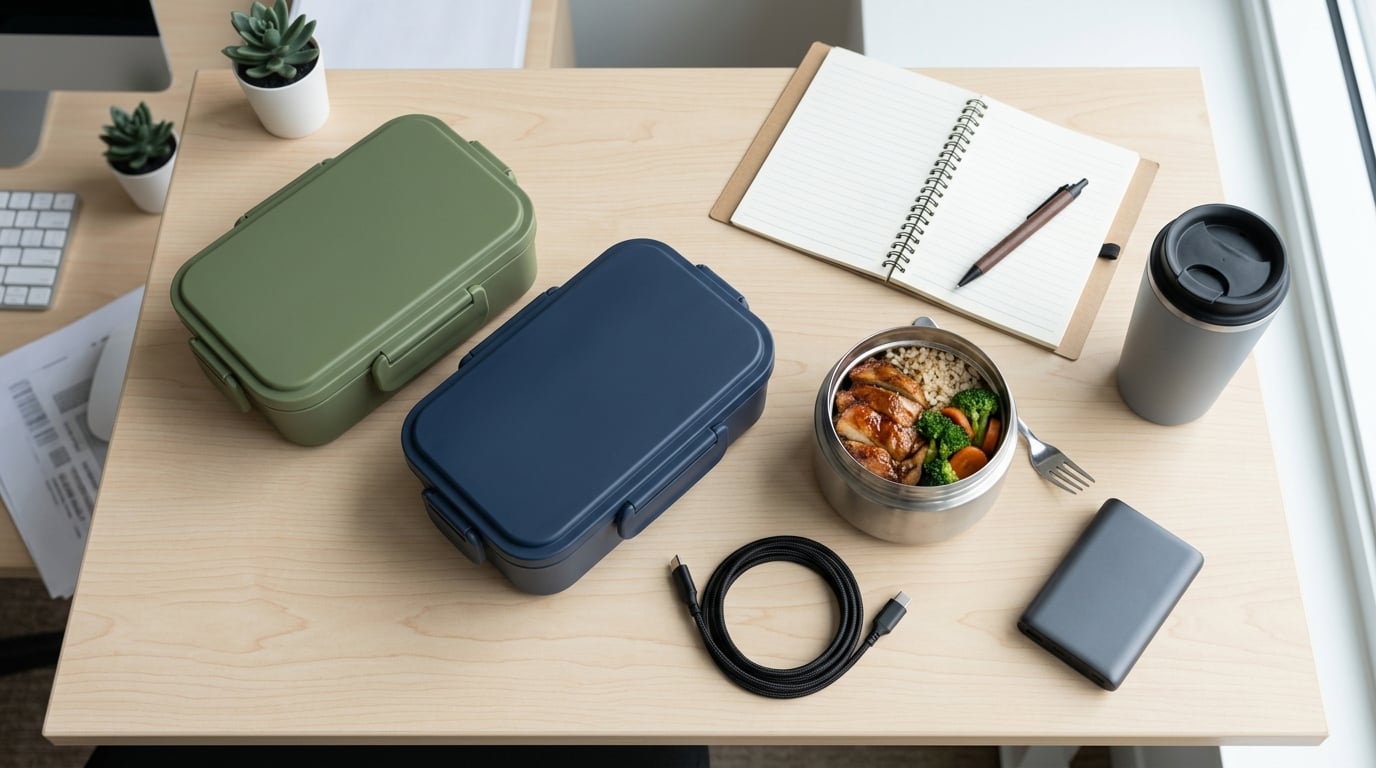
The best heated lunch boxes for work come in three families: plug-in boxes that run off a car socket, truck socket or wall outlet, cordless boxes that run off a rechargeable battery, and microwave-safe containers you heat at a shared kitchen. A plug-in model wins when you have a reliable outlet or a truck cab, a cordless model wins when there is no power at all, and a microwave-safe container is often the only thing you need if your office already has a microwave on your floor.
That last point matters more than most roundups admit. Plenty of people buy a heated lunch box, haul it to the office, then discover the break room microwave two floors up. Know your power situation before you buy anything.
What follows is a breakdown of the ten heated lunch box setups worth considering, grouped by the problem each one solves rather than by brand. I have leaned on what people actually report about heat time, cord placement, cleaning and battery life, because those are the details that decide whether a heated box gets used every day or ends up in a cupboard.
Table of Contents
- Best Heated Lunch Boxes for Work at a Glance
- 1. Best Overall: Steatot Steam-Heated Lunch Box
- 2. Best Cord-Free Heating: BougeRV 2-in-1 Electric Lunch Box
- 3. Best for Long Shifts: Battery-Heated Bento Box
- 4. Best for Hot-and-Cold Meals: Dual-Compartment Electric Lunch Box
- 5. Best for Large Portions: High-Capacity Electric Lunch Box
- 6. Best for Easy Cleaning: Removable-Liner Heated Lunch Box
- 7. Best for Value: Basic Single-Compartment Heated Box
- 8. Best for Lightweight Packing: Compact Cord-Heated Lunch Box
- 9. Best for Flexible Scheduling: Programmable Electric Lunch Box
- 10. Best for Shared Spaces: Quiet Heated Lunch Box
- Frequently Asked Questions
- Can I reheat my lunch at work with a heated lunch box?
- How long can a heated lunch box keep food hot?
- Are heated lunch boxes safe to use every day?
- Can I use a heated lunch box in a shared office break room?
- Can I heat leftovers in a lunch box from frozen?
- How do I clean an electric or steam-heated lunch box?
- Conclusion
Best Heated Lunch Boxes for Work at a Glance
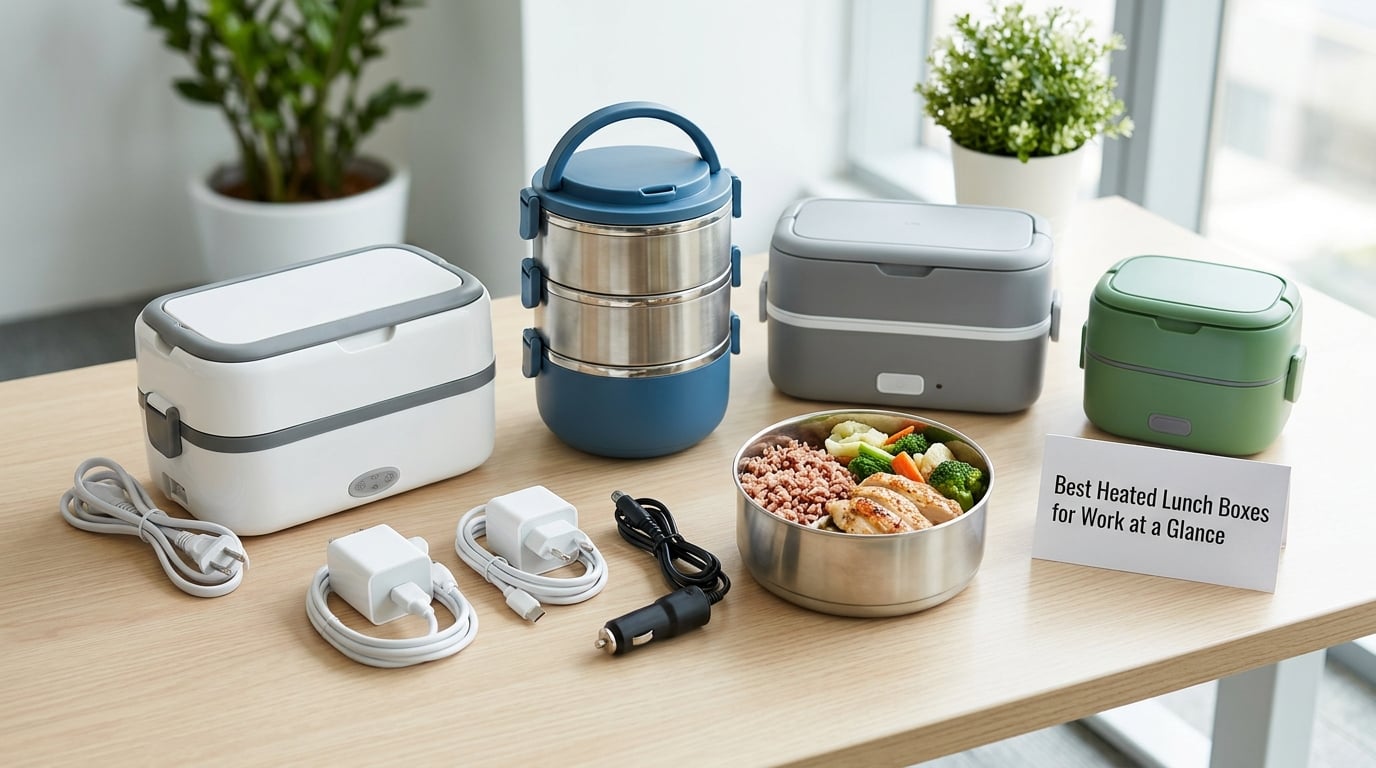
Every option below is described by the same set of specs, so you can line them up against your own shift. Heating type tells you how the box warms the food, power source tells you whether you need an outlet nearby, and the last column names the honest drawback.
| Lunch box setup | Heating type | Power source | Typical capacity | Battery or cord detail | Best use | Notable drawback |
|---|---|---|---|---|---|---|
| Steam-heated single compartment | Steam from an internal reservoir | Wall outlet | 1.5 to 2 litres | Fixed cord, usually detachable | Desk lunches near an outlet | Takes planning and a water reservoir |
| Cordless 2-in-1 box | Resistive element, hot and cold modes | Rechargeable battery | Around 1.5 litres | Charged overnight over USB | Office, campus, no outlet nearby | Battery ages and needs a full night to charge |
| Battery-heated bento | Bottom-mounted element under one well | Rechargeable battery | Two or three wells, roughly 1.5 litres total | Capacity quoted in mAh, 8000 upward | Long shifts, meetings that overrun | Less room per well than a single bowl |
| Dual-compartment hot and cold | Heated zone plus unheated zone | Rechargeable or plug-in | Split, roughly 1.4 to 1.8 litres | Single charge or single cord | Hot entree with salad, fruit or yogurt | You give up capacity in one zone |
| High-capacity steel pot | Resistive element, 80W to 100W | 12V, 24V and 110V adapters | 1.8 litres and up | Multi-voltage adapter set | Big appetites, packing a full dinner | Heavier, and slower at the same wattage |
| Removable-liner box | Resistive element under a sealed liner | Battery or wall outlet | Varies, 1 to 1.5 litres | Charged or plugged in | Daily use, strong-smelling meals | Seams around the element still need scrubbing |
| Basic single-compartment box | Resistive element, no timer | 12V, 24V or 110V | 1 to 1.5 litres | Straight cord | Truck cabs and field work | Manual on and off, no scheduling |
| Compact cord-heated box | Resistive element in a small shell | Wall outlet or power bank | Under 1 litre | Short detachable cord | Backpacks, tight desks, small portions | You will not fit a full meal in it |
| Programmable box | Resistive element with a timer and memory | Battery or plug-in | 1.5 litres | Set a start time, then leave it | Unpredictable break times | Timers are not a food-safety guarantee |
| Quiet-heating box | Slow-ramp element, no fan or a muted fan | Rechargeable battery | 1.2 to 1.5 litres | Charged overnight | Open-plan desks and shared rooms | Warmer food takes longer to reach heat |
How We Chose the Best Heated Lunch Boxes for Work
A lunch box that looks good in a photo and a lunch box that works a full shift are different products. We judged each setup on whether it reheats food consistently, whether the stated capacity matches a real meal, how easy it is to scrub clean, what power options it offers, how heavy and awkward it is to carry, whether it carries a recognised safety certification, and the one thing most listings hide: can it get through a workday without being plugged in.
Heat time mattered too. Owners report something in the region of 30 to 45 minutes from cold to properly hot, which is slow enough that a delayed start matters on a short break.
1. Best Overall: Steatot Steam-Heated Lunch Box
Steam heating is the gentlest approach of the three, and the Steatot steam-heated lunch box is the one to beat for desk lunches. A small amount of water in the base reservoir turns to steam and warms the food above it, so nothing touches a dry element. That means less scorching, less stuck-on smell, and a lunch that still tastes like lunch at 1pm.
Capacity sits in the range you want for a workday meal, and the stainless interior is a relief for anyone packing tomato sauce or curry. Cord-based power is the trade: this is a desk unit, not a truck unit, so plan on sitting near an outlet.
The adapter is the annoying part. If you move desks or work from home two days a week, you are carrying a mains brick with you, and the steam reservoir needs filling before the morning rush.
2. Best Cord-Free Heating: BougeRV 2-in-1 Electric Lunch Box
The BougeRV 2-in-1 electric lunch box is the pick when there is genuinely no outlet within reach. You charge it at a desk the night before, pack it in the morning and press heat at lunch, with no cable and no hunt for a wall socket. For hot lunches at work where you cannot rely on power, that beats any spec on a plug-in box.
It runs both hot and cold modes, which makes it usable for yogurt, fruit and drinks alongside a heated entree, though the hot side is the reason to buy it. Expect a realistic capacity of around 1.5 litres, enough for a proper meal but not for an entree plus two full sides.
The battery is the whole proposition and also the whole weakness. Rechargeable packs lose capacity over a few years, and a full overnight charge is needed if you want heat for the whole afternoon. Treat it like a phone battery, because that is what it is.
3. Best for Long Shifts: Battery-Heated Bento Box
A battery-heated bento box is the right answer for night shifts, hospital rounds and any day where lunch happens two hours late. Bento wells sit over a single heated base, so heat reaches every well at once, and the quoted battery capacity, usually 8000mAh and upward, tells you roughly what you are getting. A larger pack means more shift coverage.
Here is the distinction worth getting right. A box with a heating element reheats a cold meal to steaming and then holds it above 140F. A passive insulated container holds heat, it does not create it. If the meal starts at room temperature, only a heated model will fix it.
Owners on tradesite and shop forums make the same point: heavier electronics mean a longer warm-up, and the practical pattern is to start heating before the break rather than at it. Users of the M18 platform heated lunch box in r/MilwaukeeTool report roughly 30 minutes to heat, which is normal for the category.
The cost is well capacity. A bento with three small wells holds the same total as one bowl, so if you pack a big dinner, the single-compartment options serve you better.
4. Best for Hot-and-Cold Meals: Dual-Compartment Electric Lunch Box
A dual-compartment box is the one to pick if your lunch has two temperatures in it. One zone heats the entree while the other stays cool for salad, fruit, yogurt or a sandwich that should not be cooked. The unheated side does not refrigerate, so pack anything perishable with an ice pack, but it does stop a warm entree from cooking your raspberries on the drive in.
Capacity is split rather than pooled, so you get a realistic 1.4 to 1.8 litres overall. That suits a main plus a side, which is how most packed lunches are actually built.
Clean it in two halves. The heated compartment needs more attention than the cold one, and a removable insert on the cold side makes the daily wash painless.
5. Best for Large Portions: High-Capacity Electric Lunch Box
High-capacity boxes land around 1.8 litres and up, and they exist for people who pack a proper meal rather than a snack. Steel pots in this class usually run 80W to 100W and ship with 12V, 24V and 110V adapters, which means the same box works in a car, a truck and a kitchen wall socket.
More food means more energy to move it. At the same wattage, a larger pot takes longer to reach heat than a small one, so budget closer to 45 minutes when the meal went into the box cold. A user in an outdoor workers group described the standard pattern exactly: plug it into the work truck and 30 to 45 minutes later it is hot.
Weight and washing are the costs. A full steel pot is heavier in a bag, and it is the one class where a dishwasher is often a bad idea, so plan to hand wash the insert.
6. Best for Easy Cleaning: Removable-Liner Heated Lunch Box
Removable silicone or similar liners are the single biggest upgrade for daily use. Lift the liner out, wash it like any bowl, and the smell problem that ends most heated lunch box habits never starts. Strong sauces, garlic rice and coffee are the three things that permanently stain a fixed liner, and they will do it within a fortnight.
Most of these heat from a base plate under the liner, so heat is gentler and more even than direct element contact. Expect a smaller capacity than the big steel pots, usually 1 to 1.5 litres, which is fine for a standard meal.
The liner does not save you from the seams where it meets the base or from the element channel itself. Those still need a small brush, and it is worth doing it the same day you cook.
7. Best for Value: Basic Single-Compartment Heated Box
The basic single-compartment box is where most people should start. One steel pot, one resistive element, a cord with the right adapter for your vehicle, no timer and no battery. It does one job, and it does it for a fraction of the price of a cordless unit, which matters when the box gets used every single working day.
Before buying, check four things. The wattage, because 100W beats 80W on heat time. The capacity against a real meal rather than a restaurant portion. The voltage list, so the box actually runs in your car or truck. And the lining material, where stainless steel outlives plastic for years of daily heating.
You get manual on and off control. That is a small loss until your break moves and you remember.
8. Best for Lightweight Packing: Compact Cord-Heated Lunch Box
Compact boxes suit backpacks, small desks and people who eat a modest meal. A detachable cord means you can pack the box and the cable separately, and some run from a power bank, which quietly turns any wall you can sit near into a power source.
Limitations are honest ones. Capacity under a litre suits a sandwich, a portion of pasta or leftovers, not a full dinner with sides. And you still need a suitable outlet or a charged power bank within reach, so this is a portability upgrade rather than a power solution.
For a lunch bag that must weigh almost nothing, a passive insulated container plus a hot food jar can beat a compact electric box outright.
9. Best for Flexible Scheduling: Programmable Electric Lunch Box
Programmable boxes let you set a start time or an end time and walk away. If your break lands at noon most days but drifts to 1pm on a busy week, scheduling the heat to finish during your actual break is the feature that makes the difference between food that is hot and food that is merely warm.
Memory functions that recall your last setting are a small convenience, and auto shut-off protects against the most common mistake, which is a box left heating in a bag.
Do not treat a timer as a food-safety system. It is a convenience feature, not a temperature guarantee, and nothing on the timer validates the food. Check the manufacturer’s manual for what the setting actually does before you rely on it.
10. Best for Shared Spaces: Quiet Heated Lunch Box
Quiet heating matters more than most guides admit, because the first person to heat soup at a shared table in an open-plan office gets comments. Designs with a slow heat ramp and no fan, or a muted fan, run cooler to the touch and far less noticeable than a box that roars for half an hour.
Look for a box that holds temperature well after the element stops. On a quiet unit, the preheat finishes early and the box simply holds, so less total noise for the same meal.
Cord placement is the tell in a real break room. If the nearest outlet is across the room, you are trailing a cable through a walkway, and in my view that is a worse everyday problem than a few extra decibels.
Frequently Asked Questions
Can I reheat my lunch at work with a heated lunch box?
Yes, that is the entire point. A heated lunch box has its own element, so you reheat a cold meal at your desk, in your truck or on site with no microwave. Budget about 30 to 45 minutes from cold, which means starting before your break if it is short.
How long can a heated lunch box keep food hot?
Most hold food safely above 140F for the rest of a workday once heated, provided you close the lid and do not open it constantly. A cordless unit is limited by battery, so runtime depends on the pack. Preheating in a truck or a kitchen before you leave buys you the most extra time.
Are heated lunch boxes safe to use every day?
Daily use is fine if you follow the manual. Look for food-grade 304 stainless steel or a removable liner, and check the unit carries a recognised safety certification. People managing medical diets choose heated boxes specifically for that control, but talk to a doctor or dietitian for advice tailored to your condition.
Can I use a heated lunch box in a shared office break room?
Usually yes, provided the box runs on battery or its cord reaches an outlet without crossing a walkway. Cleanliness matters more than anything else in a shared room, so wash the insert the same day and avoid reheating fish or strong-smelling meals in an enclosed space.
Can I heat leftovers in a lunch box from frozen?
Only if the manufacturer says so. Most lunch box elements are rated for a refrigerated leftover, not a frozen solid block, and a frozen mass can take an hour or more to heat through, leaving the centre cold. Thaw leftovers overnight in the fridge and reheat them to the safe temperature for the food.
How do I clean an electric or steam-heated lunch box?
Unplug it, let it cool fully, and remove the liner or pot if it detaches. Wash that part in warm soapy water and dry it completely. Wipe the base, the cord and the heating channel with a damp cloth, and never submerge the heating unit or the cord end.
Conclusion
Choose by power first. A desk near an outlet suits a steam-heated or plug-in box, a worksite with no kitchen suits a cordless rechargeable model, and a shared microwave may make a simple microwave-safe container the sensible buy. Then match capacity to the meal, 1.5 litres for most, 1.8 litres if you pack a full dinner.
Before you order, check the real capacity, read the cleaning instructions, and confirm what the manufacturer says about unattended heating. Food should be held at 140F or above, reheated to 165F for poultry, 160F for ground meat and 145F for whole cuts and fish, and anything perishable should be handled within two hours of leaving the fridge.