
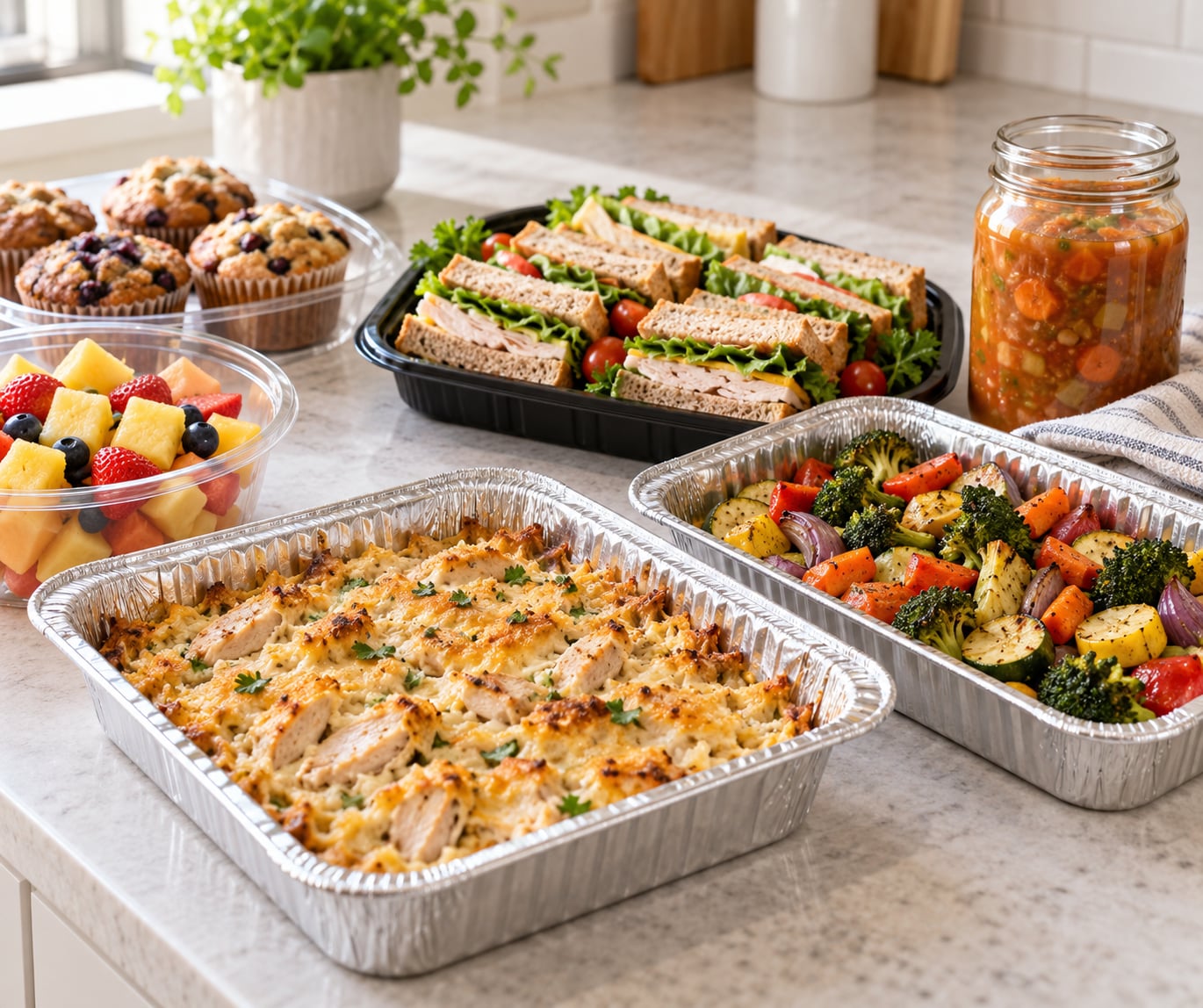
Meals to bring to a new mom should be comforting, easy to reheat, and nutrient-dense, and they should come in disposable containers so nothing needs washing up or returning. That means soups, one-pan mains, make-your-own kits, and a breakfast bundle for whoever is on the night shift.
A new mom is feeding a baby every two to three hours around the clock, so anything that needs cutting, assembling, or holding a plate while managing an infant is a poor fit. The first four weeks after birth, often called the fourth trimester, are when healing, feeding, and sleep all compete for the same hours.
I have cooked, delivered, and eventually received enough of these meals to know the small details matter more than the recipe. How many people it feeds, whether the bread gets soggy in transit, and whether you remembered to write the reheat time on the lid are what people remember a week later. This list covers ten specific meals to bring to a new mom, what container each one travels in, and how to hand it over without making her host you.
Updated for October 2026. A note on food safety below, and on what not to bring, is worth two minutes of your time before you start cooking.
Table of Contents
- Meals to Bring to a New Mom at a Glance
- 1. Chicken and Vegetable Casserole
- 2. Turkey, Sweet Potato, and Kale Tray Bake
- 3. Vegetable Lasagna With Meat or Without
- 4. One-Pot Creamy Orzo With Chicken
- 5. Slow-Cooker Pulled Pork Sandwiches
- 6. Baked Salmon With Lemon and Greens
- 7. Vegetarian Quinoa Bowls With Roasted Vegetables
- 8. Soft Taco Bowls With Chicken and Beans
- 9. Breakfast Muffins, Frittata, and Fruit
- 10. Fresh Sandwich Platter With Soup or Salad
- How to Deliver the Meal Safely and Easily
- Frequently Asked Questions
- Choose the First Meal to Send
Meals to Bring to a New Mom at a Glance
If you are standing in a shop with no plan, pick from the left column and go. The table covers the ten meals in this guide, what each one does for a tired household, which container travels best, and how it stores.
| Meal | Why it works | Best container | Storage and reheating |
|---|---|---|---|
| Chicken and vegetable casserole | Mild, hearty, complete in one dish | Disposable foil baking pan | Fridge 3 to 4 days, reheat 165F; freezes well in portions |
| Turkey, sweet potato, and kale tray bake | Protein and vegetables on one tray | Foil tray, parchment lined | Fridge 3 to 4 days, reheat 165F; freezes well |
| Vegetable lasagna, with or without meat | Serve it cold or hot, freezer friendly | Rectangular disposable pan | Fridge 3 to 4 days; freeze unbaked or baked |
| One-pot creamy orzo with chicken | Flexible, mild, forgiving texture | Microwave-safe tub | Fridge 3 to 4 days; loosen with a splash of water |
| Slow-cooker pulled pork sandwiches | Build-your-own, feeds a hungry partner | Separate containers plus roll bag | Pork 3 to 4 days hot or chilled; assemble bread to order |
| Baked salmon with lemon and greens | Lighter option, high in protein and omega-3 | Microwave-safe container | Chill within 2 hours; eat within 3 days |
| Vegetarian quinoa bowls | Add a protein to suit the household | Wide-lidded bowl | Dressing separate; assemble in 2 minutes |
| Soft taco bowls | Mild, filling, easy to portion | Two bowls plus a fixings tray | Salsa and toppings chilled, 3 to 4 days |
| Breakfast muffins, frittata, and fruit | Covers the 3am shift and the working partner | Paper muffin tin or tub | Muffins at room temp, frittata chilled, fruit cut today |
| Sandwich platter with soup or salad | No cooking, no oven, no stress | Platter plus sealed side | Chilled 3 to 4 days; salad dressing packed apart |
Two details are worth flagging before the list. Bring the food in something disposable, because a nursing mom should never be handed a stack of dirty dishes to return. And write the reheating time on the lid in pen, because most people reheating a casserole at midnight will not want to guess.
1. Chicken and Vegetable Casserole
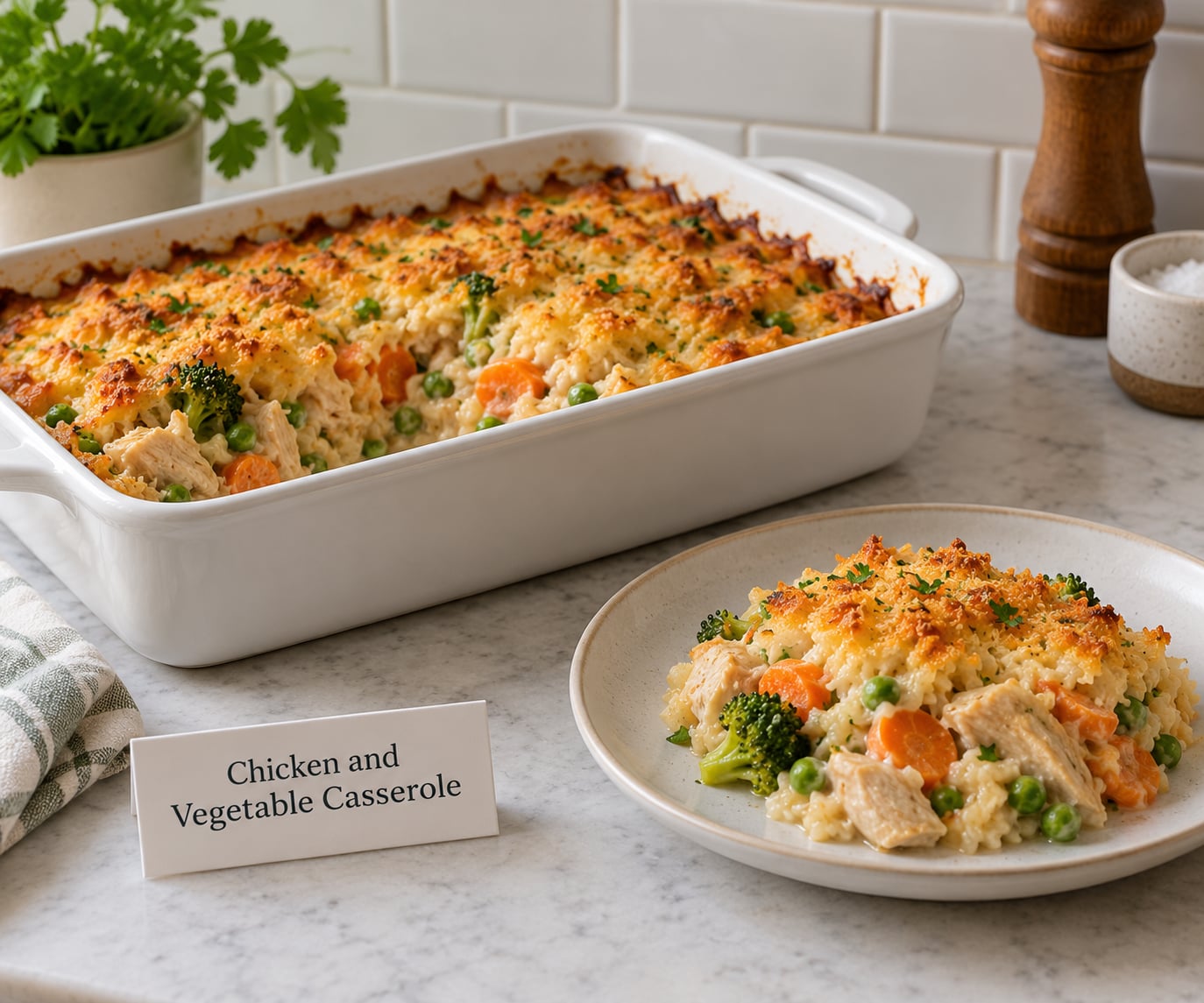
Chicken and vegetable casserole is the most reliable meal to bring to a new mom because it is mild, filling, and reheats in a single step. There is no sauce to leak and nothing to assemble at 4am. If the household has older children, this is also the version most likely to get eaten by everyone.
A simple version: dice two chicken breasts, saute with a chopped onion and two cups of frozen mixed vegetables, stir through a can of condensed cream of chicken soup with a half cup of milk, fold through two cups of cooked rice, and top with a cup of shredded cheddar. Bake at 350F for about 35 minutes until the edges bubble.
Send it in a disposable foil pan with a tight lid. Poultry needs to reach 165F internally when reheated, so note that on the lid along with the time. The pan keeps three to four days in the fridge and also freezes well in single portions, which means a meal can become several meals if the week gets away from them.
2. Turkey, Sweet Potato, and Kale Tray Bake
A sheet-pan tray bake solves the cleanup problem completely, which is why it is one of the best meals to bring to a new mom when you do not want to ask them for a dish back. Cube sweet potato, toss it with olive oil and smoked paprika, and roast while you work on the rest of the tray.
Add bite-size pieces of turkey thigh or ground turkey formed into small patties, plus torn kale dressed with a little lemon juice. Season the sweet potato generously and keep the kale separate or on the edge of the pan so it does not go dry. Turkey must reach 165F, so check the thickest piece before it leaves your kitchen.
Pack it in a foil tray lined with parchment and let the tray cool uncovered before you seal it, so condensation does not make the kale limp. It keeps three to four days and reheats at 350F for about 15 minutes, or 165F in the microwave. Do not microwave the whole tray if they only need one portion; send a second small container.
3. Vegetable Lasagna With Meat or Without
Lasagna is the meal every new mom receives and, honestly, the one she is most likely to be sick of by week two. Bring it if the family genuinely loves it, and bring the vegetable version with a lighter sauce so it lands differently from everyone else’s.
The trick to a lasagna that travels is less liquid. Use only half the usual sauce, drain the ricotta in a sieve first, and skip the final layer of mozzarella that turns to rubber when reheated. Let it stand ten minutes before slicing, and cut it into portions in the pan so nobody has to carve it while holding a squalling infant.
Send a disposable rectangular pan and write down what is inside. Label dairy and gluten explicitly, because a nursing parent who is avoiding dairy for her own reasons should not have to guess, and because babies can react to what their mothers eat. It keeps three to four days in the fridge and freezes either baked or unbaked in portions for up to two to three months.
4. One-Pot Creamy Orzo With Chicken
Creamy orzo is one of the most forgiving meals to bring because it is nearly impossible to ruin. Cook orzo with chicken stock, then stir through shredded chicken, a splash of cream or milk, and whatever vegetables you have. It thickens as it sits, which is the one thing to plan for.
Spinach, peas, roasted red pepper, and zucchini all work. Keep the seasoning mild, because a new mom often has no tolerance for heat right now, and finish with lemon zest rather than a lot of pepper. Pack the dish with a little extra liquid so a quick splash during reheating restores a loose, spoonable texture.
A microwave-safe tub is the right container, and it will feed a couple comfortably or stretch with a salad for four. Keep it chilled and eat within three to four days. You can also order the same dish from a neighbourhood restaurant and ask for the dressing or sauce on the side, which is a perfectly legitimate shortcut if the week is already full.
5. Slow-Cooker Pulled Pork Sandwiches
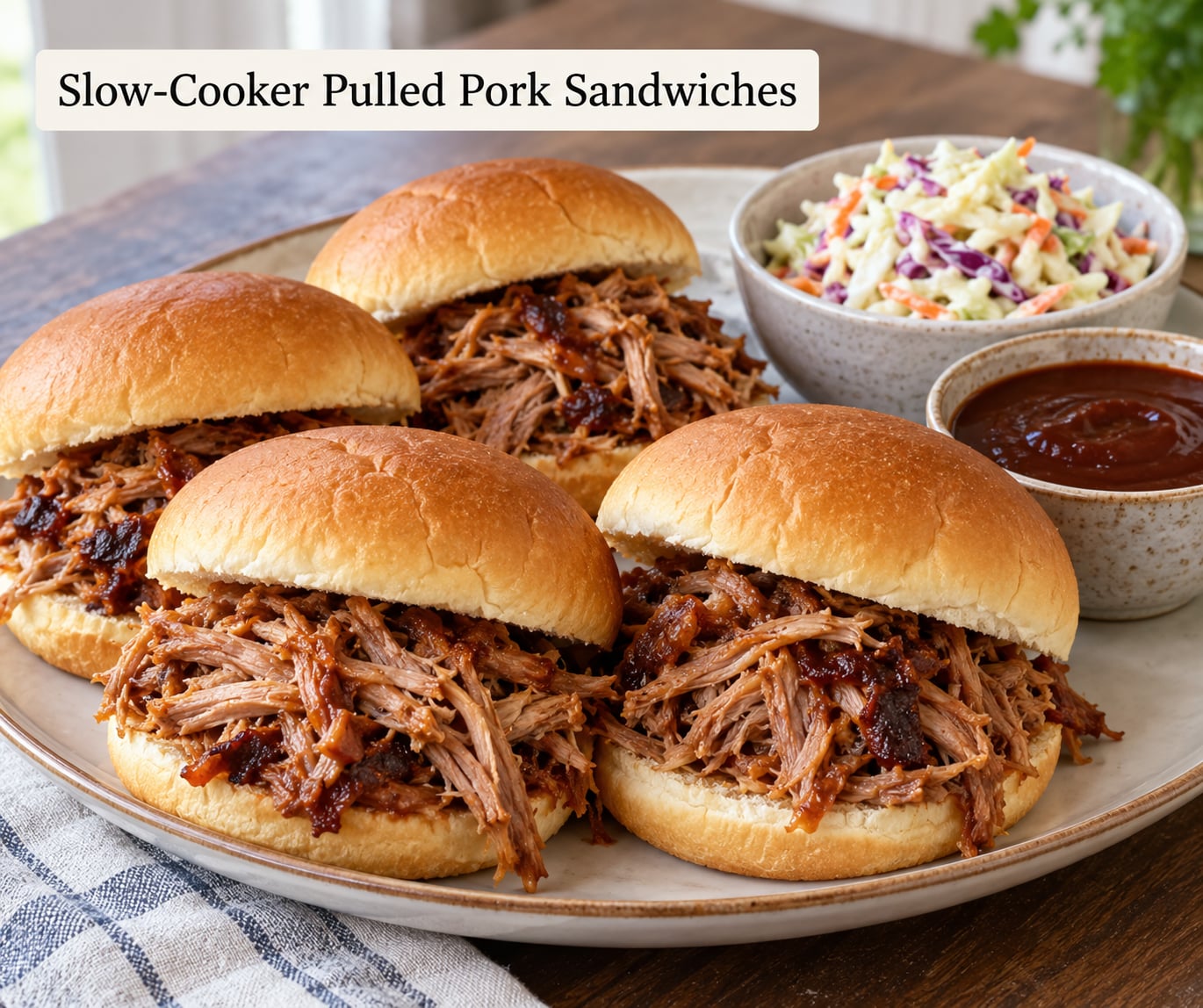
Pulled pork travels better than almost any other meal on this list because nothing is fragile about it. The trick is to keep the components separate. Sauce on the bottom bun turns the bread to mush within an hour, so send the sauce in a small lidded tub and let the family build each sandwich.
Put shredded pork in one container, coleslaw in another, sauce in a third, and soft rolls in a separate bag. Add extra pickles and sliced onion in their own small tub if you like. Feeds four generously, or six with a bag of chips, and it is the kind of meal a hungry partner can reassemble at 2am without thinking.
Cooked pork keeps three to four days in the fridge, hot or chilled, and it is also the easiest option to freeze. If you want to send a frozen drop-off instead, bag it flat in a freezer bag, double-bag it, write the cooking time on the outside, and mention it in the text so it does not get cooked by week three. Send the sauce on its own for freezing too, and the rolls on their own.
6. Baked Salmon With Lemon and Greens
Baked salmon is the lighter choice, and sometimes that is exactly what a household needs after a week of casseroles. It is quick to make, high in protein, and a good source of the omega-3 fats that matter during breastfeeding.
Roast salmon fillets at 400F for 10 to 12 minutes with lemon, dill, and a little olive oil, then cook a small tray of green beans or broccoli alongside. Add a scoop of quinoa, brown rice, or a roasted sweet potato so it reads as a meal rather than a protein. Fish needs to reach 145F and is best gently reheated, so a short microwave burst is better than a long one.
Chill the food within two hours of cooking it, keep it in a sealed microwave-safe container, and note that it is good for three days. Send the lemon wedges and any dressing in a separate small tub so the salmon does not go watery on the way over.
7. Vegetarian Quinoa Bowls With Roasted Vegetables
Quinoa bowls are a good meal to bring to a new mom when you are not sure what the household eats, because the base is neutral and the protein is a decision. Roast a tray of sweet potato, red onion, and peppers, then layer them over cooked quinoa with a dressing you pack separately.
Offer three or four protein options rather than choosing one: chickpeas for a vegan household, crumbled feta, a soft-boiled egg, baked tofu, or shredded chicken. That way the same bowl works for a vegan mom, a picky toddler, and a partner who needs more protein. Dressing on the side keeps the grains from turning to paste in transport.
Wide-lidded bowls or jam jars travel well. Keep the bowl components chilled and eat within three to four days, and add the dressing and any fresh herbs only at serving time. If you know the family prefers warm food, send the roasted vegetables in a separate tub so they can be warmed and tipped over quinoa that has just come out of the pot or microwave.
8. Soft Taco Bowls With Chicken and Beans
Soft taco bowls are mild, filling, and easy to portion, which makes them one of the safest meals to bring to a new mom who is not sure yet what she can stomach. Season with cumin, garlic, and a little lime rather than chili heat, and let people add their own heat at the table.
Send the seasoned chicken and beans in two bowls. Pack the toppings separately: shredded lettuce, cheese, corn, black beans, avocado, and salsa. Warm tortillas wrapped in a clean towel inside a sealed bag, then insulated in a cooler, stay soft for the drive across town.
A taco bar like this is one of the few meals that feeds a whole household plus visiting relatives, and it can double as lunch the next day. Keep everything chilled and eat within three to four days. Warm the tortillas separately if you can, since microwaving them with the toppings makes the bowl watery.
9. Breakfast Muffins, Frittata, and Fruit
Breakfast is the meal most often skipped in the fourth trimester and the one families miss most, especially when the partner is back at work. A portable breakfast bundle costs you one morning and covers the part of the day nobody plans for.
Make a tin of banana or blueberry muffins, a frittata with spinach and potato, and a container of cut fruit, and deliver it as one bundle. Muffins keep at room temperature for two days wrapped in a clean cloth, which is why they travel so neatly in a paper tin. The frittata must stay chilled, so carry it in an insulated bag with a cold pack. Cut fruit only on the day you deliver it, and skip anything that browns, like apple, unless you toss it in lemon juice.
Tell the family which parts need the fridge and how long each keeps. A frittata eaten within three days is a gift, and it also slices into a quick sandwich filling. Add a bag of coffee, a jar of cold brew, or a box of tea if you know they drink it, and you have turned a small gesture into something that gets them through a 5am feeding.
10. Fresh Sandwich Platter With Soup or Salad
Not everyone can cook a hot meal before dropping it off, and that is fine. A sandwich platter is a genuine option for a new mom, particularly in week one when she may be eating in bed, and it needs no oven, no stove, and no confidence.
Build a platter with a mix of sandwiches: plain turkey and cheese, chicken salad, egg salad, and ham for anyone who eats it, plus wraps cut diagonally, a handful of crackers, cheese cubes, a banana, and grapes. Choose one side and do not choose three. A single side of soup, either chilled and sealed or shelf-stable in a jar, works; a salad kit with dressing on the side also works if you want to keep everything cold.
Wrap the platter in a clean sheet of parchment or a large bag so it travels intact, and keep it chilled if the weather is warm. Everything on a sandwich platter keeps three to four days refrigerated. The advantage is that a hungry partner can take one sandwich to work, so a single delivery feeds two meals for two people.
How to Deliver the Meal Safely and Easily
Safe delivery is less about rules and more about three things: hot food stays hot, cold food stays cold, and nothing needs returning. Start with the containers. Use disposable foil pans, microwave-safe tubs, or glass jars with tight lids, and skip anything that needs to come back to you.
Food safety follows the same baseline guidance the USDA uses at home. Poultry and reheated casseroles must reach 165F, ground meat 160F, and fish or whole cuts of meat 145F. Use an insulated carrier or cooler bag for a hot dish, deliver promptly, and refrigerate anything perishable within two hours of leaving your kitchen.
Cooked food kept in the fridge belongs in the coldest part, not the door, and it is used within three to four days. Freeze portions flat in freezer bags if the household is not eating it quickly, because a frozen meal can sit for months while a refrigerated one cannot.
On the etiquette side, text first rather than turning up unannounced. Ask when someone will be home, offer to leave it at the door, and do not ask to hold the baby. Many new parents do not want to host, and some do not want visitors at all yet. Write the reheating time and temperature on the lid, label the dish contents including any allergens, and mention when in the fridge.
Finally, ask about timing. Week one after a vaginal birth is a different kind of tired than week four, and weeks one to four are when meals get eaten most. After that, most families are managing on their own and a frozen drop-off or a grocery run is more useful than a hot dish.
If more than one person wants to help, set up a meal train rather than showing up together. Pick a group chat, list the days to cover, and use a signup sheet so nobody brings the same casserole twice in one week. A workable default is ten meals across the first two weeks, spaced so that no two consecutive dinners come from the same person. Assign breakfast and snacks to different people from dinners, since those are the meals that get skipped.
When in doubt, send the form that survives a long delay. A frozen meal the family can cook whenever they are ready is often worth more than a hot casserole that arrives on the night they already have visitors.
Frequently Asked Questions
What is the best meal to bring to a new mom?
A make-ahead casserole, sheet-pan tray bake, or tray of sandwiches is usually best because it travels well and reheats in one step. Choose a mild, familiar meal with vegetables or fruit, send it in disposable containers so nothing needs returning, and write the reheating time on the lid. Ask about allergies and timing first, since a week of casseroles is rarely welcome.
Should I ask what food the new mom wants before bringing a meal?
Yes, a quick text or call prevents bringing a dish the family cannot eat. Ask about allergies, dietary restrictions, favourite foods, and whether the household needs breakfast, lunch, or dinner most. Also ask when someone will be home and whether they would rather you left food at the door. Most parents find the question helpful rather than fussy.
What foods should I avoid bringing to a new mom?
Avoid dishes the family does not normally eat, very spicy food, and anything containing an allergen you have not checked. Skip desserts, since households are usually flooded with sweets. Avoid anything that needs a dish returned. If the birth was difficult or there was a loss, bring a simple meal and acknowledge the situation instead of turning up with a generic casserole.
How should I deliver a hot meal to someone with a newborn?
Transport the food in an insulated carrier or cooler bag and deliver it promptly. Use leakproof disposable containers and include a note with the reheating time, the temperature needed, and how long it keeps. Poultry and reheated casseroles should reach 165F internally. If the parents cannot eat it right away, tell them it freezes well in portions so it is not wasted.
How do you coordinate a meal train so nobody brings the same dish?
Put everyone in one group chat, list the first two weeks, and use a shared signup sheet for days and dishes. Aim for about ten meals spaced so no two dinners come from the same person, and assign breakfasts and snacks to different people than dinners. Ask about allergies once at the top and repeat it, then name the dish in the signup so duplicates are obvious.
Choose the First Meal to Send
Start with a text, not a pan. Ask about allergies, dietary restrictions, foods the household already has too much of, and when someone is home. Then pick one of the ten meals above and send it in disposable containers with the reheating time written on the lid.
If you want one answer to the question, choose the chicken and vegetable casserole for week one. It is mild, it feeds a partner and older children, it reheats in one step, and it freezes in portions if the family cannot get to it immediately. Ten meals across two weeks is a sensible default, and breakfast is the one nobody offers twice.