
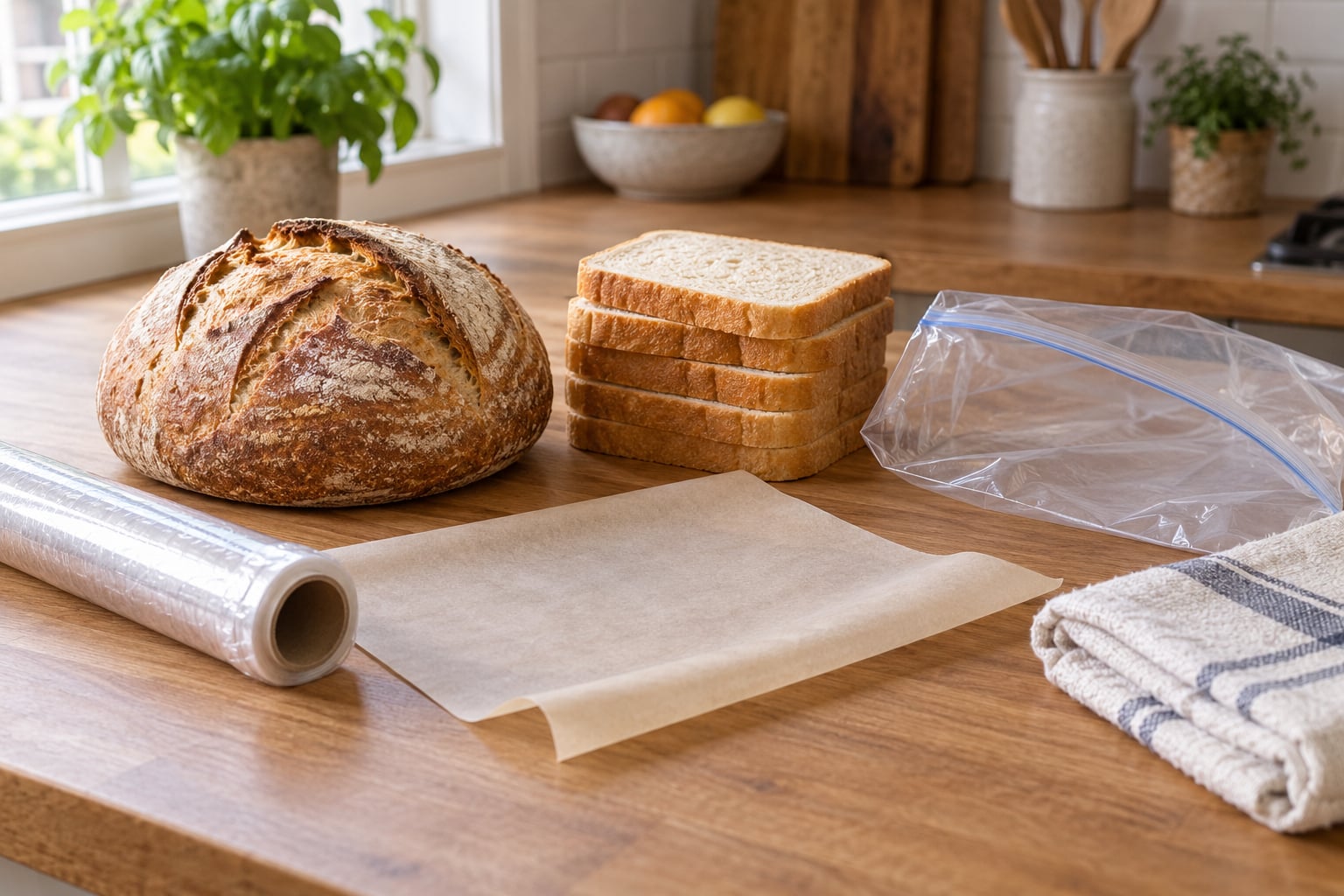
Here is how to freeze bread and thaw it without drying it out, in three moves: cool the loaf completely, seal it airtight so no air reaches the crumb, and let it thaw inside its own wrapper. Wrapped bread keeps its eating quality for three to six months in the freezer, and a short blast in a hot oven wakes the crust back up.
That matters if you bake more bread than your household eats in two days, buy in bulk, or want sandwich slices ready every morning without a daily bakery run. It also matters if you are trying to cut food waste, because a loaf you freeze on day two is still worth eating on day twenty.
Last updated for October 2026.
Table of Contents
- What You Need to Freeze Bread and Thaw It Without Drying It Out
- Step-by-Step: How to Freeze and Thaw Bread Without Drying It Out
- Common Mistakes That Ruin Frozen Bread
- Frequently Asked Questions
- How long should bread be thawed after freezing?
- Is it better to thaw bread in the refrigerator or on the counter?
- Can I refreeze bread after thawing it?
- Should I freeze sliced bread or a whole loaf?
- How do I thaw bread quickly without making it dry?
- Can frozen sandwiches be thawed without soggy or stale bread?
- Conclusion: What to Do First
What You Need to Freeze Bread and Thaw It Without Drying It Out
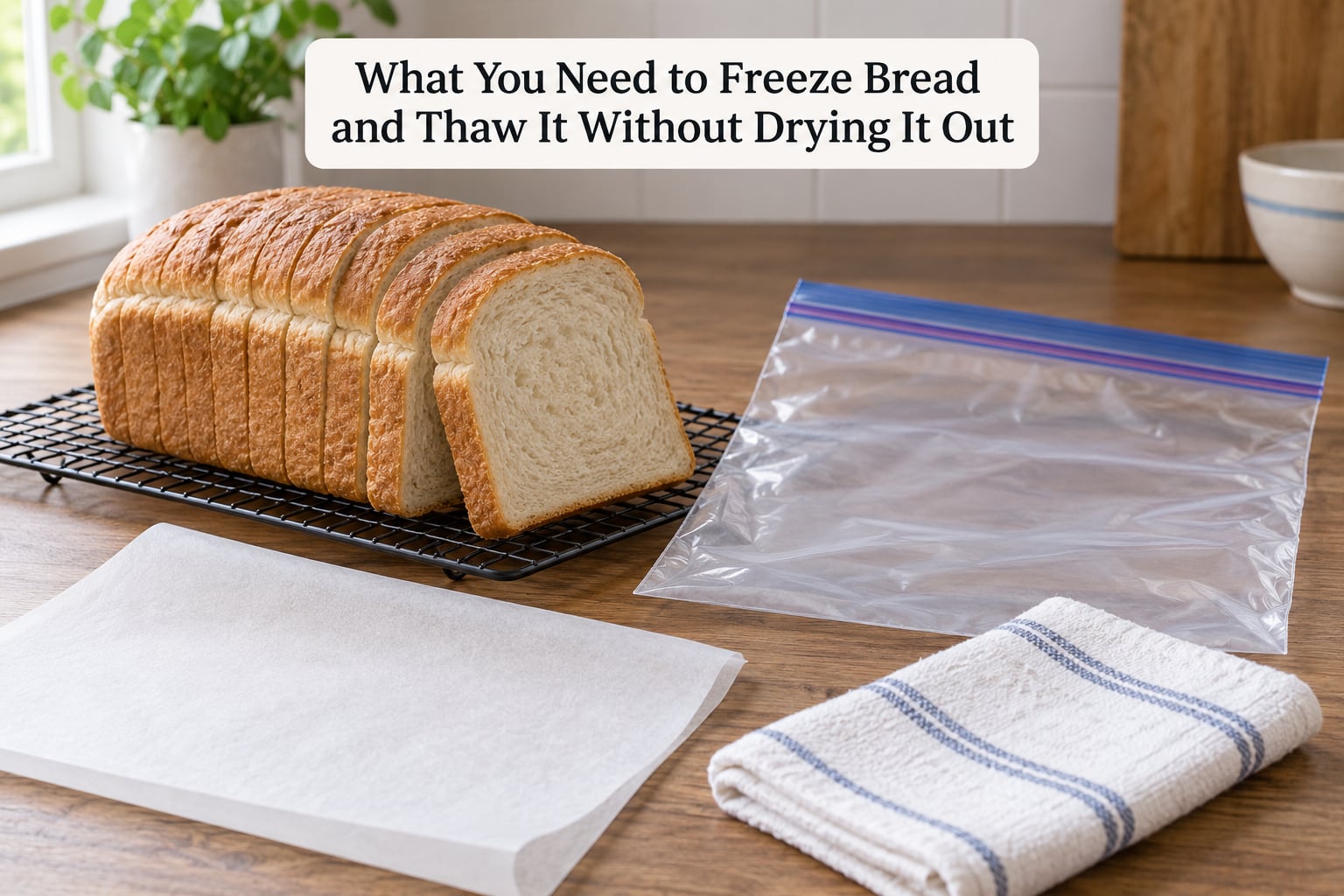
Nothing exotic. Everything below is already in most kitchens, and the only thing that genuinely changes the outcome is an airtight seal.
- Bread that is completely cool. If it still feels warm anywhere, wait. Wrapping warm bread traps steam, and that steam freezes into ice crystals that leave the loaf papery.
- A wire cooling rack. It moves air underneath the loaf so the base cools as fast as the top.
- Plastic food wrap or aluminum foil for the first layer of wrapping, tight against the bread.
- A resealable freezer bag or an airtight freezer-safe container for the second layer. The thin plastic bag bread arrives in from the bakery does not seal well enough for freezer storage, which is the single most common reason frozen bread dries out.
- Parchment or wax paper for layered slices, so they do not freeze into one solid block.
- A dry towel or paper towel to pat a loaf that came out of the freezer damp.
- A marker and masking tape, or a freezer-label tape, so you know what is in there and when it went in.
If your bread is already going stale on the counter, storing it well before then pays off much more than rescue work later. How to keep bread fresh longer at room temperature covers the short-term half of the problem.
Step-by-Step: How to Freeze and Thaw Bread Without Drying It Out
1. Let the Bread Cool Completely
Set the loaf on a wire rack and wait until it is room temperature all the way through, usually one to two hours for a full boule and about 30 minutes for a pan of rolls. The bottom of a loaf holds heat longest, so if you can touch it and it feels even slightly warm, it is not ready.
Rushing this is the mistake that undoes all the other care you take. Warm bread releases water vapor into its wrapper, that vapor freezes, and the ice crystals punch holes in the starch structure. That is the papery, crumbly texture people mistake for bad freezing.
2. Choose the Right Wrapping Method
Match the wrap to the shape of the bread. The first layer should touch the bread with no gaps, because gaps are where moisture escapes.
- Whole loaf: plastic wrap or foil pulled snugly around the loaf, then the whole thing into a freezer bag with the seal pressed shut. For a rustic boule with a scored crust, wrap in foil first so the plastic does not dent your scoring.
- Sliced bread: wrap slices individually or slide parchment between them, then stand them upright in a freezer bag. Bread from a bread machine or a sandwich loaf eats better this way, because you can pull two slices instead of thawing a whole loaf.
- Rolls and buns: a freezer-safe container lined with parchment, or one big bag with a layer of parchment between rows so the tops do not get crushed.
- Loose quick breads and muffins: a single freezer bag is usually enough, since they are less prone to drying than lean yeast breads.
If you are only protecting one or two slices, cut them from a fresh loaf and freeze those, not the heel end that nobody wants. It is the same few minutes of work and it cuts the temptation to buy a whole new loaf later.
3. Remove Air and Label the Package
Press the excess air out of the freezer bag with your hands as you seal it, working from the bottom up. Do not squash the bread to get a tighter seal; a compressed loaf thaws into a compressed loaf.
Then write three things on the bag with a marker: what it is, the month and date it went in, and how you plan to thaw it. Two loaves of sourdough in identical bags is a problem you will not enjoy solving at 8 a.m. on a Tuesday.
4. Freeze the Bread Promptly
Lay packages flat in a single layer so they freeze quickly, then stack them once hard. Freezing fast matters because slow freezing gives ice crystals more time to grow.
Leave some room in the freezer for air to circulate, and avoid overpacking it, since a crammed chest freezer dries food out faster. Frost-free freezers run a dehumidifier that pulls moisture out of everything inside them, which is one more reason the airtight wrap matters.
If you want slices to stay separate rather than freezing into a brick, lay them on a baking sheet, freeze them uncovered for 20 minutes, then bag them. It is called flash freezing and it is the difference between pulling out one slice and hacking apart the whole block.
5. Thaw It Slowly in the Refrigerator
The gentlest method is also the best one: move the sealed package to the refrigerator and leave it there for several hours or overnight. Cold thawing keeps the crumb structure steady, and you avoid the window where the outside of the loaf sits at room temperature while the middle is still frozen.
Do not open the package early. As frozen bread warms, condensation forms on the inside of the bag or the wrap, and the crumb reabsorbs that water as it thaws. Unwrap first and you lose that water to your counter instead, which is exactly how you end up with dry bread.
Never brush ice crystals off before thawing, and never taste bread that has only partly thawed to check it.
Thawing times at a glance:
- Refrigerator, wrapped: 8 to 12 hours. Best for whole loaves when you can plan ahead.
- Counter, wrapped: 2 to 3 hours for a loaf, 1 to 2 hours for slices or rolls. The best balance of speed and texture for same-day use.
- Oven from frozen: 300°F (150°C) for 10 to 20 minutes. Good for forgotten bread and for reviving texture.
- Toaster from frozen: two cycles. Single slices for sandwiches.
- Microwave: 10 to 20 seconds per slice. A last resort, and only for one slice at a time.
If you forgot to move it to the fridge in the morning, the counter is still fine. Leave it in the wrapper and give it two to three hours for a loaf, or about an hour for slices.
6. Refresh the Texture Before Serving
Thawed bread is soft but flatt. A short heat brings the crust back. For a whole loaf, dampen a clean towel, wrap the bread in it, and warm it at 350°F (175°C) for about 10 minutes; the steam trapped in the towel softens the crumb while the crust re-crisps.
For slices, a toaster oven at 350°F (175°C) for 5 to 8 minutes does the same job without drying the middle. A microwave works, but only for a slice at a time and only for 10 to 20 seconds, or the crumb turns chewy and tough.
Slice after refreshing, not before. A knife through warm bread cuts cleanly, and cutting frozen bread shaves off crumbs you will be fishing for out of your toaster.
Common Mistakes That Ruin Frozen Bread
Almost every disappointing loaf comes down to one of these. Each has a simple fix.
- Wrapping bread that is still warm. Trapped steam becomes ice crystals. Fix: cool on a wire rack until the base is room temperature too.
- Using the bakery bag it came in. Those bags have a loose seam and a hole for air. Fix: double wrap, and squeeze the freezer bag down before sealing.
- Unwrapping before thawing. The loaf loses the condensation it should reabsorb. Fix: leave it sealed until it reaches room temperature.
- Refrigerating bread instead of freezing it. Cold refrigerator temperatures make bread’s starch firm up faster, so bread goes hard sooner on the counter than it does in the freezer. This one surprises people, but it holds up: never refrigerate bread, freeze it or leave it out.
- Refreezing bread repeatedly. Each freeze and thaw cycle costs moisture. Fix: refreeze only what thawed, wrap it again, and expect slightly softer texture next time.
- Microwaving for too long. Thirty seconds in a microwave turns a slice into a tough, chewy brick. Fix: 10 to 20 seconds, or use the oven.
- Overpacking the freezer. Blocked airflow plus frost-free dehumidification is a recipe for freezer burn. Fix: keep a gap between packages and away from the door.
- Forgetting the date. Bread is at its best for the first three months and still usable at six. Fix: label the month, and eat the oldest first.
Two more worth knowing. Do not freeze unbaked dough in a home freezer, because it will freeze before the yeast can work and you will get a dense brick after baking. And if bread smells like your freezer rather than like bread, the packaging was not airtight enough, so double wrap next time.
Freezer burn itself is a quality problem, not a safety one. Pale patches, ice crystals, and dry crust are moisture damage; the bread is still perfectly safe to eat. Mold, off odors, or a slimy crumb are the signs that matter, and those mean you throw it out.
If you want a full recovery plan for bread that already came out badly, the usual moves are a damp-towel oven refresh for the crumb and a short unbroiled run under the broiler for the crust. For bread that has gone hard and crumbly on the counter rather than the freezer, dunking is the standard trick instead.
For sandwich prep, freezing components separately beats freezing assembled sandwiches whenever you can, since a frozen sandwich tends to come out of the microwave with a compressed filling. How to meal prep sandwiches for the week without soggy bread covers that in detail.
Frequently Asked Questions
How long should bread be thawed after freezing?
Thaw it in the refrigerator for 8 to 12 hours, or on the counter, still wrapped, for 2 to 3 hours for a whole loaf and 1 to 2 hours for slices and rolls. Leave the packaging sealed the whole time so condensation forms on the inside and gets reabsorbed by the crumb instead of soaking into your counter.
Is it better to thaw bread in the refrigerator or on the counter?
The refrigerator is gentler and gives the most consistent crumb, but the counter is faster and works well for same-day use. Either way, keep the bread wrapped while it thaws. A slice can be gently pulled apart and used slightly from frozen if you need it sooner, then refreshed in the toaster.
Can I refreeze bread after thawing it?
You can, as long as it thawed in the refrigerator and never sat out at room temperature. Refreeze it in fresh wrapping rather than the original bag, and expect slightly softer crumb than the first freeze, because every cycle costs a little moisture.
Should I freeze sliced bread or a whole loaf?
Freeze the whole loaf if you eat bread irregularly, since it protects the crumb best. Slice and freeze when you want two slices on demand, especially for sandwich prep, and slip parchment or wax paper between slices so they do not freeze into a single block.
How do I thaw bread quickly without making it dry?
Go straight from freezer to oven. Heat at 300°F (150°C) for 10 to 20 minutes, or wrap the loaf in a damp towel and heat at 350°F (175°C) for about 10 minutes. The towel supplies the moisture that thawing would have, and the crust crisps in the same pass.
Can frozen sandwiches be thawed without soggy or stale bread?
Yes, if you freeze the bread and fillings separately and assemble later, which gives you far better control. Toasting the thawed bread before adding a wet filling, and using a spread that is not watery, keeps everything from turning soft. Breakfast sandwiches made ahead and frozen are worth planning a whole batch around.
Conclusion: What to Do First
Start tonight, not next week. Let the loaf cool all the way down, wrap it snugly in plastic wrap or foil, seal it in a freezer bag with the air pressed out, and write the date on it. That is the whole freeze.
When you want it, move the package to the refrigerator overnight or leave it on the counter for a couple of hours, still sealed, then give it a short refresh in a hot oven before serving. Get the wrapping right and thawing is the easy part. Keeping bread fresh longer covers the days before it ever reaches the freezer.