
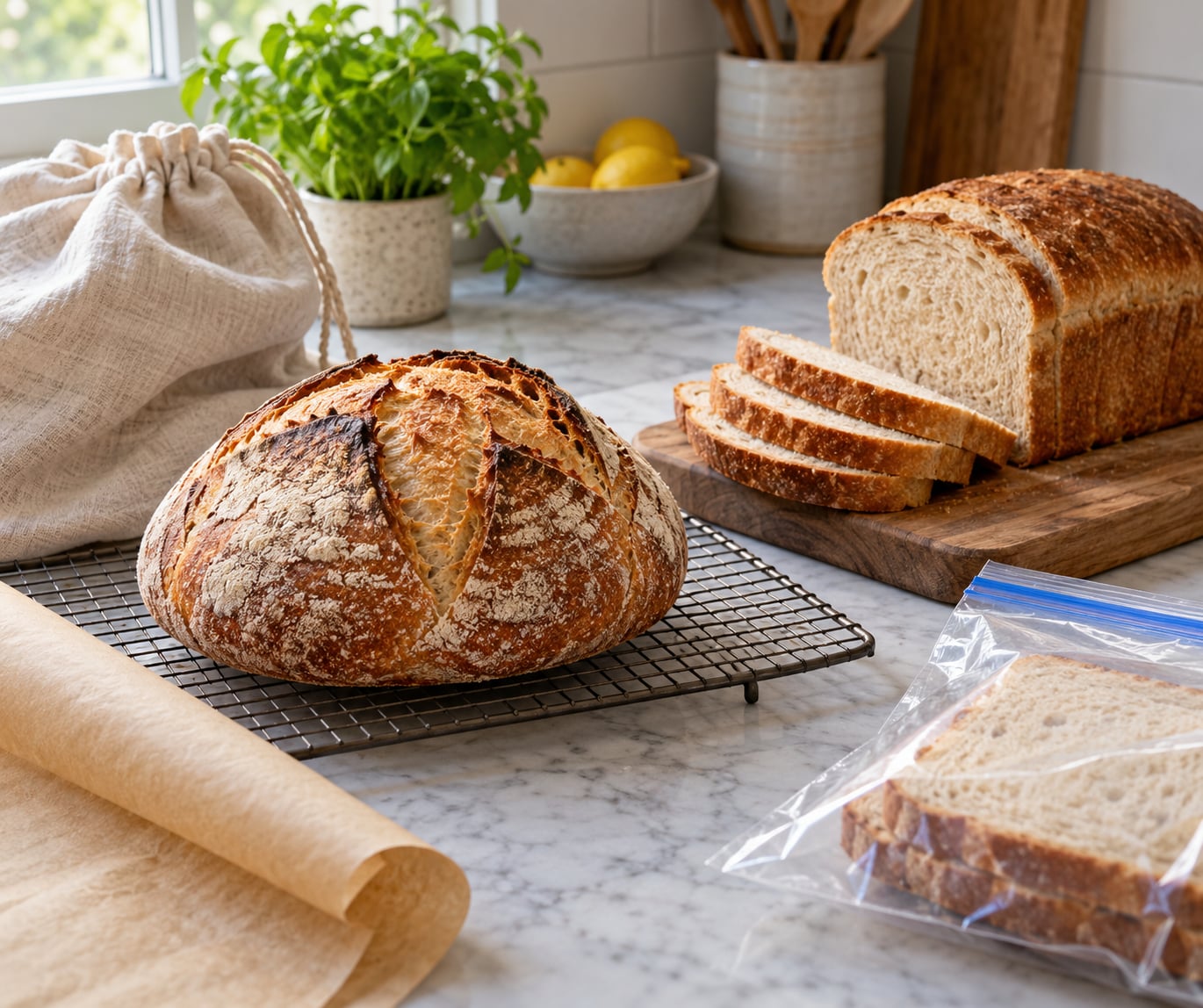
Bread stays fresh longest when you cool it completely, wrap it the way its texture needs, and match the method to how fast you plan to eat it. Soft sandwich loaves go in plastic or an airtight container at room temperature for two to four days, crusty sourdough wants to breathe in a cloth or paper wrap, and anything you will not finish goes in the freezer sliced and sealed. Skip the refrigerator unless your kitchen is genuinely humid.
I bake most weekends and eat slowly, so the loaves I cannot finish on day two all get sliced and frozen on Sunday. That one habit fixed most of what I used to fight with, including the sourdough that turned soft and gummy by Wednesday.
Table of Contents
- What You Need
- Step-by-Step: How to Store Homemade Bread So It Stays Fresh
- Common Mistakes
- Storage Times for Common Homemade Breads
- Frequently Asked Questions
- Should homemade bread be stored in the refrigerator?
- Can you freeze homemade bread without making it soggy?
- How long does homemade bread stay fresh at room temperature?
- What is the best way to store homemade sourdough?
- Should sliced sandwich bread be wrapped in plastic?
- How do you revive bread that has gone stale?
- Conclusion
What You Need
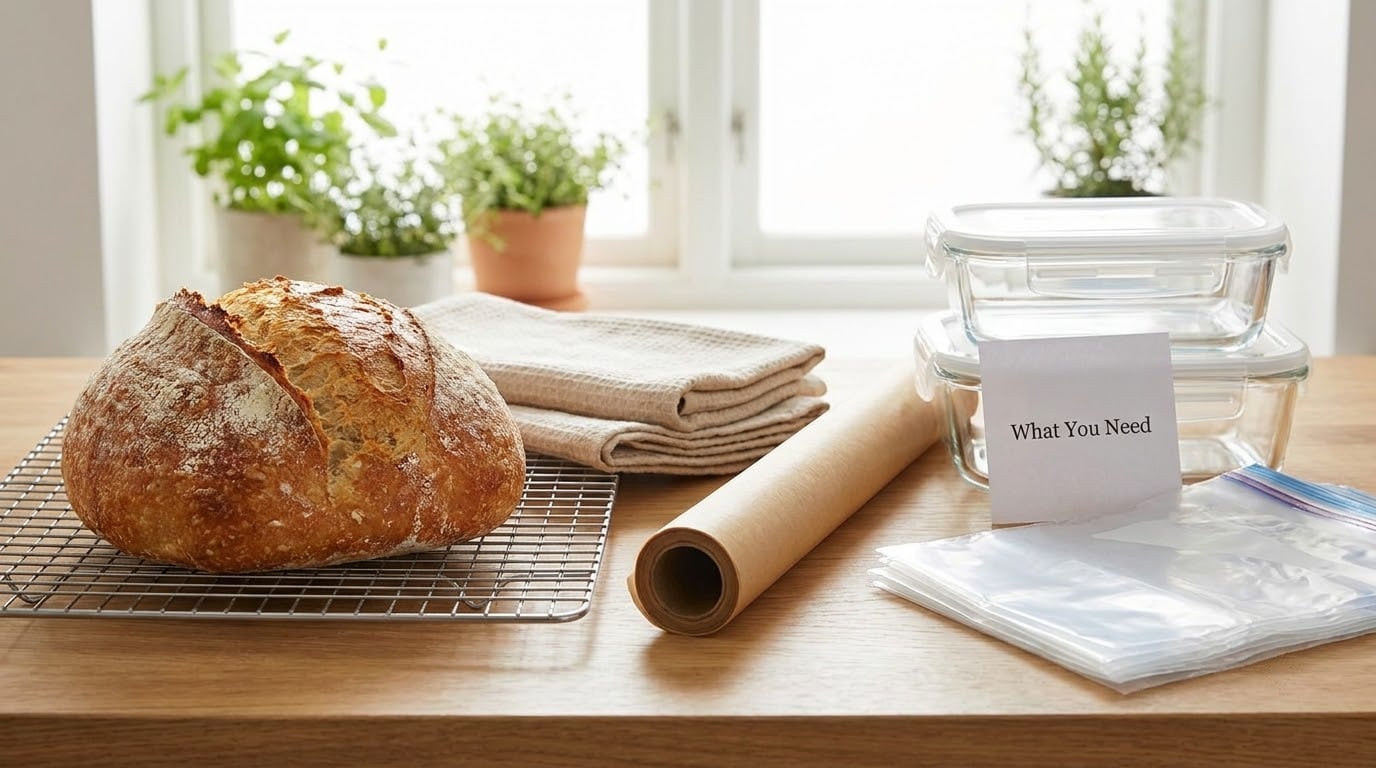
None of this is expensive and most of it is already in your kitchen. The only items you truly cannot skip are the cooling rack and some way to seal bread airtight.
- A wire cooling rack. A rack keeps air moving under the loaf so the bottom crust stays crisp instead of steaming itself soggy.
- Airtight storage. A zip-top freezer bag, plastic wrap, or a lidded container for soft bread. The seal matters more than the brand.
- Breathable wraps. A clean cotton or linen bread bag, parchment paper, a paper bag, or beeswax wraps for crusty loaves.
- Freezer packaging. Heavy-duty freezer bags or a box of freezer-safe zip bags, plus a marker or tape for labeling dates.
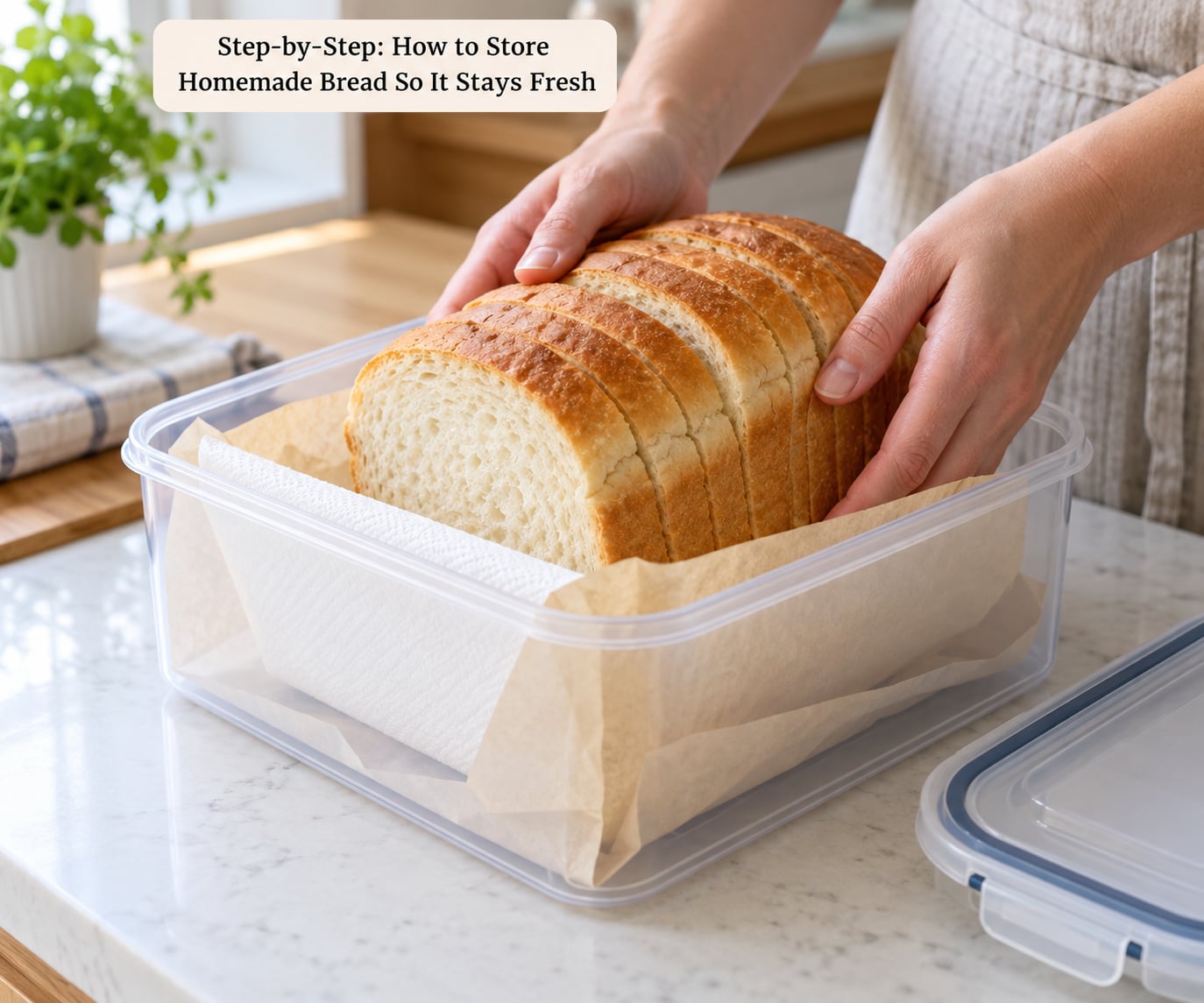
- A paper towel. Folded into the container with soft bread, replaced every day or two once it feels damp.
- Optional: a bread box. It works as a breathable buffer that slows moisture loss without sealing the crust. If you buy one, check for rear airflow holes and enough shelf clearance for a full boule rather than a sandwich loaf. Our guide to the best bread boxes for keeping bread fresh longer covers what to look for.
- Optional: a vacuum sealer. It is the best long-term option for a whole sourdough loaf because it pulls nearly all the air out before freezing.
Step-by-Step: How to Store Homemade Bread So It Stays Fresh
Step 1: Let the Bread Cool Completely
Wait two to three hours after baking before anything touches the loaf. A big artisan boule or a pan of sandwich bread can need closer to four hours, and dinner rolls are usually cool enough after 45 to 60 minutes.
Residual heat turning to steam inside a closed bag is the single most common reason homemade bread goes gummy and then molds. The moisture has nowhere to go, so it condenses on the crumb and on the crust, which softens the crust and gives mold a wet surface to start on.
You know it is ready when the bottom of the loaf feels exactly the same temperature as your kitchen counter, and when pressing the crumb leaves a springy dent rather than a soft one. Hold the loaf against the inside of your wrist for a second; any warmth at all means wait.
Cool on a rack in one open space. A wooden board or a cutting board is fine for a loaf you will eat the same day, but for storage move it to a rack so air reaches the underside.
Step 2: Choose the Right Storage Method
Match the wrap to the crumb, because soft bread and crusty bread need opposite treatment.
- Soft sandwich bread, milk bread, brioche, banana bread: seal it in plastic wrap or a zip bag, or place it in an airtight container with a paper towel. Soft bread dries out fast, and a seal is what slows that. Expect two to four days.
- Crusty sourdough, baguettes, artisan boules: store cut side down on a board inside a cotton or linen bread bag, wrap it in parchment, or roll it in a beeswax wrap. These wraps let moisture escape slowly, so the crust stays crisp. This is good for one to three days, then move it to the freezer.
- Rolls and dinner buns: keep them in a cloth bag or a basket lined with a clean cotton towel, loosely covered. Sealing rolls while they still release steam traps moisture and flattens the bottoms.
- Enriched doughs with milk, egg, honey, butter, or oil: treat them like soft bread. The extra fat and sugar hold moisture in the crumb, so they usually outlast a lean loaf by a day or two.
No preservatives is exactly why homemade bread loses ground so quickly. Store-bought loaves keep longer because additives buy time that a home loaf simply does not have.
Step 3: Protect the Crust from Drying or Getting Soggy
The goal is trapped moisture with a slow escape route, not a vacuum and not open air. A bread box, a cloth bag, or parchment all hit that middle ground, which is why they keep a sourdough crust crisp for days while a sealed plastic bag flattens it.
A paper bag alone is the shortest window of all, usually same-day to one day. Its job is letting the loaf breathe while it dries its own crust, not keeping it fresh for days.
Mesh and muslin bags get recommended constantly and they do fail, often within a couple of days. One bread group described them as lovely but only temporary, and that matches what I have seen. When a breathable wrap has done its job, escalate to the freezer on day three rather than swapping to plastic and ruining the crust.
Packaging research adds a useful detail here: across the container types tested, perforated vessels showed the least fungal and yeast growth, while the common sealed cellophane-style bread bags performed worst. In plain terms, a little airflow beats a hard seal for anything you plan to keep more than a day or two.
For sandwiches made in the morning, how you store the loaf matters as much as how you build it. Our piece on making a sandwich that still tastes fresh at lunch covers the rest of that routine.
Step 4: Freeze Bread You Will Not Eat Soon
Freezing is the only method that genuinely pauses staling. Below zero, the moisture migration and the starch changes that harden a crumb all slow to a crawl.
- Cool the loaf fully first. Warm bread traps steam and freezes into condensation.
- Slice it. Cutting the whole loaf before freezing is the most-repeated advice across bakers, and it lets you pull out one piece at a time instead of thawing everything. Halving a large boule and freezing each half works well too.
- Double wrap. Slide the sliced loaf into a heavy zip bag or wrap the loaf tightly in plastic, then seal it inside a second bag. Squeeze the air out; the water-bath trick works if you want to be thorough, since a bag laid flat under a few inches of water lets the pressure push every pocket out.
- Label it. Write the bread type and the date. Freezer bread gets buried, and without a date you will thaw something you baked before the last holiday.
- Use it in order. Quality holds best for about a month and stays perfectly safe up to three months. Bread past a few months is safe, just drier and less flavorful.
- Toast straight from frozen. This is the easiest path to fresh-tasting bread and it skips condensation entirely. Thawing first, if you must, works best in the closed bag so the bread reabsorbs its own moisture instead of drying out.
Never let a loaf go through repeated freeze-thaw cycles. Each one costs you texture, and bread that has cycled twice is usually better off in the crumbs pile.
Two related situations come up constantly. For gifting or dropping a loaf at someone’s house overnight, wrap it in a clean paper bag or parchment, skip the fridge, and tell them to leave it on the counter rather than chilling it. For dough instead of bread, a cold retard in the refrigerator overnight before baking is the established move, and dough frozen after bulk ferment can thaw in the fridge and bake straight from cold.
Keep loaves away from the oven, the dishwasher, and the stove. Heat and steam from any of them pull moisture out of the crumb fast and can carry odors into the bread.
Common Mistakes
- Wrapping bread while it is still warm. Trapped steam condenses, the crust softens, and mold follows. Fix: full cool-down on a rack, two to four hours.
- Refrigerating homemade bread. Cold temperatures make the starches in the crumb recrystallize faster, which is staling. The loaf goes hard and dry while mold is still held back. Fix: keep it at room temperature and freeze instead. The one exception is a very humid kitchen where mold outruns everything.
- Leaving sliced bread uncovered or with the cut face open. Every exposed slice is a moisture leak. Fix: seal the cut face with plastic wrap, then bag or box the loaf.
- Cramming one container full of bread. A packed container holds warmth and condensation, and the pieces at the bottom mold first. Fix: leave air room around the loaves, or store two loaves separately.
- Thawing bread in a closed plastic bag on the counter. Condensation forms on the inside of the bag and the crust turns soft. Fix: thaw in the bag but use the bread within a few hours, or skip thawing and toast from frozen.
- Leaving bread beside the oven or under a sunny window. It picks up odors and dries out well before its window closes. Fix: a cool, dark cabinet or a pantry shelf away from appliances.
- Believing a bread box solves everything. A bread bin still molds in a warm, humid kitchen because it does not change the temperature. Fix: use it in a dry room, and freeze on day three.
Storage Times for Common Homemade Breads
| Bread type | Room temperature | Refrigerator | Freezer |
|---|---|---|---|
| Soft sandwich bread | 2 to 3 days, airtight | 5 to 7 days, texture drops fast | 2 to 3 months |
| Crusty sourdough or boule | 2 to 4 days, cut side down | Not recommended | 1 to 3 months |
| Rolls and dinner buns | 1 to 2 days, loosely covered | 4 to 6 days | 1 to 2 months |
| Enriched loaf or banana bread | 3 to 4 days, airtight | 6 to 8 days | 2 to 3 months |
| Baguette | Same day to 1 day | Not recommended | 1 to 3 months |
Refrigerated columns are there so you can see the trade-off, not because refrigeration is a good idea. It stretches the window by a few days and costs you texture the whole time. In a genuinely humid kitchen, that trade can be worth making.
Staling is recoverable. A loaf that has gone firm and dull can still become croutons, breadcrumbs for a casserole, a French toast casserole, panzanella, or bread pudding. Spreading choice affects how the bread behaves in a sandwich, and picking the right one keeps a two-day loaf from tasting like a week-old one; our roundup of spreads that keep bread from getting soggy covers that side.
Frequently Asked Questions
Should homemade bread be stored in the refrigerator?
No, not unless your kitchen is very humid. Refrigeration speeds up starch recrystallization in the crumb, so the loaf turns hard and dry while the mold that you were trying to prevent is still on hold. Keep bread at room temperature in a cool, dark spot for two to four days and freeze anything beyond that. In a persistently humid kitchen, refrigerated storage buys a few days at the cost of texture, which is a reasonable swap when mold is the bigger risk.
Can you freeze homemade bread without making it soggy?
Yes, and soggy is a thawing problem rather than a freezing one. Let the loaf cool completely, slice it, press out the air in a heavy freezer bag, and double wrap it. Toast slices straight from the frozen bag and you never create the condensation layer that ruins a crust. If you prefer to thaw, keep the bread in its closed bag and use it within a few hours rather than leaving it sitting on the counter.
How long does homemade bread stay fresh at room temperature?
Two to four days is the realistic window for a preservative-free homemade loaf. Soft enriched bread held in an airtight container usually stays good for three to four days, while a crusty sourdough or baguette cut side down in a cloth bag is at its best in the first two days. Freezer bags and exposed cut faces shorten that window, and a warm kitchen shortens it further.
What is the best way to store homemade sourdough?
Store it cut side down on a board inside a clean cotton or linen bread bag, or wrap it in parchment or a beeswax wrap. That setup slows moisture loss without sealing in steam, so the crust stays crisp for two to four days. Sourdough usually outlasts sandwich bread because the crust is thicker and the crumb is less moist. On day three, move it to the freezer rather than switching to plastic, which flattens the crust.
Should sliced sandwich bread be wrapped in plastic?
Yes. Sliced bread loses moisture fastest through the exposed cut face, so seal it in plastic wrap or a zip bag, or stand the slices upright in an airtight container with a paper towel. A bread box or cloth bag is better for an unsliced crusty loaf. Replace the paper towel once it feels damp, and keep the loaf away from the oven and dishwasher so it does not pick up odors.
How do you revive bread that has gone stale?
Staling is moisture loss, not spoilage, and stale bread can usually be brought back. Run a slice through the toaster, or refresh a whole loaf in a 350 degree oven for five to ten minutes with a light mist of water on the crust. A short microwave burst with a cup of water beside the bread softens the crumb, though it will not crisp the crust. If the smell is off or you see fuzzy growth, mold is a different problem and the loaf goes in the bin.
Conclusion
Cool the loaf completely first, because nothing else works if you wrap it warm. Then pick the wrap that matches the crumb: airtight plastic for soft sandwich bread, a cloth or paper bag for a crusty sourdough, and the freezer for anything you will not eat within a few days.
Skip the refrigerator unless humidity is winning the battle in your kitchen, and when bread does go stale, revive it or turn it into croutons instead of binning it. What kind of bread are you storing right now, and is it already sliced?