
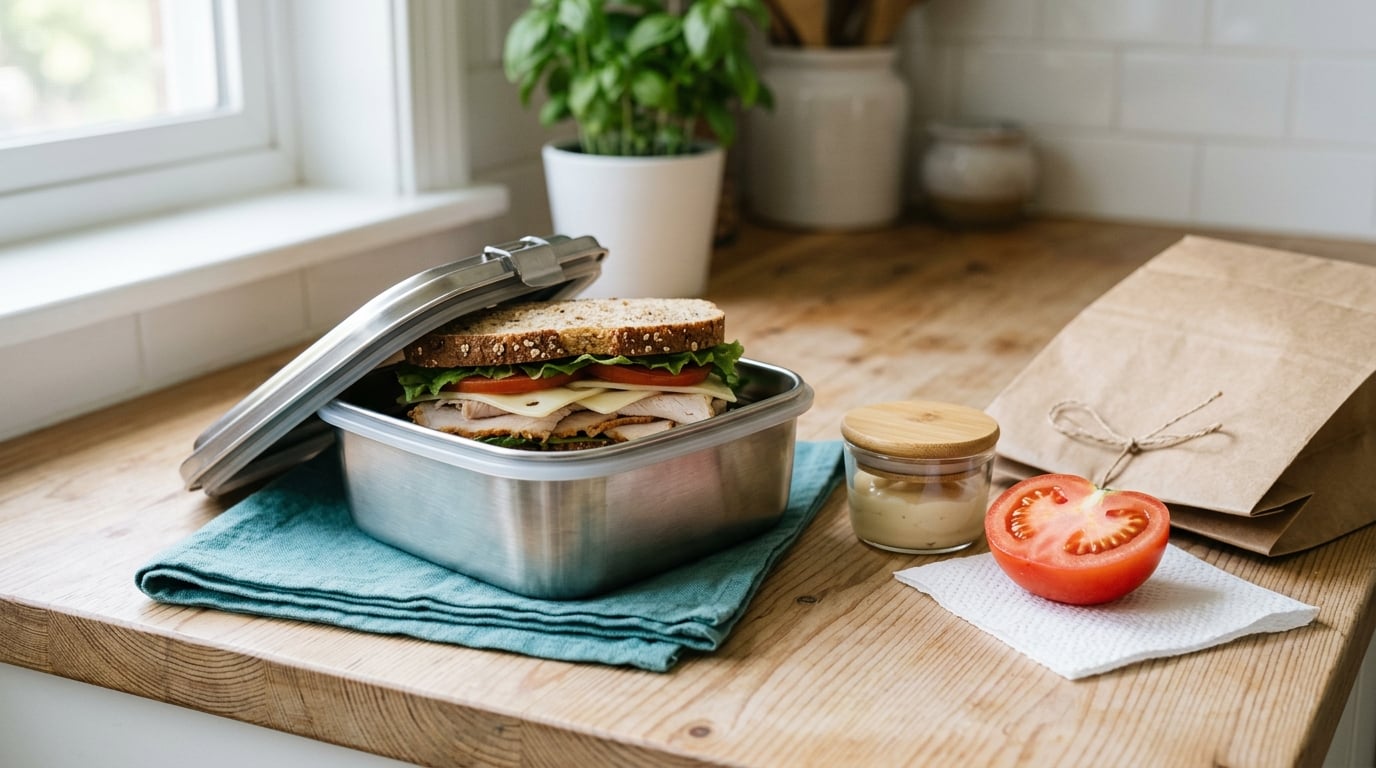
The best sandwich containers that don’t squish your lunch are rigid-walled, square rather than round, and sealed well enough that wet fillings stay put. A hard plastic or stainless steel box with a locking clasp holds a thick sandwich flat through a backpack, while a gasket-sealed or two-tier design keeps tomato, cucumber and mayo from turning the bread to mush.
Most soggy lunches are not a container problem alone. They are a compression problem and a moisture problem happening at the same time, and a box that solves one of them usually does nothing for the other.
I break the ten container types below into what they actually are, why they hold shape, who they suit and where they fall short, so you can pick for the lunch you pack rather than for a spec sheet. The packing method at the end matters as much as the box you choose.
Table of Contents
- Best Sandwich Containers That Don’t Squish Your Lunch at a Glance
- 1. Sturdier Sandwich Container With a Clasp Lid
- 2. Stainless Steel Sandwich Container
- 3. Leak-Resistant Container for Wet Fillings
- 4. Insulated Sandwich Container
- 5. Two-Tier Sandwich Container
- 6. Large Flat Container for Deli-Style Sandwiches
- 7. Flexible Silicone Sandwich Container
- 8. Reusable Sandwich Container for Meal Prep
- 9. Compact Container for Kids’ Lunches
- 10. Premium Fully Sealable Sandwich Container
- Frequently Asked Questions
- What are the best containers for storing lunch sandwiches?
- How do I keep sandwich bread from getting soggy?
- What size sandwich container fits a hoagie?
- Are plastic sandwich containers safe to use every day?
- Can sandwich containers go in the dishwasher?
- What kind of container can I use to keep a sandwich warm?
Best Sandwich Containers That Don’t Squish Your Lunch at a Glance
| Container type | Sandwich fit | Squish protection | Leak resistance | Insulated | Cleaning | Best use case |
|---|---|---|---|---|---|---|
| Hard plastic with clasp lid | Square, full-size sandwich | High | Good with dry fillings | No | Dishwasher top rack | Office lunches and daily packing |
| Stainless steel sandwich container | Square or rectangular | Very high | Very good, no electronics to leak | No, unless double-wall | Dishwasher safe | Commutes, hiking, heavy bags |
| Leak-resistant compartment box | Sandwich plus sides | Medium to high | Highest, gasket and silicone seal | Varies | Gasket pulls out and washes | Tomato, cucumber, soup, salad-heavy lunches |
| Insulated sandwich container | Square, often one person portion | Medium | Good | Yes, keeps food cold without ice | Wipe inside, air dry | Lunches eaten four or more hours later |
| Two-tier sandwich container | Sandwich on top, sides below | High | High | No | Two pieces to wash | Meal prep and wet-filling sandwiches |
| Large flat deli container | Hoagies, subs, baguette halves | High | Moderate, wide opening | No | Dishwasher safe | Deli-style long sandwiches |
| Flexible silicone container | Any shape, folds to fit | Very low | Moderate | No | Dishwasher safe, odors can set | Travel packing where bag space rules |
| Reusable meal prep container | Standard rectangular, stacks | High when stacked on top | Good | No | Dishwasher and freezer safe | Sunday batch packing for the week |
| Compact kids container | Small squares and halves | Medium | Good with a simple clip lid | Varies | Dishwasher safe, wide mouth | School lunches, ages roughly 4 and up |
| Premium fully sealable container | Square, sized to the sandwich | High | Highest, multi-point seal and gasket | Varies | Takes apart completely | Daily packing with wet fillings |
Read the squish protection column first. It matters more than capacity, and it is the one spec most shoppers skip.
1. Sturdier Sandwich Container With a Clasp Lid
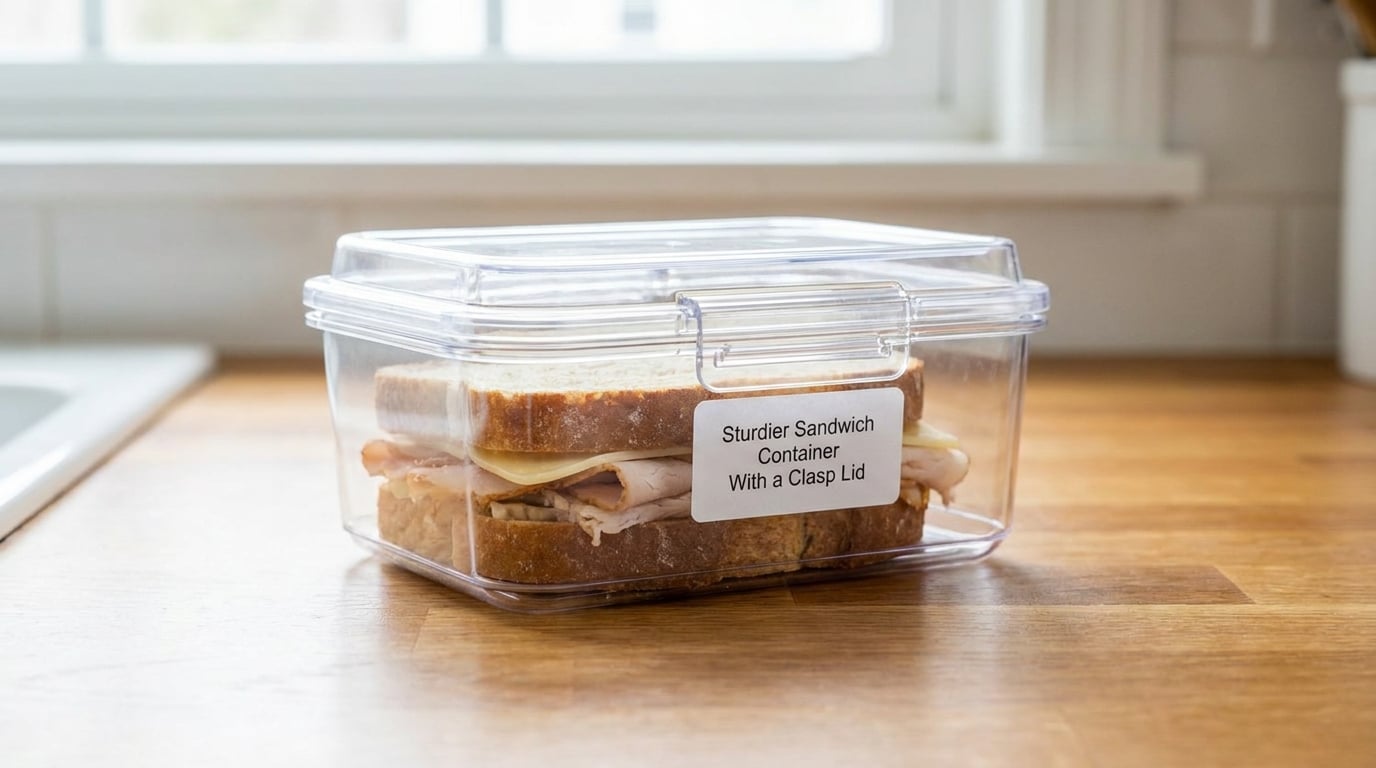
A hard plastic container with a clasp lid is the most practical all-rounder for everyday packed lunches. The walls do not flex, and the clasp keeps the lid flat so nothing on top of it presses down on the bread.
The clasp matters more than people expect. A snap-fit lid that pops loose under the weight of a laptop lets the lid tilt, and the sandwich takes the pressure instead of the bag taking it. A clasp that stays shut transfers the force to the rigid walls.
Square geometry is the quiet advantage. A round container forces a square sandwich to curve to fit, and a curved sandwich top is a crushed sandwich top once you close the lid. A square box lets the sandwich lie diagonally, flat, with air in the corners.
To pack a bulky sandwich, cut it before it goes in. A sandwich cut into two halves stacks more efficiently in a square box than one whole sandwich folded in half, and the cut faces stay separated by the box rather than pressing on each other. Leave a finger’s width of space on top so the clasp closes without force.
This is the type I would buy first for a commute, because it handles dry and semi-dry fillings, washes in a dishwasher, and costs less attention than anything with moving parts. It struggles a little with a large tomato or a generous pour of dressing, which is what the leak-resistant option in section 3 is for.
2. Stainless Steel Sandwich Container
Stainless steel sandwich containers are the strongest crush protection available in a lunch bag, and they clean better than anything else on this list. No gasket to strip, no hinge to clog, no absorbent plastic rim.
Two single-wall boxes and a fork will get a 304 or 430 grade steel container clean in under a minute, and steel does not hold odors the way textured plastic can after a few months of daily tomato and mustard. It also survives being dropped in a tote, stepped on in a parking lot, or set on a car seat in summer.
What steel does not do is seal. A tight-fitting steel lid keeps crumbs in and smells out, but it is not a leakproof system. Salad dressing, yogurt, and soup in a side compartment are a bad match unless the container is one of the gasket-sealed steel designs made specifically for that.
Steel is also a poor partner with microwave reheating. A steel sandwich box goes in the oven at low heat or into a pan of warm water, but never in a microwave, which is a real adjustment if your office lunch routine is reheating at noon.
For work lunches, outdoor meals and anyone whose bag carries a laptop, a water bottle and a charger, this is the pick. It shrugs off weight and it does not need a replacement part in two years.
3. Leak-Resistant Container for Wet Fillings
Leak-resistant containers use a silicone gasket, a pressure-fit lid or a locking tab to keep wet ingredients away from bread. This is the category to buy when your sandwich has tomato, cucumber, pickles, or more mayo than you planned on.
Moisture does most of the damage. Water released by tomato slices and cucumber migrates into the bread crumb within a couple of hours, and mayo speeds the process up by sealing the slice against the bread so nothing can escape. Dry ham and cheddar tolerate a lunch bag far better than a sandwich with a wet edge.
Two things make these containers work. First, separate the wet filling from the bread in a small compartment or a sealed cup so the juice has nowhere to sit against the slice. Second, dry the tomato before it goes in, which takes ten seconds on a paper towel and removes most of the problem before the lid is ever closed.
Tomato on a towel, cucumber sliced thin, and a paper layer between the filling and the bread handles most of the sogginess complaints I have seen, without changing what you eat.
Cleaning is the catch. A gasket seal only works while the gasket is clean and still springy, so pull it out and wash it on its own every few days. A container whose gasket has gone flat will pass a leak test on day one and quietly fail by month three, which is why the leak tests below are worth running before you commit to one model.
4. Insulated Sandwich Container
An insulated sandwich container uses a foam or vacuum layer between an inner food-contact liner and an outer shell, so a sandwich stays cold for hours without an ice pack sitting on top of it. That single fact is the whole argument for it.
Traditional insulated lunch boxes rely on a frozen gel pack placed in an upper compartment. That works, but the gel pack sweats, the water drips into the sandwich, and the crust gets damp before lunch. An insulated box that holds its own temperature removes the ice pack, and with it the biggest source of condensation in a packed lunch.
There is a difference between soft insulation and hard construction. A soft-sided insulated pouch compresses under weight in a full backpack, which sends you right back to the original problem, so a padded lunch bag needs a rigid box inside it, and hard-walled insulated containers are the version of this type I would trust under a laptop.
Insulation does not warm food, and it is worth saying plainly. These containers are built for cold retention. To keep a sandwich warm, the honest answer is that you need a real thermal vessel designed for hot food, and you should think about the 40°F to 140°F range: perishable fillings should stay below 40°F or be eaten within two hours, or within one hour when the day is above 90°F.
The inside of an insulated container is usually a removable stainless liner or a coated plastic tray. Wipe it out, air it with the lid cracked open overnight, and the smell problem never starts.
5. Two-Tier Sandwich Container
A two-tier container stacks a flat sandwich on top and sides, dips or wet fillings in a sealed section below, with a divider between them. The design is popular in Asian-style bento boxes and in the compartment lunch boxes sold for adult meal prep, and it solves moisture better than it solves compression.
Pickles, potato salad, fruit with juice, and a side of chips all work because the liquid stays in its own well instead of pooling on the bottom slice. A small pot of dressing travels in the lower tier and you dip instead of pouring, which is the single most effective fix for a wet sandwich and the one most people never try.
Compression protection is good as long as you do not stack anything on the top tier. These containers are typically tall and shallow, and the lid is often a press-fit plastic panel, so weight from above does transfer to the bread. Keep the box at the top of the bag, above the laptop, and it holds up well.
The tradeoff is parts. You wash a container, a divider, two or three small pots and a lid, and the small pots disappear into a drawer and come out a month later. Buy this style if you genuinely want a full lunch of several items. If you want one sandwich and an apple, it is more washing than the meal is worth.
6. Large Flat Container for Deli-Style Sandwiches
A large flat container is sized for a hoagie, a sub or a long baguette half, and its single job is to give a long sandwich a long, flat, supported home. A standard square sandwich box forces a 12-inch sub to bend, and the bend is where the filling slides out.
The interior here is wider than it is deep. That flat broad floor spreads the weight of the sandwich across its full length instead of letting the middle bow downward, and the low profile means the lid closes without squeezing the bread from the top.
Buy one of these when you eat deli sandwiches regularly, when you cut sandwiches in half lengthwise, or when you pack a long sandwich for a road trip where the car seat becomes the table. A whole sandwich cut into two triangles also fits, laid side by side rather than stacked, which keeps the top slice off the filling.
Two cautions. The footprint is long, so it will not sit flat in a small tote or a standard locker, and it competes with a laptop for the same space in a work bag. Also, a wide opening that makes cleaning easy is often a wide opening with a loose-fitting lid, so check that the closure actually holds before you commit, especially for anything with a wet filling.
If you want a size that handles both, look for a rectangular container in the 12 to 13 inch length range. It fits a hoagie lying flat and still holds a thick square sandwich cut in half.
7. Flexible Silicone Sandwich Container
A flexible silicone container folds down to nearly nothing when empty and springs back when packed, which makes it genuinely useful in a carry-on bag, a hiking pack or a drawer with no room. Here is the honest part: it offers close to zero crush protection, and that is a problem for this particular need.
A soft wall gives way under pressure. If a laptop, a water bottle or a stack of textbooks lands on a silicone container, the container transmits that force straight into the bread. For keeping a lunch from being squished, rigid always beats flexible, no matter how good the seal is.
Silicone does earn its place in a few situations. It is lighter than steel, it survives a drop without shattering, it handles freezer and fridge temperatures, and it is not prone to cracking the way a hard plastic container can when it hits a cold freezer shelf. Food-grade silicone is also stable and does not absorb odors the way a textured plastic ring can, though a strong spice or a tomato-based sauce can stain a light-colored one over time.
Cleaning is the easiest of the flexible options. Most are dishwasher safe on the top rack, and there are no seams to trap crumbs. A thin lid that holds liquid rather well makes silicone a fine sauce container even if it is a poor sandwich container.
So the recommendation is specific: keep silicone for travel, sauces and side dishes, and use a rigid box for the sandwich itself. Buying a collapsible lunch box expecting it to solve squishing is the most common mistake I see in this category.
8. Reusable Sandwich Container for Meal Prep
A reusable meal prep container is the pick if you pack on Sunday and eat from the same setup all week. The useful features are standard rectangular footprint, identical sizes that stack, lids that seal in a single piece, and a material you can put in the freezer and the top rack of the dishwasher.
Stackability cuts both ways. Storage in the fridge works well because boxes nest inside each other rather than sitting beside them. In a lunch bag it is a liability, because a stacked box presses down on the one holding your sandwich. If you use these, take the container out of the stack before it goes in the bag.
Portion control is the underrated benefit. Uniform containers force you to build the same sandwich every time, which means the same bread, the same filling quantity and the same layer order, and consistency is what stops the soggy-lunch habit.
Sogginess during storage is mostly a moisture problem again. Wrap each sandwich in parchment or a light layer of plastic before closing the lid, keep tomatoes in a separate small pot with a paper towel, and refrigerate cut bread rather than a whole loaf. Never store a sandwich assembled with wet fillings for more than a day, even in the fridge.
For material safety, look for containers labeled BPA-free and made from polypropylene or borosilicate glass, and check that the lid gasket is a replaceable part. A one-year-old box with a torn seal is a container that leaks, no matter what the label said.
9. Compact Container for Kids’ Lunches
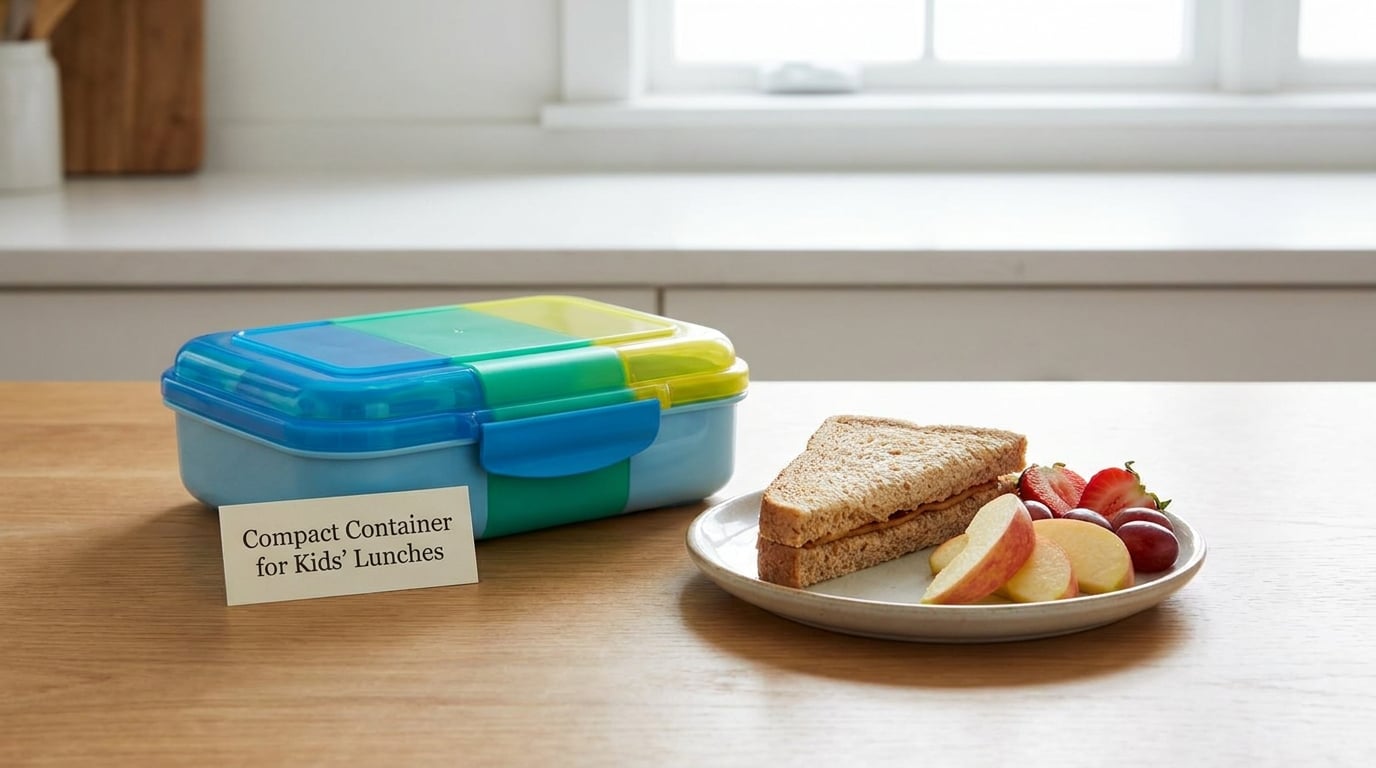
A compact container for kids is smaller, has rounded corners, and closes with a simple clip or a press lid that a child can manage without adult help. That is the entire design brief, and it is different from packing your own lunch.
Size is the deciding factor. A school lunch gets eaten on a table, not under a laptop, so crush resistance matters far less than how easily the box opens, whether it fits in a small backpack, and whether it survives being dropped on a cafeteria floor. Most of these are also lightweight, which keeps the total bag weight reasonable for a small child.
Fit the sandwich shape to the box rather than the reverse. Cut the sandwich into halves, then into finger widths, and stand the pieces upright in a square container rather than laying them flat, which is easier for small hands and reduces the chance of a piece being squashed on the way to the table.
Cleaning matters more here than anywhere else, because a lunch box that smells like yesterday’s tuna gets ignored. Choose a wide-mouth design that runs in the dishwasher, and one with few corners and no deep seams where crumbs hide. A shallow box that holds a sandwich, a few fruit slices and one side is easier to wash and easier to use than a large one half full.
For young children, keep pieces age-appropriate and round-cut long strips into short lengths. A full sandwich cut in half is the right starting point for most kindergartners and up, and a separate dip instead of wet filling inside the bread is the fastest way to a lunch that comes back eaten.
10. Premium Fully Sealable Sandwich Container
A premium fully sealable container is defined less by material than by engineering: a continuous silicone gasket, a multi-point locking lid, a strong hinge, and a body rigid enough that closing the lid does not require force. Those four things together are what a well-built container does that a cheap one does not.
The gasket is the part that matters. A continuous seal runs the full perimeter of the lid rather than relying on a few clips, so the container is genuinely leakproof when closed. Replaceable gaskets are the mark of a container built to last; a sealed-in gasket means a leaky container when it ages out.
Balance is the quiet advantage. Premium boxes are stiffer in the walls, so a sandwich pressed against the side does not dent the side, and the closure does not hinge on a thin plastic tab. They also tend to take a container apart for cleaning, which is a bigger deal than it sounds over a year of daily use.
How to Pack a Sandwich So It Stays Crisp
Packing technique does more for a sandwich than the container does. These seven steps work in any box on this list and cost about a minute extra.
- Cool the ingredients first. Let the bread and fillings come close to refrigerator temperature before you close the lid. A warm sandwich in a sealed box creates its own condensation.
- Dry the wet stuff. Blot tomato and cucumber on a paper towel, and use a slotted turner for pickles. Removing surface water handles most of the sogginess before the container enters the picture.
- Keep sauces in a sealed pot. A small dip container in a two-tier box, or a separate jar with a gasket lid, means mayo and dressing never touch the bread until the sandwich is opened.
- Use a barrier layer. One sheet of parchment or deli paper between the filling and the bread slows moisture migration and stops a wet slice from sealing against a dry one.
- Distribute heavy items evenly. Put the heavier filling, meat or cheese, in an even layer instead of a thick mound in the center, so no single spot carries the load.
- Wrap delicate bread lightly. Deli paper or a soft wrap protects a crusty roll without trapping steam the way a tight plastic wrap can. Skip the wrap on soft sandwich bread, which does not need it.
- Place bulky items away from the top. Lettuce and tomato sit low in the stack where the closing lid does not press on them, and the sandwich goes on top or on its side, not under the heavier layers.
Finally, decide where the container travels. A box at the top of the bag, above a laptop, keeps the sandwich intact. The same box at the bottom of a full backpack will be compressed no matter how rigid the walls are.
Three leak tests to run before you buy
Manufacturers say leakproof; the bag tells you whether it is. Run these three before you buy, or in the first week after you buy while a return is easy.
- The shake test. Fill the container with two tablespoons of water, close the lid, and shake it hard for fifteen seconds over a sink. Any water at the seam means the closure is friction, not a seal.
- The backpack test. Put a small amount of tomato sauce in one compartment, close the box, and carry it in a loaded bag for an hour. Sauce that reaches the bread compartment fails regardless of what the packaging claims.
- The inverted overnight test. Fill the container, invert it on a towel in the fridge overnight, and check in the morning. This catches the slow gasket weep that shows up a month into daily use rather than on day one.
Frequently Asked Questions
What are the best containers for storing lunch sandwiches?
The best containers for storing lunch sandwiches are rigid and square, with a gasket or locking clasp on the lid. Hard plastic with a clasp is the practical everyday pick, stainless steel is the toughest for heavy bags, and a compartment box is worth it when you eat wet fillings like tomato, cucumber or pickles. Square geometry matters more than brand, because a square box lets a sandwich lie flat instead of curving to fit.
How do I keep sandwich bread from getting soggy?
Moisture does it, not temperature. Blot tomato and cucumber dry, keep mayo and dressing in a separate sealed pot, and put one sheet of parchment between the filling and the bread. Avoid an ice pack resting on the sandwich, since the condensation wets the crust. Keep perishable fillings below 40 F or eat within two hours, and refrigerate a cut sandwich rather than leaving it assembled overnight.
What size sandwich container fits a hoagie?
A hoagie needs a flat container roughly 12 to 13 inches long and about 5 inches wide so the sandwich lies straight instead of bending over the sides. Cut the hoagie in half lengthwise and lay the two halves side by side for a better fit, or use a 13-inch rectangular container. Anything shorter than about 12 inches forces a curve, and that curve is where the filling slides out.
Are plastic sandwich containers safe to use every day?
Daily use is fine when the container is labeled BPA-free, is not scratched or clouded, and is replaced when the plastic gets brittle or the seal goes flat. Look for polypropylene or borosilicate glass if you want the widest margin. Wash in hot soapy water, air dry with the lid open, and replace any container with a warped lid or a loose-fitting seal, since a leak is a food safety issue before it is a taste issue.
Can sandwich containers go in the dishwasher?
Most hard plastic and glass containers with detachable lids are dishwasher safe on the top rack, while silicone is usually fine too. Stainless steel sandwich boxes are dishwasher safe, but insulated containers with a foam layer generally are not, because heat and detergent degrade the foam and the liner bond. Skip the dishwasher for gaskets and hand wash those, since high heat is the fastest way to lose elasticity in a seal.
What kind of container can I use to keep a sandwich warm?
A true hot-rated thermal container, not an insulated lunch box. Most insulated sandwich containers are built for cold retention and will not hold a hot filling safely for long. To keep a sandwich warm, preheat the container with hot water, use a stainless steel or double-wall design rated for hot food, and remember that perishable fillings should stay below 40 F or be eaten within two hours, or one hour above 90 F.
Start with a square hard plastic container with a clasp lid if you pack one sandwich a day in a bag that carries other gear. Move to stainless steel when the bag is heavy, add a gasket-sealed compartment box the day you start packing wet fillings, and pack the sandwich dry on top with sauces in a sealed pot underneath. That single habit fixes more soggy lunches than any container upgrade will.