
Most office workers who trade daily takeout for a packed lunch keep somewhere between 1,300 and 3,900 dollars a year, and the number moves with what you were buying on the side. The gap widens fast once the coffee and the afternoon snack stop too, because those two add up quietly.
The honest version of this question is not a single number. It is a small formula you can run against your own receipts, and running it takes about ten minutes. If you want the system first, our guide to stopping the leak on takeout lunches sets up the weekly review that makes the math stick.
All figures below are typical US ranges. Restaurant prices, grocery prices and rent-adjacent costs like commuting change by region and move over time, so treat the tables as a starting point rather than a quote.
Table of Contents
- How Much Money You Save Packing Lunch for Work
- What Determines Your Packing-Lunch Savings?
- Ways to Save More Without Making Lunch Unenjoyable
- Frequently Asked Questions
- How much can I save by packing lunch instead of buying takeout?
- Is packing lunch cheaper if I still buy coffee and snacks?
- How much do I save if I eat out only twice a week?
- What if preparing lunch takes too much time?
- Do leftovers and meal prep really reduce the cost of packed lunches?
- Is buying groceries for lunch always cheaper than takeout?
- Conclusion: Start With One Workday
How Much Money You Save Packing Lunch for Work
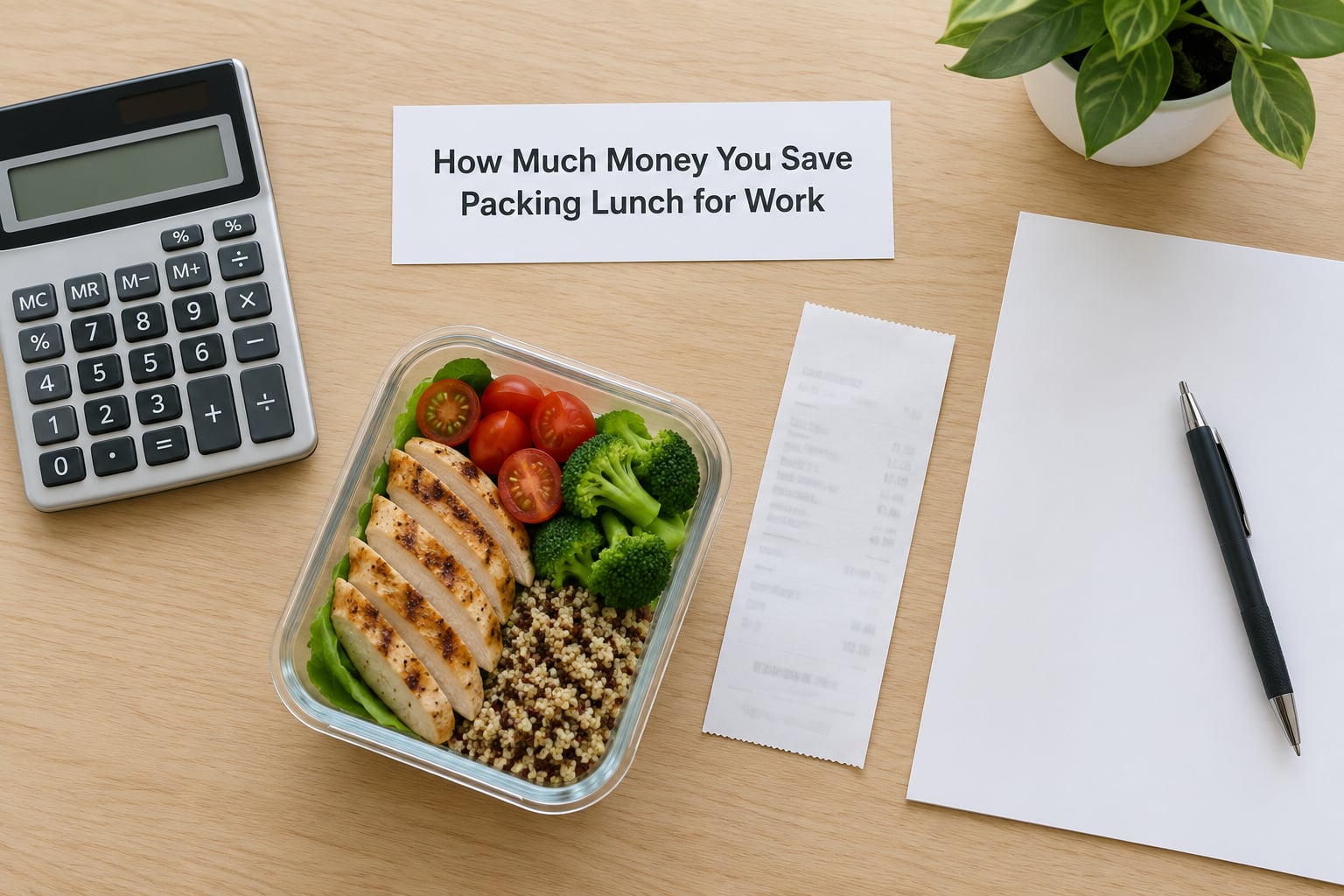
Here is the short version: packing lunch every workday instead of buying it saves roughly 5 to 10 dollars a day, which is 25 to 50 dollars a week and about 1,300 to 2,600 dollars a year on the meal itself. Add your own drinks and the total commonly reaches 3,000 or more.
These four scenarios use a baseline of 260 workdays a year, which is five days a week for 52 weeks. A month figure below uses about 21.7 workdays.
| Lunch habit | Takeout per day | Packed per day | Daily difference | Per week | Per month | Per year |
|---|---|---|---|---|---|---|
| Inexpensive habit | 9 dollars | 4 dollars | 5 dollars | 25 dollars | 108 dollars | 1,300 dollars |
| Everyday habit | 14 dollars | 7 dollars | 7 dollars | 35 dollars | 152 dollars | 1,820 dollars |
| Premium habit | 20 dollars | 10 dollars | 10 dollars | 50 dollars | 217 dollars | 2,600 dollars |
| All-in day, lunch plus coffee and snack | 18 dollars | 6 dollars | 12 dollars | 60 dollars | 260 dollars | 3,120 dollars |
The last row is the one that surprises people. A 5 dollar coffee and a 4 dollar snack are the reason so many people believe eating out costs 10 dollars, when the real number is closer to 18.
How to calculate how much money you save packing lunch for work
Run the numbers in this order. The order matters because the drinks and snacks come last, and they are the step most people skip.
- Count your workdays eaten out. Five a week times 52 weeks gives 260. If you take vacation and holidays, subtract them: 250 is a fair figure for a year with two weeks off.
- Find your real takeout cost. Not the menu price. Add the drink, the tip, the tax, and the delivery fee if you order in. Most people underestimate this by 3 to 4 dollars a day.
- Find your real packed lunch cost. Divide a week’s grocery spend by the number of lunches it produced, and include your coffee, condiments and the occasional container replacement.
- Subtract, then multiply. Takeout cost minus packed cost, times your workday count. That is your annual figure before extras.
- Add what you stopped buying. The vending machine snack, the delivered drink, the emergency pastry someone brought back from a trip.
- Subtract what packing actually costs you. Extra groceries, coffee beans at home, and the small equipment outlay. Being generous here makes the result stick for longer.
Fill-in formula: (takeout days multiplied by takeout cost) minus (packed days multiplied by packed cost) plus (purchases you stopped making) minus (extra packed lunch expenses) equals your annual savings.
A worked five-day example. Takeout at 14 dollars a day for five days is 70 dollars. Coffee and a snack at 4 dollars a day adds 20, so the takeout week really costs 90. A packed lunch at 7 dollars a day is 35, plus about 2 dollars a week for home coffee, so the packed week costs 37. That is 53 dollars saved in one week, 230 a month, and roughly 2,750 a year.
What Determines Your Packing-Lunch Savings?
Two people can do this identically and land in completely different places. These are the variables that matter, and they are worth checking before you decide whether packing is worth it for you.
- How often you buy lunch. This is the biggest lever by a wide margin. Every day you switch moves the annual number by 7 to 10 dollars times your workday count.
- What takeout costs near your office. A sandwich shop gives you 6 to 8 dollars of difference a day. A sit-down place with a table service gives you far more. Downtown prices run higher than suburbs, and airport-adjacent offices are their own category.
- Whether your groceries already covered it. Packing lunch built from last night’s dinner costs almost nothing. Packing lunch built from ingredients you bought for lunch alone costs more than people expect.
- Beverages. A daily bought coffee is usually 4 to 6 dollars. That single habit is often the difference between a 1,300 dollar year and a 2,600 dollar year.
- Office food. If your employer provides lunch, a free cafeteria, or a well-stocked snack shelf, the savings from packing shrink considerably. Compare against what you would actually have paid.
- Food waste. Two servings of something you dislike going into a bin every Friday is a false economy. This is the main reason some packed-lunch budgets come out higher than takeout.
- Commuting and errands. If eating out near work means a separate trip you would not otherwise make, the true comparison includes that travel cost. Packing usually wins bigger in a car-heavy suburb than in a transit-served city.
- Your time. Ten minutes of assembly has a value, though most people rate it well below the money. Track how long you actually spend for two weeks before deciding it is not worth it.
Same math, different week. This table adjusts the everyday scenario above for how often you actually pack.
| Packed lunches per week | Workdays per year affected | Typical annual saving |
|---|---|---|
| 5 days, every week | 260 | 1,820 dollars |
| 3 days, every week | 156 | 1,092 dollars |
| 2 days, every week | 104 | 728 dollars |
| 1 treat day a week | 52 | 364 dollars |
The one-treat-day row is worth sitting with. It requires almost no planning, survives a busy week, and still returns a few hundred dollars. It is also the version most people stick to, because it is not a rule so much as a default.
Ways to Save More Without Making Lunch Unenjoyable
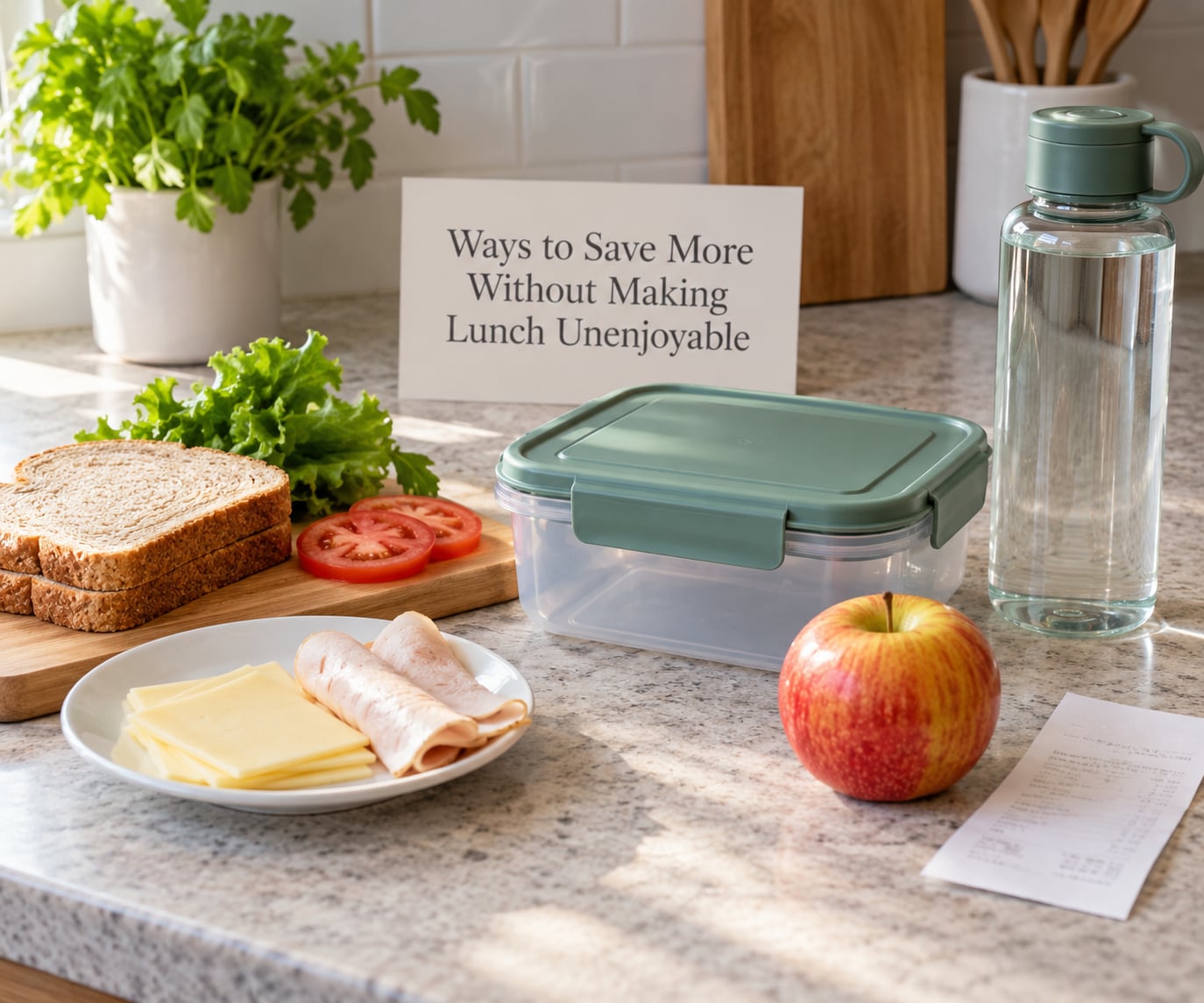
Every one of these lowers the packed side of the equation. Together they are usually worth another 100 to 150 dollars a month without making the food worse.
- Buy what is in season. Strawberries in June, squash in September, apples in October. Off-season produce is the single most expensive thing in a packed lunch, and the swap is invisible once you make it a habit.
- Build lunch from what you cooked for dinner. Extra portions of pasta, rice, soup or a tray of vegetables cost nothing beyond the meal you were already making. This is where the cheapest lunches come from.
- Plan portions on Sunday, not meals. Deciding that Tuesday is pasta and Wednesday is a sandwich takes two minutes and stops the Friday bin problem entirely.
- Carry water and skip the drink run. A reusable bottle in the bag removes the most common impulse purchase of the workday, and a 5 dollar coffee becomes about 50 cents at home.
- Batch two or three days, not five. People on forums who stick with it usually prep in small blocks rather than cooking a whole week on Sunday. It takes less time and it does not turn into something you dread.
- Stop buying the same pantry item twice. Olive oil, tortillas, cheese and condiments get repurchased constantly because they are forgotten. Keep a list on the fridge and check it before the grocery run.
- Keep two backups in the drawer. Shelf-stable options for the day you forgot to pack are described in our roundup of office desk pantry staples.
- Rotate the ideas so nothing gets boring. Repetition is the reason most packed lunches fail by week three. Our list of sandwich ideas for work lunches that are not boring exists for exactly that reason.
One food safety note, because the leftovers strategy depends on it. Refrigerate food within two hours, eat refrigerated meals within three to four days, and reheat poultry to 165°F and ground meat to 160°F before eating.
Realistic equipment spending is small: a leakproof container, a bag that keeps things cool, and a set of utensils. Spread over a year, it rarely moves the answer by more than a few dollars a month.
Frequently Asked Questions
How much can I save by packing lunch instead of buying takeout?
Packing a lunch every workday instead of buying takeout typically saves between 1,300 and 3,900 dollars a year, once you count the coffee and snacks you no longer buy. That range assumes a takeout habit around 14 dollars a day and a packed lunch near 7 dollars. People eating premium lunch spots at 20 dollars a day land at the top of the range, usually a little higher once drinks move from the office coffee bar to your own bottle.
Is packing lunch cheaper if I still buy coffee and snacks?
Usually yes, but not always. Packing saves the most when it replaces the drink and the snack too, because a 5 dollar coffee and a 4 dollar afternoon bite can outrun the cost of the sandwich. If you keep buying a latte every morning, trim your estimate by roughly 1,000 dollars a year. The honest test is to total one workday of takeout purchases, drinks included, then compare it with one packed lunch.
How much do I save if I eat out only twice a week?
Eating out twice a week and packing three days saves roughly 40 percent of the full-time figure. On a 7 dollar daily difference that is about 28 dollars a week, 121 a month and around 600 a year. People on the two-day habit often report the same or better results as daily packers, because they rarely get tired of the food or worn down by the morning routine.
What if preparing lunch takes too much time?
Ten minutes a night is the honest number, and most of it is assembly rather than cooking. A sandwich with fruit takes about three minutes, and a pasta or grain bowl you already made for dinner takes no extra time at all. Prepping two or three days at a time instead of the whole week avoids the burnout that kills the habit. Ten minutes on five nights is fifty minutes a week.
Do leftovers and meal prep really reduce the cost of packed lunches?
They do, and they are the cheapest lunch you can build. Extra portions from dinner cost nothing beyond what you already spent on groceries, so a lunch made that way can land under 2 dollars. Food safety still applies: refrigerate within two hours, eat refrigerated meals within three to four days, and reheat poultry to 165°F and ground meat to 160°F.
Is buying groceries for lunch always cheaper than takeout?
Not always, and the giveaway is usually waste. If you buy specialty items you would not otherwise eat and throw out half of them, groceries lose their edge against a 12 dollar salad. Packing clearly wins when the ingredients overlap with normal family meals, and it wins biggest when you already buy pantry staples, produce and proteins for dinner anyway.
Conclusion: Start With One Workday
Packing lunch for work saves somewhere between 1,300 and 3,900 dollars a year for a full-time office worker, and the biggest single factor is whether the coffee and the snack come with you.
Do not try to estimate the year yet. Open your banking app, total what one typical workday of takeout actually cost you including the drink, and write it down. Then total one packed lunch the same way. Multiply that small, real difference by your actual workday count, and you will have a number you can defend, which is the only kind that survives a busy March.