
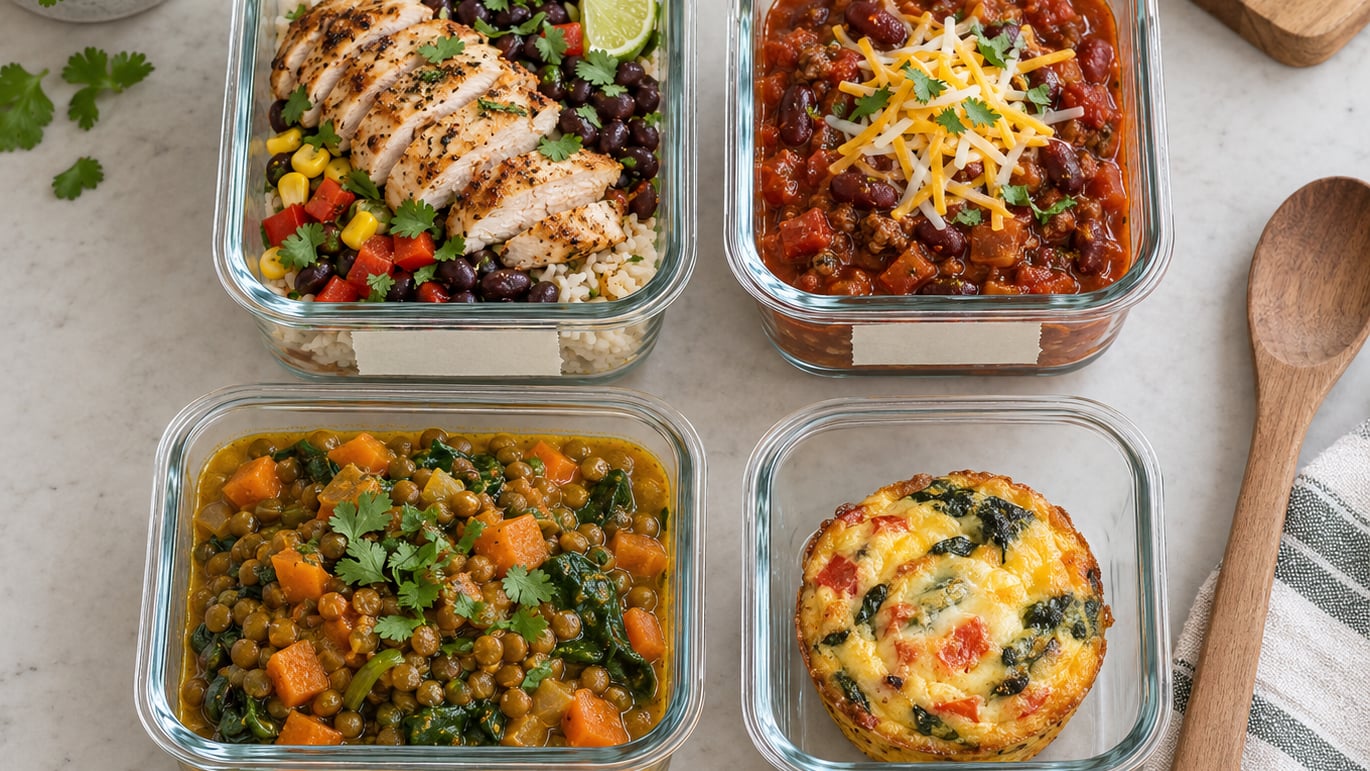
The best freezer meal prep ideas are the meals that survive a week of freezer storage and still taste good after a quick reheat: burrito bowls, chili mac, soups, egg muffins, and sheet-pan dinners portioned into individual containers. You cook once on a Sunday, cool the food fast, label it, and stop cooking on weeknights. This list covers 12 of them, with the reheating temperature and container type for each.
I keep a stash for the nights when cooking feels like one more thing. Nothing fancy, just meals I already like eating, cooked in a bigger batch than we need. The trick is portioning: two servings for tonight and everything else into containers that go straight in the freezer.
Two rules keep it safe and worth doing. Refrigerated leftovers stay good for 3 to 4 days, and cooked frozen meals taste best within about 2 to 3 months, so freeze what you will actually eat. If you are starting from scratch, we compared container options in our guide to the best meal prep containers that don’t leak.
Table of Contents
- Freezer Meal Prep Ideas at a Glance
- 1. Chicken Burrito Bowls
- 2. Turkey Meatballs with Pasta
- 3. Chili Mac
- 4. Salmon Rice Bowls
- 5. Vegetable and White Bean Soup
- 6. Pulled Chicken Sandwiches
- 7. Turkey and Sweet Potato Chili
- 8. Spinach and Ricotta Lasagna
- 9. Breakfast Egg Muffins
- 10. Breakfast Burritos
- 11. Sheet-Pan Chicken and Vegetables
- 12. Lentil and Vegetable Curry
- Frequently Asked Questions
- Conclusion
Freezer Meal Prep Ideas at a Glance
All 12 meals below freeze and reheat well when you cool them quickly, leave headspace in the container, and portion them into single servings. Here is how each one compares.
| Meal | Main Ingredients | Prep Effort | Best Container | Reheating Method | Freezes & Reheats Well? |
|---|---|---|---|---|---|
| Chicken burrito bowls | Chicken, rice, black beans, corn, peppers, salsa | Low | Glass container with lid | Microwave, covered, stirring halfway | Yes, if salsa is added before eating |
| Turkey meatballs with pasta | Turkey meatballs, tomato sauce, rotini or penne | Medium | Two containers or freezer bags | Microwave or covered oven dish | Yes, store components separately for best texture |
| Chili mac | Ground beef or turkey, elbow pasta, tomatoes, beans, cheese | Low | Rectangular glass or heavy plastic | Microwave from frozen or oven | Yes |
| Salmon rice bowls | Salmon, brown rice, cucumber, edamame, sesame | Medium | Small glass containers | Microwave, 50% power for fish | Yes |
| Vegetable and white bean soup | Tomato, carrots, celery, cannellini beans, kale | Low | Mason jars or pint containers | Microwave or stovetop pot | Yes |
| Pulled chicken sandwiches | Shredded chicken, barbecue or salsa-lime sauce, buns | Low | Freezer bags, sauce separate | Warm chicken in skillet or microwave | Yes, freeze the chicken, not the assembled sandwich |
| Turkey and sweet potato chili | Ground turkey, sweet potato, beans, tomatoes, chili spices | Low | Individual pint containers | Microwave or stovetop pot | Yes |
| Spinach and ricotta lasagna | Noodles, ricotta, spinach, mozzarella, tomato sauce | High | Single-serve baking dishes | Oven, covered, until center is hot | Yes |
| Breakfast egg muffins | Eggs, spinach, bell pepper, cheese, optional lean meat | Medium | Muffin tin sections or small cups | Microwave 40 to 60 seconds | Yes |
| Breakfast burritos | Eggs, black beans, potatoes or peppers, salsa, cheese | Medium | Freezer bags or foil wrap | Microwave from frozen or oven | Yes |
| Sheet-pan chicken and vegetables | Chicken thighs or breasts, broccoli, carrots, potatoes | Low | Sheet-pan sections or glass dishes | Oven at 350°F, covered | Yes |
| Lentil and vegetable curry | Lentils, mixed vegetables, tomatoes, coconut milk, spices | Low | Pint containers or freezer bags | Microwave with a splash of liquid | Yes |
Safe temperatures to reheat to: 165°F / 74°C for poultry and any dish with leftover chicken, 160°F / 71°C for ground meat, and 145°F / 63°C for fish and whole cuts. Take the temperature with a food thermometer in the center, not by looks.
1. Chicken Burrito Bowls
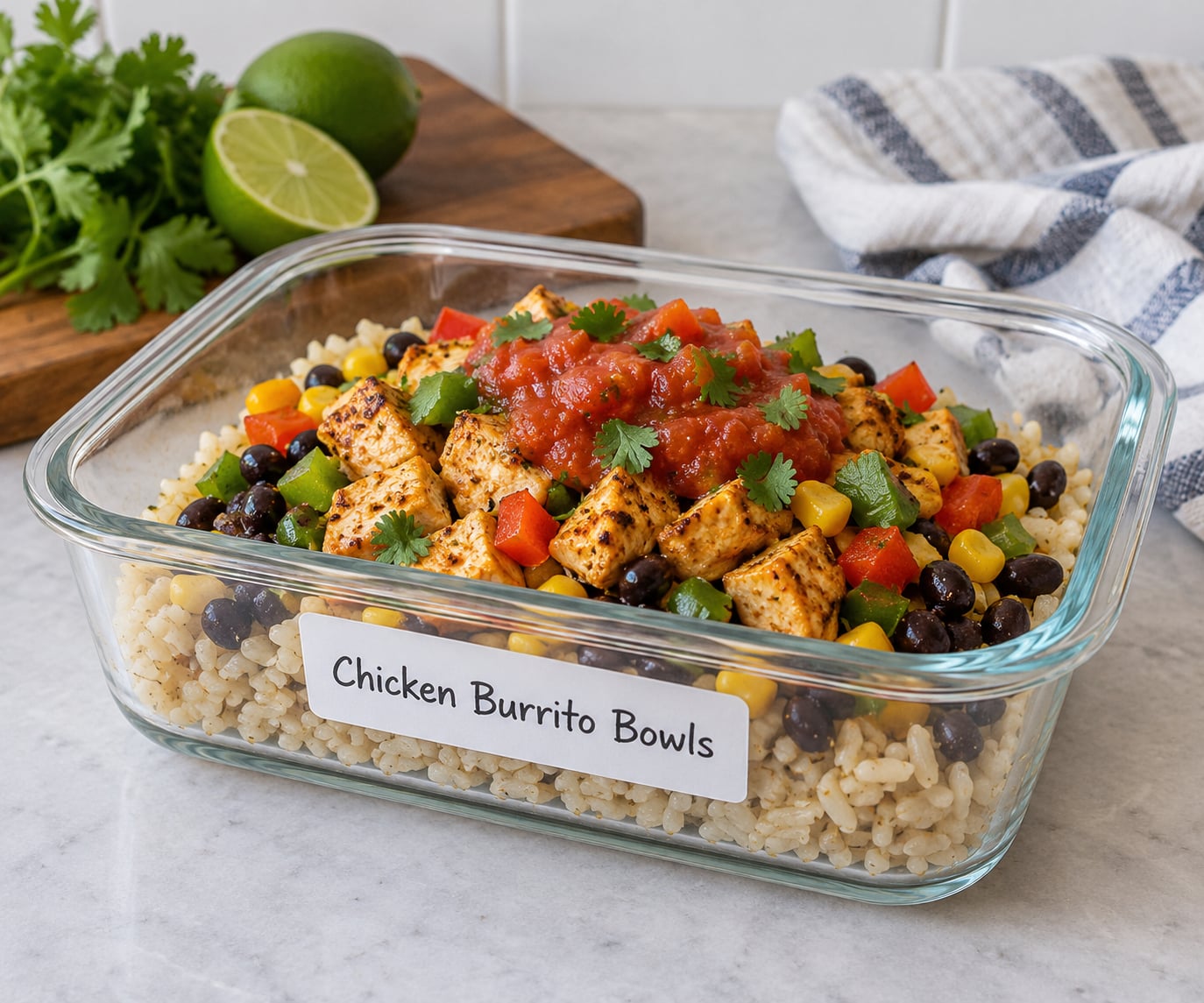
Chicken burrito bowls are the most forgiving freezer meal prep idea because almost nothing in them turns to mush. The usual build is cooked chicken over rice, with black beans, corn, peppers, and salsa on top.
For portioning, I cook a batch of rice and a tray of chicken, then fill two-cup containers: about 1 cup rice, 3 to 4 ounces of diced chicken, a tablespoon or two of beans, and corn. I leave the salsa out and add it fresh, because salsa goes watery after thawing and it is the one part that never needs reheating anyway.
To freeze safely, spread the cooked rice on a tray to cool quickly, then move it into shallow containers. Leave about half an inch of headspace, since rice and beans expand slightly as they freeze. When reheating, cover loosely and microwave until the center reaches 165°F / 74°C, stirring halfway through so the cold center heats evenly.
How to Turn This Freezer Meal Prep Idea Into a Repeatable System
Batch cooking works when the steps are the same every time, so the whole job takes about an hour once you have done it twice. Cook, cool fast, portion, label, freeze.
- Cook a full batch. One sheet pan of chicken, one pot of rice, one pan of roasted vegetables. Nothing needs a special recipe.
- Cool promptly. Spread food on shallow plates or sheet pans and get it into shallow containers within two hours. A deep bowl of hot food cools its center slowly.
- Divide into single servings. Shallow containers cool faster and reheat more evenly than one deep dish you have to split later.
- Label with the dish and date. A dry erase marker on masking tape works, or masking tape on the lid. Write the reheat instruction too.
- Freeze flat, then stack. Laying containers flat in the freezer for the first few hours reduces ice, and stacking saves shelf space.
- Keep refrigerated leftovers for 3 to 4 days max. Anything older than that belongs in the freezer or the trash, not the fridge.
Container choice matters more than people expect. Glass handles oven and microwave reheating and does not absorb odors, while heavy-duty plastic is lighter and cheaper for large batches. Our meal prep container guide compares the sizes that fit a two-serving portion.
2. Turkey Meatballs with Pasta
Turkey meatballs with pasta freeze best when you store the components separately. Sauce-coated pasta goes a little soft in the freezer, and meatballs keep their texture much longer on their own.
Cook a tray of meatballs and a pot of sauce, then build two-meal portions: about 12 meatballs and 1.5 cups of sauce in one container, and a cooked cup or two of pasta in another. Thaw both, pour the sauce over the pasta, and warm the meatballs alongside.
Reheat the meatballs until they reach 165°F / 74°C in the center and heat the sauce until it steams and bubbles across the surface. If you freeze everything together in one container on a busy week, it still works, just expect softer noodles.
3. Chili Mac
Chili mac is a one-pot meal that turns into several freezer dinners without any extra technique. Brown ground beef or turkey, stir in elbow pasta, diced tomatoes, peppers, beans, and chili powder, then finish with cheese.
A full pot gives you four to six two-cup portions. Add the cheese before freezing rather than after, so it melts into the sauce during the reheat.
Cool it in shallow containers, leaving headspace. From frozen, cover and microwave on high for two to three minutes, stir, and repeat until everything is thoroughly hot throughout. Check the center of the portion reaches 160°F / 71°C if it contains ground meat.
4. Salmon Rice Bowls
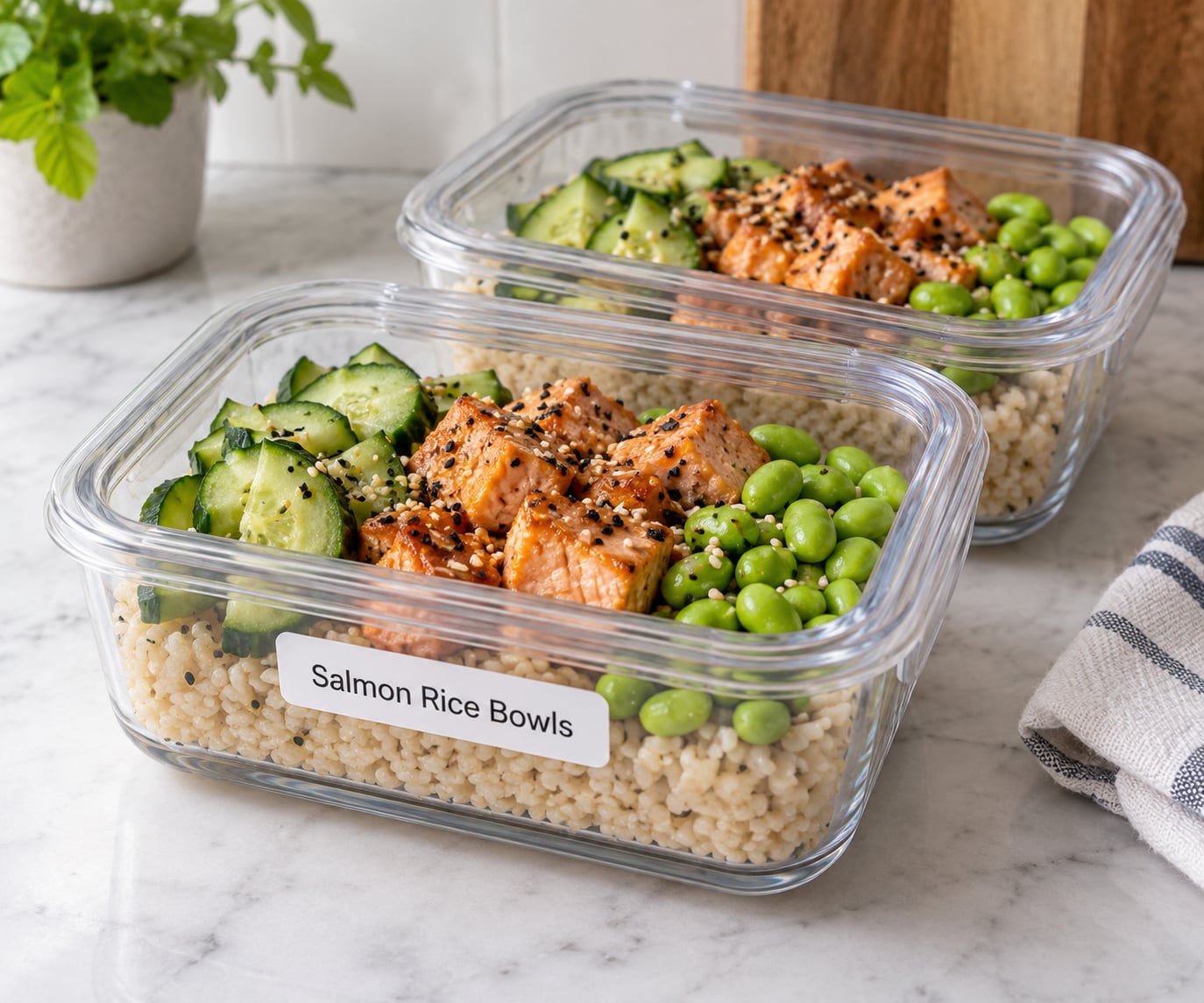
Salmon rice bowls are the lighter option on this list and the one that needs the most care. Cooked fish dries fast, so the fix is portioning salmon and rice apart whenever you can.
Cucumber, shredded cabbage, and edamame hold up well. Skip tomatoes and anything with a watery dressing, and add the sesame dressing fresh after reheating.
Reheat at 50% power rather than full, so the salmon heats without splitting. Cooked fish should reach 145°F / 63°C in the thickest part. If the rice is frozen in a separate compartment, cover it loosely; a sealed container makes the rice dry.
5. Vegetable and White Bean Soup
Soup is the least demanding thing to freeze and the hardest to ruin. Simmer tomatoes, carrots, celery, onion, and cannellini beans with any stock you have, and throw in kale or spinach at the end.
Season variations come free: cumin and lime for a southwest bowl, Italian herbs and a Parmesan rind for a heavier version, curry powder and ginger for a warming one.
Freeze in single-serving pint containers. Soups and stews thicken as they sit frozen, so stir in a quarter cup of water or stock before reheating. From frozen, heat on the stovetop or in the microwave until steaming hot all the way through, stirring to even out the hot spots.
6. Pulled Chicken Sandwiches
For pulled chicken sandwiches, freeze the chicken and the sauce, never the assembled sandwich. A frozen bun goes stale and then goes weird, and a wet bottom half is worse than no sandwich at all.
Shred two chicken breasts into a container and add half the sauce, saving the other half in a small freezer bag or ice cube tray. To eat: warm the chicken with a splash of the sauce until it reaches 165°F / 74°C, then pile it onto a toasted bun and add the rest of the sauce fresh.
A two-sandwich serving is about 5 ounces of shredded chicken and a quarter cup of sauce. If you are prepping sandwiches for the week rather than freezing them, our guide on meal prepping sandwiches without soggy bread covers the same separation trick for the fridge.
7. Turkey and Sweet Potato Chili
Ground turkey, sweet potato, beans, tomatoes, and chili powder make a mildly spiced chili that freezes beautifully. Every ingredient already holds its shape and flavor after thawing.
A two-meal portion is roughly 2 cups, which is enough for two bowls with rice, avocado, or a salad alongside. Dice the sweet potato small so it cooks through in the same time as everything else.
Reheat covered, stirring every minute or two, until the center of the portion reaches 165°F / 74°C. If the chili looks thick, add a splash of water. Freezer portions run a little drier than fresh ones because of the ice crystals that form and melt.
8. Spinach and Ricotta Lasagna
A small spinach and ricotta lasagna gives you a portion-controlled freezer dinner, and it is the most hands-on item here. The texture depends on draining the ricotta well and using a watery sauce like marinara rather than a cream sauce.
Whole milk ricotta, squeezed in a towel for ten minutes, is the difference between a creamy layer and a soupy one. Sauté spinach with a little garlic until the water cooks off.
Assemble unbaked in single-serve dishes, cover loosely, and freeze. You can also bake it first, which sets the structure and makes it firmer after reheating. Thaw in the refrigerator overnight if you can, or go from frozen to oven at 350°F covered until the center is hot through and bubbling at the edges. Use the thermometer, since the middle can stay cool while the edges look done.
9. Breakfast Egg Muffins
Egg muffins are the reason I stopped skipping breakfast on school mornings. Beat eggs with chopped spinach, bell pepper, cheese, and a little milk, then bake in a greased muffin tin until they just set.
Cool them on a rack in the tin for ten minutes before popping them out and freezing. Skipping that step traps steam and makes the tops rubbery.
A serving example is two muffins alongside fruit or a handful of nuts. Reheat one at a time in the microwave for 40 to 60 seconds, or use the microwave’s egg setting if yours has one. They are safe once the center reaches 165°F / 74°C, since the eggs need to reach that temperature regardless of how set the outside looks.
10. Breakfast Burritos
Breakfast burritos are essentially scrambled eggs with black beans, diced potatoes or peppers, cheese, and salsa, rolled up and frozen. Scrambled eggs hold together better than fried eggs, which turn rubbery once thawed.
Wrap each burrito individually. Foil works, as do small freezer bags, and wrapping first prevents the tortillas from sticking to whatever is frozen next to them.
For a microwave dinner, put the burrito on a plate or in a microwave-safe cup and microwave from frozen for two minutes, turning once, until the center hits 165°F / 74°C. A move to the refrigerator overnight is the better option when you have eight hours, because reheated-from-frozen tortillas get tough at the edges.
11. Sheet-Pan Chicken and Vegetables
Roast chicken and sturdy vegetables together and you have the lowest-effort freezer meal on this list. One pan of chicken thighs and vegetables yields four to six servings with almost no assembly.
Broccoli, carrots, and potatoes roast and reheat well. Skip asparagus, broccoli rabe, and leafy greens, which go soft and dull the moment they thaw.
Divide into glass dishes and cover. Reheat in the oven at 350°F with a splash of water, covered, until the chicken reaches 165°F / 74°C in the thickest part and the potatoes are hot in the center. Or thaw overnight and microwave, which works fine if the portion is small. Vegetables reheat better on a sheet pan, so giving them room rather than burying them in a pile helps.
12. Lentil and Vegetable Curry
A lentil and vegetable curry is the plant-based option and the cheapest one per serving here. Red or brown lentils, any combination of vegetables, tomatoes, and coconut milk give you a base you can season differently every batch.
Choose the consistency before you freeze. A thick curry reheats like the jarred kind you scoop, while a brothy one reheats into a soup. There is no wrong choice, but decide now so you know what to add when you reheat.
A two-meal portion is about 2 cups. Warm it covered with a splash of water or stock if it has thickened, and keep stirring until steam rises and the center is hot all the way through.
If you want a lighter lunch that holds up until the afternoon, our comparison of sandwich vs salad vs grain bowl for meal prep covers how each one behaves after a morning in a fridge or a freezer.
Frequently Asked Questions
How long can freezer meals stay frozen?
Frozen cooked meals stay safe to eat for as long as they stay frozen, but quality drops over time. For the best taste and texture, use cooked frozen meals within about 2 to 3 months. Soups, chilis, and curries hold up longer than pasta or rice dishes. Label every container with the date you froze it, and pull the oldest ones forward first so you use them before they fade.
Should I cool freezer meals before putting them in the freezer?
Yes, and cool them quickly. Divide a big pot into shallow containers so heat leaves the food faster, and get it covered and into the freezer within about two hours of cooking. A deep, warm dish dropped into a warm freezer takes hours to cool its center, and that slow pass through the danger zone is where bacteria multiply. Spread rice on a tray if you are in a hurry.
What containers are best for freezing prepared meals?
Glass containers are the most flexible choice because they go from freezer to microwave to oven and do not hold odors. Heavy-duty plastic is lighter, stacks better in a small freezer, and costs less, which makes it good for large batches. Freezer bags save the most space and suit liquids like soup, but they sit flat and thaw faster. Whichever you use, leave headspace and label with a dry erase marker or tape.
Can I reheat a freezer meal from frozen?
You can reheat most meals straight from frozen, and it is the safest option because the food never sits in the danger zone while thawing. Cover the container loosely, microwave on high in two or three minute bursts, and stir between each burst so the center heats evenly. Use the low setting for fish and reheats from thawed for pasta. Check the temperature in the middle, where cold spots hide.
How do I safely thaw a frozen meal?
Move the container to the refrigerator and let it thaw overnight, which is the safest method and gives you the best texture. Cold-water thawing works too: seal the food, submerge it in cold water, and change the water every 30 minutes. Never thaw on the counter, where the outside enters the danger zone while the center is still frozen. If you have skipped thawing, cooking from frozen in the microwave is fine.
Conclusion
Start with one meal you already eat and know how to cook, like chili mac or sheet-pan chicken and vegetables. Make one manageable batch, cool it in shallow containers, label the date, and freeze the individual portions.
Only buy more containers once you have seen what actually gets eaten. Most freezer meal prep ideas fail because of over-prepping, not under-prepping. Pick the two or three dishes that disappear in your house, cook those on repeat, and leave the rest for another Sunday.