
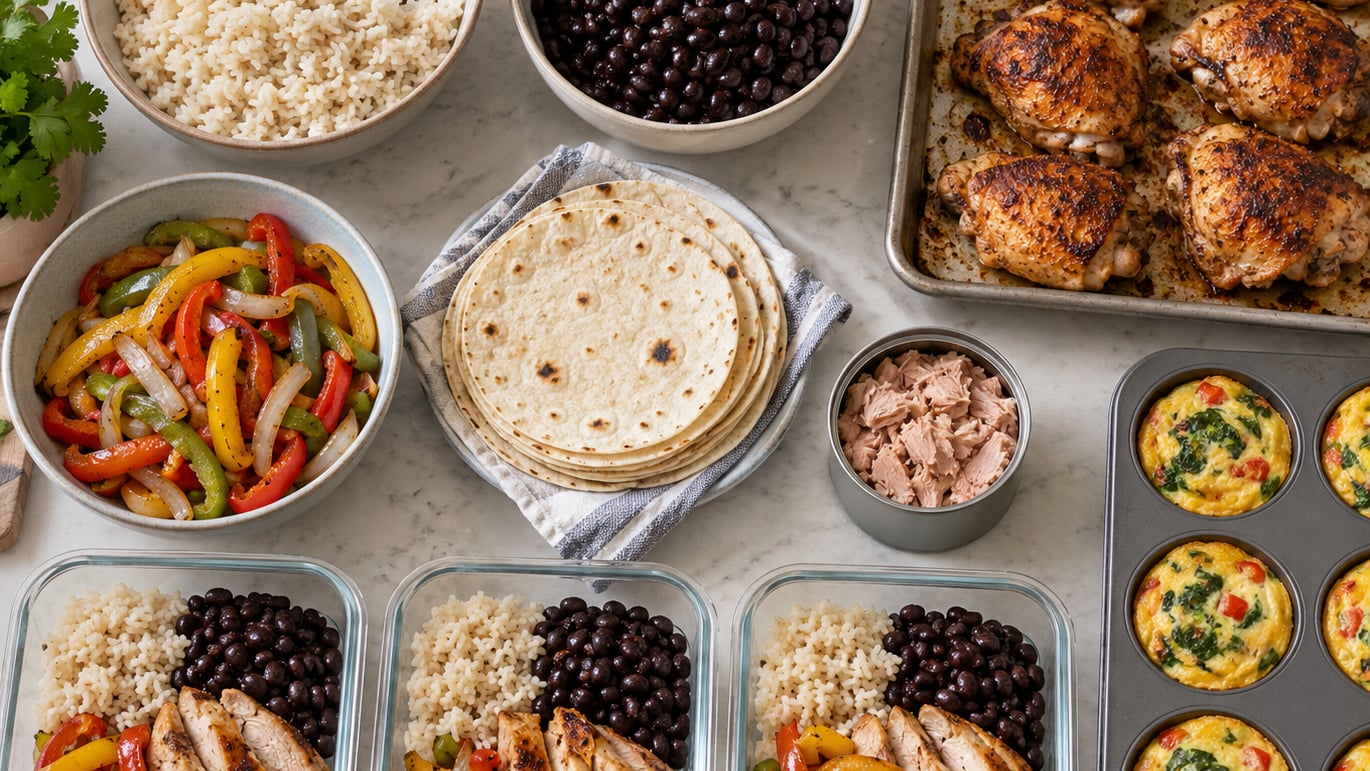
The cheapest way to fill a week of lunches and dinners is to cook two or three things in large batches on one afternoon, then change how they are served. Cook a tray of chicken thighs, a pot of rice, a pot of beans and a bag of frozen vegetables, and you have the raw material for most of the week without buying a recipe book.
That is the whole idea behind most cheap meal prep ideas for the week: the ingredient does not change much, the format does. The same shredded chicken becomes a burrito bowl on Monday, a wrap on Tuesday and a salad on Wednesday. Rotate the format and the repetition stops feeling like repetition.
Below are twelve ideas that work on a tight budget, need nothing more than an oven, a stove and a few containers, and hold up for four days in the fridge. Most of them freeze, so a batch can stretch to a full seven days.
A few habits make the whole plan cheaper. Buy store-brand versions of rice, beans, tortillas and canned goods, since the difference in a pantry staple is small but adds up over a month. Buy frozen vegetables instead of fresh, because frozen is usually picked and frozen the same day it was picked and costs less per serving. Cook grains in bulk, since a single pot of rice becomes bowls, wraps, stuffed peppers and fried rice. And always cook more than you think you need, because the leftovers become two or three unplanned meals.
Table of Contents
- Cheap Meal Prep Ideas for the Week at a Glance
- 1. Budget-Friendly Chicken Burrito Bowls
- 2. Bean and Rice Stuffed Peppers
- 3. Tuna and White Bean Salad Sandwiches
- 4. Sheet-Pan Fajita Chicken
- 5. Lentil and Vegetable Soup
- 6. Turkey and Hummus Wrap Cups
- 7. Cheesy Baked Pasta
- 8. Chickpea and Vegetable Curry
- 9. Breakfast Egg Muffins
- 10. Tuna Potato Salad Bowls
- 11. Black Bean and Corn Quesadillas
- 12. Leftover Roast Chicken and Rice Bowls
- Frequently Asked Questions
- How long does meal prep last in the fridge?
- What is the cheapest set of foods to buy for a week of meal prep?
- How do I stop meal prep from getting boring?
- Can I freeze meals instead of cooking every day?
- Do I need special containers for meal prep?
- Is it cheaper to meal prep or to cook something quick each night?
- Conclusion
Cheap Meal Prep Ideas for the Week at a Glance
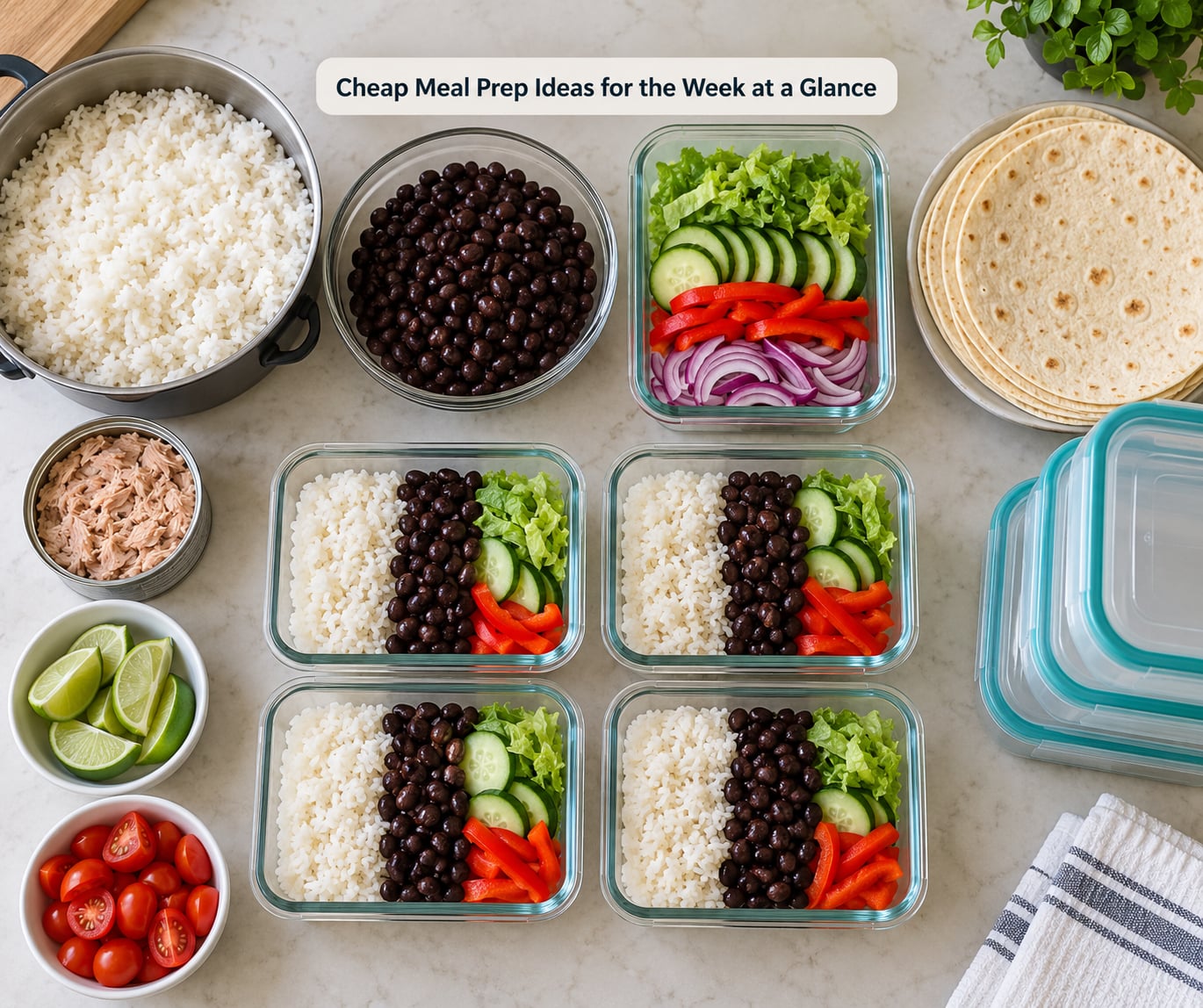
Here is how these twelve ideas compare before you commit to a prep day.
| Idea | Main protein or base | Cost-saving strategy | Best prep timing | Lunch or dinner |
|---|---|---|---|---|
| Chicken burrito bowls | Chicken thighs | One tray of thighs feeds four to five servings | Sunday, 45 minutes | Both |
| Bean and rice stuffed peppers | Canned beans and rice | Meatless, so the protein is nearly free | Sunday, 35 minutes | Dinner |
| Tuna and white bean sandwiches | Canned tuna | No cooking at all, shelf-stable protein | Any night, 10 minutes | Lunch |
| Sheet-pan fajita chicken | Chicken thighs | One pan, one wash-up, no separate starch | Sunday, 30 minutes | Both |
| Lentil and vegetable soup | Dried lentils | Dried legumes cost a fraction of canned | Sunday, 40 minutes | Both |
| Turkey and hummus wrap cups | Deli turkey | Uses deli ends and leftover vegetables | Sunday, 20 minutes | Lunch |
| Cheesy baked pasta | Pasta and beans | Beans add protein without a meat budget | Sunday, 40 minutes | Dinner |
| Chickpea curry | Canned chickpeas | Pantry-only, no fresh protein needed | Sunday, 30 minutes | Both |
| Egg muffins | Eggs | One dozen eggs becomes twelve portions | Sunday, 30 minutes | Breakfast |
| Tuna potato salad bowls | Canned tuna and eggs | Uses potatoes already in the pantry | Sunday, 30 minutes | Lunch |
| Black bean quesadillas | Canned black beans | Freezes flat, reheats fast | Sunday, 25 minutes | Both |
| Leftover roast chicken bowls | Leftover poultry | Buys you a second and third meal for free | Any night, 15 minutes | Both |
1. Budget-Friendly Chicken Burrito Bowls
This is the workhorse of the week. Chicken thighs cost less than breasts and are far more forgiving about overcooking, which matters when you are cooking a big tray and walking away from it.
Season a tray of thighs with cumin, chili powder, garlic powder, salt and whatever hot sauce you have. Roast them at 425°F until the internal temperature hits 165°F, which takes about 25 to 30 minutes. Cook a pot of rice while the oven runs.
Portion rice first, then chicken, then a spoonful of canned black beans, corn, salsa and whatever vegetable is in the freezer. Keeping the wet ingredients in a separate small container is what stops the rice turning to paste by Wednesday.
Cost-saving substitution: leftover chicken from a roast or a rotisserie chicken works fine here. Shred it, season it with the same spices, and skip the oven entirely.
For storage and reheating, keep bowls in the fridge for up to four days and add a damp paper towel to the rice container when reheating in the microwave. The bowls freeze, but the corn gets a little soft, so freeze portions you will eat later in the week and keep the fresh ones in front.
2. Bean and Rice Stuffed Peppers
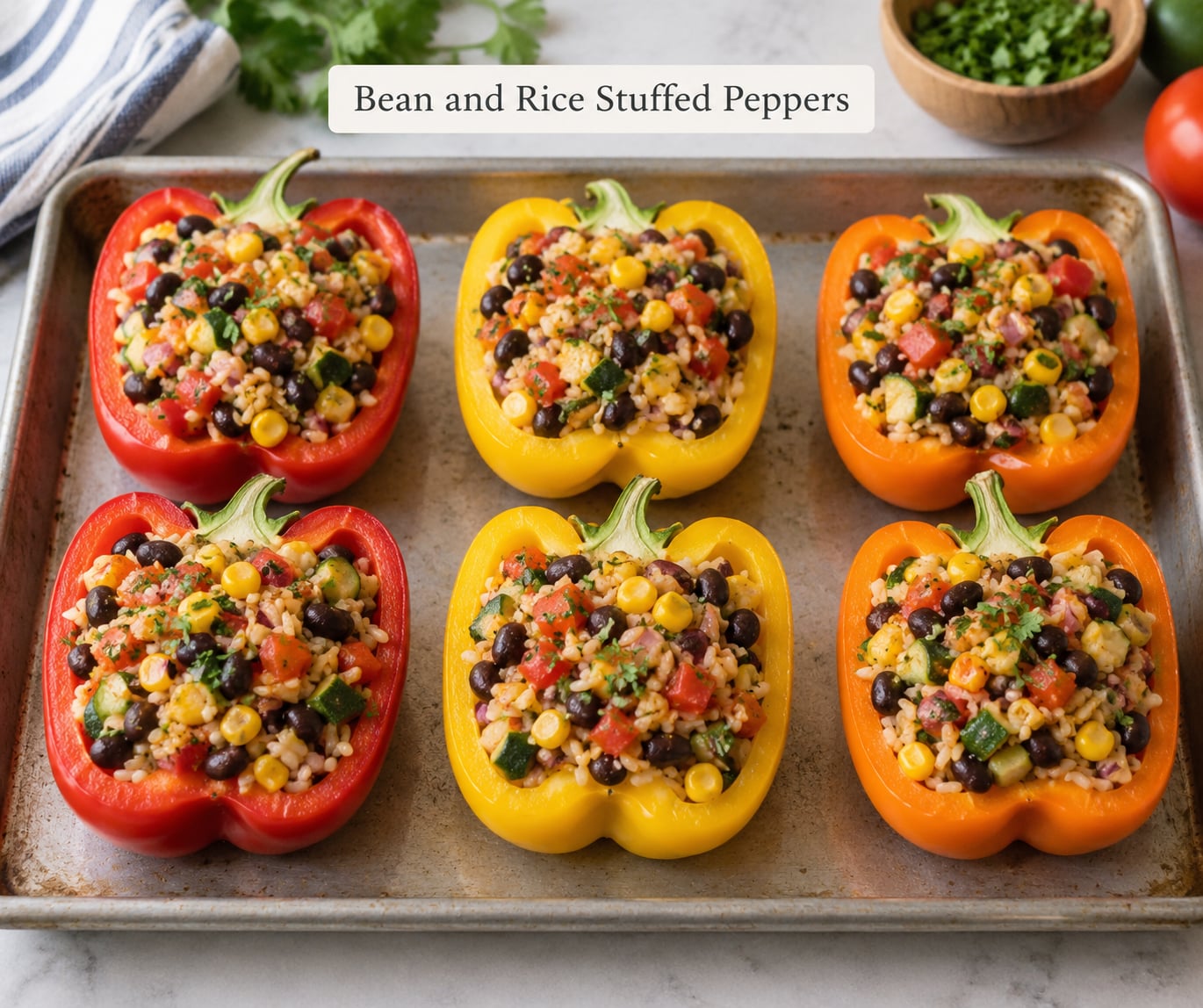
Stuffed peppers look like effort and cost almost nothing. The protein comes from a can of beans, which is one of the cheapest things in the grocery store and one of the most useful in a pantry.
Cook rice with diced onion and a splash of the bean liquid. Drain a can of beans and stir them in with corn, any chopped vegetables, and cumin and garlic. Fill halved bell peppers, top with cheese if you have it, cover the tray with foil and bake at 375°F for about 30 minutes. Uncover for the last 10 minutes if you want the tops to brown.
Refrigerate the whole peppers rather than cutting them, because the skin holds the shape and stops the filling drying out. They keep four days covered in the fridge.
Freezing is a real option but do it in assembled form, tray and all, and thaw overnight in the fridge. Reheat a single pepper in the oven at 350°F for 20 minutes with a spoonful of stock or water in the bottom of the dish, and the rice will steam rather than turn rubbery.
Microwaving the filling on its own is the fast alternative when you are out of time, and it reheats in two minutes flat.
3. Tuna and White Bean Salad Sandwiches
This is the cheapest lunch in the list and it needs no cooking at all. Canned tuna and a can of rinsed white beans mashed together with mustard, a little mayonnaise or Greek yogurt, diced celery and a small onion makes a filling that costs a fraction of deli sandwich costs and keeps better than tuna salad on bread alone.
Portion the filling into small containers rather than assembling sandwiches on Sunday. A sandwich made Monday morning is a completely different sandwich from one made on Thursday, and the lettuce stays crisp because it never sat in the dressing.
To stop lunches going soggy, pack the filling and the bread separately, or wrap the sandwich in foil rather than plastic. If you want to know the technique in detail, our guide to meal prep sandwiches without soggy bread covers the moisture problem properly.
Swaps worth trying: Greek yogurt for mayonnaise to cut the fat, chopped pickle instead of onion for a sharper taste, or a spoon of chopped pickle brine in place of mustard. Store the filling in the fridge for up to three days and keep the bread in a bag at the counter so it never gets soggy in the first place.
4. Sheet-Pan Fajita Chicken
Fajitas are a good budget meal because one pan does the protein, the vegetables and nearly the whole dinner. Slice chicken thighs thin, toss them with a cheap fajita seasoning blend, and spread them on a large sheet pan with sliced peppers and onions.
The one mistake that ruins sheet-pan fajitas is watery vegetables. Cut the peppers and onions thick, pat them dry, and use a very thin layer of oil rather than pouring it on. Crowding the pan steams the vegetables, and they release water onto the chicken.
Cook a batch of eight thighs and two peppers, and you have four generous portions. Serve them over rice, spoon salsa on top, and add a spoon of plain Greek yogurt or sour cream if you want something cool against the spices.
For storage and reheating, keep it in the fridge up to four days. Reheat the chicken and vegetables on a hot skillet for four or five minutes rather than microwaving, which keeps the peppers from turning to mush. A hot skillet also revives the skin on leftover chicken, which is why this batch is worth cooking in bigger quantities than you think you need.
5. Lentil and Vegetable Soup
Soup is the cheapest way to feed a week because the cost is almost entirely in the vegetables and the pot gets bigger as you add liquid. Dried lentils are far cheaper than canned and cook down to a thick, filling pot in about 30 minutes with no attention.
Start with onion, carrot and celery in a big pot, add lentils and broth, and let it simmer. Add canned tomatoes, a bay leaf and any frozen vegetables you have. A splash of vinegar at the end wakes the whole pot up more than you’d expect.
This is the meal to cook in double quantity. Freeze single portions in containers laid flat so they stack like books, then move them to the fridge the night before you need them to thaw.
To stretch servings later in the week, serve it over leftover rice, add a handful of greens until it wilts, or put a slice of bread on top. Those three additions turn the same pot into three different meals, which is the cheapest variety trick available.
Soup keeps four days in the fridge and three months in the freezer, so it is the safest batch to make when you are unsure how the week will go.
6. Turkey and Hummus Wrap Cups
Wrap cups solve the lunch problem because you assemble them in the morning and eat them cold at your desk, with no microwave and no reheat. Spread hummus on a tortilla, add sliced deli turkey, then top with cucumber, spinach and shredded carrot.
Crispness is everything here. Store the cut vegetables separately from the hummus and roll on Thursday, not Sunday, and the wrap still tastes fresh. If you are rolling in advance, put the spinach closest to the hummus where moisture collects least, and leave the carrot on top.
Rotating the filling is what keeps this from going stale. Monday: turkey, cucumber, shredded carrot. Tuesday: turkey, leftover roasted peppers, arugula, a little grated cheese. Wednesday: swap the turkey for leftover chicken from the burrito bowls with cabbage and a drizzle of hot sauce. Thursday: hummus, roasted vegetables and olives if you are skipping meat. Friday: whatever is left in the crisper.
These keep two days in the fridge before the vegetables soften, so they are a mid-week add rather than a Sunday batch. If you want a container that will not leak in a bag, see our pickings for meal prep containers that do not leak.
7. Cheesy Baked Pasta
Baked pasta is a pantry dish that stretches a small budget because the sauce is a can of tomatoes and the protein can be a can of beans stirred in before it goes in the oven. Boil the pasta for two minutes less than the box says, drain, then mix with jarred sauce, a drained can of beans, and any frozen vegetables.
Top with whatever cheese you have and bake at 375°F for 25 minutes. Using less water in the sauce than the jar calls for keeps it from turning watery, and adding the beans in the oven rather than on the stove keeps them from going mushy.
Batch it in a single large dish rather than four small ones, and you can scoop it into containers. It keeps four days in the fridge and freezes in single portions for a month.
Reheating is the one place this dish goes wrong. Pasta that dries out in the fridge needs liquid to come back, so put a spoonful of water or stock in the container and microwave covered for two minutes, or heat it in a covered pot on the stove. Tofu cubes or a chopped block of tofu added before baking is the other cheap protein route, and it holds its shape better than you would expect.
8. Chickpea and Vegetable Curry
Chickpea curry is the most forgiving thing in this list. Two cans of chickpeas, one can of tomatoes, a chopped onion and a few spoonfuls of curry powder make a pot that tastes like effort. Add frozen mixed vegetables in the last ten minutes so they keep some texture.
If you do not have curry powder, a paste works, and so do cumin, coriander, turmeric and a little chili powder in roughly equal parts. Fresh ginger, if you have it, is worth adding. If you have none of these, a spoonful of chili flakes and a dash of cinnamon will still produce something with depth.
Serve over rice for the cheapest plate, or over cauliflower rice if you want to stretch the rice further. A spoonful of plain yogurt stirred in at the end softens the heat and thickens the sauce without costing much.
Portion into containers and keep four days in the fridge. This one freezes particularly well because the sauce protects the vegetables, so a double batch covers a full week and survives a freezer without turning to mush.
9. Breakfast Egg Muffins
Breakfast is where most meal prep budgets quietly go, and egg muffins are the fix. Beat eggs with salt, pepper and whatever you have, then pour them into a greased muffin tin with chopped frozen spinach, diced bell pepper, shredded cheese, or leftover meat.
A standard 12-cup tin makes twelve muffins, which is three breakfasts for four people or six for a couple. A second tin is worth buying before you start, because one tin means two rounds of prep.
They keep five days in the fridge, so make them mid-week rather than all on Sunday if you want them at their best. They also freeze, though the vegetables go a bit limp on thawing, so freeze the ones with plain egg, cheese and pepper for the end of the week.
Reheat two at a time in the microwave for 40 seconds, or warm a whole tray in a low oven while the kettle boils. Reheating from fridge-cold is the mistake here, and a few minutes in a warm oven or a covered non-stick pan fixes it.
10. Tuna Potato Salad Bowls
This is a lunch built entirely from things you probably already have. Boil potatoes, cool them properly, and cut them up with canned tuna, peas, carrots, hard-boiled eggs and a simple dressing of mayonnaise, mustard, a splash of vinegar, salt and pepper.
Cooling the potatoes is not optional. Spread them in a single layer and refrigerate for at least an hour before dressing them, because warm potato absorbs dressing and turns the salad watery. It is the same reason restaurant potato salad is served cold.
To keep the salad from separating, dress it close to when you eat it. Store the components separately, with the eggs and the potato mixed lightly, and stir the dressing through at lunch.
Leftover vegetables do the variation work here. Add chopped cucumber, celery, or the last of a bag of frozen peas and carrots. Swap the tuna for leftover chicken or a hard-boiled egg if you have already eaten a lot of fish this week.
This keeps three days in the fridge dressed, four if the dressing stays separate. It travels well and does not need reheating, which makes it a good choice for a day you are working from a coffee shop.
11. Black Bean and Corn Quesadillas
Quesadillas are inexpensive because the shell does most of the work. Mash a can of black beans with cumin and a little salsa, add corn, and scatter it over tortillas with cheese. Optional chopped peppers or leftover shredded chicken turn it into more.
Cook in a dry skillet over medium heat for about three minutes a side, until the outside is spotted brown and the cheese has melted. A lid on the skillet for the first minute softens the filling so it spreads instead of staying in one spot.
Batch assembly is fast: build a tray of eight, and the total active time is about 25 minutes. They reheat in a skillet for two minutes or at 350°F in the oven for 10 minutes. Reheating in a skillet is what keeps the shell crisp, and it is faster than the oven for a single portion.
They freeze flat, separated by parchment or a slice of wax paper, and defrost well in a skillet. Portion them for lunch or a quick dinner, and add a side salad or a handful of chips to make the plate feel finished.
12. Leftover Roast Chicken and Rice Bowls
This is the meal that makes the week affordable, and it is the reason to cook more chicken on Sunday than you currently plan to eat. Leftover roast chicken or turkey over rice with vegetables is not a compromise. It is a complete bowl for a fraction of the cost of a fresh protein.
Store cooked poultry in the fridge for up to four days and use it within that window. If you are planning to eat it late in the week, freeze the bowl rather than the bare chicken, and thaw it overnight in the fridge.
Reheat with a splash of water or stock in the container and microwave covered for two minutes, or heat it in a skillet with a lid for four or five minutes. Dry reheated chicken is the reason people give up on leftovers, and adding liquid fixes it every time.
Monotony is the real problem with a week of leftovers, so rotate the format instead of the recipe. Day one: a rice bowl with salsa. Day two: a wrap with hummus. Day three: a salad with the rice as a grain, plus cucumber and any soft vegetables. Day four: fried rice in a hot pan, which is the best possible use of day-old rice. Day five: soup, where shredded leftover chicken goes into lentil or vegetable soup and adds protein for nothing.
Where cheap meal prep ideas for the week actually save the most
Across all twelve ideas, the money is saved in the same four places. You buy fewer proteins because one tray of chicken thighs appears in three different meals. You waste fewer vegetables because the ones that soften go into soup, curry or a wrap rather than the bin. You spend less on takeaway because the decision is already made before 6pm. And you buy fewer convenience items, because a can of beans costs a fraction of a prepared salad.
None of this requires a slow cooker, an air fryer or a full set of pans. One oven, one stove and a refrigerator shelf will carry the whole list. If boredom is the reason you have given up on meal prep before, the format rotation above is the fix, and our list of meal prep lunches that do not get boring by Thursday goes deeper on it.
Frequently Asked Questions
How long does meal prep last in the fridge?
Most cooked meals keep three to four days in the refrigerator at 40°F or below, which is why many people prep three or four days at a time and freeze the rest. Cooked poultry, cooked rice and reheated leftovers all use that window. Soups, curries and chilis actually improve on day two. If you are covering seven days, freeze the later portions on the day you cook rather than trusting the fridge.
What is the cheapest set of foods to buy for a week of meal prep?
Rice, dried beans and lentils, eggs, canned tuna, frozen vegetables, canned tomatoes, tortillas and rolled oats will carry a week on the smallest budget. Each is shelf-stable, keeps for months and turns into several different meals. Add one cheap fresh item, usually a bag of spinach or a head of lettuce, and you have everything you need for breakfast, lunch and dinner.
How do I stop meal prep from getting boring?
Rotate the format rather than the recipe. The same cooked chicken can be a rice bowl, a wrap, a salad, an ingredient in fried rice, or a handful of shredded meat stirred into soup. Same for a batch of rice, which becomes a bowl base, a stuffed pepper filling and fried rice. Changing how the food is served costs nothing, which is the cheapest variety available.
Can I freeze meals instead of cooking every day?
Yes, and for a week of food it is usually the better option. Freeze cooked rice, cooked beans, curries, soups, chilis, quesadillas and baked pasta in single portions, laid flat so they stack. Thaw in the refrigerator overnight rather than on the counter, and reheat until steaming all the way through. Salads, cut fruit and anything with raw crunch do not freeze, so keep those for the first three days.
Do I need special containers for meal prep?
You need lids that close and containers that hold liquid, but you do not need a matching set. Glass containers handle freezing and reheating best, plastic works well for vegetables, and any container that seals will keep a rice bowl from landing sauce in your bag. Wash them as you go rather than at the end of the week, since a sink full of lids is how most prep sessions get abandoned.
Is it cheaper to meal prep or to cook something quick each night?
Meal prep is cheaper mostly because it stops the midweek takeout run, not because the raw ingredients cost less. A tray of chicken thighs and a pot of rice feed five meals at a fraction of the cost of five restaurant dinners or delivery orders. If you already cook every night from scratch and waste nothing, the savings are smaller. Prep earns its keep when it replaces the decision you usually make at 6pm.
Conclusion
Start with two ideas, not twelve. Pick the burrito bowls and the lentil soup, buy the rice, beans, canned tomatoes, eggs and a bag of frozen vegetables, and cook both on the same afternoon while the oven is already on. Portion them into containers before you sit down, because portioning is the step that makes the rest of the week happen on its own.
Once that first batch works, add one more format per week rather than one more recipe. That is how cheap meal prep ideas for the week keep working after the novelty wears off.