
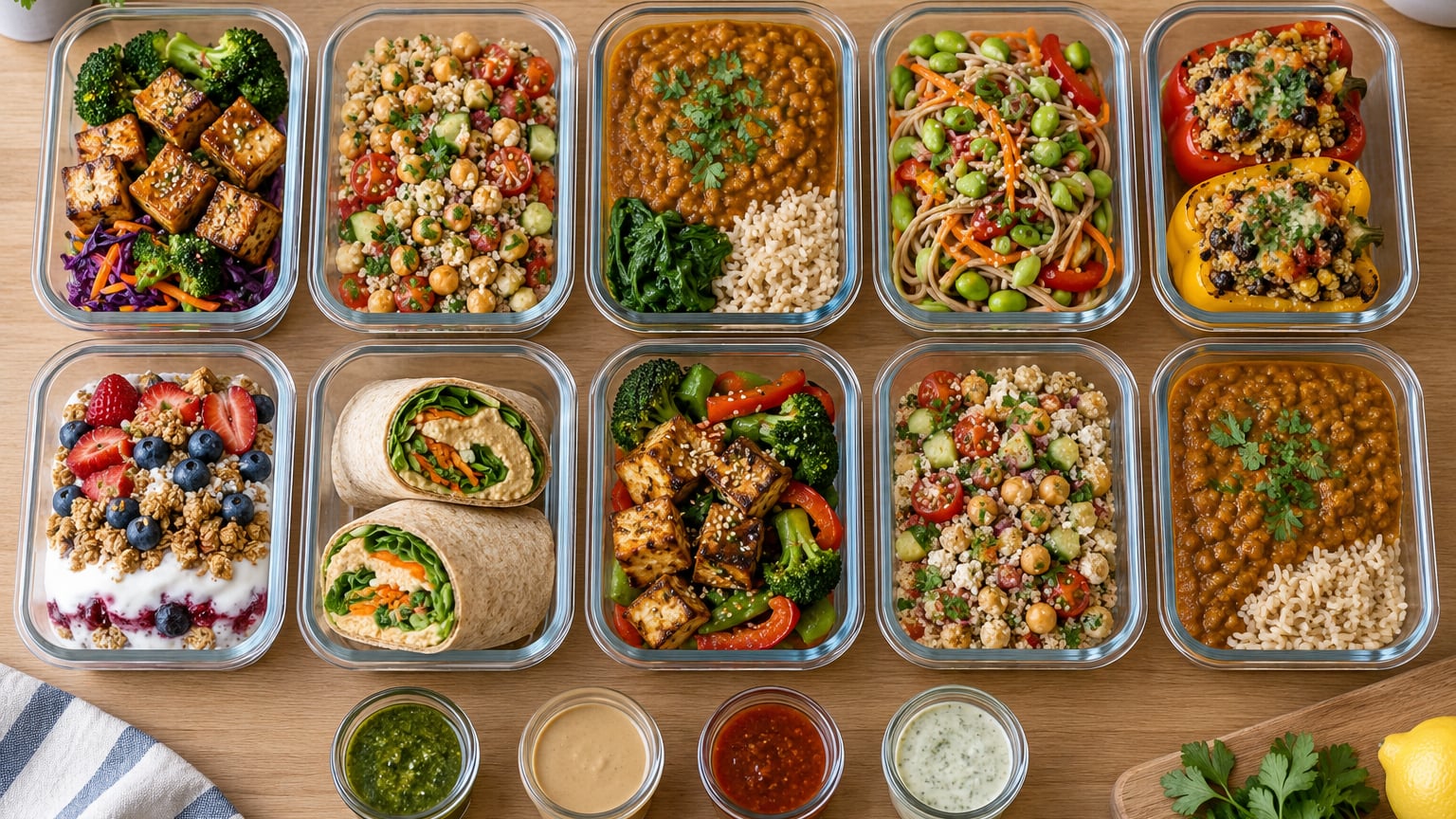
High-protein vegetarian meal prep ideas are batch-cooked meals built around tofu, tempeh, lentils, chickpeas, edamame, beans, eggs, Greek yogurt, cottage cheese and nut butters, portioned so each serving lands around 20 to 40 grams of protein and holds up in the fridge for three to five days. Below are ten of them, ordered by how little work they take on a Monday morning.
Every one of these was built for the same situation: you have about an hour on a Sunday, a fridge with room for a few containers, and a week of lunches or dinners that need to happen without you standing at the stove again.
The trick that makes vegetarian prep work is not fancier recipes. It’s components. Cook one grain, one pot of beans, one sheet pan of roasted vegetables and two sauces, then combine them differently on Tuesday than you did on Monday. That kills the boredom that sends people to the drive-through by Wednesday.
I’ve leaned on the list below for packed lunches, and the three-minute assembly at the end of each one is the part that actually keeps it realistic on a Thursday.
Table of Contents
- High-Protein Vegetarian Meal Prep Ideas at a Glance
- 1. Crispy Tofu and Brown Rice Bowls
- 2. Chickpea and Quinoa Power Bowls
- 3. Tempeh Lettuce Wrap Cups
- 4. Lentil and Sweet Potato Curry
- 5. Edamame Pasta Salad with Edible Peas
- 6. Black Bean and Cheese Stuffed Peppers
- 7. Greek Yogurt, Berry, and Seed Parfaits
- 8. Peanut Noodle Boxes with Edamame
- 9. Kidney Bean and Veggie Chili
- 10. Protein-Boosted Hummus and Veggie Sandwiches
- Frequently Asked Questions
- Conclusion
High-Protein Vegetarian Meal Prep Ideas at a Glance
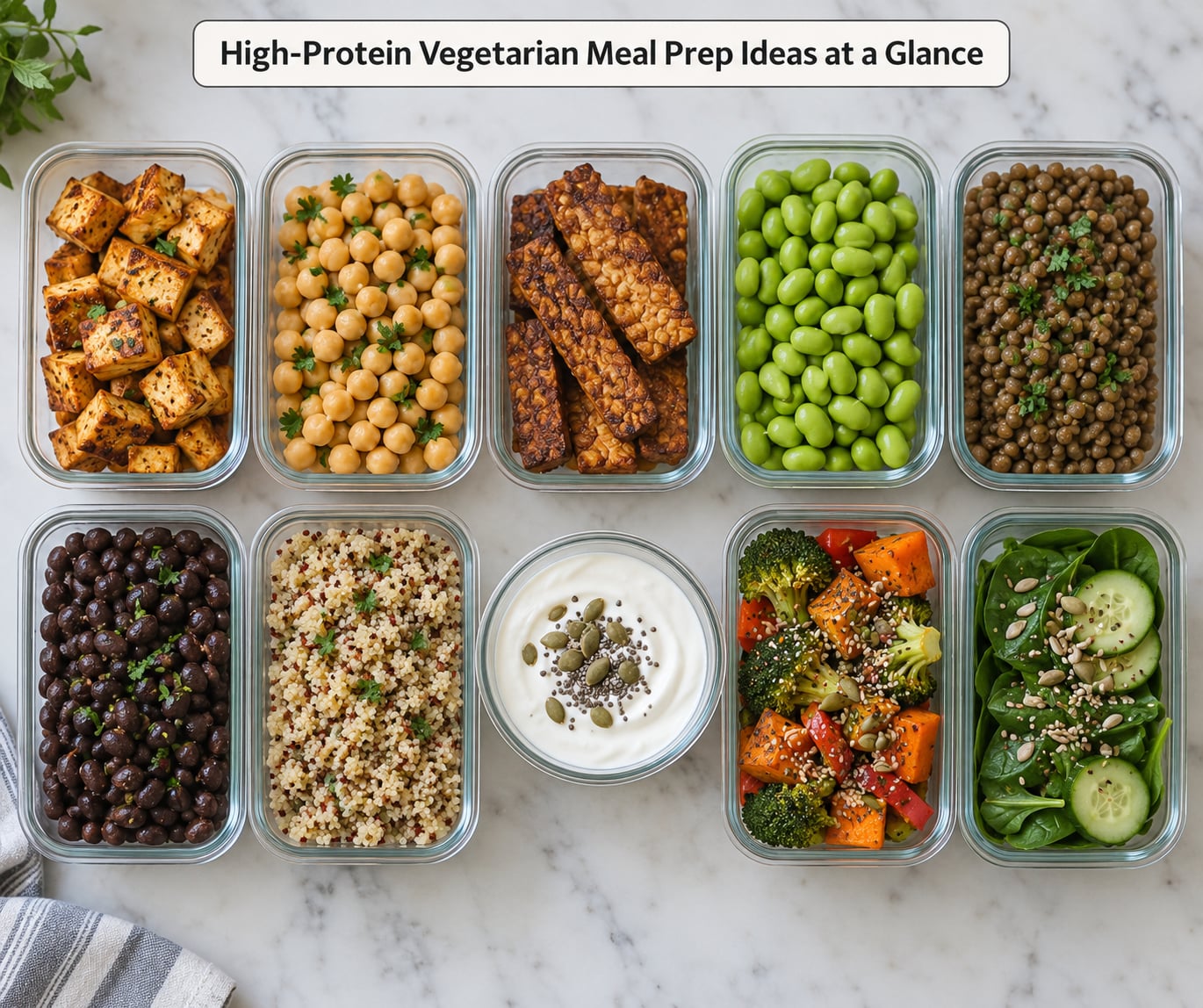
Ten options, ten different protein sources. Use this table to pick the one or two that fit your week before you shop.
| Idea | Main protein | Meal type | Prep effort | Best use |
|---|---|---|---|---|
| Crispy tofu and brown rice bowls | Tofu | Lunch bowl | Medium | Packed lunches that reheat well |
| Chickpea and quinoa power bowls | Chickpeas, quinoa | Lunch bowl | Low | Vegetables you already have |
| Tempeh lettuce wrap cups | Tempeh | Wrap | Medium | Lunches eaten in the first two days |
| Lentil and sweet potato curry | Lentils | Dinner | Low | One pot, several dinners |
| Edamame pasta salad | Edamame, peas | Lunch salad | Low | Cold lunches, no reheating |
| Black bean stuffed peppers | Black beans | Dinner | Medium | Freezer-friendly portions |
| Yogurt, berry and seed parfaits | Greek yogurt, seeds | Breakfast | Very low | Grab-and-go mornings |
| Peanut noodle boxes with edamame | Edamame, peanut | Lunch box | Medium | Lunches that travel well |
| Kidney bean and veggie chili | Kidney beans | Dinner | Low | Batch cooking, freezer meals |
| Protein-boosted hummus sandwiches | Edamame, tofu, chickpeas | Sandwich | Very low | Fastest lunch on the list |
1. Crispy Tofu and Brown Rice Bowls
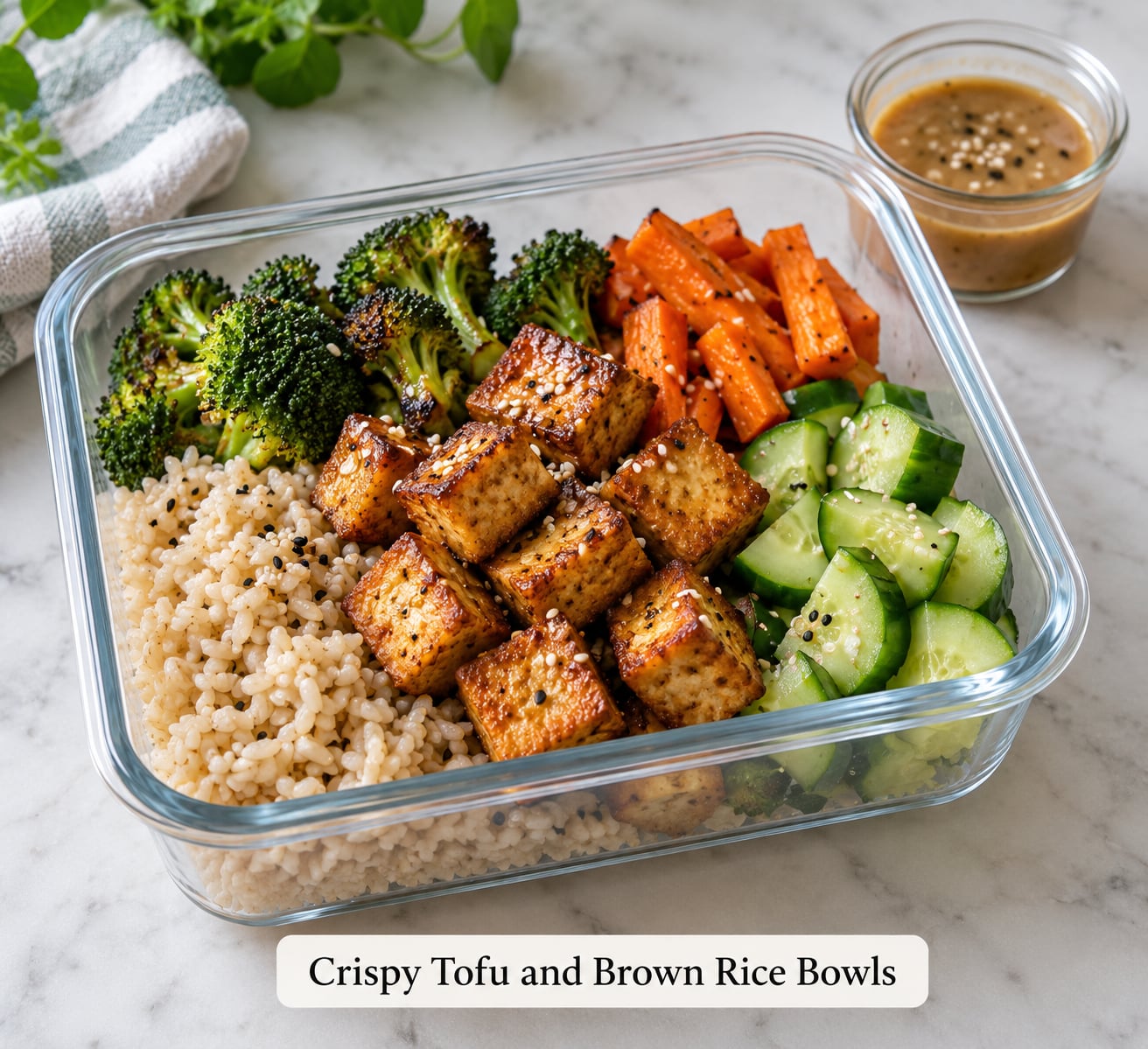
This is the bowl to make first if reheated tofu has disappointed you before. The fix is separation: dressing goes in its own cup, and you only add it when you’re ready to eat.
Press half a block of extra-firm tofu for 15 minutes, cube it, and toss it with cornstarch before it hits a hot sheet pan. Bake at 425°F for 25 minutes, flipping once, and the outside stays crisp enough to survive a microwave lunch on day three. Soy-ginger or sesame-ginger dressing, one tablespoon per container.
Keeping the bowl from going soggy by Wednesday
Store rice and dressing apart from the cucumber and any fresh herbs, and add those two at eating time. Pack the roasted broccoli and carrots loose around the tofu rather than under it, so steam has somewhere to escape.
Four to five days in the fridge. Reheat the tofu and rice for 90 seconds, then add the cold vegetables.
2. Chickpea and Quinoa Power Bowls
Chickpeas and quinoa together give you all nine essential amino acids, which is the pairing most people miss when they only eat beans all week. Cook a cup of dry quinoa, roast a tray of chickpeas and vegetables at the same time, and you have four lunches in about 35 minutes.
Whisk lemon-tahini dressing in a jar: tahini, lemon juice, a little garlic, water until it pours like thin cream. Keep it in a squeeze bottle or a small lidded cup so it stays emulsified.
Assemble greens on the bottom, then quinoa, then chickpeas and roasted vegetables. This one holds four days and travels fine without a microwave.
3. Tempeh Lettuce Wrap Cups
Crumbled tempeh gives you more protein per bite than most vegetables and it takes on sauce better than tofu does. Cook a pound of tempeh with soy, smoked paprika and a little maple syrup on a sheet pan for 20 minutes at 425°F, and it comes out chewy and browned.
Pack the filling in sturdy romaine leaves rather than soft leaf lettuce, since soft cups collapse by day three. Add a scoop of slaw, a spoonful of hummus or sliced avocado, and a lime-tahini sauce in a separate cup.
This one is a two-day meal. If you’re prepping five days of lunches, save this for Monday and Tuesday and put a chili or stuffed pepper on the back half.
4. Lentil and Sweet Potato Curry
Dried green or brown lentils simmer in about 25 minutes and cost almost nothing per serving. Dice sweet potato, onion and bell pepper, cook them down, add the lentils with coconut milk, tomato and your curry powder, and let it go for 20 more minutes. Finish with spinach at the very end.
Lentil curry thickens as it sits, so hold back a splash of water or coconut milk when you reheat. It reheats better than almost anything else on this list and freezes well in single portions.
Five days in the fridge, two to three months in the freezer. Make a double batch and half goes straight to the freezer for a week you don’t have time to cook.
5. Edamame Pasta Salad with Edible Peas
Shelled edamame and frozen peas both count as vegetables and as protein, which makes this one of the fastest ideas here. Boil whole-wheat pasta, cool it under cold water, and toss it with shelled edamame, peas, cherry tomatoes, cucumber, and a little dill or parsley.
The dressing matters more than anything else. A vinegar-based dressing with olive oil, mustard and a splash of the pasta water holds up for four days, while a mayonnaise-based dressing turns the salad into paste by Tuesday. Keep it in a jar and shake before pouring.
Four days, fridge only. This is the one to pack for lunches you eat cold at a desk.
6. Black Bean and Cheese Stuffed Peppers
Bell peppers become edible bowls, and a single pepper carries a surprising amount of protein once you fill it with black beans and cheese. Halve four peppers, roast the shells for 15 minutes at 400°F, then fill with cooked black beans, brown rice, corn, diced onion and shredded cheese. Bake another 20 minutes until the cheese bubbles.
Cut the finished peppers into two halves each and store them in a container that fits. Reheat for three minutes rather than the full two you’d use from cold, and put a torn lettuce leaf over the top so the steam doesn’t make the cheese rubbery.
Four days in the fridge. Two stuffed peppers freeze well individually for up to two months.
7. Greek Yogurt, Berry, and Seed Parfaits
Breakfast is where most people lose their protein, and plain oats give you about five grams. Greek yogurt, hemp seeds and nut butter fix that gap in about three minutes, and there’s no cooking at all.
Layer in jars: Greek yogurt, then fruit, then rolled oats soaked with a splash of milk, then yogurt again. Add hemp seeds, chia or pumpkin seeds in the jar. Save almonds, granola and anything crisp for the morning, because anything crunchy stored overnight goes soft.
Four days in the fridge. Make five jars Sunday night and you’re done for the workweek.
8. Peanut Noodle Boxes with Edamame
Whole-grain noodles plus shelled edamame puts this bowl close to 25 grams of protein. Boil the noodles, rinse them under cold water until cool, and toss with a teaspoon of sesame oil so they don’t clump and stick together.
Pack the noodles and edamame on one side, shredded carrots, cucumber matchsticks, red cabbage and herbs on the other, and peanut-lime sauce in a small container. Sauce goes in at the last second. A peanut sauce poured on Sunday turns the noodles into a solid brick by Wednesday.
Four days, fridge only. Our meal prep container picks for leak-proof lids matter more here than anywhere else, since sauce finds every seam.
9. Kidney Bean and Veggie Chili
Kidney beans carry more protein per cup than most of the beans you’ll find canned, and this cooks in one pot with almost no attention. Brown onion, bell pepper and garlic, add crushed tomatoes, kidney beans, corn and chili powder, and let it simmer 30 minutes. A cup of cooked lentils stirred in at the end adds body and pushes the protein higher.
Leave the toppings off until serving. Sour cream, shredded cheese, diced avocado, jalapeños and cilantro all travel well in a separate container and keep the base chili from getting repetitive through the week.
Five days in the fridge, three months in the freezer. This is the lowest-effort way to get a high-protein dinner onto the table for several people at once.
10. Protein-Boosted Hummus and Veggie Sandwiches
Plain hummus on wheat bread is about 7 grams of protein, which is not where you want to land at lunch. Blending a can of chickpeas, a few tablespoons of tahini and lemon juice into hummus doubles it, and it takes two minutes in a food processor.
Other boosts: mash diced firm tofu with lemon and salt for a chickpea-free spread, toss in shelled edamame for a chunky texture, or mix roasted chickpeas straight into the hummus. Add sliced hard-boiled eggs, cheese, or leftover roasted vegetables for more.
Use sturdy bread and put the wet ingredients only on the side that touches the bread, then wrap tightly. If you want more ideas on this, we covered how to meal prep sandwiches without soggy bread separately.
Assembled sandwiches keep three days wrapped in the fridge. Store the components separately and it holds to the full five, which is useful if you build them at night.
Frequently Asked Questions
How much protein do I need per meal as a vegetarian?
Most people do well aiming for 30 to 40 grams per meal and around 0.8 to 1.6 grams per kilogram of body weight daily, with higher targets if you lift weights or are cutting calories. A vegetarian bowl usually needs two protein sources at once, such as chickpeas with quinoa or lentils with brown rice, since single plant foods are lower in protein per bite than meat.
Which vegetarian protein source is the highest?
Tofu, tempeh and lentils sit at the top for protein density. A cup of cooked tempeh and a cup of cooked lentils each deliver around 20 grams, while a cup of shelled edamame is close to 18 grams. Greek yogurt, cottage cheese and eggs are higher per bite still, and they add variety to a week of plant proteins.
How long does vegetarian meal prep last in the fridge?
Most cooked vegetarian meals keep three to five days refrigerated at 40°F or below, the same window USDA guidance gives for cooked leftovers. Soups, curries and chili are on the longer end because they keep cooking in the container. Anything with raw vegetables dressed in advance is on the shorter end, so store the dressing separately.
How do I keep meal prep from getting boring by Wednesday?
Cook components instead of finished meals, then change the sauce. The same roasted vegetables and grain base can become a burrito bowl, a noodle box or a salad depending on what you add. Two or three sauces made on Sunday give you more variety than three entirely different recipes, and they take the same amount of time.
Can I meal prep without tofu or dairy?
Yes. Lentils, chickpeas, black beans, kidney beans, edamame, hemp seeds, nut butters and seitan all carry serious protein. Seitan is wheat gluten and packs around 25 grams per serving. If you also eat eggs, a hard-boiled batch made on Sunday is the fastest protein on this whole list.
Conclusion
Start with two. The lentil and sweet potato curry and the yogurt parfaits take the least work and teach you the component habit fastest, and one hot meal plus one cold breakfast covers half your week.
From there, cook a grain, a pot of beans and a sheet pan of vegetables on Sunday, and mix two sauces. Weeknight meals then take under five minutes to assemble. If you want a template for building meals that stay interesting past Wednesday, we wrote about meal prep lunches that don’t get boring by Thursday.
Buy more protein sources than you think you need and swap them out, because variety in flavor matters more than variety in protein type.