
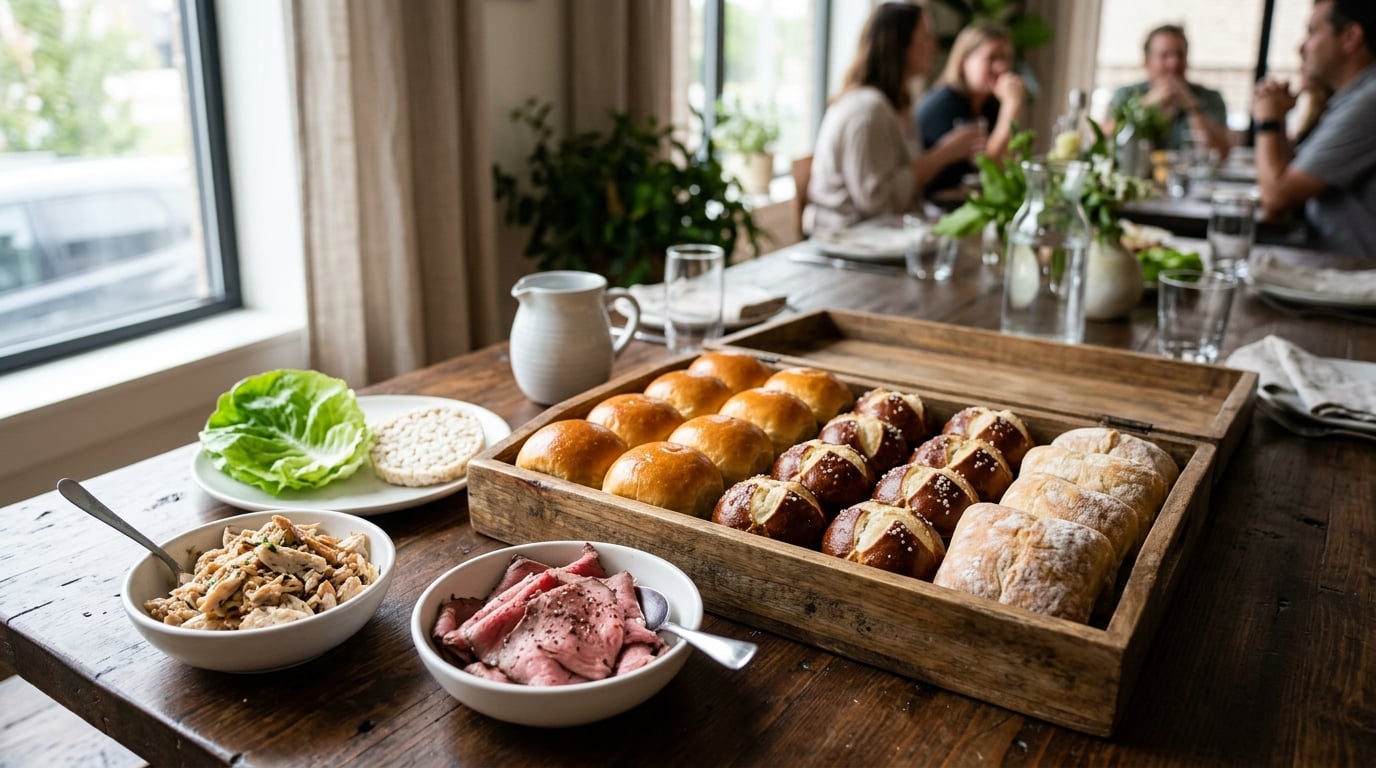
The best Hawaiian roll alternatives for party sliders are mini brioche buns, soft dinner rolls, potato rolls and pretzel buns. Each one does the same job the original does: it stays soft, measures about two bites, and carries a 2 to 3 ounce filling without splitting. Mini white hamburger buns sit right behind them as the neutral option most hosts reach for when they want the filling to speak first.
Before picking one, decide what your tray actually needs. A pulled pork tray drowns in sauce and needs a chewier bread. A chicken salad tray needs something tender that will not turn to paste by the third hour. And if one guest is avoiding wheat or watching carbs, that is a separate problem with a separate answer, covered below.
Here is the honest version: no substitute is identical to a King’s-style roll, and several of the most suggested ones are poor party sliders. Lettuce cups are slippery, waffles shed crumbs, and soft white rolls turn to mush under a heavy sauce. I have assembled trays for everything from 12-guest birthday parties to a 60-person office game-day spread, and the crumb does three jobs every time: absorb sauce without collapsing, survive a warm tray for two hours, and let the filling stay the loudest flavor on the plate.
This guide covers ten alternatives, what each one is actually like, and the filling it handles best. Updated for 2026 as bread aisles keep shifting.
Table of Contents
- Best Hawaiian Roll Alternatives for Party Sliders at a Glance
- 1. Mini Brioche Buns
- 2. Soft Pretzel Sliders
- 3. Mini Ciabatta Rolls
- 4. Potato Rolls
- 5. Whole-Wheat Mini Rolls
- 6. Gluten-Free Mini Buns
- 7. Dinner Rolls with a Hint of Honey
- 8. Mini Croissant Sandwiches
- 9. Rice Cake Sandwiches
- 10. Lettuce Cups
- Frequently Asked Questions
- What are the Best Hawaiian Roll Alternatives for Party Sliders?
- Which bread is the closest substitute for a Hawaiian roll?
- What are the best gluten-free mini buns for sliders?
- How do you keep party sliders warm without drying out the bread?
- Can lettuce cups work as sliders at a party?
- What is the safe temperature for meat-filled sliders, and how should extra filling be stored?
- Conclusion
Best Hawaiian Roll Alternatives for Party Sliders at a Glance
The closest Hawaiian roll substitute should be soft, mildly sweet, sturdy enough to hold a two to three bite piece, and sized so guests can eat two or three per serving. This table compares flavor, texture, best filling, dietary considerations, and ideal party use for each option.
| Bread | Flavor and texture | Best filling | Dietary note | Ideal party use |
|---|---|---|---|---|
| Mini brioche buns | Rich, buttery, mildly sweet, very soft crumb | Pulled chicken, turkey meatballs, ham and cheese | Contains dairy and egg | All-purpose tray, most like the original |
| Soft pretzel sliders | Salty, chewy shell, soft center | Hot dogs, bratwurst, spicy shredded beef | Often dairy-free, check the label | Game-day and savory-forward tables |
| Mini ciabatta rolls | Neutral, crisp crust, airy open crumb | Roast beef, tomato, marinated vegetables | Usually vegan-friendly, check for milk | Cold or lightly dressed trays |
| Potato rolls | Mild, pillowy, very tender | Herb chicken salad, egg salad, turkey | Often dairy-free options exist | Soft-centered trays and brunch |
| Whole-wheat mini rolls | Nuttier, firmer, less sweet | Turkey, lean meat, roasted vegetables | Whole grain, not automatically gluten-free | Health-forward tables |
| Gluten-free mini buns | Varies widely, from cake-like to dense | Chicken salad, cheese, hamburger patties | Check for wheat, milk, and egg | Accommodating one to two guests |
| Honey dinner rolls | Soft, gentle sweetness, brushed top | Chicken and pickles, ham, mild barbecue | Check for milk and butter | Sweet-sour flavor balance |
| Mini croissants | Flaky, rich, strongly buttery | Egg salad, ham with mustard, light cheese | Contains dairy and egg | Upscale brunch or brunch-hour events |
| Rice cake sandwiches | Neutral, crisp, light, gluten-free | Soft cheese, egg salad, cucumber, cream cheese spreads | Gluten-free, low carbohydrate | Low-carb and wheat-free tables |
| Lettuce cups | Cool, crisp, no baked flavor | Seasoned ground meat, taco fillings, chicken salad | Gluten-free, very low carbohydrate | Salad-style or taco-style trays |
1. Mini Brioche Buns
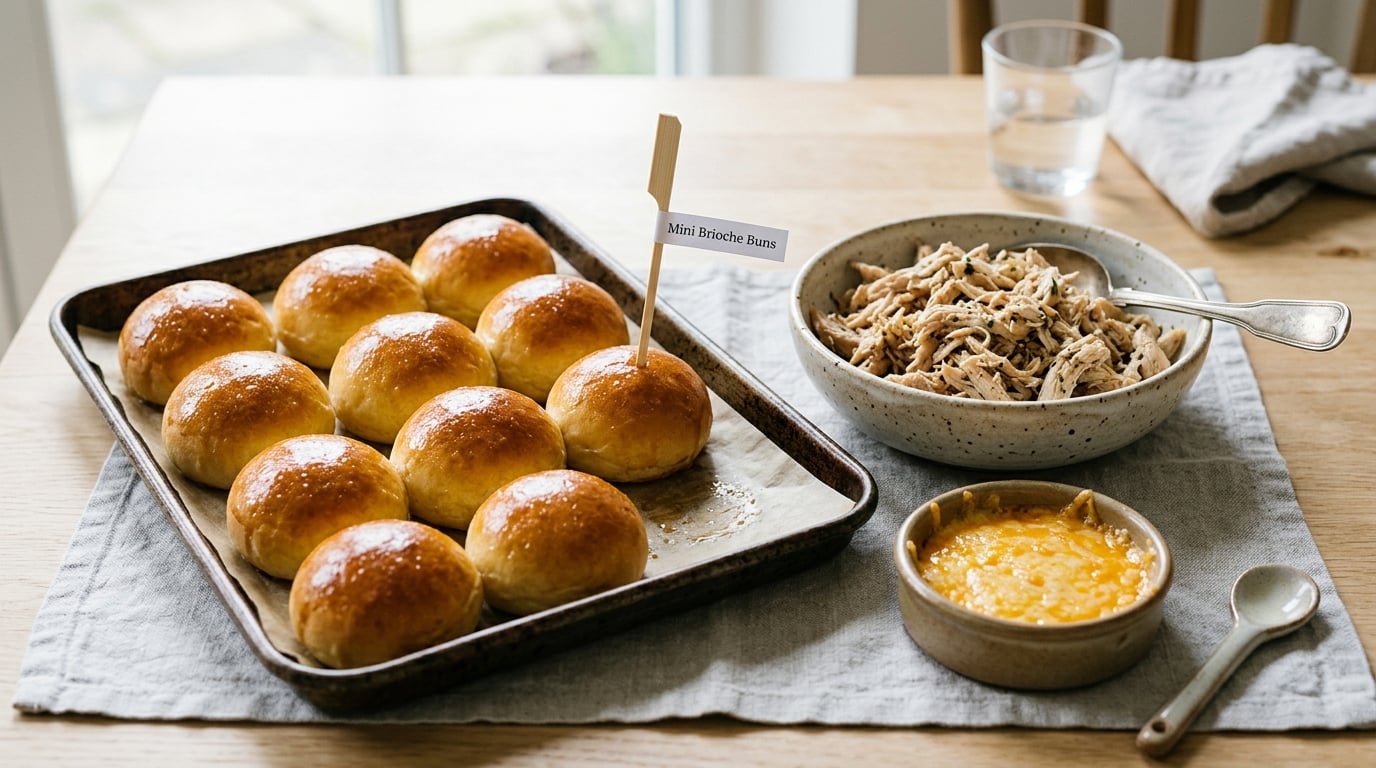
Mini brioche is the richest all-purpose substitute, and the one most people mean when they say they want a Hawaiian roll alternative that still tastes like the real thing. The crumb is soft and slightly sweet, built with egg and butter, and it stays tender for hours on a covered tray.
The one thing to watch is flavor strength. Brioche is louder than a sweet dinner roll, so a heavy filling can disappear. A practical example: fill each bun with about two tablespoons of shredded chicken, one small square of provolone, and a thin layer of mayo, then skip the salt. The richness of the bread does the seasoning work for you.
Because brioche is so soft, it is a poor match for wet barbecue sauce. If that is your filling, toast the cut side for a minute first so the bottom has a sealed crust.
2. Soft Pretzel Sliders
Pretzel rolls are the chewy, salty option, and they handle strongly seasoned meat better than any soft roll on this list. The glossy dark shell shrugs off grease, while the interior stays soft enough to eat without tearing.
They pair naturally with hot dogs, bratwurst, and shredded beef with a heavy spice rub. The salty exterior also cuts the richness of a cheese-topped patty, which is why pretzel buns show up so often on barbecue tables.
Warming matters here. If you serve them cold, they are tough. Briefly dip the top of each roll in water, lay it cut side down on a lined sheet, and warm in a 375F oven for about five minutes. The crust re-crisps, the center softens, and the roll tastes freshly baked without the chew of a reheated loaf.
3. Mini Ciabatta Rolls
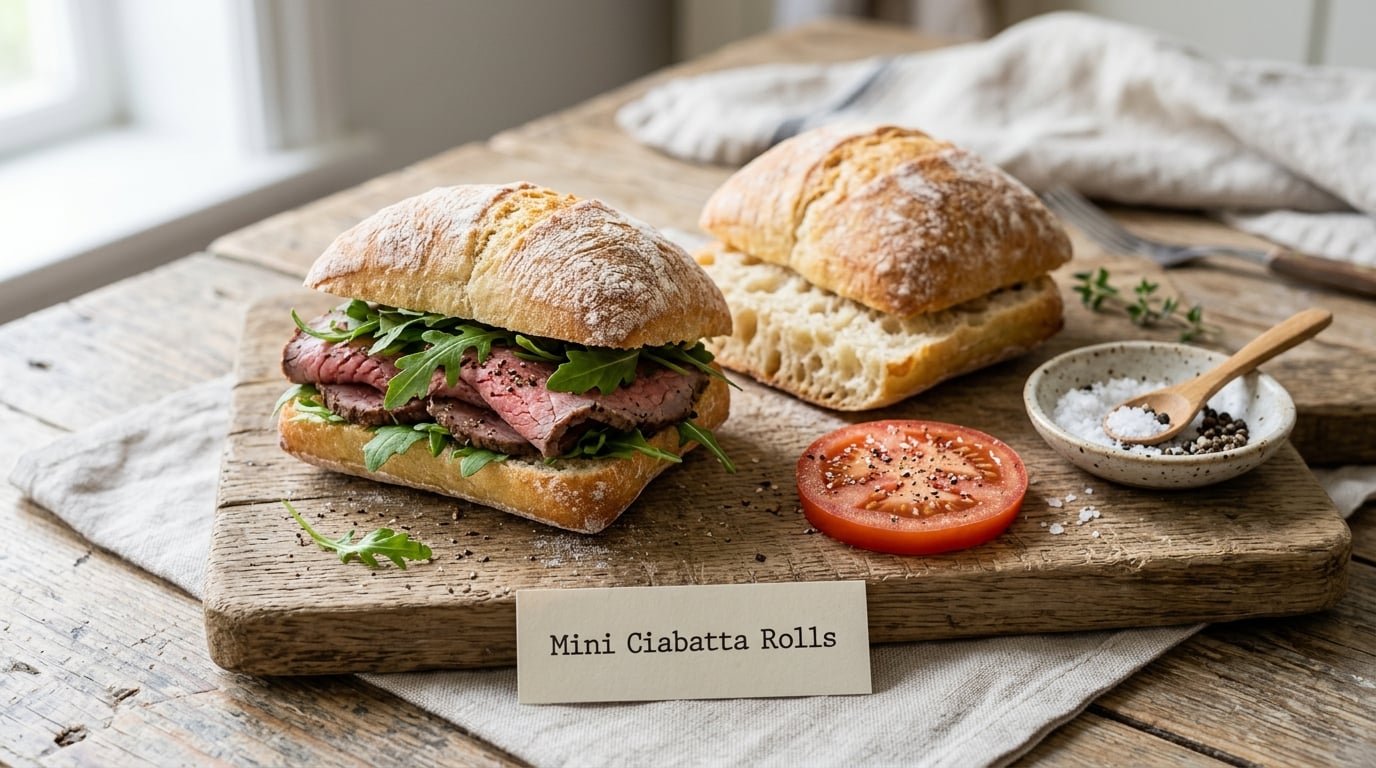
Ciabatta makes a more substantial party slider than a soft roll, which is exactly why it belongs on a tray. The exterior is crisp, the interior is open and airy, and it does not compress into a dense puck when you stack two of them on a platter.
The tradeoff is moisture. That open crumb drinks up wet fillings, so drain marinated vegetables and pat tomato slices dry before assembly. Toasting the cut side for a minute creates a barrier that keeps a tomato-and-arugula roast beef slider from going soft in the middle of a party.
Ciabatta is also the most neutral-flavored option here. If your filling is delicate, like a chicken salad with herbs, this is the bread that will not compete.
4. Potato Rolls
Best Hawaiian Roll Alternatives for a Soft, Savory Center
Potato rolls are the softest thing on this list and the least sweet, which makes them a good middle ground between a white roll and a Hawaiian-style bun. The crumb is fine and pillowy rather than springy, and it barely carries any flavor of its own.
That neutrality is the point. Compared with honey dinner rolls, potato rolls let a filling taste like itself. Compared with brioche, they will not overwhelm a delicate salad-style filling. And compared with ciabatta, they need no special handling before assembly.
A serving example that works well: chicken salad made with chopped chicken breast, celery, dill, a little Greek yogurt, and lemon, piled onto a warm potato roll with a thin layer of butter underneath. The butter stops the creamy salad from soaking straight through, and the roll stays soft from the first guest to the last. Keep the filling ratio to about a third of the bun’s volume, and skip any heavy dressing on the tray itself.
One caution: potato rolls go stale quickly once cut, so slice them close to serving time and cover the tray rather than slicing hours ahead.
5. Whole-Wheat Mini Rolls
Whole-wheat mini rolls bring a nuttier flavor and a firmer crumb than white options, and many hosts like that because it tones down the sweetness of a party tray. Turkey, vegetable, and lean-meat fillings sit well on them, and the crumb holds a thin layer of sauce without absorbing it.
One clarification worth making: a brown-looking roll is not automatically high in fiber, and whole wheat contains gluten. If someone at your table needs a gluten-free option, this is not it. Read the ingredient list rather than trusting the color of the bag.
For balance, use a light condiment. Mayonnaise or mustard on a whole-wheat roll is usually enough, since both the bread and the filling already carry flavor.
6. Gluten-Free Mini Buns
Gluten-free mini buns are the practical answer when a guest is avoiding wheat, though quality varies a great deal between brands. Some are soft and close to a sweet roll in feel. Others are dense, crumbly, and better suited to a sturdy patty than to a chicken salad.
Buy a sturdy commercial product rather than improvising with something from the bakery case. Improvised gluten-free bread tends to crumble the moment you cut it, and crumbs scattered across a party tray are hard to recover from. Check the label for wheat, milk, and egg, since many of these buns are baked in facilities or with ingredients that matter for a genuine allergy.
Once assembled, serve gluten-free sliders on their own tray. Mixing them in with wheat-based sliders breaks the whole point for a guest who is careful about cross-contact.
7. Dinner Rolls with a Hint of Honey
Mildly sweet dinner rolls are a close flavor match for both savory and sweet-sour fillings. The brushed top gives a faint glaze, and the crumb inside stays soft and slightly springy, closer to a Hawaiian roll than most alternatives here.
The trick is balance. These rolls bring their own sugar, so pair them with something peppery, sharp, or acidic: mustard, pickles, sharp cheddar, a vinegar-based barbecue sauce, or pickled onions. A chicken-and-pickle slider is a good model. Shredded chicken thigh, a few sliced dill pickles, a thin smear of mayo, and a dusting of black pepper cut the sweetness cleanly.
Avoid heavy barbecue sauce with these buns. Two sources of sugar in one bite is a lot, and the roll softens faster than it should.
8. Mini Croissant Sandwiches
Mini croissants work when you want the tray to look like it belongs at a brunch or an afternoon event rather than a game-day table. They are flaky, rich, and noticeably more delicate than a bun, so the same filling volume rule applies with less room to spare.
Keep the filling restrained. Egg salad, ham with a sharp mustard, or a simple cheese with herbs all work. Anything saucy or hot will soften the pastry within minutes and leave flakes on the platter, which is fine for a casual brunch and a problem for a tray that sits out for two hours.
Because they are rich, use smaller pieces. Most hosts find three per guest is plenty with croissants, versus two with a roll.
9. Rice Cake Sandwiches
Rice cake sandwiches are the low-carbohydrate, gluten-free option, and the base is lightly seasoned rather than flavored. The texture is completely different from bread, so this is a change of format rather than a swap-in.
Choose the sturdier cakes. Thin ones bend and crack when you spread anything on them, and the whole sandwich breaks before anyone takes a bite. Soft or saucy fillings usually need a double layer, with one cake on each side, to keep the build intact. Cream cheese spreads, egg salad, and cucumber with a soft cheese work better than shredded meat with barbecue sauce.
Expect the finished piece to feel lighter and crisper than a bread slider. For a guest actively limiting carbohydrates, that trade is usually welcome.
10. Lettuce Cups
Lettuce cups are the bread-free option, and they work best when you treat them as a taco tray rather than a bun tray. The structure comes from the leaf, and the flavor comes entirely from the filling and the dressing.
Romaine has the best balance. It is sturdy enough to hold a scoop of filling, wide enough to fold, and crisp enough to survive an hour on a tray. Butter lettuce is softer and sweeter and folds neatly, but it tears if you overfill it. Iceberg is crisp and very sturdy, though it is mostly water and contributes almost nothing but crunch.
A ground-meat filling makes the cleanest example. Brown lean beef with taco seasoning, drain it well, and spoon it into a cup of chopped romaine with a small amount of salsa and a squeeze of lime. Draining the meat matters more than anything else here, since liquid is what makes a lettuce cup collapse halfway through the party.
Whatever the base, the number to plan on is 2 to 3 pieces per adult guest, plus roughly 10 percent overage. That holds for every option on this list, and it matters more with non-standard pack sizes, since an 8-count pack will not cover a 20-guest tray.
Frequently Asked Questions
What are the Best Hawaiian Roll Alternatives for Party Sliders?
The strongest alternatives are mini brioche buns, honey dinner rolls, potato rolls, and soft pretzel sliders. Brioche gives you the richest, sweetest match; potato rolls are the softest and mildest; dinner rolls with a light glaze sit in between; pretzel rolls are the chewy, salty choice for hot dogs and spicy meats. For cold or lightly dressed fillings, add mini ciabatta. Plan two to three pieces per adult guest plus about 10 percent extra.
Which bread is the closest substitute for a Hawaiian roll?
Mini brioche buns are the closest match in texture, and honey dinner rolls are the closest in flavor profile. Both deliver the soft, tender crumb people associate with Hawaiian-style rolls. The difference is richness: brioche is enriched with egg and butter and will bury a delicate filling, while dinner rolls are gentler and let the filling lead. If your tray is saucy, choose the chewier option instead and toast the cut side first.
What are the best gluten-free mini buns for sliders?
Commercial gluten-free mini buns are the practical pick, but quality varies widely. Some are soft and close to a sweet roll; others are dense enough that they hold a patty but crumble when cut. Buy a sturdy product rather than a light one, and check the label for wheat, milk, and egg. Serve these on a separate tray so guests avoiding gluten are not dealing with crumbs from wheat-based sliders.
How do you keep party sliders warm without drying out the bread?
Keep the tray covered and hold it in a low oven, around 200F, rather than a hot one. Low heat keeps the crumb soft without driving off moisture. Avoid a warming tray with no water, which is what leaves buns hard by the second hour. Another approach is to assemble close to serving time and store the components separately, reheating the bread for a few minutes just before guests arrive. Never refrigerate assembled sliders and reheat them cold.
Can lettuce cups work as sliders at a party?
Yes, as long as you change the format rather than trying to imitate a bun. Romaine is the best all-round leaf because it is sturdy, wide, and crisp enough to hold a scoop of filling. Butter lettuce folds neatly but tears when overfilled, and iceberg is very sturdy but contributes mostly crunch. Drain any ground-meat filling well, since excess liquid is the main reason lettuce cups collapse on a tray.
What is the safe temperature for meat-filled sliders, and how should extra filling be stored?
Cook ground meat to 160F and poultry to 165F, and whole cuts of beef, pork, or lamb to 145F with a three-minute rest, following USDA guidance. Hold assembled sliders at 140F or above, and discard meat that has sat out longer than two hours, or one hour in hot weather. Refrigerate cooked filling within two hours and use it within three to four days, or freeze it for longer storage.
Conclusion
Choose mini brioche for maximum similarity to a Hawaiian roll, potato rolls for a soft and budget-friendly option that lets the filling lead, pretzel rolls for a salty or crunchy preference, and sturdy specialty buns when a dietary need drives the choice. Whichever you pick, test the crumb before the party by toasting one and loading it with the sauce you plan to use.
Start small. Buy one small package of the two or three options you think you will use, make a test tray, and commit to a large order only after you have tasted the real combination. That one afternoon of testing has saved more trays than any shortcut I know.