
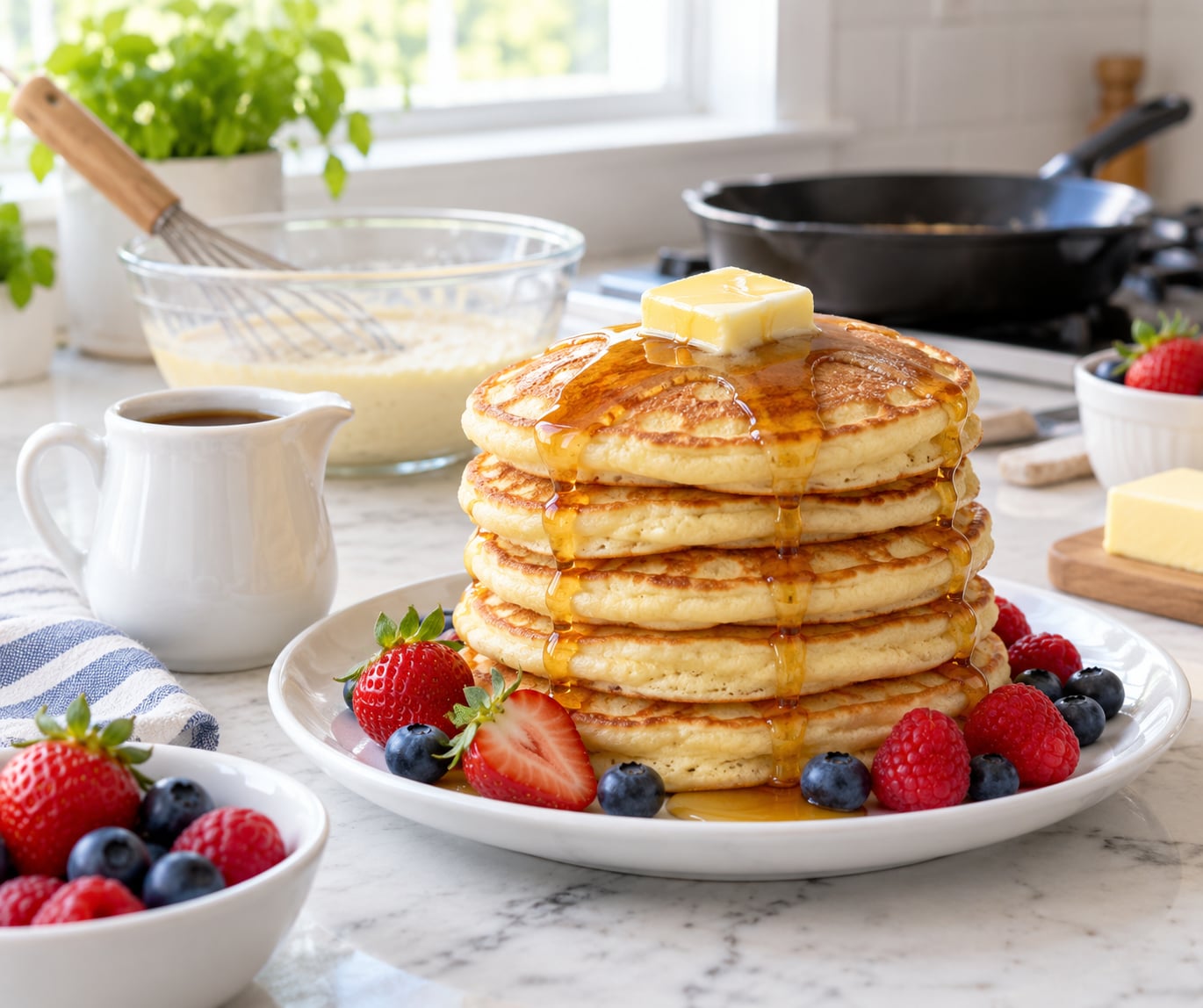
Fluffy pancakes from scratch need only flour, baking powder, a little sugar and salt, milk, eggs, and melted butter or oil. The tall, airy crumb comes from four decisions: fresh leavening measured properly, a batter you barely mix, a short rest before cooking, and a griddle held at medium heat until bubbles stop filling in. This recipe makes about four 4-inch pancakes in roughly 25 minutes, start to finish.
Table of Contents
What You Need
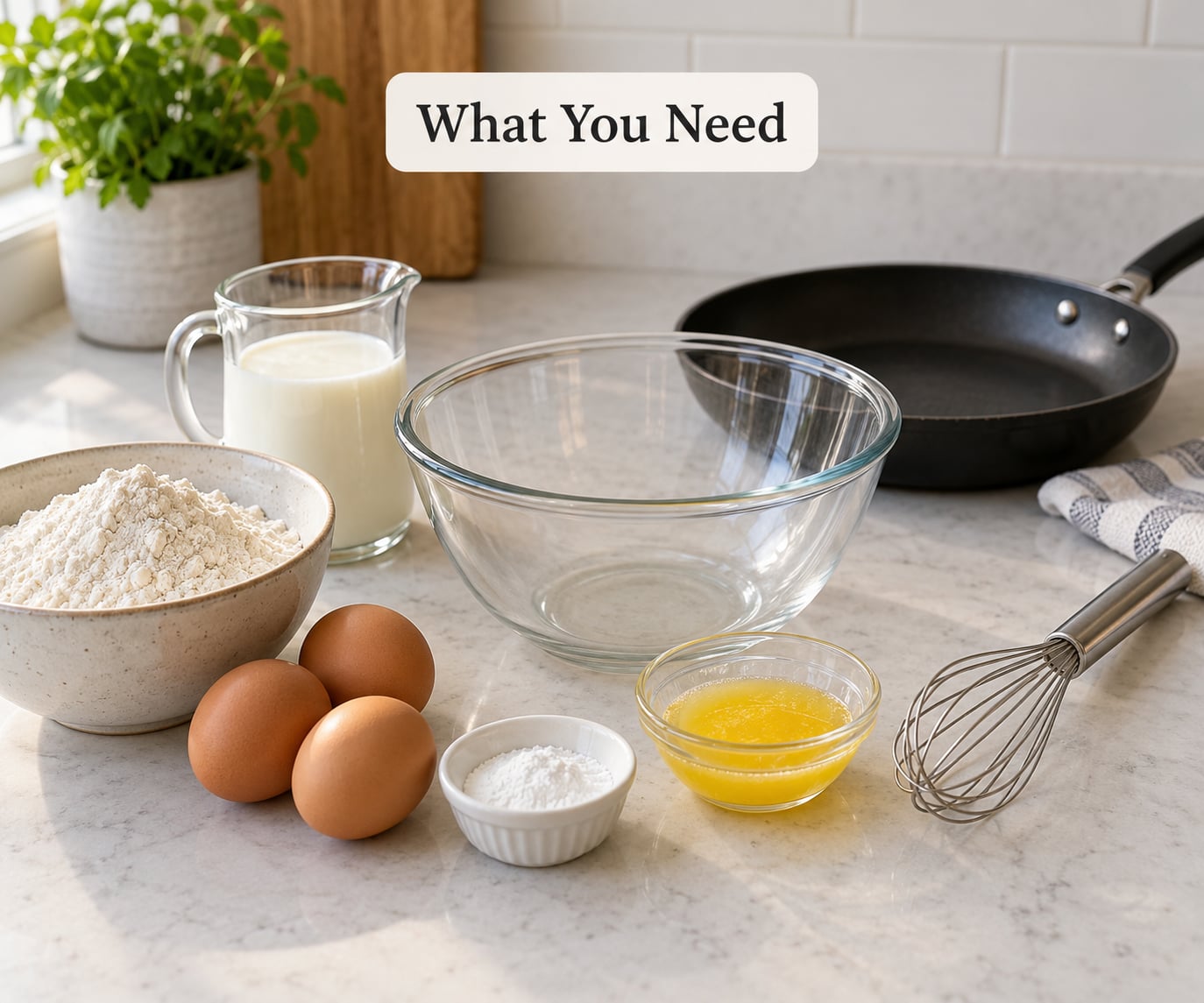
Ingredients
Measure flour by weight if you can. A cup of flour scooped with a spoon can vary by a quarter cup between scoops, and that swing is one of the top reasons a pancake recipe fails to repeat itself. The gram weights below come first.
- 1 cup all-purpose flour (125 g)
- 2 tablespoons granulated sugar (25 g)
- 2 teaspoons baking powder (8 g)
- 1/2 teaspoon baking soda (3 g)
- 1/2 teaspoon kosher salt
- 1 large egg, separated
- 1 1/4 cups whole milk, room temperature (300 ml)
- 2 tablespoons unsalted butter, melted, plus more for the pan
- 1 teaspoon pure vanilla extract
Both leavening agents earn their place. Baking powder is its own source of carbon dioxide, and the baking soda reacts with the acid in the buttermilk-sized amount of milk to add a second burst of gas plus the tang that makes these taste like a weekend stack rather than a school lunch.
Whisk the egg white separately only if you want extra height. Beat it to stiff peaks with a pinch of the measured salt, then fold it into the batter in two additions at the very end.
Tools
A 10-inch nonstick skillet works well for a batch this size and is the easiest thing to control. A cast iron griddle holds heat steadier and gives a darker crust, but it needs more butter and a lower burner setting. An electric griddle keeps one temperature across the whole surface, which matters more than anything when you are cooking for more than six at once.
You also need a medium bowl, a whisk or fork, a rubber spatula for folding, and a thin pancake turner wider than the pancake itself.
Step-by-Step
Step 1: Mix the Dry Ingredients
Whisk the flour, sugar, baking powder, baking soda and salt together in a large bowl until no streaks of baking powder sit on the bottom. Leavening that settles in one place gives you one tall patch and one flat pancake, so whisk for a full 20 seconds rather than five.
Step 2: Combine the Wet Ingredients
Whisk the egg yolk, milk, melted butter and vanilla in a second bowl until smooth. Let the melted butter cool for a minute or two before it goes in; straight-off-the-microwave butter will cook the yolk into little pale curds you will find later.
Step 3: Make the Batter Without Overmixing
Pour the wet mixture into the dry and stir with a fork just until a few streaks of flour disappear. Small lumps are exactly right. Beating a smooth batter develops gluten, and gluten is the protein that makes bread chewy, not pancakes tender. If you are beating egg whites, fold them in now with a light hand, cutting through the batter and turning it over rather than stirring in circles.
Step 4: Let the Batter Rest
Cover the bowl with a plate or damp towel and wait 10 minutes. Resting hydrates the flour fully, so the pancakes drink less liquid in the pan and cook through before the surface sets. Whole-wheat or gluten-free batters need closer to 30 minutes because the bran or starch takes longer to drink. If the batter thickens while you wait, loosen it with a tablespoon or two of milk.
Step 5: Cook the Pancakes Until Bubbly
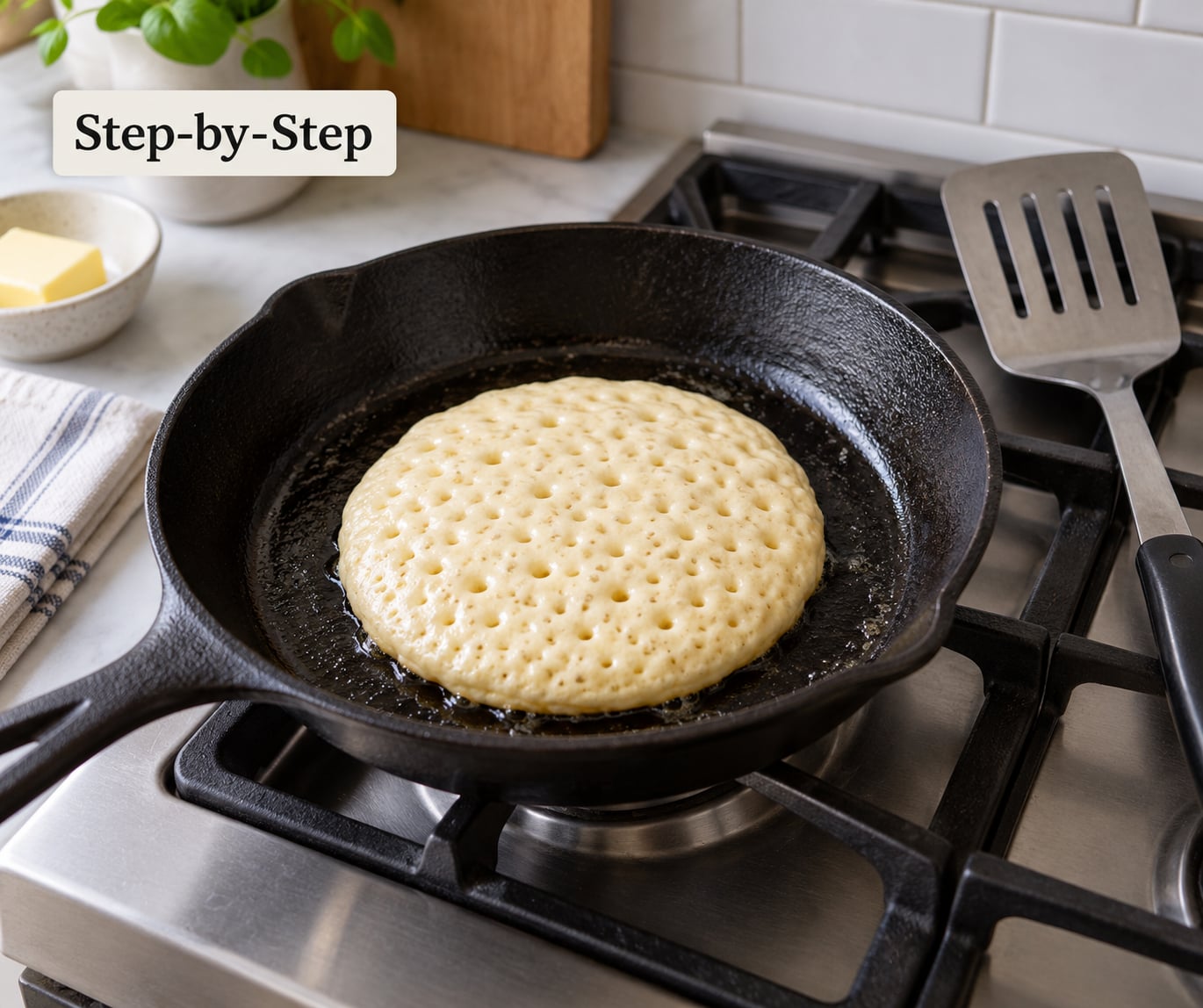
Heat the skillet over medium and wipe it with a buttered paper towel. A drop of batter should sizzle steadily rather than flash across the surface. Pour a scant 1/4 cup into the center and wait.
Do not touch it. When bubbles open across the top and stay open instead of filling back in, and the edges look dry and set, it is time to turn. That takes about 2 to 3 minutes at medium.
Step 6: Flip and Finish the Pancakes
Slide the turner fully under the pancake, commit in one quick motion, and give the pan a small shake so the pancake lands centered. Cook the second side for 1 to 2 minutes, until the top looks matte and springs back lightly when you press the edge with a fingertip.
For a golden brown face rather than a pale one, drop the heat a notch after the first pancake. The first pancake is always the test run, and it tells you whether your burner is hotter than the recipe assumes.
Common Mistakes
Pancakes come out flat and thin
Almost always leavening, not the pan. People under-measure far more often than they over-measure, and a tablespoon of baking powder scooped instead of measured is closer to 7 g than the 8 g the recipe wants. Scoop-and-level, or use the gram weights, and check that your baking powder is under six months old.
Pancakes turn out dense or rubbery
You mixed too much. Dense pancakes have no air pockets because gluten tightened during mixing and stayed tight through the bake. The batter should still show small lumps when it hits the pan. Save yourself the temptation to strain it smooth.
Pancakes are gummy in the middle or brown too fast
The heat is too high. A dark crust with a raw center means the outside set long before the heat reached the middle. Drop to medium or medium-low, and give each pancake a full 2 minutes on the first side instead of flipping on the first bubbles. Thicker, 1/3 cup portions also cook more evenly than thin ones.
The batter thins toward the end of the batch
This happens to everyone, and it has a simple cause: every scoop of batter carries flour out of the bowl and leaves liquid behind. When you notice the batter spreading instead of doming, stir in a tablespoon of flour, or cook the remainder as small silver-dollar pancakes, which spread less and cook faster.
Serving and storage
Hold cooked pancakes on a rack set over a baking sheet in an oven at 200°F. Steam trapped under a pile is what turns the bottom soggy, and a rack keeps the top from weeping.
For a head start, cook a full batch, lay them in a single layer on a wax-paper-lined sheet, freeze 4 to 6 hours until solid, then bag them. Reheat straight from frozen in a toaster oven at 350°F for about 8 minutes. Piled pancakes that freeze together come out as one solid puck, so spacing matters more than speed.
Hosting a crowd? Double the batter and set out toppings in small bowls instead of a buffet line, and keep the finished stack in the low oven. If you are planning the whole morning around food that can be made ahead and frozen, my 10 best breakfast sandwiches to make ahead and freeze covers the same slow-morning idea. For a savory board to put out alongside the syrup, see how to make a deli platter at home that looks catered.
Frequently Asked Questions
Why are my pancakes from scratch flat?
Flat pancakes usually mean the baking powder was under-measured or has gone stale, not that the pan was wrong. Levitate the flour and spoon the baking powder rather than scooping it. Give the batter a 10-minute rest before cooking so the flour hydrates, and keep the heat at medium so the outside does not set before the gas inside can expand. Overmixing is the second cause, since it develops gluten and leaves you with a dense pancake rather than a tall one.
How do I make pancakes fluffier without baking powder?
Skip the baking powder and rely on whipped egg whites for lift. Beat the whites to stiff peaks with a pinch of salt, then fold them into the finished batter gently in two additions. Some gas stays trapped in the foam, and the protein network sets around it as the pancake cooks. Expect a taller, more fragile pancake than a baking powder version, and flip these gently because the surface tears more easily.
How long should pancake batter rest before cooking?
Ten minutes is the sweet spot for a standard all-purpose flour batter. That rest lets the flour absorb liquid, so the pancakes cook through instead of staying gummy in the center. Whole wheat, oat and gluten-free batters need closer to 30 minutes because their bran and starch drink more slowly. Cover the bowl while it sits, and stir once or twice if a skin forms on top.
Why are my pancakes sticking to the skillet?
Sticking is usually a heat problem rather than a seasoning problem. Too cold and the batter welds itself to the metal; too hot and the outside burns before it releases. Set the pan at medium, wipe it with a buttered paper towel, and let it heat for a full minute before the first pour. If you still get sticking, cook the first pancake in a little more butter and let it rest on the pan for 30 seconds longer before turning.
Can I make fluffy pancakes ahead of time?
Yes, and freezing actually holds the texture well. Cook a full batch, arrange the pancakes in a single layer on a wax-paper-lined baking sheet, freeze 4 to 6 hours until solid, then stack them in a freezer bag with more paper between layers. Do not stack them warm, since the trapped steam freezes together into one solid puck. Reheat from frozen at 350u0026deg;F until hot all the way through.
How do I keep cooked pancakes fluffy until breakfast?
Keep them on a wire rack set over a baking sheet inside an oven at 200u0026deg;F. Heat this low is warm enough to delay staling without drying the edges out over a long brunch. A rack matters because a plate traps steam under the bottom, and that trapped moisture is what makes pancakes gummy by the time everyone sits down. Cover loosely with foil if you are holding them more than 45 minutes.
Start with the batter and get the ratio right: 125 g flour, 8 g baking powder, no overmixing, and a 10-minute rest. Heat the pan at medium and trust the bubbles rather than the clock, and the stack comes out tall enough to need two hands.