
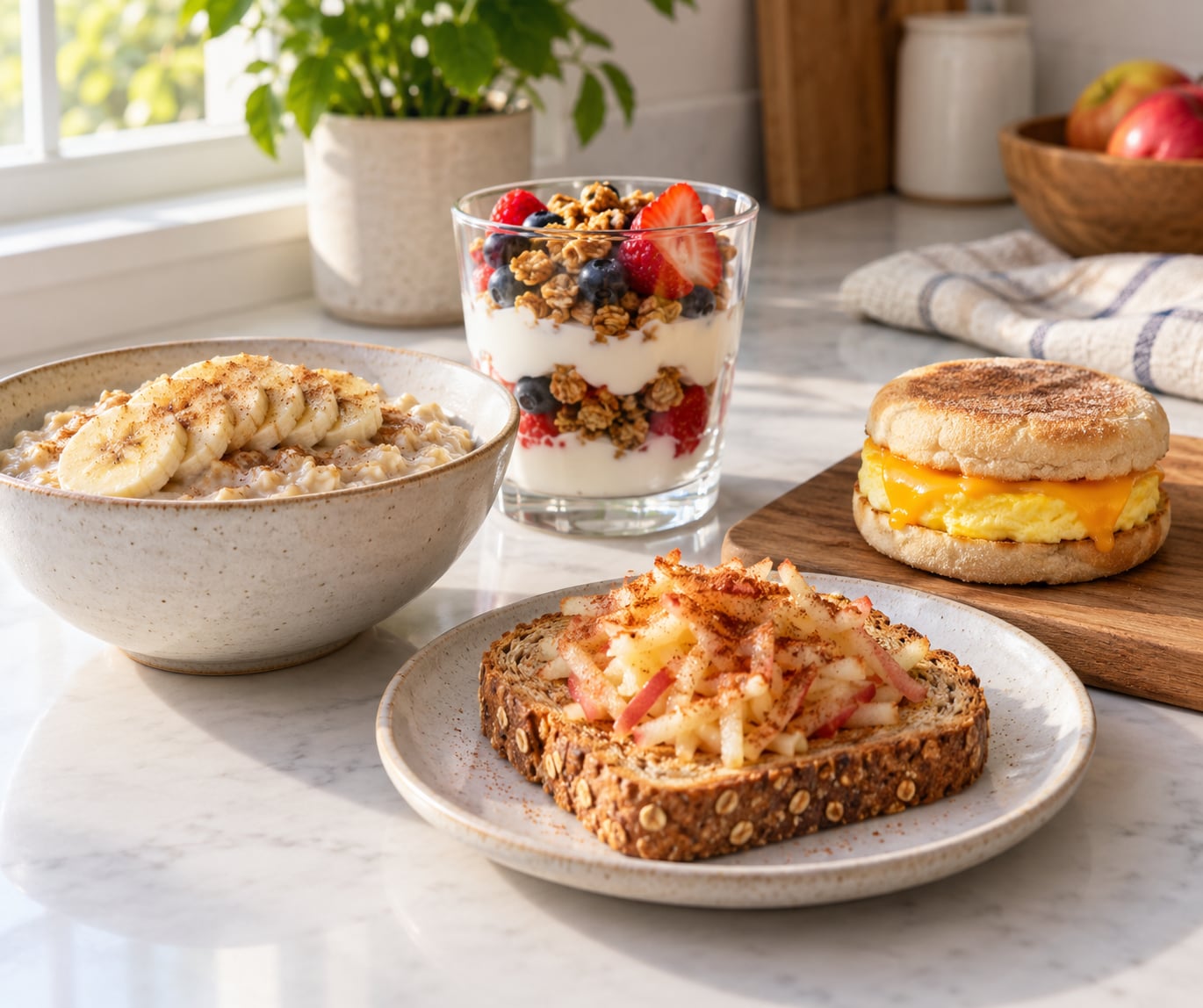
If you have about seven minutes between the alarm and the school bus, the healthiest breakfasts are the ones you can already have sitting in the fridge. This list covers healthy breakfast ideas for kids on school mornings that are quick, filling and mostly made the night before.
Every option below includes a prep time, a realistic serving example and allergen notes, so you can build a five-day rotation that fits your own household.
Table of Contents
- Healthy Breakfast Ideas for Kids on School Mornings at a Glance
- 1. Peanut Butter and Banana Oatmeal
- 2. Yogurt, Berry, and Granola Parfait
- 3. Apple Cinnamon Whole-Grain Toast
- 4. Easy Egg and Cheese Breakfast Sandwich
- 5. Overnight Oats with Berries
- 6. Banana and Oat Blender Smoothie
- 7. Turkey, Lettuce, and Creamy Cheese Morning Wrap
- 8. Cottage Cheese or Ricotta with Fruit
- 9. Breakfast Burrito with Eggs, Beans, and Cheese
- 10. Mini Caprese Breakfast Pizza
- 11. Yogurt-Chia Fruit Bark
- 12. Warm Cinnamon Rice and Apple Breakfast Bowl
- Frequently Asked Questions
- What is the healthiest breakfast for a child before school?
- How can I make a healthy breakfast for kids in under 10 minutes?
- What breakfast options work for children with common food allergies?
- How long can breakfast foods safely stay in a school lunchbox?
- How many calories does a school-age child usually need at breakfast?
- Conclusion
Healthy Breakfast Ideas for Kids on School Mornings at a Glance
The best school-morning breakfasts pair a protein, a slow-release carbohydrate and a little healthy fat, so energy holds steady until lunch. From the list below, overnight oats, yogurt parfaits and egg sandwiches take under 10 minutes on a rushed morning, while burritos, bark and breakfast pizza cook once and portion out for the week.
| Breakfast | Prep time | Best time to prepare | Main nutrients | Kid appeal | Dietary notes | Storage |
|---|---|---|---|---|---|---|
| Peanut butter and banana oatmeal | 7 minutes | Morning | Fiber, carbohydrate, fat | High, naturally sweet | Swap in seed butter for nut-free | Best eaten fresh, keeps 4 hours |
| Yogurt, berry and granola parfait | 3 minutes | Night before | Protein, fruit, carbohydrate | High, no cooking | Check granola for nuts and added sugar | Refrigerate, eat within 24 hours |
| Apple cinnamon whole-grain toast | 4 minutes | Morning | Fiber, carbohydrate, fat | Medium, light | Use seed butter on a nut-free toast | Best fresh, crisp within 2 hours |
| Egg and cheese breakfast sandwich | 10 minutes | Night before or morning | Protein, calcium, carbohydrate | High, familiar | Dairy and gluten free swaps available | Refrigerate with cold pack, use within 24 hours |
| Overnight oats with berries | 5 minutes | Night before | Fiber, protein, carbohydrate | Medium, cold | Use soy yogurt for dairy free | Refrigerate up to 4 days |
| Banana and oat blender smoothie | 3 minutes | Morning or night before | Carbohydrate, protein, fat | High, drinkable | Seed butter keeps it nut free | Drink within 2 hours or freeze |
| Turkey and cream cheese wrap | 6 minutes | Night before | Protein, calcium, vegetable | High, one handed | Swap turkey for egg or leftover roast | Refrigerate, use within 2 days |
| Cottage cheese or ricotta with fruit | 3 minutes | Morning | Protein, fat, fruit | Medium, no cook | Ricotta works dairy free | Refrigerate, cut fruit within 24 hours |
| Breakfast burrito with beans | 12 minutes | Sunday batch | Protein, fiber, fat | High, portable | Gluten free tortilla works | Freeze up to 2 months |
| Mini Caprese breakfast pizza | 12 minutes | Weekend | Protein, calcium, whole grain | High, pizza shape | Dairy free with a plant cheese | Refrigerate 3 days, freeze uncut |
| Yogurt-chia fruit bark | 10 minutes plus chill | Sunday or weeknight | Protein, fiber, calcium | High, snack like | Omit granola for a nut free version | Freeze up to 2 months |
| Warm cinnamon rice and apple bowl | 8 minutes | Morning | Carbohydrate, fiber, protein | Medium, mildly sweet | Add cow or soy milk for dairy free | Refrigerate 3 days, reheat until steaming |
The five fastest healthy breakfast ideas for kids on school mornings
- Banana and oat blender smoothie — 3 minutes, no cooking, travels in a sealed bottle.
- Yogurt, berry and granola parfait — 3 minutes layered the night before, eaten with a spoon at the table or on the way.
- Cottage cheese or ricotta with fruit — 3 minutes, no heat, works well for children who are not hungry yet at 7am.
- Apple cinnamon whole-grain toast — 4 minutes and light, which suits early-morning appetites.
- Overnight oats with berries — 5 minutes tonight buys you a cold, ready-to-eat breakfast tomorrow.
Parents searching for quick breakfast ideas for kids tend to filter by time first, so prep time is the first column above for a reason. If you want more cold-storage options, we also cover 10 Best Breakfast Sandwiches to Make Ahead and Freeze.
1. Peanut Butter and Banana Oatmeal
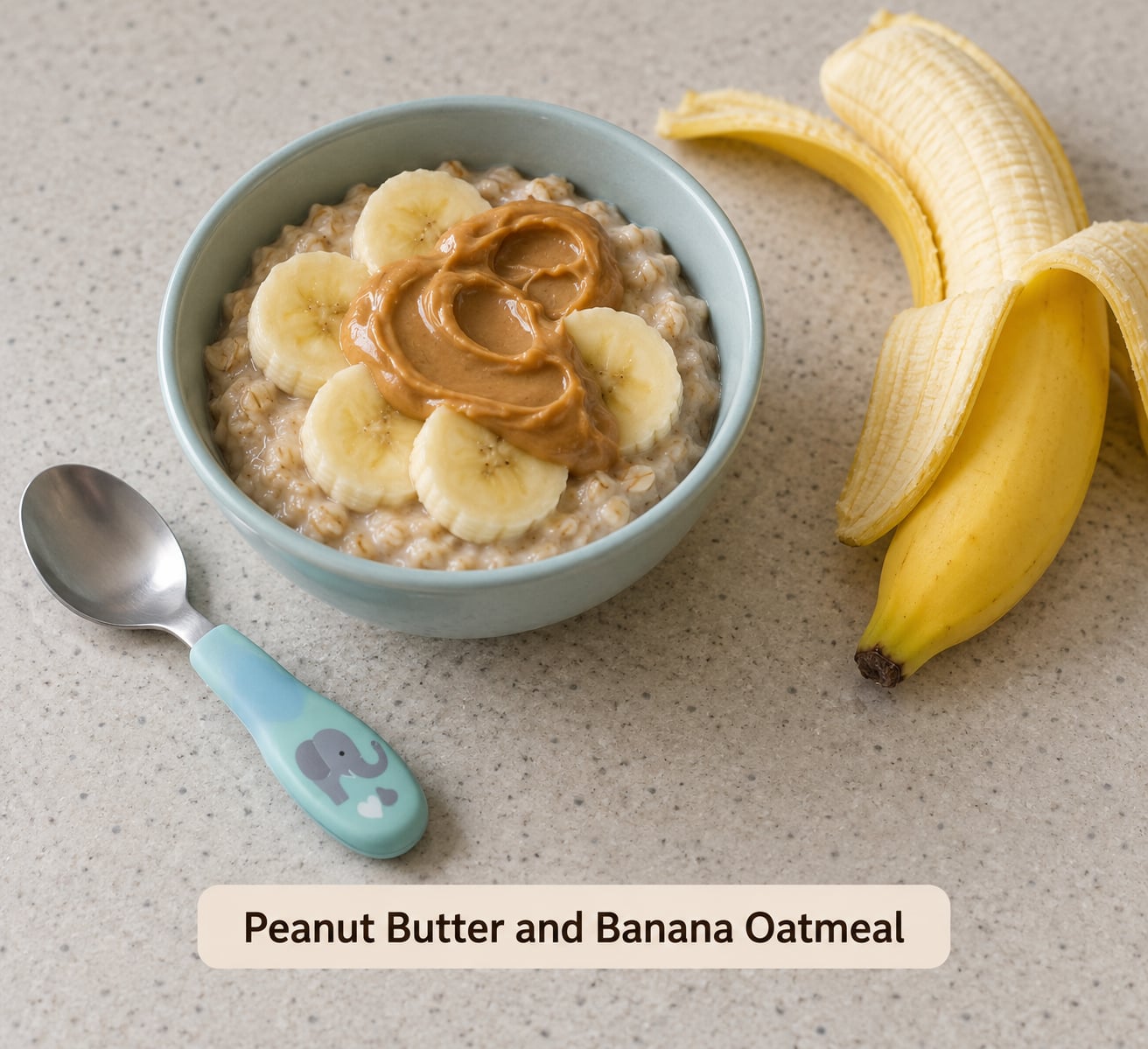
Cook half a cup of quick-cook oats in milk or water for about three minutes, then stir in half a mashed banana and one tablespoon of peanut butter stirred through after it cools slightly. The oats and banana supply fiber and carbohydrate, and the nut butter adds fat and protein, which is what keeps a child full until the mid-morning break.
A realistic serving for an elementary-age child is half a cup of cooked oats, one small banana and one tablespoon of nut butter. For a toddler, mash the banana more thoroughly and thin the oats with extra milk so nothing slides down.
Serve sunflower seed butter in place of peanut butter when the classroom is nut free or a sibling has an allergy. Some children tolerate the seed version while still rejecting the flavor of the nut one, so test it at home first.
2. Yogurt, Berry, and Granola Parfait
Layer half a cup of plain Greek yogurt, a spoonful of berries and a small handful of granola in a clear reusable cup, then repeat the layers. You do this in about three minutes the night before and pull one out of the fridge on the way out the door.
Read the granola label carefully. Many varieties carry a fair amount of added sugar and some contain nuts or cross-contamination risk, so a nut-free school means either an allergen-labeled granola or a plain toasted oat and seed mix instead.
Refrigerate the cup and eat it within 24 hours, since the yogurt thins as the granola softens. If the cup will travel, add the granola in the morning so it stays crunchy.
3. Apple Cinnamon Whole-Grain Toast
Toast one slice of whole-grain bread, spread on a thin layer of sunflower seed butter or smooth almond butter, then grate half an apple directly onto the surface and dust with cinnamon. A child will usually eat the grated version when sliced apple is refused.
The grated apple releases moisture, which is why soggy toast is the usual complaint. Mix the apple into the butter first rather than layering it on top, and serve the toast within a couple of hours.
This is the option to reach for when a heavier breakfast feels like too much early on. It is also easy to scale down to a half slice for a three-year-old or up to two slices for a teenager.
4. Easy Egg and Cheese Breakfast Sandwich
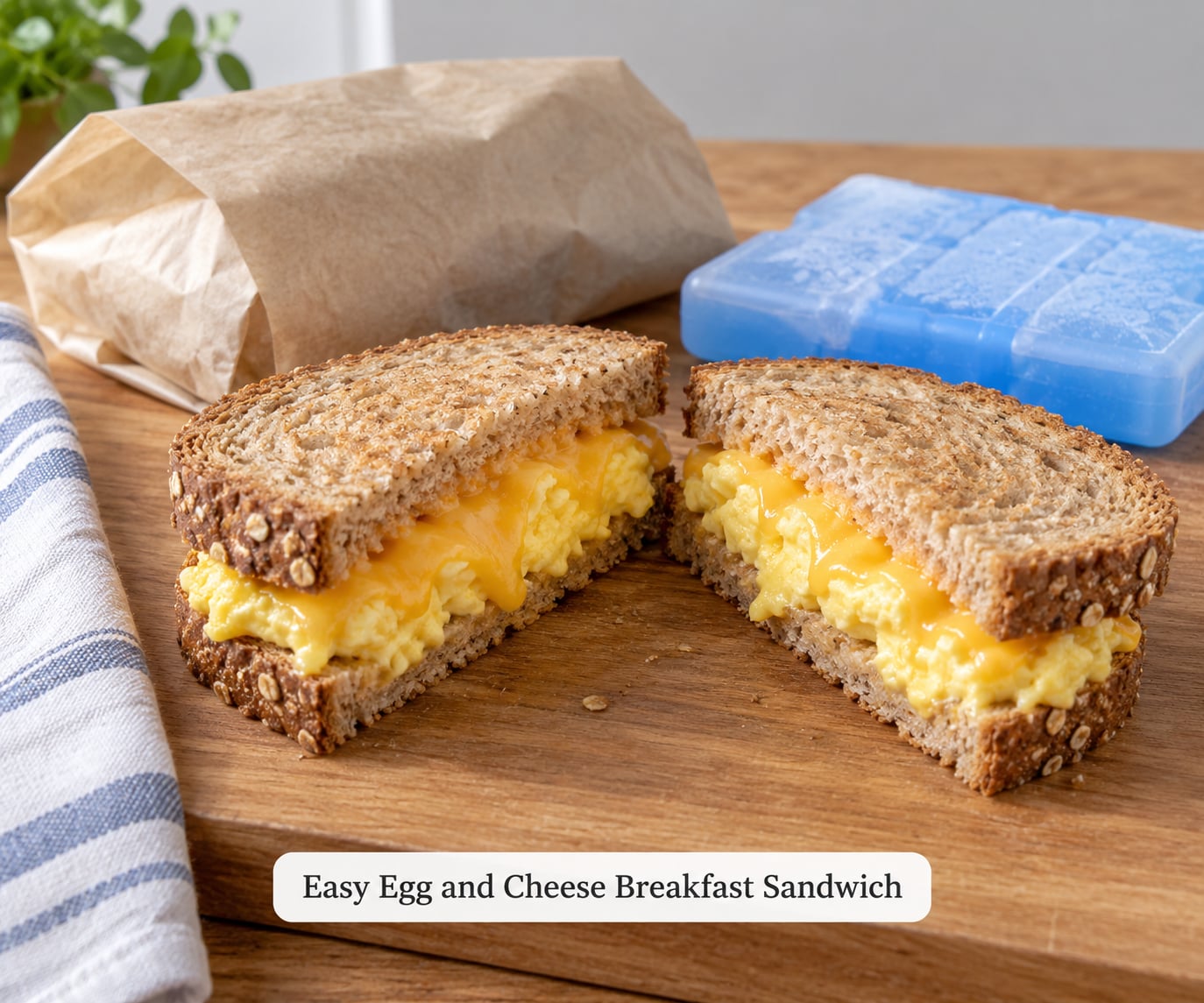
Beat two eggs with a splash of milk, cook them slowly over low heat until just set, and pile them onto a slice of whole-grain bread with a slice of cheese. Fold the top slice over, cut in half, and wrap.
For packed lunches, cook the egg until the internal temperature reaches 160°F for ground egg dishes or 165°F for other egg dishes, then cool it fully before wrapping. Transport it with a cold pack and refrigerate on arrival.
Build a batch on Sunday, refrigerate for up to 24 hours, and freeze extras flat in a bag for up to a month. Kids who refuse eggs usually accept the egg when it is hidden inside bread with cheese, and more of our sandwich ideas for children who dislike sandwiches use the same trick.
5. Overnight Oats with Berries
Combine half a cup of rolled oats, three-quarters of a cup of milk, one tablespoon of chia seeds, two tablespoons of Greek or soy yogurt and a spoonful of berries in a jar with a lid. Stir, refrigerate overnight and eat cold the next morning.
A single serving gives an elementary-age child roughly half a cup of oats with enough protein and fiber to carry them to lunch. Hold the prepared jars in the fridge and eat within four days.
Leave the chia out if your child dislikes the speckled texture, and swap in flaxseed or hemp hearts if they will tolerate those. Warm oats in the microwave for 30 seconds when cold food is refused, and add a splash of milk to loosen it.
6. Banana and Oat Blender Smoothie
Blend one banana, half a cup of rolled oats, three-quarters of cup of milk, two tablespoons of yogurt and one tablespoon of nut or seed butter until smooth. Oats and fruit do the work of adding body and keeping the drink filling rather than thin.
Add the softest ingredients first and the nut butter last, with a little milk to loosen it. Overloading a blender is the usual reason a smoothie turns grainy, and a larger cup gives the blades room to move.
A smoothie is the best breakfast for a child who is not hungry in the morning, since it goes down easily. If it will not be finished within two hours, seal it in a chilled bottle with a cold pack, or freeze it in a popsicle mould for later in the day.
7. Turkey, Lettuce, and Creamy Cheese Morning Wrap
Spread a thin layer of cream cheese over a whole-grain tortilla, add a couple of slices of turkey, finely shredded lettuce and a few small pieces of tomato, then roll it up tightly. Cut the roll into pinwheels or simply halve it for smaller children.
Deli turkey is a perishable food, so refrigerate the wrap and use it within two days, or pack a cold pack for transport. To reheat, wrap it in foil and heat until steaming hot all the way through.
A cooked egg or the rest of last night’s roast works in place of the turkey, which also makes this a good way to clear out dinner. For children who refuse anything green, shred the lettuce fine enough that it disappears into the cream cheese.
8. Cottage Cheese or Ricotta with Fruit
Spoon half a cup of cottage cheese or ricotta into a bowl and add sliced banana, berries, peaches or pear. The protein and fat in the dairy complement the natural sugar in the fruit and pair well with a slice of whole-grain toast on the side.
Use about two tablespoons of fruit per serving and dice it small for children under four, since round slices of raw apple and pear are a common choking risk. Thick fruit can be mashed for toddlers who will not chew yet.
Keep cut fruit and dairy refrigerated and eat the bowl within 24 hours. Ricotta or a plain soy yogurt works well if dairy is out, and a teaspoon of hemp hearts adds protein and omega-3 without changing the flavor much.
9. Breakfast Burrito with Eggs, Beans, and Cheese
Scramble an egg, warm a few spoonfuls of beans with a splash of water, add a strip of cheese, and roll it all in a whole-grain tortilla. Folding the sides in before rolling keeps the burrito compact enough for a lunchbox.
The egg and the beans do the filling work, and the fiber in both slows down how fast the carbohydrate hits. Most children who dislike beans on their plate will eat them inside a burrito.
Cool the burrito before wrapping and refrigerate it for up to three days. For longer storage, wrap individual burritos in foil and freeze them for up to two months, then thaw them in the refrigerator overnight and heat until the filling is steaming hot.
10. Mini Caprese Breakfast Pizza
Split a whole-grain English muffin, spread each half with a spoonful of tomato sauce, add a small slice of low-sodium cheese and a spoonful of finely diced tomato. Add a little scrambled egg or turkey if you want more protein, then bake at 400°F for 8 to 10 minutes.
The whole thing takes about 12 minutes from oven to plate, and one English muffin half is a sensible portion for an elementary-age child. Most children eat the pizza shape happily even when they will not eat a sandwich.
Refrigerate cooked pizza for up to three days. For a lunchbox, send it cold rather than warm, since a cold pizza holds its texture far better than a reheated one, and freeze it uncut if you want to keep it longer.
11. Yogurt-Chia Fruit Bark
Stir two cups of thick Greek yogurt with two tablespoons of chia seeds and a spoonful of honey or maple syrup, spread the mixture about half an inch thick on a lined tray, and scatter berries, a small handful of oats or a little granola over the top. Chill for four hours, then cut into pieces the size of your child’s palm.
The yogurt supplies protein and calcium, the chia adds fiber, and the fruit carries the sweetness. It is a make-ahead breakfast that behaves more like a snack, so most children eat it without negotiating.
Refrigerate the bark for up to four days and freeze it in a sealed container for up to two months. Omit the granola and use certified seed or oat toppings for a nut-free version, and freeze it 30 minutes longer for a crunchier texture that older children tend to prefer.
12. Warm Cinnamon Rice and Apple Breakfast Bowl
Warm cooked rice from the night before with a splash of milk, then stir in a small finely diced apple, a pinch of cinnamon and a spoonful of yogurt. The apple softens into the rice as everything heats together, so no added sugar is needed.
Blend the bowl for younger children until the texture is smooth enough for their stage, and let it cool to a warm temperature before serving. Rice is a familiar food for many children who will not eat a typical breakfast grain, which makes this a useful substitute on a school morning.
Cool the rice quickly and refrigerate it, using it within three days, or freeze it in single portions. Reheat until steaming hot throughout before serving, and follow the same rule with any cooked rice carried to school.
Frequently Asked Questions
What is the healthiest breakfast for a child before school?
The healthiest school-morning breakfast combines a protein, a slow-release carbohydrate and a small amount of healthy fat, such as eggs with whole-grain toast, or Greek yogurt with oats and berries. This combination gives steadier energy through the morning and reduces mid-morning hunger and irritability. Portions scale with age and appetite, and no single food is required. For guidance on a specific child, speak with a pediatrician or registered dietitian.
How can I make a healthy breakfast for kids in under 10 minutes?
Keep three no-cook options on the fridge shelf: yogurt with fruit and granola, cottage cheese with sliced banana, and a banana and oat smoothie blended the night before. Add one shelf-stable backup such as nut-free energy bites or a whole-grain English muffin half. Prep takes under five minutes each, so even on a hard morning something balanced is within reach. Our roundup of u003ca href=u0022https://www.hillcrestsandwich.com/best-school-lunch-ideas-for-picky-eaters/u0022u003e10 Best School Lunch Ideas for Picky Eatersu003c/au003e offers more options children reliably finish.
What breakfast options work for children with common food allergies?
For a nut-free classroom, replace peanut butter with sunflower seed butter or pumpkin seed butter and choose certified seed toppings instead of granola. For gluten free needs, use corn tortillas, brown rice flour muffins or certified gluten free oats, and check that oats are labeled gluten free. For dairy free needs, use soy yogurt, oat milk and a plant-based cheese. Always read labels, because cross-contact warnings appear on many products that look allergen free.
How long can breakfast foods safely stay in a school lunchbox?
Perishable foods such as egg sandwiches, wraps, burritos, cut fruit and yogurt should be kept at or below 40°F or above 140°F. Pack them with a cold pack, refrigerate them on arrival, and treat food left in a warmer environment for more than two hours as unsafe. Whole fruit, plain cereal, nut-free energy bites and shelf-stable milk are the safest options for a room-temperature lunchbox.
How many calories does a school-age child usually need at breakfast?
Breakfast commonly supplies about a quarter to a third of a child daily energy needs, though the exact figure varies with age, size, activity level and growth stage. A serving that pairs a protein, a whole-grain carbohydrate and a little fat is a practical way to reach that range without calculating numbers. Needs for children with medical conditions or food allergies are individual, so ask a pediatrician or registered dietitian.
Conclusion
Set aside fifteen minutes the night before: fill one make-ahead item such as overnight oats, a parfait cup or a batch of breakfast burritos, leave two fresh options that need only heating, and put a couple of shelf-stable snacks where the hungry child can reach them.
Then build each plate from the same four parts: a fruit or vegetable, a protein, a whole-grain or other slow-release carbohydrate, and a small amount of appropriate fat. When a child has a medical condition, a diagnosed allergy or ongoing trouble eating, talk with a pediatrician or registered dietitian about the specifics.