
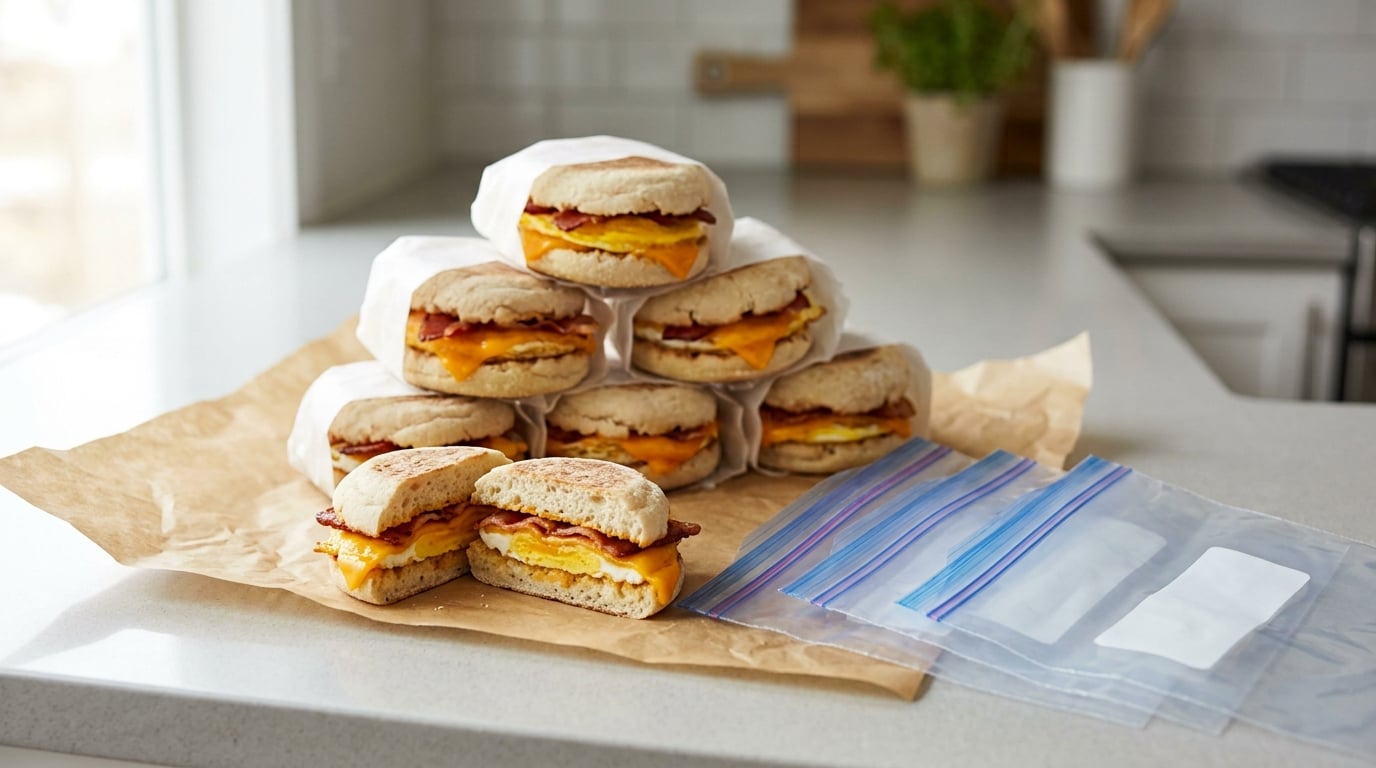
Yes, you can make breakfast sandwiches ahead of time and freeze them, and the method is short enough to repeat every week. Cook the eggs fully, toast the bread, melt the cheese, stack the sandwich, let it cool completely, then double wrap it in plastic wrap and foil before freezing. Done right, a frozen sandwich reheats in about three minutes and costs a fraction of a drive-thru stop.
The part that trips people up is not the freezing. It is assembly order and moisture. Stack bread, egg, cheese, then meat, let everything cool to room temperature before it touches plastic, and you get a sandwich that reheats like it was made an hour ago. Wrap it while it is warm and the trapped steam turns the bread to mush in the freezer, which is the soggy complaint that comes up over and over in meal prep communities.
Below are the ten best breakfast sandwiches to make ahead and freeze, ordered from the plain one that is hardest to mess up to the ones that need a little more care. Each one lists the bread, protein, and cheese that hold up best, the prep trick specific to that filling, and how to reheat it.
Table of Contents
- Best Breakfast Sandwiches to Make Ahead and Freeze at a Glance
- 1. Classic Egg and Cheese Breakfast Sandwich
- 2. Bacon, Egg, and Cheddar Breakfast Sandwich
- 3. Sausage, Egg, and Cheese Breakfast Sandwich
- 4. Ham, Egg, and Swiss Breakfast Sandwich
- 5. Turkey, Egg, and Provolone Breakfast Sandwich
- 6. Spinach, Feta, and Egg Breakfast Sandwich
- 7. Mushroom, Egg, and Gruyere Breakfast Sandwich
- 8. Chorizo, Egg, and Pepper Jack Breakfast Sandwich
- 9. Apple Cheddar and Egg Breakfast Sandwich
- 10. Vegetarian Egg, Potato, and Cheese Breakfast Sandwich
- Frequently Asked Questions
- Can you make breakfast sandwiches ahead of time and freeze them?
- How long do frozen breakfast sandwiches last?
- Do frozen breakfast sandwiches get soggy when you reheat them?
- How do I reheat a frozen breakfast sandwich without making the bread rubbery?
- Can you freeze scrambled egg breakfast sandwiches?
- What fillings hold up best after freezing?
- Conclusion
Best Breakfast Sandwiches to Make Ahead and Freeze at a Glance
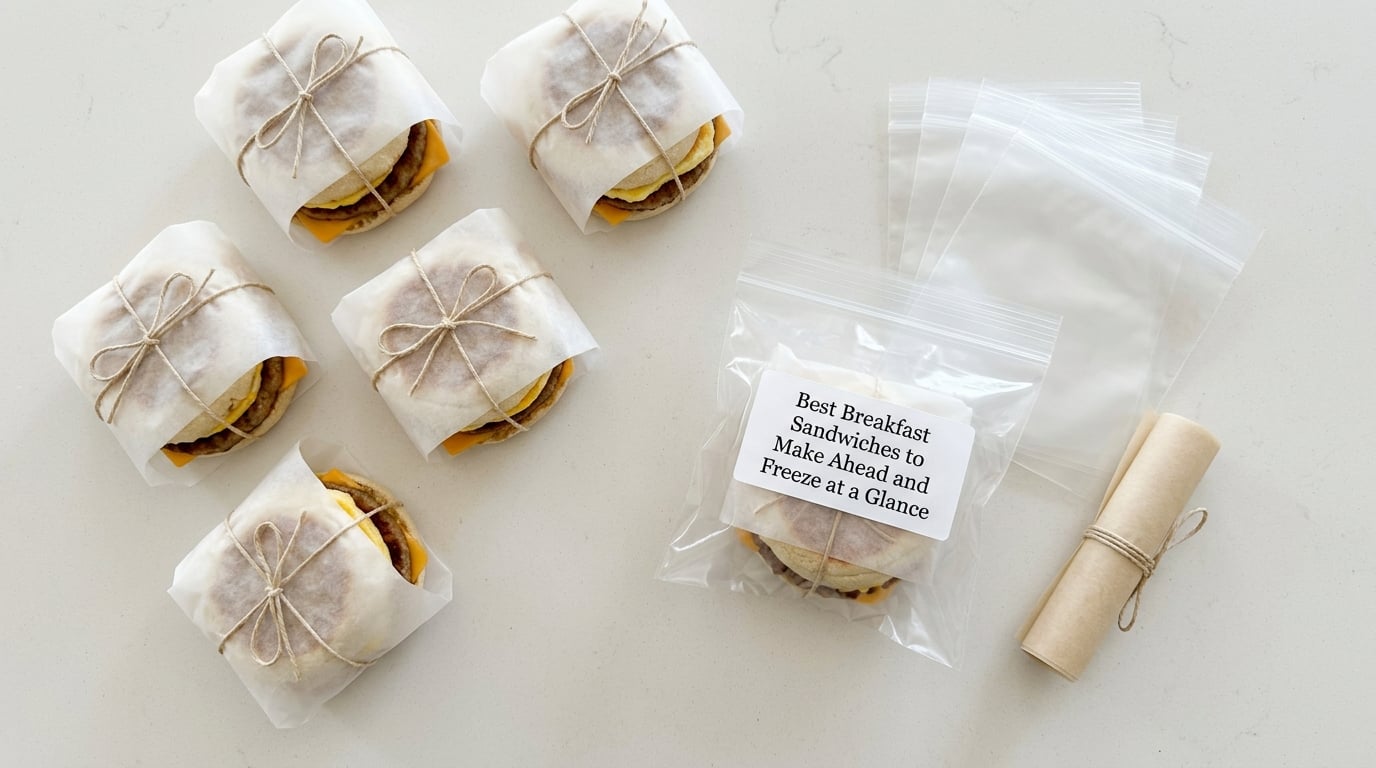
How these 10 breakfast sandwiches to make ahead and freeze compare
| Sandwich | Main ingredients | Best prep method | Freezing suitability | Storage time |
|---|---|---|---|---|
| 1. Egg and cheese | Egg, cheddar, English muffin | Baked egg rounds | Excellent | 2 to 3 months |
| 2. Bacon, egg, cheddar | Bacon, egg, cheddar, biscuit | Crisp bacon, cooled flat | Excellent | 2 to 3 months |
| 3. Sausage, egg, cheese | Sausage patty, egg, American cheese | Pre-cooked patty to 160F | Very good | 2 to 3 months |
| 4. Ham, egg, Swiss | Ham, egg, Swiss, croissant or muffin | Sheet-pan eggs | Very good | 2 to 3 months |
| 5. Turkey, egg, provolone | Deli turkey, egg, provolone | Egg patties cut to fit | Good | 1 to 2 months |
| 6. Spinach, feta, egg | Spinach, feta, egg, pita or muffin | Sauté spinach until dry | Good | 1 to 2 months |
| 7. Mushroom, egg, Gruyere | Mushrooms, egg, Gruyere | High-heat sear, drain well | Good | 1 to 2 months |
| 8. Chorizo, egg, pepper jack | Chorizo, egg, pepper jack, bun | Crumbed chorizo, drained | Good | 1 to 2 months |
| 9. Apple cheddar, egg | Apple, cheddar, egg, cinnamon bread | Diced apple, pat of butter | Good | 1 to 2 months |
| 10. Egg, potato, cheese | Hash browns, egg, cheese, biscuit | Crisped potatoes, cooled | Very good | 2 to 3 months |
Two columns matter more than the rest. Freezing suitability tells you whether the filling survives a month in a bag, and storage time is the honest window, not the optimistic one. Where you see 1 to 2 months, treat that as the point of quality drops, and eat them in order rather than saving the best batch for last.
One rule covers all ten: cool every component on a rack until it stops steaming before you wrap anything. Warm food plus sealed plastic equals a wet sandwich, and no wrapping technique will rescue it.
1. Classic Egg and Cheese Breakfast Sandwich
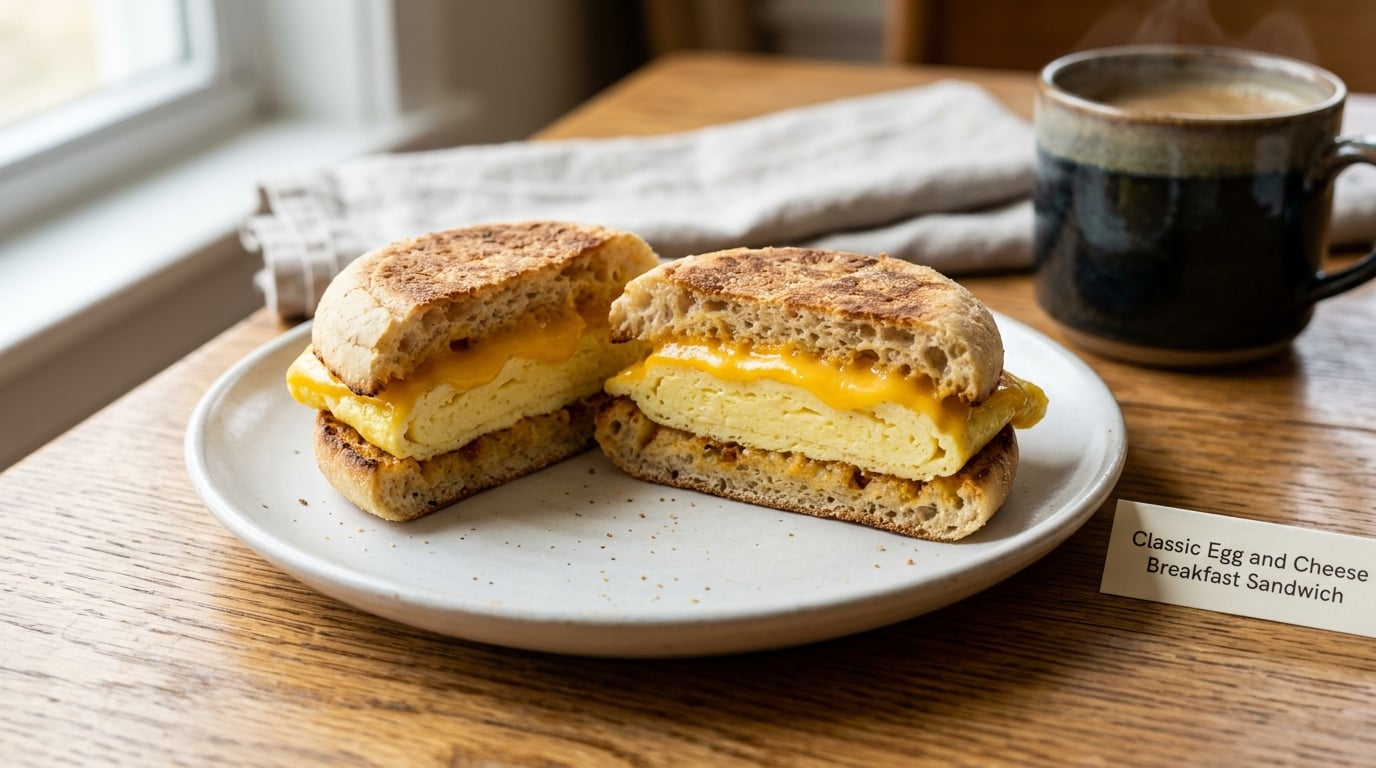
Egg and cheese is the one to master first because there is nothing to hide behind. No crispy meat to disguise a rubbery edge, no vegetables releasing water. If this version reheats well, the method works and everything built on top of it works too.
Make the egg component as one sheet-pan casserole rather than cooking patties one at a time. Whisk eight eggs with a splash of milk, pour it into a buttered 9×13 pan, and bake at 350F until just set, roughly 18 to 20 minutes. Let it cool, then cut rounds with a biscuit cutter sized to your English muffin. Cook the eggs to 160F and no more, since they keep cooking during the reheat.
Toast the muffin halves, lay on the egg round, add a slice of cheddar, and broil for 60 to 90 seconds until the cheese melts. That pre-melt matters. Cheese that goes into the freezer already melted reheats evenly instead of sitting in a cold rubbery layer. Assemble, cool, wrap.
Reheat it in the microwave from frozen for about three minutes with every bit of plastic and foil removed, on a paper towel to catch condensation.
2. Bacon, Egg, and Cheddar Breakfast Sandwich
Bacon works because it is already crisp, and crisp things survive freezing better than anything else in a breakfast sandwich. The balance problem is salt, since bacon and cheddar together can make a sandwich that needs a drink within three bites. Two rashers rather than three fixes most of it, and a little black pepper on the eggs helps more than any sauce would.
Cook the bacon until deeply crisp, then lay it on a paper towel while it cools so the fat does not soak back into it. Blot the egg the same way. Fat is what turns the bottom bun into a grease slick after a month in the freezer.
Use a biscuit or a sturdy English muffin instead of a soft roll. Biscuits have more structure and take the weight of a thick egg round without collapsing under the bite, which is the main complaint people have with frozen egg sandwiches built on tender bread.
Assemble bottom half, egg, cheese, bacon, top half. Cool completely, press the air out of the wrap, and freeze flat on a sheet pan for an hour before moving the sandwiches into a bag so nothing sticks together.
3. Sausage, Egg, and Cheese Breakfast Sandwich
Sausage sandwiches are the most requested make-ahead breakfast in the meal prep forums, and the reason is quantity. Twelve patties and a pan of egg rounds gives a two-person household a working breakfast for a week and a half with no morning cooking at all.
Pre-cook the patties in a skillet and bring them to an internal temperature of 160F, which is the safe minimum for ground meat. Breaking them up into crumbles rather than freezing them whole works just as well and stacks flatter in a sandwich. A single layer of crumbles between the egg and the cheese is the version I make most often.
Season at the egg stage rather than the sausage stage. Salt, black pepper, and a pinch of paprika go into the egg mixture, and the sausage provides plenty of its own salt. Over-seasoned freezer food is hard to fix because you cannot take salt back out after reheating.
Use a slice of American or cheddar, which melt reliably from frozen. Wrap and freeze like the others, and expect the patty to reheat a little drier than it went in. A few extra drops of water in the bottom of the microwave bowl helps.
4. Ham, Egg, and Swiss Breakfast Sandwich
Ham and Swiss is the lighter-leaning option on this list, and it is the one that takes the most help staying moist through freezing. The ham dries out first, then the bread follows. Two fixes handle it: a thinner slice of ham folded in half, and a spreadable layer of cream cheese or mayo on the inside of the bread before the ham goes down.
That barrier layer does something specific. It slows moisture leaving the ham and gives the bread a surface that does not absorb the egg moisture directly. It is the difference between a sandwich that is still pleasant at week three and one that is not.
Skip the ham in the sandwich and serve it alongside if you want a lighter breakfast, or use the sandwich as the protein and cut the portion size. A Swiss slice melted over the egg during the broil step gives you a closed sandwich rather than a stack that falls apart halfway through a school morning.
For bread, a croissant works here where it would not with sausage. It toasts well, it holds a thin filling, and it re-crisps in an air fryer at 350F for 5 to 8 minutes from thawed, flipped halfway.
5. Turkey, Egg, and Provolone Breakfast Sandwich
Deli turkey is the substitution most people make when they want a breakfast sandwich that is lighter than bacon and sausage. It freezes acceptably, with one honest caveat: turkey gives up water as it thaws, so the sandwich needs more protection than a pork-based one.
Fold each slice in half rather than laying it flat. The folded layer is thicker, which means less surface area leaking moisture, and it keeps the filling from sliding out when the sandwich is cut in half. Blot the turkey on a paper towel before you stack it, and pat the egg round dry as well.
Provolone is the right cheese because it melts smooth and does not turn grainy the way a low-fat block does after it sits frozen. Skip reduced-fat cheese in any sandwich you are freezing. Low-fat cheeses separate and turn oily when reheated, and there is no way around it.
Fold a layer of hard turkey and provolone into the sheet-pan egg casserole itself before baking. That gives you a single cohesive block to cut rounds from, which is faster than assembling twelve sandwiches one layer at a time.
6. Spinach, Feta, and Egg Breakfast Sandwich
Spinach is the vegetable that works in a freezer breakfast sandwich, and only because cooked spinach behaves differently from raw. Sauté it in a hot skillet with a little olive oil until the volume collapses and there is no liquid left in the pan, then let it cool on a plate. Skip that step and you will have a watery filling that soaks the bread from the inside.
Crumble the feta in after the spinach is cool. Cheese added while the spinach is hot melts into it, and what you want is distinct pieces of feta that reappear as distinct pieces after reheating.
Fold the cooked spinach and half the feta into the egg mixture before baking, so the round is self-contained. Keep the remaining feta as a layer on top, and add it after the egg is set so it does not disappear into the egg.
Season with salt, pepper, garlic powder, and a small squeeze of lemon. The acid keeps the greens from tasting flat after a month frozen. Use a pita or a split English muffin, both of which stay dry enough to handle the filling.
7. Mushroom, Egg, and Gruyere Breakfast Sandwich
Mushrooms are the other vegetable that freezes well, but only when cooked dry. A skillet over medium-high heat, not low, is what drives off the water. Crowding the pan drops the temperature and traps steam, which gives you a grey, watery mushroom that turns the sandwich bottom into a sponge.
Cook them in a single layer, let them sit undisturbed for a minute at a time, and only move them once they have browned. Season with salt, pepper, and a little thyme after they have released their water and started to reabsorb it.
Drain the cooked mushrooms on a towel before they go into the egg. Scatter them over the egg mixture in the baking pan, add a layer of Gruyere, and bake the whole thing together. Gruyere melts into the eggs and gives the round a cohesive structure that keeps it from breaking apart when frozen.
For the fresh element, add a few raw mushroom slices and a scrape of garlic after reheating. Fresh toppings go on at serving time, never before freezing, and that rule is covered in more detail below.
8. Chorizo, Egg, and Pepper Jack Breakfast Sandwich
Chorizo is the boldest option here and the one most likely to convert a skeptic. Crumble it and cook it like ground meat until the rendering is well browned, then drain it thoroughly on a paper towel. The casing has to come off. Chorizo skin chews like rubber after freezing and reheating, and it is the single most common complaint about frozen chorizo sandwiches.
Portion control matters more here than with the other meats. Chorizo carries a lot of fat, and a heavy layer in a sandwich turns the bottom bun greasy by week two. A thin, even layer of crumbles plus two eggs and a slice of pepper jack is plenty.
Use a sturdy bun or a kaiser roll rather than a muffin, and toast it well. Pepper Jack melts at a lower temperature than cheddar, which means it stays smooth through the reheat instead of seizing.
Reheat in an air fryer at 350F for 5 to 8 minutes from thawed, or from frozen add 2 to 3 minutes. Dry heat keeps the bread from going soft the way a long microwave run does, and chorizo re-crisps well.
9. Apple Cheddar and Egg Breakfast Sandwich
The sweet and savory option is the one that gets skipped because people expect it to be too sweet, and that is a seasoning problem rather than a recipe problem. Dice a small apple, toss it with cinnamon and a pinch of salt, and use a sharp cheddar. The salt is what stops it reading as dessert, and the sharp cheese stops it reading as a muffin.
Keep the apple to about a tablespoon per sandwich. Any more and the bread underneath stays damp, which is a real problem here because the fruit releases water as it reheats. Cooking the diced apple briefly in butter first, until it softens and the liquid cooks off, is worth the extra five minutes.
Spread butter or soft cheese on the bread before assembly, which creates the same moisture barrier that helps the ham and Swiss version. Toast the bread, add the egg round, the apple, and a slice of cheddar, and broil until the cheese melts over the fruit.
Cinnamon bread, brioche, and a toasted sourdough slice all work. Skip a soft enriched bun, which goes soggy faster than anything else in this roundup.
10. Vegetarian Egg, Potato, and Cheese Breakfast Sandwich
The filling meatless option is the potato one, and it is the most forgiving batch build on the list. Hash browns hold their texture through freezing better than any other vegetable component, and they make the sandwich substantial enough to be breakfast on its own.
Cook the potatoes on a sheet pan with oil and salt until deeply browned on both sides. Crowding the pan is the enemy here, same as with the mushrooms, because the potatoes need direct contact to crisp rather than steam. Cool them on a rack so no steam gets trapped under them.
Build with a full egg round, a layer of crisped potatoes, and a slice of cheese. Cheddar is the default, but a blend of cheddar and mozzarella gives you the melt and the pull. Add a spoonful of cooked shredded potato into the egg casserole as well if you want the sandwich to hold together better.
If you are freezing a very large batch, freezing the egg rounds separately from the crisped potatoes and assembling on the morning of gives you better texture, though it costs you the grab-and-go convenience. Whichever way you do it, cool everything first, wrap flat, and label the bag with the filling and the date.
Frequently Asked Questions
Can you make breakfast sandwiches ahead of time and freeze them?
Yes. Cook the eggs, toast the bread, broil the cheese until melted, assemble in the order bread, egg, cheese, meat, bread, then let the sandwich cool completely before wrapping it in plastic wrap and foil. Freeze flat until solid, then move it to a bag. It reheats from frozen in about three minutes in the microwave.
How long do frozen breakfast sandwiches last?
One to two months gives you the best quality, and about three months is a reasonable practical ceiling before the bread dries out and the texture softens. You will see recipes claiming six months, and food will stay safe that long frozen, but the eating quality drops well before then. Assemble what you will actually eat in a month and keep the freezer for emergency mornings.
Do frozen breakfast sandwiches get soggy when you reheat them?
They get soggy when steam has nowhere to go, which happens if you wrap the sandwich while it is still warm or reheat it in a sealed container. Cool each component fully before wrapping, take off all plastic and foil before heating, and set the sandwich on a paper towel. Air fryer or toaster oven reheats leave the bread noticeably crisper than a microwave.
How do I reheat a frozen breakfast sandwich without making the bread rubbery?
Microwave from frozen for about three minutes, or about one minute if it has thawed overnight in the refrigerator, with all wrapping removed. For a crisp outside, skip the microwave and use an air fryer at 350F for 5 to 8 minutes from thawed, flipping halfway. A toaster oven at 350F for 8 to 10 minutes from frozen does the same job with less drying.
Can you freeze scrambled egg breakfast sandwiches?
You can, but the texture comes back softer and a little watery compared with a baked egg round. A sheet-pan egg casserole cut with a biscuit cutter holds its shape far better through freezing and thawing, and it scales to a whole week of sandwiches in one short session. If you use scrambled eggs, cook them just until set and let them cool completely on a sheet pan before assembly.
What fillings hold up best after freezing?
Cooked egg rounds, fully melted cheese, and crisp pre-cooked bacon or sausage hold up best. Skip raw egg, avocado, fresh tomato, lettuce, banana, and wet condiments like salad dressing or mayonnaise straight from the jar, since all of them go watery or mushy. Add avocado, tomato, hot sauce, and any sauce fresh, after the sandwich is reheated.
Conclusion
Pick one sandwich this weekend and make it before you buy anything else for the week. Cook every component fully, cool it on a rack, double wrap it, and label the bag with the filling and the freeze date.
Freezer breakfast sandwiches are one of those habits that feels like a lot of work the first Sunday and takes ten minutes every Sunday after that. Start with egg and cheese, keep the fresh toppings for serving time, and eat the batch in order.