
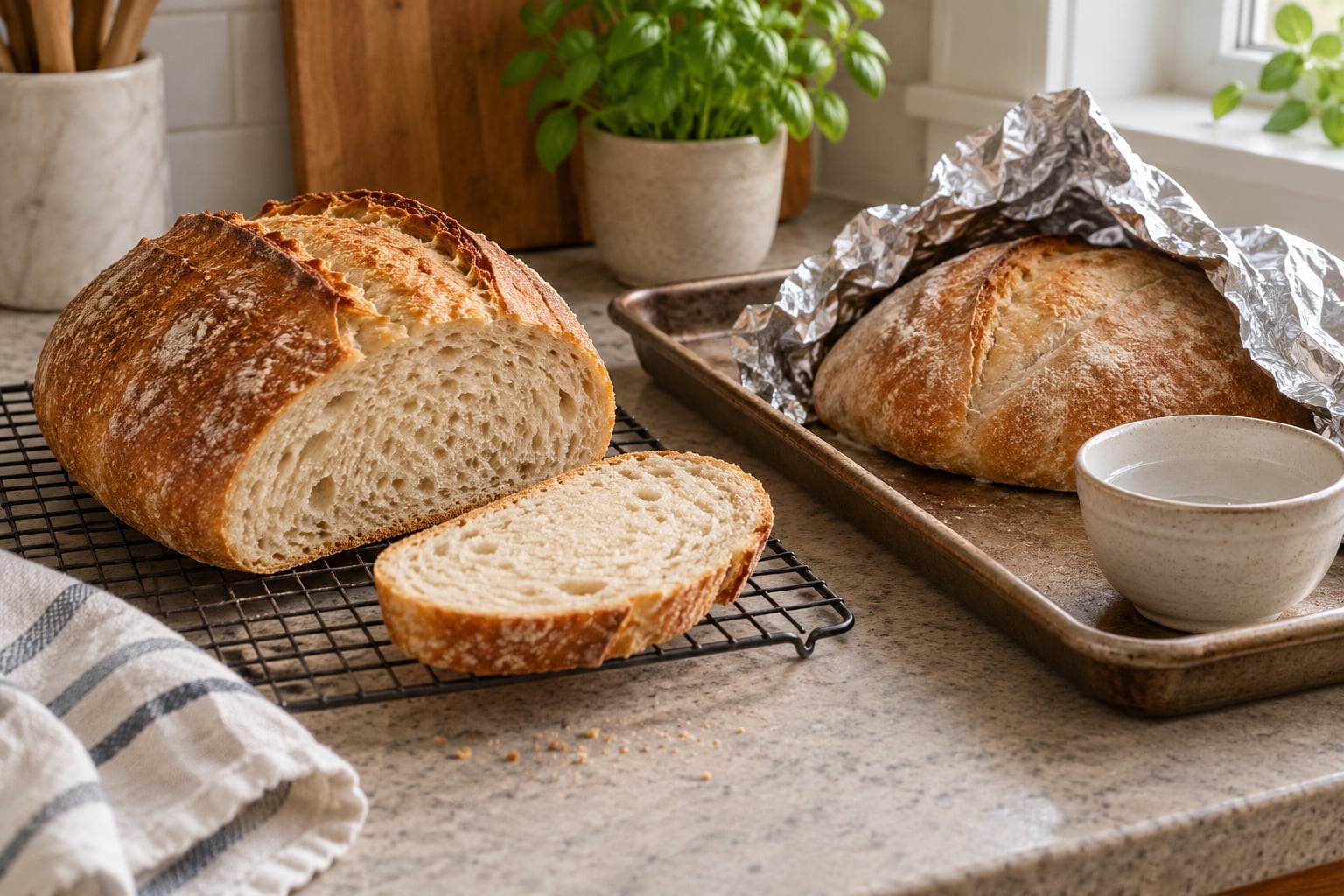
To revive stale bread in the oven, dampen the loaf lightly with water, wrap it in foil, and bake at 300°F for 10 to 15 minutes. The moisture turns to steam, the hardened crumb softens, and the crust firms up again, so day-old bread tastes close to fresh. Start checking at the 5-minute mark, because a soft sandwich loaf needs a fraction of what a rock-hard artisan boule needs.
Stale bread is not spoiled bread. Moisture leaves the crumb and the starch molecules settle back into a rigid arrangement, so the loaf feels dry and sounds dull when you tap it. Heat and a little water reverse that, and you get a warm loaf with a usable crust in well under 20 minutes. Let it cool on a rack before you cut it, and plan to eat it the same day.
Table of Contents
What You Need
The whole method costs about five minutes of setup. Almost everything is already in your kitchen.
- A baking sheet or rimmed baking pan to catch drips and keep the oven floor clean.
- A wire cooling rack for cooling the bread afterward. Bread set directly on the tray traps steam underneath and softens the crust.
- Aluminum foil for whole loaves and thick, crusty bread.
- A spray bottle or a measuring cup of cool water for dampening the crust.
- An instant-read thermometer, optional but useful. Aim for 325°F to 350°F inside the loaf when you unwrap it.
- Olive oil, butter or flaky salt, optional finishing touches for a crusty loaf.
A toaster oven works for rolls and slices, and an air fryer basket works for a single baguette at 350°F for about 6 to 8 minutes. If you toast sandwiches often, this is the same logic as toasting a sub at home without a commercial oven except the bread needs water added before the heat goes on.
Step-by-Step: How to Revive Stale Bread in the Oven
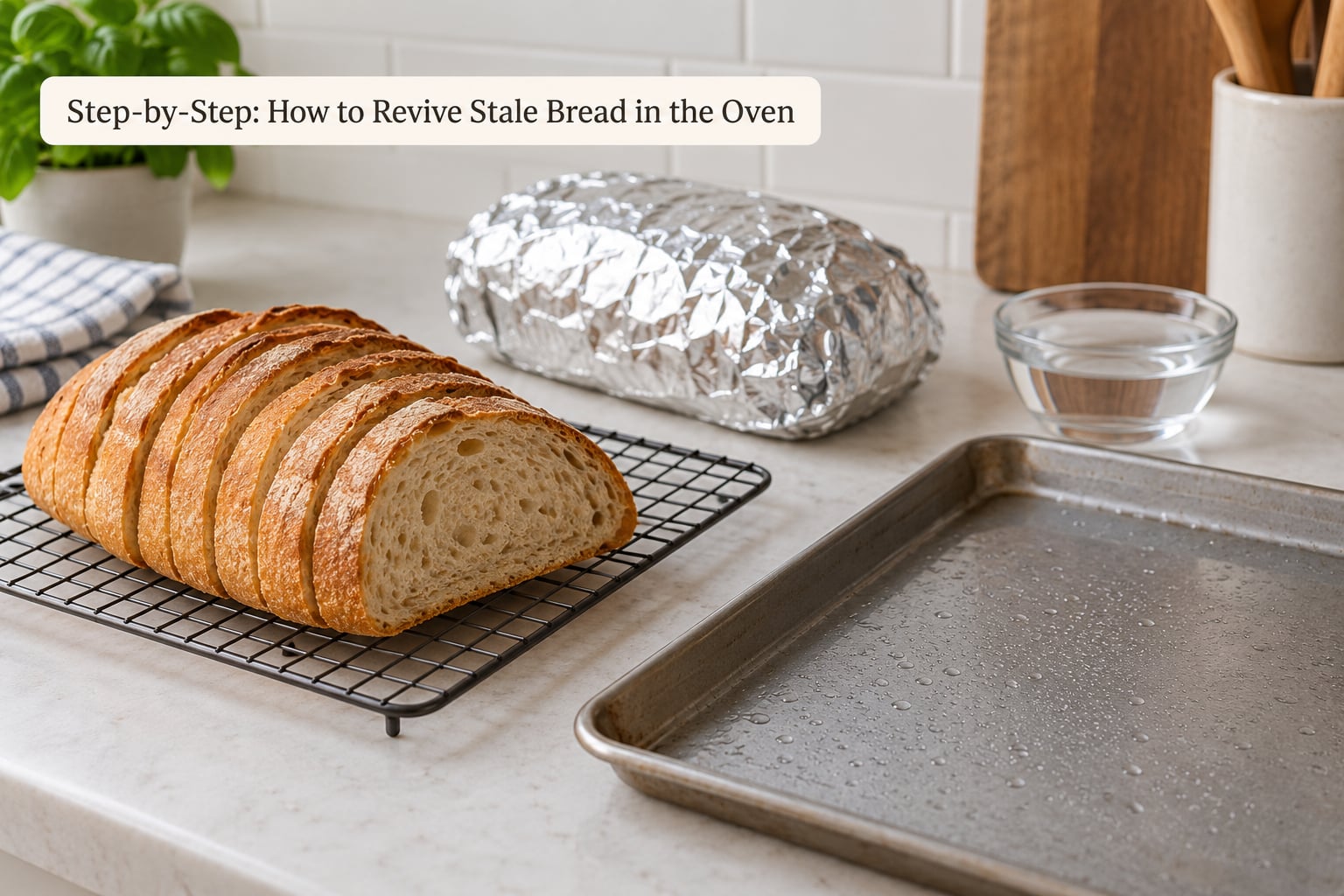
Step 1: Preheat the Oven and Lightly Dampen the Bread
Set the oven to 300°F (150°C) and give it 10 minutes to preheat. 300°F is the sweet spot: hot enough to turn moisture into steam inside the loaf, cool enough that a sugary enriched crumb will not brown before the middle warms through. Higher temperatures work for a crisp crust, and I use those for thin baguettes.
Run the crust under cool running water for two or three seconds, or spritz it two to four times with a spray bottle. A full baguette takes more water than a dinner roll, and a whole sourdough boule takes the most, because there is more crust per slice of crumb. Stop while the surface still looks matte rather than dripping. Soaking is the mistake that turns revived bread into a dense, gummy brick.
Wrap the loaf in foil and crimp the packet loosely. Crumple the foil first so it conforms to the shape of the bread, and leave a small gap at the top so steam can vent instead of tearing the crust. If you want a crackly crust, skip the foil and put the bread straight on the rack at 450°F instead.
Step 2: Heat the Bread Until the Crust Softens
Put the rack in the middle of the oven and heat until the crust feels dry and the foil stops fogging up. For a foil-wrapped loaf that is usually 10 to 15 minutes at 300°F. Unwrapped slices need far less: 4 to 6 minutes at 350°F is plenty, and they dry out fast, so pull them the moment the edges crisp.
| Bread type | Temperature | Time | Foil? |
|---|---|---|---|
| Baguette or demi-baguette | 450°F (230°C) | 4 to 6 minutes | No |
| Crusty sourdough or country loaf, whole | 300°F (150°C) | 10 to 15 minutes | Yes |
| Dense rye or whole-grain loaf | 325°F (165°C) | 12 to 18 minutes | Yes |
| Sandwich bread, sliced | 350°F (175°C) | 4 to 6 minutes | No |
| Dinner rolls or kaiser rolls | 325°F (165°C) | 5 to 7 minutes | Yes, in a packet |
| Brioche, challah or panettone | 300°F (150°C) | 6 to 8 minutes | Yes |
| Bagels or ciabatta halves | 400°F (205°C) | 5 to 8 minutes | No |
Enriched breads burn before they finish, which is why they sit at the low end and get watched. Home bakers on r/Breadit and r/Cooking point out the same pattern: homemade sourdough revives better than supermarket sandwich bread, and soft enriched loaves are the ones most likely to scorch in a hot oven.
Freeze-dampened bread does not revive well. Thaw it first on the counter, then treat it like day-old bread.
Step 3: Cool the Bread Before Serving
Take the bread out and slide the foil back a few inches, or unwrap it completely on the cooling rack. Wait 10 to 15 minutes before slicing, because steam trapped inside a warm loaf keeps making the crumb damp, and cutting early traps it there. Ten minutes is enough for a single roll, a quarter of an hour for a whole loaf.
Press the cut face with a fingertip. A revived loaf springs back slowly and feels plush, not rubbery. If the center is still hard, wrap it again for 4 more minutes. If the crumb feels wet and heavy at the middle, leave the foil open and give it 3 minutes more at the same temperature to dry out. Slice with a serrated knife, moving away from your fingers, and eat the bread the day you revive it.
Common Mistakes
Too much water. A soaked crust steams hard, and the crumb comes out gummy and dense. Fix it by finishing the loaf uncovered for a few extra minutes. Next time, aim for damp rather than wet, and remember the water is on the crust, not the crumb.
An oven that is too cool. Below 300°F, the loaf sits in gentle heat long enough to lose the last of its moisture, and you end up with warm dry bread. Raise the temperature to 300°F and shorten the time rather than cooking longer at a lower setting.
Overheating. Sugar and milk in brioche, challah and panettone brown fast, and a 450°F oven is too punishing for anything soft. If the crust darkens before the center warms, foil it immediately and drop the heat.
Crowding the tray. Bread touching in a single layer steams itself and softens unevenly. Give each loaf or roll its own space, and swap the sheet halfway through for large batches.
Slicing too early. Cutting while the loaf is hot locks moisture into the crumb as gummy patches. Cooling on a rack for at least 10 minutes fixes almost every case of a wet center.
Expecting ancient bread to come back. The oven reverses staleness, not age. Bread that has been sitting uncovered for weeks, smells sour or musty, or shows any mold, fuzz, or white and green patches goes in the bin, no exceptions. Mold on one slice means hyphae have already spread through the loaf, and no amount of heat makes that safe to eat.
Cutting rock-hard bread. A serrated knife on a day-old boule can slip and draw your hand across the blade. If the loaf will not take a knife without pressure, put it in the oven first, uncut, and wait for the crust to give.
Two habits prevent most of this. Freeze half the loaf in a sealed bag on the day you bake or buy, and thaw it in the bag overnight before reviving. And store the half you are keeping at room temperature in paper or a cloth, wrapped loosely in a plastic bag, never in the refrigerator, since cold storage pushes bread toward staling faster. A bread box or a simple storage routine covers more ground than any oven trick; our guide to the best bread boxes for keeping bread fresh longer goes into the options.
For sandwiches that will not be eaten the same day, freezing at the point of assembly and thawing in the fridge overnight is the better route. Our guide to meal prepping sandwiches for the week without soggy bread covers that side of it.
Frequently Asked Questions
Can hard bread be made soft again?
Yes, as long as the loaf is stale rather than moldy. Dampen the crust, wrap it in foil and bake at 300°F for 10 to 15 minutes, checking after 10. Bread that is only slightly firm needs about 5 minutes; a rock-hard loaf needs closer to 20. If the crumb is still hard in the middle, wrap it again for 4 more minutes. The texture will not match a loaf baked the same day, but it slices and eats like bread again.
Can I microwave stale bread to make it taste fresh again?
You can, and it is the fastest option for a couple of slices. Put the bread on a paper towel, dampen the towel, and microwave in 10-second bursts until the crumb is soft. It works in about 30 seconds. The catch is texture: microwaved bread often turns chewy and rubbery as it cools, and the crust stays flat. A microwave followed by 3 to 4 minutes in a toaster oven fixes both problems and is the best small-batch method.
How long to reheat stale bread in the oven at 350 degrees?
At 350°F, give a whole foil-wrapped loaf 12 to 15 minutes, a crusty loaf unwrapped 6 to 8 minutes, and a few slices 4 to 6 minutes. Unwrapped bread dries faster, so check early and pull it while the crust still has a little give. Dampen the crust first, or the crumb will tighten again within an hour of cooling.
Should I cover stale bread in foil before reheating?
Foil is right for thick, crusty, enriched bread: a sourdough boule, rye, dinner rolls or brioche. The packet holds steam against the crust so the crumb rehydrates before the outside dries out. Skip the foil for baguettes, ciabatta and bagels, and for sliced sandwich bread, and heat them uncovered at a higher temperature to re-crisp the crust instead.
Can you revive a whole loaf at once?
Yes, and reviving a whole loaf is more efficient than reviving slices. Dampen and foil the entire loaf, bake at 300°F for 10 to 15 minutes, then cool it whole on a rack for at least 15 minutes before cutting. Sliced bread loses moisture faster, so if you only need a few pieces, revive the cut slices instead and save the rest for later.
What do I do with bread that is moldy or very old?
Discard it. Mold is only visible on the surface, but the root threads have already spread through a soft loaf, and a loaf with fuzz, white or green patches, a musty smell or a slimy crust is not salvageable by reheating or toasting. Very old bread that is simply hard is a different case, and the oven will soften it, but once there is a smell or a mark you cannot scrape off, it goes in the bin.
Conclusion
Dampen the crust, wrap it in foil, and bake it at 300°F for 10 to 15 minutes. Cool it on a rack for a quarter of an hour before slicing, and eat it the same day.
That is the whole trick: moisture plus moderate heat softens the crumb again, and a short uncovered finish brings the crust back. It works on day-old sandwich bread, a day-old sourdough boule, rolls and French bread alike. Bread with mold, a sour smell or a slimy crust is finished, and no oven temperature will make that safe.