
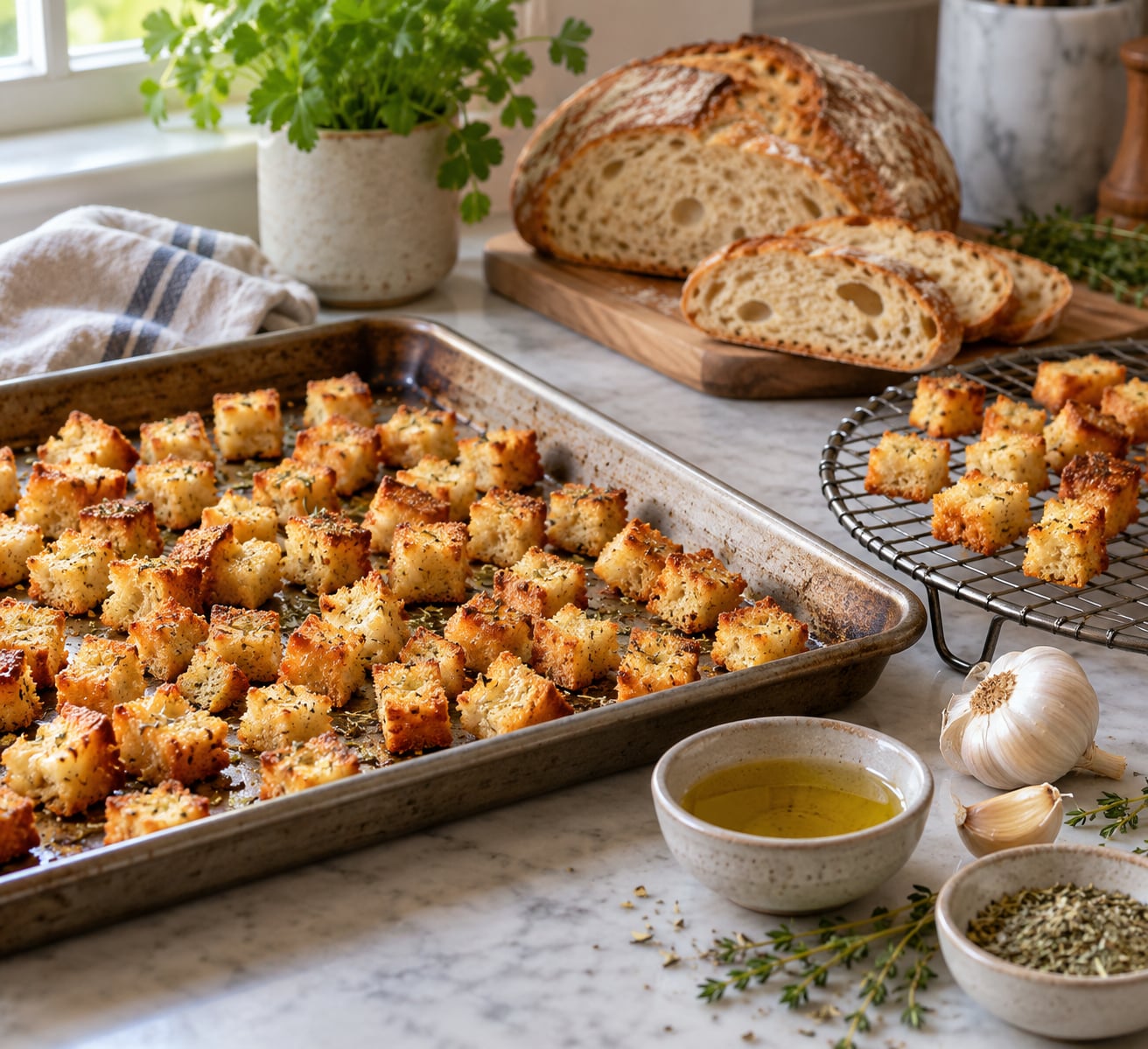
To make homemade croutons from leftover bread, cut day-old bread into 3/4-inch cubes, toss them with olive oil and salt plus any seasonings you like, then bake at 375°F for 15 to 20 minutes, stirring once, until golden. Cool completely before serving. Ten minutes of prep, about 25 minutes total.
That is the whole method, and it works for the half loaf nobody ate, the heel-shaped scrap left on the cutting board, or the sourdough that came out flatter than you wanted. The one thing that changes the result is how dry the bread is, so if yours is only slightly stale, give it a drying run in a low oven first.
A note on why dry bread matters: moisture in a fresh cube turns to steam in a hot oven instead of crisping. Stale bread has already given up most of that water, so the same 15 minutes buys you actual crunch. If you like your sandwiches to stay soft until lunch, you already know the trade-off in the other direction.
Readers say: “Since I can never find any decent croutons, I’ve started making them myself. Store bought croutons are too big and way too hard.” — a home cook in a Santa Fe food group. In another thread on r/Cooking, a baker described making croutons from a failed sourdough loaf, and the comments were almost entirely about not wanting to throw it away.
Table of Contents
What You Need
The ingredient list is short because the bread does the work. Everything else is there to add crunch and seasoning to something you already had.
- Day-old or stale bread, 3 to 4 cups cubed. Sourdough, French bread, baguette, challah and plain sandwich bread all work. Gluten-free bread works too, though it browns faster, so watch it closely.
- Olive oil, roughly 1 tablespoon per cup of bread cubes. Extra virgin is fine, and so is whatever you already have.
- Salt and black pepper, to taste.
- Garlic powder, 1 to 2 teaspoons.
- Italian seasoning or dried oregano, 1 to 2 teaspoons, optional but good.
- Melted butter, 1 to 2 tablespoons, optional. Butter gives a dairy note and better browning; oil holds up to higher heat and stays crisp.
- Grated Parmesan, a handful, optional. Toss it in during the last five minutes so the cheese browns without burning.
For equipment you need a rimmed baking sheet, a large bowl, and a chef’s knife. If you cut a lot of rustic loaves, it is worth reading up on the best bread knives for crusty loaves and soft sandwich bread — a serrated blade keeps the crumb intact when you are cutting a dense loaf into small pieces.
Most of the work is passive. Set the pan in the oven and go do something else for 15 minutes.
How to Make Homemade Croutons from Leftover Bread
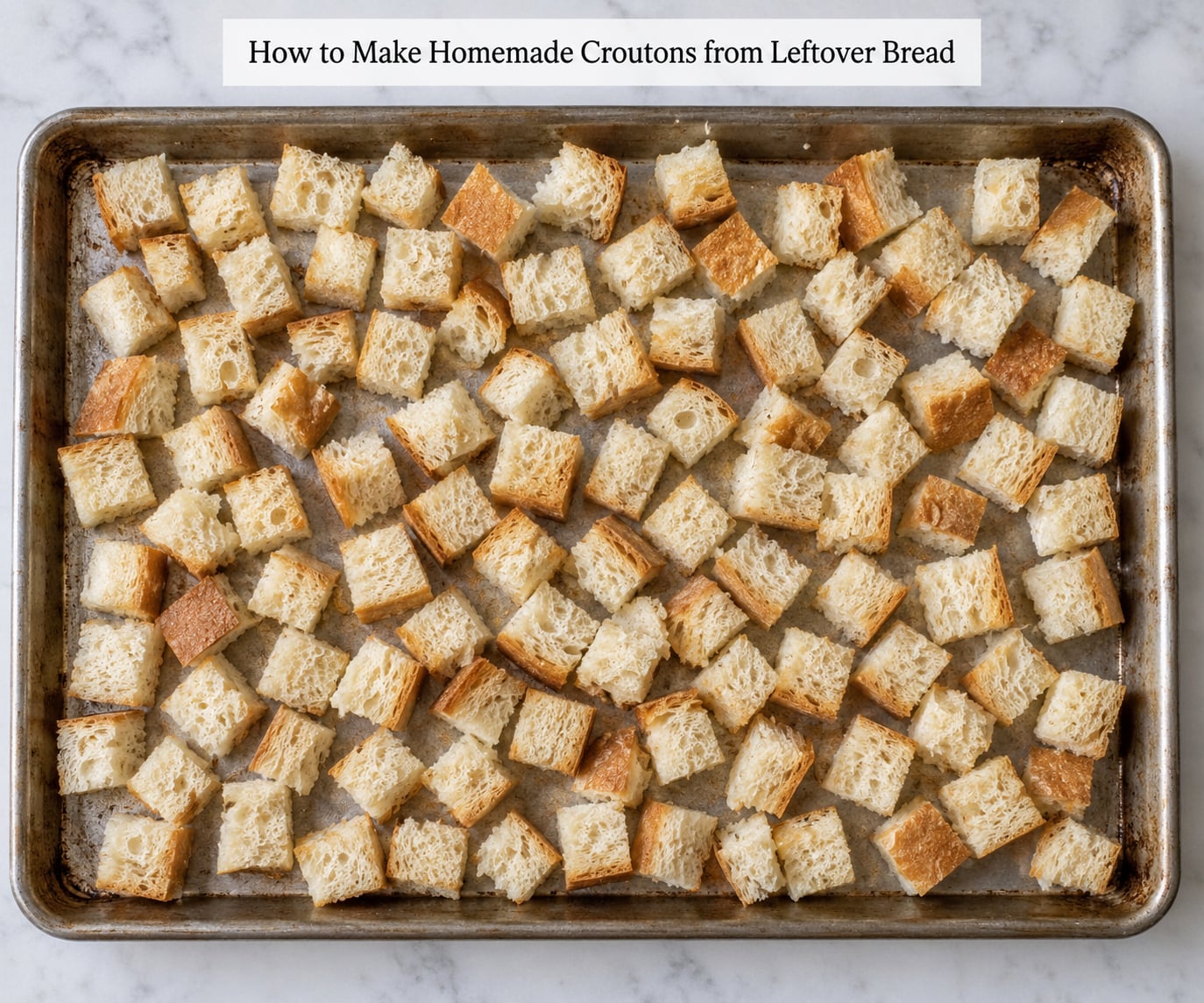
There are three good finishes, and they all start from the same bread. Cut even cubes and you get bakery-style croutons that hold their shape in a salad. Go smaller for a denser shower over a Caesar. Tear the bread into irregular pieces instead of cutting, and you get the rustic croutons that come out of Italian trattorias, craggier and more varied.
Step 1: Choose and prepare the leftover bread
Best results come from bread that is dry on the surface and a little firm all the way through — the heel of a loaf, a few slices left on the counter, or a loaf that is a day or two past its prime. Fresh bread is workable but needs drying first: spread the slices on a baking sheet and bake at 200°F for 15 to 20 minutes until they feel dry and no longer bend. That is a slow, gentle bake, not a browning one.
Whether to remove the crusts depends on the loaf. A thick sourdough or baguette crust is deliciously crisp when toasted, so leave it on. A soft sandwich loaf crust just gets leathery, so peel it or mix the soft pieces with a crusty loaf so the batch improves rather than suffers.
You are looking for pieces that are firm but not rock-hard. Bread that has been in a cabinet for a week may crumble as you cube it; work gently and accept a few crumbs, or pulse the whole loaf in a blender a few times for rustic pieces.
Step 2: Cut the leftover bread into crouton-sized pieces
Cut the leftover bread into 3/4-inch cubes as the default, and the pieces cook at roughly the same rate so the whole batch finishes together. For salad croutons that scatter nicely, go down to 1/2 inch. For croutons you want to survive a bowl of dressing, go up to 1 inch.
Evenness matters more than shape. If the pan is full of cubes ranging from a pea to a walnut, the small ones scorch while the large ones stay pale and chewy in the middle. Measure the first slice against itself as a template, and cut the rest to match. Torn pieces will always vary, so keep those batches to a single size or accept uneven browning as part of the look.
Thickness is the other half of it. Slice at a uniform thickness rather than working down to the end of the loaf where slices thin out, and if you have a denser loaf, slice thicker so the interior has time to dry out.
Step 3: Season the bread with oil and flavorings
Put the cubes in a large bowl and drizzle about 1 tablespoon of olive oil per cup of bread. Toss with your hands until every piece looks faintly shiny and no oil pools at the bottom of the bowl. That ratio is the whole trick: too little oil and the croutons taste flat, too much and they turn chewy and heavy.
Add the seasonings now, before baking, so the salt and garlic coat the surface and brown onto it. A teaspoon of kosher salt and a couple of twists of black pepper is the baseline. Garlic powder, Italian seasoning or dried oregano add the savory edge that most people are actually after.
Butter is a fine substitute for some or all of the oil, and it is worth knowing the difference. Butter browns faster and tastes richer, which suits a garlic-Parmesan batch, but milk solids burn sooner, so watch a butter-tossed pan in the last few minutes. Oil gives you a slightly cleaner, more neutral crunch that holds up to a lemon vinaigrette. Both work; use a thin coating the way spreads work best, and never drench the cubes.
Avoid fresh garlic at this temperature. A clove rubbed on the croutons straight out of the oven works nicely, but fresh garlic in the pan before baking will scorch before the bread crisps.
Step 4: Bake the croutons until crisp
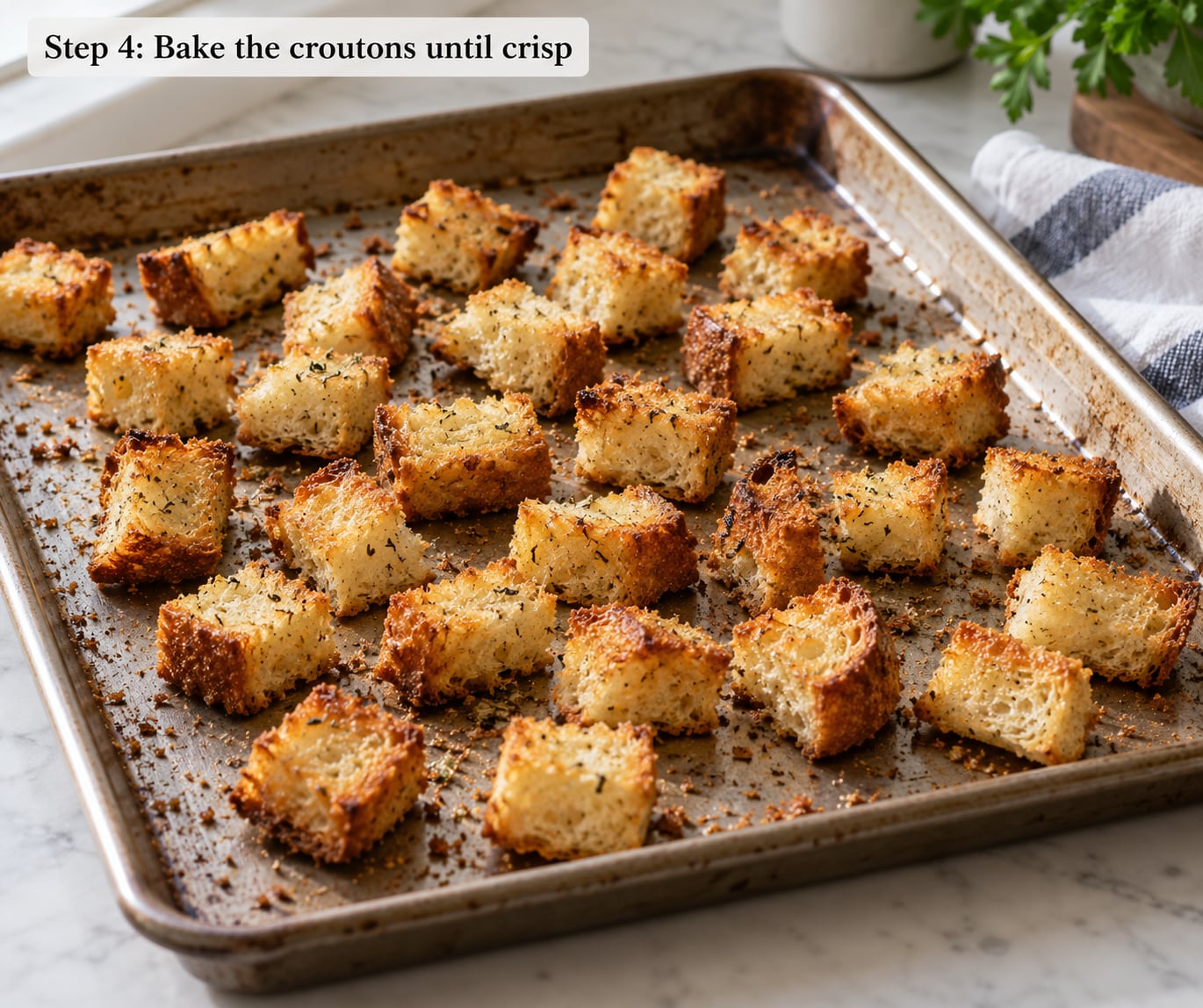
Heat the oven to 375°F. Spread the seasoned cubes on a baking sheet lined with parchment in a single layer with space between them, and slide it into the middle rack. Crowding traps steam, and steamed bread never crisps — this is the single most common reason a batch comes out chewy. Use two sheets rather than doubling up on one.
Bake 15 to 20 minutes, stirring or rotating the pan halfway through so the pieces brown evenly. Pull them when they are deep golden and the outsides look dry, not when they feel rock-hard in the pan. They firm up considerably as they cool, and croutons pulled too late come out genuinely hard rather than crunchy. A pale piece with a browning crust can hide a few more minutes; a dark piece is done.
For a small batch, a skillet on the stovetop takes about 5 to 8 minutes. Warm a tablespoon of oil in a heavy skillet over medium heat, add the seasoned cubes in one layer, and toss every minute or two so they color on all sides. Same seasoning, same size pieces, just faster.
Step 5: Cool and use the finished croutons
Tip the croutons onto a wire rack and leave them until completely cool, about 15 minutes. A wire rack matters: the underside needs air, and croutons left on a plate steam themselves into softness. Warm croutons also wilt the greens they sit on, so even for a salad, let them finish cooling first.
They should look dry and rigid, snap cleanly when you bite one, and give a little when you press it. That is the finished texture. Store them only after they are completely cool.
Use them on a Caesar salad, a garden salad, a pasta salad, or over tomato soup and chili. Add them to stuffing in place of the last of the bread, scatter a few on a casserole before it bakes, or eat them plain with a drink. As a breadcrumb substitute for meatloaf or a crust, crush them in a bag or pulse them in a blender — they are more coarse than store-bought crumbs, so pulse a bit longer than you think you need to.
Common Mistakes
The bread was too fresh. This is the usual cause of crumbs instead of crunch. Dry it at 200°F for 15 to 20 minutes first, or let it sit out uncovered overnight.
Pieces browned unevenly. Either your cubes were wildly different sizes or the pan was crowded. Cut to a single size, and use a second sheet when the first is full.
The croutons turned oily and chewy. Too much oil, or croutons stored while still warm. Use about 1 tablespoon per cup of bread and cool them fully on a rack.
Small pieces burned while big ones stayed pale. The pan sat too close to the element or the oven was too hot. Bake on the middle rack, and check at 12 minutes rather than waiting for the full 20.
They went soft in a day. The fridge is the cause. Fridge air is humid, and crisp bread has no moisture left to give up. Keep croutons at room temperature in an airtight container, and they stay crisp for four to five days.
One re-crisp trick covers most of the above. Spread soft croutons on a baking sheet and heat them at 350°F for 3 to 5 minutes until they snap again. They will not get back to day-one crunch, but they are a long way from sad.
Frequently Asked Questions
What kind of leftover bread is best for homemade croutons?
Sourdough, French bread, a stale baguette and plain sandwich bread all work well. Sourdough and baguettes have enough open crumb and flavor to stand up to seasoning, while sandwich bread is mild and takes garlic and herbs well. The bread does not matter nearly as much as how dry it is: anything firm and slightly stale works, and very fresh bread should be dried at 200°F for 15 to 20 minutes first.
Can I make croutons without oil?
Yes, and they will still crisp up, since the oven drives off moisture rather than oil. Bread tossed with only salt and seasoning gives a drier, crunchier result that holds up well in a salad. You lose a little flavor depth, and the coating is less even, so the crumbs shed a little more. For the most reliable crunch, use about 1 tablespoon of oil per cup of cubes.
Can I cook croutons in a skillet instead of baking them?
A skillet works well for a small batch. Warm a tablespoon of oil in a heavy skillet over medium heat, add the seasoned cubes in one layer, and toss them every minute or two so they brown on all sides. It takes roughly 5 to 8 minutes. The pan does not dry out as evenly as an oven, so keep the pieces moving and pull them once they are deep golden and dry on the outside.
How long do homemade croutons stay fresh?
At room temperature in an airtight container, homemade croutons stay crisp for about four to five days. Make sure they are completely cool before sealing the container, since warmth trapped with the croutons creates condensation and softens them. Do not refrigerate them: the humidity in a fridge turns crisp bread soft within a day. If they soften anyway, spread them on a baking sheet at 350°F for 3 to 5 minutes to bring the crunch back.
Can I freeze leftover-bread croutons?
Freezing finished croutons is possible but not ideal. They usually come back softer and slightly limp, since freezing introduces ice crystals that re-wet the crumb. The better freezer move is to stash the raw bread itself: cube stale loaves, bag them, and freeze. When a batch accumulates, toss the frozen cubes straight in oil and seasonings and bake from frozen, adding a few extra minutes. Fully cooked croutons freeze fine for stuffing, where they get soaked anyway.
Start with the driest bread you have, cut every cube to the same size, and spread them in a single uncrowded layer. Salt lightly, taste one before deciding you need more, and let the batch cool on a rack before it goes anywhere near a bowl. That gets you a reliable crouton the first time rather than the third.
Once you have the basic version down, the same base takes on a different character with a change of seasoning — Italian herbs for a tomato soup, garlic powder and Parmesan for a pasta salad, cinnamon and sugar if you are heading toward stuffing. It is still ten minutes of work.
Keeping a freezer bag of pre-cubbed stale bread is the other habit worth building. It turns croutons from an occasional project into something you can make without a trip to the store, which is a decent argument for baking a loaf you can still eat fresh the next morning and having the leftovers handled too.