
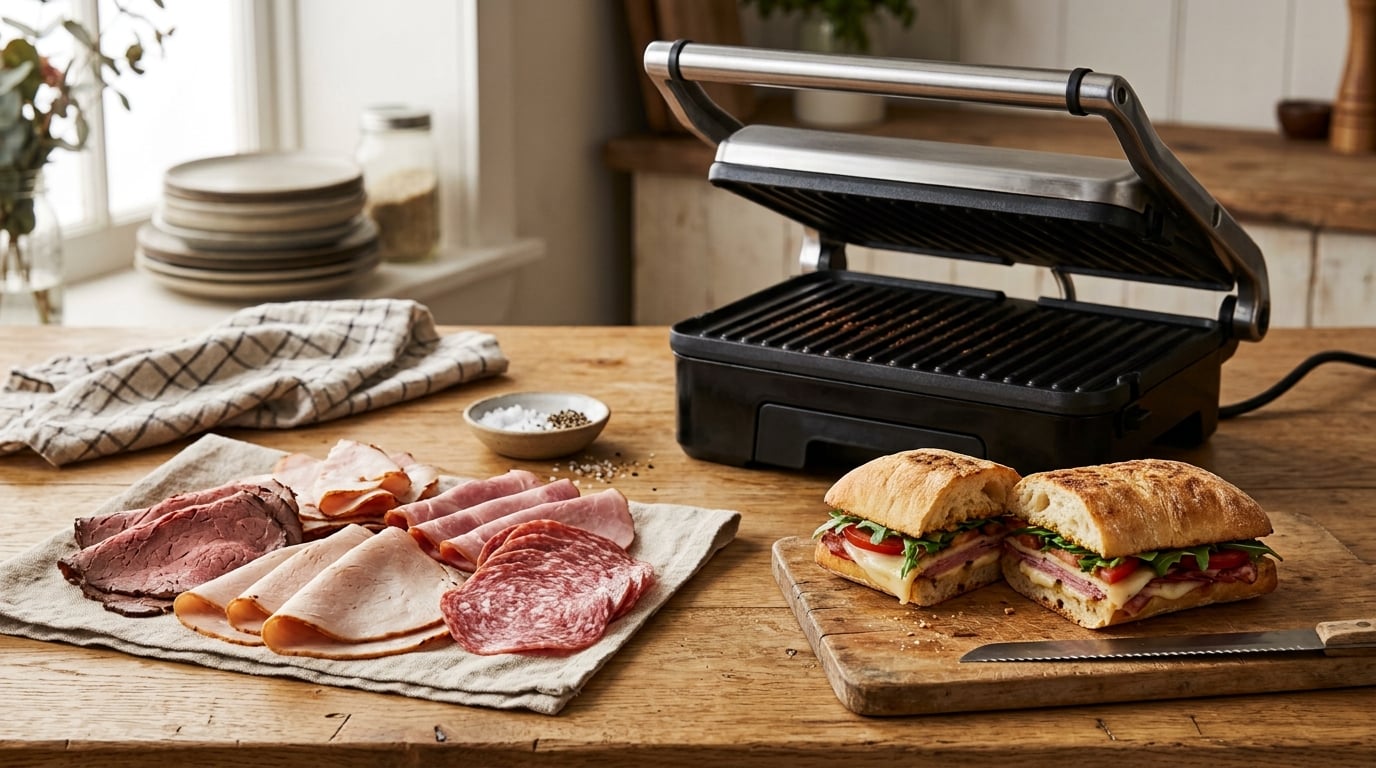
For a hot sandwich, pick a moist, heat-tolerant meat: ham, roast beef, pastrami, mortadella or bologna all improve under a press or a toaster oven. For a cold sandwich, pick a firm, boldly seasoned meat: salami, capicola, prosciutto or soppressata keep their texture and flavor cold. The difference comes down to fat and moisture, not preference.
Getting this wrong is the most common reason a homemade deli sandwich lands flat. A stack of oven-roasted turkey pressed in a panini comes out dry and chewy, and a thick slice of soppressata served cold on soft white bread turns oily and heavy.
So this guide breaks the eight most common deli meats down by how each one behaves under heat, then gives you a build for either style. Updated for 2026, with the storage and reheating numbers straight from USDA guidance.
Table of Contents
- Best Deli Meats for Hot Sandwiches vs. Cold Sandwiches at a Glance
- How Heat Changes Deli Meat
- Best Deli Meats for Hot Sandwiches vs. Cold Sandwiches by Texture
- Flavor, Saltiness, and Sandwich Pairings
- Moisture and Melt: Which Meats Stay Juicy?
- Hot Sandwich Picks by Meat
- Cold Sandwich Picks by Meat
- Safe Handling and Storage
- Which Should You Choose?
- Frequently Asked Questions
- Conclusion
Best Deli Meats for Hot Sandwiches vs. Cold Sandwiches at a Glance
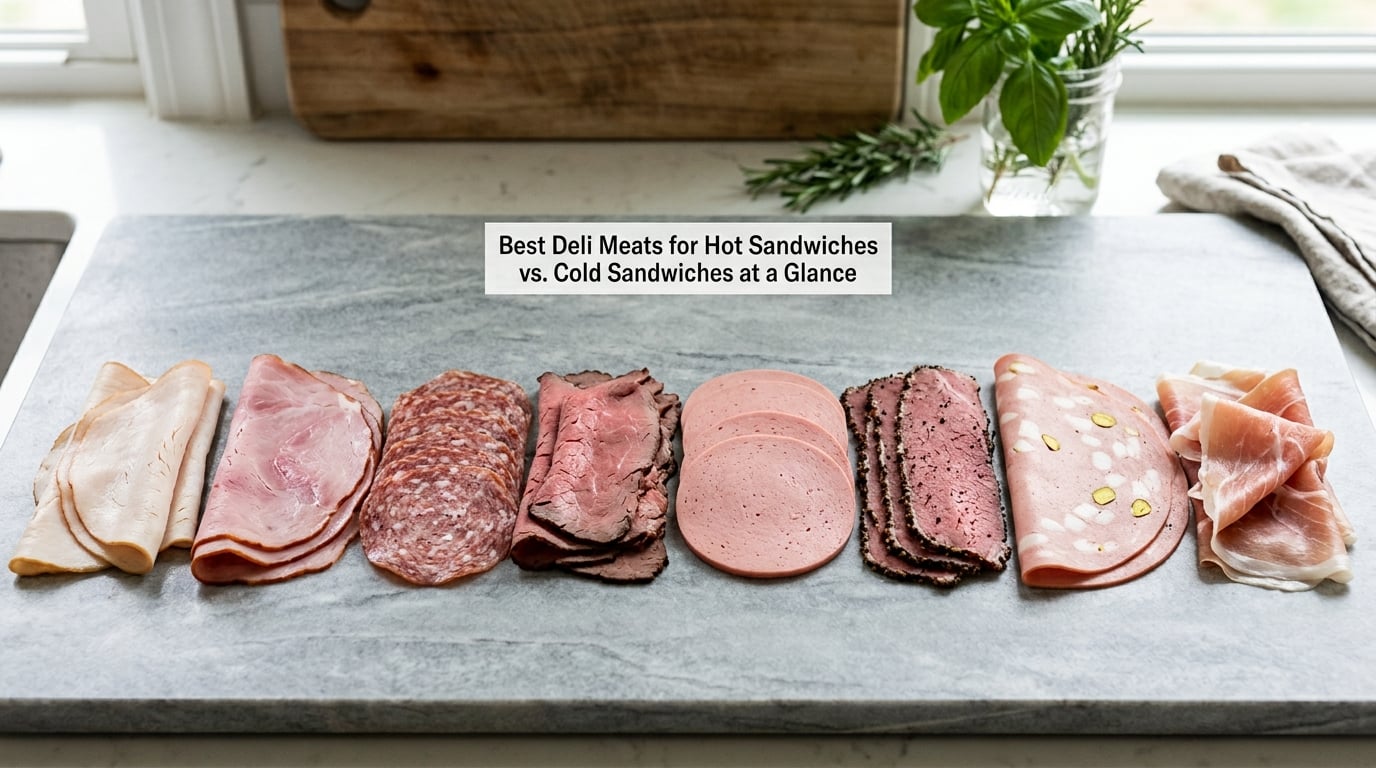
| Deli meat | Heat tolerance | Texture | Moisture | Flavor | Best bread | Ideal use |
|---|---|---|---|---|---|---|
| Turkey breast | Low to moderate | Tender, tightens when hot | Lean, dries fast | Mild, slightly sweet | Wheat or sourdough roll | Cold club or lettuce wrap |
| Ham | High | Tender, stays moist | Moderate to high | Sweet-smoked or cured-salty | Rye, wheat toast, ciabatta | Hot melt, pressed, or cold club |
| Roast beef | High | Slice-dependent, tender if thin | Moderate, needs sauce | Beefy, savory | French roll, sourdough | Hot French dip, cold roast beef sub |
| Salami | Moderate to high | Firm, chewy, crisp edge | Low to moderate | Salty, peppery, spiced | Crusty Italian roll, rye | Cold Italian sub or grinder |
| Bologna | Very high | Creamy, emulsified, smooth | High | Mild, faintly sweet | Rye, potato bread | Hot fried or grilled bologna sandwich |
| Pastrami | Very high | Tender with a crisp crust | High | Smoky, peppery, spiced | Rye, sourdough | Hot Reuben or hot pastrami melt |
| Mortadella | Very high | Soft, creamy, loosely bound | Very high | Mild, garlicky, peppery | Ciabatta, crusty baguette | Hot melt or cold Italian sub |
| Prosciutto | Low to moderate | Thin, soft, slightly chewy | Lean, dries quickly | Sweet, salty, nutty | Ciabatta, focaccia, melon bread | Cold, or a fast warm melt |
Read the heat tolerance column first. Anything marked high or very high can take a panini press, a skillet or a few minutes under the broiler without losing its character.
How Heat Changes Deli Meat
Heat does four things to a slice of deli meat, and the balance between them decides whether the sandwich improves or falls apart.
First, fat renders. In a cured pork cut like salami or prosciutto, the white flecks are fat that softens and crisps at the edge. In an emulsified loaf like bologna or mortadella, finely ground fat melts into the binder and the slice goes creamy instead of drying out. That is why bologna and mortadella are the two most forgiving meats on a hot sandwich.
Second, water leaves. Lean cuts have less internal fat and less water to hold, so heat pushes moisture out of them faster. Oven-roasted turkey and low-fat ham are the usual casualties. Once the surface dries, muscle proteins tighten and squeeze, and the slice turns rubbery. A quick sear actually seals the outside, but a slow toaster oven cycle dries it through.
Third, collagen and fat soften in slow, well-fatty cuts. Pastrami, corned beef and roast beef from the eye of round or top round have enough intramuscular fat to stay tender through a press.
Fourth, smoke and spice concentrate. A slice of salami that tastes balanced cold can taste twice as salty at 400°F, because water evaporates and what stays behind is mostly salt and spice. Heat does not create flavor here, it concentrates it.
Curing is the other half of the story. Dry-cured and fermented meats (salami, prosciutto, soppressata) develop a firm, drier texture that resists heat better than wet-brined or roasted poultry, yet their thin profile means they scorch easily on direct contact.
Best Deli Meats for Hot Sandwiches vs. Cold Sandwiches by Texture
Texture after heating sorts the meats into four families, and each family wants a different bread and a different press time.
Tender and moist: ham, roast beef, pastrami
These hold their tenderness straight through a hot press. Ham is the most forgiving of all of them, and roast beef sliced thin enough behaves the same way. Pastrami adds a crust from the smoked fat cap, so it rewards a longer, harder press than the others. Bread: sturdy but not dense, so rye, sourdough, or a lightly toasted wheat roll.
Crisp-fatty: salami, coppa, soppressata
Cold, these are firm and meaty with a little snap. Heated, the fat renders and the edges turn crisp while the center stays springy. They take a fast press only, because they are already well cooked and they burn before they soften. Bread: a crusty roll that can stand up to the oil.
Chewy-cured: prosciutto, serrano, lean ham
Thin dry-cured slices tighten noticeably under heat. Prosciutto is the clearest case: cold it drapes and folds, hot it goes leathery at the edges in under two minutes. Warm it fast, use low heat, and pair it with a cheese that supplies the moisture.
Creamy and emulsified: bologna, mortadella, liverwurst
These are the most heat-tolerant textures on the counter. The emulsion holds water in a way a whole-muscle slice cannot, so they brown, crisp and stay tender simultaneously. Mortadella with its visible fat cubes is the richest of the group; bologna is the mildest.
Flavor, Saltiness, and Sandwich Pairings
Every deli meat sits somewhere on a scale from mild to loud, and the pairing job is to fill in what’s missing rather than add more of the same.
Mild options are turkey, chicken, honey ham and bologna. They need something with an edge: sharp mustard, provolone, pepper jelly, banana peppers, or a pickle cut into thin coins so it does not push the bread apart. I like honey ham with provolone and a thin layer of hot honey for a sandwich that reads mild but isn’t.
Smoky, peppery options are pastrami, corned beef and Black Forest ham. Pair them with Swiss or muenster, which are mild enough not to fight the smoke, plus sauerkraut or grilled onion. The classic rye, Swiss, sauerkraut, Russian dressing combination is a Reuben shape for a reason: each element answers a different flavor in the meat.
Salty, tangy, fermented options are salami, soppressata, capicola and prosciutto. These want acid, not more salt: pickled peppers, giardiniera, marinated artichokes, arugula with a lemon dressing, or a light mustard. Bread: the crustier the better, since a soft roll turns to paste under the oil.
Heating sharpens every profile, so reduce what you add. A sandwich that needs a heavy sauce when cold often needs only a thin spread once the meat is hot and the bread is toasted.
Moisture and Melt: Which Meats Stay Juicy?
Moisture is the deciding factor for hot sandwiches, and it is largely a question of how the meat was made.
How moisture and melt decide your hot sandwich
High-fat, emulsified, and well-cured meats stay juicy because the fat they render replaces the water they lose. Mortadella, bologna, ham, pastrami and corned beef all fall in that group. Lean low-fat turkey and chicken do not, and a low-fat turkey melt needs a wetter cheese and a shorter cook to compensate.
Cheese choice matters as much as the meat. Low-moisture mozzarella, provolone, cheddar and muenster melt and stay put over a hot sandwich. Fresh mozzarella, ricotta and goat cheese release water and turn the bread to mush before they melt.
Method follows moisture. Toast or press fatty, emulsified and cured meats, since they tolerate direct high heat. Grill lean poultry briefly over high heat and add the cheese at the end so it melts without a long bake. For driest-prone meats like roast beef and prosciutto, warm the meat separately for a minute, then build the sandwich so you control the moisture going in.
Hot Sandwich Picks by Meat
These are the builds I would actually make, with the cooking method, slice thickness, bread, cheese and toppings that suit each meat.
Turkey. Ask for a thick-cut, not the paper-thin default. Sear it hard in a skillet for 30 to 45 seconds a side, then add low-moisture cheddar and finish under the broiler for two minutes. Wheat toast or a sturdy roll, cheddar, raw onion, a smear of mayo. Turkey on its own is not a hot sandwich; the cheese and a fast sear are what make it work.
Ham. The most forgiving option there is. Medium slices on sourdough or wheat toast, Swiss or provolone, a smear of whole-grain mustard, and two or three minutes under a panini press. Black Forest ham works hot too, with the added bonus that the smoke deepens rather than fades.
Roast beef. The cut decides the result. Eye of round and top round are the standard deli choices, and top round holds up to heat slightly better; sirloin tip is the tender option. Slice it thin, warm it briefly in its own juice or au jus, and assemble last. French roll, provolone, and a hot roast beef melt is the highest-return use for a pound of deli roast beef.
Salami. Use a hard or cured salami, sliced thin, on a crusty roll, and give it a very short press, about 90 seconds. Sharp provolone, banana peppers, a little olive oil, and a splash of red wine vinegar in the dressing. Long toasting turns salami leathery, so watch it.
Bologna. A genuinely underrated hot meat. Thick slices in a skillet until the edges brown and crisp, a slice of American or cheddar on top, one slice of tomato added after cooking, and the sandwich pressed for a minute. Rye or potato bread. This is the closest thing a sandwich shop has to a grilled bologna.
Pastrami. Only worth it hot. Ask for a thin slice with the fat cap, sear it cut-side down for crust, then add Swiss and sauerkraut and press. Rye, a little mustard, and Russian or Thousand Island dressing. Corned beef is the same family and swaps in directly, though it is less smoky and more tangy.
Mortadella. The best hot deli meat nobody thinks to buy. Thick slices, provolone, a little arugula added after the press, on ciabatta. The fat cubes crisp, the slice stays creamy, and it is impossible to overcook.
Prosciutto. A fast melt only. Warm the slices for 45 to 60 seconds in a dry skillet, add fontina or scamorza, and serve immediately on ciabatta. Beyond two minutes it goes leathery, and no amount of cheese fixes that.
Cold Sandwich Picks by Meat
Cold is where the most flavorful deli meats belong, because you taste them as they are, and nothing gets concentrated or scorched.
Salami, capicola, coppa and soppressata are the core of any Italian sub, in that order of texture from firmest to most tender. Layer two or three of them together on a crusty roll that gets a quick toast first, and the combination reads richer than any single meat alone. Mortadella and prosciutto add creamy and salty depth to the same roll. Balance it with giardiniera, roasted peppers, or a lemon-oil dressing rather than mayonnaise.
Turkey and chicken want something structural around them. A club-style stack with bacon, lettuce, tomato and mayo works because the crisp and the crunch are doing the work the meat cannot. Provolone or cheddar give the sandwich a backbone that plain sliced turkey lacks.
Ham and roast beef are the most portable cold options. They travel well, they hold for a lunchbox, and they take almost anything. Roast beef with provolone, tomato, sweet onion and banana peppers is a cold sandwich that tastes like a hot one without the heat.
One rule for cold builds: keep wet condiments away from the bread. Mayonnaise and Italian dressing belong on the meat, never spread on the cut face, and dry ingredients like lettuce should go in last. Thin deli slices roughly matched to the thickness of a pickle or a slice of cheese make a cold sandwich that eats evenly instead of falling apart halfway through.
Safe Handling and Storage
Keep sliced deli meat at or below 40°F (4°C) at all times, including in the car on the way home from the counter, and use it within three to five days of opening.
Store it in a shallow, airtight container or a sealed bag in the coldest part of the fridge. Letting cold cuts sit in their own liquid is what makes prepackaged lunch meat watery, and watery meat slides out of the sandwich and dries out the bread.
For reheating leftover deli meat, heat it to 165°F (74°C) and keep it steaming. That figure applies to leftovers and to previously cooked deli meat served hot, which is exactly what a toasted turkey or ham sandwich is.
Do not confuse that with safe minimum cooking temperatures for raw meat. Poultry must reach 165°F (74°C), ground meat 160°F (71°C), and whole cuts of beef, pork, lamb and fish 145°F (63°C) with a three-minute rest. Deli meat from a counter is already cooked; raw cuts are not.
Reheat only what you will eat. Sliced meat reheated two or three times loses moisture each round, and that is the real reason a re-warmed sandwich tastes dry rather than any fault in the meat.
Which Should You Choose?
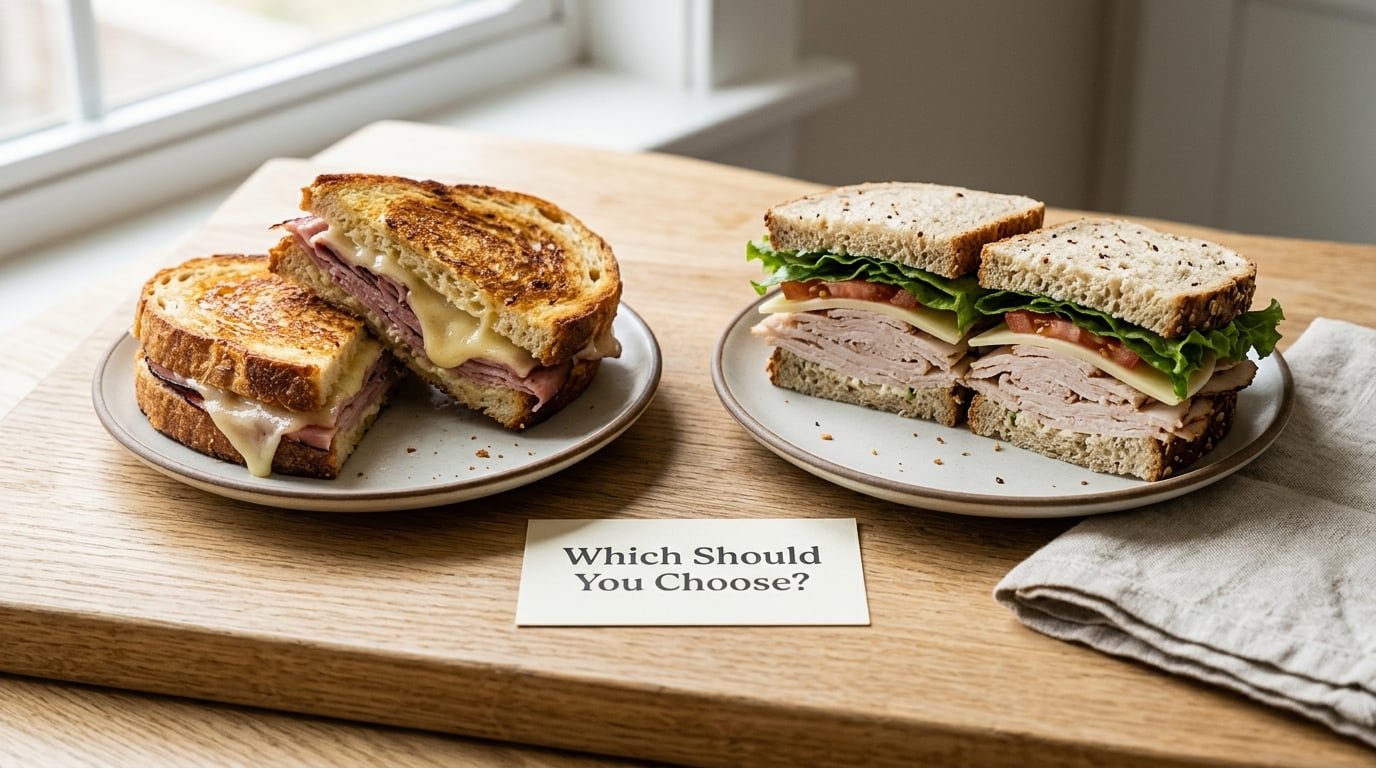
A quick toasted lunchbox sandwich calls for ham. It takes heat well, presses fast, and pairs with anything in the fridge. A hearty grilled sandwich wants pastrami or corned beef on rye, seared hard with Swiss and sauerkraut. A crisp cold sub wants salami with capicola and mortadella on a toasted crusty roll.
An Italian-style sandwich is a cold build by definition, built on salami, capicola and prosciutto with pickled vegetables. A roast beef melt belongs hot, and roast beef served cold is the same meat used for something else entirely. For a lower-sodium sandwich, skip the cured and emulsified meats, choose uncured oven-roasted turkey or roast beef, and season with pepper and mustard rather than cured meat and cheese together.
A kid-friendly sandwich is cold turkey or honey ham with mild cheddar, thin-cut so nothing shifts, and the lettuce chopped fine. The two hardest cases are pastrami and soppressata, both of which are too salty and too textured for a younger eater. My own rule is that if the meat needs two sauces to taste right, it is not a beginner sandwich.
And if you only remember one thing: ask the counter for thick cuts for a hot sandwich and thin cuts for a cold one, and take a piece home to taste before you commit to a quarter pound.
Frequently Asked Questions
What is the best deli meat for a hot sandwich?
Ham is the most reliable all-round choice because it stays moist and takes a press without shrinking. Pastrami and corned beef are the best-tasting options on rye with Swiss and sauerkraut. Mortadella and bologna are the most forgiving, staying creamy and juicy under direct heat, while turkey and prosciutto need a fast sear and a wet cheese to avoid drying out.
What is the best deli meat for a cold sandwich?
Salami is the top answer because it holds its firm texture, salty flavor and slight bite when served cold. Capicola and soppressata add tender and spicy contrast to the same sub, and mortadella adds creamy richness. Turkey and ham are the most portable cold options, pairing well with cheese, lettuce and tomato in a club-style stack.
Should I grill or toast deli meat?
Grill or sear fatty and emulsified meats, such as bologna, mortadella, ham and salami, since they tolerate direct high heat and develop a crust without drying. Toast lightly for lean meats like turkey and prosciutto, which tighten and turn leathery with long exposure. Pressing the assembled sandwich for one to three minutes gives you both the crust and the melt in one step.
Which deli meat is least salty?
Uncured, oven-roasted turkey breast is usually the lowest-sodium option, followed by freshly sliced roast beef and plain baked ham. Cured meats like salami, prosciutto, pastrami and corned beef carry far more salt, and emulsified meats like bologna and mortadella add sodium as well. Check the label per 2 oz serving, and compare it against the FDA daily value of 2,300 mg.
Can I use leftover deli meat in a sandwich?
Yes, as long as it has stayed refrigerated at or below 40°F (4°C) and you use it within three to five days of opening. Reheat it to 165°F (74°C) and keep it steaming, or serve it cold, which is better for texture. Reheat only the portion you will eat, since each round of heating dries the slices further and turns lean meat rubbery.
Conclusion
The first decision to make is moisture and heat tolerance. If the sandwich is hot, choose a moist meat such as ham, pastrami, roast beef, mortadella or bologna. If it is cold, choose a firmer, more heavily seasoned meat such as salami, capicola, prosciutto or sopressata, and let its flavor speak for itself.