
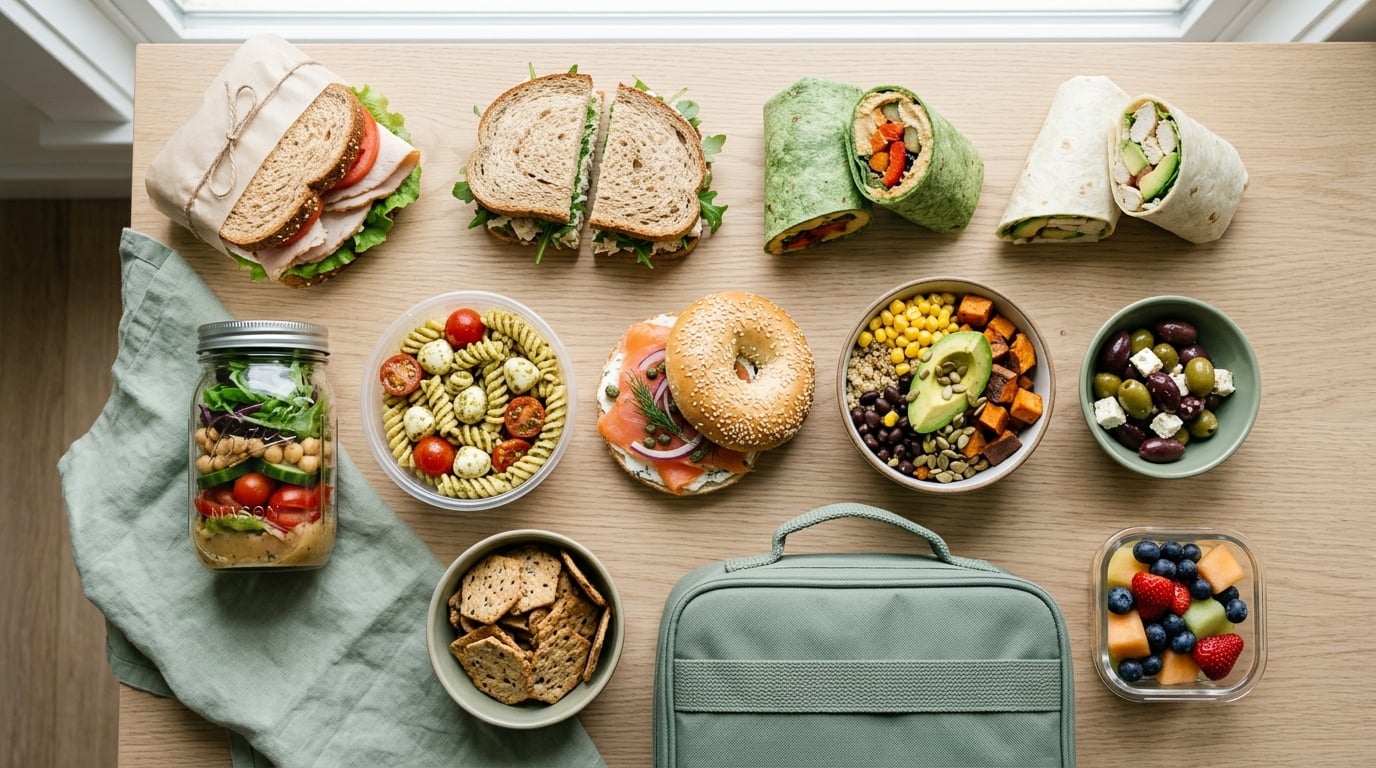
A cold road trip lunch is any meal you eat exactly as packed, with no microwave, no stove, and no reheating. That usually means a sturdy sandwich, a wrap you can hold one-handed, or a salad in a jar that survives being set on a dirty center console for six hours. The 12 ideas below cover everything from a ten-minute PB and fruit wrap to a make-ahead pasta salad worth looking forward to.
One word of clarification before we start: here, cold means no-cook and no-reheat. It does not mean cold-weather camping food. If you are searching for meals to keep you warm in December, this is the wrong page; if you want something that survives a parked car in July, you are in the right place.
Every idea gets a cooler flag. If a lunch says it keeps without refrigeration, you can pack it in a backpack on a flight. If it says cooler, it needs to sit under 40°F the whole time. Last updated for 2026, and still true for the year ahead.
A lot of this comes down to how you pack. We put together our own sandwich ordering and packing guides as a starting point, but the specific cold-chain rules below matter more for a long drive than what goes between the bread.
Table of Contents
- Best Cold Lunch Ideas for Road Trips at a Glance
- 1. Turkey and Hummus Sandwich
- 2. Mediterranean Chicken Wrap
- 3. Tuna and White Bean Salad
- 4. Caprese Pasta Salad
- 5. Chickpea and Veggie Pita
- 6. Cold Salmon Bagel
- 7. Turkey, Apple, and Brie Sandwich
- 8. Black Bean and Corn Bowl
- 9. Chicken Salad Lettuce Cups
- 10. Roasted Vegetable and Pesto Sandwich
- 11. Peanut Butter and Fruit Wrap
- 12. Italian Sub with a Side of Olives
- How to Pack Cold Lunches Safely for a Road Trip
- Frequently Asked Questions
- What is the easiest cold lunch to take on a road trip?
- How long can a cold sandwich stay safe in a car?
- Which cold lunches work best without a microwave?
- What foods should I keep separate when packing a road-trip lunch?
- Are cold wraps healthier than cold sandwiches?
- How can I keep lunch cold for a long drive?
- Conclusion
Best Cold Lunch Ideas for Road Trips at a Glance
Here are all twelve, side by side. Prep time is active time, not total chill time, and the storage column is the one that decides whether an idea works on your route.
| Lunch | Best for | Prep time | Portability | Storage note |
|---|---|---|---|---|
| Turkey and hummus sandwich | Long driving days | 5 min | High, eats one-handed | Keep cold; hummus goes off faster in heat |
| Mediterranean chicken wrap | Protein-heavy trips | 10 min | High, tortilla flexes less than bread | Cooked poultry must stay under 40°F |
| Tuna and white bean salad | Fork-friendly, no crumbs | 10 min | High in a leakproof jar | Keep cold; eat the same day |
| Caprese pasta salad | Make-ahead mornings | 15 min | Medium, best eaten with a fork | Keep cold; drain before packing |
| Chickpea and veggie pita | Vegetarian trips | 10 min | Medium if packed in halves | Keep vegetables separate from pita |
| Cold salmon bagel | Cold or cooked fish days | 5 min | High on a sturdy bagel | Eat within four hours of leaving the fridge |
| Turkey, apple, and brie sandwich | A little indulgence | 5 min | High | Keep cold; assemble at the last minute |
| Black bean and corn bowl | Multi-day trips | 10 min | Medium, eats with a fork | Keep cold; dressing packed separately |
| Chicken salad lettuce cups | Lighter, low-carb options | 10 min | Medium, leaves wilt | Keep cold; cup packed upright |
| Roasted vegetable and pesto sandwich | Vegetarian and picky eaters | 15 min | High, foil wrapped | Keep cold; pesto sealed in a small pot |
| Peanut butter and fruit wrap | Budget and family travel | 3 min | Highest, no cooler needed | Shelf stable, no chilling at all |
| Italian sub with olives | Big appetites | 5 min | Medium, hold it level | Deli meat needs a cooler or a chilled bag |
1. Turkey and Hummus Sandwich
Turkey and hummus travels better than almost any other sandwich because there is nothing wet in it. Hummus replaces mayo, which means the bread stays dry in a way a turkey sandwich with mayo never does.
Build it on a sturdy roll or thick slices of wheat, spread the hummus on both sides so it forms a barrier, then add turkey, thin tomato, and a few leaves of romaine. A little Dijon on the turkey keeps it from tasting flat.
The example: a seven-hour drive from Denver to Kansas City. Two of these, cut in half, plus a bag of baby carrots, held together with a twist tie. They survived the second half of the drive without a soggy spot, which is the whole point.
One caution. Hummus is one of the most-repeated questions in road trip food forums, and the answer is consistent: unrefrigerated hummus is a short-window food. Use it early in the trip, or keep it under 40°F.
2. Mediterranean Chicken Wrap
A wrap beats a sandwich when the filling is moist, because a tortilla flexes instead of cracking. Grilled chicken, cucumber, red onion, olives, and a thin spread of hummus roll tight enough to eat one-handed through a rough stretch of interstate.
Slice the vegetables thin and salt the onion in a separate container for ten minutes, then drain it. Raw onion is the one thing that turns a good wrap into a tearful one at mile 400.
Poultry is the safety story here. Cooked chicken must reach 165°F (74°C) before it goes in the wrap, and once assembled, it stays under 40°F in a cooler or it goes in the bin. Pack the dressing separately and drizzle it at the rest stop. I have packed this wrap twice without the dressing and regretted it both times.
3. Tuna and White Bean Salad
Tuna and white beans is a lunch for people who do not want crumbs on their shirt. Drain both, fold them together with a little olive oil, lemon, and black pepper, and pack it in a jar or a leakproof container you can eat from with a fork.
Layer it if you use a mason jar: dressing at the bottom, beans, then tuna, with lettuce tucked in at the very top so it never touches the bottom and turns limp. Pack a sleeve of crackers or a small baguette on the side and it becomes a real meal instead of a scoop.
This is one to eat early in the day. Canned tuna is shelf stable, but once mixed into a dressed salad it behaves like any other perishable, and in a hot parked car that window closes fast.
4. Caprese Pasta Salad
Small pasta, halved cherry tomatoes, cubed mozzarella, torn basil, and a dressing of olive oil and balsamic. It is better on day two than day one, which makes it the rare lunch that rewards planning the night before.
The travel problem is watery pasta, and there are two fixes. Salt the tomatoes and let them sit in a colander for fifteen minutes to drain, then pat them dry. And pack the balsamic in a separate little container rather than pouring it in at home. Dress it in the car or at a rest stop, not in the bag.
For a store-bought version, buy a deli tub of pasta salad and a container of mozzarella pearls, then skip the tomatoes entirely. Less pretty, travels all day.
5. Chickpea and Veggie Pita
Chickpeas, cucumber, peppers, greens, feta, and a lemon-olive oil dressing in a whole wheat pita. It is filling, it is vegetarian, and it needs nothing more than a knife and a flat surface.
Pack the pita in halves and keep the wetter vegetables in a separate container until you are ready to eat. A packed pita left overnight next to tomatoes becomes a folded, soggy disappointment, and this is the single most common packing mistake in this whole list.
Roasted or raw, the chickpeas hold up fine cold. Add a hard-boiled egg if the trip is long and the eaters are hungry, and you have a full meal.
6. Cold Salmon Bagel
Smoked salmon or baked salmon, cream cheese, thin cucumber slices, and a handful of arugula on a sturdy everything bagel. The bagel needs to be dense, because a soft one folds in half and delivers the filling to your lap.
Fish is the item most sensitive to time out of the fridge. Keep it in an insulated tote with an ice pack, eat it within about four hours of leaving refrigeration, and if it is a hot day, make it the first lunch rather than the last.
Cooked salmon travels better than smoked, since hot-smoked fillets hold texture better once they have cooled. Cook to 145°F (63°C), cool fully, and pack it in a sealed container over the ice packs.
7. Turkey, Apple, and Brie Sandwich
Thin apple slices, turkey, and a small piece of brie on sourdough. The fruit is what makes it work, cutting the richness of the cheese and keeping the whole thing from tasting heavy at hour three.
Assemble this one at the last minute. Brie softens quickly, and a sandwich that has sat warm for two hours becomes a slice of melted cheese on a piece of bread. If you must build it in advance, wrap it tightly in foil and keep the apple on top so it does not bleed into the bread.
The balance is a little sweet and a little sharp, which makes it a good choice for a trip where the kids have already rejected two plain sandwiches.
8. Black Bean and Corn Bowl
Rinsed black beans, corn, diced peppers, red onion, cilantro, and rice or quinoa, with lime, olive oil, and cumin for dressing. It is cold, it is filling, and it scales to a four-person trip without a second recipe.
Pack the dressing in a leakproof container and shake it in at a rest stop. Dressing added at home turns the bottom of the bowl into soup by mile 300, and the smell stays in the car for the rest of the day.
Serve it deconstructed if you are traveling with people who are fussy. Beans on one side, everything else on the other, and everyone assembles their own. That trick has saved more family road trips than any lunch idea I have tried.
9. Chicken Salad Lettuce Cups
Chicken salad, a little celery, some grapes or dried cranberries, all packed into crisp leaves instead of a slice of bread. It is the option for people who want a sandwich lunch and nothing heavier.
Poach or bake the chicken to 165°F (74°C), cool it before mixing, and use a yogurt or lemon dressing rather than a heavy mayo one. Hold the lettuce in a separate container and line the leaves at the last minute, because they wilt fast once dressed or warm.
Eat it inside. A lettuce cup eaten in a parked car is a genuinely risky proposition, and this is the one idea on the list I would save for a scenic overlook with a table.
10. Roasted Vegetable and Pesto Sandwich
Roasted zucchini, red pepper, and eggplant, a layer of pesto, and slices of mozzarella on a crusty roll. It tastes like a warm-weather sandwich even served cold, and it converts more skeptical eaters than any other option here.
Salt the vegetables lightly, roast until they are dry rather than juicy, and let them cool completely before assembly. Wet vegetables against bread is where sandwiches go to die. Wrap the finished sandwich in foil and it holds up remarkably well.
Shortcut version: a jar of good roasted red peppers, a wedge of fresh mozzarella drained in a paper towel, and pesto from the grocery deli. Three items, five minutes, same result.
11. Peanut Butter and Fruit Wrap
A flour tortilla, peanut butter, a banana or thin apple slices, and a drizzle of honey. Three minutes to make, costs almost nothing, needs no cooler, and survives being thrown in a bag at a rest stop.
Use banana rather than apple if the trip is longer than a day. Apples release moisture and soften the tortilla; bananas do not. Toast the tortilla for thirty seconds in a dry pan first and the whole thing holds together properly.
Two things to sort out. If anyone in the car has a nut allergy, sunflower seed butter behaves the same way in the wrap and travels just as well. And if you are packing for a school trip or a shared vehicle, remember the allergy rules are stricter than the hunger is.
12. Italian Sub with a Side of Olives
Salami, ham, provolone, shredded lettuce, tomato, and a splash of the pickle juice, folded into a long roll and cut with a serrated knife before you leave. Olives on the side, in a small lidded pot rather than the sandwich.
It is a big, salty, satisfying lunch, and it is the one most likely to make an eight-hour drive feel shorter. Wrap the halves in foil and carry it level in a tote. A sub carried at an angle has a way of shedding its contents down the front of your shirt.
Cured deli meat needs a cooler or at least a chilled bag with an ice pack, especially in summer. If you have no cold storage at all on this trip, swap in hard salami, which is genuinely shelf stable, and skip the ham and provolone.
How to Pack Cold Lunches Safely for a Road Trip
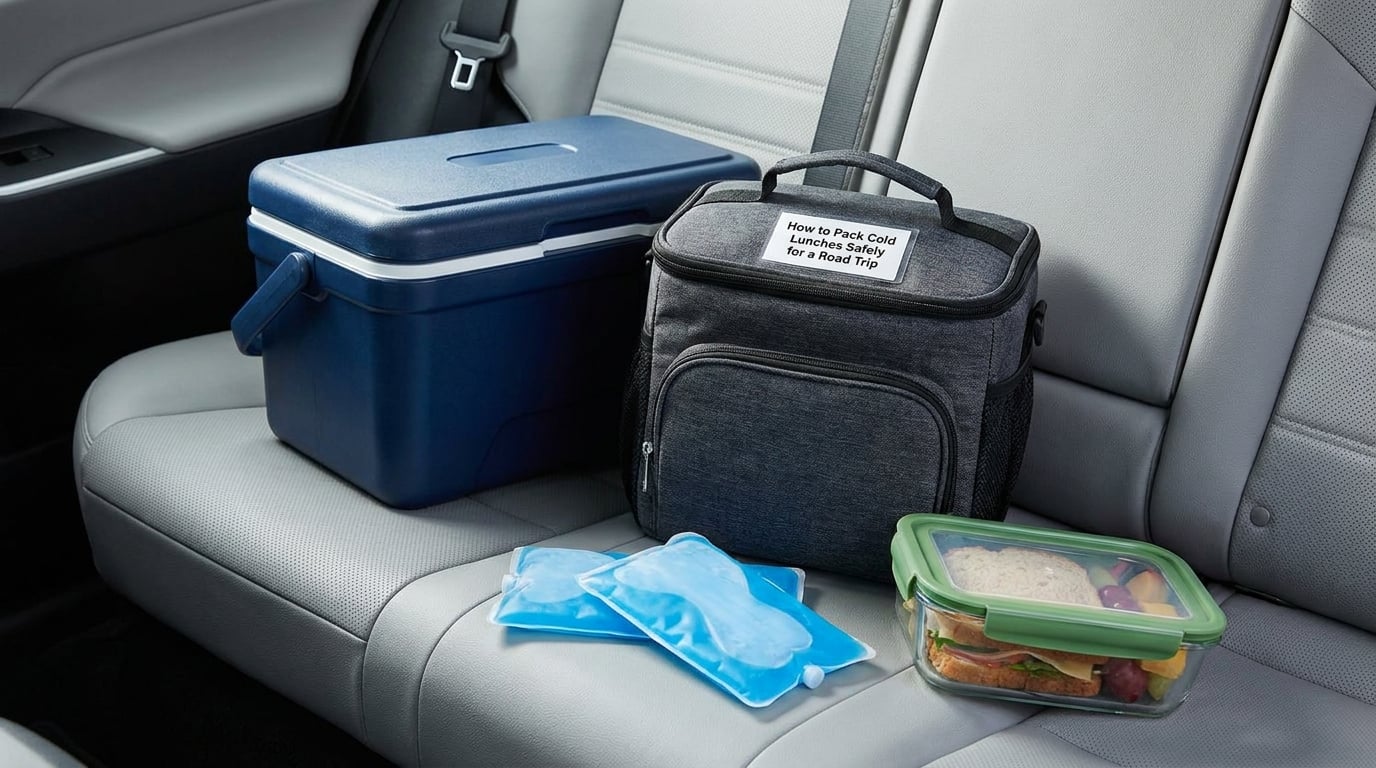
The safety rule that matters: keep cold food under 40°F (4°C), and eat or discard perishables that sit above 40°F for more than two hours. Above 90°F (32°C) outdoors, that window shrinks to one hour. A parked car climbs fast in the sun, so a bag left on the passenger seat is not a safe bag.
Build the cooler the night before, not at 6 a.m. Freeze water bottles and use them as your ice. They hold cold far longer than loose ice, they do not melt into a swamp, and by mid-afternoon you have drinking water.
Put the cold items on top, packed tightly so air cannot circulate. Loose air is what moves heat, and a half-empty cooler with two ice packs in it performs far worse than a packed one. Use a second small cooler for the food you will eat at lunch so you are not digging through everything to find it.
Dressings and sauces travel in their own containers. A small pot with a snap lid, a jam jar inside a plastic bag, or a reusable silicone pouch all work, and all of them prevent the leak that ruins the rest of the bag.
Use foil for anything assembled, and pack bread separate from wet ingredients if you can. Packing the sandwich and the fruit in one container all morning guarantees a damp bottom half by noon.
For anyone cooking before leaving, the reference temperatures are poultry at 165°F (74°C), ground meat at 160°F (71°C), and whole cuts and fish at 145°F (63°C). Cook, cool, and refrigerate leftovers within two hours.
Finally, bring a bag for trash. Cracker wrappers, banana peels, and sandwich paper go in the bag, not under the seat. It sounds small, and it is the difference between a car that is still pleasant at hour eight and one you have to vacuum out.
Frequently Asked Questions
What is the easiest cold lunch to take on a road trip?
A sandwich on a sturdy roll with hummus instead of mayo is the lowest-effort option that still holds up for hours. Hummus forms a moisture barrier that keeps the bread from going soggy, there is no cooking involved, and it can be assembled in about five minutes the night before. Wrap it in foil, and keep it under 40 degrees in a cooler.
How long can a cold sandwich stay safe in a car?
Perishable sandwiches should stay under 40 degrees or be eaten within two hours of leaving refrigeration. Above 90 degrees outdoors, that window drops to one hour. A parked car heats up quickly, so a sandwich left in a bag on the seat can go past the safe limit faster than the clock suggests. When in doubt, eat the meat fillings first and save the PB and J for later.
Which cold lunches work best without a microwave?
Everything on this list is built to be eaten cold, so the real question is storage rather than reheating. Sandwiches, wraps, salads in leakproof containers, pasta salad, and grain bowls all work, and none of them need a microwave. A peanut butter and fruit wrap needs no refrigeration at all, which makes it the safest bet on a route with no cooler space.
What foods should I keep separate when packing a road-trip lunch?
Keep dressings, sauces, and anything wet in their own sealed container. Pita and bread should stay away from tomatoes, cucumbers, and other wet vegetables until you are ready to eat. In a layered jar salad, put the dressing at the bottom and the greens at the top so the leaves do not sit in liquid. These three habits prevent most of the soggy, leaking lunches people complain about.
Are cold wraps healthier than cold sandwiches?
It depends on what goes in them, not on the format. A wrap built around grilled chicken, vegetables, and hummus can be lighter than a sandwich layered with deli meat and cheese, and it also tends to be neater to eat in a car. A sandwich on whole grain bread with lean protein is just as good. Watch the sodium on processed deli meat either way.
How can I keep lunch cold for a long drive?
Use a hard-sided cooler packed tightly with frozen water bottles rather than loose ice, and put the perishables on top where the cold sinks. Keep the lunch you plan to eat first in a separate small cooler so you are not unpacking everything. Open the cooler as little as possible, park in the shade, and never leave a bag of perishables on a warm seat.
Conclusion
Two picks cover most trips. For a day drive, the peanut butter and fruit wrap needs nothing but a backpack. For anything longer, the turkey and hummus sandwich keeps for hours, travels cold, and gets eaten one-handed at a rest stop without complaint.
Start by checking your route. If you have cooler space, add a black bean and corn bowl or a caprese pasta salad, both of which reward a night of prep. If you have no cold storage at all, build around nut butter, crackers, hard salami, dried fruit, and tortillas. Whatever you choose, pack the dressing separately and keep the perishables under 40°F. Those two rules solve most of what goes wrong.