
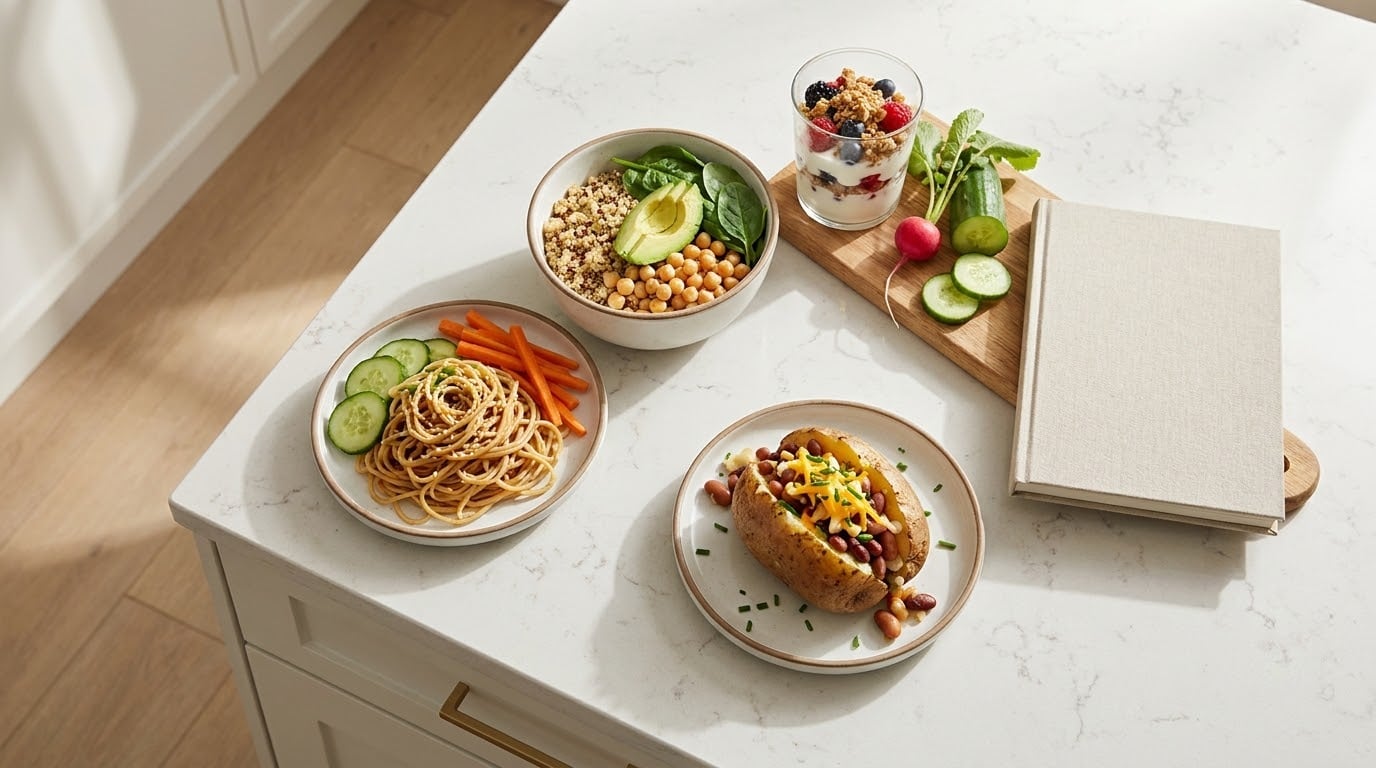
The best lunch ideas for working from home are bowls, plates and salads you can put together in the time between two meetings, eat cold at your desk, and stay full until dinner. Nothing below needs a sandwich, and every option fits inside a 30-minute break.
Sandwich fatigue is a specific kind of boredom. By Wednesday the same turkey and cheese has been in front of you four times, and the fix is not a better bread, it is a different shape of meal. A bowl gets assembled rather than constructed, which is exactly the right amount of effort for a lunch that has to happen between a standup and a client call.
We make sandwiches for a living, and even we get tired of them. That is the honest reason this list exists. Most people searching for lunch ideas for working from home have the same problem: a 20 or 30 minute break, one person to feed, and no interest in washing a pan. So the guiding rule here is that every idea below needs one pan or no pan at all, and most of them taste fine at room temperature.
One more thing worth naming, because nobody else mentions it. On a camera-on day your lunch is a scheduling problem before it is a food problem. Bowls with too many loose pieces, anything that needs two hands and a napkin, and foods that crunch loudly all create problems during a meeting. The one-handed options here are flagged so you can plan around them.
Table of Contents
- Best Lunch Ideas for Working from Home When You’re Sick of Sandwiches at a Glance
- 1. Greek Yogurt Chicken Bowls
- 2. Sesame Soba Noodle Bowls
- 3. Mediterranean Quinoa Bowls
- 4. Peanut Noodle Cold-Pasta Salads
- 5. Baked Potato Lunch Plates
- 6. Hummus and Veggie Grain Bowls
- 7. Chicken Lettuce Wrap Cups
- 8. Warm Rice and Vegetable Bowls
- 9. Tuna White Bean Salad
- 10. Instant Ramen Upgrade Bowls
- 11. Vegetable Frittata with a Side Salad
- 12. Yogurt, Fruit, and Granola Parfaits
- Frequently Asked Questions
- What are easy lunch ideas for working from home that do not require cooking?
- How can I keep lunch from getting soggy or dry while it sits at my desk?
- Can I prepare these lunches in advance for several workdays?
- What should I eat for lunch if I want more protein but do not want a sandwich?
- How long can I safely keep a packed lunch in the refrigerator?
- Which of these lunches freeze well for future workdays?
- Conclusion
Best Lunch Ideas for Working from Home When You’re Sick of Sandwiches at a Glance
Here is the short version: twelve lunches, sorted by what goes in them, how long they take, and the situation each one solves. Every row is sandwich-free, and every row is meant to be eaten at a desk.
| Lunch | Main ingredients | Prep time | Best for |
|---|---|---|---|
| Greek yogurt chicken bowl | Chicken, Greek yogurt, cucumber, greens, herbs | 5 minutes | A filling solo lunch assembled from what is already cooked |
| Sesame soba noodle bowl | Soba noodles, edamame, cabbage, carrot, sesame sauce, egg | 10 minutes | A cold lunch that travels well to a hybrid day |
| Mediterranean quinoa bowl | Quinoa, chickpeas, cucumber, tomatoes, feta, olives | 15 minutes from cooked components | Batch cooking on a Sunday for the week |
| Peanut noodle pasta salad | Rotini or spaghetti, peanut-lime dressing, carrots, peppers | 12 minutes | A creamy cold lunch that does not dry out by 3pm |
| Baked potato plate | Potato, black beans, salsa, yogurt or tuna | 10 minutes microwave, 50 minutes oven | A light meal built around one pantry staple |
| Hummus and veggie grain bowl | Grains, roasted vegetables, chickpeas, hummus | 5 minutes from extras | A budget lunch with almost no chopping |
| Chicken lettuce wrap cups | Romaine, seasoned chicken, rice, cucumber, carrot, sauce | 8 minutes | A crisp, one-handed lunch on a camera-on day |
| Warm rice and vegetable bowl | Rice, roasted vegetables, tofu or beans, sesame-ginger sauce | 20 minutes | A hot lunch when the weather or the mood calls for it |
| Tuna white bean salad | Tuna, cannellini beans, celery, parsley, lemon, olive oil | 10 minutes, no cooking | A pantry lunch for a week with no grocery trip |
| Instant ramen upgrade bowl | Ramen, egg, spinach, mushrooms, frozen vegetables | 8 minutes | The cheapest hot lunch that still has protein and vegetables |
| Vegetable frittata and salad | Eggs, extra vegetables from dinner, greens, vinaigrette | 20 minutes | Using up dinner extras instead of binning them |
| Yogurt fruit granola parfait | Greek yogurt, fruit, granola, nuts, chia seeds | 3 minutes | A light meal on a day when cooking feels like too much |
1. Greek Yogurt Chicken Bowls
Greek yogurt chicken bowls are the fastest sandwich replacement on this list: diced chicken, a spoonful of plain Greek yogurt, chopped cucumber and tomato, greens, and whatever herbs are alive in the fridge come together in about five minutes with one spoon.
The yogurt does the work a mayonnaise-based chicken salad would normally do, but it reads as something lighter and it holds chopped vegetables in place instead of making them watery. A half cup of plain Greek yogurt carries more protein than most people expect, which is what keeps this bowl from leaving you reaching for a snack at 3pm.
Shortcuts that matter more than the recipe: rotisserie chicken from the supermarket, the rest of a roast chicken from Sunday dinner, or a batch of poached chicken breasts you cook once and keep. The same goes for the vegetables, since roasted broccoli or peppers from a sheet pan in the oven that night are exactly as good raw in this bowl the next day.
Add the crunchy element last, right before you eat. Toasted seeds, a spoon of chopped walnuts or a handful of crisp lettuce keeps the texture from turning soft by the time you are halfway through your second call.
2. Sesame Soba Noodle Bowls
Sesame soba noodle bowls solve a problem most lunch ideas ignore: they are genuinely good at room temperature, so they survive a late start, a slow meeting, and a lunch eaten forty minutes late without a microwave anywhere in sight.
Boil a pack of soba noodles, cool them under cold water, and drain well. Then top them with shelled edamame, shredded cabbage, grated carrot, sliced scallions, a boiled egg cut in half, and a sauce of soy, rice vinegar, sesame oil and a touch of honey. The egg is the protein anchor that turns a noodle salad into lunch.
Two texture rules keep this bowl good. Rinse the noodles until the water runs clear, which removes the surface starch that makes them gluey, and dress them with less sauce than looks right, loosening with a splash of water if you pack the sauce separately. Most soba is a wheat and buckwheat blend, so read the label if gluten is a factor.
Pack the components in separate sections of a divided container and toss at the desk, with a fork and a napkin, which matters if you end up eating between two meetings rather than during a proper break. On a hybrid day, pack the egg whole rather than halved so it does not press into the noodles on the way in.
3. Mediterranean Quinoa Bowls
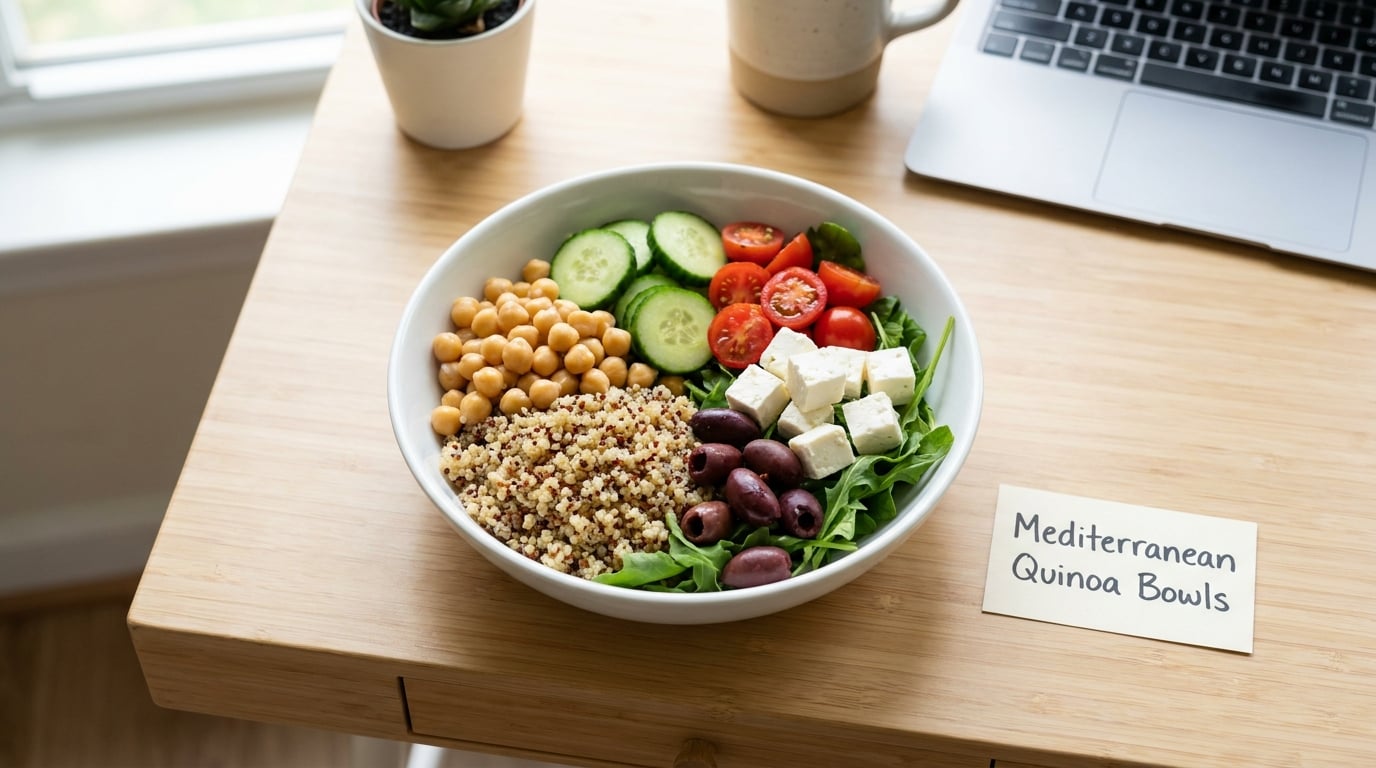
Mediterranean quinoa bowls are the best lunch to cook once and eat four times, because every component keeps separately and nothing in the bowl needs reheating to taste right.
Build it from cooked quinoa, chickpeas, cucumber, halved cherry tomatoes, crumbled feta, a few olives, greens, and a dressing of lemon juice, olive oil, oregano and a little salt. The dressing is doing more work than any single vegetable, so make it slightly sharper than feels comfortable on its own.
Batch cooking is what makes this a workday lunch rather than a weekend project. Cook a large pot of quinoa and let it cool uncovered so it does not steam itself soggy, roast a sheet pan of vegetables, rinse a can of chickpeas, and shake a jar of dressing with olive oil and lemon. Four components, five containers, and the rest of the week is handled.
Keep the olives and feta on top and the greens underneath so they do not wilt against something warm, and refrigerate the bowl within two hours of assembling it. It holds for about four days in the fridge, which covers Monday through Thursday comfortably.
4. Peanut Noodle Cold-Pasta Salads
Peanut noodle pasta salads are the creamy, cold, desk-friendly option, and they are the dish most often recommended when people ask online for a sandwich replacement they can make in a flash.
Cook spaghetti or rotini, rinse it cool, and toss it with a dressing of peanut butter, lime juice, soy sauce, a little honey and warm water whisked in until it pours. Add shredded carrot, cucumber, bell pepper, scallions and crushed peanuts, and you have a lunch that tastes like more effort than it was.
Drying out is the only real failure mode. Make the dressing thinner than you want it, save a little pasta water to loosen it again, and if you are packing it for later, keep the crunchy vegetables and peanuts in a separate compartment and add them just before eating.
For a vegetarian version, swap the peanut butter for sunflower seed butter or use a tahini and lime dressing, and add edamame or chickpeas for protein. Both hold a full lunch, and neither needs a microwave.
5. Baked Potato Lunch Plates
A baked potato is the most underestimated lunch for a person who is sick of sandwiches, because one potato plus a can of beans becomes a filling, hot, vegetable-adjacent meal that costs almost nothing to assemble.
Microwave a large potato for about eight minutes, or bake one at 200 degrees Celsius for 45 to 55 minutes if you are starting it during a slow call. Split it, fluff the inside with a fork, and load it up. Black beans and salsa is the fastest route, and a spoon of Greek yogurt instead of sour cream keeps it lighter. Cheese and chopped vegetables work, and a tin of drained tuna mixed with mayo and a little pickle relish makes it feel like a different meal entirely.
If you are eating away from your desk, pack the toppings in a small container and let everyone build their own plate. A baked potato carried whole will cool and harden in the middle, and a split one travels much better.
It is also the easiest lunch to scale for a household where one person will only eat a sandwich. Bake four potatoes, make a small bowl of toppings each, and there is no second recipe to cook.
6. Hummus and Veggie Grain Bowls
Hummus and veggie grain bowls are the answer on the days when you have a grain and some roasted vegetables in the fridge and absolutely no interest in cooking anything new.
Start with cooked grains, either rice, quinoa or farro, add roasted vegetables and chickpeas, then finish with hummus rather than a dressing. Hummus is fat and protein in one scoop, which is what gives the bowl the same staying power a sandwich would without the bread. Lemon, a little olive oil, paprika and fresh herbs turn it into something that does not taste like an afterthought.
Two habits prevent the soggy version. Keep the hummus in its own small pot and spoon it in at the desk rather than spreading it against the grains, and dress with lemon and oil in a separate container. The same goes for the greens, which belong on top and last.
Online budget threads keep landing on hummus with shredded carrot and crumbled pita chips for exactly this reason: it is cheap, it is filling, and it needs almost no knife work. Add a hard-boiled egg or two and you have a lunch that holds until dinner.
7. Chicken Lettuce Wrap Cups
Chicken lettuce wrap cups are the most camera-on-day friendly lunch on this list, because a filled romaine leaf is held in one hand, eaten in a bite or two, and leaves no crumbs anywhere near your keyboard.
Separate the leaves of a romaine heart, rinse them and pat them dry. Fill each one with shredded seasoned chicken, a spoon of cooked rice, diced cucumber, grated carrot and a drizzle of the sauce you would put on a wrap. The leaves are sturdy enough to hold a filling and crisp enough to survive an hour in a container if you keep the wet ingredients on the side.
This is the dish where dinner extras pay off best. If you roasted a chicken, grilled thighs or cooked a batch of ground turkey earlier in the week, use it here rather than letting it sit in the fridge until it turns past its best.
For the same reason, make your own seasoned chicken with soy sauce, garlic, ginger and a little honey instead of relying on a deli bag, which tends to make the leaves watery once it has sat. Warm the rice for a minute in the microwave first, then cool it, so the lettuce does not wilt from the inside.
8. Warm Rice and Vegetable Bowls
Warm rice and vegetable bowls are the hot option, for the days when a cold salad sounds unappealing and you still want something that takes one pan and leaves you full.
Cook brown rice or jasmine rice, and top it with roasted or stir-fried vegetables, a protein and a sauce. Tofu, chicken and beans all work, and the sauce is where the personality lives: soy sauce, rice vinegar, sesame oil, grated ginger and a little honey makes a sesame-ginger dressing that turns the same bowl into a different lunch each time you change the vegetables.
To keep it genuinely fast, roast a sheet pan of vegetables while the rice cooks, or use frozen vegetables, which need only a hot pan and a few minutes. Fresh broccoli, peppers and carrots are the ones that hold their texture rather than turning to mush.
On food safety, cool cooked rice quickly and refrigerate it within two hours of cooking, which gives you about three to four days in the fridge. Reheat until it is steaming all the way through, and take chicken and other poultry to 165 degrees Fahrenheit before it goes in a bowl. If you are doubling the recipe, freeze the extra rice flat and thaw it in the fridge overnight rather than on the counter.
9. Tuna White Bean Salad
Tuna white bean salad is the lunch to make when you have not been to the grocery store, because canned tuna and canned beans turn into something that eats like a proper meal with ten minutes of work and no heat at all.
Drain a can of tuna and a can of cannellini beans, then combine them with chopped celery, parsley, lemon juice and olive oil, plus a little salt and pepper. A spoonful of mayo or Greek yogurt makes it creamy, and a teaspoon of mustard or relish adds a sharp note that keeps it from tasting like a can of tuna with beans next to it.
For the vegetarian version, leave the tuna out and increase the beans, then add a chopped hard-boiled egg or a handful of cheese. The result has the same weight and the same protein satisfaction, and it holds just as well cold.
Onion is the most common no-thank-you in lunch threads, so this is an easy dish to adjust. Leave out the red onion, use a little extra lemon and a pinch of smoked paprika instead, and add chopped bell pepper or cucumber for crunch. Store it covered in the fridge and eat it within four days, straight from the container.
10. Instant Ramen Upgrade Bowls
Instant ramen is a perfectly good starting point for a cheap hot lunch, and the fix is not expensive ingredients but adding a protein and a vegetable to a bowl of salt.
Use half the seasoning packet and a reduced-sodium broth or a small amount of water, then add whatever you have. A cracked egg stirred into the hot broth cooks in about a minute, a handful of spinach or frozen mixed vegetables softens in the same time, and sliced mushrooms or a spoonful of corn add bulk. A teaspoon of sesame oil and a sliced scallion at the end make it taste deliberate rather than like a packaged meal.
The reason to modify it is sodium, not the noodles. A standard packet carries roughly 1,000 to 1,400 milligrams, which is a large share of the 2,300 milligram daily value, and that is what leaves people reaching for something salty again at four in the afternoon. Using half the seasoning and a lower-sodium broth brings the bowl into range without changing the character of the meal.
For real staying power, add a hard-boiled egg you already made, or half a cup of chickpeas from the fridge. The bowl takes eight minutes end to end and reheats nothing twice.
11. Vegetable Frittata with a Side Salad
A vegetable frittata is the answer to the leftover problem, since the vegetables from dinner that were not quite enough for a second meal usually become the entire main event the next day.
Whisk six eggs, pour them into an ovenproof skillet with the extra vegetables, some grated cheese and any soft herbs you have left, and bake at 180 degrees Celsius for about 15 minutes, until the centre is set and no longer liquid. Cut it into wedges and eat a slice or two with a handful of greens dressed in olive oil, lemon and salt.
Eggs are cooked to 160 degrees Fahrenheit, which is the point at which the whites and the yolk are both fully set, and a frittata is easier to judge than a whole egg because you can look at the middle. A knife tip in the centre should come out clean.
One pan handles the eggs, and the salad is raw, so the cleanup is a single skillet to soak. Refrigerate the leftover wedges within two hours and eat them within four days, reheating only the portion you are about to eat, covered so the edges do not turn rubbery. A slice with a handful of greens also travels well to a day you are back in an office.
12. Yogurt, Fruit, and Granola Parfaits
Yogurt fruit granola parfaits are the three-minute option, and they are worth keeping for the days when the thought of standing at a stove feels like too much to ask of yourself.
Layer plain Greek yogurt, chopped fruit, granola, nuts and chia seeds in a glass or a lidded container, and you have a lunch with more staying power than it looks. The yogurt supplies the protein, the fruit supplies the bulk, and the granola is what makes it feel like a meal instead of a snack.
The one trick is adding the granola at the last possible moment. If you layer it in the morning, it will be soft by lunch. Keep the yogurt and fruit together, pack the granola in a small bag or the lid of the container, and tip it on when you sit down. Nuts and seeds do not soften the same way, so they are the better choice for a parfait packed hours ahead.
Pantry versions work well: canned peaches or pineapple drained, a spoonful of applesauce in place of fresh fruit, and any nut or seed you keep on hand. A spoonful of pumpkin or peanut butter mixed into the yogurt turns it into something closer to a filling bowl if the day has been hard.
Frequently Asked Questions
What are easy lunch ideas for working from home that do not require cooking?
Cold assemblies take the least effort: Greek yogurt chicken bowls, tuna white bean salad, hummus and veggie grain bowls made from extras, peanut noodle pasta salad, and yogurt parfaits. All of these are a mix-and-stitch job rather than a cooking job, and most take under ten minutes. Keep cooked chicken, boiled eggs and cooked grains in the fridge and assembly gets even faster.
How can I keep lunch from getting soggy or dry while it sits at my desk?
Separate the wet from the dry. Pack dressings, hummus and sauces in their own small containers and add them just before eating, and keep lettuce and other greens on top rather than underneath something warm. For noodles and pasta, rinse until the water runs clear and pack the sauce slightly thinner than usual, loosening it with a splash of water at your desk.
Can I prepare these lunches in advance for several workdays?
Yes, and that is the most efficient way to use them. Grains, roasted vegetables, boiled eggs and chopped proteins all keep about four days refrigerated, and components stored separately stay in good shape longer than a fully assembled bowl. Cook a pot of quinoa or rice, roast a sheet pan of vegetables and shake a jar of dressing on a Sunday, and you have four or five lunches handled at once.
What should I eat for lunch if I want more protein but do not want a sandwich?
Put a protein anchor in a bowl rather than between bread. Greek yogurt, a boiled egg, edamame, chickpeas, cannellini beans, tuna, tofu and rotisserie chicken all work, and pairing one with a grain or vegetable bowl keeps you full into the evening. Greek yogurt in a chicken bowl and tuna with white beans are the two fastest no-cook routes to a high-protein lunch.
How long can I safely keep a packed lunch in the refrigerator?
Most of these lunches keep about four days refrigerated, which covers a Monday to Thursday work week. Refrigerate everything within two hours of cooking or assembly, keep the fridge at or below 40 degrees Fahrenheit, and reheat until steaming all the way through. Poultry should reach 165 degrees Fahrenheit, eggs 160, and fish and shellfish 145.
Which of these lunches freeze well for future workdays?
Several, with a caveat. Cooked rice and grain bowls, soups, chili and vegetable frittata portions freeze reasonably well if the creamy or raw components are left out and added after thawing. Salads, noodle bowls with a dressed sauce, anything with fresh lettuce and any bowl built on Greek yogurt do not freeze, because the texture suffers badly. Freeze rice flat in portions and thaw it in the fridge overnight.
Conclusion
Start with two lunches, not twelve. A Greek yogurt chicken bowl covers the no-cook days, and a Mediterranean quinoa bowl covers the days when you cooked something on Sunday and want it in a container by 12:30.
Put the components in the fridge before your first meeting rather than thinking about it at noon: cooked chicken or chickpeas, boiled eggs, cooked grains, a jar of dressing and a bag of greens. Once those five things are there, most of the ideas above are assembly rather than a decision.
And when the week ends and a sandwich genuinely is what you want, that is fine. This list exists for the other twelve days of the week.