
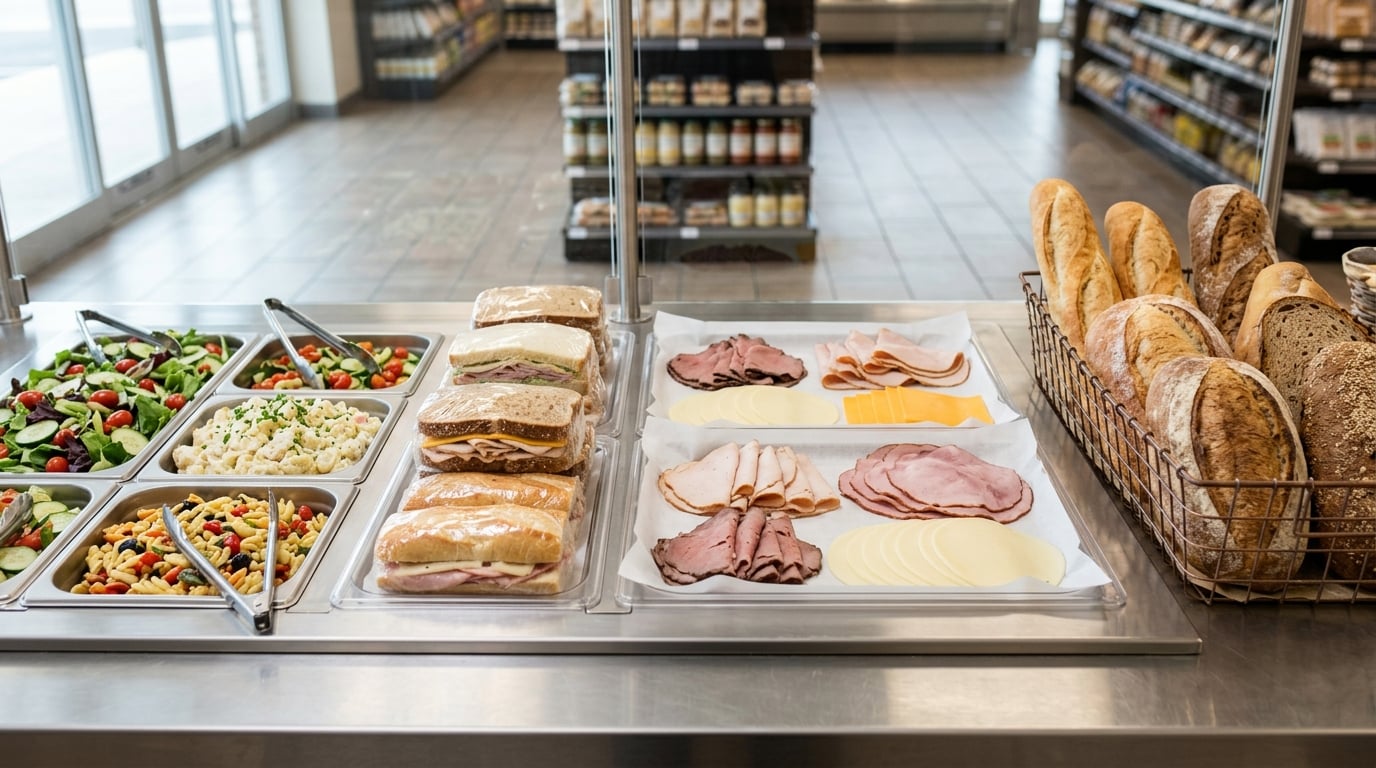
If you want the short version: the best grocery store delis in America are the ones that slice your order to order instead of handing you a wrapped sandwich from a case. Publix, Trader Joe’s, Wegmans and H-E-B pull ahead on made-to-order quality, Whole Foods leads on ingredients and customization, and Kroger, Safeway, Giant Eagle, Stop & Shop and Meijer win on reach and everyday value. Which one is best for you depends heavily on where you live, and that varies more by store than by brand.
That last part matters more than it sounds. A Publix deli in one Florida town can be a different experience from a Publix deli twenty miles up the road, and the same is true of Kroger, Safeway and every other chain on this list. What follows is a ranking built from how shoppers actually describe these counters: the quality of the sliced-to-order service, the breadth of the prepared foods case, how generous the portions are, and how easy the counter is for a first-timer to navigate. Every entry names one thing worth ordering the moment you walk in.
Table of Contents
- Best Grocery Store Delis in America at a Glance
- 1. Trader Joe’s
- 2. Whole Foods Market
- 3. Wegmans
- 4. Kroger
- 5. Safeway
- 6. Publix
- 7. H-E-B
- 8. Giant Eagle
- 9. Stop & Shop
- 10. Meijer
- Frequently Asked Questions
- Which grocery store has the best sandwiches?
- Which grocery store deli is best for fresh-made sandwiches?
- Are supermarket deli sandwiches good for everyday meals?
- Can I customize a grocery store sandwich at most delis?
- How should I compare grocery store delis for value?
- How do I keep a deli sandwich safe until I eat it?
- Conclusion
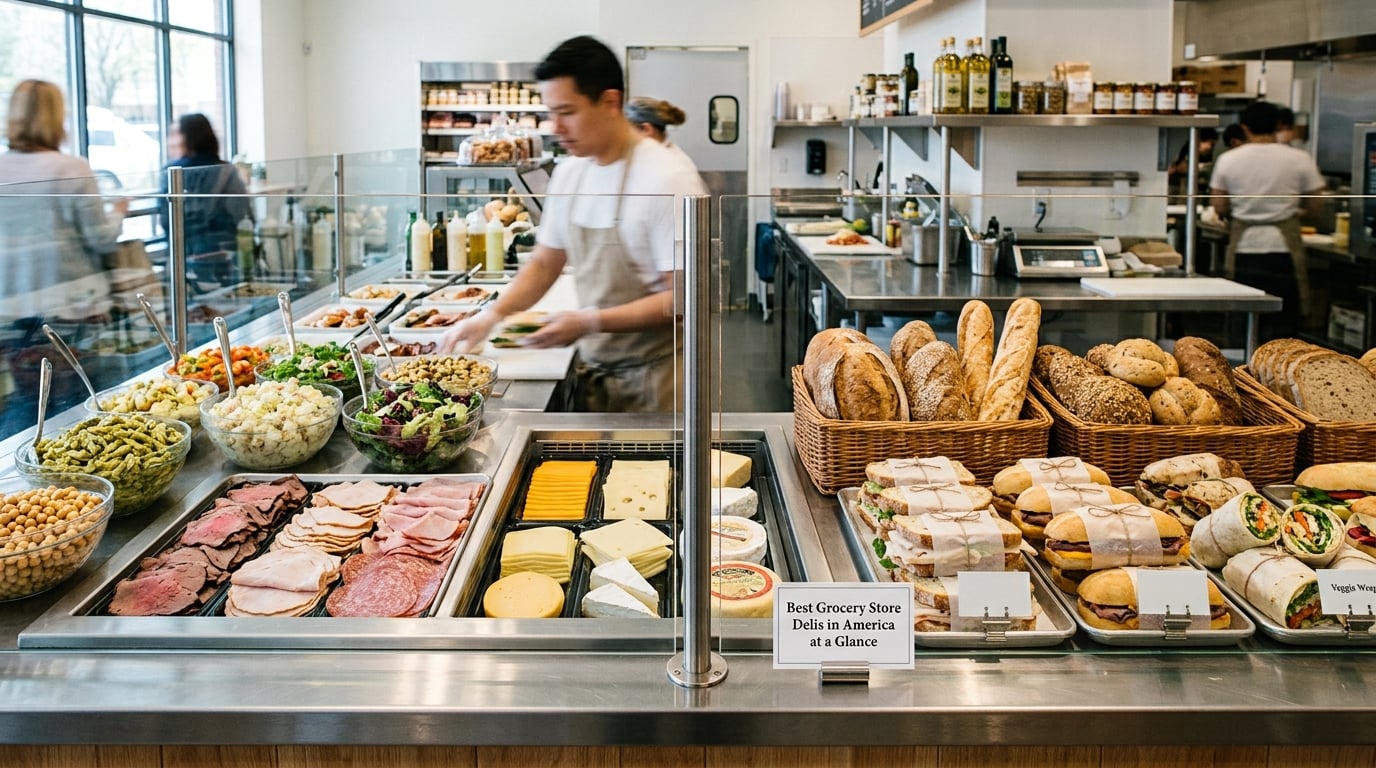
Best Grocery Store Delis in America at a Glance
| Deli | Best-known strength | Standout prepared foods | Value | Ideal for |
|---|---|---|---|---|
| Trader Joe’s | Creative, affordable prepared combinations | Sandwich boxes, wraps, salads, cheese portions | Strong | Grab-and-go lunches and mixed shopping trips |
| Whole Foods Market | Premium ingredients and customization | Fresh-made sandwiches, salad bars, sushi, hot bar | Mixed | Picky eaters and ingredient-first shoppers |
| Wegmans | Generous portions, made-to-order service | Custom subs, party trays, soups, international cheeses | Strong | Big families and catering orders |
| Kroger | Dependable counters, widest national reach | Fresh-cut meats and cheeses, store-brand subs, hot food | Strong | Nearly any ZIP code in the country |
| Safeway | Consistent convenience across many markets | Made-to-order sandwiches, bakery items, party platters | Strong | West Coast and inland regulars |
| Publix | Service reputation and clean presentation | Subs, salads, sushi, prepared meals, party trays | Strong | Southeast shoppers and quick lunch runs |
| H-E-B | Hospitality plus regional flavor combinations | Regional sandwiches, fresh prepared foods, meal solutions | Strong | Texas and the Southwest |
| Giant Eagle | Made-to-order subs for Midwestern families | Sub sandwiches, fresh salads, bakery items, platters | Strong | Ohio, Pennsylvania and western Pennsylvania |
| Stop & Shop | Everyday fresh-cut and affordable platters | Cold cuts, prepared sandwiches, party trays | Strong | Northeast value shoppers and party hosts |
| Meijer | Dependable deli meals at a fair number | Deli sandwiches, hot prepared meals, party trays | Strong | Midwest families and road trips |
Two notes before the rankings. First, the table lists chains, not single stores, because that is the only way to give an answer that travels. Second, quality swings by location and by the people running the counter, so treat each entry as the house style rather than a guarantee. My rule was that a deli has to earn its place on made-to-order service and prepared foods, not on being a convenient stop on the way to the milk.
How this list was put together
I read through shopper discussion of grocery deli counters, review-platform listings and the pattern of complaints that keeps repeating online. The signals that mattered most: whether a counter slices to order or unwraps something pre-sliced, whether the bread is fresh rather than a pre-baked loaf, whether staff will build something you have not ordered before, and whether regulars keep going back week after week.
A few threads came up constantly and shaped the ranking. Chain deli quality varies more by franchise than by brand, which is why a store-level check beats a national reputation. Order-ahead systems that let you shop while your sandwich is made get singled out as the biggest convenience win. And staff friendliness is cited nearly as often as the food itself. Nobody wrote in praising a pre-packaged cold cut round; people described bread, service and portion size in detail instead.
How to order at a deli counter like a regular
Most first-time customers hesitate at a deli counter because nobody explains the system. Here is how it usually works, so you can walk in and order without the pause.
- Name the sandwich style first. Cold cut on a roll or bread, hot sandwich off the warmer, or a salad. Staff need this before anything else.
- Pick the bread. Most counters slice ciabatta, focaccia, rye, sourdough and a gluten-free option. Say no thanks if they do not offer one.
- Choose the meat or cheese. Order by weight if you want control over the portion, or ask what they recommend. A grinder gets you cold cuts cut fresh rather than off the packaged stack.
- Add condiments and toppings last. Ask about house-made dressings, in-house pickles and toasted spreads. This is where the counter differentiates itself.
- Ask for the number or the pickup ticket. Then keep shopping. That is the move regulars make, and it is the reason order-ahead is so often praised.
One more habit: when the counter is quiet, ask what they are known for. Deli staff will nearly always tell you the item they are proudest of, and it is rarely on the printed menu.
1. Trader Joe’s
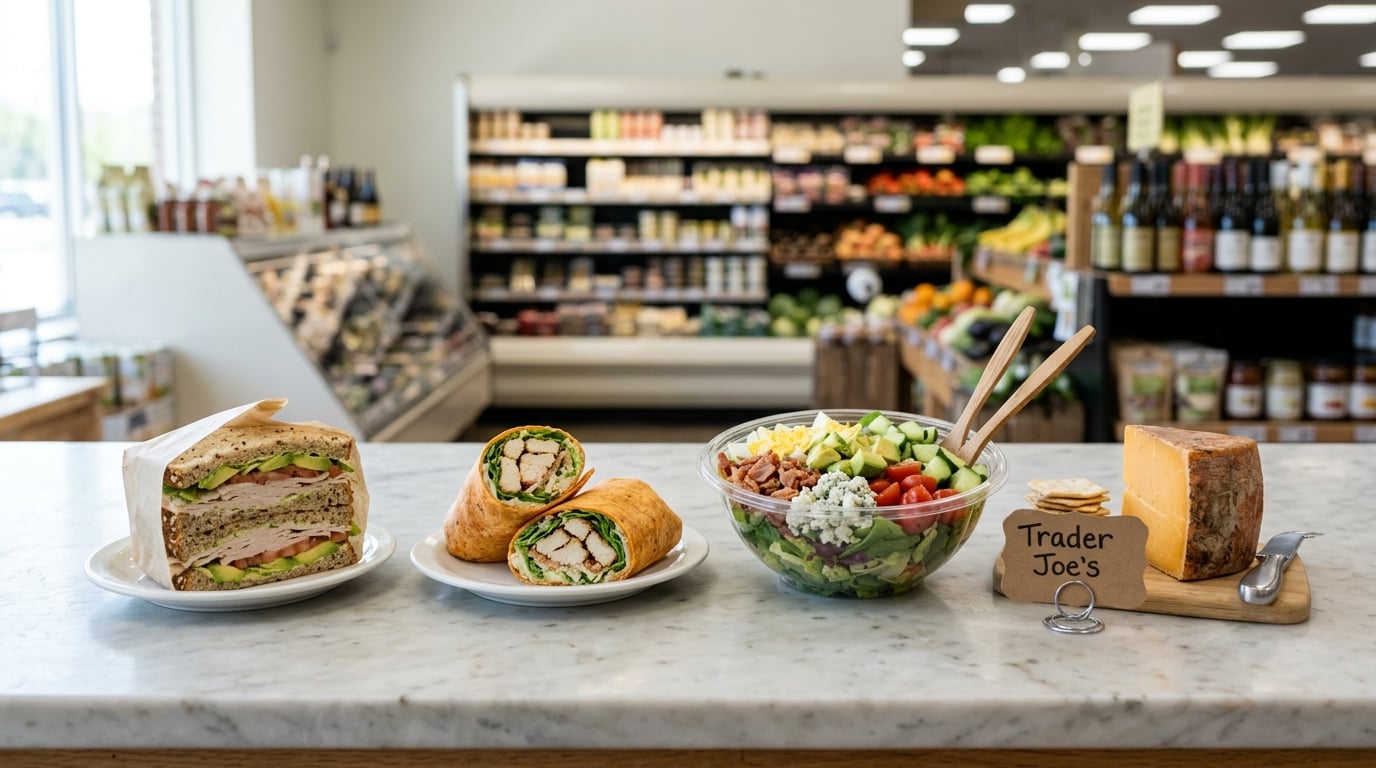
Trader Joe’s takes the top spot because it does something the others rarely attempt: it treats the deli as a prepared-food program rather than a counter with a slicer. Sandwich boxes, wraps, salads and cheese portions are designed to be combined into a single meal, and the prices are the most aggressive of any deli on this list.
The ordering example that works best: pick a sandwich box, add a salad and a small portion of cheese, and you have lunch for one or two people without a detour to a restaurant. That combination is the core of the Trader Joe’s deli proposition, and it is why the store keeps showing up in conversations about cheap lunches that still taste like something.
What you give up is choice at the counter. There is no made-to-order slicing line and no conversation with a person about your sandwich, because the food is made ahead and stacked in a case. Shoppers who want a custom sub with three specific cold cuts will be disappointed, and shoppers who want to eat well on the way to the car rarely are.
The bread is the quiet strength. Loaf after loaf gets baked in-store and used for the sandwich boxes and the focaccia portions, and the change in the bread between morning and afternoon is small. If your trip involves walking out with lunch for the whole family, this is the deli to plan around.
2. Whole Foods Market
Whole Foods Market has the best ingredients of any grocery store deli in America, and the most expensive sandwich in most of its markets. Whether that trade is worth it depends entirely on what you care about.
The counter itself is good. Sandwiches are built fresh, there is a wide selection of breads and toppings, and staff will customize almost anything you describe, which makes it the easiest option on this list for specific dietary requests. Sushi, salad and hot bar items sit next to the deli case, so one trip covers several meals.
Where value slips is in the protein. You are paying specialty-counter prices for meat and cheese that elsewhere costs considerably less, and the difference shows most on a large sandwich. If you are buying one roast beef sub for yourself, the cost is manageable. Buying a dozen for a picnic is a different conversation.
The practical comparison people ask for is between this and a regional specialty market. Whole Foods wins on breadth and on being in more cities. The regional market wins on the specific regional sandwich you actually grew up eating. In California, that is usually a genuine advantage.
3. Wegmans
Wegmans wins on portions and on the willingness to build something unusual. If you want a custom sub with four different meats, an unusual cheese and a hot topping pressed on afterward, this is the counter most likely to say yes without blinking.
Order example: a half pound of assorted cold cuts sliced to order, a chunk of a specialty cheese, roasted red peppers and a house-made dressing, all on a large loaf of in-store bread. That comes out as a party sub, not a lunch. Wegmans deli is genuinely good at the catering end of the job, and shoppers with a group to feed tend to come back.
Portions run large across the board, which matters for families. Trays of sandwiches, platters of vegetables and dips, and soups sold by the quart make Wegmans a one-stop solution for a weekend gathering rather than a sandwich stop.
The limitation is availability. Wegmans operates in a limited number of states, mostly in the Northeast and Midwest, so most of the country cannot simply drive to one. Where a store exists, it is usually worth planning a trip for a catering order.
4. Kroger
Kroger has the widest reach of any deli on this list, and that matters more than rankings usually admit. There is almost no corner of the country where a Kroger store is more than a reasonable drive, so for a lot of shoppers this is the answer to where can I get good deli sandwiches.
The counters are dependable. Meats and cheeses are cut fresh rather than pulled from a stack, the store-brand sandwiches hold their own, and the bakery bread is decent. Most locations also run hot food cases, so you can pair a cold sandwich with something warm on the way out.
The value story is genuinely strong, especially with loyalty programs. Regulars at most chains describe the same thing: they clip digital coupons, use their loyalty number at the counter and pay meaningfully less than the shelf price suggests. That habit changes which sandwich you choose more than any preference between two stores.
Expect variation. Some locations run a counter with an experienced person running the slicer; others have a younger crew working a shorter shift. Ask what the staff recommends and pick the meat that was cut most recently.
5. Safeway
Safeway is the quiet consistency pick. It has no national reputation for sandwich genius, and that is the point. You can walk into a Safeway deli, ask for a made-to-order sub on fresh bread with a specific meat, and get a competent sandwich without a surprise.
The counters do the standard job well: sliced to order, several bread choices, a hot case for sandwiches off the warmer, and bakery items on the same side of the store. Party platters are available in most stores and are the reason Safeway keeps showing up on holiday and office-lunch lists.
Availability is the deciding factor. Safeway covers the West Coast and inland mountain markets thoroughly, and Alaska and Hawaii too, which no other chain on this list does. That breadth makes it the practical answer for a huge part of the country.
Where it does not shine is in-house production. House-made sauces, dressings and pickled items are limited, so if in-house pickling is your thing, look elsewhere. The counter will still make you a good sandwich; it just will not surprise you.
6. Publix
Publix has the best service reputation among grocery delis in America, and the sandwich results usually follow. In chain deli discussions on Reddit, threads about in-store lunches and sub orders come back consistently positive, and the sub itself is the most-recommended item.
Presentation does more work here than taste does. The counter is clean, the case is organized, the produce in the salads is fresh, and sushi sits next to the sub area for shoppers who want a lighter lunch. Service is the differentiator: staff are friendly in a way that is unusual for a grocery counter, and they will build a sandwich you did not order from the board.
Order example for a quick weekday lunch: a sub on fresh bread with turkey, provolone, tomato and lettuce, plus a side of olives or a small salad. Publix subs are frequently discussed as the best of the chain options for the balance of portion, price and freshness, and it is a hard case to argue against.
The catch is geography. Publix is concentrated in the Southeast, and there is no version of this list where a Portland, Oregon or Chicago shopper can rely on it. If you are outside the footprint, the closest equivalent is usually a regional chain with a comparable service culture.
7. H-E-B
H-E-B is the best deli counter in Texas and one of the best in the country, which surprises people who have never shopped there. The prepared foods case is large, the regional flavor combinations are aggressive and good, and the service runs on genuine hospitality.
Order example: ask for a regional combination sandwich with a chopped hot meat, melted cheese and pickled peppers on a soft roll. That is a Texas take on the Italian sub, and it is the kind of item the counter is proud of. H-E-B also carries a wide range of fresh prepared foods, so a weeknight dinner can come out of the same case as lunch.
Value is a genuine strength. H-E-B stores sell their own store-brand products across the store, and the deli follows that approach, so the everyday sandwich costs less than it does in a specialty market without tasting like a compromise.
Same limitation as Publix, with a slightly wider footprint through the Southwest. Outside Texas and the bordering states, this entry simply does not apply. Note that H-E-B has expanded beyond the region, so check before assuming.
8. Giant Eagle
Giant Eagle is the Midwestern answer, and for Ohio and western Pennsylvania shoppers it is often the only list-worthy option on a regular shopping trip. Made-to-order subs are the core of the counter, and they are built properly.
Order example: a large sub with ham, salami and provolone, toasted, with lettuce and tomato added after the press so they stay crisp. That construction matters more than any specific meat, and a lot of grocery subs skip the order of operations. Ask for it and the counter will do it.
Salads are fresh rather than bagged, bakery sandwiches are available for gatherings, and deli platters cover birthdays and office lunches. Several stores also run a hot counter, which is where the fried chicken and potato bar items come from.
What Giant Eagle does not do is the in-house production that smaller regional markets do. No house-made mozzarella, no house-cured sausage. The counter is reliable and generous, which is a different and, for everyday shopping, more useful advantage.
9. Stop & Shop
Stop & Shop is the affordable Northeast option. It does not generate the same excitement as Publix or the same fuss as Whole Foods, and for a regular Tuesday lunch that is exactly the point.
Meats and cheeses are cut fresh, prepared sandwich options sit in the case for people who do not want to wait, and the bakery items are worth adding to an order. The party trays are the best value in the region: a large tray that feeds a group at a lower per-person cost than most independent delis will quote.
Where it struggles is with the specialty requests. The cheese selection is narrower, the hot counter is limited at many locations, and the counters that close early will not be open for a 4 p.m. fix. Plan for a midday trip rather than an evening one.
The other thing regulars mention is the deli closure pattern. Many counters shorten hours or close on a set weekday. If you have ever walked to the deli after lunch hoping for a sandwich and found lights off, this is the entry where that happens most often.
10. Meijer
Meijer rounds out the list as the dependable, family-sized option across the Midwest. The deli makes fresh sandwiches to order, runs hot prepared meals during the day, and handles party trays without fuss.
Order example for a family: two large sandwiches cut into quarters plus a tray of sides. That covers four to six people from one counter order, and the per-person number stays low, which is the whole reason families end up at the Meijer deli instead of a sandwich shop.
Like most Midwestern chains, Meijer competes on hot food and on store-brand breadth rather than on in-house charcuterie. There is no house-cured salami here. What there is, reliably, is a clean counter, fresh-cut meats and a value number that holds up during a road trip or a big weekend.
The scope is the point. Meijer covers a large part of the Midwest with a consistent format, so if you have seen the deli in one store, you know what to expect in the next one. That predictability is exactly what a list of grocery delis should be able to offer.
Frequently Asked Questions
Which grocery store has the best sandwiches?
There is no single winner, but Publix and Trader Joe’s come up most often. Publix wins on made-to-order subs, service and portion balance, and Trader Joe’s wins on price with prepared combinations that feed one or two people. Wegmans and Whole Foods take the top spots when quality of ingredients and customization matter more than the number. Where you live matters as much as the brand.
Which grocery store deli is best for fresh-made sandwiches?
Look for a counter that slices to order rather than a case of pre-made sandwiches. Publix, Wegmans, H-E-B and many Kroger and Safeway locations all build your sandwich when you order it. Trader Joe’s is the exception: its food is made ahead in large batches and displayed rather than assembled for you, which is faster but not the same thing.
Are supermarket deli sandwiches good for everyday meals?
Most of the time, yes. A made-to-order sub from a supermarket counter is a real sandwich made from fresh bread, sliced meat and cheese you chose yourself. The weak spots are prepacked grab-and-go sandwiches, which shoppers regularly describe as soggy and overpriced, and counters that lean on pre-sliced meat. Order fresh and the everyday meal holds up well.
Can I customize a grocery store sandwich at most delis?
At most, yes, with limits. Bread, meat, cheese, condiments and toppings are almost always your choice, and many counters will press it, add toasted spreads or slice it differently. Whole Foods and Wegmans are the most accommodating of unusual requests. Trader Joe’s is the least, since its food is prepared in advance and sold as it is. Ask, and the answer is usually closer to yes than no.
How should I compare grocery store delis for value?
Compare portions and extras rather than the ticket alone. A sandwich that feeds one hungry person is worth more than one that barely covers half a sandwich. Check whether loyalty discounts apply at the counter, whether sides like soup or a salad are included, and whether the store offers a cash discount or a loyalty number at the point of order. Those three things move a chain’s value faster than brand reputation does.
How do I keep a deli sandwich safe until I eat it?
Take it out of the deli packaging and refrigerate it within two hours of purchase, or keep it chilled with an ice pack in a cooler. USDA guidance puts cold cuts and deli sandwiches in the refrigerator at 40 degrees Fahrenheit or below, and cooked deli meats at 165 degrees Fahrenheit or above when heated for hot holding. Eat it within three to five days refrigerated.
Conclusion
Start with the store you already shop at, then pick by counter style. Order fresh rather than grab-and-go, ask the person behind the glass what the counter is proudest of, and take a number so you can keep shopping while it is made. If your grocery run happens to cross Publix, Trader Joe’s, Wegmans or H-E-B, take the detour. Those four cover nearly every preference in the best grocery store delis in America rankings.