
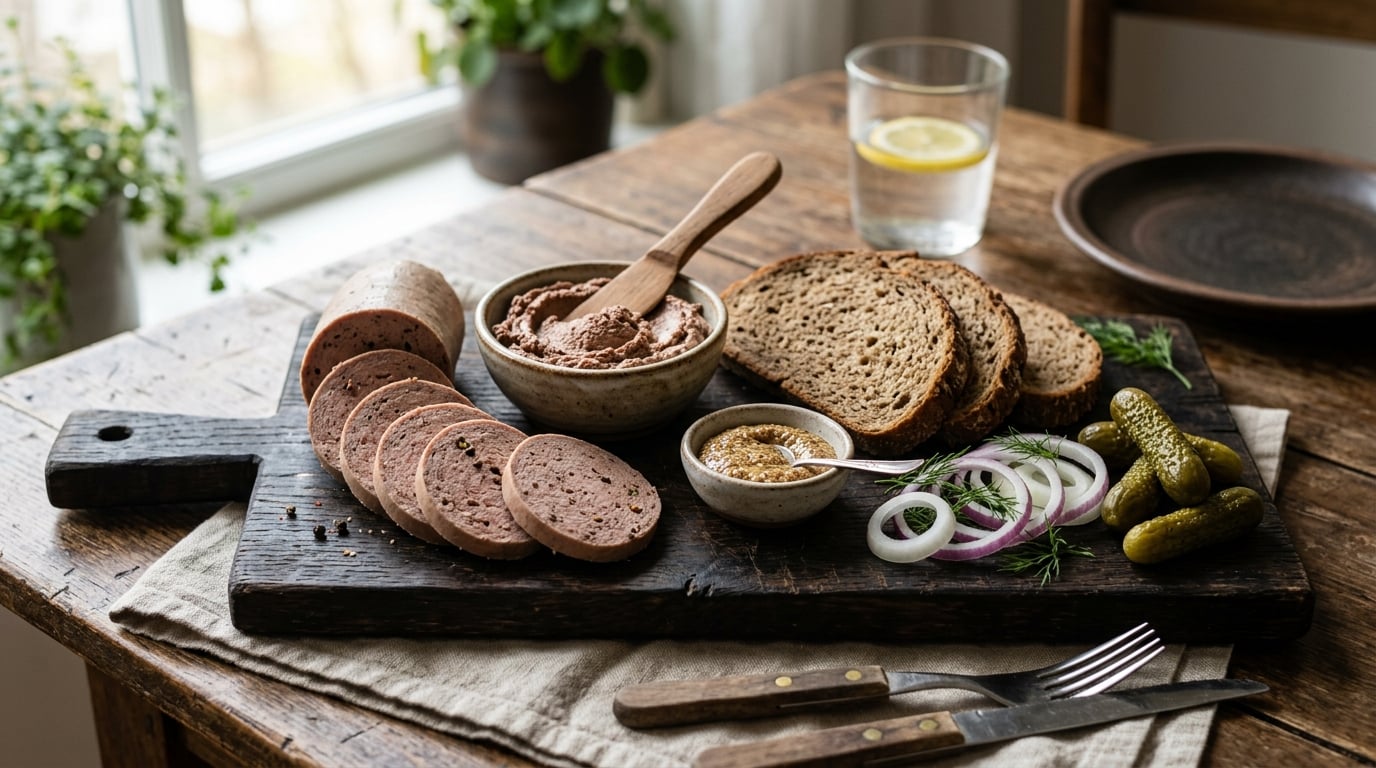
If you’re buying liver sausage for the first time, the short answer is this: pick a sliceable German-style Leberwurst if you want a firm sausage you cut with a knife, and pick an American braunschweiger if you want something soft enough to smear on toast. Past that split, the liverwurst and braunschweiger brands worth your attention come down to grind and seasoning, and every brand in this list is still being made as of 2026.
There is a second reason to care about the name. In American supermarkets “liverwurst” and “braunschweiger” mostly point at the same food, a cooked pork liver sausage sold refrigerated in a tub, a link, or a deli loaf. The words carry different weights in different countries, and the same word covers a different texture in different parts of the US, which is why people argue about which brand is best and never reach a conclusion.
I’ve eaten the deli-counter version cold off a knife, the tub version on a school-lunch sandwich, and the imported German cans on rye. What follows covers ten brands that are easy to find, explains what each one actually tastes like, and then gets into how people really eat liver sausage, including the unglamorous methods that never make it into a recipe box.
Table of Contents
- Best Liverwurst and Braunschweiger Brands and How People Actually Eat Them at a Glance
- 1. Kühne Rinderleberwurst
- 2. Rügenwalder Mühle Leberwurst
- 3. Mautner Markhof Leberwurst
- 4. FELIX Austria Leberwurst
- 5. Usinger’s Bavarian Liverwurst
- 6. Old Wisconsin Liverwurst
- 7. Diephuis Country-Style Liverwurst
- 8. Old Wisconsin Braunschweiger
- 9. Klement’s Braunschweiger
- 10. Hummel Braunschweiger
- How to Serve Liverwurst and Braunschweiger Without Making It Too Rich
- Frequently Asked Questions
- What is the difference between liverwurst and braunschweiger?
- Can liverwurst be eaten cold or does it need to be cooked?
- How long does liverwurst and Braunschweiger last in the refrigerator?
- What is the best bread to serve with liver sausage?
- Is Braunschweiger supposed to be spreadable or sliceable?
- How should I store an opened package of liverwurst?
- Conclusion
Best Liverwurst and Braunschweiger Brands and How People Actually Eat Them at a Glance
Here is the short version of all ten, organized by what you’ll feel on the tongue rather than by how the label is worded. Texture is the column that matters most, because it decides whether you slice the sausage or scoop it.
| Brand | Style | Texture | Flavor | Where to look | Best serving use |
|---|---|---|---|---|---|
| Kühne Rinderleberwurst | German-style beef liver sausage | Firm, sliceable, dense | Savory, peppery, cured | Import aisle | Sliced cold on rye with raw onion |
| Rügenwalder Mühle Leberwurst | German pork liverwurst | Dense, coarse, holds its shape | Deeply savory, traditional | Import aisle | Warm open-faced sandwich |
| Mautner Markhof Leberwurst | Austrian liverwurst | Medium, spreadable to sliceable | Hearty, herb-lifted | Import aisle | Breakfast plate with onion and herbs |
| FELIX Austria Leberwurst | Austrian liverwurst | Soft, smooth, spreadable | Rich, mild, approachable | Import aisle | Crostini with pickles and mustard |
| Usinger’s Bavarian Liverwurst | Americanized Bavarian style | Firm, sliceable, coarse | Smoky, meaty, assertive | Midwest specialty and deli | Pretzel roll with mustard and onion |
| Old Wisconsin Liverwurst | US deli cold cut | Sliceable, moist | Mild, cured, deli-style | Supermarket deli case | Thick deli sandwich on rye |
| Diephuis Country-Style Liverwurst | Premium US deli | Sliceable, coarse-country | Hearty, liver-forward, seasoned | Specialty and gourmet grocers | Breakfast board with cheese and rye |
| Old Wisconsin Braunschweiger | US spreadable braunschweiger | Soft, spreadable, coarse grind | Pork-forward, lightly seasoned | Supermarket dairy case | Cold toast with pickle chips |
| Klement’s Braunschweiger | Midwest specialty spread | Spreadable with body | Seasoned, smoky, hearty | Midwest and specialty meat cases | Warm sandwich with sweet onion |
| Hummel Braunschweiger | German-style spread | Spreadable, fine to medium grind | Savory, traditional, moderately smoked | Import and specialty meat cases | Rye with herring, onion and dill |
How the liverwurst and braunschweiger brands in this list differ
Three groups hide inside these ten. The first is German and Austrian Leberwurst: firmer, denser, slice cleanly, and usually found in the import aisle rather than behind the deli counter. The second is American deli liverwurst, sold as a sliced loaf or a roll in the cold case, closer in texture to a soft luncheon meat with a much more mineral flavor.
The third is the American braunschweiger tradition, which is softer, comes in a tub, and is meant to be spread. Community cooks who take sausage seriously judge all three the same way, by grind and smoke level, and the naming confusion is largely regional rather than a real culinary divide. The name braunschweiger points at Braunschweig in Germany, but the spreadable American product is a New World interpretation of Leberwurst, not an import.
1. Kühne Rinderleberwurst
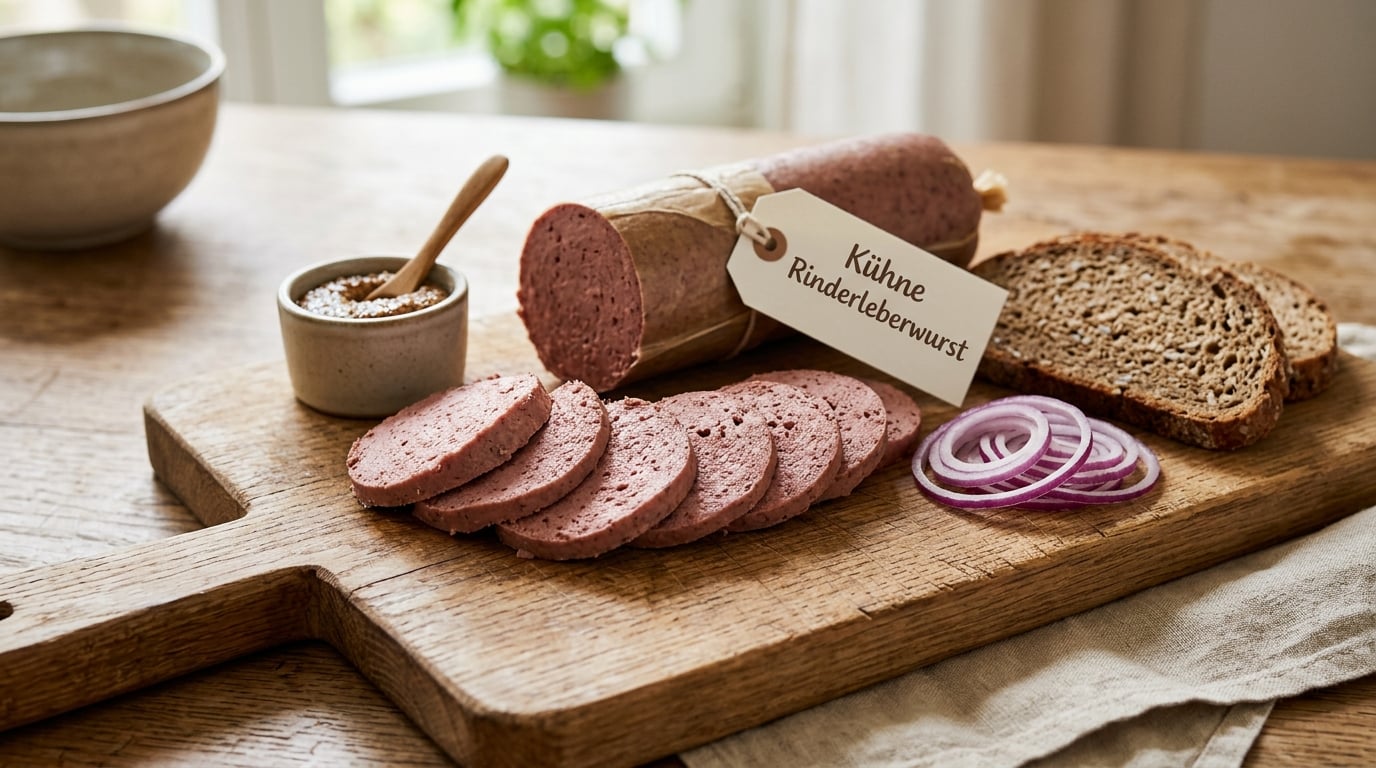
Kühne’s Rinderleberwurst is the most useful benchmark on this list for what German-style liverwurst is supposed to be, and the first one to try if your reference point is a deli counter in Wisconsin rather than a bakery in Munich.
Rinderleberwurst is a beef liver sausage rather than a pork one, which makes it denser and a little more mineral than the American tubs most people meet first. It slices instead of smears, holds its shape on a board, and takes a sharp knife without crumbling. The seasoning reads as salt, pepper and cured-meat savor rather than as a sweet or smoky sauce.
Serve it cool, not fridge-cold, and slice it thin enough to see the board through. Rye bread with raw onion and a line of mustard is the straightforward version. If it came in a can, check the label before you plan meals, because import versions differ on whether they need refrigeration once opened.
2. Rügenwalder Mühle Leberwurst
Rügenwalder Mühle is the traditional German option on this list, and its character is dense and savory in a way that rewards a hot sandwich rather than a cold plate.
Unlike the softer American versions, this one has the consistency of a coarse country sausage. It holds a thick layer without sliding out from under the bread, which makes it a good candidate for a warm sandwich where the cheese or the bread does the melting. A little heat also softens the fat, which is the part that makes cold liver sausage heavy for some people.
It also works in a cold antipasto spread, sliced thin next to cheese, cornichons and mustard, where its density holds up next to olives and pickles. Pickles and a sharp mustard are the pairing to reach for, since the sausage is rich enough that anything mild gets lost.
3. Mautner Markhof Leberwurst
Mautner Markhof brings the Austrian version, which sits between the dense German imports and the softer American products, and it is a good fit for hearty open-faced sandwiches and breakfast plates.
The texture is firmer than a braunschweiger spread and looser than a cured German slice, so you can either cut it or thin it with a knife on the board. The flavor leans savory with a herbal lift rather than the sharper cured note some German imports have, which makes it approachable if the first liver sausage you ever ate was too mineral for you.
Build it open-faced on thick bread with raw onion, fresh herbs and a drizzle of the mustard you have on hand, or plate it at breakfast alongside bread, onion and a hard-boiled egg. Sweet mustard works better here than plain yellow, and a scattering of chives does more than a heavier garnish.
4. FELIX Austria Leberwurst
FELIX Austria is the most accessible liverwurst on the list for readers who want the Austrian character without a firm, sliceable texture, and it spreads.
Smooth and soft, it behaves much like a rich pâté with more body, which makes it easy to portion and easy to hide in a sandwich. The flavor is rich and mild, with the liver taste present but not the first thing you register. That is usually a good starting point for a first-timer, and a bad one for someone who wants the sharp edge.
Serve it slightly below fridge temperature, spread thickly on toast or crostini, and balance it with something acidic. Pickled onions, cornichons, a sharp grain mustard, or a spoonful of sour cream all cut the fat. Anything mild and starchy, like plain white bread on its own, will make the richness the only thing you taste.
5. Usinger’s Bavarian Liverwurst
Usinger’s is the Americanized Bavarian-style entry, made by the Milwaukee sausage company that sausage-literate cooks name first when they talk about Wisconsin, and it is the smokiest, most assertive slice on this list.
It is not a soft braunschweiger spread. The texture is firm and coarse enough to slice onto a roll, and the flavor leans smoky and meaty rather than delicately cured, so it reads more like a savory summer sausage with liver in it than like a deli cold cut. If the first liver sausage you tried tasted mostly of fat, this one is the correction.
Cut it fairly thick, tuck it into a pretzel roll or a crusty sub, and finish it with mustard and raw onion. Pickled onion is better if you want to cut the richness. It also takes well to a warm pan for a few minutes per side, which is unusual advice for a cold cut and worth trying once.
6. Old Wisconsin Liverwurst
Old Wisconsin liverwurst is the familiar deli-style option, sold sliced or as a roll behind the counter, and it is the safe first purchase for a shopper who wants a sandwich filling rather than a spread.
The texture is moist and sliceable, closer to a tender cooked cold cut than to a firm cured sausage, and the flavor is mild with a cured edge. That makes it the one most people can eat without wincing, which is why it works so well on rye with mustard and a pile of raw onion. It also holds up under a slice of cheese without the sandwich turning to mush.
Because it is sold refrigerated and sliced, treat the open package the way you would any deli meat: keep it cold, use it within the window printed on the label, and don’t leave it on the counter while you make the rest of the sandwich.
7. Diephuis Country-Style Liverwurst
Diephuis is the premium American option here, and it is worth seeking out at a specialty or gourmet grocer if you want liverwurst treated like a serious cold cut rather than a sandwich commodity.
Country-style means a coarser grind and a fuller, more seasoned profile than a mild deli loaf. It is hearty in a way that asks for something alongside it, and it should not be treated as a mild everyday sausage. Slice it thin, put it on rye, and let cheese, mustard and onion do the work of making it a meal.
A breakfast board is the other strong use, with the slices fanned next to cheese, radishes, pickles and a hard-boiled egg. The richness that would make a sandwich feel heavy gets absorbed by bread and raw onion, and you end up with something that reads as a composed plate instead of a leftover.
8. Old Wisconsin Braunschweiger
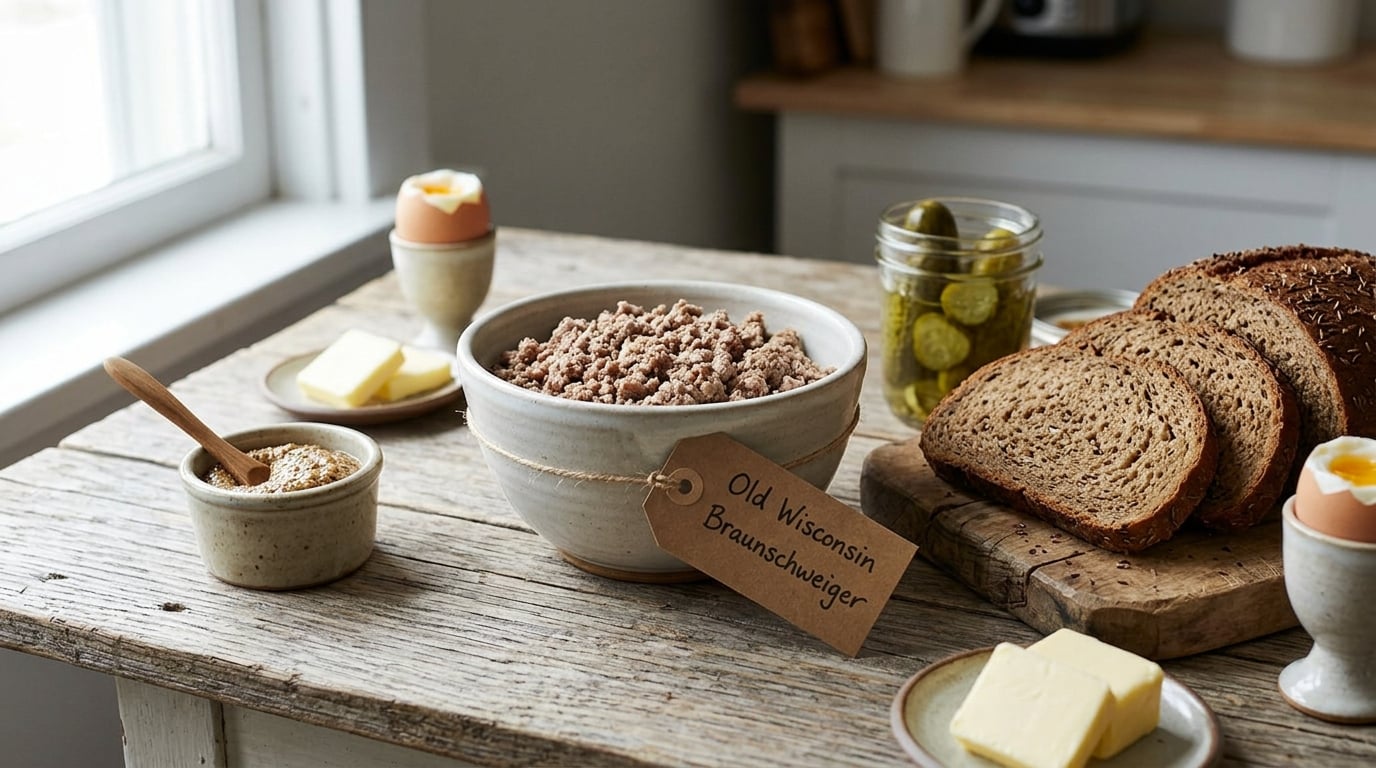
Old Wisconsin Braunschweiger is where the American side of this list gets explicit: this is a spreadable braunschweiger from a supermarket dairy case, not a sliceable German Leberwurst.
The texture is soft with a visible coarse grind, so it smears on toast but still has some body to it, and the flavor is pork-forward and only lightly seasoned compared with the German imports. That mildness is exactly what makes it the standard American version. The grind also means it holds a little more structure than a pâté, which is why people call it a sausage rather than a spread.
Serve it cold, straight from the tub, on toast or rye with pickle chips and mustard. Lightly warming it for a few seconds in a pan softens the fat and makes it taste more like a cooked sausage, which is a small departure from tradition but a good one on a cold morning.
9. Klement’s Braunschweiger
Klement’s is a Midwest specialty-meat braunschweiger, and it is the one to buy when you want a spread with more seasoning in it than a supermarket tub gives you.
The texture is spreadable with real body, somewhere between a pâté and a coarse fresh sausage, and the flavor is smokier and more seasoned than the mainstream versions, with a savory weight that carries across a slice of bread. It leans toward the German-style profile of the food without becoming a firm Leberwurst, which makes it a useful bridge for people moving between the two traditions.
Use it on toast, on crackers with a sharp cheese, or inside a warm sandwich where a little heat softens it. Sweet onion is the topping for this one, because the smokiness and the onion sweetness argue with each other in a way that works. A thin smear of mustard underneath keeps the sandwich from going flat.
10. Hummel Braunschweiger
Hummel is the traditional preparation on this list, and it is the one to reach for if you want liver sausage the way a German deli serves it rather than the way a Midwestern tub does.
This is a spreadable braunschweiger with a savory, moderately smoked character and a grind that runs from fine to medium. It is richer and more assertive than the mild American versions, closer to the flavor of the Austrian and German imports than to a deli loaf, and it is the one on this list that genuinely wants a traditional accompaniment.
Rye bread is the base. On top, go with herring, thin raw onion, dill, pickled cucumber or a tangy mustard, in the German order of Leverwurst mit Augurk, which is liver sausage with pickle. The point is contrast: something sour or briny against something rich. Serve it cold, on its own plate with the fixings laid out, which is how it is meant to be eaten.
How to Serve Liverwurst and Braunschweiger Without Making It Too Rich
Liver sausage is rich by definition, and the reason people love it and the reason they feel heavy after it are the same fat. A few adjustments fix that without changing the food.
- Portion smaller than feels right. A quarter-inch slice on a thick slice of rye is plenty. Most people spread like a quarter-pound of butter because that’s how deli meat comes out of the box.
- Eat it near fridge temperature, not ice cold. Cold fat is solid fat. Letting the sausage sit out for fifteen minutes before assembly softens it enough to taste less heavy, and it’s still a cold cut.
- Put something sour or sharp on top. Raw onion, pickled red onion, cornichons, dill pickles, radish, a sharp mustard, or a spoon of sour cream all cut the richness. This is the single highest-return change.
- Choose bread with structure. Rye, a dense country loaf, or a pretzel roll beats thin white bread, which goes soft and turns the whole thing to paste.
- Go easy on the mayo. Mayonnaise is another fat. Dijon, grain mustard, or pickled onion do the same job with less weight.
- Pair with something that cuts. A tart drink, iced tea, a sharp beer, or a pickled side on the plate all help. A sweet soda does not.
- Don’t serve it hot. Liver sausage is a cold cut. Warm it briefly if you must, but a piping-hot serving is a different, greasier food and not the point.
If you are serving it to someone who has never had it, start small and cold, on toast with mustard and pickle chips, and let them add more. The single most common reaction from newcomers is the mineral, iodine-like note, and it reads as something gone wrong unless you say up front that it is normal.
Frequently Asked Questions
What is the difference between liverwurst and braunschweiger?
In the United States the two names usually describe the same food: a cooked pork liver sausage sold refrigerated in a tub, link, or deli loaf. Braunschweiger is the American name, and it typically points at the softer, spreadable, coarsely ground version. Liverwurst often points at firmer, sliceable versions, including the German and Austrian imports sold under the name Leberwurst. The split is regional naming rather than a different recipe, and the texture is what tells you which one you are holding.
Can liverwurst be eaten cold or does it need to be cooked?
Liver sausage is sold fully cooked and ready to eat. Cook it again and you have made it heavier and greasier, not safer. The one variation worth trying is a few seconds in a warm pan, which softens the fat and makes a spreadable braunschweiger taste more like a cooked sausage. It is a small departure from tradition, and people who dislike liver sausage cold often prefer it warmed that way.
How long does liverwurst and Braunschweiger last in the refrigerator?
Follow the use-by date printed on the package, since recipes and shelf lives differ by maker. As a rough rule, an unopened refrigerated braunschweiger tub keeps for a few weeks, and once opened you should finish it within about seven to ten days. Sliced deli liverwurst and links keep less time than a sealed tub. Canned import versions are often shelf stable until opened, then move them to the refrigerator.
What is the best bread to serve with liver sausage?
Rye is the classic answer and the most useful one, because its sourness cuts the fat and its density keeps the sandwich from collapsing. A country loaf or a pretzel roll works nearly as well, and pumpernickel is the German-leaning version. Thin white bread is the worst option, since it absorbs moisture and turns the sandwich into paste. Toast the bread rather than serving it raw if the sausage is soft.
Is Braunschweiger supposed to be spreadable or sliceable?
American braunschweiger is supposed to be spreadable, and that soft tub or link texture is the defining feature of the product. Liverwurst, especially the German and Austrian imports, is normally firm and sliceable. That is the practical difference between the names in a store: if it smears on a knife, it is braunschweiger. If it holds a clean slice, it is Leberwurst or a deli-style liverwurst loaf.
How should I store an opened package of liverwurst?
Keep it refrigerated and use it within the window on the label, usually a week to ten days for an opened tub. Reseal the original package or press out the air and use a tight container, since liver takes on odors and dries out quickly when exposed to air. Keep it away from raw meat in the fridge, and do not rely on smell alone to judge it, since liver sausage already carries a strong mineral odor. When in doubt, discard it.
Conclusion
Start with texture, not with a ranking. If you want to slice it, buy a firm loaf, and Old Wisconsin liverwurst behind the deli counter is the least risky first sandwich, while Usinger’s is the one to try if you want smoke and a Bavarian character. If you want to spread it, start with a supermarket braunschweiger, and move to Klement’s or Hummel once you want more seasoning and less mildness.
Whichever way you go, serve it cold, on rye, with something sharp on top. That combination covers most of what the liverwurst and braunschweiger brands on this list are actually good at, and it is how most people who grew up eating them still eat them.