
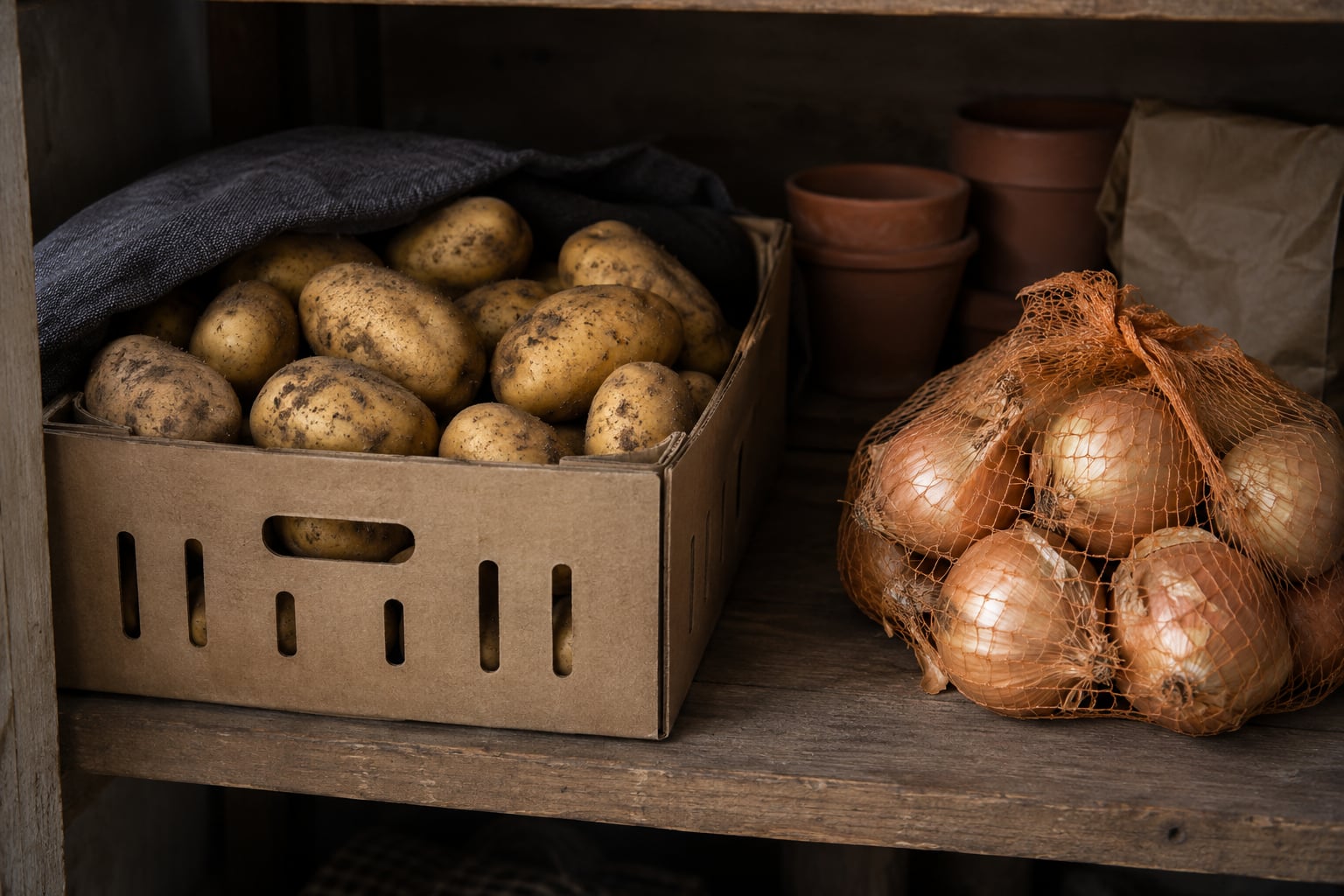
Store onions and potatoes in separate spaces at least 3 feet (about 1 metre) apart, in cool, dark, dry, well-ventilated containers, and keep both of them out of the refrigerator. Potatoes do best around 45-55°F (7-13°C), cured onions around 40-50°F (4-10°C).
That is the whole trick to how to store onions and potatoes, and the reason a bag of potatoes next to a basket of onions goes bad weeks early. Potatoes and onions both breathe after harvest, and what each one gives off hurts the other: moisture from the potatoes softens onion skins and invites mould, while onion gases and ripening fruit nearby push potatoes toward sprouting and greening.
Getting the containers and the spot right takes about ten minutes. Everything after that is a weekly glance in the cupboard.
Reviewed and updated for 2026. Storage times and temperature targets follow mainstream food-safety guidance and extension-service recommendations; check your local growing conditions if you store a large home harvest.
Table of Contents
- What You Need
- Step-by-Step: How to Store Onions and Potatoes
- Common Mistakes and How to Fix Them
- Frequently Asked Questions
- Why should onions and potatoes not be stored together?
- How long can whole onions and potatoes be stored at room temperature?
- Should peeled onions and cut potatoes go in the refrigerator?
- Can green onions be stored like whole yellow or red onions?
- Are sprouted potatoes still safe to eat?
- What is the best container for storing onions and potatoes?
- Conclusion
What You Need
Nothing here needs to be bought. Every item below is a container that lets air move and keeps light out.
For potatoes:
- A mesh produce bag, a wooden slat crate, a wire basket, or a cardboard box with a few holes punched in the sides.
- A dark cloth, an old pillowcase, or a folded newspaper to throw over the top and block light.
- A cheap refrigerator thermometer, placed in the spot for a day before you fill it, so you know what the temperature really is.
- Woodchip or paper-based cat litter if you want more humidity control in a dry room. Growers use it as a moist-but-not-wet bedding layer under and around the potatoes.
For whole dry onions:
- A mesh produce bag, an open wire basket, or a crate with the lid propped open for airflow.
- A shallow tray or a sheet of newspaper to sit the container on, because cured onions shed dry skin flakes constantly.
- A separate thermometer, if the onion spot is not the same room as the potato spot.
For green onions and cut vegetables: a jar for scallion ends, an airtight container for sliced onion, and a bowl of cold water for diced potato.
If you have no pantry: a lower cabinet, a closet shelf, or a laundry room will do. One home cook on the Cuisine at Home forum keeps onions in a bowl on the counter and potatoes in their ventilated bag in the laundry room, and that layout works because the two never share air. A recycled 2-gallon tub with hand-punched side holes, top open, is a popular forum solution for onions when nothing else fits.
Step-by-Step: How to Store Onions and Potatoes
Choose Where to Store Potatoes
Pick the darkest, coolest, best-ventilated spot you have. For most kitchens that is a hall pantry, an unheated basement corner, or the lowest shelf of a cabinet away from the wall and pipes.
Stay at 45-55°F (7-13°C) if you can. Below about 40°F (4°C) the starch in potatoes converts to sugar, which is why refrigerated fries taste sweet, and colder temperatures also make the texture suffer once they are cooked.
Keep the spot away from four things: direct light, the oven and stove, the dishwasher, and the onions. A garage, shed, RV or boat usually fails because the temperature swings with the weather, and heat turns dormant potatoes into sprouting potatoes within a couple of weeks.
Prepare Potatoes Before Storage
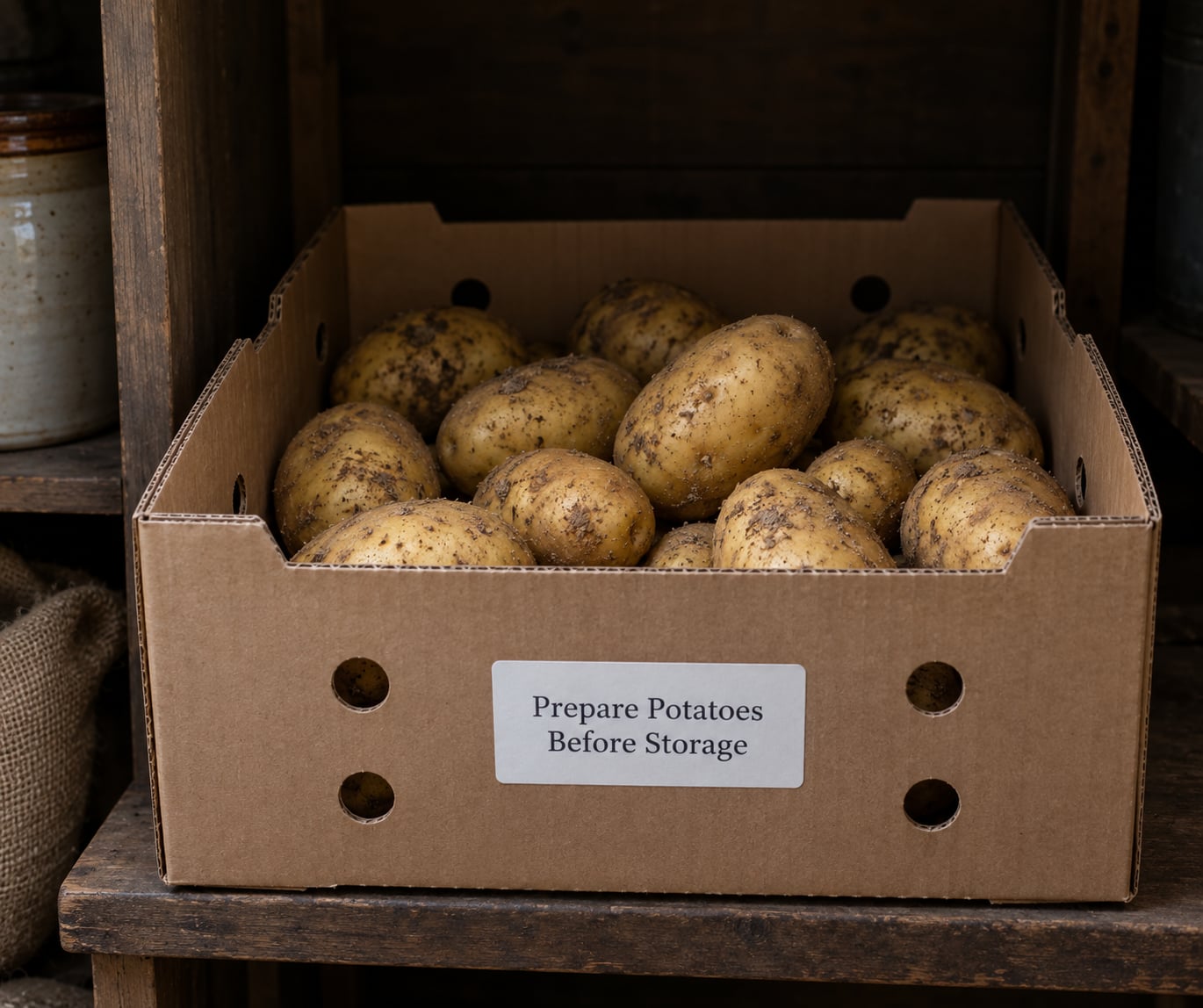
Sort first and set aside anything green, soft, bruised or already sprouting. One bad potato in a closed box can take the whole box within a week.
Do not wash them. The dry skin is the protective layer, and growers on gardening forums point out that unwashed potatoes benefit from a few hours of drying out of direct sun, which thickens the skin before storage. Washing traps moisture against that skin and invites rot.
Then store them loose or in a single loose layer, not piled deep, in a breathable container you cover with something dark. Buy the oldest first and use them up first, and keep ripening fruit out of the room: apples, bananas and tomatoes release ethylene gas, and ethylene is one of the things that wakes potatoes up and starts sprouting.
Choose Where to Store Whole Onions
Whole onions only store well once they are properly cured, which means the neck is dry and papery all the way through. If the neck still feels soft or the layers smell green, dry them in a warm airy spot for another week or two before they go into storage.
Then give them 40-50°F (4-10°C), dry air, darkness and moving air. Sweet onions such as Vidalia, Walla Walla and red onions hold more water than pungent yellow ones, so they last only a couple of weeks and should be cooked first rather than stored long.
Skip sealed plastic and airtight canisters entirely. Onion skins need to shed moisture, and a closed container traps it, which is how a bin of dry onions turns into a bin of soft, mouldy onions.
How to Store Onions and Potatoes Separately
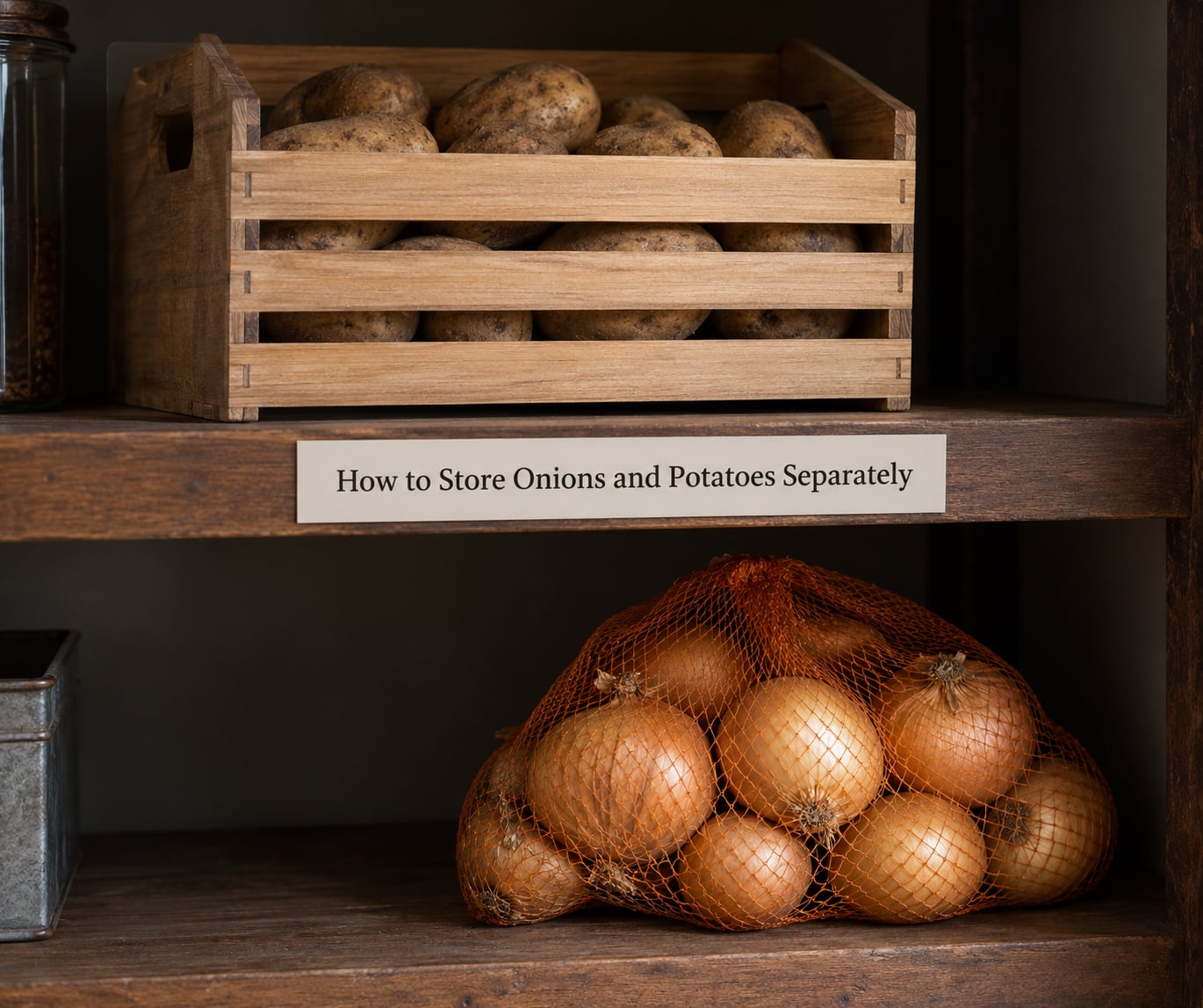
The 3-foot rule is the part people argue about. Different shelves in the same cupboard are fine as long as each vegetable sits in its own container and the two are not stacked touching. Two separate cabinets, or two separate rooms, are better still.
Give every batch its own container so you can move one without disturbing the other. Potatoes go in a dark, ventilated crate or box; onions go in an open mesh bag or basket; nothing gets washed, wrapped or sealed; and both stay out of the refrigerator.
Peeled onions and cut potatoes are the exceptions. Both lose moisture fast once their skin is broken, so seal them and refrigerate them: peeled or sliced onion in an airtight container for up to 7 to 10 days, and diced potato submerged in cold water in the fridge for up to about 4 days.
Side by side, the two vegetables want opposite conditions:
- Ideal temperature: potatoes 45-55°F (7-13°C), whole dry onions 40-50°F (4-10°C).
- Light: total darkness for potatoes or the skin greens; darkness preferred for onions, though light is tolerated.
- Air and humidity: airflow with slightly humid air around the potatoes, strong airflow and dry air around the onions.
- Best container: a mesh bag, slat crate or ventilated box covered with a dark cloth for potatoes; a mesh produce bag, wire basket or crate with the lid propped open for onions.
- Never use: sealed plastic, the refrigerator or a closed canister for whole potatoes; sealed plastic bags, airtight canisters or a damp shelf for whole onions.
- Refrigerator: no for whole potatoes and yes for cut potato; no for whole onions and yes for peeled or sliced onion.
- Realistic shelf life: 2 to 4 months for potatoes when cool, 1 to 2 weeks in a warm kitchen; 2 to 6 months for pungent yellow onions, 1 to 2 weeks for sweet onions.
- If it sprouts or greens: cut away small spots on either vegetable, but discard heavily green or bitter tubers and any soft or mouldy bulbs.
Store Green Onions and Cut Vegetables
Scallions cannot be stored like whole yellow or red onions. Trim the ends, stand them in an inch of water in a jar in the refrigerator, and change the water every two or three days. They keep about a week to ten days that way; dry in a bag in the crisper, they turn limp and slimy much sooner.
Sliced and diced onions need the opposite treatment from whole ones. Airtight container, refrigerator, use within 7 to 10 days according to USDA food-safety guidance, and judge them by appearance and texture rather than by smell alone, since cut onion keeps its aroma after it has gone off.
Cut potatoes belong in cold water in the fridge and are good for about 4 days. For longer storage, blanch the pieces, drain them dry and freeze them, or freeze grated raw potato for fries and roasts.
Check Stored Vegetables Before Using Them
Make it a weekly five-minute check, and always pull anything suspect out immediately rather than leaving it to infect the rest of the box.
Sound potatoes are firm and dry-skinned. Small green patches or short sprouts can be cut away if the green area is minor, but discard a tuber that is extensively green, bitter-tasting, soft, slimy or mouldy.
That green colour matters because light triggers chlorophyll and a rise in glycoalkaloids such as solanine, the compound that gives green potatoes their bitterness. Cooking does not remove it reliably, so the fix is prevention: darkness, cool temperature, and taking green skin off before eating.
Onions should feel firm with dry, papery skin. A bulb with one small green sprout is still fine once you cut the sprout out. Discard onions that are soft or squishy, mouldy at the neck, leaking, or sour-smelling, and cut away any dark spot that is only on the outer skin.
Fixing a Storage Mistake You Already Made
If onions and potatoes are sharing a shelf now, spread them out, sort out anything already soft, and move one batch into a different container in a different part of the kitchen. Moving them costs you five minutes and usually buys months.
If your potatoes are sweating in the supermarket plastic bag, empty them onto a tray, blot the surfaces dry, discard anything wet underneath, and move them into a crate or mesh bag where air reaches every side. Plastic wrapping holds condensation against the skin, which is the fastest route to rot.
If mould is already showing in an onion bin, remove every bulb, including the ones that look fine, wash and fully dry the container, then restock with cured onions and much more airflow. Mould spreads by contact, so the whole batch is suspect.
Most people who ask how to store onions and potatoes are not doing anything wrong at the start. They buy a bag and a bunch, dump both into the nearest cupboard, and only think about storage again when the potatoes are soft or the onions smell sour.
Common Mistakes and How to Fix Them
Most spoiled vegetables were spoiled by one of these, and all of them are free to correct.
- Storing them in the same basket or shelf. Move one batch at least 3 feet away, each in its own container.
- Washing whole potatoes. Skip the rinse; let the skin dry in the air instead.
- Using airtight plastic. Swap for mesh, wire, slat crates or a box with punched holes.
- Refrigerating whole vegetables. Cold makes potatoes sweet and softens onion skins; refrigerate only the cut or peeled portions.
- Leaving them in light. Potatoes green and build glycoalkaloids, so cover every container with a dark cloth.
- Picking a damp or warm spot. A cabinet beside the oven is the classic failure; the coolest dark corner wins.
- Piling produce too deep. Keep potatoes in a single loose layer so no skin touches another wet skin.
- Letting the oldest pile sit too long. Move the oldest batch to the front as you shop, and cook it next.
- Ignoring ethylene producers. Keep apples, bananas and ripe tomatoes out of the potato room.
- Skipping the weekly check. Ten minutes now saves a whole box of mould later.
A few habits extend freshness without any preservative at all. Chop surplus onions and freeze them flat in a bag for cooking; freeze grated potato for quick sides; keep a spare dark cloth over each container; and label the front of the crate with the date you filled it, because oldest-first rotation only works if you know what came in first.
Frequently Asked Questions
Why should onions and potatoes not be stored together?
Both vegetables release gases and moisture after harvest, and those two together shorten both shelf lives. Onion off-gases and ethylene from ripening fruit push potatoes toward sprouting and greening, while the steady moisture potatoes give off softens onion skins and invites mould. Keeping them at least 3 feet apart in separate ventilated containers removes most of that damage.
How long can whole onions and potatoes be stored at room temperature?
Potatoes last 2 to 4 months at cool room temperature around 45-55°F, but only 1 to 2 weeks in a warm kitchen near the stove. Pungent yellow and white onions keep 2 to 6 months at 40-50°F, while sweet onions such as Vidalia and Walla Walla hold more water and last only a couple of weeks. Bulb or pasta onions bought with dry papery skins store far longer than spring onions.
Should peeled onions and cut potatoes go in the refrigerator?
Yes, once the skin is broken. Peeled or sliced onion in an airtight container keeps about 7 to 10 days refrigerated, and diced potato kept submerged in cold water keeps roughly 4 days. Both dry out in a sealed pantry container, and both are better off in the fridge where humidity is controlled. For longer storage, freeze chopped onion or blanched and frozen potato pieces instead.
Can green onions be stored like whole yellow or red onions?
No. Green onions hold very little stored energy, so they wilt and turn slimy fast if left in a pantry basket. Trim the ends, stand the stalks in an inch of water in a jar, and keep them in the refrigerator, changing the water every two or three days. Used that way they last about a week to ten days, which is why scallions are bought in small bunches.
Are sprouted potatoes still safe to eat?
Small sprouts and small green patches can be cut away and the rest used, provided the flesh underneath is firm and not bitter. Extensively green, soft, or strongly bitter potatoes should be discarded, because light raises chlorophyll and glycoalkaloids such as solanine, and cooking does not reliably remove them. Keeping stored potatoes dark at 45-55°F is the real prevention.
What is the best container for storing onions and potatoes?
Use a breathable container for each, never the same one. A mesh produce bag, wooden slat crate, wire basket or cardboard box with punched holes works for potatoes, covered with a dark cloth. A mesh bag, open wire basket, or crate with the lid propped open works for cured onions. Avoid sealed plastic bags, airtight canisters and unventilated plastic tubs, because trapped moisture is what causes rot.
Conclusion
Start by splitting them up. Put uncut potatoes in a dark, ventilated container at 45-55°F, put cured dry onions in a separate mesh bag or basket at 40-50°F, and keep the two at least 3 feet apart, out of the refrigerator and away from light.
Refrigerate only the parts that need moisture protection: peeled or sliced onion in an airtight box, and cut potato in cold water. Check both containers once a week, take out anything soft or mouldy straight away, and cook the oldest stock first. That is the whole method, and it holds up in a real kitchen with no pantry at all.