
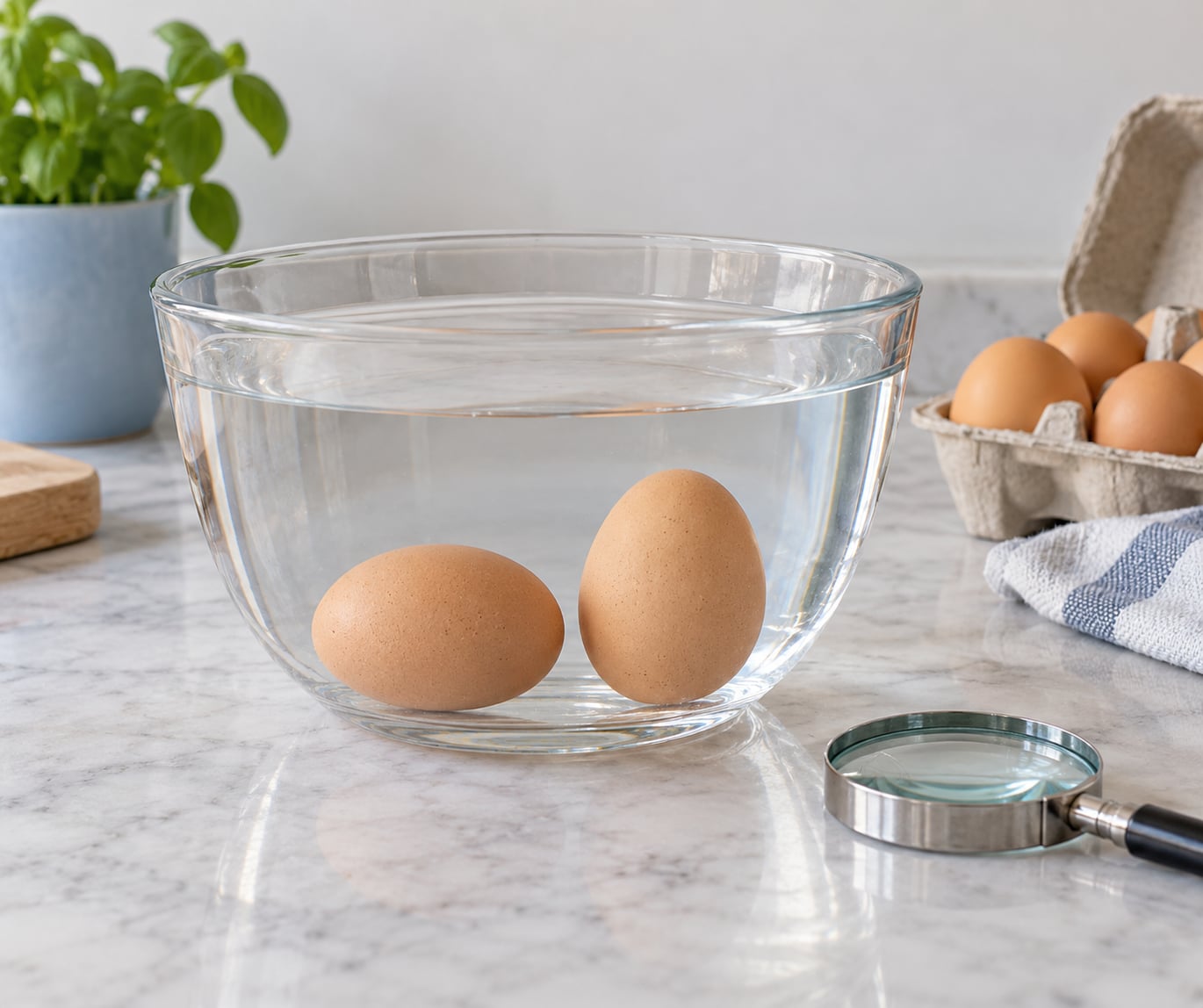
If you want to know how to tell if eggs are still good, the fastest answer is the float test: put the egg in a bowl of cold water and watch what it does. Sinks and lies flat means very fresh, sinks but stands up means older yet usable, floats means it is past its best days and needs a smell test before it goes anywhere near a pan. The whole thing takes about a minute per egg and costs nothing, which beats throwing out a carton of perfectly good eggs because a date on the side felt vague.
Dates on egg cartons are quality markers, not safety deadlines. Most of us read them as the latter, and that is where a lot of avoidable waste starts.
Table of Contents
What You Need
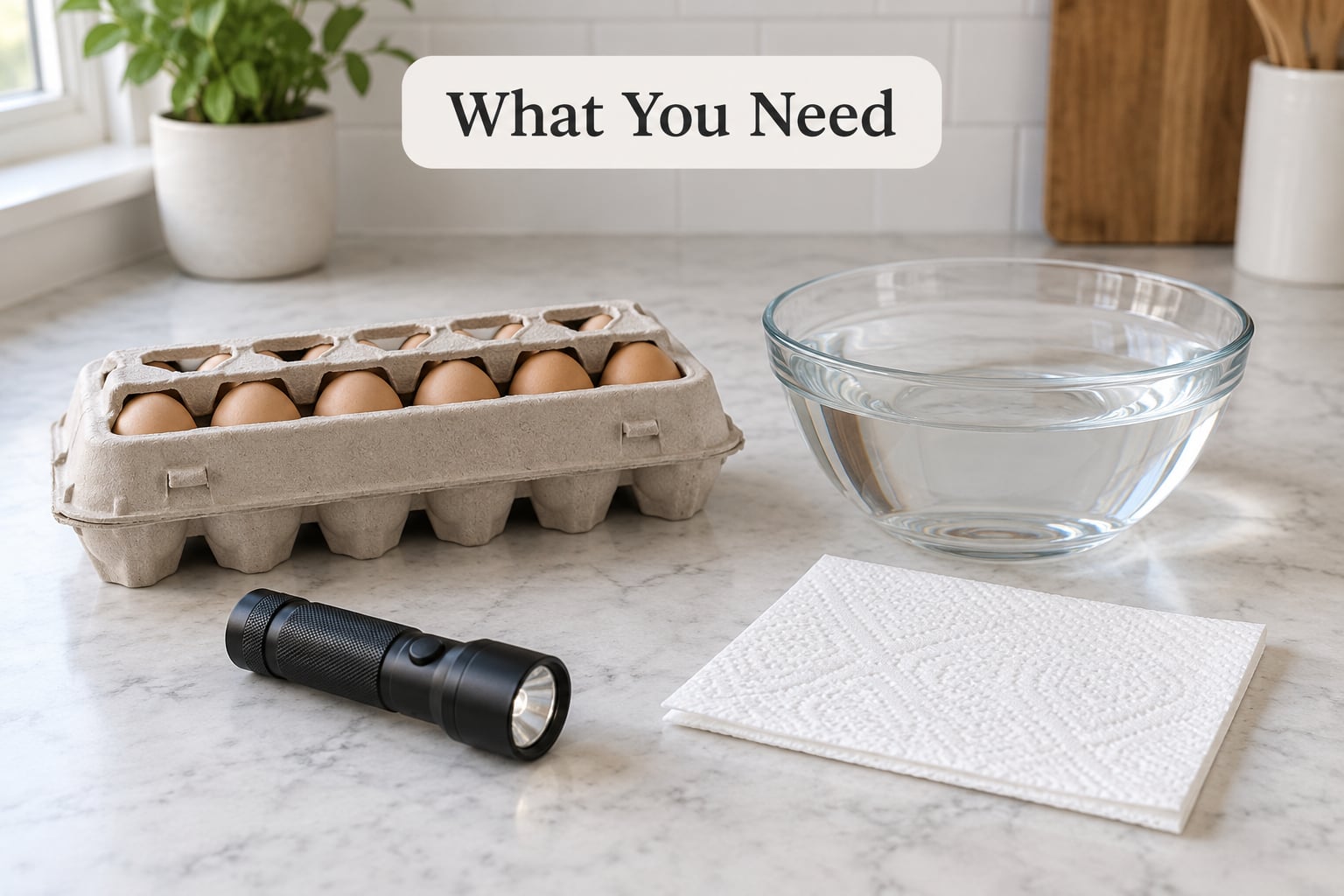
You need less than most people expect. A bowl or glass deep enough that the egg sits fully under water is the main tool, filled with cold tap water. Filtered, distilled or mineral water changes nothing about the result, so do not bother.
Also useful: the original carton, because the date lives on it. A small flashlight helps you catch hairline cracks that are invisible under kitchen light. Keep a clean plate, a cup for cracking a suspect egg into, and a paper towel within reach so a leaking egg is not cleaned up with your hands.
Finally, have a way to dispose of an egg without thinking about it later. A small bin or the compost bowl works. Once you smell something off, your instinct will be to put it down gently and walk away, which means you will find it again in a week.
Step-by-Step: How to Tell If Eggs Are Still Good
Step 1: Read the date on the carton first
US egg cartons carry one of four labels, and they are not interchangeable. A sell-by date is a packaging guideline for the retailer. A best-by or use-by date is about quality. A Julian pack date is a three-digit number from 001 to 366 showing the day of year the eggs were packed, so 137 means May 17 in a non-leap year.
All of them are quality signals. None of them means the egg becomes dangerous at midnight that night. The USDA puts refrigerated shell eggs at roughly three to five weeks after purchase when they have stayed cold and unbroken, and many people safely use them several weeks beyond a best-by date.
Step 2: Look at the shell before anything else
Pick the egg up and turn it slowly in good light. You are looking for three things: a crack that reaches the membrane, a wet or sticky spot that means it is leaking, and dark staining around a break. Shake it gently next to your ear too. A sloshing sound suggests a larger air cell and an older egg, though a still egg can be well past its prime.
A clean shell with a chalky, slightly rough feel is normal. A wet shell is not, and an egg that squirts when you crack it should go in the bowl rather than the pan.
Step 3: Float the egg, the fastest way to tell if eggs are still good
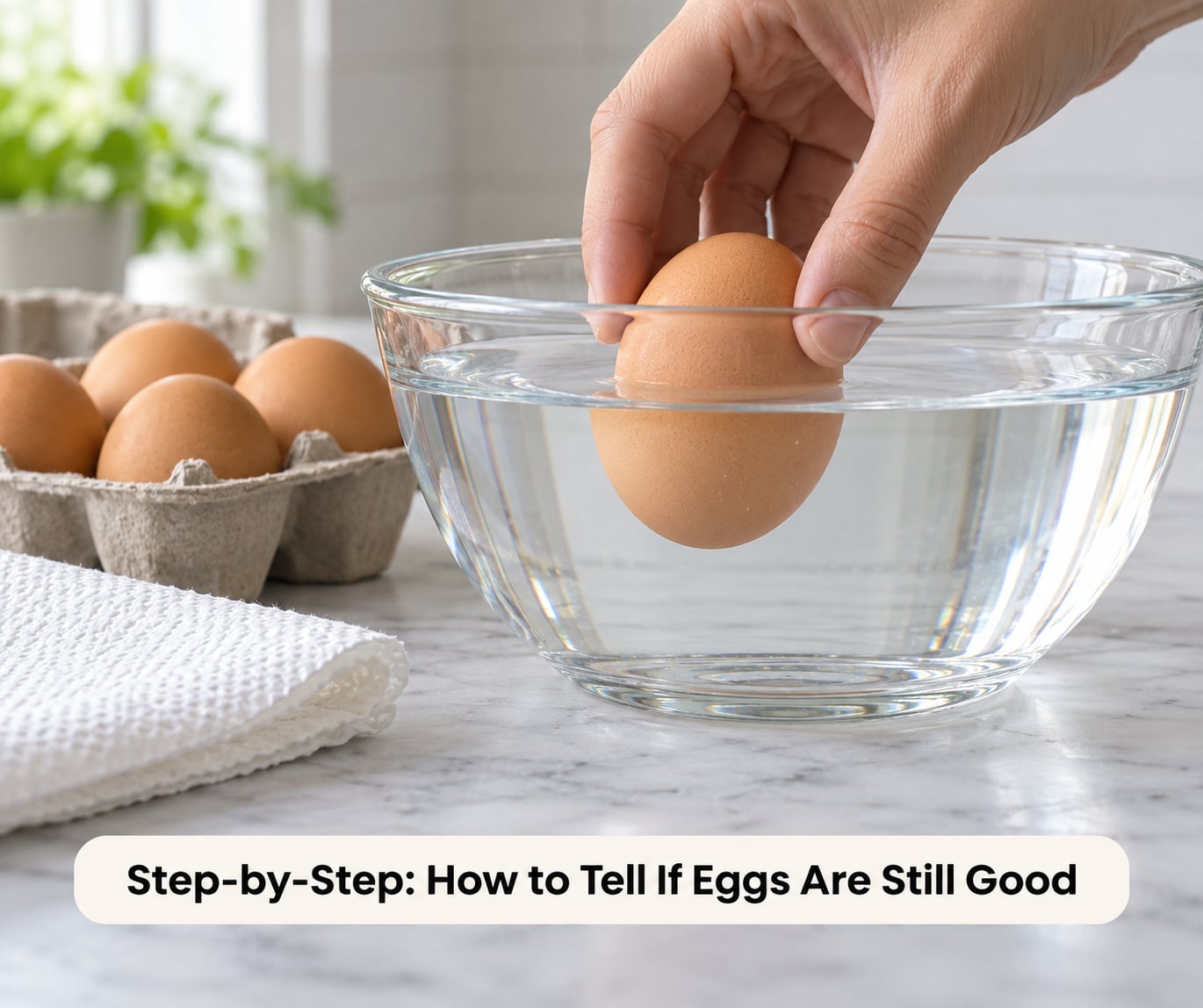
Fill the bowl with cold water deep enough to cover the egg, then lower it in with your fingers. Do not drop it from height. A splash and a cracked shell defeat the whole exercise. Wait a few seconds, then read what the egg is doing.
| What the egg does | What it means | Safety verdict | Best use |
|---|---|---|---|
| Sinks and lies flat on the bottom | Very fresh, small air cell | Safe | Anything, including soft yolks |
| Sinks but stands upright on its end | Older, air cell has grown | Usually safe, still test by smell | Scrambling, baking, hard-boiling |
| Rises with most of it above the water | Old, air cell is large | Crack into a bowl and smell before deciding | Baking, meringue, or discard |
Here is why that happens. An eggshell is porous, and the egg forms a small air cell at its broad end right before it is laid. Water slowly escapes through those pores and is replaced by air, and if bacteria have started to work, they add gases too. A bigger air cell makes the whole egg lighter than water, so it stops sitting flat and eventually floats. The test measures age, not rot, and that distinction matters.
Step 4: Crack it into a separate bowl and smell it
Whichever result you got, this is the step that tells you about safety. Crack the egg into a cup or bowl rather than straight onto the pan, so a bad one does not contaminate a dish you already started. A fresh egg smells neutral, maybe faintly grassy.
A spoiled egg gives off a sharp sulfur smell you will notice immediately, like rotten eggs. If you cannot decide, throw it out. A gray-green ring on the yolk is harmless oxidation, and a watery white is just age, not spoilage. Any pink, olive or iridescent cast in the white is a reason to discard it.
Extra caution goes to pregnant people, young children, older adults and anyone with a weakened immune system, because Salmonella is the risk that matters here. Cook eggs to 160°F, and avoid runny yolks for those groups.
Common Mistakes
Assuming any crack means the egg is ruined. It depends where the crack is and how it happened. A small hole in a shell with an intact membrane, or a carton where eggs have been jostled in the fridge, is different from a split egg with dried blood and damp staining. If it looks clean, smells normal at the shell, and passes the float and crack tests, most cooks would keep it.
Using shell or yolk color as a freshness signal. Shell color comes from the hen breed. Yolk color comes from what she ate. Neither tells you anything about age or safety, and pale yolks are not a warning sign.
Treating the float test as a safety certificate. Food scientist Don Schaffner is on record saying smell is the only reliable indicator, and r/isthissafetoeat reaches the same conclusion: an egg floats well before it spoils. A floating egg is an old egg, which is not always a bad egg. Crack it into a bowl and let your nose decide.
Tasting an egg to check it. That is how people get sick, and you cannot un-swallow Salmonella. It is also completely unnecessary when cracking into a bowl shows and tells you everything.
Binning a whole carton on the printed date. The USDA window is three to five weeks refrigerated, and quality dates are set conservatively. Test the eggs in order of oldest first and you will usually rescue most of the carton.
One more exception worth knowing: unwashed farm and backyard eggs have an intact waxy bloom, so they hold their contents longer and start floating sooner than store-bought eggs. r/AskRedditFood has plenty of people reporting farm eggs that floated yet smelled fine with normal yolks. For those, the float test flags age far more aggressively than it does spoilage. Smell carries more weight, and refrigeration still matters.
Storage is what keeps the ambiguity low. Keep eggs in the original carton on a middle shelf rather than the door, store them pointed end down so the yolk stays centered, and put them back in the fridge within two hours of shopping. If you find room for one habit, make it a date check before your weekly shop rather than a sniff test at the back of the fridge, because the ones you forget are the ones that go bad. Cold chain discipline matters for everything in the fridge, not just the egg carton, which is the argument in whether Boar’s Head deli meat is still worth buying after a listeria recall.
Frequently Asked Questions
Do eggs really float when they are bad?
No, and that is the part most guides get wrong. Floating means the air cell has grown large enough to make the egg buoyant, which is a sign of age rather than rot. A spoiled egg also floats, but plenty of floating eggs are still fine. Crack a floating egg into a separate bowl and smell it. Any sharp sulfur odor means discard it regardless of what the water said.
Are eggs safe after the sell-by date?
Usually yes. Sell-by, best-by and use-by dates are quality guidelines for retailers, not safety deadlines. The USDA gives refrigerated shell eggs a three to five week window after purchase when they stayed cold and unbroken, and many eggs are used safely several weeks past a printed date. Test each egg with the float test and a smell check rather than emptying the carton into the bin.
Can I use an egg with a small crack in the shell?
It depends on the crack and the egg. A hairline chip with no leak, no staining and a normal smell is often fine once you confirm the egg passes the float and crack tests. A wet egg, a split with dried blood, or any odor means it should be discarded, because bacteria can move through the shell and the protective membrane. When in doubt, throw it out.
Why does my egg smell bad even if the shell looks normal?
Because spoilage starts inside the egg long before anything shows on the outside. Bacteria breaking down proteins produce sulfur compounds, and those gases pass through the porous shell and into the air cell. A normal-looking egg can therefore smell terrible once cracked, and that is why the smell test is the one to trust. The shell, the float test and the color of the yolk all tell you far less.
How should eggs be stored to keep them fresh?
Keep them in the original carton in the fridge at 40°F or below, on a middle shelf rather than in the door, with the pointed end down. Buy eggs last when shopping and get them home within two hours. Washing eggs removes a protective coating, so only wash the shells if you plan to cook the eggs immediately, and always cook them to 160°F.
Conclusion
Start with the carton date, then look at the shell, then float the egg in cold water, then crack it into a bowl and trust your nose. Anything cracked, wet or sour-smelling goes in the bin. Everything else goes back in the carton on a middle shelf, pointed end down, and gets used. Once you know how to tell if eggs are still good, that order takes about a minute an egg and keeps a good carton of food out of the trash.