
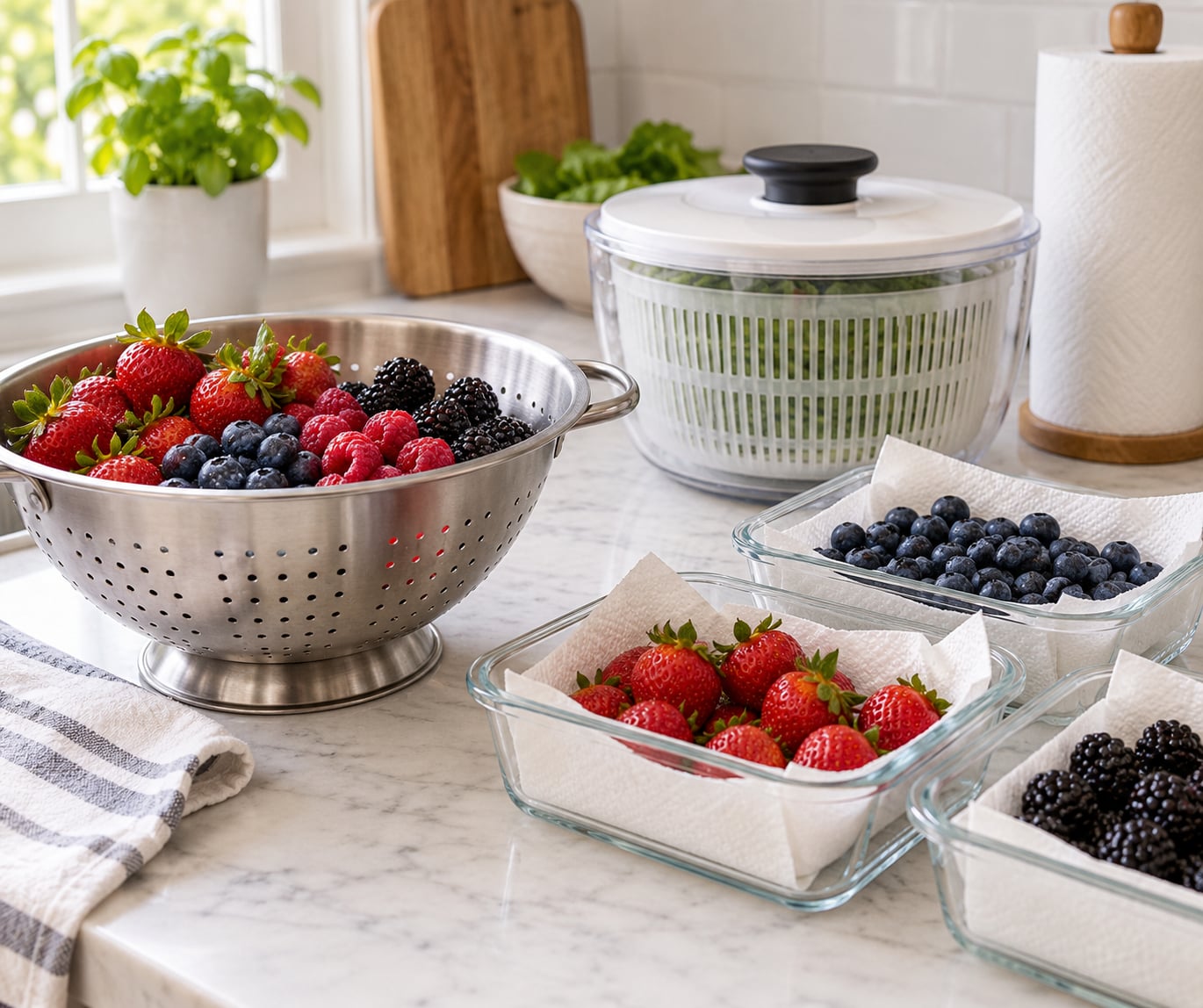
To keep berries fresh longer, keep them cold, dry, and ventilated until you need them, and wash them only when you plan to eat them. A gentle vinegar bath before storing knocks down surface mold spores, thorough drying stops condensation, and a shallow container lined with paper towel on an upper fridge shelf buys you the extra days. Firm berries like blueberries can stretch to a week or two that way. Soft ones like raspberries never will.
Most clamshells from the grocery store are already near the end of their life by the time you get them home, which is why so many people assume berries just spoil fast. They do, but not at the pace most kitchens produce. Most spoilage traces back to three things: water on the skin, a closed container that traps that water, and fruit bruised at the store. Fix those three and the clock slows noticeably.
Below is the whole method, from prep to freezer, with the numbers spelled out so you can stop guessing. If you want the sandwich version of food storage and portioning, my guide to how to make a sandwich in the morning that still tastes fresh at lunch covers the other half of the problem.
The short version
- Dry. Surface moisture is what grows mold. Dry every berry completely before it goes near a lid.
- Cold. Keep berries at or below 40°F. The door is the warmest spot in the fridge, so avoid it.
- Ventilated. A shallow container with a loose lid beats a sealed mason jar every time.
- Single layer. If berries touch, moisture and mold move from one to the next.
- Unwashed until needed. Washing at the store is the single most common reason berries turn to mush in a day.
Table of Contents
- What You Need
- Step-by-Step: How to Keep Berries Fresh Longer
- Frequently Asked Questions
- Should berries be washed before storing in the refrigerator?
- How long do strawberries, blueberries, raspberries, and blackberries last in the refrigerator?
- What is the best way to keep berries fresh without freezing them?
- How can I tell whether stored berries are still good to eat?
- Can I freeze berries with sugar or in a single layer first?
- Why do berries get moldy so quickly after being stored?
- Conclusion
What You Need
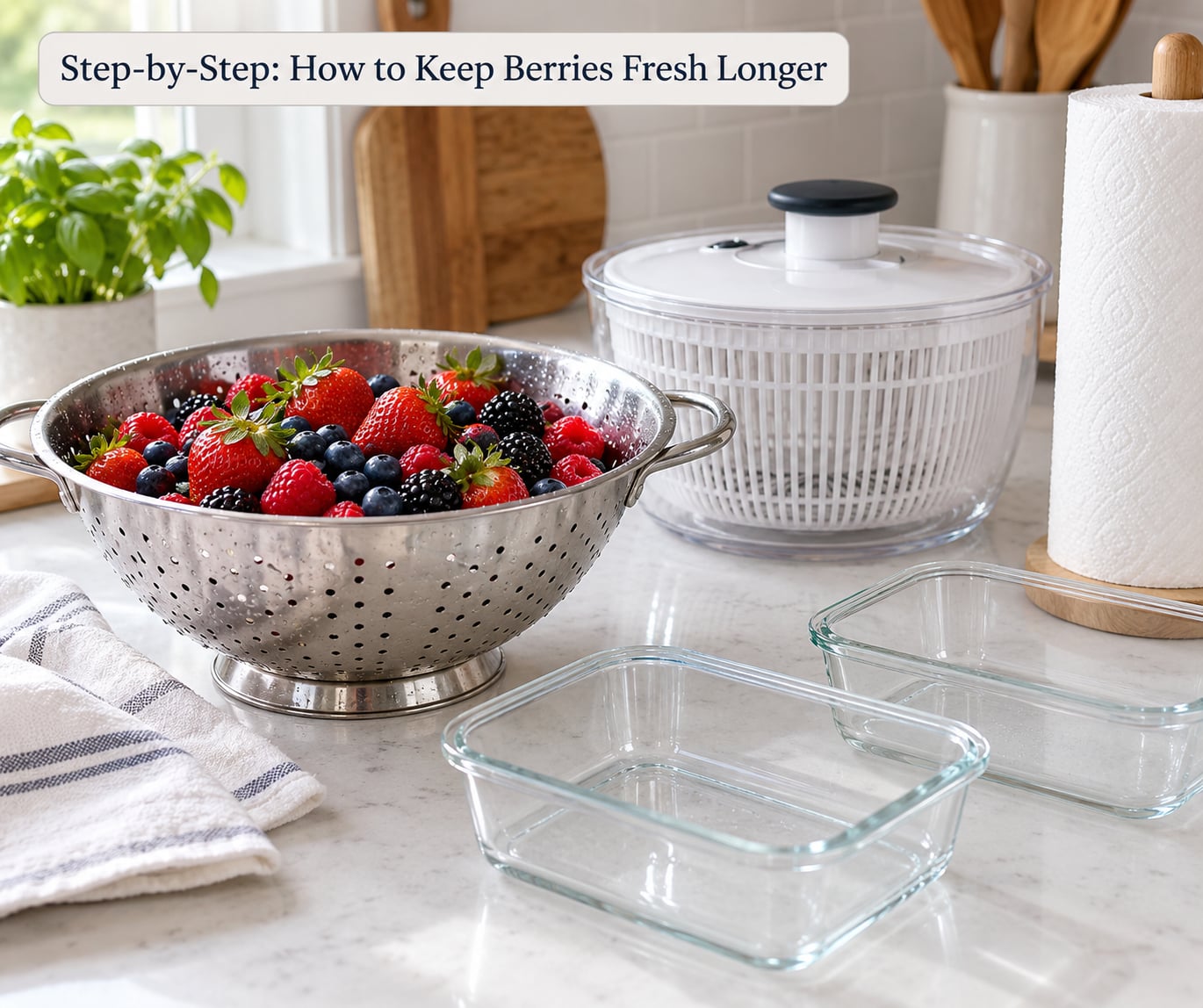
The tool list is short, and most of it you already own. A colander or fine-mesh strainer for rinsing, a clean kitchen towel or a salad spinner for drying, a roll of paper towels, and a shallow storage container with a lid that closes loosely.
The container matters more than people expect. Shallow and wide beats deep and narrow, because it lets you lay the berries in one layer instead of piling them. A rigid glass or plastic container you can reuse for sandwiches works fine. Skip the tall jars, even though jar storage is the most popular advice on the internet right now, for reasons I get into below.
Add a bottle of distilled white vinegar for the wash, and a rimmed baking sheet with a silicone mat or parchment for freezing. If you have one small piece of equipment worth buying, make it the salad spinner. Drying is the step people rush, and it is the step that decides whether the rest works.
Step-by-Step: How to Keep Berries Fresh Longer
How to Prepare Berries Before Storing
Start with inspection, not washing. Open the clamshell, spread the berries out, and pull anything bruised, split, leaking juice, or already fuzzy. One crushed berry sitting against forty good ones is how a whole punnet goes.
Washed or not washed is the argument that splits every berry conversation in two, so here is the verdict. If you cannot dry them properly, do not wash them. Store them unwashed, cold, and dry, then wash the amount you are about to eat right before you eat it. If you can dry them thoroughly, washing first actually wins, because you have now removed surface mold spores and the dirt that harbors them, and you have removed it while you were handling the berries anyway.
That is the whole debate: washing is safe only if the drying step is complete.
| Wash method | What it actually does | When to use it |
|---|---|---|
| No wash | Leaves surface spores in place but adds zero moisture | Default, especially for raspberries and blackberries |
| Cold water rinse | Removes dirt and some loose spores, minimal flavor impact | When you want clean berries for baking |
| Vinegar bath | Acid rinse that knocks down surface mold spores before they multiply | Best all-round choice for strawberries and blueberries |
| Baking soda rinse | Mildly abrasive, lifts grit; claims about longer shelf life are mostly unproven | Fine for dirty garden fruit, but not a preservation step |
| Salt water brine | Draws out insects and grit from unwashed fruit | Home-harvested berries with bugs, not store-bought |
| Hot water | Cooks the fruit and sets it soft | Never, for storage |
For the vinegar bath, mix about one part 5% distilled white vinegar to three or four parts cold water. A quarter cup of vinegar in roughly ten cups of water is the ratio that circulates most often and it works fine.
Drop the berries in and soak two to ten minutes. Five minutes is the sweet spot for strawberries and blueberries. Do not extend the soak for raspberries or blackberries, because their hollow cores fill with water and never dry out properly, which is exactly how those two go from fresh to moldy overnight.
Rinse briefly under cold water, then move straight to drying. While you are at it, run the empty clamshell through the same vinegar water you just used. Mold spores live in the plastic corners, and putting clean fruit back into a contaminated container undoes the whole wash.
How to Dry Berries Properly
Moisture causes mold, so this step decides everything. Spread the berries in a single layer on a clean towel or on a sheet pan lined with paper towels and let them air dry for 20 to 30 minutes, out of any direct sun.
A salad spinner is faster, but it is too rough for raspberries and blackberries unless you use the bare minimum spin and no downward pressure on the lid. For firm berries like blueberries, a quick spin is ideal.
For a big farmers market haul, a ceiling fan on low aimed at the tray is a genuinely good trick. Moving air across the surface of the berries finishes the drying faster than a towel ever will, and it keeps you from stacking wet fruit into a container.
Then line your container with a paper towel and swap the towel every two or three days. A damp paper towel drawing moisture away is doing the work; a soaked one just becomes another wet thing in the box.
Which Storage Method Keeps Berries Fresh Longer?
Different berries fail in different ways, so one method will not cover all of them. Blueberries outlast everything because of their waxy bloom, a natural coating that resists moisture. Raspberries and blackberries last the shortest, because the hollow core traps both juice and mold at the same time. Cherries crack if you wash them and store them wet.
| Berry | Refrigerator | Counter | Frozen | Best container |
|---|---|---|---|---|
| Strawberries | 3 to 7 days | 1 to 2 days | 6 to 12 months | Shallow container, paper towel, stems on |
| Blueberries | 7 to 14 days | 2 to 3 days | 6 to 12 months | Shallow container, loosely covered |
| Raspberries | 1 to 3 days | Same day | 6 to 9 months | Single layer, dry, unwashed |
| Blackberries | 2 to 4 days | 1 day | 6 to 9 months | Single layer, dry, unwashed |
| Cherries | 5 to 10 days | 2 to 3 days | 6 to 12 months | Shallow container, stem side up |
These are realistic ranges for fruit bought at a normal store and handled well. Berries from your own garden, or from a farm stand during peak season, usually last longer. Big clamshells from warehouse clubs often spoil faster, because the volume concentrates bruising and moisture into one crowded box.
Elderberries, boysenberries, and gooseberries follow the same dry, cold, ventilated rules. Handle elderberries gently and store them the same way, since they are soft and stain everything they touch.
How to Store Berries in the Refrigerator
Put the dried berries in the shallow container in a single layer, paper towel underneath, lid closed but not sealed down. Then choose the shelf carefully, because most people put berries in the worst available spot.
| Location | Humidity and airflow | Verdict |
|---|---|---|
| Upper shelf | Cooler, better airflow, condensation drips away | Best choice |
| Crisper drawer | High humidity by design, traps condensation | Avoid for berries |
| Door shelf | Warmest spot, temperature swings with every opening | Worst choice |
| Counter | Room temperature, full airflow | Only for berries still ripening |
The crisper drawer is the intuitive choice and it is actively working against you. It exists to hold humidity for leafy greens, and that trapped moisture is precisely what berries cannot tolerate.
Keep berries away from bananas, apples, avocados, and tomatoes. Those fruits release ethylene gas, a ripening hormone that makes nearby soft fruit break down faster and go from ripe to overripe in a night.
Check the container every day or two and pull anything soft, leaking, or showing the first fuzzy spot. That daily check is the habit that actually sets the ceiling on how long your berries last.
How to Freeze Berries for Longer Storage
Freezing is the answer to a surplus haul, a big garden pick, or a farmers market weekend when the harvest outruns your fridge space. Frozen berries keep most of their character for smoothies, baking, sauces, and jams.
- Wash and dry the berries fully, then hull the strawberries and halve the larger ones.
- Spread them in a single layer on a baking sheet lined with parchment or a silicone mat.
- Freeze the sheet uncovered for two to three hours until the berries are solid.
- Transfer them to a freezer bag or container, press out the excess air, seal, and label with the date.
- Use straight from frozen in recipes, or thaw in the refrigerator overnight for a softer texture.
The tray-freeze step is not optional if you skip sugar. Berries that touch while freezing fuse into one solid block, and the tray keeps them separate so you can scoop out exactly what you need. Adding a light coating of sugar before freezing also helps by drawing out moisture and preventing the berries from clumping, at the cost of making them stickier for portioning later.
Do not refreeze berries you have already thawed, and do not wash fruit you plan to freeze straight from the store if you can avoid it. Frozen fruit is going into cooked or blended dishes anyway, so the wash step buys very little.
If you are packing fruit into lunches rather than baking it, layering matters as much as freezing does. The layering order that keeps sandwiches from getting soggy is worth a read if wet fruit has been ruining your packed meals.
Common Mistakes
- Washing berries at the store or right before refrigerating them. Fix: wash just before eating, unless you can dry them completely first.
- Sealing damp berries in a container. Fix: air dry for a full 20 to 30 minutes, then line the container with a paper towel and close the lid loosely.
- Crowding berries in layers. Fix: one layer in a wide, shallow container. If it will not fit in one layer, split the batch across two containers.
- Using the crisper drawer. Fix: move berries to the upper shelf, where air circulates and condensation does not collect.
- Filling an airtight mason jar with washed berries. Fix: skip the jar. A sealed container of wet fruit is exactly the warm, damp, closed environment that grows bacteria and mold fastest.
- Storing berries next to bananas, apples, or avocados. Fix: move the ethylene producers to a different shelf or a countertop bowl.
- Leaving overripe berries in the fridge for another week. Fix: freeze them the day you notice, or use them in a same-day recipe.
- Skipping the daily check. Fix: take thirty seconds each morning to look at the container and remove anything soft or fuzzy.
Frequently Asked Questions
Should berries be washed before storing in the refrigerator?
Usually not. Store berries unwashed, dry, and cold, then wash only the amount you are about to eat. Washing adds surface moisture, and moisture is what grows mold. Washing first is fine if you dry every berry completely before it goes into the container, which matters most for strawberries and blueberries. Skip the pre-wash for raspberries and blackberries, whose hollow cores hold water.
How long do strawberries, blueberries, raspberries, and blackberries last in the refrigerator?
Realistic ranges: strawberries 3 to 7 days, blueberries 7 to 14 days, raspberries 1 to 3 days, and blackberries 2 to 4 days. Cherries usually last 5 to 10 days. Those numbers assume unwashed storage, a single layer, a paper towel, and an upper fridge shelf. Soft berries on the counter or in a crowded container will fall well short of them.
What is the best way to keep berries fresh without freezing them?
Keep them dry, cold, ventilated, and spaced out. Store them unwashed in a shallow single layer, line the container with a paper towel, close the lid loosely, and set it on the upper fridge shelf. Keep the container away from bananas, apples, avocados, and tomatoes, which release ethylene gas that speeds softening. Check the container daily and remove anything soft or fuzzy.
How can I tell whether stored berries are still good to eat?
Look and smell. Fresh berries are firm and evenly colored, and they smell clean and fruity. A soft berry that still smells normal is ripe, not spoiled, and is fine for baking or smoothies within a day. Discard anything fuzzy, leaking juice, slimy, fermented, or sour-smelling. If one berry in the box is moldy, check the whole batch, because mold spreads to neighbors within a day.
Can I freeze berries with sugar or in a single layer first?
Yes, and both are useful. Freezing in a single layer on a lined baking sheet for two to three hours keeps berries from fusing into one block, so you can scoop out single servings later. A light coating of sugar before freezing reduces clumping and freezer burn, at the cost of making them stick together and harder to portion. Most people skip the sugar and use frozen berries in smoothies and baking.
Why do berries get moldy so quickly after being stored?
Mold spores live naturally on every berry before harvest, and moisture wakes them up. Washing berries and sealing them in a closed container creates the damp, warm conditions they need to multiply, and one infected berry spreads through a crowded container fast. Soft berries such as raspberries and blackberries trap juice in their hollow cores, which is why they spoil first. Dry them fully, space them out, and check the container daily.
Conclusion
Start tomorrow with the smallest change: stop washing your berries before refrigerating them, and move the container off the crisper drawer onto an upper shelf. Then dry the next batch properly before it goes in, and check the container every morning. Those two habits account for most of the difference between three days and a week.