

If you are trying to answer one question, it is this: wedding catering in the US runs roughly $60 to $150 per guest for full service, with a national average near $80 per plate, and the menu price you are quoted is only part of the invoice. Couples planning 100 guests typically see a food-and-service line between $6,000 and $12,000 before rentals, cake and alcohol.
That is the number that matters, but it is also the number that changes most. A different service style, a different month, a different zip code, and you can move the same wedding by thousands of dollars. So the practical version of how much does it cost to cater a wedding is not one figure. It is a per-guest rate, a guest count, and a short list of fees that quietly sit on top.
Everything below reflects typical US ranges. They vary by region and change over time, so treat them as planning numbers and get real quotes for your date.
Table of Contents
- How Much Does It Cost to Cater a Wedding?
- What Catering Costs by Guest Count and Service Level
- How Much Does It Cost to Cater a Wedding at 50, 100 or 150 Guests?
- Service Charge vs Gratuity vs Sales Tax
- Where the Per-Guest Price Comes From
- The Cheapest Ways to Feed a Wedding Crowd
- DIY Catering Versus a Professional Caterer
- Bar, Cake and Late-Night Snack Costs
- What Affects the Price
- How to Compare Two Catering Quotes Apples to Apples
- Ways to Save
- Frequently Asked Questions
- Conclusion
How Much Does It Cost to Cater a Wedding?
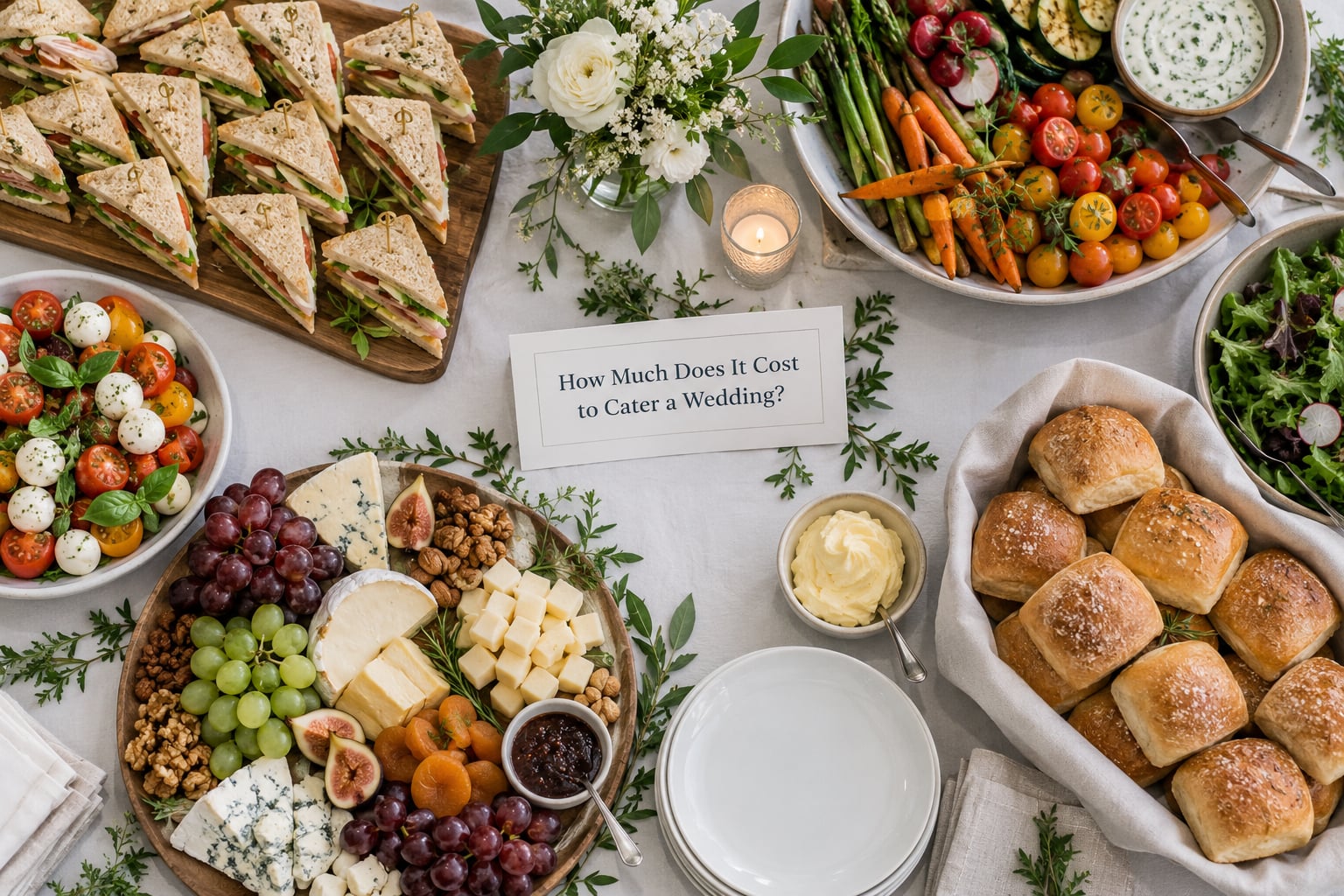
The Knot’s 2026 Real Weddings Study puts average wedding spending at roughly $292 per guest. That figure covers the whole wedding, not the food. Venue, dress, flowers and entertainment sit inside it too, which is exactly why couples get confused when a caterer quotes $80 a plate.
Break catering out on its own and average US spending lands near $80 per plate. Split that by service style and the real spread shows up: drop-off catering starts near $10 to $35 per guest, while formal plated service in a major metro area runs $100 and up.
| Wedding size | Guests | Drop-off or casual catering | Staffed buffet or food stations | Plated or family-style service |
|---|---|---|---|---|
| Intimate | 25 to 50 | $750 to $2,000 | $2,000 to $5,000 | $3,500 to $7,500 |
| Small | 50 to 100 | $1,250 to $4,000 | $4,000 to $9,000 | $6,500 to $13,000 |
| Medium | 100 to 150 | $2,500 to $6,500 | $7,000 to $14,000 | $11,000 to $21,000 |
| Large | 150 to 200 | $3,500 to $9,000 | $9,500 to $19,000 | $15,000 to $28,000 |
These totals cover food and basic service. They usually exclude rentals, cake, alcohol, delivery, ceremony flip-flops, staffing overtime and tax, all of which land later on the invoice.
What Catering Costs by Guest Count and Service Level
Guest count and service style are the two numbers that do the most work. Here is the same information arranged the way caterers actually quote it.
| Service style | Per guest | What you get | Staffing |
|---|---|---|---|
| Drop-off catering | $10 to $35 | Trays or boxes delivered ready to serve, set up by your team | None on site |
| Sandwich and deli station | $4 to $10 food | Bread, cold cuts, cheese, spreads, condiments, dessert | Optional |
| Pasta or taco bar | $5 to $15 | Build-your-own buffet with toppings and sides | 1 to 2 servers |
| Bargain barbecue | $10 to $20 | Slow-cooked meat, buns, two sides | 2 to 3 |
| Staffed buffet | $35 to $65 | Cold and hot buffet, servers restock, cleanup | 1 per 25 to 30 guests |
| Family style | $45 to $85 | Shared platters placed on each table | 1 per 20 to 25 guests |
| Food or action stations | $55 to $95 | Chef-attended carving, pasta or taco action | 2 to 4 |
| Plated dinner | $85 to $150+ | Seated courses served by name | 1 per 10 to 12 guests |
Typical inclusions are food, disposable or basic china, beverage pouring, setup and cleanup of catering items, and often a simple side salad. Exclusions are common: premium rentals, cake cutting, florals, favors, dance floor labor, and per-guest staffing minimums.
How Much Does It Cost to Cater a Wedding at 50, 100 or 150 Guests?
Here is the arithmetic people actually want, using one consistent mid-range staffed buffet rate of $55 per guest, then layering the fees a caterer adds at the end.
| Line item | 50 guests | 100 guests | 150 guests |
|---|---|---|---|
| Food and service at $55 per guest | $2,750 | $5,500 | $8,250 |
| Service charge at 20% | $550 | $1,100 | $1,650 |
| Gratuity at 18% | $495 | $990 | $1,485 |
| Sales tax at 8% on food and service | $220 | $440 | $660 |
| Subtotal | $4,015 | $8,030 | $12,045 |
| Effective cost per guest | $80.30 | $80.30 | $80.30 |
That is the lesson buried in the table. A $55 menu rate becomes an $80 all-in number once fees stack, and the per-guest figure barely moves as the guest count grows. Scale is the only thing that changes.
Getting the quantity right matters as much as the rate. Our guide to how much food to order by headcount works through the same per-person math for a smaller group, and the over-ordering problem shows up in both settings.
Real couples report similar results. In r/weddingplanning, full-service catering lands around $60 to $62 per person after tax, gratuity and ceremony fees, with some canapes-only quotes reaching $65. A couple in r/Weddingsunder10k reported venue plus catering at roughly $140 per person for a Saturday wedding in the Chicago suburbs, appetizers, plated dinner and cake included.
Service Charge vs Gratuity vs Sales Tax
Three different charges, three different meanings, and the most misunderstood part of any wedding invoice. A service charge is an administrative fee the business keeps. A gratuity is a tip for the people on site. Sales tax is owed to the state.
| Charge | Typical rate | Who keeps it | Tax treatment |
|---|---|---|---|
| Service charge | 18% to 25% | The catering company | Taxable in most states, treated differently in a few |
| Gratuity | 15% to 20% | The on-site team, after the event | Usually not taxed |
| Sales tax | 4% to 10% | The state | Applied to taxable food and service |
| Delivery | $150 to $500 | The caterer’s drivers | Often taxable |
| Bartending staff | $35 to $60 per hour | The staffing company or the bar company | Varies |
The long-standing consensus on forums.theknot.com is blunt: a 20% service charge is the gratuity wearing a different name, covering bartenders, chefs and wait staff so the company does not have to distribute tips itself. Couples on r/weddingplanning who asked about tipping again on top of a billed gratuity were told consistently that staff usually cannot receive more, and extra tipping is unnecessary. Ask who receives the gratuity in writing before you decide anything.
Where the Per-Guest Price Comes From
Restaurants publish a menu price because food is a minority of what they collect. Caterers work the same way. The industry standard food cost target is 28% to 35%: ingredients should run about a third of the menu price, and the rest covers labor, rentals, equipment, insurance, overhead and profit.
That is why a per-guest price that looks reasonable on paper turns into a much larger total. It also means a caterer quoting $12 per guest for a full-service meal is not being generous, and one quoting $150 is not gouging you. They are describing different versions of the same arithmetic.
If part of the guest list wants a lighter option, cold cuts and rolls are the cheapest line that still counts as a meal. Our breakdown of how much deli meat to buy by the pound gives you the per-head math that a sandwich station quote is built on.
The Cheapest Ways to Feed a Wedding Crowd
For couples who want the food to be the least expensive line on the invoice, service style matters more than menu cleverness. Published ranges from a Houston caterer put the casual options well below any staffed buffet.
| Style | Food cost per guest | Why it works | Where it gets awkward |
|---|---|---|---|
| Sandwich station | $4 to $10 | No cooking line, easy timing, feeds a crowd fast | Outdoor summer weddings and long guest lists |
| Pasta bar | $5 to $12 | Warm food, short ingredient list, generous portions | Dessert needs, since guests want seconds |
| Taco or grain bowl bar | $6 to $15 | Build-your-own suits mixed diets | Requires a longer service window |
| Barbecue | $10 to $20 | Comfort food, slow-cooked, popular in warm months | Cuts of meat and long prep lead time |
| Drop-off trays | $10 to $35 | Cheapest labor of any full-service option | No refills, no clearing, your crew handles setup |
| Food truck | $15 to $40 | Distinctive, needs only a truck and a power drop | Distance from the reception, guest queue length |
Two warnings. First, a $10 per guest food rate billed at a 20% service charge, an 18% gratuity and 8% tax lands near $20 all-in, so a “cheap” casual menu is not always a cheap catering budget. Second, over-ordering to be safe is the most expensive habit in this article. r/Frugal threads are full of couples feeding more than they needed and paying for the difference.
DIY Catering Versus a Professional Caterer
Self-catering looks cheap until you price everything the invoice would have included. The number that shows up repeatedly on r/Frugal is roughly $10 per head for 150 people, five entrees, an appetizer and dessert, around $1,500. Every one of those posts describes the same missing rows in the spreadsheet: your own labor, the permit, the rentals, the hot holding, and the cleanup.
| Cost row | Professional caterer | DIY |
|---|---|---|
| Food | Included in per-guest price | $1,000 to $3,000 |
| Labor | Inside the menu rate | $800 to $2,000 for servers |
| Permits and food manager | Handled | $200 to $600 |
| Equipment and chafing rentals | Often excluded | $300 to $900 |
| Tables, linens, china | $800 to $2,500 extra | Same cost, no discount |
| Cleanup and trash removal | Usually included | $200 to $500 |
One r/weddingplanning couple found their full-service per-person price landed almost exactly on their drop-off quote once tax, service fee and gratuity were added. That is common. Before going DIY, price the permit, a licensed food manager for the required hours, rental equipment, and someone whose only job is cleanup, then compare that stack against a real quote.
Bar, Cake and Late-Night Snack Costs
These three lines are where budgets break quietly, because most couples budget the entree and forget the rest. A local Rochester caterer puts full bar service for a typical wedding at $2,000 to $3,000, which can rival the food itself.
| Item | Typical range | Note |
|---|---|---|
| Cash bar | $10 to $30 per guest | Guests pay; cheapest option for the couple |
| Beer and wine package | $15 to $40 per guest | Often includes bartenders |
| Full open bar | $25 to $60+ per guest | Premium spirits and labor push it higher |
| Wedding cake | $400 to $1,500 | Baker fee plus optional delivery and setup |
| Cake cutting service | $50 to $200 | Charged when caterers handle a bakery cake |
| Late-night snack | $3 to $10 per guest | Sliders, fries, pizza or taco cart |
| Passed appetizers | $4 to $12 per guest per hour | Requires servers, so it compounds quickly |
What Affects the Price
A per-guest rate only means something once you know the conditions behind it. Here is what moves the number most, roughly in order of impact.
Location and Season
Labor is the biggest input, and labor cost tracks wages. A plated wedding in a coastal metro area can run double the same menu in a rural county two hours away. Peak season matters as much as geography: Saturday evenings from May through October book the best caterers first, and holiday weekends carry their own premium. A winter or weekday wedding gives you the same menu for less, or the same budget for noticeably better food.
Guest Count, Menu Complexity and Service Level
Guest count scales the bill linearly and is the only lever with real weight. Menu complexity adds money through ingredients and prep: a carved prime rib service costs more than pulled chicken, and a raw bar costs more than a cheese display, before a single server is counted. Service level adds money almost entirely through labor, which is why moving from plated service to a staffed buffet often saves 30 to 40 percent per guest without anyone noticing in a way that matters.
Passed appetizers are the trap here. Each hour of passed service needs servers walking the room, so a two-hour cocktail hour can add hundreds per guest and quietly become the second largest line on the invoice.
Rentals, Staffing and Venue Rules
Rentals usually sit outside the per-guest price. Plates, glassware, flatware, linens, tables, chairs, lighting and heat lamps are frequently quoted by the piece, so a 150-guest wedding with a full china pattern can add $1,500 or more to a menu quote that looked reasonable.
Many venues require you to use their in-house caterer or approved list, others charge outside-corkage or kitchen access fees, and a few will not allow you to bring in food at all. Check that before you fall in love with a quote. r/Chicagoweddings threads are full of couples discovering venue policies late.
Staffing minimums matter too. A caterer may require a four-hour minimum per server regardless of how early the meal ends, and after-hours or overtime labor is billed at the same hourly rate doubled.
Contracts, Minimums and Final Head Count
Most caterers work to a guaranteed guest count, and you generally sign for a minimum rather than an estimate. If the minimum is 100 and you deliver 84, you often pay for 100 unless the contract allows a downward adjustment by a set date. This is the single most common way couples overpay without realizing it.
Also read the price-lock clause. Some quotes hold pricing for 60 or 90 days, others expire in 30, and a few add an escalation clause tied to food cost inflation. Bank of America Institute data has shown wedding-related spending climbing year over year at rates well above general inflation, so a quote written a year ahead is a promise with a short warranty.
How to Compare Two Catering Quotes Apples to Apples
Two quotes for the same wedding are rarely two prices for the same thing. One includes staffing, the other bills it hourly. One includes rentals, the other lists them as an optional add-on. Line these up before you compare anything.
- Per-guest rate and what is inside it. Ask for the menu price and a written list of included services. Food only, or food plus staffing, rentals, delivery and cleanup?
- Service charge percentage and who keeps it. This one line can be $1,200 or more on a 100-guest wedding.
- Gratuity, and whether it is optional or automatic. If it is automatic, staff usually cannot be tipped further.
- Sales tax rate applied, and to what. Tax on food, on service, or on both, differs by state.
- Rentals. Get a per-piece breakdown, including replacement fees for breakage, which are usually nonrefundable.
- Delivery and travel. Some quote it, some build it in, some charge by the mile for a rural venue.
- Beverages. Compare per-person package cost against the actual drink math, and confirm whether bartenders are inside the per-guest price.
- Minimums and guarantees. The lowest head count you pay for, and how far ahead you can revise it.
- Overage and cancellation terms. The rate per extra guest, the deadline for final numbers, and what happens if you cancel.
- Quote validity and escalation clauses. How long the price holds and what triggers an increase.
- Tasting, rentals and staffing minimums. Confirm whether the tasting fee and any minimum hours are refundable.
If a quote refuses to break these out, that tells you something useful too. Transparency is the whole game, and a vendor who will not itemize is asking you to guess.
Ways to Save
There is no magic discount on wedding catering, but there are ten levers that consistently move the total.
- Lock your guest count before you quote. A firm number beats a hopeful one. Quote three scenarios, 80, 100 and 120, and price honestly against the middle one.
- Move the wedding out of peak season. A January or February Saturday trades a bit of atmosphere for meaningfully cheaper labor and looser caterer availability.
- Drop from plated service to a staffed buffet. Service style is the biggest single cost lever short of guest count, and a well-run buffet reads as generous rather than cheap.
- Cap the cocktail hour. One hour of passed appetizers instead of two, or move to a station guests serve themselves. Servers are the cost, not the food.
- Simplify the menu. Two entrees instead of four, one side instead of three, a dessert table instead of plated dessert. Fewer components means less prep, and prep is priced in.
- Take a cash bar or a beer and wine package. If the guest list skews toward drinkers, an open bar can outrun the food budget. Decide with the full cost in front of you, not on principle.
- Negotiate rentals and delivery separately. Rentals are frequently a markup on an outside vendor, and delivery is often a flat fee. Ask what the actual cost is and whether the caterer must supply it.
- Use a shorter rental window. Collection and drop-off usually run in blocks of a few hours. Pick up the night before or drop off the morning after and you may drop the fee.
- Ask about wedding week or off-site prep. Several caterers price a rehearsal dinner or a Friday load-in differently, and the savings often go to your rental budget instead.
- Read the contract before the deposit clears. Check the price-lock window, the guest-count deadline and the cancellation terms. This costs nothing and has saved people thousands.
What not to do: do not trim the head count to fit a number and then invite everyone anyway. Do not skip the final count and let the caterer guess upward. And do not assume a low food rate stays low after fees. The couples who look surprised on invoice day are almost always the ones who compared menu prices instead of totals.
Frequently Asked Questions
What is the average cost to cater a wedding?
Average US wedding catering runs about $60 to $150 per guest for full service, with recent Knot study data putting the national average near $80 per plate. Most couples fall between 50 and 150 guests, so a realistic food-and-service line runs $4,000 to $15,000 before rentals, cake, alcohol and tax. Read the quote as a total, not a per-person number.
Is buffet wedding catering cheaper than plated service?
Yes, usually by a wide margin. A staffed buffet lands around $35 to $65 per guest while plated dinner runs $85 to $150 or more, because plated service needs roughly one server per ten to twelve guests and a buffet needs about one per twenty-five. The food can be nearly identical. The saving is almost entirely labor, so watch the staffing line rather than the menu line.
Does wedding catering usually include cake, rentals, and gratuity?
Rarely all three. Most quotes cover food, service staff, setup and cleanup, and little else. Rentals, cake delivery, cake cutting fees, alcohol and staffing minimums are typically extra, while gratuity is either folded into a service charge or added as its own line. Ask for these four items in writing, because each one has quietly become a standard line on wedding invoices.
How much should I budget for wedding catering per person?
Plan on $60 to $100 per guest all-in for a staffed buffet, and $100 to $150 for plated service, with cheaper casual styles starting near $25 to $40 per guest once fees are counted. Those figures assume service charge, gratuity and tax are already folded in. Getting a quote that is genuinely all-in takes more effort and is worth it, since the same menu can differ by $25 per guest between caterers.
What is the minimum guest count for wedding catering?
Most caterers set a minimum of 40 to 60 guests for staffed service, often tied to the labor they must schedule rather than the food they must buy. Drop-off catering usually has a lower minimum or none at all. You generally pay for the guaranteed count even if fewer attend, so agree the guaranteed number, the revision deadline and the overage rate before signing.
Conclusion
Start with three numbers: the guest count you are actually willing to feed, the service style, and the menu tier. Take those to three caterers and ask for an itemized quote that shows per-guest rate, service charge, gratuity, tax, rentals and delivery on separate lines. Then compare the totals, not the menu prices.
That is how how much does it cost to cater a wedding stops being a vague anxiety and becomes a line in your budget you can defend. Figures here are typical US ranges for 2026 planning and move with region, season and vendor availability, so treat them as the starting point for October quotes, not the answer.