
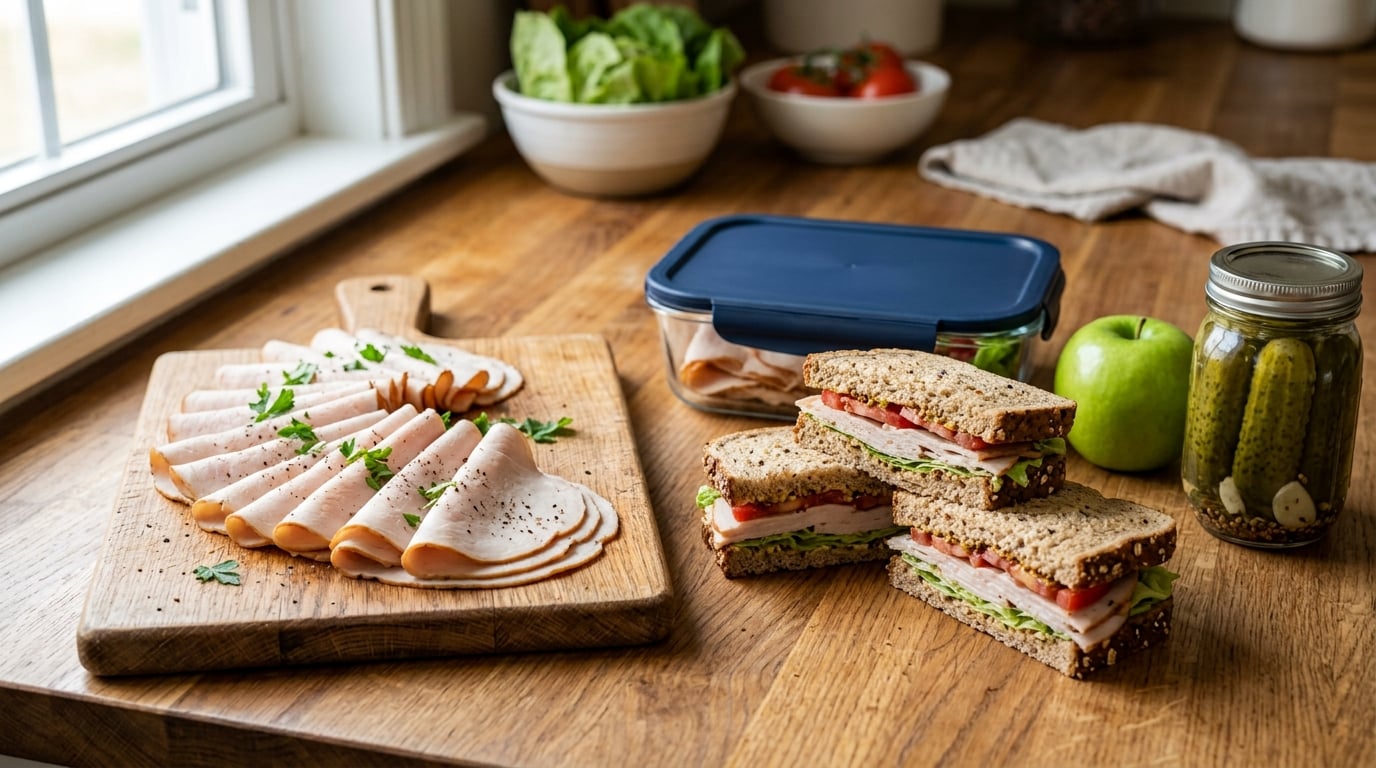
A family of four eating deli meat for five packed lunches each needs about 40 to 60 slices, or roughly 1 to 1.5 pounds, for the whole week. That works out to 20 sandwiches and about 1 to 1.5 ounces of meat per person per lunch, which is a normal home-built sandwich rather than the oversized ones the deli counter hands you. Here is the arithmetic, the package weights that match it, and how to keep what you buy fresh long enough to use it.
Most people overshoot here, not because they eat more but because they have no mental picture of what a pound weighs once it is sliced. A quarter-pound deli sandwich is common, so four of them already eat a full pound.
Table of Contents
How Much Deli Meat to Buy for a Family of Four: Quick Guide
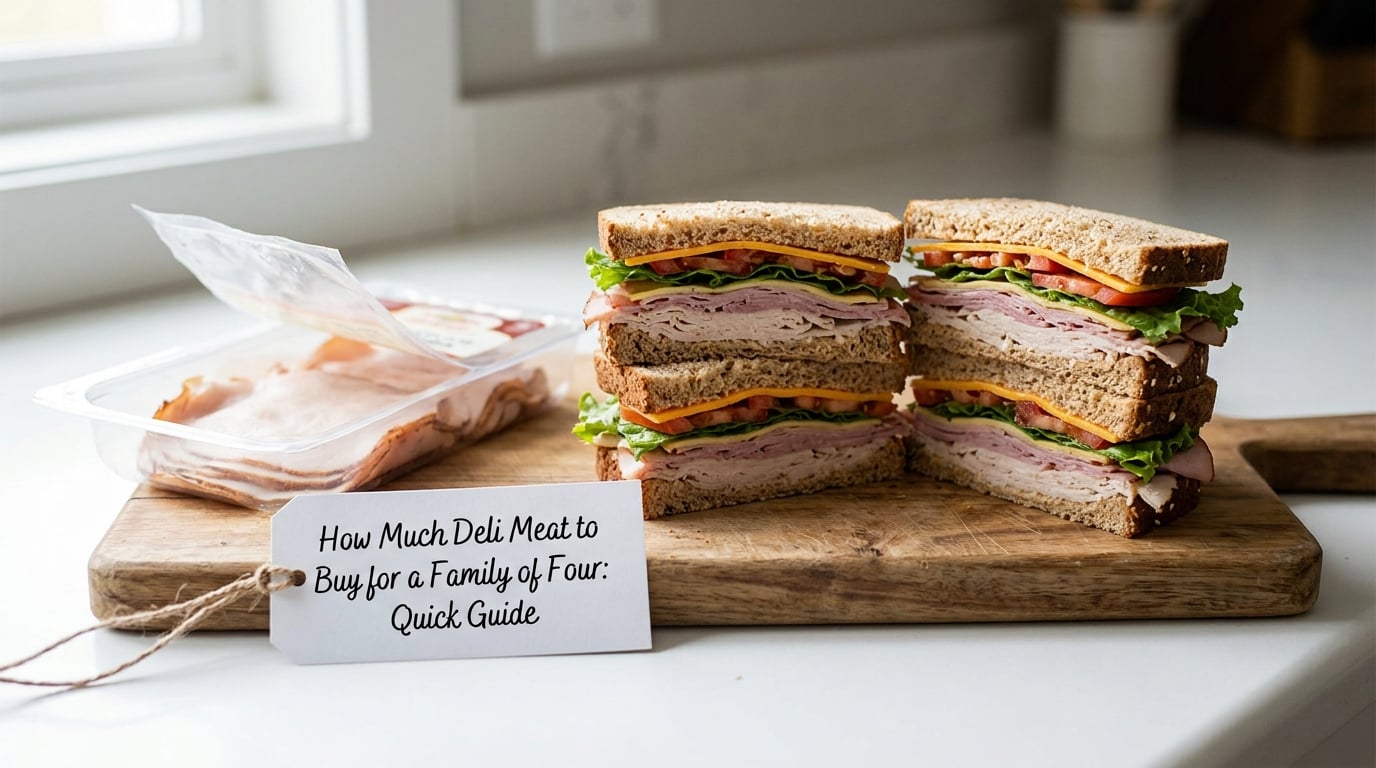
Four people, five lunches each, equals 20 sandwiches. At 2 to 3 slices per sandwich that lands between 40 and 60 slices, and most store-brand packages hold roughly 40 to 50 slices per pound, so 1 to 1.5 pounds covers the week comfortably. Buy 2 pounds if anyone eats thick sandwiches, builds a double-decker on Fridays, or if some of the same meat shows up at dinner.
Calculate the Amount by Servings, Slices, and Weight
The table below covers 20 sandwiches at three filling levels. The middle row is the one most families land on.
| Filling level | Slices per sandwich | Total slices for 20 | Approx. weight | Package to buy |
|---|---|---|---|---|
| Light (kid portions, wraps) | 2 | 40 | 0.8 to 1 lb | One 1 lb pack |
| Standard (most families) | 3 | 60 | 1.2 to 1.5 lb | Two 1 lb packs, or one 2 lb pack |
| Generous (big sandwiches) | 4 | 80 | 1.6 to 2 lb | Two 1.5 lb packs, or one bulk pack |
Slices are the unreliable unit because a thin packaged turkey slice and a hand-sliced deli-counter slice can differ by double in weight. Weigh it instead: 16 ounces makes a pound, and standard deli slices run about a third of an ounce each, so 60 slices comes to roughly 20 ounces, or a pound and a quarter.
A counter sandwich is the baseline most people miss. A full-size one from a deli case runs about a quarter pound, and counter staff routinely add extra slices, so a sandwich that looks modest in the bag is usually bigger than what you would build at home. Weight trumps slice-count instinct every time.
What Affects the Quantity and Price
For enough deli meat to cover the week for four, expect a typical US range of about 10 to 25 dollars depending on where and what you buy. Deli-counter meat runs roughly 6 to 10 dollars a pound, a national grocery brand usually costs 4 to 6 dollars a pound, and club-store bulk packs often land near 4 dollars a pound. These are typical US ranges that vary by region and change over time, so check the shelf tag in your own store.
| Where you buy | Typical US range per pound | How the yield compares |
|---|---|---|
| Deli counter, sliced to order | 6 to 10 dollars | Thick, ~26 to 30 slices per pound |
| Grocery store brand bag | 4 to 6 dollars | Standard, ~40 to 50 slices per pound |
| Thin-sliced budget bag | 3 to 5 dollars | Thin, ~55 to 70 slices per pound |
| Club-store bulk pack | Around 4 dollars | Standard, ~40 to 50 slices per pound |
Several other things move the number. Sandwich size is the big one, and a roll that fits more meat is a roll that costs more meat. Meat type matters less than people expect, since turkey, ham and roast beef all land in the same 1 to 2 ounce per-sandwich range, though roast beef and salami go a little heavier by slice. Thickness changes the pound math more than anything else, because a thin bag that costs the same per pound yields half again as many slices.
Two other factors catch families off guard. Using the same meat at dinner doubles the week without meaning to, and buying unsliced whole muscle roasts to slice yourself stretches a single pound further, since you control the thickness. Leftover meat that misses the lunch rotation usually becomes quesadillas, wraps or pasta, and once you plan for that, an over-buy stops being waste.
Ways to Save on Deli Meat
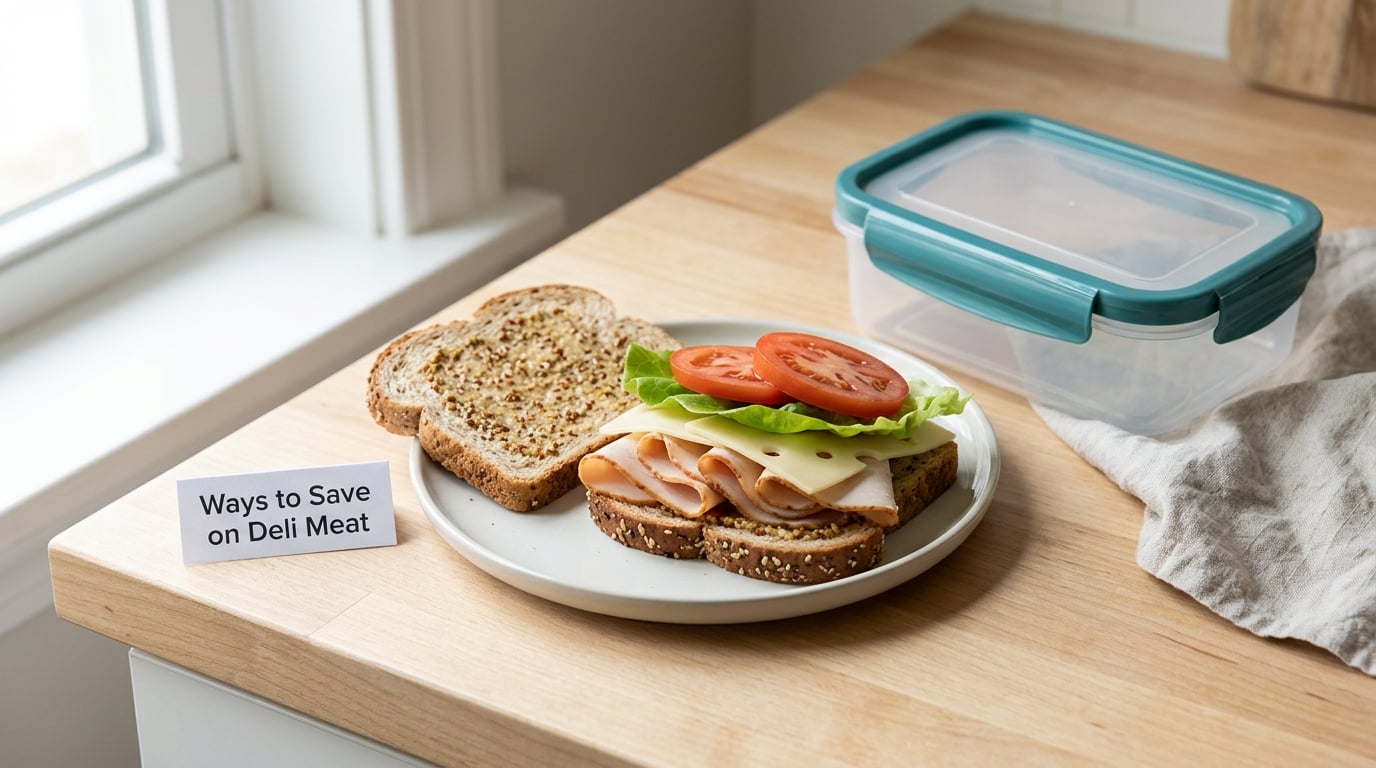
Stretch the meat rather than the money. Cheese, lettuce, tomato, cucumber, avocado, pickles and a decent spread do the filling work that extra slices would otherwise do, and most people cannot tell the difference on a two-slice sandwich. Two slices of turkey with provolone and tomato reads as a full lunch; three slices of turkey on white bread reads as a lot of turkey.
Store-brand turkey and ham usually win on price per pound, and the difference in taste is smaller than the deli-counter premium suggests. The trade is honest: counter-sliced meat really is better, and that is what the extra dollars per pound buy. Decide whether taste or cost per lunch matters more this week.
Compare price per pound, not price per package. A larger pack is a deal only if you will actually eat it inside the storage window, so freeze the extra in flat freezer bags sized to one week, or slice it and freeze it in single-sandwich portions. Refrigeration handles a few days; the freezer handles the rest of the month.
Rotate two meats instead of one. A pound of turkey plus a pound of ham feeds the same week as two pounds of turkey and gives you variety, and mixing a strong-flavored meat like salami with a mild one lets each slice taste like more. Build the week so one lunch is meat-free, like a cheese or hummus sandwich, and the pound requirement drops by a fifth.
Finally, buy thinner bread. The same meat fills a slice of hearty wheat or fits a thin-sliced loaf just as well, and the loaf is the cheaper part of the equation anyway.
Storing Deli Meat Safely
Keep unopened packages in the coldest part of the refrigerator, below 40 degrees Fahrenheit or 4 degrees Celsius, and follow the use-by date printed on the label. Once opened, sliced deli meat kept in an airtight container or resealable bag is generally used within about 3 to 5 days, which is a tight fit for a Monday-to-Friday week.
That is why freezing is the fix. Freeze the portions for the second week on the day you shop, and move the container from fridge to freezer as the week advances. Thaw in the refrigerator, not on the counter, and use thawed meat within a day or two rather than refreezing it.
For hot lunches, reheat deli meat to 165 degrees Fahrenheit or 74 degrees Celsius before serving, which is the food safety guidance for reheating cold cuts. Higher-risk eaters, including pregnant people, young children and older adults, are advised to heat deli meat to steaming before eating it cold. If anyone in the house is pregnant or has a weakened immune system, the hot-lunch route removes the guesswork.
Use a shallow container rather than a deep pile, and keep the date on it. Cold cuts dry out fast in a fridge, so a sealed box of slices keeps its texture better than loose slices on a plate.
Frequently Asked Questions
How much deli meat do I need for a family of four?
Plan on 40 to 60 slices, or about 1 to 1.5 pounds, for a family of four eating deli meat five days a week. That is 20 sandwiches at 2 to 3 slices each, and roughly 1 to 1.5 ounces of meat per person per lunch. Buy the larger amount if anyone eats thick sandwiches or if the meat also appears at dinner, and freeze the difference for the following week.
How many slices of deli meat are in a pound?
A pound of deli meat usually holds 40 to 50 slices of standard packaged turkey or ham, since each slice weighs close to a third of an ounce. Thin-sliced budget packs reach 55 to 70 slices per pound, while thick counter-sliced meat gives you only 26 to 30. Check the servings or weight per serving on the nutrition label when you want an exact number rather than a guess.
Should I buy a 1-pound or 2-pound package for a week?
For 20 sandwiches at three slices each, one pound is tight and two pounds is the practical buy. A 2-pound pack usually costs less per pound than two 1-pound packs and opens into two separate weeks of lunches. If you want to test a brand before committing, buy one pound and pair it with a different meat the rest of the week.
Can I freeze deli meat for future lunches?
Yes, and most families who buy for a full week end up freezing some of it. Freeze meat in flat bags or a single layer so you can break off only what you need, label the bag with the date, and thaw it in the refrigerator rather than on the counter. Use thawed meat within a day or two, and reheat it to 165 degrees Fahrenheit for hot lunches.
What is the cheapest way to buy deli meat for lunches?
Compare the price per pound, not the price per package, and store-brand turkey or ham usually costs the least. A thin-sliced pack stretches a dollar further because each pound yields more slices, and adding cheese, vegetables and a good spread lets two slices carry a whole sandwich. Club-store bulk packs win on unit price but only pay off if the extra weight gets used or frozen.
Conclusion
Start at 40 to 60 slices for 20 family lunches, which works out to about 1 to 1.5 pounds, and adjust from there. Count how full your sandwiches really are, check the weight printed on the package rather than trusting slice count, and buy only what you can eat within about 5 days of opening or freeze right away. That single habit is the difference between a planned week of lunches and a bag of deli meat going in the trash on Thursday.