
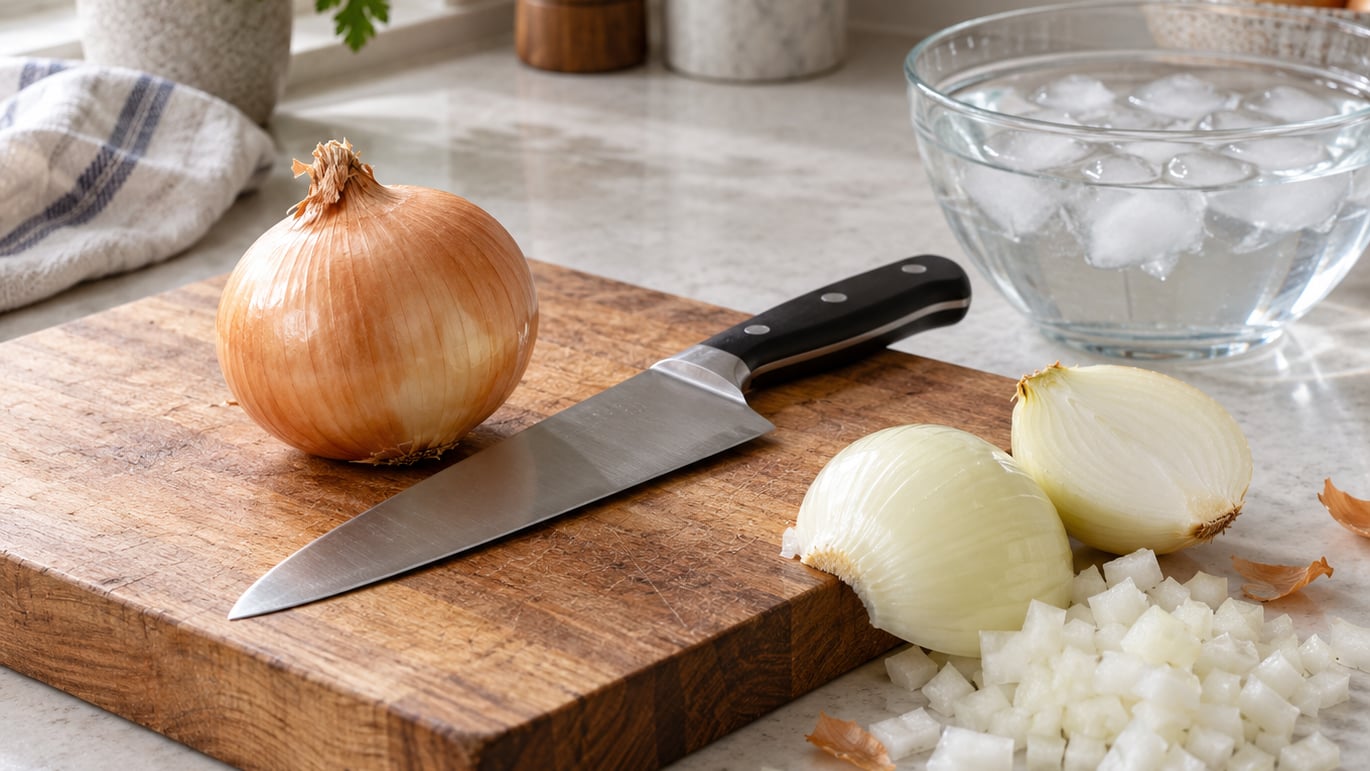
If you want to know how to cut an onion without crying, the short answer is a cold onion, a sharp blade, and cutting from the stem end toward the root while leaving that root attached. Those three things together handle most of the problem for most home cooks, and the whole job takes about two minutes of extra planning.
The reason onion fumes bother you is chemistry, not weakness. When a knife opens the onion’s cells, sulfur compounds stored apart in each cell get mixed with an enzyme called lachrymatory-factor synthase. The reaction produces syn-propanethial-S-oxide, a volatile gas fine enough to reach your eyes from across the counter and sting them enough to trigger tears.
That matters because every method below works by attacking one of those steps: fewer ruptured cells, slower reactions, less gas reaching your face, or a barrier between the gas and your eyes. Pick the one that matches how much onion you are cutting and how sensitive you are.
Table of Contents
What You Need
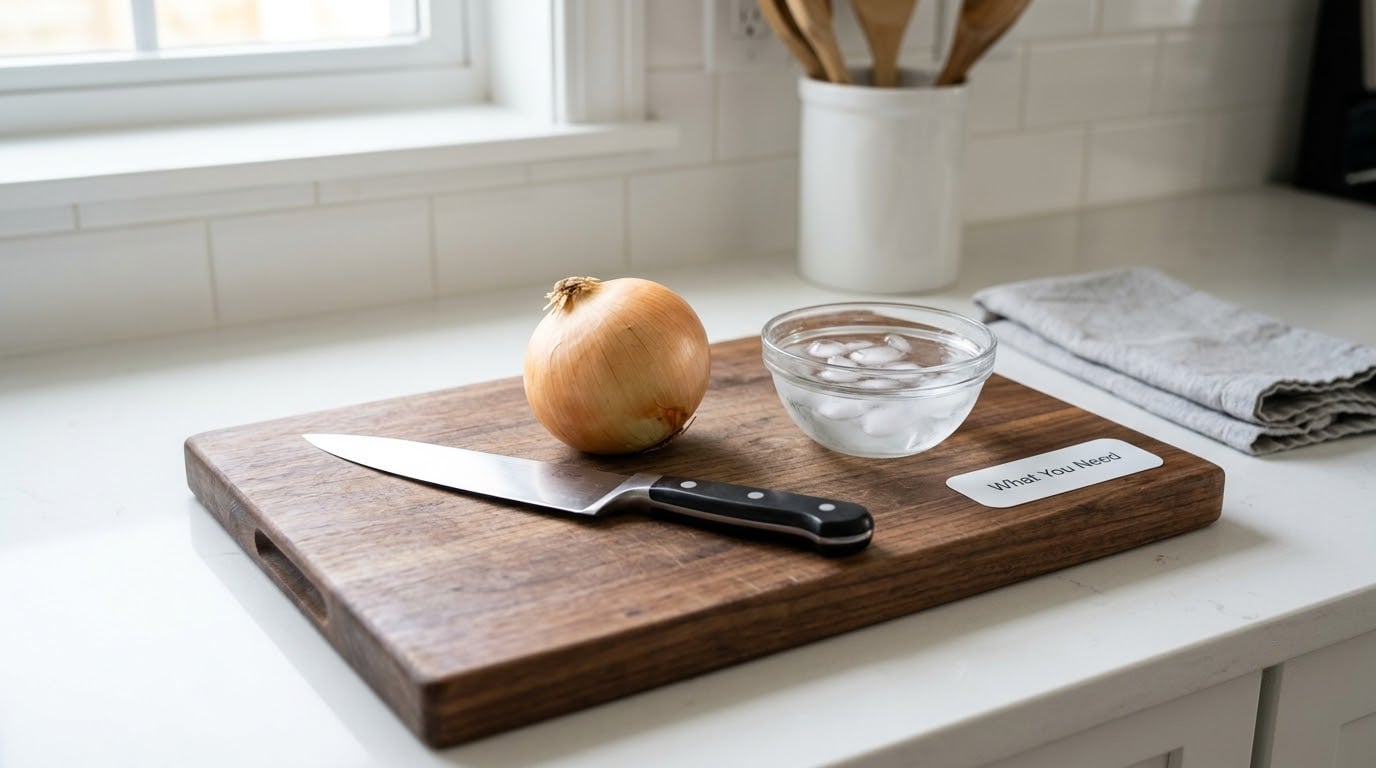
- A sharp chef’s knife. This does the most work of anything on this list. A dull blade crushes instead of slicing, which tears far more cell walls and dumps more irritant into the air.
- A stable cutting board. A wet onion slips. Put a damp paper towel under the board and the onion stops wandering.
- A chilled onion. Thirty minutes in the fridge or ten to fifteen in the freezer. Cold slows the enzyme reaction noticeably.
- A bowl of ice water. For the quick-soak version and for washing your hands afterward.
- A small towel. For your knife grip and your face if you already feel the sting starting.
- Optional: sealed swim goggles. Worth the trouble if you are doing a ten-pound batch or your eyes are sensitive.
That is the whole kit. Nothing here changes how the onion tastes or how it cooks, which is what separates a real fix from a gimmick.
Step-by-Step: How to Cut an Onion Without Crying
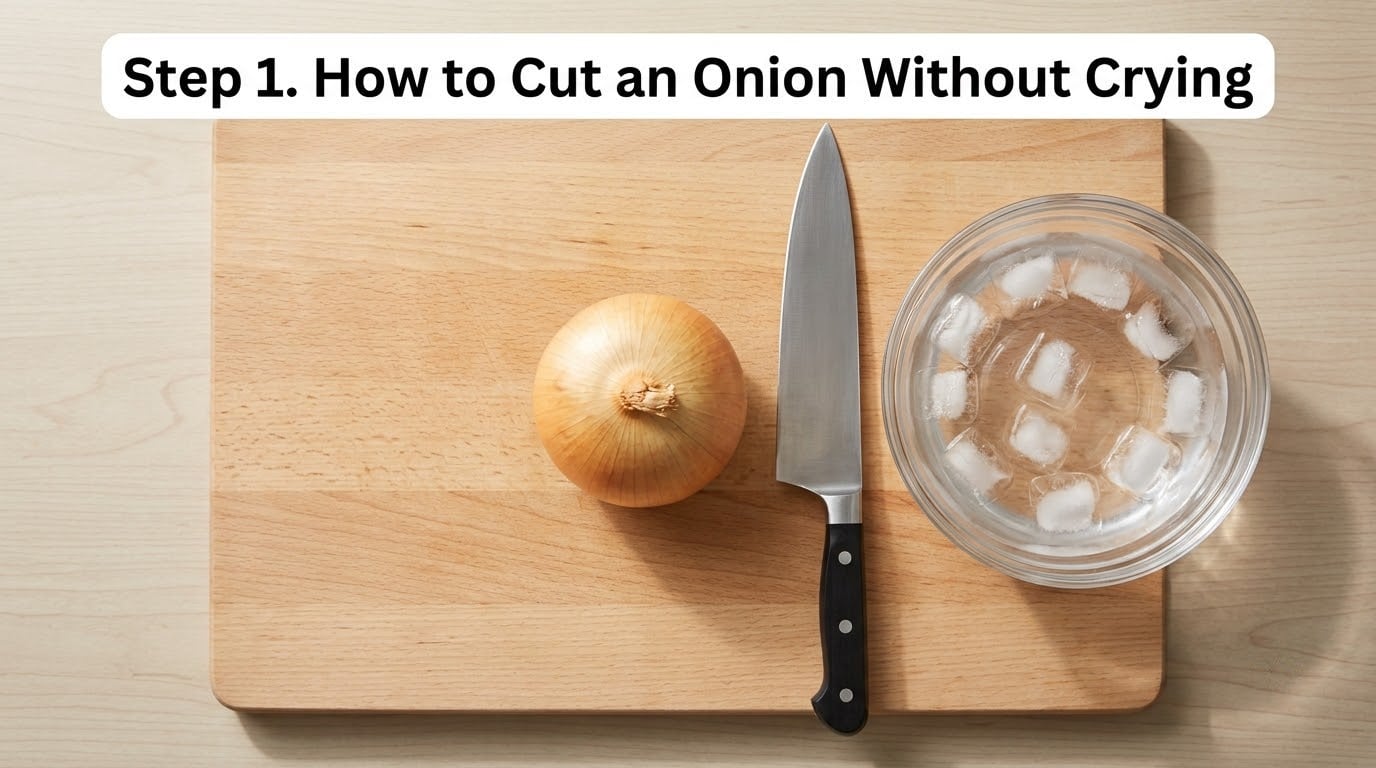
Chill the Onion First
Thirty minutes in the refrigerator is the standard window, and ten to fifteen minutes in the freezer is the fast version that many cooks report works just as well. Cold does not remove the sulfur, but it slows the enzyme reaction that creates the gas, so less of it forms in the few seconds you are actually cutting.
You will know it worked because the onion feels firm and cold rather than room-temperature and soft around the outside. Skip this step if the onion has already been sitting in a cold car or pantry.
Trim and Halve the Onion
Cut off the stem end, then leave the root end completely alone. Set the onion cut-side down on the board and make your first vertical cut straight down through the root.
That first cut matters more than it looks. The root is the wettest, most concentrated part of the bulb, so you want the onion to bleed from the top and stay pinned to the board at the bottom.
Make the Skin-Side Cut
Peel back the papery skin from the cut face, then lay the onion with the root still on and cut down toward that root, stopping before you sever it. The root holds the layers together in one piece, which keeps the half from squishing and spraying.
Cutting from the stem end toward the root is the direction that matters. It moves the blade through the layers instead of driving them sideways.
Peel and Make Even Slices
Pull off the remaining skin and make perpendicular cuts across the layers, keeping your fingers curled and your knuckles behind the blade line. Stop before the root and the little end flicks loose on its own.
Once the slices are down, a second set of cuts across them gives you dice in about fifteen seconds. If you want how to cut an onion without crying to cover more than dicing, cut lengthwise for caramelizing, since thin strips take longer in the pan and give you time to walk away from the fumes.
Common Mistakes and What Fixes Them
Using a dull knife
This is the mistake that undoes everything else. A dull edge pushes the onion forward, crushes cells instead of opening them, and sends fine droplets further. If your knife can glide through a ripe tomato without dragging, it is sharp enough; if it skips or requires pressure, sharpen it first.
Cutting through the root
Finishing the cut through the root releases everything at once, right at the end of the cut when your face is closest. Leaving it intact keeps the layers together and the drip slow.
Ignoring ventilation
The gas does not stay put. It drifts with whatever air is moving, and a still kitchen lets it pool around your cutting board. Turn on the range hood or open a window before you pick up the knife, not after you start crying. For large batches, cutting under the hood with a lid propped nearby cuts the sting noticeably.
Cooking onions right before you cut more
A hot pan of caramelizing onions is putting out the same gas at the same time you are prepping the next one. Sequence your prep so onion cutting happens first, before any onion hits heat. It pairs naturally with planning a week of sandwich meal prep ahead without soggy bread, where most of the chopping happens in one session.
Wearing contacts and expecting nothing
Contact lenses trap the gas against the cornea, which is why some wearers get a sting instead of tears. Many report noticeably less irritation with lenses in, but a pair of sealed goggles is the only real barrier. Regular glasses leave a gap at the sides.
Ignoring what is left on your hands
The smell stays for hours and transfers to anything you touch. Rubbing bare hands on bare stainless steel for thirty seconds before washing removes most of it, and washing with cold water first keeps the sulfur from setting into your skin.
Two popular tricks are worth skipping: chewing gum or a slice of bread in your mouth, and holding your breath or breathing only through your mouth. Neither touches the chemistry, and most people who report success with them also changed something else the same week.
Frequently Asked Questions
Why do onions make me cry?
Cutting breaks open onion cells and mixes sulfur compounds with an enzyme called lachrymatory-factor synthase. The reaction makes syn-propanethial-S-oxide, a volatile gas that reaches your eyes and irritates them until your tear glands respond. A dull knife makes far more of it by crushing cells instead of slicing them.
How can I stop my eyes from watering when cutting onions?
Chill the onion for thirty minutes, use a sharp knife so fewer cells rupture, leave the root end intact and cut down toward it, and run the range hood before you start. Those four steps together handle most of the problem. Goggles work too if you cut large batches often.
Does freezing an onion stop tears?
Ten to fifteen minutes in the freezer is the common fast version, and plenty of cooks report it working as well as a full fridge chill. Cold slows the enzyme reaction that creates the gas. Let it sit five minutes after removing so it is firm rather than frozen solid before you cut.
Do swim goggles work for cutting onions?
Yes, and they are the most reliable barrier available. Anything sealed around the eye keeps the gas out entirely, which is why kitchen workers and people cutting ten pounds at a time reach for them. Look for goggles with a soft foam seal and no gaps at the temple.
Does running the onion under cold water help?
Running water over a whole onion does very little because the gas forms the moment cells are opened. Washing the knife and board before and after helps keep the smell off your hands, but it will not stop the sting. The chilled, sharp-knife, root-intact method is what actually works.
Do contact lenses protect you from onion tears?
Many wearers say lenses help, because the lens shields the cornea from the gas directly. They can also trap the irritant against the eye and cause a stinging feeling instead of tears. If your eyes burn more with lenses in, use sealed goggles rather than relying on them.
Conclusion
Start with the onion, not with yourself. Put it in the fridge for thirty minutes, sharpen the knife, cut from the stem toward the root, and leave the root intact. Turn the hood on first and your eyes will probably stay dry through your next three onions.
And if the onions are going into sandwiches, we have a write-up on toasting a sub at home without a commercial oven for when the chopping is done.
If you want a second trick for nights when you are chopping for a group, a fan pointed at the board moves the gas away from your face while you work.