
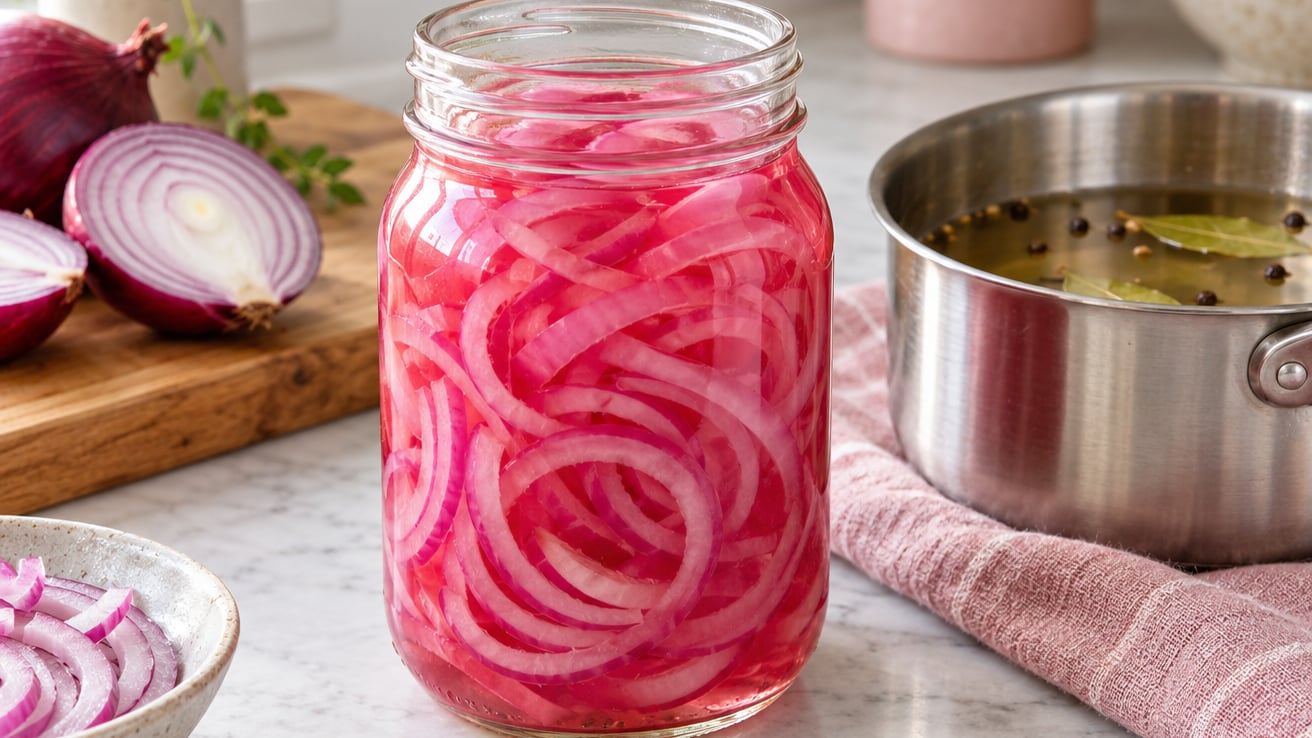
Quick pickled red onions are thin red onion slices steeped in a hot vinegar brine salted with salt and often sweetened with a little sugar, which turns them bright pink and gives them a tangy-sweet crunch in about 10 minutes of active work. They are ready to eat once the colour goes pink and the raw bite softens, roughly 30 minutes for mandoline-thin slices, and they keep in the fridge for two to three weeks.
The whole thing is osmosis: the acetic acid in the vinegar plus the salt pulls water out of the onion cells, so the raw sharpness fades and the brine reaches the centre of each slice. The reason red onions stay pink while white onions go yellowish is the anthocyanin pigment in the skin layers, and acid holds that colour instead of browning it.
At a glance: about 10 minutes active time, 30 minutes to overnight before they hit their best flavour, one standard pint mason jar, and no cooking beyond warming a saucepan. They are a refrigerator pickle, so this is a fridge condiment, not a shelf-stable canning recipe.
Table of Contents
- What You Need
- How to Make Pickled Red Onions: Step-by-Step
- Common Mistakes
- Frequently Asked Questions
- Do I need to cook the red onions before pickling them?
- Can I use distilled white vinegar instead of white vinegar?
- How long do homemade pickled red onions last?
- Why are my pickled red onions soft instead of crunchy?
- Can I make pickled red onions without sugar?
- What can I do if the brine does not completely cover the onions?
What You Need
This makes one 16-ounce mason jar, about two cups of finished onions. A second jar is a good idea if you are feeding a crowd, because half the batch disappears before you get to it.
- 1 medium red onion, peeled and sliced as thin as you can manage
- 1/2 cup vinegar — distilled white for the classic clean pickle, or apple cider vinegar for a rounder tang
- 1 cup water
- 1 tablespoon granulated or cane sugar
- 1.5 teaspoons kosher salt, or the same amount of sea salt
Optional extras, added to the jar before the onions go in: a teaspoon of whole peppercorns, one smashed garlic clove, a dried or fresh chili flake, a teaspoon of mustard seed, a few sprigs of fresh dill, or a few thin slices of beetroot if you want the colour pushed further.
For equipment you need a sharp knife or, much better, a mandoline slicer, a small saucepan, one clean mason jar with a lid, and tongs or a chopstick for pushing the slices under the brine.
How to Make Pickled Red Onions: Step-by-Step
1. Slice the Red Onions Thinly
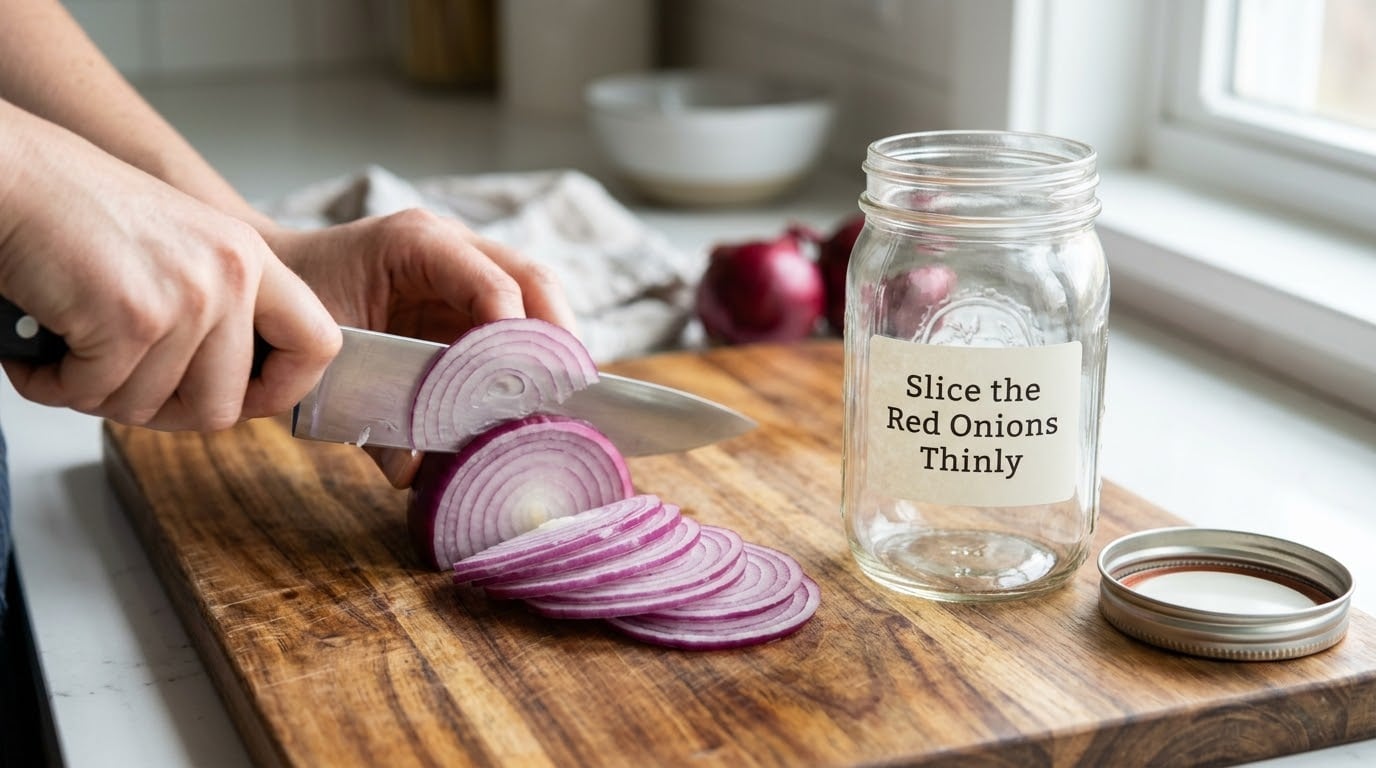
Thinness is the whole recipe. On a mandoline set to its second or third thinnest setting, one medium onion gives you roughly 60 to 80 rings, which fills a 16-ounce jar without crushing them. If you are using a knife, slice against the grain as thin as your grip allows, then halve the thickest pieces.
Thick slices take hours or a full overnight to pick through; paper-thin ones are seasoned in half an hour. If raw onion heat bothers you, dunk the slices into a bowl of ice water for 10 minutes, drain them, and pat them dry. That pulls some of the enzymes out and leaves you with a milder pickle.
2. Make the Vinegar Brine
Combine 1/2 cup vinegar, 1 cup water, 1 tablespoon sugar and 1.5 teaspoons kosher salt in a small saucepan. Warm it over medium heat, stirring, just until the sugar and salt have dissolved and the liquid looks clear and combined.
Do not let it boil. A hard boil softens the onion slices, dulls the colour and flattens the flavour, and that is the single most common reason a batch comes out limp. You want steam, not bubbles.
A no-heat version works too: pour the same amounts of vinegar, hot water, sugar and salt into a jar or bowl and stir until dissolved. It takes another ten minutes for the salt to settle, and the flavour is very slightly flatter, but nothing cooks.
3. Pack the Onions Into a Clean Jar
Drain the rinsed onions thoroughly and pat them dry. Water left on the slices dilutes your brine and softens the texture, so give them a proper towel.
Drop the dry slices into a clean mason jar with any peppercorns, garlic or spices you are using. Fill it loosely rather than pressing the rings down, then tap the jar on the counter and give it a few shakes to knock out air pockets. If some slices sit above where the liquid will reach, they will stay raw and bitter, so drop them in loosely.
4. Pour the Brine Over the Onions
Pour the warm brine straight into the jar, filling until every slice is covered and you still have about half an inch of headspace. Any onion left above the liquid line stays pale and raw, and that is why the brine needs to fully submerge them.
Push the slices down with a chopstick or the back of a spoon, and swirl or shake the jar a few times so the brine gets between the layers instead of pooling at the bottom. Screw the lid on loosely at first, let the jar sit on the counter for about 20 to 30 minutes until it stops steaming, then tighten the lid and refrigerate.
5. Chill and Check the Pickles
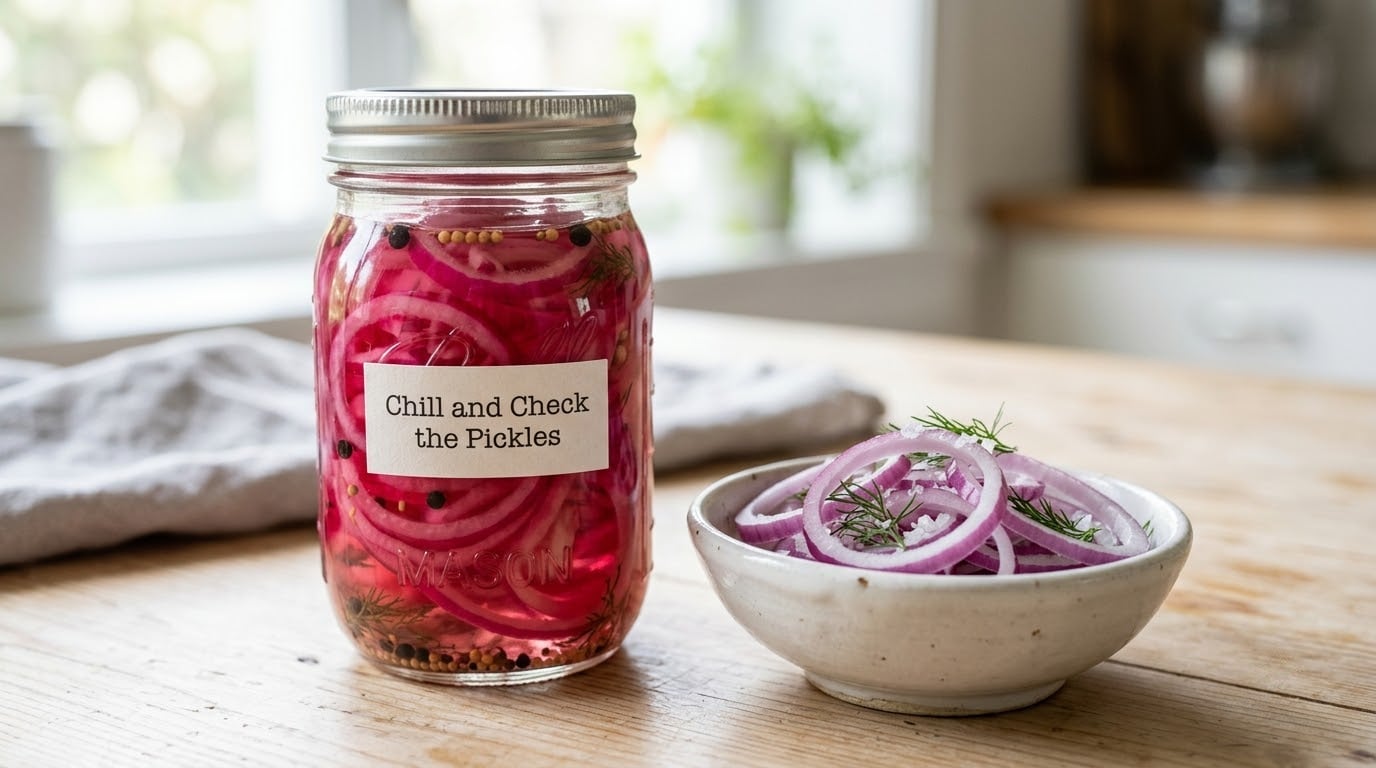
They are technically edible after 30 minutes, when the slices have gone translucent and lost their sharp edge. Most people wait a few hours, and the flavour keeps deepening for 24 to 48 hours, so the jar made this morning tastes noticeably better at dinner the next day.
You know they have pickled properly when the onions turn bright pink all the way through and the rings still snap rather than bend. Grey, dull, or brown-tinted onions mean the brine did not have enough acid or the slices sat above the liquid. If they go soft within a day, the slices were too thick or you boiled the brine.
Common Mistakes
- Boiling the brine. It softens the onion and dulls the pink. Warm the vinegar, water, sugar and salt until dissolved, then stop.
- Slices too thick. They stay raw in the middle and go mushy at the edge. Mandoline-thin or as close as you can get.
- Onions above the liquid line. They never pickle. Top up the brine or press the slices down until everything is submerged.
- Too sour or too sharp. Add 1 to 2 teaspoons more sugar and let it sit overnight, or dilute with a splash of water next time.
- Over-salted batch. Kosher salt is roughly twice as dense as table salt by volume, so a tablespoon goes a long way. Add 2 tablespoons of water and sugar to loosen it.
- Cloudy or grey brine. Usually too little vinegar or too little salt rather than a safety problem, but the fix is the same: never go below a 1:1 vinegar-to-water ratio, use a proper pinch of salt, and keep everything cold.
On safety: onions are a low-acid food, so these are refrigerator pickles. Keep the brine at least 1:1 vinegar to water with a real measure of salt, refrigerate the jar, and do not leave it on the counter for days. Shelf-stable canning is a different process that needs tested ratios, pickling vinegar at 7% acidity and a water-bath canner, and that is not something to improvise at home.
Adjusting the brine is easy. More vinegar than water gives a sharper, more thoroughly pickled result that stays crunchiest; more water softens the flavour and makes the pickle gentler on kids. More sugar rounds out the acidity, and a spoonful of maple syrup or a monk fruit sweetener works in place of white sugar if you are cutting sugar.
Keep a standing jar in the fridge and eat from it. They are good on tacos and burritos, layered into burgers and hot dogs, tucked into an overstuffed sandwich that holds together, folded through slaws and grain bowls, stirred into egg salad, and served alongside grilled steak, chicken, or fish. Pickled onions travel well, so they work as a filling for a sandwich packed in the morning that still tastes fresh at lunch, where the brine soaks into the bread instead of wilting it.
Frequently Asked Questions
Do I need to cook the red onions before pickling them?
No. The brine does the cooking for you, and that is the point of a quick pickle. Warm the vinegar, sugar, salt and water just until dissolved, pour it over raw sliced onion, and let the acid and heat of the liquid do the rest. Blanching the slices for a few seconds in the hot brine before draining them softens them a little if you want a very mellow result.
Can I use distilled white vinegar instead of white vinegar?
Yes, and distilled white is the cleanest neutral choice. It is usually around 5 to 7 percent acetic acid and gives you a crisp, classic pickle where the onion and the sugar are the only flavours you taste. Apple cider vinegar makes it fruitier, rice vinegar is milder and a touch sweet, and red wine vinegar adds depth. Avoid rice vinegar if you want maximum acidity.
How long do homemade pickled red onions last?
Kept refrigerated in a clean jar, they last two to three weeks and often stay good for a month. Keep the onions submerged, use clean utensils every time you dip in, and refrigerate after a maximum of about 30 minutes at room temperature. A cloudy brine or a bad smell means the batch is finished, so toss it rather than tasting again.
Why are my pickled red onions soft instead of crunchy?
Almost always the brine boiled, the slices were too thick, or the onions sat in diluted liquid. Slice as thin as possible, heat the brine only until the sugar and salt dissolve, and use a full 1:1 vinegar-to-water ratio with salt. Salt is what firms the onion tissue, so do not reduce it. Patting the onions dry before jarring also stops a watery, limp batch.
Can I make pickled red onions without sugar?
Yes, though the flavour shifts from tangy-sweet to sharply acidic, which many people find harsh on raw onion. The sugar is there to balance the acid, not to preserve anything, so a splash of maple syrup, honey, or a teaspoon of monk fruit sweetener works just as well if you want the balance without the sugar. Add the sweetener after tasting the plain version, since everyone lands in a different place.
What can I do if the brine does not completely cover the onions?
Press the slices down with a chopstick and swirl the jar so brine moves between the layers, then top up with a little extra vinegar or water until every slice is submerged with about half an inch of headspace left. Onion above the liquid line never pickles and can taste bitter. If the jar is genuinely too small, split the batch into two jars rather than cramming the rings in.
Start with the basic brine — 1/2 cup vinegar, 1 cup water, 1 tablespoon sugar, 1.5 teaspoons kosher salt — and slice the onion as thin as you can. Once that jar is in the fridge and the colour has gone pink, adjust the sweetness or the vinegar next time to suit your taste, and adjust it while making pickled red onions at home rather than trying to rescue a finished batch.